

Politics
Groups uncover fresh shortcomings in Enugu guber tribunal’s verdict, seek review of judgement
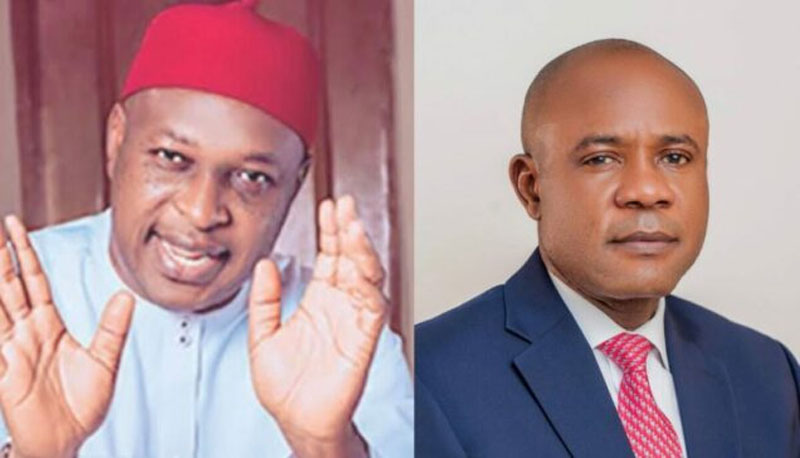
Groups uncover fresh shortcomings in Enugu guber tribunal’s verdict, seek review of judgement
A new twist has been added to the controversies trailing the decision of Enugu election petition tribunal to uphold the election of Peter Mbah as governor of the coal city state.
Mbah of People’s Democratic Party (PDP) was narrowly declared winner of the 18 March, 2023 election by Independent National Electoral Commission (INEC), a move which prompted the candidate of Labour Party, Chijioke Edeoga to challenge the results in the tribunal.
But addressing a press conference in Abuja at the weekend, Human Rights Writers Association Of Nigeria (HURIWA) in Clconjunction with Patriotic Defenders of National Institutions, faulted the decision of the tribunal to uphold Mbah’s victory.
National Coordinator of HURIWA, Emmanuel Onwubiko, said issues raised by Edeoga, which range from alleged forged National Youth Service Corps certificate to over-voting, among others were enough to nullify Mbah’s election.
The groups, which called for the review of the tribunal judgement based on new findings that it was a miscarriage of justice, expressed concern over the decline of judicial integrity in the country.
The text of the press conference reads : “We, the Human Rights Writers Association of Nigeria (HURIWA), in conjunction with the Patriotic Defenders of National Institutions, gather here today to address a matter of utmost importance to the foundation of our nation’s democracy.
We are deeply concerned about the recent judgment handed down by the Enugu State Governorship Election Petition Tribunal regarding Petition No.: EPT/EN/GOV/01/2023.
This petition, filed by Chijioke Edeoga and the Labour Party, challenges the outcome of the gubernatorial election held on March 18, 2023, in Enugu State.
READ ALSO:
- Nnamdi Kanu’s release: Ohanaeze seeks meeting with Tinubu – Iwuanyanwu
- Reject bill to regulate social media, SERAP urges National Assembly
- Suspected ritualists kill young girl in Bauchi
This case brings to light crucial issues surrounding the integrity of certification, justice, and the rule of law in Nigeria.
*Key Issues:*
The Enugu State Governorship Election Petition Tribunal’s decision has raised serious questions about the conduct of the tribunal, the credibility of our institutions, including the National Youth Service Corps (NYSC), the Department of State Security (DSS), the Judiciary and the broader implications for the certification process in Nigeria.
The tribunal swiftly dismissed allegations of NYSC certificate forgery against the People’s Democratic Party (PDP) candidate, Peter Mbah, and rejected the Labour Party’s claims of over-voting and bypassing the Biometric Voter Accreditation System (BVAS). The tribunal’s conclusion was that Peter Mbah was legitimately elected as governor based on the majority of valid votes in the election.
However, the Labour Party and its gubernatorial candidate are appealing this decision, firmly believing that justice was not served in this case. We are deeply troubled by the apparent decline in the integrity of our judiciary, where questionable rulings frequently emerge from our esteemed halls of justice.
The case before the tribunal, led by Honourable Justice Kudirat Akano, points to a clear instance of electoral malpractice. The petitioners presented evidence that after the collation of 16 out of the 17 local government areas in Enugu State, Labour Party candidate Chijioke Edeoga was leading by over 11,000 votes. Shockingly, the PDP in Enugu, possibly with the involvement of INEC, awarded the PDP a staggering 30,000 votes in Nkanu East LGA, which happens to be the PDP candidate’s LGA.
The Labour Party alleged that the INEC BVAS data for Nkanu East LGA showed a total of 15,000 accredited voters on Election Day. However, when the results were declared, the PDP was credited with a total of 30,350 votes, while the Labour Party received only 1,855 votes. How could INEC report over 33,000 votes in a location where only about 15,000 voters were accredited?
Legal experts have analyzed the judgment and found it to be delivered with a disregard for the Constitution and Supreme Court precedents. Section 182(1)(j) of the 1999 Constitution of the Federal Republic of Nigeria clearly outlines the penalties for forgery, regardless of the perpetrator’s status.
The tribunal also erred in failing to reevaluate the figures awarded to the PDP. It is a miscarriage of justice for the court to rule in favor of an individual who as alleged, blatantly violated Section 182(1)(j) of the Constitution.
READ ALSO:
- Ex-Senate President, Lawan loses mother
- ‘10,000 Aborted Babies’: NHRC insists on unraveling truth of Reuters allegation against Nigerian army
- Confusion as sacked NIPOST boss returns, says he’s been reinstated
Furthermore, it was erroneous for the court to assert that a petitioner must produce a certificate they did not create. Additionally, describing the evidence of witnesses subpoenaed by the court as “incompetent” because the witness statements were not filed at the time the petition was initially submitted is a grave mistake.
The Supreme Court, in the case of Agi vs PDP, defined forgery as presenting a document not created by the agency purported to have made it. In this petition, the tribunal called five witnesses, including a Director from the National Youth Service Corps (NYSC) responsible for Corps Certification, and a Managing Partner of a law firm who sought NYSC certificate verification under the Freedom of Information Act to confirm the authenticity of Peter Mbah’s NYSC certificate presented to INEC.
The tribunal’s assertion that the forged certificate was not submitted to support Mr. Mbah’s qualification to contest the election contradicts the law and Supreme Court precedent. The tribunal’s decision that the NYSC certificate is not a prerequisite for a gubernatorial election, or that both the forged and original documents must be presented to the court, is a gross miscarriage of justice.
The court was also incorrect in declaring that the NYSC certificate, not having been mentioned in Form EC9 (the affidavit of personal particulars), is merely an attached document and does not impact the qualification of the second respondent.
Section 177 of the constitution outlines the qualifications for running in a gubernatorial election in Nigeria. Anyone eligible under Section 177 can be disqualified under Section 182(1) (j) if, as specified in subsection (j), they present a forged certificate to INEC.
The Supreme Court, in the case of Ucha v. Onwe (2011), ALL FWLR (PT 580) 1227 @ 1295; (2011) 4 NWLR (PT 1237) 386 @ 427, upheld the provision of Section 66(1)(h) of the 1999 Constitution as a disqualifying factor. The tribunal’s finding that the NYSC Certificate is not covered by Section 66(1) (h) of the 1999 Constitution is incorrect.
Hence, the judgment delivered by the Enugu State Governorship Election Petition Tribunal can only be described as a miscarriage of justice and a fundamental jurisprudential flaw.
*Key Concerns:*
A central issue in this case revolves around the serious allegation of NYSC certificate forgery against Peter Mbah, the PDP candidate. This allegation gains weight through NYSC’s testimony as contained in a sworn affidavit in the Federal High Court case between Peter Mbah and the NYSC, which formed part of the evidence NYSC submitted to the tribunal in further proof that NYSC never issued any certificate to Mr. Mbah, let alone the purported certificate of National Service No. A808297 dated January 6, 2003, was not given due cognizance by the tribunal.
The revelations from the NYSC is alleged to cast serious doubt on the authenticity of the NYSC certificate presented by Peter Mbah, raising significant questions about the eligibility of the governor for the gubernatorial race.
READ ALSO:
- Another billionaire ‘steps in’ as Qatar’s Sheikh Jassim withdraws bid to buy Man Utd
- Brain drain: Minister confirms plans to engage retired doctors, others
- Adamawa: Father of 20 rapes 12-year-old girl, says victim didn’t cry during the act
Again, the implications of the tribunal’s judgment are deeply troubling. They undermine the integrity of the Nigerian certification process, not only for the NYSC but also for other certifying bodies. The tribunal’s decision, seemingly disregarding critical evidence presented by the NYSC, raises serious concerns about the credibility of our institutions and the rule of law.
On the one hand, there is confusion surrounding the appearance of the Department of State Service (DSS) at the Enugu State Governorship Election Petitions Tribunal. The question arises: Why did the DSS appear at the tribunal? The DSS is not the issuing authority for National Youth Service Corps (NYSC) certificates, and they are not typically involved in NYSC matters. Their unexpected presence at the tribunal has raised concerns and cast doubt on their role because it falls outside their usual mandate.
The DSS does not have a mandate to appear before election petition tribunals in political cases and provide testimonies in favor of one candidate over another, especially when it involves a government institution like the NYSC. So, the critical question is, who authorized or procured their appearance at the tribunal?
Furthermore, there is a troubling conspiracy theory yet to be verified unless thoroughly investigated by an independent body of experts to ascertain if there a connection between the DSS hierarchy, as it were, and Peter Mbah, the individual involved in the dispute with the Labour Party. Peter Mbah, the owner of Pinnacle Oil, had his certificate issue, and the DSS even testified that it was valid.
Notably, there is the urgent need to further investigate why the DSS featured in that tribunal matter which is unprecedented.
Moreover, the individual, Isa Yahaya Mohammed, who represented the DSS at the tribunal has been alleged as someone who is no longer associated with the DSS. Mohammed had at the tribunal, while giving testimony reportedly claimed that he was a serving deputy director in charge of operations at the DSS and later contradicted himself in his written deposition where he wrote that he was Deputy Director (Strategy).
However, it’s essential to note that he appeared to have the blessing of the DSS, as they did not arrest him for falsely claiming to represent their organization. In typical situations, the DSS would swiftly apprehend someone falsely claiming to represent their agency. This has resulted in a situation where the DSS appears to have undermined their own institution’s credibility and also cast doubt on the NYSC’s integrity.
READ ALSO:
- Passport : Immigration boss gives fresh condition on 2 weeks issuance timeline
- BREAKING: Police avert theft of train coaches in Maiduguri
- Lagos-Ibadan expressway: FG owes contractors N18bn, road ready Nov
The larger question remains: What motivated their involvement in this matter? Were financial incentives or other factors involved? There are various coincidences surrounding the strange appearance in a partisan political litigation by the DSS and the fact that they gave testimony regarding what is considered their secret internal investigative activity when in actual fact there is absolute no need for their appearance since the DSS is not an agency under the Enugu state’s chapter of the People’s Democratic Party which sponsored Peter Mbah in that contentious gubernatorial election.
HURIWA and Patriotic Defenders of National Institutions are profoundly concerned that the NYSC, a pivotal institution in Nigeria tasked with certifying the completion of national service for graduates, is facing questions about the authenticity of a gubernatorial candidate’s NYSC certificate. This threatens the trust and credibility of the NYSC. We insist on a comprehensive investigation into the authenticity of NYSC certificates issued to all individuals in public offices, particularly those in elected positions.
The rule of law is a fundamental pillar of democracy. In this case, it appears that the tribunal’s judgment may have departed from established legal principles. The rule of law guarantees that justice is administered impartially, without bias. We demand a thorough review of the judgment to ensure the rule of law prevails.
Moreover, the independence of the judiciary is crucial for the smooth functioning of a democratic society. A judiciary perceived as compromised or biased erodes public confidence in the judicial system. We call for an evaluation of the Justice Akano-led tribunal’s decision to determine if it aligns with the principles of judicial independence.
The credibility of elections is paramount for democracy. The accusations of over-voting and bypassing the BVAS during the election in Nkanu East local government area, as raised by the Labour Party, demand a comprehensive investigation to safeguard the integrity of the electoral process.
*Our Stance and Demands:*
In light of the issues outlined above, HURIWA and Patriotic Defenders of National Institutions firmly call for a thorough and impartial review of the Enugu State Governorship Election Petition Tribunal’s judgment to ensure that justice is served. The evidence presented by the NYSC and the allegations of certificate forgery warrant a comprehensive reexamination of the case.
Furthermore, we demand a nationwide investigation into the authenticity of NYSC certificates issued to individuals holding public offices. The credibility of these certificates must be verified to maintain public trust and uphold certification integrity.
In addition, the rule of law must be upheld without exception. The tribunal’s decision should align with established legal principles, and justice should be administered impartially. The judiciary must remain independent and free from bias.
HURIWA and Patriotic Defenders of National Institutions emphasize the need for a thorough investigation into the allegations of over-voting and BVAS bypass during the election. Electoral integrity is paramount for democracy.
In conclusion, we remain resolute in our commitment to defending human rights, upholding the rule of law, and protecting the integrity of our democratic institutions. We will closely monitor developments in this case and continue to advocate for transparency, accountability, and justice in our democracy.”
platinumpost









Politics
Adeleke, Oyetola in Focus as Report Reveals Osun APC Power-Sharing Plan
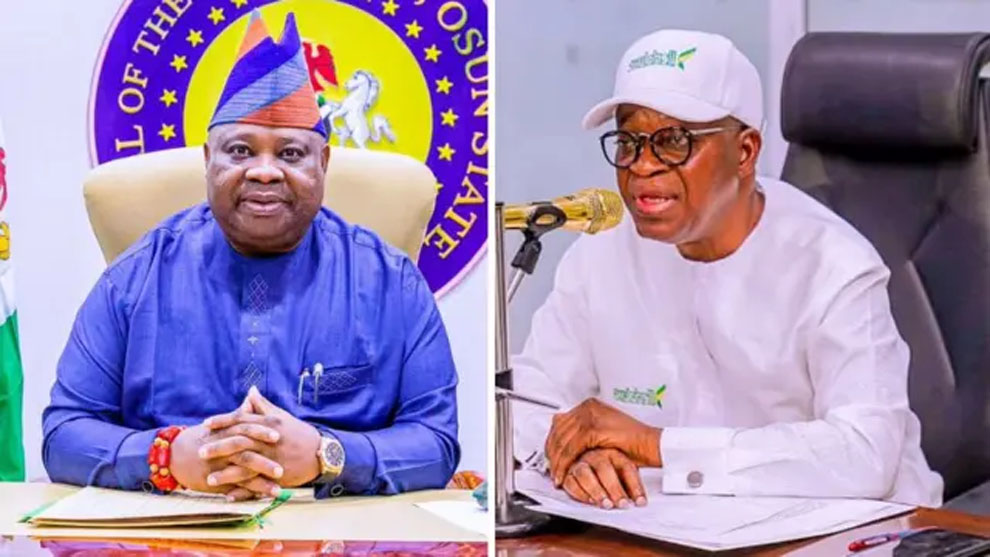
Adeleke, Oyetola in Focus as Report Reveals Osun APC Power-Sharing Plan
President Bola Ahmed Tinubu’s reported decision to place Osun State Governor Ademola Adeleke at the centre of his 2027 re-election campaign in the state has triggered a fresh power struggle within the All Progressives Congress (APC), amid reports of a proposed political arrangement that could reshape the party’s leadership and distribution of appointments.
According to a report by Leadership, negotiations allegedly brokered by Femi Gbajabiamila, Chief of Staff to the President, have produced a proposed power-sharing arrangement involving Adeleke, former Osun governor Gboyega Oyetola, APC National Secretary Ajibola Basiru and former party national secretary Iyiola Omisore.
Under the reported arrangement, Adeleke would coordinate Tinubu’s re-election campaign in Osun and secure greater influence over political appointments and party affairs, despite remaining a member of the Accord Party, which he joined after leaving the Peoples Democratic Party (PDP).
The report also suggested that Adeleke could defect to the APC in 2027 after the elections, potentially bringing his political loyalists with him. However, no formal defection announcement has been established, and the alleged agreement should not be treated as a concluded deal.
The reported negotiations represent a potential shift in the balance of power within Osun APC, where Oyetola has exercised considerable influence over party leadership and candidate selection.
Oyetola, who currently serves as Minister of Marine and Blue Economy, was a central figure in the party’s political structure before the latest developments. His influence extended to the selection of the APC’s candidates for the August 15, 2026, Osun governorship election and other elective positions.
The APC candidate, Bola Oyebamiji, lost the election to Adeleke, who contested on the Accord Party platform. The Independent National Electoral Commission declared Adeleke the winner with 511,067 votes against Oyebamiji’s 444,815, a margin of 66,252 votes.
READ ALSO:
- Police Rescue Two Abducted Children in Suleja, Arrest Woman For Cutting Husband’s Manhood
- Farmer Arrested Over Plantain Theft Dies in Police Custody, Family Questions Suicide Claim
- State Police: 25 States Approve Bill as Nigeria Moves Closer to Decentralised Policing
The result strengthened arguments among some APC stakeholders that the governor’s electoral standing and grassroots support could be important to Tinubu’s efforts to improve the party’s performance in Osun in 2027.
Under the reported power-sharing proposal, Adeleke would nominate chairpersons in 20 of the state’s 30 local government areas, while Oyetola, Omisore and Basiru would share influence over the remaining 10. The proposed arrangement would also cover the nomination of councillors in the affected local government areas.
The report said the proposed distribution would reduce Oyetola’s previous influence while giving Basiru and Omisore a larger role in the party’s political arrangements.
Another sensitive issue reportedly addressed during the negotiations is the prolonged dispute over control of Osun’s local governments. The proposed understanding would see the parties explore an out-of-court settlement, subject to the appropriate court process and approval of any terms reached.
The reported negotiations have not, however, established that the parties have concluded a binding agreement on the local government dispute or that any proposed settlement has received judicial approval.
Basiru has reportedly urged members of his Alubarika political group to cooperate with Adeleke in coordinating Tinubu’s re-election campaign. At a meeting in Osogbo, he was quoted as saying that the President had chosen the governor for the assignment and that party members should put aside personal ambitions in support of Tinubu’s second-term bid.
Basiru’s reported position has added weight to the emerging arrangement, although the extent to which all APC factions will accept the proposed distribution of influence remains uncertain.
The governor’s inauguration of a 344-member campaign council for Tinubu’s re-election bid has also exposed disagreements among party stakeholders. Oyetola and Oyebamiji were among prominent figures reported absent from the event, alongside APC State Chairman Tajudeen Lawal and other party leaders.
The Osun APC had complained that it was not adequately consulted before the inauguration, raising concerns about the process through which the campaign structure was established.
Nevertheless, several prominent political figures attended the event, including former governor Adebisi Akande, Basiru and Omisore. Akande reportedly said the party had lacked direction until Adeleke stepped in to coordinate the presidential campaign.
Basiru also defended the arrangement, urging party members to respect Tinubu’s choice of campaign coordinator and work together towards the 2027 election.
READ ALSO:
- Messi Makes History as Barcelona, Inter Miami Celebrate Asturias Award
- Kane Beats Yamal to Win Major Football Award Ahead of Ballon d’Or Ceremony
- Police Arrest Suspect Eight Months After Retired Teacher’s Killing in Ogun
The development has generated mixed reactions among political stakeholders. Some have welcomed Adeleke’s appointment as an opportunity to unite rival political camps behind Tinubu, while others have called for wider consultation to prevent the new structure from deepening existing divisions.
Adeleke’s position is particularly notable because he remains an Accord Party governor while coordinating the re-election campaign of the APC’s presidential candidate. His support for Tinubu predates the latest reported negotiations.
After his August 2026 governorship victory, Adeleke publicly expressed support for Tinubu’s second-term ambition, citing the President’s regional background and the need to complete major federal infrastructure projects in the South-West.
The governor has previously denied that his support resulted from a political agreement with Tinubu. He said his position was motivated by his desire to see federal projects in the region completed.
His campaign team has also rejected claims of a secret political pact with the Presidency, maintaining that the governor’s support was based on his assessment of Tinubu’s performance and policies.
The distinction is important as the reported negotiations involve claims about political appointments, local government influence and the future leadership of the Osun APC that have not all been independently confirmed.
Other political stakeholders have urged the emerging coalition to avoid sidelining existing party leaders. Some have argued that the campaign council should provide space for rival factions to participate without allowing disagreements over appointments or political ambitions to undermine the shared objective of supporting Tinubu.
The coalition’s effectiveness will depend on how the participating groups manage their differences and whether the proposed arrangements translate into practical cooperation beyond the campaign.
For now, Adeleke’s appointment as Tinubu’s Osun campaign coordinator is a reported political development, while the broader claims of a secret power-sharing deal and a future defection to the APC remain subject to confirmation.
The unfolding negotiations could significantly alter Osun’s political alignments ahead of the 2027 general election, but the final terms, the position of Oyetola’s camp and Adeleke’s long-term party affiliation remain unresolved.
Adeleke, Oyetola in Focus as Report Reveals Osun APC Power-Sharing Plan
Politics
2027: Remi, Seyi Tinubu Reportedly Differ Over APC Youth Mobilisation
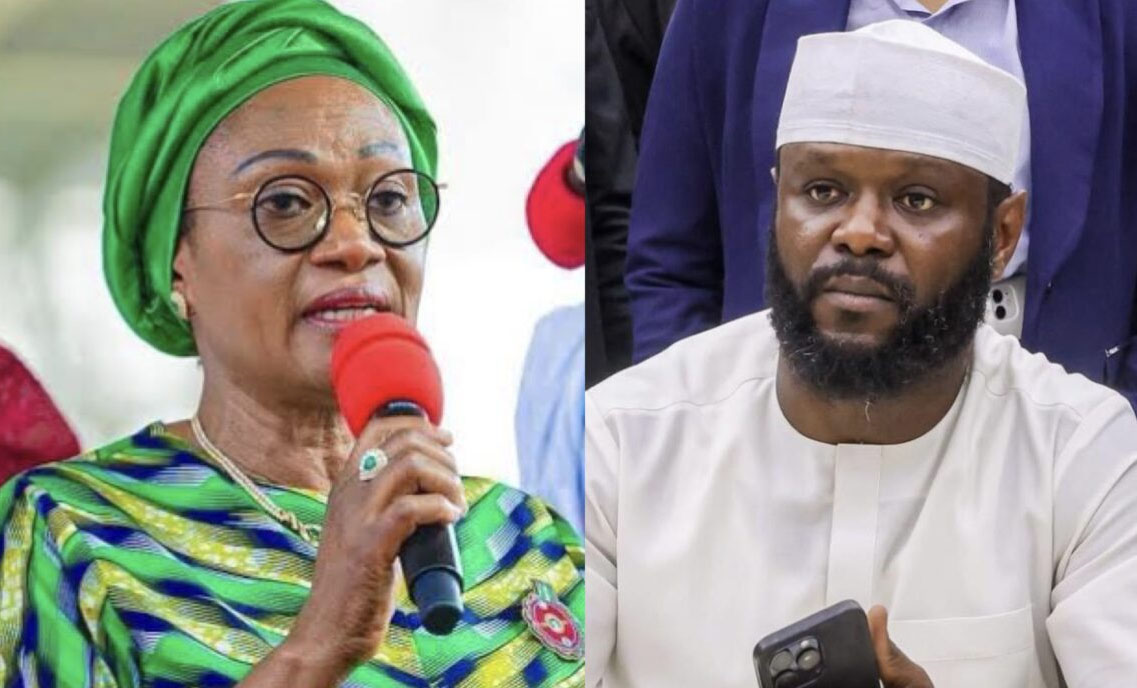
2027: Remi, Seyi Tinubu Reportedly Differ Over APC Youth Mobilisation
A reported disagreement between First Lady Oluremi Tinubu and President Bola Tinubu’s son, Seyi Tinubu, has drawn attention to competing political mobilisation networks within the ruling All Progressives Congress (APC) ahead of the 2027 presidential election.
The reported tension centres on the leadership of the APC Presidential Campaign Council’s youth mobilisation directorate and the activities of two support groups associated with the President’s family: Seyi Tinubu’s CityBoy Movement and the Mummy’s Men Movement, which is associated with the First Lady.
According to reports published on October 22 and 23, 2026, the latest development followed changes to the campaign council’s leadership structure, including appointments to its youth mobilisation directorate.
In the reshuffle announced by the campaign council, Imo State Governor Hope Uzodimma, who serves as the council’s secretary, named Minister of Youth Development Ayodele Olawande as director of youth mobilisation, while APC National Youth Leader Dayo Israel was appointed his deputy.
However, an unnamed source cited in the reports claimed that the arrangement displeased the First Lady, who allegedly preferred Israel to lead the directorate. The source further alleged that Olawande was perceived by the First Lady’s camp as being aligned with Seyi Tinubu and his CityBoy Movement.
READ ALSO:
- Igbo Presidency: Soludo Tells South-East to Back Tinubu for Future Power Shift
- 41 Days in Bandits’ Den: Five Islamic Clerics Still Held After Tinubu Re-Election Prayer Trip
- EFCC Opens Recruitment for Nigerians, Sets Age Limits for Four Job Categories
The reports suggested that the appointments had exposed competing interests over the direction of youth mobilisation for President Tinubu’s anticipated re-election campaign. However, the claims about the motivations behind the appointments have not been independently established.
The alleged disagreement also draws attention to the growing visibility of the CityBoy Movement, which Seyi Tinubu founded to mobilise young Nigerians in support of his father’s political ambitions.
The group has organised political activities and established support networks in different parts of the country ahead of the 2027 elections. President Tinubu has publicly praised his son and members of the movement for engaging young people and building a political support structure.
During a meeting with the group at the State House, the President commended Seyi and his associates for their efforts, saying they had invested their time in organising young people without demanding official positions or titles.
The President’s public endorsement of the movement has been cited in reports about the alleged tensions, although claims that it angered the First Lady remain allegations attributed to unnamed sources.
The Mummy’s Men Movement, meanwhile, emerged as another platform promoting support for the President’s second-term ambition. Dayo Israel has been associated with the initiative and announced its formation in August, describing it as a movement inspired by the First Lady.
Israel said the initiative was open to women, young people and Nigerians across different age groups.
A report by Peoples Gazette also cited an unnamed source alleging that the movement was established partly to counter the influence of the CityBoy Movement. The report further carried claims about an alleged attempt to restrict CityBoy members’ attendance at an event in Abeokuta, Ogun State, in August. These claims have not been independently verified.
The reported dispute comes amid wider concerns within the APC about internal disagreements and competing interests as the party prepares for the 2027 general elections.
Senator Ali Ndume recently warned that internal divisions and personal interests among party members could pose a challenge to the APC’s electoral preparations. Vice-President Kashim Shettima has also cautioned party members against undermining one another while publicly professing support for the President.
Although the reports have described the situation as a struggle for influence within Tinubu’s political camp, there has been no publicly established confirmation that the President’s wife and son are personally at war over the campaign structure.
The developments nevertheless highlight the importance of youth mobilisation and internal coordination as the APC works to consolidate support for Tinubu’s second-term bid.
2027: Remi, Seyi Tinubu Reportedly Differ Over APC Youth Mobilisation
Politics
Igbo Presidency: Soludo Tells South-East to Back Tinubu for Future Power Shift
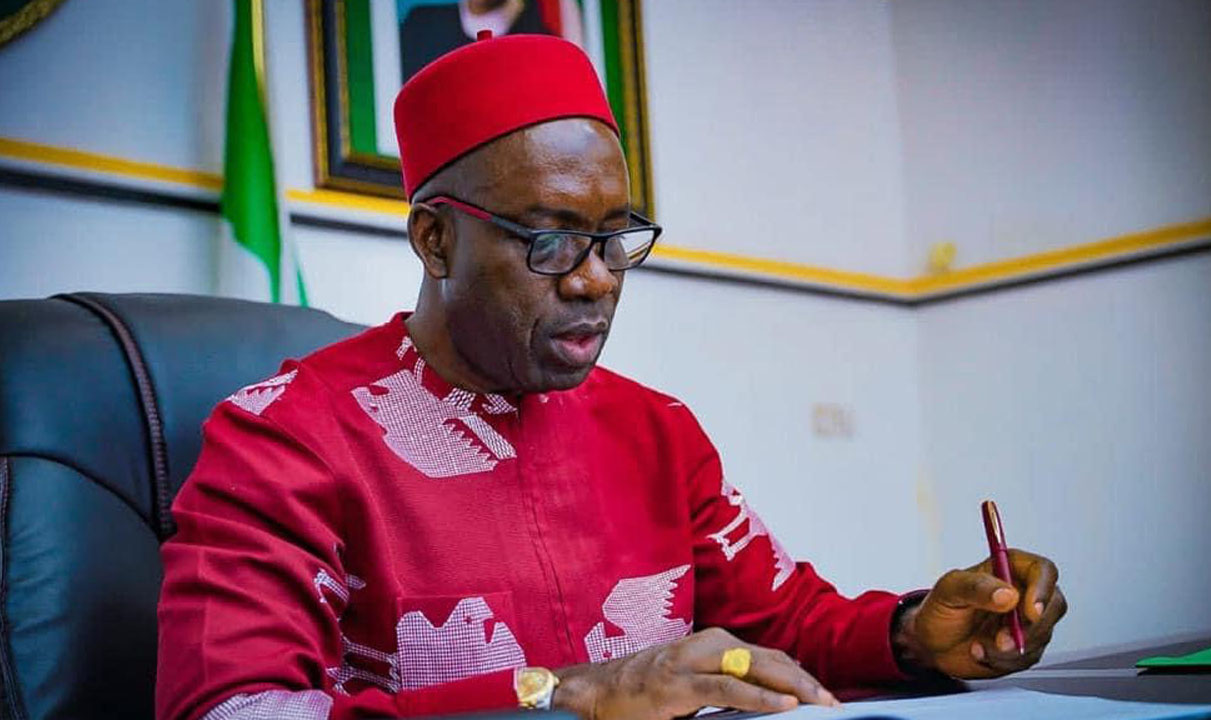
Anambra State Governor, Chukwuma Soludo, has urged the South-East to support President Bola Tinubu, arguing that political alliances with the South-West could improve the region’s chances of producing Nigeria’s president in the future.
Soludo said presidential power in Nigeria is shaped by political negotiations, agreements and cooperation between regions, suggesting that the South-East should adopt a strategic approach rather than rely solely on demands for an Igbo presidency.
The governor made the remarks while speaking in Igbo at a recent event, according to reports published on Friday, October 23, 2026.
“Presidency is about discussion and agreement. Now that President Tinubu, from the South-West, is in power, if we in the South-East support him, then when power returns to the South after going to the North, the South-West will support an Igbo presidency,” Soludo was quoted as saying.
The governor’s position comes as political activities gather momentum ahead of the 2027 general elections, with competing parties and regional interest groups seeking support for their preferred presidential candidates.
Soludo, who belongs to the All Progressives Grand Alliance (APGA), has repeatedly advocated political cooperation between the South-East and the Tinubu administration, maintaining that strategic alliances could help the region secure greater political and economic benefits.
READ ALSO:
- 41 Days in Bandits’ Den: Five Islamic Clerics Still Held After Tinubu Re-Election Prayer Trip
- EFCC Opens Recruitment for Nigerians, Sets Age Limits for Four Job Categories
- Saudi Executions: Truth Behind Viral Kissing Claim
- MURIC petitions Oyo police over 2019 murder of Muslim cleric in Fiditi
In March, during his second-term inauguration, the governor urged people in the South-East to support Tinubu in the 2027 presidential election, arguing that the region should prioritise political partnerships capable of advancing its interests.
He also called for a shift from what he described as the “politics of lamentations” to an alliance focused on progress and prosperity.
In June, Soludo reiterated his position at a pro-Tinubu rally in Abakaliki, Ebonyi State, where he called on political leaders across the country to unite behind the President.
The governor has also praised Tinubu over federal government approvals for the design and procurement processes for two major road projects linking Anambra with neighbouring states, describing the projects as important to the development of the South-East.
Soludo has maintained that cooperation between APGA, the ruling All Progressives Congress (APC) and the Federal Government can deliver practical benefits for the region, despite differences in party affiliation.
However, support for Tinubu is not unanimous across the South-East. The Igbo Agenda Dialogue recently endorsed Peter Obi and his running mate, Rabiu Musa Kwankwaso, for the 2027 presidential election, dismissing endorsements of Tinubu by Soludo and other political figures as positions that do not necessarily represent the choices of all Igbo voters.
The competing positions highlight the political debate within the South-East over whether supporting the incumbent President could improve the region’s prospects of producing a future Nigerian leader or whether backing an alternative candidate would better serve its interests.
Soludo’s latest remarks place renewed emphasis on political bargaining and regional alliances as key factors in the debate over an Igbo presidency.
Igbo Presidency: Soludo Tells South-East to Back Tinubu for Future Power Shift
-

 Auto3 days ago
Hyundai Unveils Mufasa, Grand Creta SUVs to Strengthen Nigeria Line-up (Updated)
-

 metro3 days ago
Horror in Sokoto: Bandits Intercept Vehicle, Massacre All Passengers Returning from City
-

 metro3 days ago
Nigerian Journalist Sentenced to 4 Years Over Facebook Post Criticising Police
-

 metro3 days ago
Fourth Gas Leak in Six Months: Over 100 Ogun Pupils Hospitalised, Schools Shut as Parents Panic
-
 metro3 days ago
Bauchi Mosque Removes Imam After Tinubu Campaign, Rejects Proposal to Rename Mosque
-
 metro3 days ago
Shettima Blasts States Over Power Woes, Says Govs Must Stop Waiting for Abuja
-

 International2 days ago
Two Killed, Eight Injured as Attack Hits Saudi Arabia Airport
-

 metro2 days ago
Police Arrest Man Over Fake Presidency Number Plate in Abuja