
International
Hamas rejects ‘new’ Gaza truce conditions as Biden says deal closer than ever
Hamas rejects ‘new’ Gaza truce conditions as Biden says deal closer than ever
DOHA: Hamas said Friday it rejected “new conditions” in a Gaza ceasefire proposal that US-led mediators presented during two days of talks in Qatar.
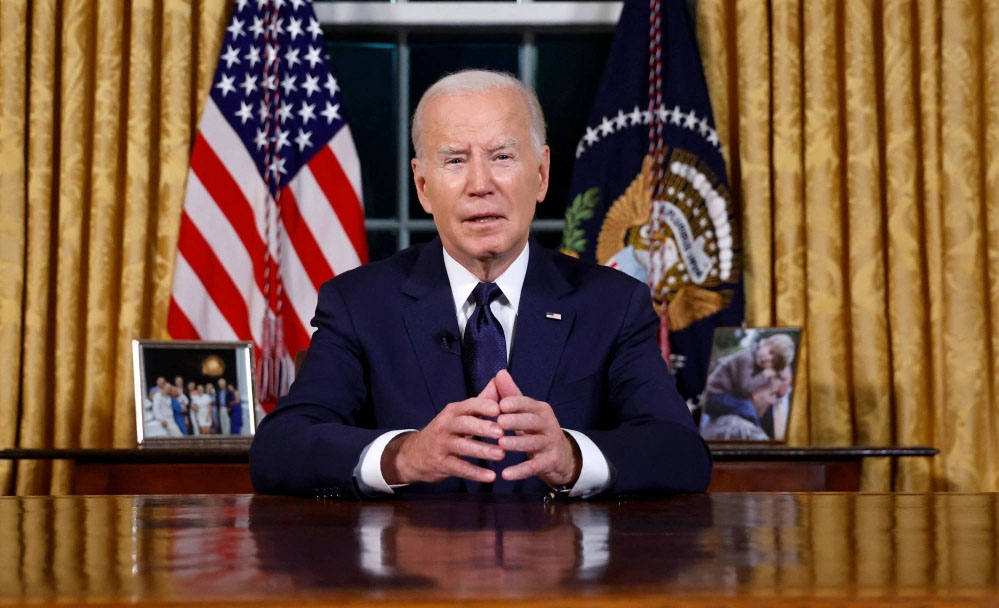
Diplomatic efforts have so far failed to alleviate the suffering endured over more than 10 months of war, but US President Joe Biden insisted after the latest round of talks that “we are closer than we have ever been.”
He is sending US Secretary of State Antony Blinken to Israel this weekend to push the latest proposal, the State Department said.
Egyptian, Qatari and US mediators have been seeking to finalize details of a framework initially outlined by Biden in May, which he said Israel had proposed.
In a joint statement, the mediators said they had presented both sides with a proposal that “bridges remaining gaps” and will continue working in the coming days to hash out the specifics on humanitarian provisions and the hostage-prisoners swap.
Talks aiming to secure a rapid deal are set to resume in Cairo “before the end of next week.”
Hamas, which did not attend the Doha talks, swiftly announced its opposition to what it called “new conditions” from Israel in the latest plan.
Israeli Prime Minister Benjamin Netanyahu called on mediators to “pressure” Hamas to accept Biden’s framework.
Threats by Iran and its proxies to attack Israel have added renewed urgency to the efforts to hammer out a Gaza ceasefire, with mediators seeking a deal in the hopes of dousing a wider regional conflict.
“No one in the region should take actions to undermine this process,” Biden warned, later telling reporters, “There’s just a couple more issues, I think we’ve got a shot.”
READ ALSO:
- Nigerian accused of rape gets strange sentence of life jail with 76-year imprisonment in US
- Drug trafficking: Three kingpins, 16 others jailed 302 years
- Noise pollution: Enugu receive 1,000 petitions against churches, mosques
International pressure
An informed source told AFP Hamas had objected to conditions about keeping Israeli troops on Gaza’s border with Egypt and terms related to the release of Palestinian prisoners in exchange for Israeli hostages.
Western ally Jordan, however, put the blame squarely on Netanyahu for blocking a deal, with Foreign Minister Ayman Safadi urging pressure “by everyone who wishes to see this through to completion.”
British Foreign Secretary David Lammy and his French counterpart Stephane Sejourne held talks in Israel on Friday to press the deal.
Israeli Foreign Minister Israel Katz told his visiting counterparts he expects foreign support if Iran seeks to avenge the assassination of Hamas leader Ismail Haniyeh in Tehran.
Sejourne replied that it would be “inappropriate” to discuss responding to any attack while diplomacy to stop it from happening is in high gear.
A senior US official, speaking to reporters on condition of anonymity, said Iran would face “cataclysmic” consequences if it strikes Israel.
A deadly attack by Israeli settlers in the occupied West Bank late Thursday drew international condemnation and calls for sanctions, including against government ministers, over the surge in settler violence against Palestinians since the Gaza war began.
The Israeli military said “dozens of Israeli civilians, some of them masked,” entered the village of Jit and “set fire to vehicles and structures in the area, hurled rocks and Molotov cocktails.” A Palestinian man was shot dead.
The West Bank-based Palestinian foreign ministry described the attack as “organized state terrorism.”
The European Union’s top diplomat, Josep Borrell, said he would propose sanctions against Israeli government “enablers” of Jewish settler violence.
Israeli far-right Finance Minister Bezalel Smotrich, a proponent of West Bank settlements, was quick to join other Israeli leaders in condemning Thursday’s attack by “criminals.”
READ ALSO:
- Police apprehend suspected ritualist selling human parts in Ibadan
- Woman arrested with AK-47 hidden in garri sack
- Illegal alcohol production factory uncovered in Lagos Island (photos)
Ongoing fighting
Hamas’s unprecedented October 7 attack on Israel that triggered the war resulted in the deaths of 1,198 people, mostly civilians, according to an AFP tally of Israeli official figures.
Militants also seized 251 hostages, 111 of whom are still held in Gaza, including 39 the military says are dead. More than 100 were freed during a one-week truce in November.
On Thursday, the toll from Israel’s retaliatory military campaign topped 40,000, according to the health ministry in Hamas-run Gaza, which does not provide a breakdown of civilian and militant casualties.
The war has devastated the besieged territory’s health care infrastructure, prompting repeated warnings from the World Health Organization about the risk of preventable diseases.
On Friday, the Palestinian health ministry reported an unvaccinated 10-month-old child in Gaza had been diagnosed with polio, the territory’s first case in 25 years, according to the WHO.
The announcement came hours after UN chief Antonio Guterres called for two seven-day breaks in the Gaza war to vaccinate more than 640,000 children against type 2 poliovirus, which was first detected in the territory’s wastewater in June.
As truce talks were underway, thousands of civilians were on the move again inside the Palestinian territory after the Israeli military issued fresh evacuation orders ahead of imminent military action.
The UN estimated the orders affect more than 170,000 people, forcing them to pack into the shrinking remnants of an area declared a humanitarian safe zone.
The area where people have been told to relocate to makes up just 11 percent of Gaza, according to the UN.
“During each round of negotiations, they exert pressure by forcing evacuations and committing massacres,” Issa Murad, a Palestinian displaced to Deir Al-Balah, said of the Israeli forces.
Hamas rejects ‘new’ Gaza truce conditions as Biden says deal closer than ever
ARAB NEWS








International
Russia Confirms Iran Has Made No Request for Military Aid
Russia Confirms Iran Has Made No Request for Military Aid
Russia has confirmed that Iran has not formally requested any military aid, arms supplies, or material assistance, even as tensions escalate in the Middle East amid military strikes by the United States and Israel.
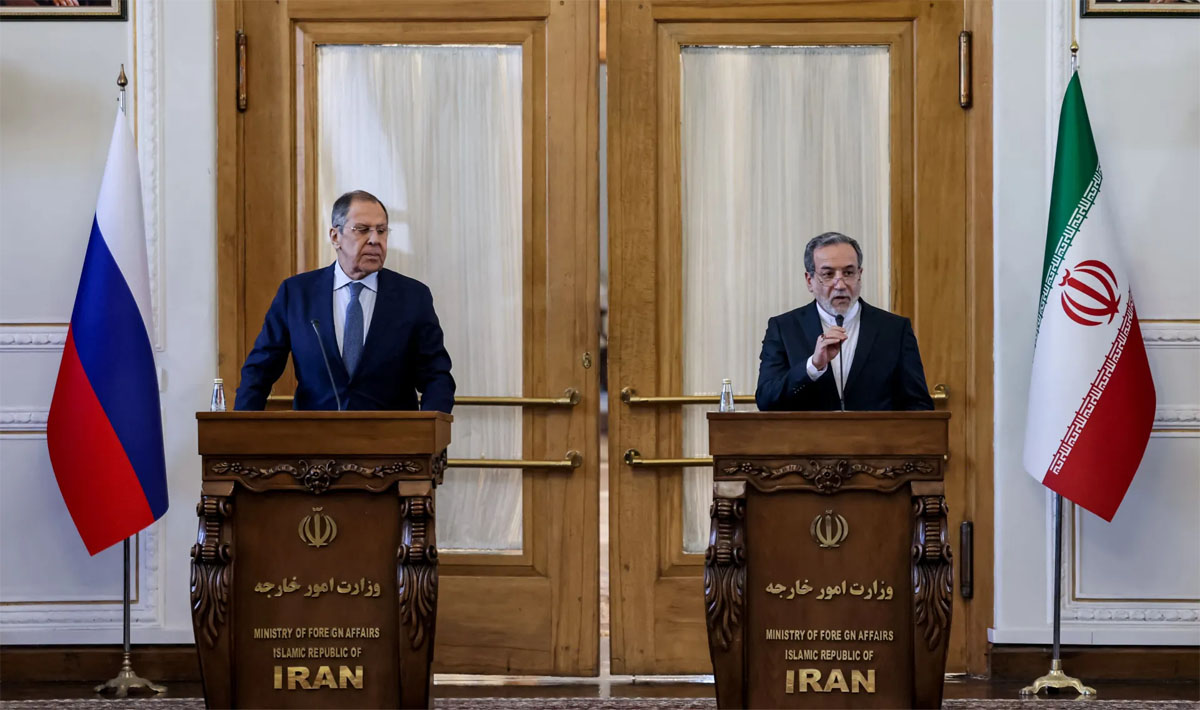
Kremlin spokesman Dmitry Peskov stated during a press briefing in Moscow that no request for weapons or support has come from Tehran, emphasizing that Russia’s position remains consistent. “In this case, there were no requests from the Iranian side. Our position is well known and unchanged,” he said. The statement was reported by TASS and other international news agencies.
The announcement comes amid rising conflict, with U.S. and Israeli airstrikes targeting Iranian positions and Tehran carrying out retaliatory operations. Russian Foreign Minister Sergey Lavrov has also questioned claims that Iran is pursuing nuclear weapons, stating that Moscow has seen no concrete evidence to support these allegations.
Despite not providing military aid, Russia has strongly condemned the strikes as “unprovoked aggression” and violations of Iranian sovereignty. Moscow has called for an immediate ceasefire and offered to mediate through diplomatic channels or the United Nations, warning that prolonged conflict could destabilize the region further.
READ ALSO:
- FG Approves Medical Fellowships as PhD Equivalent in Nigerian Universities
- FEC Approves 100% Gratuity for Retiring Federal Civil Servants
- Prof. Abdur‑Razaq Alaro Warns Misusing Orphans’ Wealth Could Lead to Hellfire
Background on Russia–Iran Relations
Russia and Iran signed a Comprehensive Strategic Partnership Treaty in January 2025, covering defence collaboration, intelligence sharing, joint military exercises, nuclear energy projects, and broader economic coordination. However, the treaty does not include a mutual defence clause, meaning neither side is automatically obligated to provide military assistance in case of conflict.
The partnership has facilitated exchanges such as Russian support in Iran’s Bushehr Nuclear Power Plant construction and past drone technology cooperation. Analysts note that the agreement allows both countries to maintain strategic ties while preserving Moscow’s diplomatic flexibility in the Middle East.
Russia’s stance demonstrates a balance between diplomatic support for Iran and careful avoidance of direct military involvement, while continuing to monitor the escalating situation and push for de-escalation through diplomacy.
Russia Confirms Iran Has Made No Request for Military Aid
International
US Senate Rejects Bill Limiting Trump’s War Powers as Iran Conflict Escalates
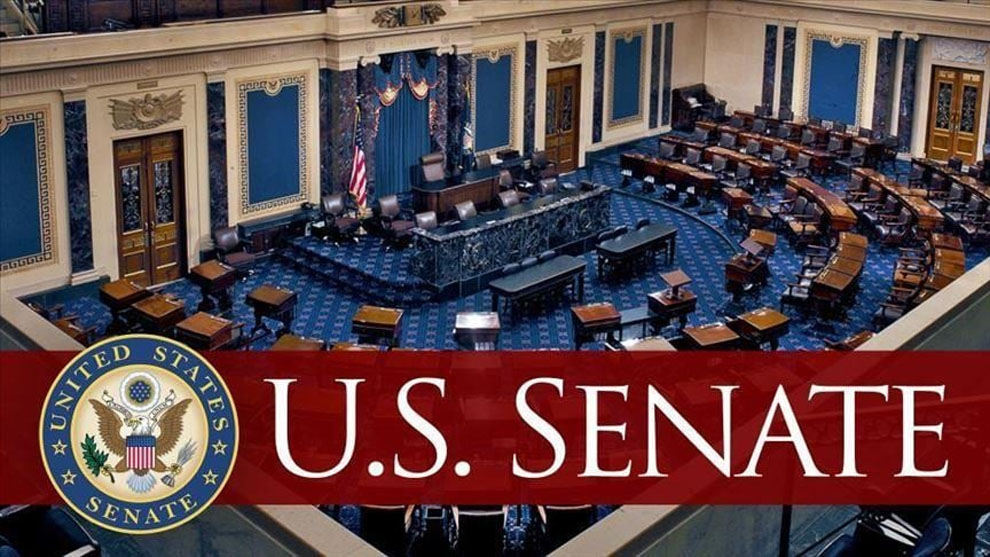
US Senate Rejects Bill Limiting Trump’s War Powers as Iran Conflict Escalates
The United States Senate has rejected a bipartisan resolution aimed at limiting President Donald Trump’s authority to conduct military operations in Iran without explicit Congressional approval, as tensions and military activity in the Middle East continue to escalate.
On Wednesday, March 4, 2026, the Senate voted 53‑47 against the measure, largely along party lines. The resolution would have required that any further U.S. military actions in Iran be authorised by Congress, rather than carried out solely at the discretion of the president. Two senators switched positions: Pennsylvania Democrat John Fetterman opposed the bill, while Republican Rand Paul of Kentucky supported it. All other senators voted according to party affiliations.
Supporters of the bill, including Senate Democratic leader Chuck Schumer, argued that the president had bypassed Congress in launching the military campaign, raising concerns over constitutional authority and oversight. Schumer questioned whether lawmakers were “standing with the American people, who are exhausted with forever wars in the Middle East, or with Donald Trump and Defense Secretary Pete Hegseth as they bumble us headfirst into another war.”
READ ALSO:
- Terrorists Attack Borno, Kill Soldiers, Abduct Women, Children
- Leadership Reshuffle: IGP Tunji Disu Removes Hundeyin as Nigeria Police Force PRO
- Army Kills Notorious Kidnapper, Rescues Four Hostages in Edo
The vote comes amid an escalating conflict in the region. On Saturday, the United States and Israel conducted air strikes targeting Iranian assets, prompting Tehran to respond with attacks on Israeli and U.S.-aligned interests in the Gulf. Defense Secretary Pete Hegseth warned that the military campaign could continue for up to eight weeks, nearly twice the duration President Trump initially suggested over the weekend.
Opponents of the bill, primarily Senate Republicans, argued that the executive branch has broad authority as commander-in-chief and that limiting presidential powers during active military operations could hinder U.S. forces and send the wrong message to both allies and adversaries. Senator Susan Collins, a centrist Republican from Maine, said, “At this juncture, providing unequivocal support to our service members is critically important, as is ongoing consultation by the administration with Congress.”
The bill now moves to the House of Representatives, where it faces a challenging path in a Republican-controlled chamber. Even if it passes the House, a presidential veto is expected, which would require a two-thirds majority in both chambers to override.
This episode highlights ongoing tensions in Washington over the scope of presidential war powers. The 1973 War Powers Resolution was enacted to limit unilateral presidential authority, mandating that Congress be informed within 48 hours of military engagements and that authorization for military force be obtained within 60 days. Successive presidents, both Republican and Democratic, have historically challenged the constitutionality of the law.
President Trump has previously launched military operations without Congressional approval, including attacks on Iranian nuclear facilities last year and the capture of Venezuela’s President Nicolás Maduro in January 2026. Critics argue these precedents demonstrate the need for clearer limits on executive power, while supporters emphasize national security and swift response capabilities.
US Senate Rejects Bill Limiting Trump’s War Powers as Iran Conflict Escalates
International
Iran Launches Missiles at Israel as Middle East War Enters Sixth Day
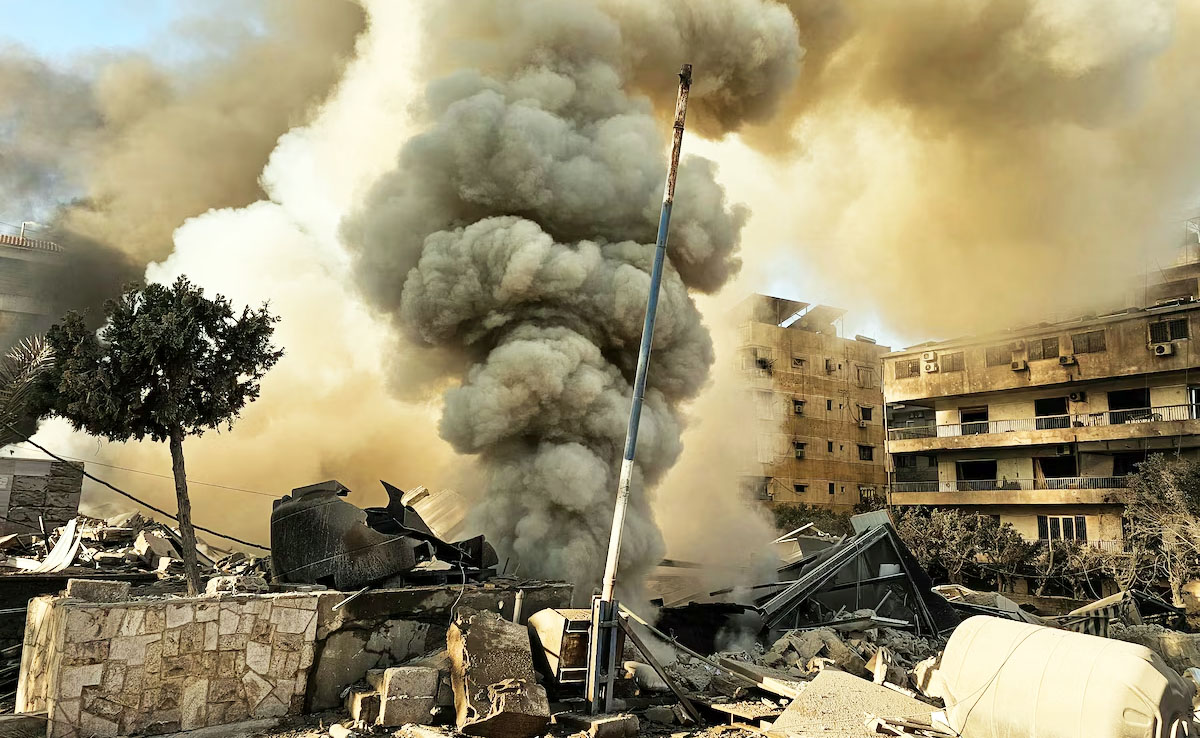
Iran Launches Missiles at Israel as Middle East War Enters Sixth Day
Iran launched a fresh wave of missiles at Israel early Thursday, intensifying the rapidly expanding Middle East conflict as hostilities between Iran, Israel, and the United States entered a sixth consecutive day.
Israeli authorities confirmed the incoming missile barrage shortly after the Israeli military said it had begun new air strikes in Beirut’s southern suburbs, targeting positions linked to Hezbollah, the Iranian-backed militant group operating in Lebanon.
The renewed attacks followed an escalation on Wednesday when the United States and Israel intensified bombardments of Iranian security forces and key government installations, striking multiple locations across Tehran and other strategic cities.
The intensity of the air strikes forced Iranian state television to postpone a planned national mourning ceremony for Iran’s late Supreme Leader, Ayatollah Ali Khamenei, who was killed at the start of the conflict. The move highlighted the scale of disruption caused by the ongoing military operations.
The war began Saturday after the United States and Israel launched coordinated strikes targeting Iran’s leadership, missile arsenal and nuclear programme, while officials in both countries suggested that weakening or removing Iran’s ruling establishment could become a broader objective.
READ ALSO:
- US Submarine Sinks Iranian Warship in Indian Ocean as Conflict Escalates
- Court Orders INEC Chairman to Appear Over Alleged Contempt of Court
- Islamic Scholar Barred From Ramadan Tafseer After Criticising Tinubu, Governors
Speaking on Wednesday, Donald Trump, the US President, praised American forces, saying the military was “doing very well on the war front, to put it mildly.” Meanwhile, Republican lawmakers in the United States Senate voted down a resolution seeking to halt the war effort.
As tensions escalated, Iran expanded its retaliation by launching attacks toward Bahrain, Kuwait, and Israel. Turkey also reported that NATO-linked defence systems intercepted an Iranian ballistic missile before it entered Turkish airspace.
The war has already caused significant casualties across the region. Iranian authorities say more than 1,000 people have been killed in Iran, while over 70 deaths have been recorded in Lebanon and around a dozen fatalities in Israel. The conflict has also claimed the lives of six American troops, according to US officials.
The escalating hostilities have disrupted global energy supplies and international travel, with oil and gas shipments affected and hundreds of thousands of travellers stranded across the Middle East.
US Defence Secretary Pete Hegseth confirmed another major development earlier in the conflict, revealing that an American submarine sank an Iranian naval warship in the Indian Ocean using a torpedo. Sri Lankan authorities later reported that 32 sailors were rescued while 87 bodies were recovered from the waters.
Meanwhile, Israeli forces continued to target Iran’s security infrastructure, striking facilities linked to the Basij, a volunteer paramilitary wing of the Islamic Revolutionary Guard Corps known for suppressing domestic protests.
Israeli military officials also confirmed strikes on buildings connected to Iran’s internal security command, operations analysts say could weaken Tehran’s ability to control unrest at home.
Iran’s Foreign Minister, Abbas Araghchi, however, insisted that Iranian forces operate under decentralised command structures, suggesting that attacks on senior leadership or command centres may not significantly weaken Iran’s military response.
Images broadcast on Iranian state television showed extensive damage to buildings in Tehran, while additional strikes were reported in the religious city of Qom, where a structure linked to a clerical council responsible for selecting the country’s next Supreme Leader was reportedly targeted.
At the Pentagon, Hegseth declined to specify how long the US military campaign might last.
“You can say four weeks, but it could be six. It could be eight. It could be three,” he said, adding that American forces would continue to maintain pressure on Iranian targets.
Brad Cooper, the top US military commander in the Middle East, said American operations had already damaged Iran’s air defence systems and destroyed ballistic missiles, launchers and drones.
Israeli officials said the number of missile launches from Iran has declined in recent days, allowing some restrictions inside Israel to be relaxed. The country’s Homefront Command said workplaces could reopen if shelters were nearby, although schools remain closed nationwide.
Despite the partial easing of restrictions, explosions were reported again across Israel early Thursday as air defence systems moved to intercept the latest Iranian missile launches.
The conflict has also spread to the maritime domain. A Maltese-flagged container ship passing through the Strait of Hormuz was struck by two missiles, triggering a fire before its 24 crew members were rescued.
The Strait of Hormuz is one of the world’s most critical energy routes, with about one-fifth of global oil shipments passing through it. Shipping tracker MarineTraffic reported that tanker traffic through the strait has fallen by nearly 90 percent compared with prewar levels.
The disruption has sent global oil prices soaring and rattled international financial markets, raising concerns about the potential impact on the world economy.
Inside Iran, political leaders are scrambling to choose a successor to Khamenei, who ruled the country for 37 years. The selection of a new supreme leader marks only the second leadership transition since the 1979 Islamic Revolution.
Possible candidates range from hard-line clerics advocating continued confrontation with the West to more moderate figures who favour diplomatic engagement. Among those frequently mentioned is Mojtaba Khamenei, the late leader’s son.
As the crisis deepens, Iranian authorities have also warned of severe consequences for anyone seen as cooperating with foreign enemies.
Meanwhile, Israel Katz, Israel’s defence minister, said any future Iranian leader who continues to threaten Israel or its allies “will be a target for elimination.”
Iran Launches Missiles at Israel as Middle East War Enters Sixth Day

-

 News3 hours ago
FG Approves Medical Fellowships as PhD Equivalent in Nigerian Universities
-

 metro7 hours ago
Leadership Reshuffle: IGP Tunji Disu Removes Hundeyin as Nigeria Police Force PRO
-

 metro11 hours ago
Islamic Scholar Barred From Ramadan Tafseer After Criticising Tinubu, Governors
-

 metro6 hours ago
Police Announce Dates, Requirements for 2026 Constable Recruitment Screening
-

 metro1 day ago
How Ikwechegh’s ₦1.15tr Interrogation Led to Tinubu’s Cabinet Shake-Up
-

 metro3 days ago
DSS Busts Alleged Arms Trafficking Network in Gombe, Seizes RPGs
-

 Politics10 hours ago
Lai Mohammed: Peter Obi Couldn’t Have Won 2023 Election Even With 10 Million Extra Votes
-

 Politics3 days ago
Atiku’s Son Resigns as Adamawa Commissioner Following Fintiri’s APC Defection