

International
Hamas to give Israel another hostage body, vows to return rest
Hamas to give Israel another hostage body, vows to return rest
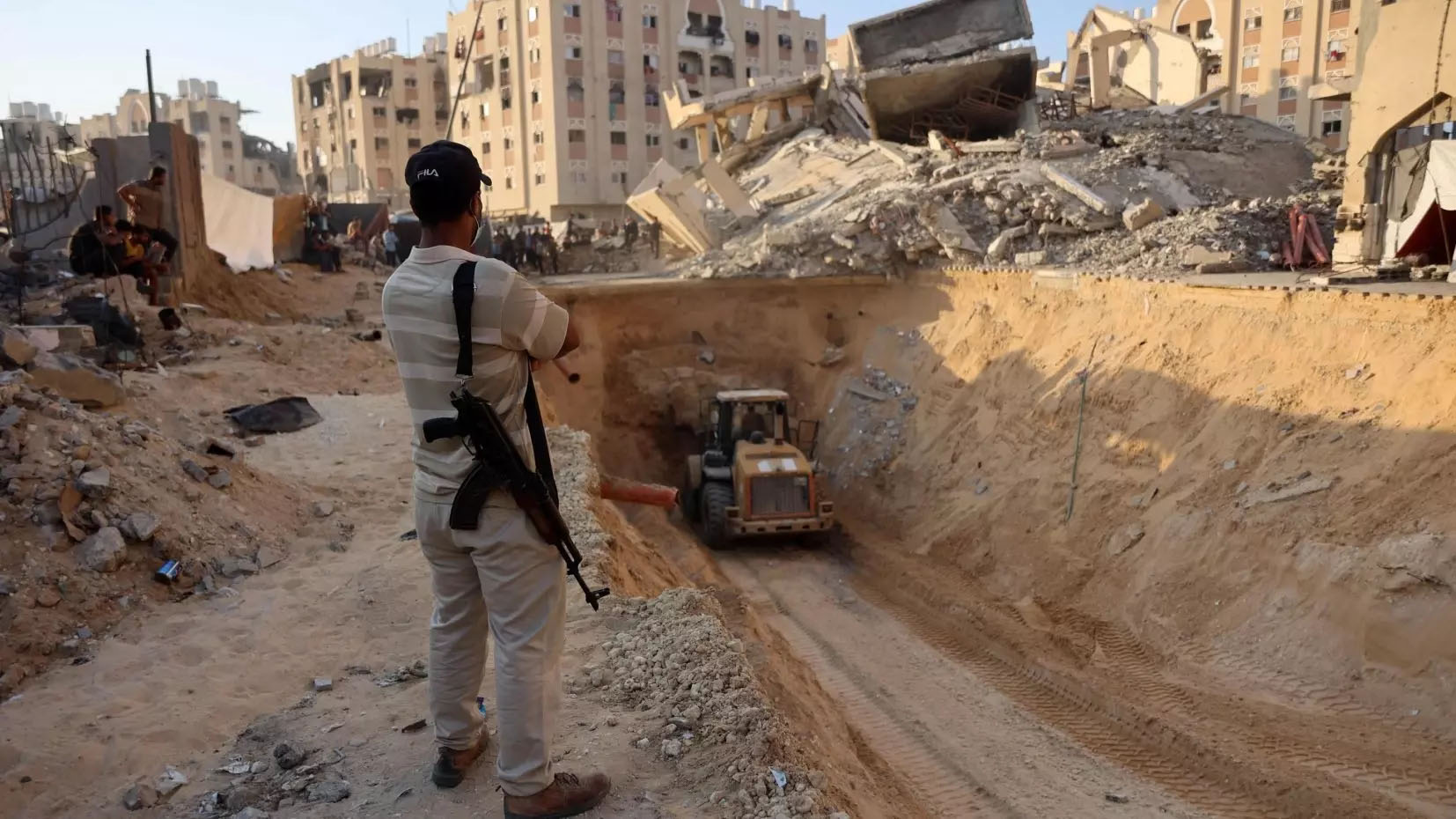
JERUSALEM: Hamas promised to hand over to Israel the remains of one more hostage on Friday night, after insisting it was committed to returning all the dead captives still unaccounted for under Gaza’s ruins.
Turkiye, responding to a Hamas call for help in finding the remaining hostage bodies, has dispatched a team of specialists to help retrieve remains buried under the rubble, but the group was still waiting Friday for Israeli permission to enter the territory.
The 81-member team from Turkiye’s Disaster and Emergency Management Authority (AFAD) is equipped with specialized search-and-rescue tools, including life-detection devices and trained search dogs.
“It remains unclear when Israel will allow the Turkish team to enter Gaza,” a Turkish official told AFP, noting the team’s mission included locating both Palestinian and hostage remains
A Hamas source told AFP the Turkish delegation was expected to enter by Sunday.
Under a ceasefire agreement between Israel and Hamas spearheaded by US President Donald Trump, Hamas returned 20 surviving hostages and the remains of nine of 28 known deceased ones — along with another body which Israel has said was not that of a former hostage.
In exchange, Israel freed nearly 2,000 Palestinian prisoners from its jails and halted the military campaign it launched in Gaza after Hamas’s October 7, 2023 attack.
Hamas said Friday that as part of the deal, its armed wing “will hand over the body of one of the Israeli captives, which was recovered today in the Gaza Strip, at 11:00 p.m. Gaza time (2000 GMT).”
READ ALSO:
- Maryam Sanda and Tinubu’s crisis of clemency, By Farooq Kperogi
- Boko Haram killing more Muslims than Christians – US envoy
- FG drags senator to court over alleged defamatory comments against Natasha
– ‘May require some time’ –
Israel’s Prime Minister Benjamin Netanyahu reaffirmed on Thursday his determination to “secure the return of all hostages,” and his defense minister has warned that the military will restart the war if Hamas fails to do so.
Senior Hamas official Ghazi Hamad on Friday called those threats “unacceptable pressure tactics.”
“The issue of the bodies is complex and requires time, especially after the occupation changed the landscape of Gaza,” Hamad said in a statement.
“We will return the bodies and adhere to the agreement as we promised.”
The ceasefire deal has so far seen the war grind to a halt after two years of agony for the hostages’ families, and constant bombardment and hunger for Gazans.
The UN’s World Food Programme said on Friday it had been able to move close to 3,000 tons of food supplies into Gaza since the ceasefire took hold.
But it cautioned it would take time to reverse the famine in the Strip, saying all crossings needed to be opened to “flood Gaza with food.”
Trump’s 20-point plan for Gaza calls for renewed aid provision, with international organizations eagerly awaiting the reopening of southern Gaza’s strategic Rafah crossing.
UN humanitarian chief Tom Fletcher entered Gaza on Friday, where he watched a convoy of aid head to Rafah from Israel’s Kerem Shalom crossing and later visited a bakery making pita bread.
“We’ve begged for this access for months and finally we’re seeing goods moving at scale: food, medicine, tents, fuel, a lot of fuel got in today,” he said, in a video message posted to social media.
READ ALSO:
- Super Eagles climb to 41st in new FIFA ranking
- Osun Govt ‘withdraws’ suit over withheld LG funds
- Labour Party collapses in Enugu East as chairman, ward executives defect to APC
The next phases of the truce should also include the disarmament of Hamas, the offer of amnesty to Hamas leaders who decommission their weapons and establishing the governance of post-war Gaza.
– ‘Better than living on street’ –
The families of the surviving hostages have been able to rejoice in their return after two long years. Others have had to endure the agony of burying the returned remains of their loved ones.
“We’ve been waiting for this for so long, two years that we’ve been fighting for him every single day,” said 30-year-old Gal Gilboa Dalal, the older brother of Guy Gilboa Dalal, who was released after two years in Hamas captivity.
Gal told AFP that Hamas had intentionally starved his brother and another prisoner for three-and-a-half months to use him as a prop in a propaganda video about hunger.
“Their bones hurt, their muscles hurt. Their recovery will be very long.”
At the Nasser Hospital in Gaza, meanwhile, families gathered in front of a screen, hoping to find their loved ones among the bodies of Palestinians returned by Israel.
One, Akram Khalid Al-Manasra, told AFP he identified his son “thanks to the birthmark on his nose and his teeth.”
Others were clearing the rubble from their destroyed homes, undercutting their relief that the bombing had stopped.
“I’m right under the threat of death. It could collapse at any moment,” said Ahmad Saleh Sbeih, a Gaza City resident. “But there is no choice.”
The war has killed at least 67,967 people in Gaza, according to the health ministry in the Hamas-run territory — figures the United Nations considers credible.
The data does not distinguish between civilians and combatants but indicates that more than half of the dead are women and children.
Hamas’s October 7 attack on Israel resulted in the deaths of 1,221 people, mostly civilians, according to an AFP tally based on official Israeli figures.
Hamas to give Israel another hostage body, vows to return rest
ARAB NEWS







International
Trump launches ‘Super Intelligence Force’ to keep US ahead in AI race
Trump launches ‘Super Intelligence Force’ to keep US ahead in AI race
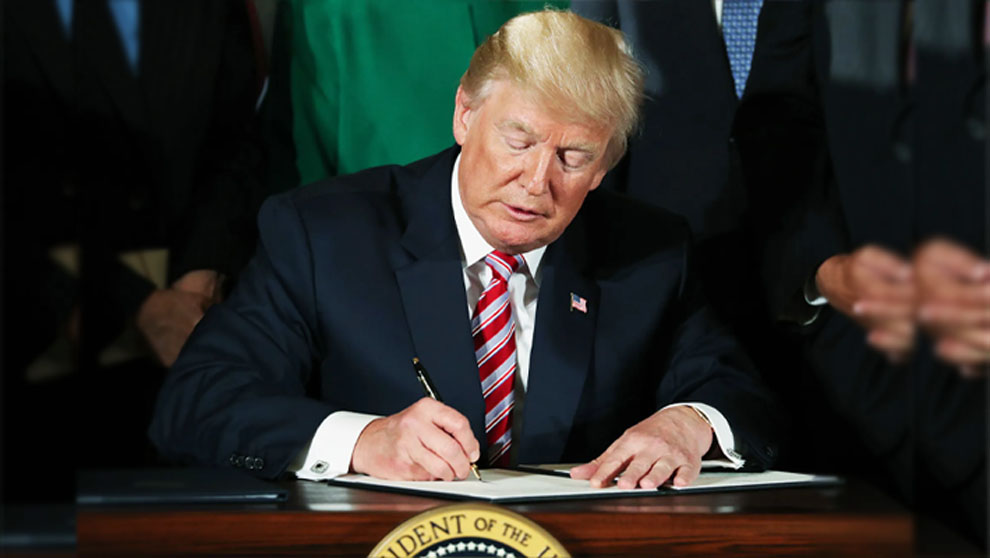
US President Donald Trump has announced the creation of a new Super Intelligence Force (SIF) to coordinate the federal government’s efforts to strengthen the country’s position in the global artificial intelligence (AI) race.
Trump appointed Director of National Intelligence Jay Clayton to lead the new force, making him the administration’s central figure for coordinating its AI strategy and efforts to maintain US technological leadership.
The announcement followed a meeting between Trump and executives from some of the world’s leading technology companies as his administration seeks to accelerate the development of advanced AI while addressing growing concerns about its potential risks.
The Super Intelligence Force will bring together senior government officials and engage AI companies, consumers, public-interest groups, religious organisations and critical-infrastructure providers as the United States develops its approach to increasingly powerful AI systems.
Other senior officials named in connection with the initiative include Federal Trade Commission Chairman Andrew Ferguson, Pentagon Chief Technology Officer Emil Michael and Office of Personnel Management Director Scott Kupor.
READ ALSO:
- Madonna University expels final-year nursing student, suspends 14 over dance video
- JUST IN: WAEC appoints Suleiman Kum as new Nigeria National Office head
- Ojudu Reveals How Tinubu, He Narrowly Escaped Death In Third Mainland Bridge Crash
The force will report to President Trump and White House Chief of Staff Susie Wiles.
One of its immediate tasks will be to assess the risks and opportunities associated with advanced AI, including the role the federal government should play in the sector. The group is expected to submit a comprehensive report to the president within 120 days.
The review is also expected to examine the US government’s ability to respond to potential AI security breaches and other threats linked to rapidly advancing technology, as well as identify areas where federal capabilities may need to be strengthened.
Trump’s latest initiative comes shortly after he signed an executive order directing federal agencies, where legally permissible, to use “Super Intelligence” and “SI” instead of “Artificial Intelligence” and “AI” in official communications, websites, reports and policy documents.
The September 29 executive order also directed the administration to develop a proposed federal definition of Super Intelligence within 60 days and consider changes that could establish the terminology in federal law.
The administration has increasingly presented advanced AI as a strategic issue involving national security, economic competitiveness and technological leadership, particularly as the US competes with China for dominance in the sector.
Trump has repeatedly warned against excessive regulation of AI, arguing that burdensome rules could slow American innovation and give rival countries an advantage.
At the same time, concerns about the technology’s potential impact have intensified, including risks involving cybersecurity, privacy, employment, misinformation, misuse and AI safety.
The White House has therefore sought greater cooperation with the technology industry. Major AI companies recently agreed to voluntary safety measures following discussions with the administration, reflecting Trump’s preference for industry-led safeguards alongside government coordination.
The new Super Intelligence Force is a federal task force and does not represent the creation of a new military branch. It also differs from an earlier proposal by Trump for an “AI Force” modelled on the US Space Force.
With Clayton at its helm, the initiative places AI development, national security and US technological competitiveness at the centre of Trump’s latest technology policy push.
Its 120-day review could provide the administration with a framework for determining how Washington will manage the opportunities and risks created by increasingly advanced AI while seeking to keep the United States ahead in the global technology race.
Trump launches ‘Super Intelligence Force’ to keep US ahead in AI race
International
US Marine arrested in Japan over suspected murder of woman in Okinawa

US Marine arrested in Japan over suspected murder of woman in Okinawa
A 20-year-old US Marine has been arrested in Japan on suspicion of murdering and robbing a 39-year-old Japanese woman at a hotel in Okinawa, in a case that has prompted a strong protest from the Japanese government.
The suspect, identified as Lance Corporal Devin Jacob Ballard, is stationed at Marine Corps Air Station Futenma in Okinawa. Japanese police allege that Ballard killed Anna Yagi, 39, at a hotel in Naha and took some of her belongings.
Police said Yagi entered the hotel with Ballard in the early hours of Saturday. She was later found unresponsive in the room after hotel staff became concerned. She was pronounced dead at the scene.
Japanese investigators believe the woman was killed, with reports indicating that she appeared to have been strangled. The precise cause and circumstances of her death remain under investigation.
Police reportedly reviewed security-camera footage from the hotel, which showed a man believed to be Ballard entering the building with Yagi and later leaving alone with her belongings.
Investigators subsequently located Ballard in Naha and arrested him on suspicion of murder and robbery.
READ ALSO:
- JUST IN: WAEC appoints Suleiman Kum as new Nigeria National Office head
- Ojudu Reveals How Tinubu, He Narrowly Escaped Death In Third Mainland Bridge Crash
- ‘I Thought I Was Dead’ — Hairstylist’s Daring Escape From Kidnappers After Benin-Ore Ambush
Ballard has denied the allegations, according to Japanese authorities, and reportedly told investigators that he did not know anything about the incident.
The case has triggered a diplomatic response because of the longstanding sensitivity surrounding the large US military presence in Okinawa.
Japanese Prime Minister Sanae Takaichi described the alleged incident as extremely serious and said Tokyo had lodged a strong protest with Washington.
She called for full US cooperation with the Japanese investigation and urged measures to prevent similar incidents involving US military personnel from happening again.
Foreign Minister Toshimitsu Motegi also summoned US Ambassador to Japan George Glass and expressed Japan’s strong concern over the case. Japanese officials have demanded that the United States cooperate fully with the investigation.
Japan’s Defence Minister Shinjiro Koizumi and Okinawa Governor Genta Koja also expressed concern over the incident.
The US Marine Corps said it was cooperating with Japanese authorities. The US Embassy in Tokyo also expressed condolences to the victim’s family and said American officials were working with Japanese and local authorities as the investigation continues.
The arrest is likely to renew concerns among residents about the impact of the US military bases in Okinawa, where a large concentration of American military personnel and facilities is located.
Okinawa has for decades been at the centre of debate over the US military presence in Japan, with residents raising concerns about crime, noise, accidents and other incidents involving service members.
The latest case comes against the backdrop of the close security relationship between Japan and the United States, with Okinawa playing a major strategic role in the two countries’ defence arrangements.
Japanese authorities are continuing to investigate the circumstances surrounding Yagi’s death and the alleged robbery.
Ballard remains presumed innocent unless proven guilty in court.
US Marine arrested in Japan over suspected murder of woman in Okinawa
International
Flydubai Co-Pilot Attacked Captain With Axe in Attempted Terrorist Act, UAE Says
Flydubai Co-Pilot Attacked Captain With Axe in Attempted Terrorist Act, UAE Says
The United Arab Emirates has said the co-pilot of a Flydubai passenger aircraft attacked the captain with a cockpit crash axe and attempted to take control of the plane in what investigators have described as an attempted terrorist act.
The incident occurred aboard Flydubai Flight FZ1073, which was travelling from Dubai to Tel Aviv on September 30 when the aircraft was forced to make an emergency diversion to Saudi Arabia.
According to the UAE Attorney General, Hamad Saif Al Shamsi, an investigation into the incident established that the co-pilot attacked the captain inside the flight deck with a crash axe before attempting to seize control of the aircraft.
The Boeing 737 reportedly plunged thousands of feet during the struggle, creating a potentially catastrophic situation for the 172 passengers and crew members on board.
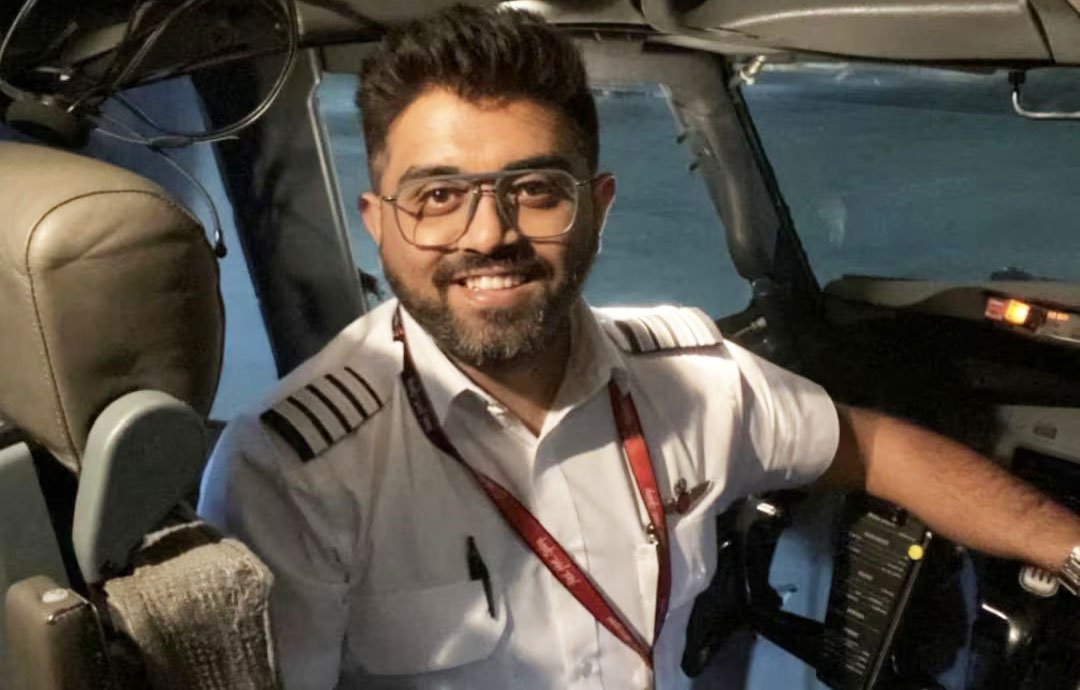
The injured captain, identified as Smit Machchhar, managed to open the cockpit door and call for assistance despite sustaining injuries in the attack. Passengers and crew members then intervened, helping to overpower the co-pilot.
A reserve pilot who was travelling on the aircraft also assisted in stabilising the plane before it was diverted to Tabuk Airport in northwestern Saudi Arabia, where it landed safely.
READ ALSO:
- Nigerian-Born Ex-Professor Jailed 78 Months Over $1.3m US Student Aid Fraud
- Police Arrest Man Caught Sexually Assaulting 12-Year-Old Girl in Car
- Wike to Amaechi: What Did You Bring to Rivers After 24 Years in Power?
The captain was subsequently taken to hospital in the UAE for treatment. His condition has been described as stable and improving.
The UAE Attorney General said investigators were continuing to establish the full circumstances surrounding the incident, including the motive, possible links and whether there were other people involved. Authorities are also examining physical and digital evidence as part of the investigation.
The co-pilot has been identified by international media as Hammam al-Hammami, an Omani national, although UAE authorities have not officially confirmed all details concerning his identity.
Earlier reports had raised questions about his aviation background and alleged previous concerns over extremist views. However, investigators have not publicly established the full circumstances behind those reports or confirmed any wider organisational link.
The incident has also prompted renewed scrutiny of pilot recruitment, aviation security and background checks, particularly after reports emerged about the co-pilot’s previous aviation history.
Flydubai has said a full official investigation is under way and that it is cooperating with the relevant authorities.
The airline’s chief executive, Ghaith Al Ghaith, praised the crew and passengers for their actions during the emergency and thanked Saudi authorities for their response after the aircraft diverted to Tabuk.
The UAE authorities have urged caution over unverified reports while the investigation continues, saying the final findings will be announced after the necessary procedures and examinations are completed.
The incident has been formally described by the UAE as an attempted terrorist act, but investigators are still working to establish the motive and whether the co-pilot acted alone or had any external connections. (The National)
Flydubai Co-Pilot Attacked Captain With Axe in Attempted Terrorist Act, UAE Says
-

 Entertainment3 days ago
Phyna Knocks Out Nkechi Blessing in Fourth Round, Wins ₦50m, New Car
-

 metro2 days ago
NYSC Kidnap: Abductors Demand N950m for 19 Prospective Corps Members in Imo
-
 metro3 days ago
2027 Hajj: Nigeria Secures 10,000 Extra Slots, Allocation Hits 60,000
-

 Entertainment3 days ago
Olu Jacobs Laid to Rest in Lagos as Dignitaries, Nollywood Stars Honour Screen Icon
-

 Politics2 days ago
2027: Oshiomhole Dares Opposition Over ₦500 Petrol Promise, Says APC Will Take Argument to Nigerians
-
 International3 days ago
Trump Threatens Iran With ‘Very Hard’ Response Over Flydubai Attack
-

 metro3 days ago
Nigeria Launches 11-Character Digital Postcode System for Every Addressable Building
-
 metro2 days ago
Amaechi: Tinubu’s Policies Made My Mother’s Drugs Unaffordable