
International
Hamas releases 4-year-old girl under Gaza ceasefire deal after 50 days

Hamas releases 4-year-old girl under Gaza ceasefire deal after 50 days
A four-year-old American girl released by the Islamist group Hamas has touched the hearts of many people.
Before being kidnapped and taken to the Gaza Strip, the little girl witnessed the murder of both her parents.
The Washington Post reported on Monday that on Oct. 7, the then three-year-old was at home with her two siblings, aged 10 and 6, in a kibbutz on the border with the Gaza Strip when Hamas terrorists invaded.
The two older children survived because they hid in a closet, where they held out for 14 hours before being rescued.
A gunman shot the children’s mother, and as her father lay protectively over Abigail, he too was shot dead.
Abigail, who was initially presumed dead, crawled out from under her father’s body and ran to a neighbour’s house, the Washington Post quoted a relative of the girl as saying.
The terrorists seized the girl, together with the family of five who were there and took them to the Gaza Strip with many other civilians.
Last Friday, the little girl turned four years old in captivity.
READ ALSO:
- United Nigeria Airline confirms Abuja bound flight mistakenly diverted to Asaba
- Hamas/Israel war: US will work to extend pause in fighting – Biden
- Arrested barber on cultism allegations dies in police custody with torture marks
“What she endured is unthinkable,” U.S. President Joe Biden said, after the girl was released on Sunday – the first U.S. citizen among the hostages freed in the agreement between Israel and Hamas.
Abigail “has been through terrible trauma,” said Biden.
“What a joy it is to see her with us, but on the other hand it is also sad that she is returning to a reality in which she has no parents,” said Israeli Prime Minister Benjamin Netanyahu in a video posted on social media platform X, formerly Twitter.
“She has no parents, but she has an entire nation that hugs her, and we will take care of all her needs,” Netanyahu said.
Abigail’s great-aunt, Liz Hirsh Naftali, said in a statement on Sunday after the girl had been released that they had “no words to express our relief and gratitude,” according to the Washington Post.
The little girl will be reunited with her siblings and live with her aunt, uncle and grandparents in Israel, a relative was further quoted as saying.
Since Friday, 58 of the approximately 240 hostages have been released from Hamas control.
Another 10 hostages are expected to be released this Monday.
Hamas releases 4-year-old girl under Gaza ceasefire deal after 50 days
(dpa/NAN)







International
Iran’s Revolutionary Guard Fires at ‘Israeli-Owned’ Vessel, Strikes Thai Cargo Ship

Iran’s Revolutionary Guard Fires at ‘Israeli-Owned’ Vessel, Strikes Thai Cargo Ship
Iran’s Islamic Revolutionary Guard Corps (IRGC) has confirmed that it fired on two commercial vessels transiting the Strait of Hormuz, escalating tensions in one of the world’s most strategically important shipping routes.
In a statement, Iranian authorities said the vessels ignored repeated warnings from Iranian naval forces and failed to obtain the required permission before entering waters Tehran considers under its jurisdiction.
Iran identified one of the ships as the Liberia-flagged container vessel Express Rome, which the IRGC described as an “Israeli-owned vessel.” The second vessel was the Thailand-flagged bulk carrier Mayuree Naree.
According to Iranian officials, both ships allegedly disregarded several radio warnings and attempted to proceed through the strait despite instructions from Iranian maritime authorities.
The Mayuree Naree was reportedly struck by at least two projectiles while sailing approximately 11 nautical miles north of Oman, causing heavy damage to the ship’s engine room and stern and igniting a large fire onboard.
Maritime safety agencies said the fire forced emergency evacuation procedures as rescue teams and nearby vessels responded to distress calls from the ship’s crew. Regional maritime authorities later assisted in rescue efforts and damage control operations.
READ ALSO:
- Oil prices rise again after Dangote reduces petrol by N100/litre
- Four Reps Members Defect from PDP, LP to APC
- DR Congo FA president gets life jail over corruption scandal
Most crew members aboard the Thai vessel were reported rescued, although initial reports indicated that some seafarers were temporarily unaccounted for before search operations were launched.
The second vessel, Express Rome, was reportedly targeted after Iranian forces claimed it had links to Israel and had also failed to comply with instructions to halt or change course while passing through the area.
Iranian naval authorities said the action was justified because the vessels “disregarded warnings” and attempted to navigate the Strait of Hormuz without complying with Iranian directives.
Tehran has repeatedly maintained that ships passing close to its territorial waters must follow navigation protocols and respond to communications from Iranian naval units operating in the region.
The Strait of Hormuz is a narrow but crucial maritime corridor connecting the Persian Gulf to the Gulf of Oman and the Arabian Sea. Around 20 percent of global oil and liquefied natural gas exports transit through the route each day, making it one of the most vital chokepoints in the global energy supply chain.
The latest incident comes amid rising tensions involving Iran, Israel and the United States, with military forces and intelligence agencies from multiple countries closely monitoring maritime activity across the Gulf.
In recent days, maritime security agencies have also reported that several other commercial ships were struck by projectiles or damaged while navigating the Strait of Hormuz, forcing emergency evacuations and raising concerns about the safety of international shipping.
Some vessels reportedly suffered fires and structural damage, prompting rescue missions by regional naval forces and international maritime safety organisations.
Shipping companies and global maritime authorities are now closely monitoring the situation, with some operators considering alternative routes or delaying voyages due to growing security concerns.
Energy analysts warn that any sustained disruption in the Strait of Hormuz shipping route could have serious implications for global oil prices, energy markets and international trade, given the massive volume of oil and gas shipments that pass through the waterway daily.
The incident highlights the growing geopolitical tensions in the Middle East, with Iran asserting control over strategic waterways while regional and global powers weigh their responses in an effort to prevent a wider conflict that could threaten global shipping and energy supplies.
Iran’s Revolutionary Guard Fires at ‘Israeli-Owned’ Vessel, Strikes Thai Cargo Ship
International
Saudi Arabia Intercepts Multiple Ballistic Missiles, Drones in Major Defence Operation
Saudi Arabia Intercepts Multiple Ballistic Missiles, Drones in Major Defence Operation
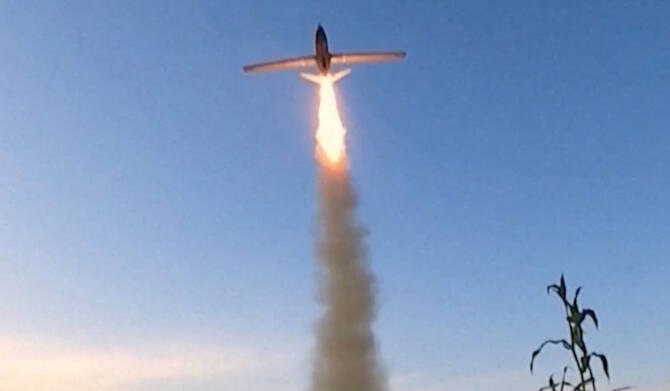
Saudi Arabia’s air defence forces have shot down a wave of ballistic missiles and drones fired toward the kingdom as the Middle East conflict escalates, officials said on Wednesday, highlighting rising regional instability and ongoing threats to critical infrastructure. (Arab News)
According to the Saudi Ministry of Defense, at least seven ballistic missiles were intercepted and destroyed, including six aimed at Prince Sultan Air Base — a major military installation in Al‑Kharj — and one that was heading toward the Eastern Province. Additionally, Saudi air defences knocked down more than 20 attack drones targeting key locations including the Shaybah oil field in the Empty Quarter, Al‑Kharj, Hafar Al‑Batin, and other parts of the Eastern Province. (Arab News)
READ ALSO:
- Nigerian Midfielder Daniel Daga Jailed in Norway for Sexual Assault
- Quack Doctor Sentenced to Death for Murder in Ekiti
- Galatasaray Beat Liverpool 1–0 in Champions League Last‑16 First Leg
Prince Sultan Air Base, used by both Saudi and allied forces, has been a repeated target in recent days as Iran and allied factions intensify cross‑border attacks in retaliation against US‑Israeli military operations in Iran that began in late February. These strikes are part of a broader barrage of missile and drone attacks across the Gulf region, complicating security and defence efforts for Gulf Cooperation Council (GCC) states. (Al Jazeera)
The Saudi government has vowed to protect its sovereignty and security, with the cabinet condemning the attacks on the kingdom and neighbouring states. In a recent session chaired by Crown Prince Mohammed bin Salman, officials reaffirmed Saudi Arabia’s right to take “all necessary measures” to safeguard its territory and citizens from external threats. (Arab News PK)
The ongoing barrage has also threatened energy infrastructure and global oil markets. Brent crude prices surged earlier in the week — hitting historic highs before stabilising — as oil supplies from the Gulf region face disruption due to hostilities and shipping risks through the Strait of Hormuz, through which a significant portion of the world’s oil and LNG normally flows. (The Guardian)
Amin Nasser, CEO of Saudi Aramco, warned that continued disruptions could have “catastrophic consequences for the world’s oil markets,” stressing that prolonged instability would worsen the impact on global energy supply chains. (Arab News PK)
The conflict, which shows no immediate sign of abating despite statements from US President Donald Trump suggesting it could be drawing to a close, is expected to persist for months. Tehran’s Islamic Revolutionary Guard Corps has made clear that any end to hostilities will be decided on its terms. (Arab News PK)
Saudi Arabia Intercepts Multiple Ballistic Missiles, Drones in Major Defence Operation
International
Iran Continues Crude Oil Exports to China Despite Middle East Conflict

Iran Continues Crude Oil Exports to China Despite Middle East Conflict
Iran has maintained a steady flow of crude oil exports to China despite escalating Middle East tensions and threats to disrupt the Strait of Hormuz, a key global energy corridor. Since the outbreak of the conflict on February 28, 2026, Iranian vessels have transported at least 11.7 million barrels of crude oil to China, according to satellite-based tanker tracking data cited by CNBC and independent monitoring firms.
The Strait of Hormuz normally carries about 20 percent of global seaborne oil and LNG supplies, but the ongoing conflict involving US and Israeli military strikes has caused many international tankers to avoid the route due to the threat of attacks and naval mines. Despite this, Iranian tankers, including some that “went dark” by switching off tracking systems, have continued transporting crude to Chinese ports, highlighting Beijing’s reliance on Iranian oil.
READ ALSO:
- Nigerian Midfielder Daniel Daga Jailed in Norway for Sexual Assault
- Quack Doctor Sentenced to Death for Murder in Ekiti
- Galatasaray Beat Liverpool 1–0 in Champions League Last‑16 First Leg
Maritime intelligence firms, such as TankerTrackers and Kpler, reported that multiple tankers have transited the strait in recent weeks. One supertanker flagged in Guyana carrying around 2 million barrels of crude recently passed through the strait en route to China, contributing to the total exports that now exceed 11 million barrels since the conflict began.
China remains Iran’s largest oil buyer, with long-standing contracts and strategic energy ties that have continued despite sanctions and heightened geopolitical risks. While Iranian crude continues flowing to China, other regional exporters, including Saudi Arabia, Kuwait, and Iraq, have scaled back shipments due to conflict-related risks.
The sustained flow of Iranian oil through the Strait of Hormuz occurs even as global energy markets face rising freight costs, higher insurance premiums, and supply volatility. Analysts warn that continued disruptions could exacerbate fuel price spikes and threaten energy security for importing nations.
The ongoing exports underscore Iran’s determination to preserve vital revenue streams while China secures diverse crude sources amid global uncertainty, reflecting the resilience of their bilateral energy relationship even during a regional crisis.
Iran Continues Crude Oil Exports to China Despite Middle East Conflict

-

 metro3 days ago
Viral Video Shows Man Disarming Robbers After Minna Bank Heist, ₦10m Stolen
-

 metro3 days ago
Tragedy in Ibadan as Woman, 26, Dies at Boyfriend’s Residence
-

 Business2 days ago
JUST IN: Dangote Refinery Cuts Petrol, Diesel Ex-Depot Prices Amid Market Relief
-

 metro9 hours ago
Ikeja Electric Apologises to Customers Over Power Disruptions
-

 metro3 days ago
Students Escape as Four-Storey School Building Collapses in Lagos
-

 News22 hours ago
India, Other Countries Reject Tinubu’s Ambassadorial Nominees
-

 Politics2 days ago
BREAKING: Zamfara Governor Dauda Lawal Defects from PDP to APC
-

 News2 days ago
OYOSUBEB Chairman Adeniran Joins 2027 Oyo Governorship Race