

metro
Hours To Deadline: Seats Racketeering, Bribery Mar Hajj Operations

With a few hours to the deadline of landing permits granted to the Nigerian government by the Kingdom of Saudi Arabia, about 5,000 pilgrims may be left behind as activities of this year’s Hajj continue to face hitches.
Pilgrims and some officials from state pilgrim boards have accused the National Hajj Commission of Nigeria (NAHCON) of cutting corners on processing visas and incompetence, which has led to a lot of visa cancellations and the inability of assigned carriers to efficiently airlift pilgrims.
Officials of state Muslim pilgrims’ boards also alleged the sale of visa slots by some staff of NAHCON.
They expressed their displeasure over NAHCON’s action in replacing their visa slots with others, especially from tour operators.
As of Tuesday afternoon, NAHCON announced that 29,128 pilgrims and 920 officials had been safely airlifted to Saudi Arabia while 8,620 visas from private tour operators had been processed.
This leaves a deficit of about 5,000 pilgrims including state officials whose hopes of making it for this year’s hajj were shattered.
Many state pilgrims boards across the country have expressed dissatisfaction with the handling of this year’s hajj operation, blaming NAHCON for many of the challenges.
Daily Trust reports that 1, 120 intending pilgrims out of 2, 265 from Niger State have yet to be airlifted as of yesterday evening.
READ ALSO:
- Gunmen Kill Guard, Set Filling Station Ablaze in Ondo
- CAN Disowns Pastors Arrested Over Ondo Church Kidnapping
- Just in: BBNaija Season 7 begins July 23, winner to get N100m
In Bauchi State, 150 pilgrims have been asked to go home because their visas could not be processed while in Kaduna State, about 100 people including officials are expected to stay behind because NAHCON could not process their visas, despite making payments.
An intending pilgrim from Bauchi alleged that agents increased the price of visas to N700, 000 and some were asked to pay N1 million for visas in the last one week.
However, the Executive Secretary of the Bauchi State Muslims Pilgrims Welfare Board, Imam Abdurrahman Ibrahim Idris, explained that he was not aware of any visa slot for Bauchi pilgrims being replaced by NAHCON.
Kaduna, which has the highest allocation by NAHCON, was given 2,491 slots before the commission increased it to 2,600.
So far, about 2,392 pilgrims have been airlifted by Azman after its sixth flight left the Kaduna International Airport in the early hours of Tuesday with 406 pilgrims including the state’s Deputy Governor, Dr Hadiza Sabuwa Balarabe.
Daily Trust reports that so far, 116 pilgrims from the state were expected to be airlifted by yesterday while 92 will stay back for lack of visa.
In Plateau, out of the 826 seats allocated to the state, only 552 intending pilgrims have been airlifted by Max Air with the fate of 218 uncertain. Daily Trust, however, gathered that about 60 intending pilgrims from the state will be left behind as their visas have not been provided.
The Executive Secretary of the Plateau State Pilgrims Welfare Board, Auwal Abdullahi, said he could not explain why the visas were not ready but that 60 of the state’s remaining 278 intending pilgrims who had already been taken to Bauchi State where they were expected to be airlifted would not make it due to non-availability of visas.
Daily Trust reports that most of the affected persons in the state were government sponsored, including government officials.
Slots sold to highest bidder – Sources
Despite pegging the 2022 Hajj fare at N2.85m, some pilgrims paid as much as N3.5m to secure a slot for the holy exercise, findings by Daily Trust have revealed.
Our correspondent learnt that some of the pilgrims who made deposits as far back as 2019 could not make it to the holy land due to the short time given to them to top their deposits.
It would be recalled that some pilgrims in Lagos had in April protested over the short notice the state pilgrims’ welfare board gave them to complete their payment after an over 100 per cent hike in the 2022 Hajj fare.
It was however learnt that majority of those who made deposits from 2019 could not perform the exercise as their names were allegedly replaced on the excuse that they could not meet up with the deadline to complete the payment.
One of the affected pilgrims from Kwara State who spoke with our correspondent on the condition of anonymity said she was cleared to pay N800, 000 to balance her deposit on a Friday and could not pay up that day because the bank had already closed.
“When I got to the bank on Monday, I was told the payment deadline has elapsed. I learnt my name was replaced,” she said.
READ ALSO:
- One million Nigerians will be engaged for 2023 census – NPC
- PDP crises worsens, Wike camp gives Ayu-must-go condition to support Atiku
- ’Special Adviser to EFCC Chairman’ jailed over employment scam
It was gathered that some pilgrims in the state paid as much as N3.5m to buy a seat meant for N2, 850, 000.
“Those who did not make it are more than those who made it to Hajj this year. They replaced those who have made deposits since 2019 and 2020 with new set of people saying they are unable to meet up with the deadline for payment,” the source said.
It would be recalled that a civil society organisation, the Independent Hajj Reporters (IHR) had called the attention of the NAHCON to the seat racketeering which dominated the 2022 exercise.
IHR said it had received numerous complaints all over the country from intending pilgrims alleging that some officials across the states’ boards colluded with others outside the Hajj industry to sell Hajj seats to “Desperate intending pilgrims who are ready to purchase such seats at any price.”
“Our social media message box is filled with complaints from 2022 Hajj intending pilgrims who alleged that some officials demanded and received between N250,000 to N500,000 before agreeing to process their traveling documents despite depositing the required N2.5 million since 2019 and meeting NAHCON’S criteria of “First come, first served, age and payment before deadline.”
IHR, in a statement signed by its National Coordinator, Ibrahim Mohammed, also drew the attention of the Central Bank of Nigeria, ACAs and NAHCON to the controversy surrounding the issue of Basic Travelling Allowances (BTA) to some state pilgrims.
Another top official of a pilgrims board in a South West state gave our correspondent another instance of some pilgrims who paid as much as N2.8m as Hajj fare without getting BTA.
“As I am talking to you, the issue is still there. It has not been resolved. These pilgrims are altogether eight. They paid N2, 850,000 but at the end of the day, they are unable to travel and they are yet to get a refund,” the source said.
NAHCON deleted our 66 visa applications – Kano ES
In a related development, the Executive Secretary of Kano State Pilgrims Welfare Board, Mohammad Abba Danbatta, alleged that there was a grand plan to deny several intending pilgrims visas.
Speaking on the hopes of the over 1,300 intending pilgrims yet to be airlifted from Kano yesterday, Danbatta said they were visa problems despite meeting all the requirements.
“They (NAHCON) deleted 66 of our visa applications after processing it with the only thing remaining, being for the visa to be printed,” he said.
He said when the complaints on this and mostly on the slow airlifting of Kano pilgrims became too much, he relocated five ICT personnel of the board to Abuja but he was only able to see the chairman of NAHCON over the issue a few days ago and the chairman instructed one of his commissioners to go and attend to the matter.
“They have already given directives to their ICT not to print any visa for us,” he said, adding that as of Tuesday afternoon, there were at least 88 persons from Kano that were denied visas.
He also alleged that he was given 87 names from NAHCON to be accommodated in the slots given to Kano, thereby further reducing the chances of intending pilgrims that paid through the Hajj savings scheme.
He said as of Tuesday afternoon, there were still about 1,300 intending pilgrims that had not been airlifted. He, however, said with the coming in of two Flynas aircraft on a rescue operation to Kano, they were hopeful that at least all of them would depart for the pilgrimage.
Efforts to speak to NAHCON’s Assistant Director, Public Affairs Division, Mrs Fatima Usara did not yield results.
She did not return several calls seeking her response to the allegations against the commission.
Airlines also fingered
Daily Trust also gathered from intending pilgrims that many of their colleagues who did not go through the government but through independent operators got their visas by “lobbying” through the airlines.
But reacting, the General Manager of Azman Air, Suleiman Lawan, said the allegation that the airline played any role in denying or “hijacking” Kano pilgrim’s visas was not true.
“This is the first time we are hearing this (allegation). Azman has nothing to do with visa issuance. We are just carriers and visa is being prepared by NAHCON. Even with our own visas, we applied through NAHCON. They even rejected my own visa, maybe because of my age,” he said.










metro
Ex-APC Women Leader Found Dead With Throat Slit in Bauchi

Ex-APC Women Leader Found Dead With Throat Slit in Bauchi
A former APC Women Leader in Bauchi South, Jemimah Dutse, has been found dead inside her residence in Bauchi State, with her throat allegedly slit by unidentified assailants.
Dutse was discovered in a pool of blood at her residence in Muazu New Layout, Yelwa, Bauchi, on Saturday, October 3, 2026.
The Bauchi State Police Command said the incident was reported at about 2:07pm by a 49-year-old man, following which detectives visited the residence and documented the scene.
Her body was subsequently evacuated to Abubakar Tafawa Balewa University Teaching Hospital (ATBUTH), Bauchi, for medical examination and autopsy.
The Commissioner of Police, Sani-Omolori Aliyu, directed that the case be transferred to the Homicide Section of the State Criminal Investigation Department (SCID) for a discreet and thorough investigation.
READ ALSO:
- Supreme Court Ruling: INEC Moves to Clarify Fate of 2027 Candidates
- Omokri Defends Tinubu Over Pension Record, Faults Linking President to 89-Year-Old’s Death
- Tantita Operations Push Oil Export Earnings to $9.39bn in Q2
The police said the investigation is focused on establishing the circumstances surrounding Dutse’s death and identifying the person or persons responsible.
The motive for the killing remains unknown, and authorities have not established any link between the death and Dutse’s previous political activities.
The command has appealed for calm and expressed condolences to Dutse’s family, friends and political associates, while assuring them that efforts are underway to unravel the circumstances surrounding her death.
The incident has also generated concern among residents and groups in Bauchi, with calls for a comprehensive investigation and improved security in the area.
The Take-It-Back Movement, Bauchi chapter, condemned the killing and called on security agencies to intensify efforts to identify and arrest those responsible.
The group also urged the authorities to conduct a high-powered investigation into the incident and strengthen security measures across Bauchi metropolis and surrounding communities.
Police said further developments would be communicated as the investigation progresses.
Ex-APC Women Leader Found Dead With Throat Slit in Bauchi
metro
Kidnappers torture abducted corps members, slash ransom to N100m
Kidnappers torture abducted corps members, slash ransom to N100m
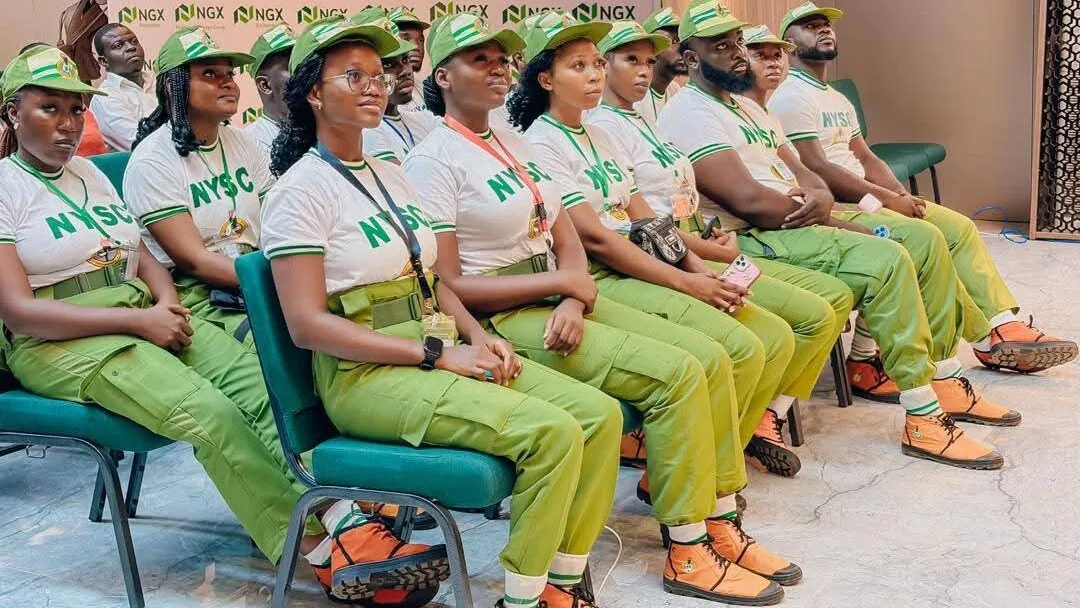
Relatives of 20 abducted corps members have raised fresh concerns over the safety of the victims, alleging that kidnappers have subjected them to physical torture while reducing their ransom demand to N100 million.
The prospective National Youth Service Corps (NYSC) members were reportedly travelling from Ibadan, Oyo State, to orientation camps in Abia and Akwa Ibom states when gunmen attacked two buses along the Owerri–Onitsha Road in Umunoha, Mbaitoli Local Government Area of Imo State, on October 1.
The abductors initially reportedly demanded N50 million from each victim, putting the total ransom at N1 billion.
However, relatives said the kidnappers have now reduced the demand to N5 million per victim, bringing the total to N100 million.
The families also alleged that the abducted corps members were being beaten in captivity, including female victims, raising fears over their physical condition as the rescue operation continues.
A relative of one of the victims, Alimot Akande, said the situation had become increasingly frightening, appealing to the authorities to intensify efforts to secure the victims’ safe release.
According to the relatives, the abductors have maintained contact with some families through the phones of the captives and have used the communication to demand ransom.
READ ALSO:
- Family seeks N10m to free kidnapped newlywed, other victims
- Trump launches ‘Super Intelligence Force’ to keep US ahead in AI race
- NDLEA intercepts N5bn worth of drugs at ports, arrests Milan-bound businessman
The families had earlier appealed to the Olubadan of Ibadanland, Oba Rashidi Ladoja, for intervention after the kidnappers reportedly demanded the initial N1 billion ransom.
Meanwhile, security agencies have intensified efforts to locate the kidnappers’ hideout and rescue the victims.
The Imo State Police Command said its operatives had traced the suspected kidnappers to a location in the bush. However, the operation has reportedly been complicated by intelligence that the area may have been planted with improvised explosive devices (IEDs).
The police said drone surveillance was used to identify the suspected location of the captives, with plans underway to deploy additional operational equipment to safely access the area.
The Inspector-General of Police, Olatunji Disu, has also deployed the Deputy Inspector-General of Police in charge of Operations, Shehu Umar Nadada, to Imo State to coordinate the rescue operation.
Nadada subsequently reviewed the security deployment and directed additional tactical resources towards efforts to rescue the abducted corps members.
Police authorities have assured the families that efforts are ongoing to locate the victims and bring them home safely.
There have also been varying reports over the exact number of people abducted and those already rescued. The police initially reported that some victims had been rescued after the attack, while relatives continued to maintain that 20 prospective corps members remained affected by the abduction.
The two buses involved in the incident have reportedly been recovered as security agencies continue operations around the area.
The Oyo State Government has also joined efforts to secure the release of the victims, maintaining contact with the Imo State Government and security agencies.
The incident has renewed concerns about the safety of prospective corps members travelling to NYSC orientation camps, particularly along major highways where kidnapping remains a persistent security challenge.
For the affected families, the immediate priority remains the safe return of their loved ones as security agencies work to overcome the reported explosives threat and reach the suspected kidnappers’ hideout.
Kidnappers torture abducted corps members, slash ransom to N100m
metro
Family seeks N10m to free kidnapped newlywed, other victims
Family seeks N10m to free kidnapped newlywed, other victims
The family of a newlywed woman kidnapped in Kwara State has appealed to Nigerians for financial assistance to raise ₦10 million being sought for the release of her and other victims still held by their abductors.
The victims were among six passengers reportedly abducted along the Eruku-Iyemero Road, a route linking communities in Kwara and Kogi states.
The incident involved newlyweds Funmilayo Bamidele and Rev. Abiodun David, who were travelling with other passengers when suspected kidnappers intercepted their vehicle.
Following the abduction, the victims’ vehicle was reportedly found abandoned around Ayetoro in Ekiti State, prompting security agencies and authorities from Kwara, Kogi and Ekiti to intensify efforts to locate the victims and rescue them.
READ ALSO:
- JUST IN: WAEC appoints Suleiman Kum as new Nigeria National Office head
- Ojudu Reveals How Tinubu, He Narrowly Escaped Death In Third Mainland Bridge Crash
- Trump launches ‘Super Intelligence Force’ to keep US ahead in AI race
The family of Precious Alonge, one of those abducted, has now appealed for public support, saying they need to raise ₦10 million to secure the release of the captives.
The appeal comes amid growing concern over the safety of travellers using the route, which has witnessed security challenges and kidnapping incidents.
One of the six abducted passengers has reportedly been rescued, while efforts are continuing to secure the release of those still in captivity.
The families of the victims have continued to appeal for assistance as security agencies work to locate the kidnappers and secure the safe return of the remaining captives.
The incident has renewed concerns about kidnapping along inter-state roads in Nigeria, particularly routes connecting communities across Kwara, Kogi and Ekiti states.
Security authorities have yet to provide a full account of the circumstances surrounding the abduction or disclose details of any arrests made in connection with the incident.
The families are urging members of the public, community leaders and other well-meaning Nigerians to support their efforts to secure the safe release of the remaining victims.
Family seeks N10m to free kidnapped newlywed, other victims
-

 metro2 days ago
NYSC Kidnap: Abductors Demand N950m for 19 Prospective Corps Members in Imo
-

 Politics2 days ago
2027: Oshiomhole Dares Opposition Over ₦500 Petrol Promise, Says APC Will Take Argument to Nigerians
-

 Entertainment3 days ago
Olu Jacobs Laid to Rest in Lagos as Dignitaries, Nollywood Stars Honour Screen Icon
-

 metro3 days ago
Nigeria Launches 11-Character Digital Postcode System for Every Addressable Building
-

 Entertainment2 days ago
Less Than Four Months After Wedding, Jarvis Threatens Peller With Lawsuit Over Second-Wife Plan
-

 metro2 days ago
N500 Petrol, Wage Award: Public Sector Workers Begin Warning Strike
-

 metro2 days ago
Amaechi: Tinubu’s Policies Made My Mother’s Drugs Unaffordable
-
 metro1 day ago
‘I Thought I Was Dead’ — Hairstylist’s Daring Escape From Kidnappers After Benin-Ore Ambush