
Opinion
How opposition Tinubu would treat President Tinubu, By Farooq Kperogi





Opinion
Adelabu’s Power Lines as Laundry Lines
Adelabu’s Power Lines as Laundry Lines
Azu Ishiekwene
In many parts of the country, the rains poured down earlier in the week, bringing much physical and psychological relief from the searing heat.
The absence of electricity from public supply channels made it worse. Average daytime temperatures throughout March ranged from 33 degrees to 38 degrees centigrade in Lagos and Abuja, respectively.
Nigeria’s public electricity grid must rank among the most intractable problems any developing country could face. There is hardly anything more constant than the announcement of grid collapse, which leaves businesses and homes seeking alternatives and incurring unplanned expenses while paying for electricity not supplied.
What Candidate Tinubu promised
During his 2023 campaign, President Bola Ahmed Tinubu said that if he didn’t fix the problem, he shouldn’t be voted in for a second term. He must be regretting that statement now. Since the beginning of his administration in May 2023, there have been multiple grid collapses, with the highest number recorded in 2024 at 12. Even when incidents were fewer, sporadic outages have continued. The failure, on face value, is attributed to a mix of technical, structural and administrative weaknesses in the system. But there is more to it in the sense in which it is said: “The more you see, the less you understand.”
So unreliable is the public electricity supply that the Presidential villa appropriated N10 billion in 2025, and an additional N7 billion in 2026 for the installation of a solar mini grid that will effectively disconnect Nigeria’s seat of power from the national grid, bedevilled by ageing transmission lines which collapse repeatedly from sabotage, poor maintenance, and frequency imbalances.
The joke is on us
Nigerians, ever ready to make a jest of their tragic maladies and long suffering, are beaten when it comes to power outages. They are shocked beyond humour. If the high-tension cables were not too high overhead, people in communities through which they run would not hesitate to hang their laundry on them – knowing from experience that the lines are just part of the landscape and are very likely to be without electricity.
READ ALSO:
- Ondo PDP Rejects Wike Faction, Affirms Loyalty to Turaki‑Led NWC
- Bandits Abduct Seven Family Members, Three Neighbors in Kaduna
- Festus Keyamo Urges ADC to Thank INEC Over Derecognition of Rival Factions
I have seen a video of a masquerade performing on a streetlight pole. Of course, the crowd applauded its invincibility; yet, both the crowd and the masquerade knew better. The lines had not been electrified for months and were unlikely to be for the spell of the circus.
Hope was rekindled at the beginning of the Tinubu administration when news filtered through that the currently embattled former governor of Kaduna State, Nasir El-Rufai, had not only produced a blueprint, but was going to be given the assignment of sorting out Nigeria’s notorious electricity sector. I learnt reliably that, as part of his plan, El-Rufai was discussing a $10 billion investment agreement with the Saudis before he ran into rough weather.
The coming of Adebayo
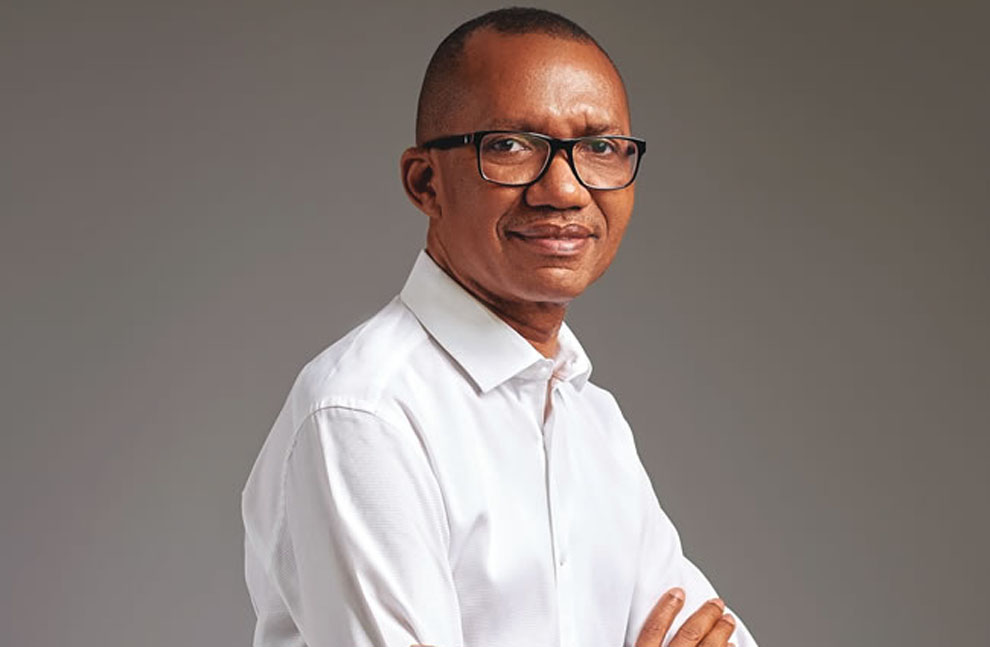
That was how Adebayo Adelabu took the job – a job at which he has performed so disastrously, saying he failed would be an honour. But it’s not his fault – it’s the fault of the President who appointed him and the Senate that cleared him for a job that he was clearly incompetent to perform, either based on his record or based on any hope of redemption. He is brilliant, but the power sector is littered with the remains of brilliant people, among whom he is now a fossil.
His better years were when he worked as an auditor at PWC. He was also the Executive Director/CFO at First Bank, and later a deputy governor at the Central Bank. He may not have been directly responsible for the misfortunes of these institutions at the time, but he doesn’t exactly smell of roses.
In the normal course of things, his banking career should have been a yellow flag. Still, Nigeria being Nigeria, the quota system and political connections ensured that he defied gravity.
Then, in 2023, Tinubu offered him the position of Minister of Power, after his failed attempt to become governor of Oyo State on the platform of the Accord Party. That only worsened our misery. Adelabu will be best remembered for splitting electricity consumers into parallel payment bands that do not necessarily reflect improved services.
The thing is not that Adelabu failed at his job. It’s the lack of evidence that he tried. Mr Dan Kunle, an energy expert familiar with the history of that sector, told me that, “No one is saying a power minister should provide the resources to fix the sector from thin air. It’s for him to provide a solid framework that would create the right environment and attract sovereign intervention.”
Adelabu, like many of his predecessors, is running the power ministry in 2026 with the 1950 operational manual of the Electricity Corporation of Nigeria (ECN). Yet, even then, when the country had a population of about 50 million, the British knew that electricity was an economic good. To provide meaningful and sustainable service, they had to prioritise not just the key administrative centres but also areas that could pay. That was why, for example, coal was shipped from Enugu to the Ijora Power Station in Lagos.
No roadmap
Adelabu has no roadmap, or if he has one for a population four times what it was under ECN, it’s a roadmap to nowhere. The same old problems persist: gas shortages, moribund plants, infrastructure deficits, massive debts, and frequent grid collapses, limiting supply to about 4,000 MW despite a capacity of 13,000 MW.
READ ALSO:
- INEC Warns ADC Against Holding Convention Without Supervision
- APC Rejects ADC Claims, Says Tinubu Not Responsible for Party’s Legal Troubles
- Fani‑Kayode Fires Back at Peter Obi, Defends NADECO’s Legacy
While Adelabu may wring his hands alongside Nigerians when the lights trip off, the sector has been drowning under the yoke of N6 trillion in debt as of late 2025, fuelled by non-cost-reflective tariffs and unpaid bills to both generating and distribution companies. Some of the problems predate Adelabu, but his incompetence has worsened them.
Yet, he still has ambition. Not to redeem himself after his disastrous three years as minister, but to become the governor of Oyo State. Obviously, he believes the reward for poor performance is a higher office. He is so shameless, it means nothing to him that he holds the Olympic record for national grid collapse. It means nothing to him that Nigerian businesses are powered by Indian generators and their homes by Chinese solar panels.
Examples from Africa
Egypt, with a population of 110 million, has 100 percent universal electricity access, supported by a heavy reliance on gas (81 percent) and growing low-carbon sources like hydropower. This ensures a stable supply amid population pressures.
South Africa serves 85-90 percent of its 62 million residents but faces severe shortages. Frequent load shedding persists due to Eskom’s debt, ageing infrastructure, and maintenance issues, despite high per-capita generation.
Ghana reaches 88-89 percent coverage for 34 million people, with hydro and thermal power dominating. Urban areas enjoy near-99 percent access, while rural areas still have gaps and occasional outages.
Kenya hits 76 percent for 56 million, excelling in urban (97 percent) and geothermal power. Rural expansion lags, though targets aim for full access by 2030.
Compared to the countries above, only 57 percent of Nigerians are grid-connected, with outages occurring 85 percent of the time, and poor metering and corruption that sustain estimated billing and inefficiencies.
After watching Adelabu perform so poorly over the last two years on the national stage, I was hoping he would go away quietly, under the shadow of the darkness he has fostered. But since he insists that he won’t leave quietly – or appears determined to stay on – I’m considering a self-appointed mission to drag him to Oyo State to see how he will turn their night into day.
Adelabu’s Power Lines as Laundry Lines
Ishiekwene is the Editor-In-Chief of LEADERSHIP and author of the book, Writing for Media and Monetising It.


Opinion
Super Bowl: Can Africa Spring Up anew?
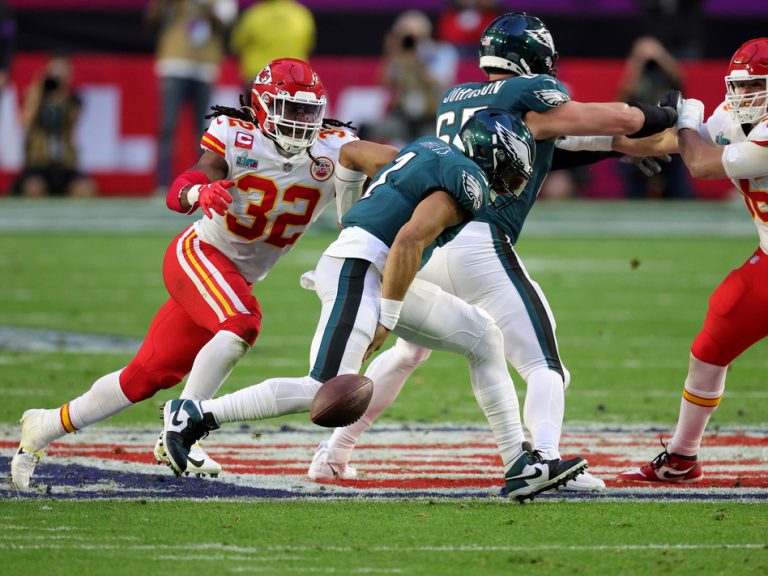
Super Bowl: Can Africa Spring Up anew?
With a landmass of approximately 9.83 million km² and a population of 334–336 million as of 2025—making it the third-largest country in the world—the United States is massive. It is four times the size of Algeria, Africa’s largest country, and dwarfs Nigeria, the continent’s most populous nation.
The United States is a titan among nations. Who knows—perhaps neologists will coin a new term if the U.S. eventually purchases or forcefully takes Greenland from Denmark, further surging its landmass and population. When this massive scale fuses with unparalleled infrastructure, world-class venues, and a vast market, the USA becomes an ideal host for international sporting events with strong returns on investment.
Between 1904 and 2025, the USA hosted one FIFA World Cup (with another to be co-hosted in 2026 with Mexico and Canada), four Summer Olympics, four Winter Olympics, and one FIBA Basketball World Cup. Unlike soccer, which is still finding its footing in the United States—even with Major League Soccer (MLS) having existed for 30 years—American football is the undisputed number-one sport. The Super Bowl—born from Lamar Hunt’s “light-bulb moment”—is the crown jewel. The Super Bowl has become what sociologists call a secular ritual, binding the social fabric of Americans together.
Beyond the Vince Lombardi Trophy, the Super Bowl has evolved into a global marketing masterpiece. From the famous 1984 Apple commercial introducing the Macintosh, which is studied in MBA classes worldwide, to the 1979 Mean Joe Greene Coca-Cola commercial that showed genteel human warmth winning over fearsomeness, the intentionality of brands going head-to-head with rivals has been a recurring feature of every Super Bowl.
While the USA is always attractive for hosting events, the Super Bowl’s success pivots on intellection that results in ingenious marketing. For the recent Super Bowl LX on February 8, 2026, two brands mirrored David Ben-Gurion’s principle of “taking the fight to the enemy.” Pepsi and Anthropic’s Claude entered with an offensive strategy: Claude’s AI ad—“Ads are coming to AI. But not to Claude.”—was a calculated strike in the competitive AI market, while Pepsi’s polar bear blind test revived the sulphurous rivalry with Coca-Cola. Many companies use their ad slots to build brand identity and equity or announce arrival in the business world.
Where does Africa stand in this Super Bowl business and sports calculus? While developed nations are making groundbreaking launches with chutzpah and creativity from creative shops—all resulting in a participatory economy—Africa’s involvement is largely an on-the-field display of Négritude spirit and ravenous passion.
For Africa, the Super Bowl has become a “badge of honor” through representation. Mohammed Elewonibi, a Nigerian raised in Canada, was the first player of African origin to win a Super Bowl (XXVI, 1992, with the Washington Redskins). Since then, nearly 41 players of Nigerian origin or heritage have won—the most of any African country—including six who tasted victory with the recent Seattle Seahawks: Uchenna Nwosu, Nick Emmanwori, Boye Mafe, Jaxon Smith-Njigba (of Nigerian and Sierra Leonean roots), Jalen Milroe, and Olu Oluwatimi.
Yet, as impressive as African athletes are in making the continent proud, we have blatantly failed to translate that audience engagement into commercial windfalls like the Super Bowl on home soil. It is appalling that most of Africa’s sporting events—the Durban July Handicap, Senegalese wrestling (Laamb), or the Safari Rally—have not fully harnessed the intersection of sports and marketing. Even the Africa Cup of Nations (AFCON), despite its 3.45 billion cumulative viewers (far surpassing the Super Bowl’s ~125–127 million), lacks comparable marketing prestige. Why are there no global product launches during our matches? Why aren’t AI giants capitalizing on Africa’s tech startup boom?
Africa is being fed celery when it deserves the whole salad. This asymmetry stems from structural economic factors, but the genie is out of the bottle—we must be forward-looking. To turn African sporting events into “goldmines,” we must reinvent the industry, much as Cirque du Soleil did for the circus. Facing declining audiences, rising costs, and fierce competition, it lost its grip on the circus business. Cirque, however, escaped the dying circus business by reinventing it.
By viewing competition through a new lens, Africa can transform massive viewership into unparalleled economic advantage and value. Just as Cirque du Soleil created uncontested market space, African sports must adopt what W. Chan Kim and Renée Mauborgne called a “Blue Ocean Strategy”—creating uncontested market space and making competition irrelevant. Much as we can not compete toe to toe with advanced economies , we should not follow them like zombies.
In their book Blue Ocean Strategy: How to Create Uncontested Market Space and Make the Competition Irrelevant, the authors highlight how companies in “red oceans” fight for shrinking profits in crowded, defined markets. African sports events currently sit in those crowded red oceans. To elevate them, we need disruptive leaders willing to venture into untapped markets, create new demand, and unlock unlimited growth opportunities.
Joseph Pine and James Gilmore, in their book The Experience Economy, wrote about the need to transform commodities into experiences. As Africans, we have been able to move our sporting events from the commodity stage to the third stage—service delivery—but the experience stage is the North Star we should aspire to reach.
Our cultures, as varied as they are, define us. Despite dilution by Western civilization, our culture stands uneroded, like the mountains that litter our landscape and serve as a canopy to preserve our common heritage. This means our forefathers took culture into the realm of experience—something we are still grappling with in our sporting spectacles today. For us to make headway, our cultures—already bubbling with experience—must mix seamlessly with our sporting spectacles.
Now is the time to merge cultural events like the Eyo Festival, Argungu Festival, Gnaoua World Music Festival, Osun Osogbo Festival, Meskel Festival, and others with our sporting spectacles—that is the Blue Ocean Strategy. This can only be achieved through close collaboration between leaders in sports administration and marketing professionals selling experiences, and the time is now. As this is done, a line from David Diop’s poem Africa—“That is your Africa springing up anew”—would fill our lips.
The experience stage is the nirvana!
Toluwalope Shodunke
Can be reached via tolushodunke@yahoo.com
Super Bowl: Can Africa Spring Up anew?
Opinion
Dele Momodu vs. Fani-Kayode: The pot fighting the kettle
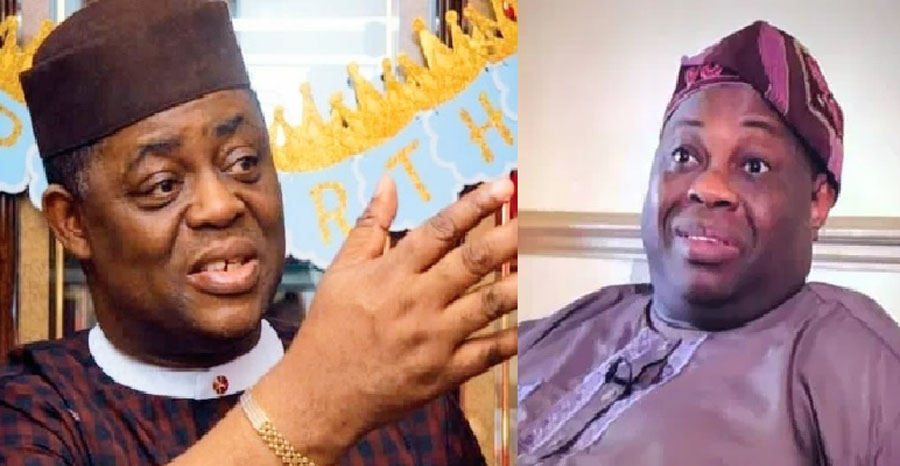
Dele Momodu vs. Fani-Kayode: The pot fighting the kettle
Tunde Odesola
(Published in The PUNCH, on Friday, March 27, 2026)
Back in the Italy of 44 BC, there lived a babalawo called Spurinna. Spurinna was a haruspice. In ancient Rome, a haruspice was a priest or soothsayer who practised divination by inspecting the entrails–specifically the liver and gallbladder–of sacrificed animals, to interpret the messages of the gods. Spurinna was popular in his time and was much sought after. He was like Nigeria’s present-day A-list religious leaders.
So, it was to Spurinna that the Roman military general, Julius Caesar, went when the exceptionally important month of March beckoned. In ancient Rome, March was the first month of the year and the start of military campaigns and farming seasons. Caesar offered a bull for sacrifice; Spurinna inspected its entrails, communed with the gods, who showed him that the sacrificed bull lacked a heart, a metaphor for the pool of blood ahead.
Therefore, the diviner went up to Caesar, hit his staff on the ground, and warned, “Roman General, I see danger in March! Beware of the Ides of March! Danger lurks, Caesar. Yes, the Ides of March, beware!” And he left.
But, Caesar, engrossed in statecraft, never remembered the warning until the day the siegecraft of his enemies subdued him at the Senate, and he fell to their swordcraft, as he was stabbed 23 times by his fellow senators, crying, “Et tu, Brute,” at the final stab. Ironically, the assassination that was meant to save the Roman Republic from Caesar’s dictatorship led to its end, giving rise to the Roman Empire.
Just like Caesar, two Nigerian politicians, Chief Dele Momodu and Chief Femi Fani-Kayode, in the March of 2026, forgot the Ides of March. They threw caution to the wind and engaged each other in a dogfight that members of the National Union of Road Transport Workers had outgrown. The bloodless power tussle between the forces of Alhaji Tajudeen Baruwa and Alhaji Musiliu Akinsanya aka MC Oluomo over control of the national headquarters of the NURTW in Abuja a few days ago shows that ‘Up National’ members are far more civil than many Nigerian political leaders.
If we share the same parentage, both Momodu and Fani-Kayode, at 65, should pick pieces of meat ahead of me at the family table. Ẹ̀gbọ́n Momodu should pick meat before ẹ̀gbọ́n Fani-Kayode because he arrived in the world five months before FFK. By reason of age, both should talk before me in family gatherings. And, I should wash the plates and pots if the three of us had a family cookout, and there was no Reno Omokri, who I’m older than, around. But when old men fight dirty and disrobe themselves in the marketplace, society allows their younger brother to separate them, exorcise the March Madness and call a spade by its proper name.
I knew FFK between 2009 and 2010 when he eyed the governorship of Osun State on the ticket of the Peoples Democratic Party. In a field brimming with Ife-born political heavyweights such as Senator Iyiola Omisore, former Attorney General and Commissioner for Justice, Chief Niyi Owolade; former Nigerian Ambassador to Cuba, Senator Segun Bamigbetan-Baju; former Commissioner for Education, Prof Muib Opeloye, etc, the young Fani-Kayode stood little chance in emerging the PDP candidate, despite the ‘it is our turn’ clamour by Ife. Femi Fani-Kayode aspired and failed.
Like FFK, Momodu, in 2011, ran for the nation’s presidency on the platform of the National Conscience Party, losing in his ward, where he got just one vote, according to a Vanguard newspaper report. In the PDP presidential primaries, which he contested in 2022, Momodu, who bought the PDP presidential primary form for N50 million, lamented the monetisation of Nigeria’s electoral process. He magnanimously donated copies of his magazine, Ovation, at the PDP primaries. But, for his troubles, Momodu got the type of fat zero mischievous teachers draw in the books of dullard students. PUNCH newspaper reported that no delegate voted for Momodu.
When glitz and glam fuel political aspiration, and public service becomes trackless like a snake crawling on a mountain, prefixes such as ‘former governorship aspirant’ and ‘former presidential candidate’ become mere tickets to the corridors of power.
Though both Fani-Kayode and Momodu never won an election, both are streetwise. Both are grandmasters of Nigeria’s prebendal politics. They understand perfectly how the crooked Nigerian system works. They know the power of visibility, timing and positioning. They understand power and its laws. Both know that most Nigerian men and women of power are vulnerable, lonely and insecure creatures who need public validation to ease the guilt their conscience suffers from years of public mismanagement. The brains of Bob Dee and FFK calculate better than the best Casio calculators.
When FFK wants something from you, you cannot survive his pressure. During the administration of President Goodluck Jonathan, FFK would daily bombard me with press statements. One day, after speaking with me a couple of times on various press statements, he called me yet again. So, I sighed and sounded sleepy. Quick-minded, FFK noticed the drop in the cadence of my voice and said something like this, “Tunde, I have spoken to you many times today, and on each occasion, your voice was different. How many voices do you have?” I smiled at the other end of the phone, and intoned silently to myself, “I go let you kill me with PDP stories, abi?”
For someone who started from scratch, Momodu’s life story resonates with the rags-to-riches tales of resilience and consistency among never-say-die Nigerians. For this, I choose Momodu’s plastic spoon over Fani-Kayode’s silver spoon. Momodu’s youthful life leaves a noticeable trail of labour and salary, while FFK’s life reflects connection and affluence. But that is where my admiration for Momodu stops. The Yoruba say ‘kò sí bí ọ̀bọ ṣe ṣorí, tí ìnàkí o ṣé…’, meaning that there are similarities in the features of the monkey and the gorilla.
‘Trouble dey sleep, yanga go wake am’ when Momodu, in a television interview, said the President and Commander-in-Chief of the Armed Forces, Bola Tinubu, was a civilian image of former military dictator, General Sani Abacha, the rogue. An angry Fani-Kayode, who had just been named ambassador-designate to Germany by Tinubu, argued that comparing a democratic government to a military regime was a distortion of history. Thus, FFK threw down the gauntlet and flung his hat into the ring, but an unfazed Momodu laced his gloves and rolled on his side into the ring, barechested. No way, we die here today!
For calling Tinubu, Fani-Kayode’s current benefactor, a dictator, FFK opened the Book of Remembrance to Chapter 1, and recalled how Dele is ‘friend and brother’ bagged a Third Class degree in Yoruba, and how the late Chief MKO Abiola picked him up from the gutter, washed him, and employed him. Not done yet, Femi, the son of Remi, flipped the Book of Remembrance to Chapter 2, recollecting how unhinged, emotional and illogical his friend, Dele, could be, stressing that he (FFK) had been loyal to the President, unlike Bob Dee, whom he accused of being a back-biter, untrustworthy, and ungrateful individual.
FFK said, “Unlike Dele, I did not benefit from him (Tinubu) for close to 40 years, eat from his plate, collect handouts from him, stayed in his house, claim to be his brother and yet refuse to support him in achieving his dream of becoming president.” The former aviation minister went on to call his publisher friend a glutton, saying Momodu’s big size was evidence of his gluttony.
Momodu roared back. He grabbed the Book of Response, and read from Chapter 7, saying, “He (Femi Fani-Kayode) went to Cambridge University…but became an enfant terrible, fighting anyone and anything in sight. All supplications and intercessions by friends and family on his behalf have failed to cure his malady. And this is the man President Tinubu is about to unleash on Germany as an ambassador of the Federal Republic of Nigeria, for God’s sake.”
Bob Dee did not stop. He attacked Omokri, who was in the same boat with FFK over the issue. He said, “I was going to ignore these two, but later decided to respond to them just in case they thought they could bully me into silence and submission. No, they can’t. They both have no credibility whatsoever.
“Together, they have expressed the worst views ever about Bola Tinubu that they will never be able to erase in a million years, except the world finally comes to an end. The only reason I could adduce for Tinubu’s tolerance of both irritants is desperation and his inability to find better people to do the dirty jobs. The brains of these ones have been configured to say anything and delete immediately.
“I have never disparaged Tinubu in my life. I have never called him a murderer. I have never called him a drug baron or addict. I’m intelligent enough not to say what I have no proof of. Only morons talk without thinking. I thank God for a good upbringing. I do not fight like pigs. And I have a job and manage my modest income. I’m not seeking government appointments. I know how many times Femi and Reno have reached out to me, privately, either begging for publicity or apologising for attacking me publicly.”
But Omokri denied the claims of him reaching out to Momodu, challenging the Edo-born politician to make his claims public. He said the only time he reached out to Momodu was when he urged the opposition stalwart to carry blood thinners such as aspirin along with him because of sudden death associated with frequent flying. He maintained that the Tinubu administration had recorded giant strides in economic growth and security. “Based on the aforementioned statistics devoid of emotions, I put to you that your claims are alarmist and a misrepresentation of the true state of Nigeria and the health of our democracy,” Omokri said.
If you think the Momodu–FFK-Omokri fight is a contest between democracy and dictatorship, you are missing the point. No, it’s beyond such smokescreens. Neither is it a struggle between light and darkness, nor is it a tussle between good and evil.
The fight among the estranged friends and the younger Omokri could be deconstructed through a layered prism. Sitting smugly at the heart of the fight is the degeneration of elite political communication, battle over access to power, struggle for relevance in political-media space, egocentrism, and the fleeting nature of loyalty.
While Momodu put the loyalty of Fani-Kayode and Omokri to the test of integrity, and found them both falling short, FFK’s recall of how close Momodu was to the late MKO Abiola, and how he (Momodu) later went back and associated with the family of the late dictator, Sani Abacha, after Abiola died, put a big question mark on the honour of Momodu. The pot knows when the kettle whispers.
In October 2025, a former Mayor of Blanco, Texas, Mike Arnold, labelled Omokri a “pathological, habitual liar’ and ‘social media influencer’ who misrepresents facts for political gains. Arnold, the founder of Arise Africa International, was formerly associated with Omokri, but broke up the friendship after enumerating instances of ‘constant, calculated lying’ by Nigeria’s ambassador-designate to Mexico.
Arnold accused Omokri of screaming ‘Christian genocide’ during the administration of President Muhammadu Buhari, but turned around to call it a hoax under Tinubu, accusing Omokri of possessing the penchant to flip to the side that holds the fattest chequebook.
Omokri never responded to Arnold’s accusations, even as the former mayor accused the ambassador-designate of begging him to cease fire. Uhmm, Omokri, renowned for his caustic wit and quick fingers on the keypad, has never said ‘pim’ in response to Arnold. Does silence mean guilt? Abi, where has Omokri’s courage gone? Arnold said many other unprintable things about Omokri, but Omokri is my aburo, so I won’t drag him.
The fight of the Three Lions is not in the interest of Nigeria. All three men are public brands, not just political actors. So the quarrel is also a market contest over visibility. Momodu typifies elder-journalist candour; FFK typifies gladiatorial loyalty; Omokri typifies data-driven regime advocacy. FFK and Omokri write not just to wound Momodu, and vice versa, but each writes to reassure his own constituency that he is still indispensable.
The roforofo fight shows that proximity to power in Nigeria speaks the language of outrage, where defenders of incumbency no longer defend policy but often attack dissent as betrayal. It also exposes how fast media and social reaction change once policy debates become public discourse, with the way attention shifted from Tinubu’s alleged authoritarian tendencies to personal attacks.
None of Momodu, Fani-Kayode and Omokri was fighting for Nigeria. The three of them are fighting for power.
Email: tundeodes2003@yahoo.com
Facebook: @Tunde Odesola
X: @Tunde_Odesola
Dele Momodu vs. Fani-Kayode: The pot fighting the kettle

-

 Railway3 days ago
Easter train: NRC increases Lagos-Ibadan trips, offers free Osun holiday transit
-

 metro2 days ago
VeryDarkMan Dares Sowore Over Blord’s Kuje Prison Remand
-
 Business2 days ago
NNPC Boosts Crude Supply to Dangote Refinery to Address Rising Fuel Prices
-

 metro2 days ago
Nigerians to Enjoy Four-Day Break as FG Declares Easter Holidays
-
 metro1 day ago
Tinubu Approves 1,000 Forest Guards, Orders 5,000 CCTV Cameras to Boost Security in Plateau
-
 metro3 days ago
Power Crisis Looms as NLC Shuts AEDC, Protests Sack of 900 Workers
-
 International18 hours ago
Iran Announces ‘Bounty’ on US Pilots After Claiming Downing of Fighter Jet
-
 International2 days ago
Iran Fires Missiles at Israel After Trump Threatens Weeks of ‘Extremely Hard’ Strikes