
Business
How to use your pensions for mortgage

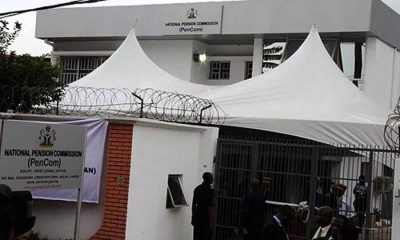
The National Pension Commission recently approved the guidelines to access Retirement Savings Account balance for payment of equity contribution for residential mortgage by RSA holders.
The approval was in line with Section 89 (2) of the Pension Reform Act 2014, which allows RSA holders to use a portion of their RSA balance towards payment of equity for residential mortgage.
PenCom however specified conditions to access the funds. A major condition is that the applicant must be in active employment, either as a salaried employee or as a self-employed person.
It stated that application for equity contribution for residential mortgage must be in person and not by proxy.
How to apply
Anybody who is interested can approach his PFA to get explanation on the process. The PFA will print the statement of account and determine the 25 per cent.
Speaking with our correspondent, the Spokesperson, PenCom, Abdulqadir Dahiru, said, “Then when you have that, you can now go back to your mortgage lender, get a letter of offer of your property, go through their own due diligence to agree for them to finance because the pension is only giving you 25 per cent; 75 per cent will still be financed by somebody.
READ ALSO:
- 2023: PFN disowns Bishops for holding meeting with Tinubu
- Wike’s camp plots for Mimiko to replace Ayu
- Muslim-Muslim ticket: Tinubu, Shettima frustrating reconciliation, says Lawal
“That person must give you an offer letter for a loan that he is ready to finance you, and this is the equity contribution you are required to bring. So if you have that equity contribution with that letter of offer, which has been validated by the mortgage lender, that is when you can approach your PFA to request for your 25 per cent.”
Maximum amount allowed
PenCom stated that the maximum amount to be withdrawn is 25 per cent of the total mandatory RSA balance as of the date of application, irrespective of the value of equity contribution required by the mortgage lender.
Where 25 per cent of a contributor’s RSA balance is not sufficient for payment as equity contribution, the RSA holders may utilise the contingency portion of their voluntary contributions (if any).
Consent form
If a person had accessed part of the funds before either for leaving paid employment before retirement age, he will still get lump sum at retirement. He can still get part of the funds for mortgage after meeting specific conditions stated in the guidelines, but he must sign a consent form to get it.

Aisha Dahir-Umar, DG National Pension Commission
Dahiru said, “If you have taken 25 per cent for temporary loss of job and then you get employment again, and you continue contributing and you come to collect for a mortgage, you will sign a consent to say that I’m fully aware that this money I want to withdraw to finance a house will affect the amount I may likely take when I retire, I understand and whatever.
“So, basically you are indemnifying the PFA that you understand so that at the point of retirement, if your benefit is lower compared to your colleagues you will not complain.”
Mortgage lender
To qualify as a mortgage lender for the purpose, the company must be licensed by the Central Bank of Nigeria, comply with the Contributory Pension Scheme and have valid Pension Clearance Certificate, according to PenCom’s guidelines.
Eligibility
According to PenCom, a worker must have an offer letter for the property duly signed by the property owner and verified by the mortgage lender. The RSA of the applicant must have both employer and employee’s mandatory contributions for a cumulative minimum period of 60 months (five years). A contributor under the Micro Pension Plan is also eligible, provided he/she has made contributions for at least 60 months (five years) prior to the date of his/her application.
Age limit
RSA holders that have less than three years to retirement are not eligible.
READ ALSO:
- Campaign: Tinubu invites Aregbesola, others for ‘special prayers’
- Lagos-Ibadan traffic: Police, kidnappers exchange gunfire, traveller rescued
- Newly married artisan burns self, blames abusive wife
Dahiru explained, “If I am an employee and working in an organisation where the retirement age is 55 years, if I am 50, or 51 years, I can access because I have five years or more than three years to retire. But once I get to 52 that, means I have three years which I cannot access.”
According to PenCom’s guidelines, married couples, who are RSA holders, are eligible to make a joint application, subject to individually satisfying the eligibility requirements.
Data recapturing
RSA holders, if registered before 1 July 2019, must have their records updated through the RSA data recapture exercise.
Dahiru said, “But it’s very important that RSA holders have done their recapture. When you have not done your data recapturing, we can’t process it.”
Insufficient 25 per cent contribution
The PenCom spokesperson said, “Where the 25 per cent the mortgage lender is asking for is equal to the 25 per cent of your RSA, definitely we will process. But if what mortgage lender is asking for is higher than what you can get from your PFA, you will have to look for the difference and pay and show evidence to your PFA.
“For instance, if your mortgage lender is looking for N2.5m and the mortgage is N10m, and the mortgage lender says bring 25 per cent as equity contribution, and your own 25 per cent in your RSA is only N1.5m, you will have to look for that difference of N1m and pay; then come with it with your offer letter for the property and the evidence that I have paid, then your PFA will give you the balance of N1.5m which is your 25 per cent.”
Punch








Business
Bottles of Death: SWAN rallies media to combat ₦472bn illicit alcohol crisis

Bottles of Death: SWAN rallies media to combat ₦472bn illicit alcohol crisis
The fight against Nigeria’s surging illicit alcohol trade took centre stage recently as Mr. Tony Okwoju, Director-General of the Spirits and Wine Association of Nigeria (SWAN), called on the media to help dismantle a criminal industry that is quite literally killing its customers.
Speaking at a Brand Journalists Association of Nigeria (BJAN) roundtable, Okwoju highlighted a grim reality: counterfeiters are no longer just cutting corners on quality; they are substituting ethanol with methanol—a toxic industrial chemical that causes permanent blindness, organ failure, and death.
The economic toll is equally devastating. Citing data from a Deloitte report, Okwoju revealed that Nigeria hemorrhages an estimated ₦472 billion annually to illicit trade.
This underground economy now commands a staggering 40% of the total market share, effectively starving the government of tax revenue and threatening billions of naira in legitimate private sector investments.
The SWAN boss described this as a “tripartite threat” that undermines public health, national security, and economic stability all at once.
One of the most insidious tactics used by these criminal syndicates, according to him, involves scavenging high-end bars and dumpsters for empty, branded glass bottles.
These authentic containers are then refilled with cheap, poisonous mixtures and resealed to look like the real thing.
To combat this, Okwoju noted that major manufacturers have been forced to adopt expensive countermeasures, including deploying specialized teams to nightclubs to retrieve and crush their own empty bottles.
By destroying the packaging, the industry hopes to starve counterfeiters of the primary tools they need to deceive the public.
Looking ahead, SWAN is preparing for a high-stakes stakeholder workshop scheduled for April 22, 2026.
The forum is designed to bring enforcement agencies and government regulators under one roof to forge a unified front against the counterfeiters.
Okwoju emphasized that without more stringent enforcement and a massive boost in public awareness, these dangerous commercial hubs will continue to thrive at the expense of Nigerian lives.
Supporting the call for action, BJAN Chairman Daniel Obi emphasized the media’s commitment to promoting responsibility within the beverage industry.
He noted that through collaborative storytelling and accurate reporting, journalists can amplify the dangers of illicit consumption and help protect consumers.
As the April stakeholder forum approaches, the message from the industry is clear: the era of silence regarding counterfeit spirits is over, as the cost of the trade is now being measured in both lost billions and lost lives.
Auto
Lagos NURTW Chairman Sego Distributes Exotic Cars, Luxury Items to Cabinet Members (Video)

Lagos NURTW Chairman Sego Distributes Exotic Cars, Luxury Items to Cabinet Members (Video)
The Chairman of the Lagos State chapter of the National Union of Road Transport Workers (NURTW), popularly known as Sego, has distributed exotic cars, luxury items, and other valuables to members of his cabinet.
The development, which took place on Tuesday, drew attention across Lagos as beneficiaries reportedly received high-end vehicles and other expensive gifts as part of what insiders described as a reward and appreciation gesture.
READ ALSO:
- Canada Raises Permanent Residence, Citizenship Fees for Nigerians, Others
- Plateau Palm Sunday Massacre: US Lawmaker Warns Nigeria
- Cars Torched as South Africans Protest Alleged Nigerian ‘Igbo King’ Coronation
Sources within the union disclosed that the items shared included luxury cars, household equipment, and other high-value materials, aimed at boosting morale among cabinet members and strengthening loyalty within the leadership structure of the union.
Observers say the move highlights the growing influence and financial strength of transport unions in Lagos, particularly the NURTW, which plays a key role in the state’s transport sector.
While supporters of the chairman have praised the gesture as a sign of generosity and leadership, critics argue that such displays of wealth raise questions about transparency and accountability within union operations.
As of the time of filing this report, there has been no official statement from Sego addressing the distribution, but the development has continued to generate reactions among stakeholders in the transport industry and the wider public.
The Chairman of the Lagos State chapter of the National Union of Road Transport Workers (NURTW), popularly known as Sego, has distributed exotic cars, luxury items, and other valuables to members of his cabinet
Tonto Dike | Blessing CEO | Kaduna | Pastors and Imams | Jerry Eze pic.twitter.com/YWGLjMiJyZ
— Newstrends.Ng (@Newstrends_ng) March 31, 2026
Lagos NURTW Chairman Sego Distributes Exotic Cars, Luxury Items to Cabinet Members (Video)
Business
Naira Slides to ₦1,415 per Dollar in Parallel Market as Official Rate Weakens

Naira Slides to ₦1,415 per Dollar in Parallel Market as Official Rate Weakens
The Nigerian Naira continued its downward trend yesterday, trading at ₦1,415 per US dollar in the parallel (black) market, up from ₦1,405 per dollar last Friday. This latest depreciation underscores ongoing pressure on the currency amid high demand for foreign exchange and limited supply.
Data from the Central Bank of Nigeria (CBN) showed that the naira also weakened in the Nigerian Foreign Exchange Market (NFEM), trading at ₦1,386.75 per dollar, a drop from ₦1,384.25 recorded last week. This reflects a modest ₦2.50 decline at the official window.
READ ALSO:
- Plateau Attackers Spoke Fulfulde, Came on Motorbikes, Ex‑Rep Says
- US Lawmaker Urges King Charles to Meet Jeffrey Epstein Survivors During US Visit
- Spain Shuts Airspace to US Warplanes, Rejects Iran Conflict Involvement
The gap between the parallel and official rates widened further to ₦28.25 per dollar, compared with ₦20.75 over the weekend, highlighting persistent market distortions between formal and informal forex channels.
Analysts say the naira’s slide is largely driven by rising dollar demand from importers, investors, and corporate traders, while supply remains constrained despite CBN interventions aimed at stabilising the currency. Recent policy adjustments, including allowing oil exporters more flexibility to repatriate proceeds, have yet to significantly ease pressure on the naira.
The depreciation in both the parallel and official markets has direct implications for import costs, inflation, and the purchasing power of Nigerian households and businesses. Market watchers are closely monitoring the CBN’s next moves, with expectations that further policy actions may be needed to curb the naira’s decline.
Naira Slides to ₦1,415 per Dollar in Parallel Market as Official Rate Weakens

-

 Entertainment1 day ago
Funke Akindele, Toyin Abraham Spark Reactions Over Alleged Snub at Iyabo Ojo’s Premiere
-

 metro1 day ago
Jos Attack: Plateau Govt Declares 48-Hour Curfew After Deadly Assault
-

 Entertainment3 days ago
Streamer Peller Escorted Out of Alake of Egbaland’s Palace in Abeokuta
-

 Education9 hours ago
WAEC Releases 2026 WASSCE Timetable for School Candidates
-
 metro3 days ago
ADC Chairman’s Daughter Joins Pro-Tinubu Campaign Organisation
-

 News1 day ago
UK Raises Visa Costs, Tightens Immigration Rules From April 8
-

 Auto5 hours ago
Lagos NURTW Chairman Sego Distributes Exotic Cars, Luxury Items to Cabinet Members (Video)
-

 International2 days ago
Iran Threatens US-Linked Universities in Middle East Amid Escalating Tensions