Husband bound, gagged by wife, children in Ogun community rescued (video) - Newstrends
Connect with us

metro

Husband bound, gagged by wife, children in Ogun community rescued (video)

Published

on

Husband bound, gagged by wife, children in Ogun community rescued (video)

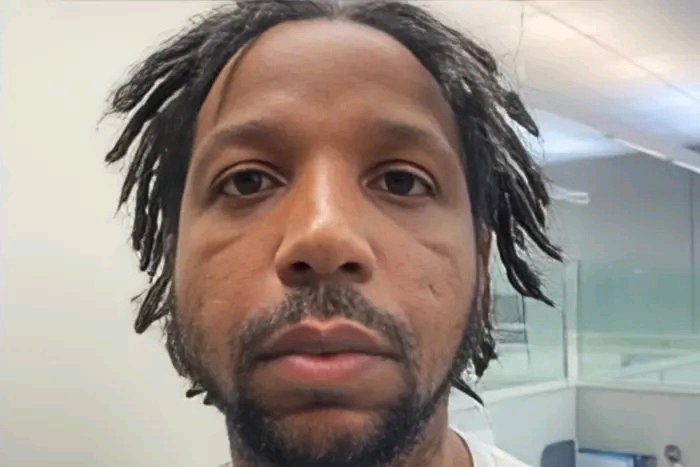
A husband was rescued by residents of Oko-Filling, a neighborhood in Araromi, Ijoko, Sango Ota, after he was bound, gagged and left for dead by his wife and children following a dispute over his retirement benefits.

The incident took place in the early hours of Thursday, March 13, at the family’s residence.

The husband had reportedly received his retirement payout and used a portion to open two shops for his wife in Abule after giving her N3 million, The Nation reports.

He also bought a N12 million car for himself while the family already owned a home in the area.

However, his wife and four sons, who are all university graduates, were not happy that he did not hand over the entire funds to them to use as they deemed fit so they attempted to pressure him for more money.

Shortly after acquiring the new vehicle for himself, he sold it, raising suspicions among neighbors.

A local landlord, who spoke to The Nation, revealed that the man was later discovered in his home with his mouth, hands, and feet bound.

“He was tied like an animal to be slaughtered. They (his wife and kids) got some Aboki men, about six of them to tie him up. It was the strange noise from their packing that alerted residents who gathered in front of the house to know what was happening.

READ ALSO:

“Landlords in the area who could not endure the noise at that hour, decided to go out and find out what was wrong. When they got to his compound, they saw a Korope (small bus) outside packing properties.

“His wife and sons were the ones packing and so, the residents asked after the man. When the response given was not satisfactory, they forced themselves inside the house and saw the man completely bound with the Aboki people still inside the house, as though they were waiting to k!ll him.

“The man was untied and rushed to the hospital. He’s still at the hospital receiving treatment. The suspects were all taken to the police station. One of the Aboki men confessed it was the man’s wife that contracted them to tie him up. They were all taken to the police station that morning,” the landlord said.

An audio message recorded by the chairman of the Anjomo Community Development Association (CDA), Emmanuel Omola, corroborated the information from the landlord.

According to Omola, the woman had gone to the police station to report that her husband wanted to k!ll her.

He said: “The evening of 12th March, the wife went to the police station to report that her husband wanted to k!ll her. The police told her to go and get a bus to convey the policemen to her house to arrest her husband. She left the station and didn’t return.

“By the time she got to the neighbourhood, she went inside the house with some Aboki to tie the man and when they started packing the belongings, that was when the neighbours heard noise and that was what made them all gather there.

“By the time they got there, they saw that the children had come with a small bus (Korope) and they had packed loads there and were leaving.

“The residents entered the house and they met Aboki there and saw the man tied. The Aboki and the owner of the tricycle that conveyed them there confessed that it was the wife that called them.”

Omola advised people to always ask questions whenever they hear unusual noise in their surroundings.

“We shouldn’t be nonchalant about it, let us respond quickly. If not that the landlords responded fast, I believe the Abokis that were brought into that house wanted to kill that man, that’s what they have been told to do.

“So, if we hear noises in our neighbour’s house, we shouldn’t say it doesn’t concern us, just a swift response can save lives. If not that the landlords in the neighborhood went out, the man would have died.

“Now, the man is in the hospital, they said his penis is swollen. His wife, children and the Aboki are in the police station.

“Those of you who receive pension, know how you tell your family. I think the pension the man received is what almost led to his de@th.”

Husband bound, gagged by wife, children in Ogun community rescued (video)

Loading

metro

IPOB Says FG Cross-Appeal Undermines Kanu’s Conviction, Claims ‘Jurisdiction Is Not a Buffet’

Published

on

IPOB Says FG Cross-Appeal Undermines Kanu’s Conviction, Claims ‘Jurisdiction Is Not a Buffet’
Mazi Nnamdi Kanu

IPOB Says FG Cross-Appeal Undermines Kanu’s Conviction, Claims ‘Jurisdiction Is Not a Buffet’

ABUJA, Nigeria – The Indigenous People of Biafra (IPOB) has declared that the Federal Government’s cross-appeal in the case of its leader, Mazi Nnamdi Kanu, has fundamentally weakened the legal foundation of his conviction and raised serious questions about the jurisdiction of the trial court. In a statement issued on Friday, June 5, 2026, by the group’s spokesperson, Emma Powerful, IPOB argued that the appeal process has moved beyond the fate of Kanu alone and now places the credibility of the Nigerian judiciary under intense scrutiny. The group claimed that the Federal Government, in its cross-appeal filed in response to Kanu’s appeal, allegedly admitted that Justice James Omotosho of the Federal High Court, Abuja, acted without jurisdiction when he convicted Kanu and sentenced him to life imprisonment instead of the death penalty.

“The global family of the Indigenous People of Biafra… wishes to draw the attention of all reasonable Nigerians, the international community, members of the diplomatic corps, legal practitioners, human-rights organizations, and all defenders of constitutional government to a reality that can no longer be hidden,” the statement said. IPOB said the recent cross-appeal filed by the Federal Government, in which it allegedly conceded that the trial court acted without jurisdiction in imposing a life sentence instead of a death penalty, had “changed everything” about the case. The group noted that the Federal Government’s brief of argument was filed on Friday, June 5, 2026, at the Court of Appeal, Abuja Division, in response to Kanu’s appeal challenging his conviction.

IPOB seized on the government’s cross-appeal argument that the trial judge erred by imposing a life sentence instead of the death penalty, interpreting this as a concession that the court acted without proper legal authority. “The Federal Government has effectively fired a cannon through the heart of the judgment it is simultaneously attempting to defend,” the statement read in part. “The implication is simple. Jurisdiction is not divisible. Jurisdiction is not a buffet… Jurisdiction is a continuum,” the group said. IPOB argued that if the trial court lacked jurisdiction at the sentencing stage, then the entire conviction should be considered invalid, maintaining that “the conviction and sentence are juridically inseparable. One cannot survive without the other.”

READ ALSO:

IPOB further contended that the Court of Appeal would be forced to either reject or reconcile what it described as contradictions in the Federal Government’s position. “Any attempt by the Court of Appeal to affirm the conviction while simultaneously accepting the Federal Government’s admission regarding jurisdiction would require the creation of an entirely new species of criminal jurisprudence unknown to Nigeria, unknown to the Commonwealth, and unknown to the common-law world,” the statement added. “The court would effectively be saying that a trial court can lack jurisdiction and yet validly convict.” The group argued that the Federal Government has inadvertently converted itself into a witness against its own judgment. “If the trial court lacked jurisdiction to impose sentence, as the Federal Government now asserts, then the same trial court lacked jurisdiction to produce the conviction from which the sentence supposedly arose,” IPOB stated. “The question now becomes unavoidable: If the trial court lacked jurisdiction, what exactly is left to affirm?”

Justice James Omotosho of the Federal High Court, Abuja, convicted Kanu on November 20, 2025, on terrorism charges filed against him by the Federal Government, sentencing him to life imprisonment. Kanu is currently serving his life sentence at the Sokoto Correctional Facility. Kanu had previously filed his notice of appeal on February 4, 2026, challenging the conviction on 22 grounds. In that appeal, Kanu argued, among other things, that the trial court delivered its judgment while a preliminary objection challenging the competence of the charge and his bail application remained pending and undetermined, and that the court erred by convicting him under the Terrorism Prevention (Amendment) Act, 2013, which he asserted had been repealed by the Terrorism (Prevention and Prohibition) Act, 2022. Kanu also alleged that he was denied a fair hearing because he was not permitted to file and adopt a final written address before the verdict was delivered, and that the trial judge failed to grant him the right of allocutus—the opportunity to address the court before sentencing—and neglected to consider relevant mitigating factors. Following Kanu’s appeal, the Federal Government filed its cross-appeal, seeking an upward review of the sentence from life imprisonment to the death penalty. It is this cross-appeal that IPOB now claims contains the admission that Justice Omotosho acted without jurisdiction.

IPOB also outlined what it described as multiple procedural and legal defects in the trial proceedings. The group alleged that the proceedings were founded on repealed statutes, specifically noting that the Terrorism Prevention (Amendment) Act 2013 under which Kanu was charged had been repealed by the Terrorism Prevention and Prohibition Act 2022. The group further claimed that Kanu was denied a final address and allocutus, that the court failed to determine jurisdictional objections properly, and that the prosecution relied on provisions not pleaded in the charges. According to IPOB, the trial judge himself acknowledged that without a written law there can be no conviction, yet proceeded to convict Kanu under a repealed law. “The TPAA was not a written law in force in Nigeria as of 20 November 2025,” IPOB stated, referring to the Terrorism Prevention (Amendment) Act. The group further alleged that there was a failure to disclose applicable statutes and withholding of evidence, along with the denial of fair hearing. According to IPOB, these alleged irregularities have rendered Kanu’s conviction legally unsustainable.

READ ALSO:

IPOB declared that the Nigerian judiciary itself is now on trial, arguing that the issues before the Court of Appeal extend far beyond the fate of one man. “The issue before the Court of Appeal in the case of Onyendu Mazi Nnamdi Kanu is no longer merely about one man. It is now about whether the Nigerian judicial system is prepared to remain a legal institution or whether it is prepared to openly repudiate its own foundational principles,” the statement read. IPOB further argued that the appeal has assumed significance far beyond the immediate parties involved in the case. “The Court of Appeal is no longer deciding merely whether Onyendu Mazi Nnamdi Kanu should be convicted. It is deciding whether long-established principles of Nigerian criminal law still mean what they say,” IPOB said. “It would have to explain how a conviction can stand when the trial judge himself acknowledged that without a written law there can be no conviction,” the statement added.

The group warned that the implications of the appeal could extend beyond Kanu’s case and affect future criminal prosecutions in Nigeria. “Every future criminal defendant would be entitled to ask whether jurisdiction still matters… whether fair hearing still matters… whether constitutional supremacy still matters,” it said. “The Nigerian judiciary now stands at a crossroads. One path preserves the integrity of constitutional government. The other path requires the abandonment of principles repeatedly proclaimed by Nigerian courts over many decades,” the statement warned. The group called on the international community, members of the diplomatic corps, legal practitioners, human rights organizations, and all defenders of constitutional government to pay close attention to the proceedings. IPOB insisted that the outcome would have lasting consequences for Nigeria’s legal system and described the appeal as a test for the judiciary, urging observers within and outside Nigeria to monitor proceedings closely.

The legal saga surrounding Nnamdi Kanu has seen numerous twists since his initial arrest in 2015. He was granted bail in April 2017 but fled the country after an invasion of his home by the Nigerian military in September 2017 during Operation Python Dance. He was re-arrested in Kenya and controversially renditioned back to Nigeria in June 2021. The Court of Appeal had previously, on October 13, 2022, held that the manner of Kanu’s rendition violated the country’s extradition treaty and breached his fundamental human rights, striking out the terrorism charges and ordering his release. However, the Federal Government appealed that ruling to the Supreme Court, which set aside the Court of Appeal’s judgment and ruled that the trial could proceed despite the violation of Kanu’s rights. Following the Supreme Court’s decision, the trial resumed before Justice Omotosho, leading to the November 2025 conviction that is now the subject of the competing appeals. The Court of Appeal is yet to fix a hearing date for the appeals, while the Federal Government has not publicly responded to IPOB’s latest claims.

For readers seeking a quick summary of the key details, the following information has been confirmed. Nnamdi Kanu was convicted on November 20, 2025, by Justice James Omotosho of the Federal High Court, Abuja, and sentenced to life imprisonment. He is currently serving his sentence at the Sokoto Correctional Facility. Kanu filed his appeal on February 4, 2026, on 22 grounds. The Federal Government filed its cross-appeal on June 5, 2026, seeking the death penalty. IPOB claims that the cross-appeal contains an admission that the trial court lacked jurisdiction to impose the life sentence, arguing that jurisdiction is indivisible and that the conviction and sentence cannot be separated. The Court of Appeal has not yet fixed a hearing date for the appeals.

IPOB Says FG Cross-Appeal Undermines Kanu’s Conviction, Claims ‘Jurisdiction Is Not a Buffet’

Loading

Continue Reading

metro

Kaduna Woman Sues Husband for Renting Out Her Bedroom Without Permission

Published

on

Kaduna Woman Sues Husband for Renting Out Her Bedroom Without Permission

Kaduna Woman Sues Husband for Renting Out Her Bedroom Without Permission

KADUNA, Nigeria – A middle-aged housewife, Umma Bashir, has dragged her husband, Bashir Ibrahim, before Sharia Court II at Magajin Gari, Kaduna State, for renting out her bedroom without her knowledge and moving all her belongings to the sitting room. The case, which has drawn significant attention across northern Nigeria, highlights the ongoing legal debates surrounding marital rightspolygamy, and the husband’s responsibility to provide shelter under Islamic law. The wife, who has three co-wives in total, also told the court that she is being treated unequally, as each of her two other co-wives enjoys a two-bedroom apartment with their children while she is left to manage one room.

According to the News Agency of Nigeria (NAN) , Umma Bashir narrated her ordeal before the court. She explained that her husband had initially provided two rooms for her and her two children but later decided to rent out her bedroom without seeking her consent. “I returned home from a journey to discover that my bedroom was locked and my belongings moved to the sitting room,” she told the court. “When I confronted my husband, he told me that it was his room and he has the right to do whatever he wishes with it.” The incident prompted Umma to leave for her parents’ house, where she remained for five days before deciding to seek legal redress. She told the court that she will not return to her matrimonial home until her husband provides “good shelter” for her.

In a revelation that added weight to her complaint, Umma disclosed that her two other co-wives were each living in a two-bedroom apartment with their children, while she was left with only one room to manage for herself and her two children. This disparity in treatment appears to have been a significant factor in her decision to take the matter to court, as she argued that she was being unfairly disadvantaged compared to her co-wives under the same husband.

READ ALSO:

The defendant, Bashir Ibrahim, admitted that he rented out the room but denied his wife’s claim that he did not inform her beforehand. He told the court: “I informed her that I will rent out one of the rooms to be able to renovate an apartment I am planning to relocate her to.” Ibrahim added that he promised his wife that he would use the rent money he got from the tenant to renovate the proposed apartment. While the husband claimed prior notification, Umma maintained that she was never consulted before the decision was made.

The presiding judge, Malam Musa Sa’ad (also referred to in some records as Malam Musa Sa’ad-Goma), after listening to both parties, emphasised the importance of shelter in marriage under Islamic law. The judge stated that it was the responsibility of the husband to provide shelter for the family. He specifically stressed that “it is Islamically wrong for husband and wife to live in one room with two teenagers.” This observation from the bench highlighted the court’s concern not just with the act of renting out the room, but with the overall living conditions of the family, particularly the presence of teenage children sharing a single room with their parents.

Malam Musa Sa’ad is a seasoned Sharia court judge at Magajin Gari, Kaduna, who has presided over several notable cases that have shaped public discourse in the state. In 2018, he presided over a divorce case where a 23-year-old wife sought dissolution of her marriage on grounds that her husband did not pray and was irresponsible. In 2019, he sentenced two women to two months in prison (or a N3,000 fine each) for wearing skimpy dresses, which he ruled constituted public nuisance and indecent dressing under Section 346 of the Sharia Penal Code of Kaduna State. His reputation as a strict but fair arbiter of Islamic law suggests that his remarks about the husband’s duty to provide shelter carry significant weight.

Rather than delivering an immediate judgment, Judge Sa’ad adjourned the case to allow the court to inspect the house and assess its condition firsthand. According to reports from the Punch Newspaper, the case was adjourned until April 18 for the court to conduct the inspection. This inspection is expected to help the court determine the true state of the family’s living arrangements and whether the husband’s proposed renovation plan is genuine. The adjournment suggests that the court intends to take a thorough approach to resolving the dispute, considering both the wife’s complaint and the husband’s defense.

The case raises several important questions about marital rights and responsibilities within the context of Nigerian Islamic law. While the husband claimed absolute authority over the room, stating “it was his room,” the judge’s remarks suggest that such authority is not unlimited when it affects the wife’s welfare and the family’s living conditions. Under Islamic law, a husband is obligated to provide housing that is appropriate to his wife’s status and needs. The wife’s complaint about unequal treatment compared to her co-wives touches on the Islamic principle that husbands must treat all wives equitably. While perfect equality in material possessions is not required, significant disparities without valid justification can be grounds for complaint. Additionally, the judge’s concern about two teenagers sharing a single room with their parents reflects broader child welfare considerations that Sharia courts increasingly take into account.

As of the latest reports, the case remains pending, with the court yet to conduct its inspection of the property. The outcome could have significant implications for similar disputes in Sharia courts across northern Nigeria. The case was first reported by the News Agency of Nigeria (NAN) and has since been covered by multiple Nigerian news outlets, including Tribune OnlinePunch Newspapers, and other major platforms.

For readers seeking a quick summary of the key details, the following information has been confirmed. The complainant is Umma Bashir and the defendant is her husband, Bashir Ibrahim. The case was filed at Sharia Court II, Magajin Gari, Kaduna State. The allegation is that the husband rented out the wife’s bedroom without her consent, moving her belongings to the sitting room. The wife currently lives in one room with her two children while her two co-wives each occupy two-bedroom apartments with their children. The husband defended himself by stating that he rented out the room to raise money to renovate another apartment he plans to relocate his wife to. The presiding judge is Malam Musa Sa’ad (also known as Malam Musa Sa’ad-Goma), who stated that it is Islamically wrong for a couple with two teenagers to live in one room and that providing shelter is the husband’s responsibility. The case was adjourned until April 18 for the court to inspect the house.

Kaduna Woman Sues Husband for Renting Out Her Bedroom Without Permission

Loading

Continue Reading

metro

Bandits Collect N3m, Smartphone, Clothes Before Announcing Zamfara Teacher’s Death

Published

on

Bandits Collect N3m, Smartphone, Clothes Before Announcing Zamfara Teacher’s Death

Bandits Collect N3m, Smartphone, Clothes Before Announcing Zamfara Teacher’s Death

The family of a teacher at the Federal Government College (FGC), Anka, Zamfara State, has narrated how bandits allegedly collected a N3 million ransom, a smartphone and the victim’s clothes before informing them that he had been killed in captivity.

The victim, Mallam Mustapha Yahaya Maru, a Civic Education teacher at FGC Anka, was abducted on May 4 while travelling from Maru town to Anka alongside a newly admitted student, Summayah Abubakar, and other passengers.

The tragic incident, which also claimed the life of the student, has once again drawn attention to the worsening banditry in Zamfara State and the growing trend of kidnapping victims being killed despite ransom payments.

According to family members and colleagues, heavily armed bandits ambushed the commercial vehicle conveying the passengers along the Maru-Anka road and opened fire indiscriminately.

One of the bullets reportedly struck Summayah in the head, while the driver sustained multiple gunshot wounds to the neck.

The attackers then whisked away several passengers, including Mallam Maru, into the forest.

Although the student was rushed to General Hospital, Anka, and later referred to the Usmanu Danfodiyo University Teaching Hospital (UDUTH), Sokoto, she died the following day due to the severity of her injuries. The driver is said to be receiving treatment.

A close friend and colleague of the deceased, Mallam Nura Hassan, said the kidnappers initially demanded N50 million and five motorcycles for Maru’s release.

According to him, the family pleaded with the abductors, explaining that they could not raise such an amount.

After several days of negotiations, the bandits reportedly reduced their demand to N3 million.

Hassan said the family was surprised by the sudden reduction and became worried about Maru’s condition.

“We wondered whether he was still alive because the kidnappers stopped allowing us to speak with him. We only heard his voice during the first few days after the abduction,” he said.

READ ALSO:

The family eventually raised N1.8 million and informed the kidnappers that another N1 million was in the bank account of Maru’s wife.

However, the abductors reportedly claimed they had already taken possession of all his ATM cards and insisted that the family complete the payment.

As negotiations continued, the bandits allegedly dropped their earlier demand for motorcycles and instead requested a smartphone with three cameras.

They also demanded one of Maru’s best clothes.

According to Hassan, the family delivered the cash, phone and clothes through intermediaries who had contacts with individuals linked to the criminal groups operating in the area.

The intermediaries reportedly charged additional fees to facilitate the delivery.

After receiving the items, the kidnappers claimed the family had failed to meet an earlier deadline and demanded an additional N1.3 million.

The family complied, bringing the total amount paid to more than N3 million.

After receiving the final payment, the kidnappers allegedly informed the family that Maru had already been killed.

According to Hassan, the bandits claimed that Maru and two other captives attempted to escape during a rainstorm while being guarded by younger members of the gang.

The kidnappers said their guards pursued the fleeing captives and opened fire on them.

“They only gave us that explanation after collecting the money. That made us believe he had already been killed before they demanded the balance,” Hassan said.

The family said they have not been able to recover Maru’s body for burial.

The killing has thrown Maru community and the FGC Anka school community into mourning.

Colleagues described the deceased teacher as hardworking, peaceful and dedicated to the welfare of students.

The Head of Science Department at FGC Anka, Hajiya Maryam Gusau, said Maru was widely respected by both staff and students.

“I never saw him quarrel with anyone during the years he worked in the school. He was a man of the people and deeply committed to his work,” she said.

She also renewed calls for the relocation of the school from Anka to a safer location, citing the persistent security threats along access roads.

According to her, travelling to Anka has become increasingly dangerous due to repeated attacks by armed groups.

The incident highlights the continuing security challenges facing communities across Zamfara State, where kidnappings, killings and extortion by armed groups remain widespread despite ongoing military operations.

READ ALSO:

Residents say several communities in Maru, Anka and neighbouring local government areas have suffered repeated attacks over the years, forcing many families to flee their homes.

Mallam Kabiru Maru, the deceased teacher’s brother, said residents now live in constant fear.

“We do not sleep peacefully anymore. The bandits attack villages, abduct people and demand huge ransoms. Many people have relocated because they can no longer cope with the insecurity,” he said.

He appealed to the Federal Government and security agencies to intensify efforts to dismantle bandit camps and restore security across the state.

Security experts have repeatedly warned that the increasing trend of victims being killed after ransom payments reflects the growing audacity of criminal groups operating across Nigeria’s North-West. In several recent cases, families reportedly paid huge sums in ransom only to receive news that their loved ones had either been killed or remained in captivity.

The Zamfara State Police Command said it was not officially informed about the abduction.

Police spokesperson, DSP Yazid Abubakar, stated that security agencies usually respond to kidnapping incidents when they are promptly reported.

He reiterated the command’s position against ransom payments, warning that such payments often embolden criminal groups and encourage further kidnappings.

Meanwhile, local authorities said security measures have been strengthened along some major roads in the area, including increased patrols and the clearing of vegetation that could serve as cover for attackers.

The Chairman of Anka Local Government Area, Hon. Bashar Musa Anka, disclosed that the council had deployed security patrols along vulnerable routes after receiving reports of repeated attacks.

According to him, armoured patrol vehicles now conduct regular surveillance operations along critical road corridors to improve security and reassure travellers.

Despite these efforts, residents insist that more needs to be done to address the insecurity threatening lives, education and economic activities across the state.

For the family of Mallam Mustapha Maru, the loss remains devastating.

After weeks of negotiations, raising money and meeting every demand made by the kidnappers, they were left with the heartbreaking news that their loved one had been killed.

The tragedy underscores the growing dangers of kidnapping for ransom, the escalating security crisis in Zamfara, and the devastating impact of bandit attacks in North-West Nigeria.

For many residents, it is another painful reminder that paying ransom no longer guarantees the safety or release of victims.

Bandits Collect N3m, Smartphone, Clothes Before Announcing Zamfara Teacher’s Death

Loading

Continue Reading

Trending