Dangote, Amosun disagree on Ogun cement factory demolition, Abiodun facilitates rebuilding
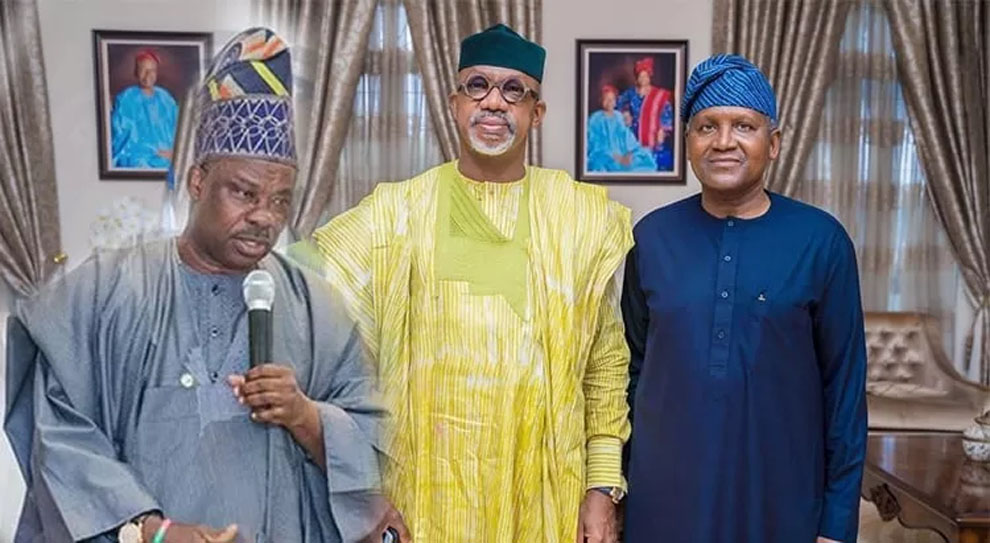
THE President of Dangote Industries, Alhaji Aliko Dangote, yesterday, alleged that his cement plant in Itori, Ewekoro local government area of Ogun State was demolished twice by the Governor Ibikunle Amosun administration, including the factory’s fencing during the second demolition.
However, in a swift reaction to the allegation, the former Ogun State governor said that Dangote does not possess requisite approvals for constructing the structures he alleged were demolished.
Speaking when he visited his new Cement factory located in Itori Ewekoro local government area of the state, Dangote commended Governor Dapo Abiodun for persuading him to return and resume construction of the plant, which is now nearing completion and expected to commence operations next year.
Dangote said: “I think it is good we have it on record that the (cement) factory we are visiting now in Itori, you know it was because of His Excellency (Dapo Abiodun) that we came back.
“That factory was demolished twice. We started, and Governor Amosun demolished it. The second time, we started again; he demolished not only the factory, including the fencing, so we left.
“But, right now, we are coming because of His Excellency my brother, Prince Dapo Abiodun. We are now back.”
He said the facility will feature two 6,000t/day clinker production lines, covering limestone crushing, cement packaging, and shipping, further solidifying Ogun State’s status as an industrial powerhouse.
He said: “Dangote Cement is Africa’s leading cement producer with 52.0Mta capacity across the continent, of which almost 70% of our production is based in Nigeria. Our Obajana plant in Kogi State is currently the largest in Africa with 16.25Mta of capacity across five lines; the Ibese plant in Ogun State has four cement lines with a combined installed capacity of 12Mta; Gboko plant also in Benue state has 4Mta; and Okpella plant in Edo State has 3Mta. By the time we deliver Abidjan and Itori, we will be at 61mm tons per annum next year.
“It is on record that our investment in cement manufacturing made Nigeria self-sufficient in the product, effectively ending importation and marking its transformation into a cement exporting nation.
“We repeated the feat in the production of fertilizer as Nigeria is now self-sufficient, with the surplus going for the export market thereby generating foreign exchange earnings for the country.
“We rolled out automotive gas oil (AGO) in January 2024 and Premium Motor Spirit (PMS) in September 2024 from our 650,000 barrels per day petroleum refinery located in Ibeju-Lekki. Other products from the refinery include aviation fuels, LPG, and carbon black.
“The refinery can meet domestic demand for all refined petroleum products. Today, we have repeated the cement story, where a country that was once a net importer of a product, is now exporting refined petroleum products.
“Additionally, we have also commenced the production of Polypropylene at our petrochemical complex.
“At Dangote Industries, our goal is to make Nigeria self-sufficient in whatever we consume, because we have the natural resources for the domestic manufacturing of these products and commodities.
“This is tested by the influx of many manufacturing firms setting up their plants here. I especially would like to commend specially, my good friend and brother, the Governor of Ogun State for your vision, and deliberate policies that focus on attracting enterprises through immense support for the private sector which is now attracting investors”.
“We have also received tremendous support and encouragement from both the traditional ruler and the good people of Itori land, which enabled the speedy takeoff of the project.
“Similarly, we enjoyed such tremendous support from the traditional rulers in Yewa Land and host communities of Ibese Cement Plant. We are grateful for such an overwhelming show of partnership and support and ask that this same level of support be extended to the operations of the plant.
“Nigeria is a growing economy; the developmental challenges are quite enormous and require concerted efforts to overcome them. This is why private companies should complement the government’s efforts. It is in this light that we, at Dangote Industries, continue to demonstrate our belief in this nation and its people and make investments that are targeted towards transforming the economy of the nation through our work in Ogun State as we have done elsewhere.”
I won’t be bullied or blackmailed — Amosun
While reacting to the allegation, Senator Amosun, who spoke through his Media Aide, Lanre Akinwale said that Dangote did not possess requisite approvals for constructing the structures he alleged were demolished.
The former governor said: “We want to appeal to Alhaji Dangote to avail the public of the requisite approvals for the construction of the structures he alleged were demolished.
“This will, at least, help the public to put the issue in proper context and for us to know what exactly his grouse is.
“For us, as a government, we believed that there could not be two governments in a state, and Dangote, therefore, could not operate above the law or under a different set of laws.
“It is important to note that at the commissioning of his Ibese Cement factory, Dangote praised the Amosun administration to high heavens for its promotion of investments in Ogun State and for facilitating the commencement of the cement factory after eight years of frustration as he then alleged by other administrations.
“Dangote is just one of the many ongoing concerns in Ogun State, and the Amosun administration is on record to have attracted over 500 companies to the state and was acknowledged by the World Bank as one of the top three states ensuring Ease-of-Doing-Business in Nigeria.
“While we will not give vent to this obvious mischief as it is deliberate, we will advise Alhaji Dangote to furnish the public with details of the land acquisition with relevant planning approvals, and let us engage in a constructive conversation therefrom.”
“However, while we will wait to hear from him, we would like to state that not all Nigerians can be compromised, bullied or blackmailed. The notion that everyone has a price is an expression applicable only to people with weak foundations and questionable upbringing. This is why some of us will continue to uphold high standards in all our undertakings, irrespective of whose ox is gored.”
FRSC hands over Safeline Bank to ROBOPAY, targets digital financial transformation
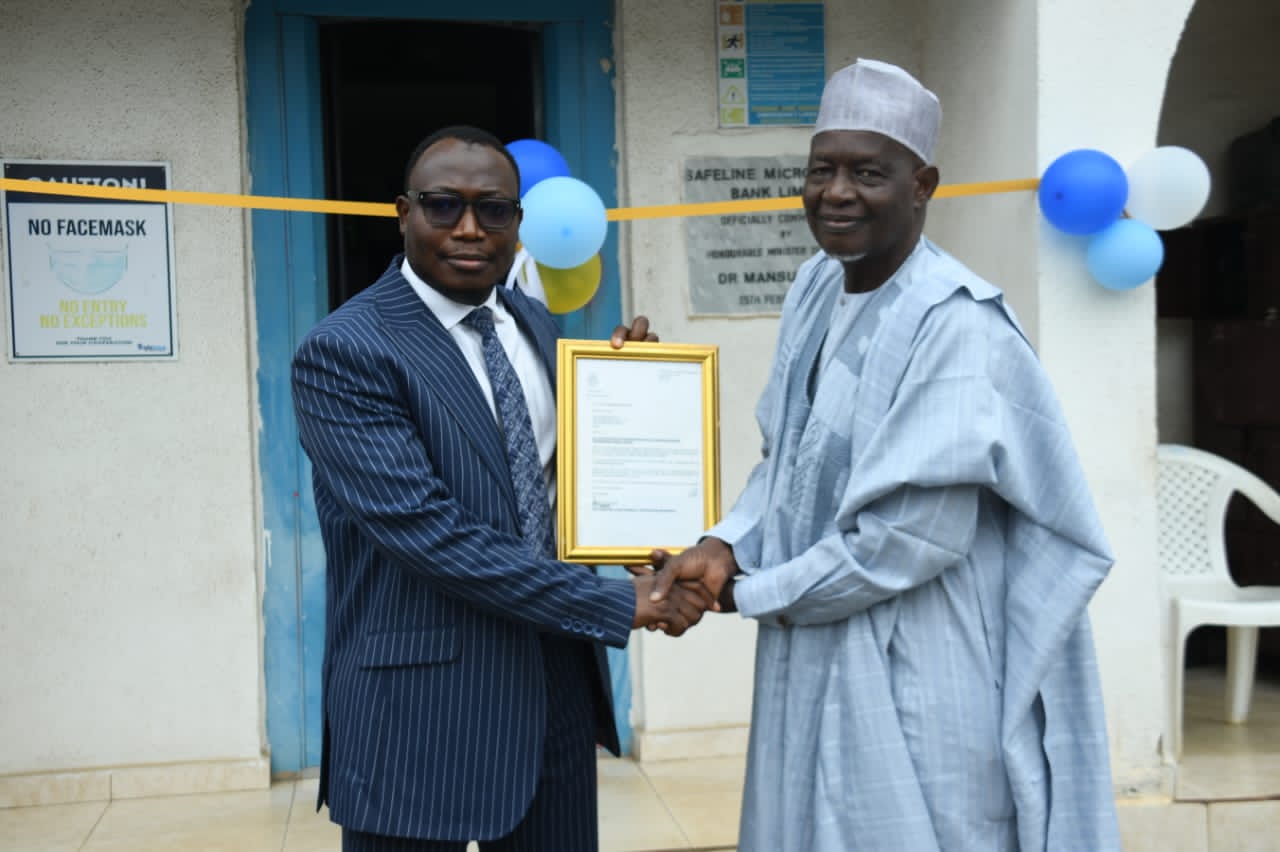
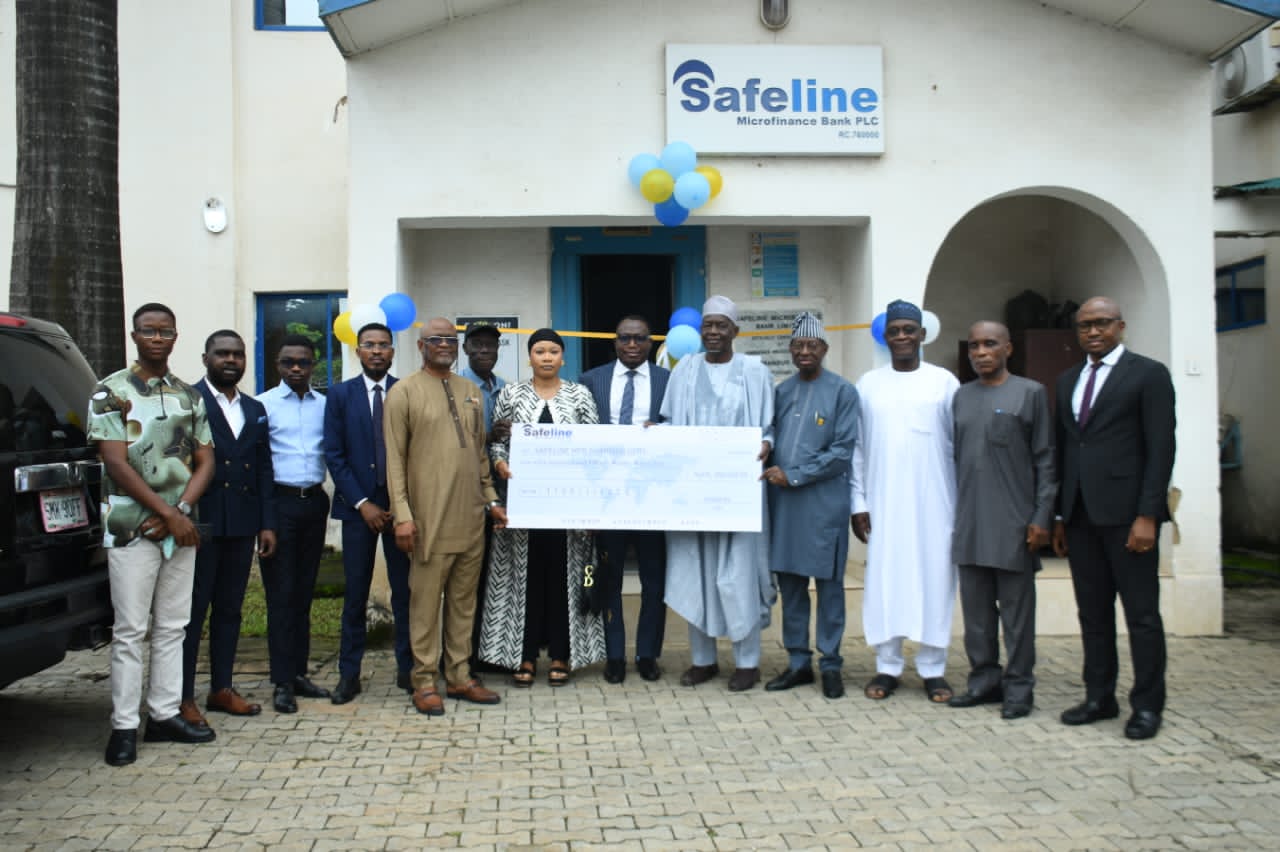
The Federal Road Safety Corps (FRSC) has handed over ownership of Safeline Microfinance Bank to ROBOPAY NIG. LTD., paving the way for a major recapitalisation and technology-driven transformation of the financial institution.
The divestment, which took place on Monday, October 5, 2026, at the bank’s premises in Abuja, is expected to reposition Safeline Microfinance Bank for stronger competitiveness, improved service delivery and sustainable growth in Nigeria’s rapidly evolving financial services sector.
The development, according to a statement by the Corps Public Education Officer, Osondu Ohaeri, is part of the strategic efforts under the leadership of the Corps Marshal, Shehu Mohammed, to reposition the institution for greater efficiency and competitiveness.
Safeline Microfinance Bank was established by the FRSC to provide financial services and opportunities to members of the Corps and other stakeholders.
Speaking at the handover ceremony, Chairman of the Board of Safeline Microfinance Bank, Ibrahim Babagana, a Deputy Corps Marshal (Rtd.), said the decision to divest the bank followed a careful assessment of the prevailing regulatory environment and emerging government policies affecting the microfinance banking industry.
Babagana said sustaining the bank under the changing financial landscape would require substantial additional capital, greater investment in technology and enhanced human capital.
He explained that the Board therefore resolved to transfer ownership to an investor with the capacity, resources and commitment to make the required investments and place the bank on a sustainable growth trajectory.
The former FRSC chief expressed confidence in ROBOPAY, saying the company had demonstrated the competence, commitment and vision required to build on the foundation established by the Corps and take Safeline Microfinance Bank to a new level.
He identified strengthening the bank’s capital base, deploying modern technology and investing in human resources as critical priorities for its survival and competitiveness in the increasingly digital financial services market.
Responding on behalf of ROBOPAY NIG. LTD, Malam Aliyu Abiodun thanked the Board and management of Safeline Microfinance Bank for the confidence reposed in the company, describing the acquisition as a significant milestone and an opportunity to unlock the institution’s considerable potential.
Abiodun said the bank already had valuable assets, structures and an institutional foundation which the new owners would build upon through strategic investments in financial technology, capital and human resources.
He said ROBOPAY would deploy FinTech solutions to modernise the bank’s operations, improve customer experience, expand its service offerings and strengthen its competitive position within Nigeria’s financial services industry.
According to him, the new ownership would retain and leverage the institutional foundation created by the FRSC while introducing innovative technology-driven solutions capable of opening new growth opportunities for the bank.
The transaction thus signals more than a change in ownership, as it ushers Safeline Microfinance Bank into a new phase anchored on recapitalisation, digital innovation and professionalised financial services.
Both parties expressed commitment to ensuring a seamless transition, with the ultimate objective of building a stronger, more competitive and sustainable institution capable of delivering greater value to its customers and stakeholders.
High Chief Government Oweizide Ekpemupolo, popularly known as Tompolo
Tantita Operations Push Oil Export Earnings to $9.39bn in Q2
Nigeria’s crude oil export earnings rose to $9.39 billion in the second quarter of 2026, with improved pipeline security, higher production and greater stability in the Niger Delta supporting the stronger performance.
Provisional Balance of Payments (BOP) data showed that Nigeria’s total goods exports increased to $20.08 billion in Q2, up from $15.56 billion in the first quarter.
Crude oil exports increased by 15.78 per cent to $9.39 billion, while natural gas exports climbed by 40.15 per cent to $3.63 billion.
The improvement has renewed attention on the role of pipeline security in protecting Nigeria’s oil production and ensuring that crude reaches evacuation points and export terminals.
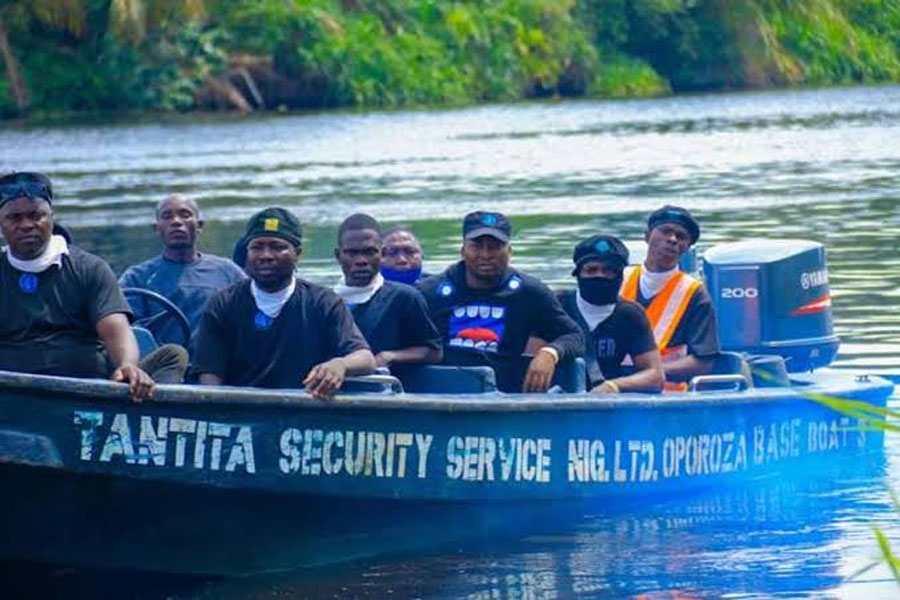
Among the companies involved in pipeline surveillance in the Niger Delta is Tantita Security Services Nigeria Limited (TSSNL), which was engaged by the Federal Government to protect oil pipelines and other critical petroleum infrastructure.
Tantita’s operations, carried out alongside government security agencies, have focused on tackling oil theft, illegal bunkering and pipeline vandalism and improving the security of facilities used to transport crude oil.
Industry stakeholders have linked the improved operating environment in the Niger Delta to increased crude production and stronger export performance. However, the rise in export earnings cannot be attributed to Tantita alone, as production volumes, international oil prices, investments, operational efficiency and wider government measures also influence export receipts.
The broader export figures also showed significant improvements across other sectors of the petroleum industry.
Refined petroleum product exports increased by 66.24 per cent to $3.94 billion, while non-oil exports rose by 25.30 per cent to $3.12 billion during the quarter.
At the same time, Nigeria’s crude oil imports fell sharply from $1.39 billion in Q1 to $580 million in Q2, further strengthening the country’s external position.
The stronger export performance helped push Nigeria’s current account surplus to $7.54 billion, representing a 67.93 per cent increase from the $4.49 billion recorded in Q1. The figure was also higher than the $5.17 billion recorded in Q2 2025.
The increase in the current account surplus was driven largely by higher export earnings and an improved goods account.
The rise in crude earnings also coincided with stronger production, with Nigerian crude output reaching about 1.56 million barrels per day in June 2026, excluding condensates.
The development is significant for Nigeria, which has struggled in recent years to consistently meet its production potential because of crude oil theft, pipeline vandalism, ageing infrastructure and underinvestment in the upstream sector.
Improving security around oil-producing assets has therefore become a key part of efforts to raise output and increase foreign-exchange earnings.
Tantita, led by High Chief Government Oweizide Ekpemupolo, popularly known as Tompolo, has been at the centre of the Federal Government’s pipeline surveillance arrangement in the Niger Delta.
Stakeholders, however, say sustained growth in oil earnings will require more than surveillance operations. They have called for continued investment in exploration and field development, improved infrastructure, enhanced recovery from mature fields and faster development of major deepwater projects.
The Federal Government has also been pursuing measures aimed at attracting fresh investment into Nigeria’s upstream sector, including fiscal incentives for deepwater oil and gas projects.
For Nigeria, the latest export figures offer a boost at a time when the country is seeking stronger foreign-exchange inflows, increased oil production and greater fiscal revenues.
The challenge now is to sustain the improvement by keeping petroleum infrastructure secure, reducing crude losses and ensuring that higher production translates into consistent export earnings and broader economic benefits.
Tantita Operations Push Oil Export Earnings to $9.39bn in Q2
Dangote Sets 40-Month Deadline for $16bn East Africa Refinery in Kenya
Nigerian industrialist Aliko Dangote has set a 40-month completion target for his planned $16 billion East Africa refinery in Lamu, Kenya, following the official groundbreaking of the project.
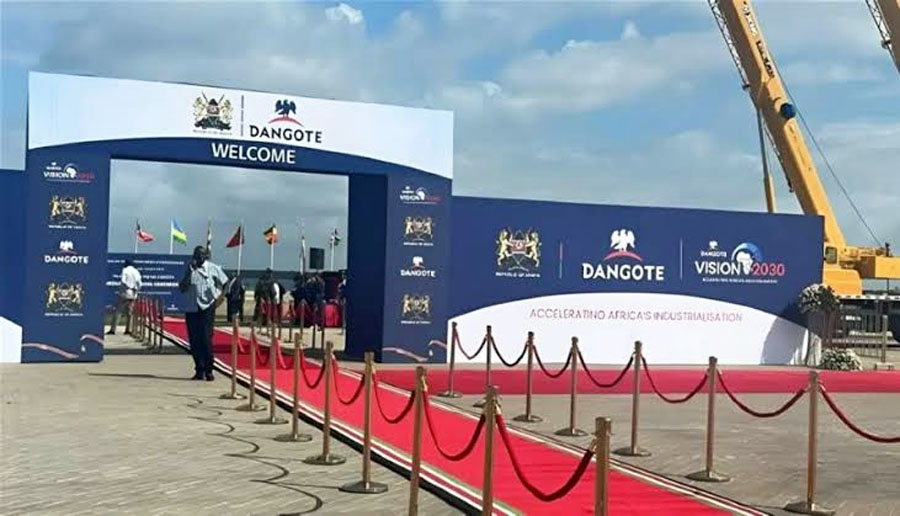
Dangote and Kenyan President William Ruto broke ground for the 700,000-barrel-per-day (bpd) refinery on Wednesday, September 30, 2026, with the facility designed to supply refined petroleum products to Kenya and other countries across the region.
Dangote said the refinery would be commissioned within 40 months.
“We will come back here and commission this refinery in 40 months from today,” he said at the ceremony.
The Dangote East Africa Petroleum Refinery and Petrochemicals Complex is expected to process about 700,000 barrels of crude oil daily, making it one of the largest refining projects in Africa and, when completed, potentially the world’s largest single-train refinery.
The project is expected to produce petrol, diesel, jet fuel, polypropylene and base oil, with the products targeted at Kenya and wider East African markets. Dangote has also said part of the refinery’s jet-fuel output could be supplied to Europe and the United Kingdom.
The facility will also include a planned 1,000-megawatt power plant, which Dangote said would provide electricity for the wider industrial complex.
Beyond refining, the billionaire said the project would create an industrial ecosystem covering petrochemicals, logistics, engineering, marine services, manufacturing, technology and small and medium-sized enterprises.
Dangote also announced plans for a training school that would prepare 1,000 Kenyan engineering graduates for opportunities associated with the project. The wider development is expected to generate thousands of jobs across the refinery and related industries.
The project has attracted major international engineering and technology partners, with Honeywell Technologies providing process technologies, licensing, engineering services, catalysts, equipment and digital solutions.
The use of established designs and experience from Dangote’s Nigerian refinery is expected to shorten the development schedule compared with a typical new refinery.
Engineers India Limited is also involved in the project under a major engineering and project-management contract.
Dangote’s Kenyan project is modelled partly on the experience of his 650,000-bpd refinery in Lagos, with the new facility expected to draw on technology and engineering experience gained from the Nigerian plant.
The refinery is expected to source crude from Uganda and other African producers, while serving a market extending beyond Kenya to countries including Uganda, Rwanda, Tanzania, Ethiopia and South Sudan.
Regional leaders who attended the groundbreaking included Ugandan President Yoweri Museveni and Ethiopian Prime Minister Abiy Ahmed, alongside other African leaders and former Nigerian President Olusegun Obasanjo.
President Ruto described the project as an investment in energy security, industrialisation and regional integration, while stressing the importance of ensuring that Kenyan citizens benefit from the employment and training opportunities created by the refinery.
Dangote has also proposed allowing governments in the region to take a combined 30 per cent stake in the refinery, potentially giving participating countries an opportunity to benefit financially from the project.
However, the project faces a legal challenge over the land on which it is being developed. A Kenyan court ordered parties to maintain the status quo over a disputed parcel in Lamu after residents challenged the development, citing ancestral land claims and other concerns.
Environmental concerns have also been raised over the potential impact of the project on the coastal ecosystem and the wider Lamu area.
Despite the legal and environmental issues, Dangote has said the project will proceed.
Once completed, the $16 billion Kenya refinery is expected to increase refining capacity in East Africa, reduce dependence on imported petroleum products and support the region’s broader industrialisation drive.
Dangote Sets 40-Month Deadline for $16bn East Africa Refinery in Kenya