

Sports
“I Don’t Regret To Take The Decision To Not Come On Against Spurs” – Ronaldo

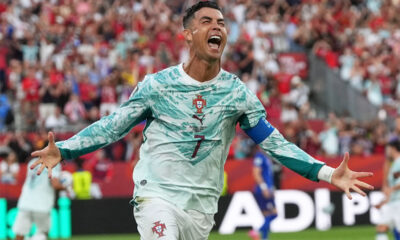
Portugal superstar Cristiano Ronaldo said he felt “provoked” by Erik Ten Hag before leaving the field at Old Trafford during the win against Tottenham in October.
Newsbreak.ng reports that the Manchester United forward, who refused to come on as a late substitute, revealed his reason for leaving in his interview with Piers Morgan on TalkTV.
“Piers I will be honest with you, it’s something that I regret to left from the stadium. Probably, or maybe not, I don’t know,” he said.
“It’s difficult to tell you 100% but let’s say I regret, but in the same way I felt provoked by the coach.
READ ALSO:
- Military destroys 44 illegal refineries, arrests 29 suspects, rescues 41 in 2 weeks
- For destroying Tinubu’s billboard, Oyo park chairman, Auxiliary arraigned
- Ayu: PDP will win 25 states, hold victory party in Aso Rock
“Don’t tell me that the top players, the guys who want everything, the key players will play three minutes. Come on, this is unacceptable after what they keep saying before, that they respect me, that they do this, they do that.
“For me it was not respect, this is why I take this decision I regret.
“I apologised to my teammates for the situation, I did a post, an Instagram, I regret to left from the stadium.
“I regret my teammates know what I felt, and I said to them apologised, but in the same way, I do not regret to take the decision to not come on.”






Sports
‘I Was Never the Chosen One’ — Dembele Responds to Mbappe
‘I Was Never the Chosen One’ — Dembele Responds to Mbappe
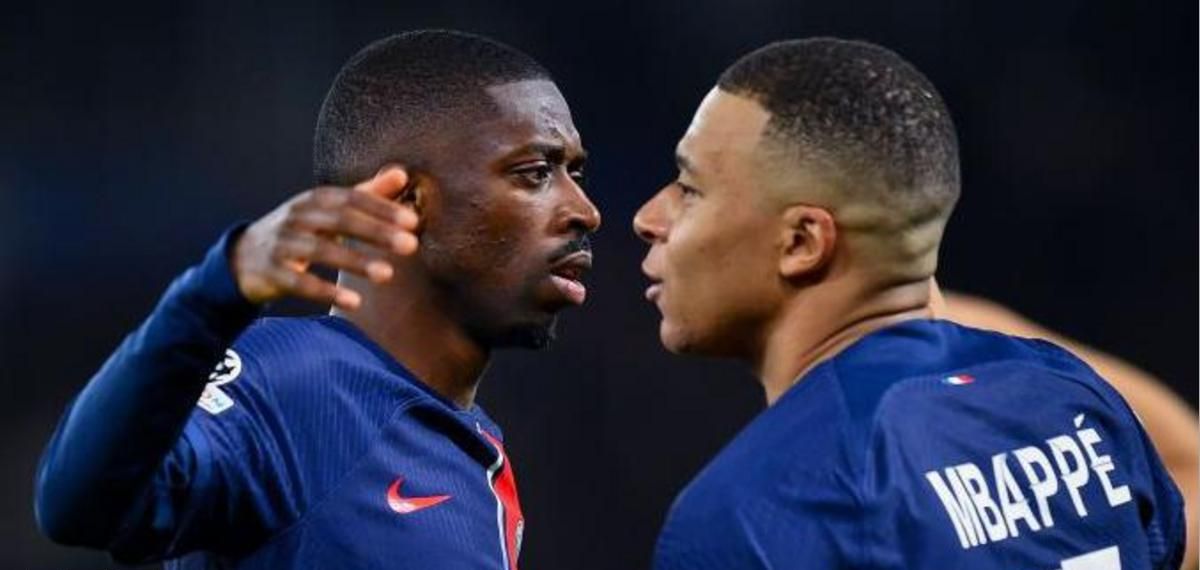
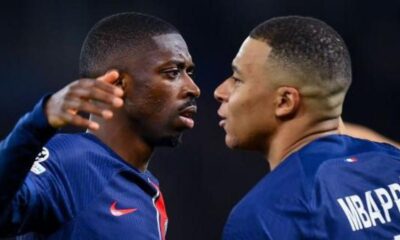
Ousmane Dembele has pushed back against Kylian Mbappe’s description of their different career paths as the two France teammates compete for the 2026 Ballon d’Or.
Mbappe, speaking to France Football, said Dembele had always been recognised as a talented player, while he had been viewed as “the chosen one”.
The comment appeared to prompt a pointed response from Dembele following PSG’s victory over Brest.
The current Ballon d’Or holder said he had spent much of his career working without receiving the same level of recognition.
READ ALSO:
- Plateau Attacks: Gunmen Kill Passengers, 13 Dead Across Three LGAs
- 2027: Northern Lecturers Back Tinubu, ASUU Disowns Endorsement
- ‘I Was Never the Chosen One’ — Dembele Responds to Mbappe
“I was always at the back of the class, working hard” Dembele said. “I was never the chosen one.”
He went on to say that he had kept working throughout his career and was rewarded last year after an outstanding season with PSG.
The exchange comes as both players prepare for another contest for the biggest individual prize in football.
Dembele is among the nominees after winning the award in 2025, while Mbappe is also on the 30-player shortlist. Other leading names include Harry Kane and Lamine Yamal.
The winner will be announced on October 26 at the London Palladium, where the Ballon d’Or ceremony will be held for the first time.
For now, the remarks have added an extra layer to the competition between the two France stars, although neither player has publicly described their relationship as a feud.
‘I Was Never the Chosen One’ — Dembele Responds to Mbappe
International
‘Completely False’ — Moreno Denies Using AI to Prepare Games
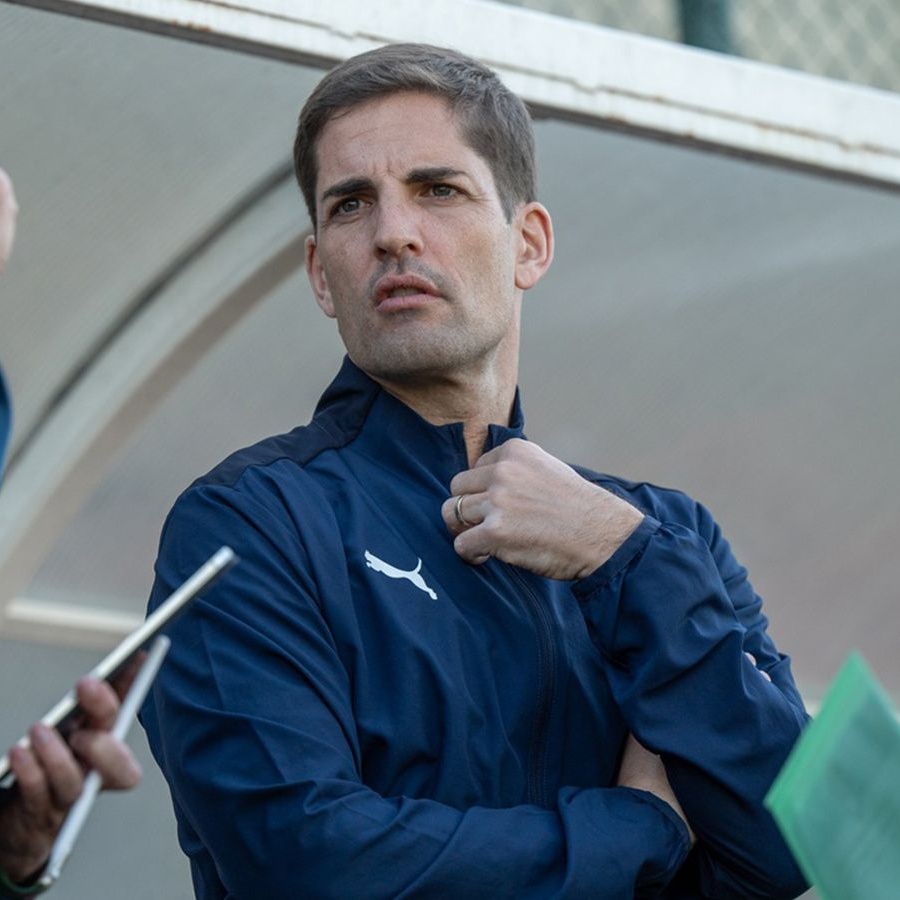
Robert Moreno has begun his interim tenure as South Korea’s coach with a denial of one of the more unusual controversies attached to his coaching career, claims that he used ChatGPT to help prepare his teams for matches.
The Spanish coach, who arrived in South Korea this weekend, was asked about the allegation as he began work with the national side.
Moreno was accused by Russian media earlier this year of heavily relying on artificial intelligence during his spell at Sochi, where he left in September 2025 following a poor run of results.
He has consistently rejected the claim.
Moreno said the reports were “completely false” and argued that his use of technology had been misrepresented.
His explanation comes as he takes over a South Korean side attempting to recover from a turbulent World Cup campaign. The team crashed out in the group stage, leading Hong Myung-bo to resign and leaving the Korea Football Association under pressure over both the team’s performance and its previous recruitment process.
The KFA appointed Moreno as a temporary replacement rather than immediately committing to a permanent coach. He is expected to lead the team through six international matches, beginning with September and October friendlies against Ecuador, Uruguay, Venezuela and Uzbekistan.
His first squad includes veteran captain Son Heung-min, who now plays for Los Angeles FC, as well as Lee Kang-in and Kim Min-jae.
Moreno said he wants his tenure to be about more than results, with the immediate goal of rebuilding the relationship between the national team and its supporters.
“I want to make Korean football fans happy,” he said.
For now, however, the AI controversy remains part of the baggage surrounding his appointment, something Moreno appears keen to put behind him as he begins the task of rebuilding South Korea’s national team.
Sports
Falconets Crush New Caledonia 10-1, Set Up England Clash
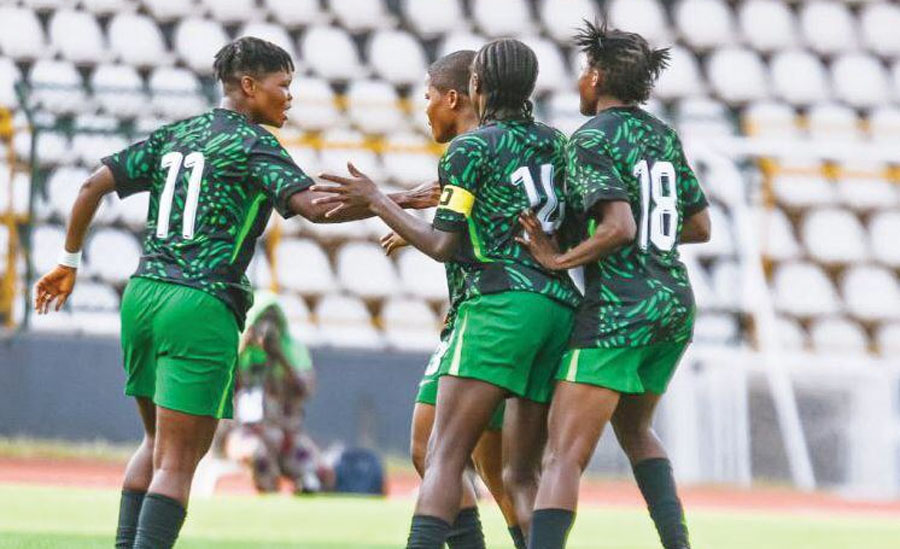
Falconets Crush New Caledonia 10-1, Set Up England Clash
Nigeria’s Falconets have secured their place in the Round of 16 of the 2026 FIFA U-20 Women’s World Cup in Poland after producing a record-breaking 10-1 victory over New Caledonia in their final Group F match on Sunday.
The emphatic victory at the Stadion Miejski ŁKS in Łódź lifted Nigeria to second place in Group F with four points, behind Spain, and earned the team a knockout-stage meeting with England, who topped Group E. The Round of 16 clash is scheduled for Thursday, September 17.
The result marked a dramatic turnaround for the Falconets, who had struggled to find the back of the net in their opening two matches. Nigeria began the tournament with a 2-0 defeat to Spain before playing out a goalless draw against China, leaving qualification in doubt heading into the final group fixture.
With their knockout hopes on the line, coach Moses Aduku’s side responded in emphatic fashion, racing into a four-goal lead before half-time and adding six more goals after the break.
Ramotalahi Kareem opened the scoring from the penalty spot in the 17th minute before Rebecca Adegbemile doubled Nigeria’s advantage two minutes later.
Janet Seimeyeha Akekoromowei added the third in the 23rd minute, while Kareem struck again in the 27th minute to complete a first-half brace and give the Falconets a 4-0 lead at the interval.
READ ALSO:
- Driver Flees With Employer’s Car Two Days After Employment
- Boris Johnson Caught in Russian Drone Strike Scare Near Poland Border
- South Africa: Two Women Arrested Over Alleged Rape, Kidnap of E-Hailing Driver
Nigeria continued to dominate after the restart, with substitute Winner Onajite David joining the scoring in the 60th minute.
Kareem completed her hat-trick in the 64th minute before Tosin Rafiu added the seventh goal in the 70th minute. Adegbemile then scored her second of the match four minutes later.
David returned to the scoresheet in the 75th minute to make it 9-0 before New Caledonia finally found a consolation goal through Joceline Kourevi in the 89th minute.
David completed her own hat-trick in stoppage time to round off a remarkable 10-1 victory for Nigeria.
The win is the biggest victory recorded by Nigeria at the FIFA U-20 Women’s World Cup, giving the Falconets a significant boost in goal difference, which proved decisive in determining their final position in Group F.
Nigeria and China both finished the group stage on four points. However, Nigeria advanced in second position because of their superior goal difference, while Spain topped the group with nine points after defeating China 3-1 in the other final Group F fixture.
The victory also ensured that Nigeria maintained their impressive record of reaching the knockout stage of the FIFA U-20 Women’s World Cup. The Falconets have been regular participants in the latter stages of the competition and have twice finished as runners-up, although they are still searching for their first world title.
For New Caledonia, the match brought an end to their historic debut at the U-20 Women’s World Cup. The Pacific island nation made history by qualifying for the tournament for the first time.
Despite the heavy defeat to Nigeria, Kourevi’s late goal provided a memorable moment for New Caledonia as the team recorded its first goal at the tournament.
The Falconets, meanwhile, will now turn their attention to England. The knockout fixture presents a significantly tougher challenge, with a place in the quarter-finals at stake.
Nigeria will enter the match with renewed confidence after scoring 10 goals in their final group game, while coach Aduku will be expected to build on the attacking display as the Falconets continue their bid to go all the way in Poland.
The dramatic victory has transformed what appeared to be a difficult group-stage campaign into another opportunity for Nigeria to make a deep run at the FIFA U-20 Women’s World Cup.
Falconets Crush New Caledonia 10-1, Set Up England Clash
-
 Politics3 days ago
2027: Northern Lecturers Back Tinubu, ASUU Disowns Endorsement
-

 metro3 days ago
Police Arrest Mother Over Alleged Brutal Abuse of 7-Year-Old Girl in Anambra
-
 Sports2 days ago
‘I Was Never the Chosen One’ — Dembele Responds to Mbappe
-
 metro3 days ago
Grand Chief Imam calls for professional communication structure for Rabitoh 1964
-

 International1 day ago
Islamic Council Condemns Attempted Attack on Holy City of Mecca
-

 Education2 days ago
JAMB Moves 2027 UTME Time — Here’s What Candidates Need To Know
-

 metro2 days ago
Lagos Power Outage: Ikeja Electric Blames TCN as Businesses, Homes Groan
-
 Politics2 days ago
2027: APC Governors Reject Wike’s Rainbow Coalition, Insist on Party Loyalty