

News
Ibadan explosion: About N50b properties lost as govt ends rescue operation

Ibadan explosion: About N50b properties lost as govt ends rescue operation
About N50 billion worth of properties may have been lost and reduced to rubble after last Tuesday’s explosion in Ibadan, Oyo State, which killed five persons, injured 77 and rendered thousands homeless, some estate valuers have estimated.
Conservative estimates from estate valuers and cost consultants show that residents may have lost properties so much to the explosion. With about 230 houses claimed to have been affected by the explosion, valuers note that at N150 million per building, a conservative estimate of N34.5 billion would have been arrived at, while other critical infrastructure and vehicles would account for the balance.
This is coming after the Oyo State governor, Seyi Makinde, disclosed at the weekend that a structural integrity test has been conducted on no fewer than 230 houses affected by the explosion.
While speaking at the Nigerian Society of Engineers investiture in Abuja, Makinde noted that the test included plans to resettle affected residents and avert a possible collapse of buildings.
“These past few days have been tough for the indigenes of Oyo State. We had an explosion and lost five lives and a lot of properties were destroyed.
“Between Tuesday and today (Saturday), the Society of Engineers led an effort to look at the structural integrity of the houses around ground zero of the explosion site and as of today, they have carried out integrity tests on 13 houses within 50 metres radius of the blast site, another 40 houses at 100 meters radius.
“They also carried out an integrity test at 200 metres on 122 houses and 53 houses within a 250-metre radius. In total, about 230 houses have been checked and this effort was led by the society. I sincerely thank you for helping us during this difficult time.”
The experts opined that it is at best still a rough estimate as going by ethics of the profession, the actual cost cannot be arrived at until estate valuers see all documents of the properties affected.
READ ALSO:
- Wike refuses to meet with me over insecurity in Abuja – FCT Senator, Kingibe
- One killed, 16 family members, 5 others abducted in fresh attack on Niger village
- 20-year-old spiritualist arrested for blackmailing, swindling women with nude videos
The state government at the weekend disclosed that it has concluded rescue operations on the site of the explosion, while adding that the site is now being fumigated.
According to a source at the Governor’s Office, the state government has concluded operations at the scene of the incident, adding that what the various emergency responders are doing at the site now is fumigation exercise.
Barring last minute change, a Federal Government delegation will be visiting the Old Bodija scene of the explosion today. According to a source, the team will include the Minister of Solid Minerals, Dele Alake; the National Security Adviser (NSA), Nuhu Ribadu among other top government functionaries.
The visit will be for an on-the-spot assessment of the incident, its impact which will guide the Federal Government to making a decision on what form of support and palliative that would be made available for the victims and residents.
Preliminary investigations fingered dynamite stored up by illegal miners as the immediate cause of the explosion. As at press time, no arrest had been made as search and rescue efforts have been concluded.
A visit to the explosion site at Adeyi Avenue, Old Bodija, by The Guardian revealed that properties along Dejo Oyelese Street, Canon Odusanwo Street, Rev Aderinola Street and others were badly damaged while some were irreparably mangled. The explosion also affected some structures at the state government secretariat, University College Hospital (UCH), among many other adjoining areas.
Describing the loss as colossal while assessing the depth of the damage, the Oyo State chairman of the Nigerian Institution of Estate Surveyors and Valuers (NIESV), Pastor Oluseyi Adebayo, said the loss would be difficult to quantify. The same sentiment was also shared by a lecturer at the Estate Management Department of Lead City University, Mr. Adewale Adedokun, adding that the properties destroyed were enormous and run into billions of Naira.
Adebayo said: “To do a comprehensive valuation of property, we need authorisation from the government and owners of such property. Some documents need to be made available to the valuers. However, we can do an on-the-spot assessment. We may not be able to do a comprehensive valuation but a rough estimate. The properties lost to the incident in that community alone are in trillions of Naira. It is a highbrow area. The cost of property in the area is huge. Again, many cars, electronic appliances and other household goods were destroyed, besides other personal effects.”
For Adedokun: “To say the fact, assets worth more than a trillion naira have been destroyed, considering the high yielding neighbourhood, assets are not only limited to the land and buildings, but it also includes land, buildings, furniture, fittings, jewelry, automobiles, household appliances, and personal properties.
“These are categorised as economic value. What of social and cultural value, environmental value, emotional and psychological values that are intangible and cannot be quantified in monetary terms. In addition, how can we ascribe value to the lives that were lost in the explosion? In summary, the value of assets lost in the explosion are enormous.”
Adebayo, Adedokun and other estate valuers and investment analysts have urged the government to conduct integrity tests for all buildings within the neighbourhood.
READ ALSO:
- Billionaire list : BUA boss, Rabiu, edges out Adenuga, becomes Nigeria’s 2nd richest person
- Police arrest 31 suspected kidnappers, drug dealers, armed robbers in Jigawa
- One dies as vehicle rams into motorcycle in Lagos
- Lagos govt bans use of plastic, styrofoam ‘take away’ packs
Others who spoke with The Guardian are the Managing Director, Southwest Housing Exhibition, Dr Olayemi Rotimi-Shodimu; a NIESV Fellow, Fisayo Alo; and the immediate past chairman of NIESV in Oyo State, Solomon Bamidele Faloye.
They also called on the government to engage all relevant professionals to critically analyse the environmental impacts of the blast on humanity and the ecosystem, adding that a review of mining laws concerning keeping of explosives is expedient.
Faloye said it is necessary to conduct an integrity test on all the properties as many foundations have been shaken and may now have cracks leading to collapse afterwards.
Adewale, a lecturer, said: “Government needs to formulate a policy that will mandate every property owner to take life and property insurance policies like that of vehicles. The state government had taken proactive steps in ensuring that lives of injured people were secured and homeless residents accommodated in hotels at the expense of the government.
“Furthermore, the government should engage the services of professionals to analyse the incident to come up with robust reports and recommendations on how to move forward post-explosion effect. The professionals should involve built environment experts to look into the causes, extent of damage to properties around the incident site, assess the worth of the lost assets, determine compensation payable in terms of finance or redevelopment, and fish out the culprit responsible for the explosion.
“Also, experts should carry out impact assessment and integrity tests on the properties within the 500 metres radius from the centre, the environmental pollution, that is air and water. This will ensure safety of lives and properties in the long run. Hence, there is a need for experts to let us know the type and nature of the explosive. We pray it doesn’t have killer components like uranium.”
As victims of last Tuesday’s explosion continue to count their losses, a former director of the National Emergency Management Agency (NEMA), Dr. Olusegun Edward Ojo, yesterday, tasked security agencies, Federal Government and Oyo State government not to limit investigations into the explosives and dynamites of a resident miner as the cause of the incident.
While commending Governor Makinde for his prompt response to the explosion, he emphasised the need to widen the scope of the investigation to discover the immediate and remote causes of the explosion.
Ojo, who is former director of NEMA in charge of relief and rehabilitation, in a statement hinted that “with the massive extent of the devastation; it is very critical that other much more intricate findings on the remote and immediate causes of this incident are embarked upon to prevent a repeat of this anywhere in Oyo State or Nigeria in general.
“I visited the explosion site on Friday for the second time to see what activities were going on and to possibly lend my experience to the process. My interest was fuelled by the fact that I had spent a very good part of my active service life until recently in local and international humanitarian interventions such as the Ikeja ammunition bomb blast of 2002; the Bellview and the Sosoliso plane crashes in 2005; and part of the 2010 Haiti earthquake humanitarian intervention. I was also the National Focal Person on UNDRR’s proactive paradigm in Disaster Risk Reduction.
“I reckon that epidemiological, sanitation and health management were also ongoing to prevent the spread of diseases. But we cannot and must not just simply conclude and go to sleep that the Dejo Oyelese explosion incident was caused by explosives in the premises of the Malian miners.
“This is because of the unimaginable magnitude of the material devastation and loss of lives. We should think out of the box and search widely for other possibilities and consequences given the perennial act of terrorism in the country; and even for remote terrestrial astronomical possibilities as being speculated in some quarters.
“This incident is indeed a good opportunity to learn new lessons, and to reexamine and rejig our community/state-wide security architecture; the not-too-salutary environmental and town planning practices/approvals of incompatible land uses in the city of Ibadan.
“For example, petrol and cooking gas filling stations are located close to business concerns and dense residential areas in some parts of the city without due consideration for possible explosions, fire incidents, and other hazard risk implications,” he noted.
Ibadan explosion: About N50b properties lost as govt ends rescue operation









News
Atiku to Tinubu: Cut Fuel Prices, Let Nigerians Breathe
Atiku to Tinubu: Cut Fuel Prices, Let Nigerians Breathe
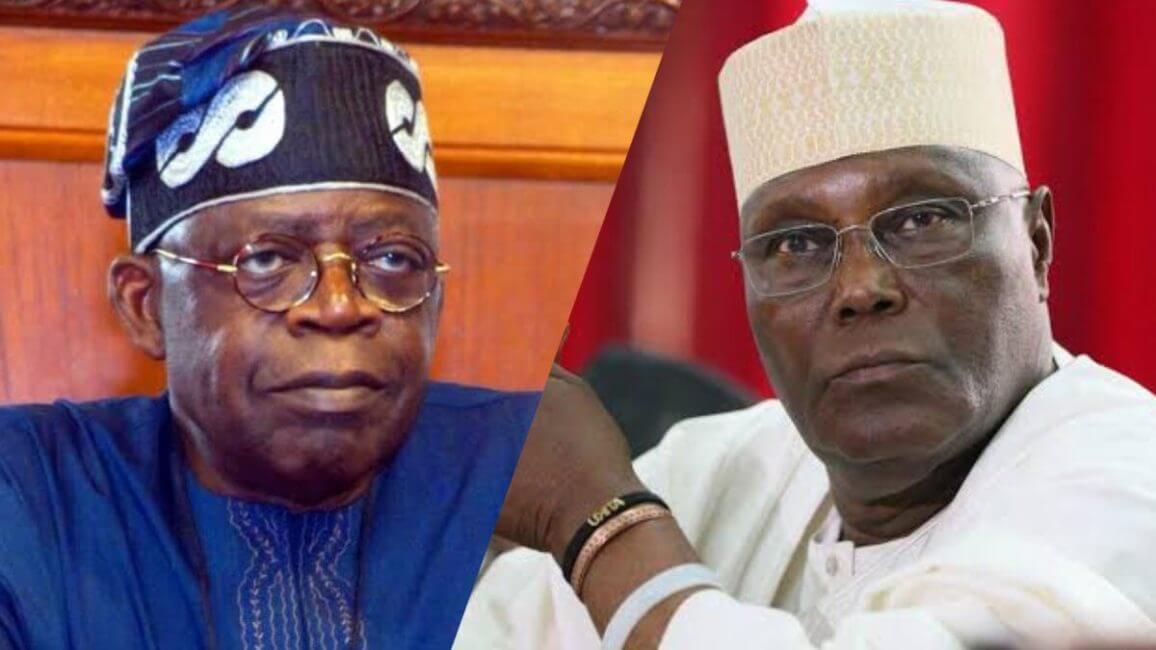
Former Vice-President and African Democratic Congress (ADC) presidential candidate Atiku Abubakar has urged President Bola Ahmed Tinubu to intervene in the petroleum sector and reduce petrol and diesel prices, saying rising energy costs are putting additional pressure on Nigerian households, workers, farmers and businesses.
Atiku made the call on Friday, September 18, 2026, during a press conference in Abuja, where he also criticised the Federal Government’s reliance on palliatives and raised concerns over plans to phase out electricity subsidies.
He asked President Tinubu to use the remaining months of the administration to implement measures capable of easing the cost-of-living crisis, arguing that Nigerians need policies that reduce the underlying cost of goods and services rather than temporary relief after prices have already risen.
According to Atiku, the impact of higher petrol prices has extended far beyond filling stations, affecting transportation, food distribution, farming, manufacturing, logistics and household budgets.
He argued that when petrol becomes more expensive, transport operators face higher costs, farmers spend more moving produce, traders pay more to move and stock goods, workers spend more commuting and businesses incur higher logistics and energy expenses.
Atiku said the resulting pressure ultimately reaches consumers through higher prices for food and other essential goods.
He also questioned the effectiveness of government palliatives, including food distribution and cash-transfer programmes, arguing that such interventions may provide temporary assistance but cannot replace policies that restore the purchasing power of Nigerians.
The ADC candidate said government should concentrate on lowering production and energy costs so that households and businesses can retain more of their income.
His comments came amid another round of increases in the domestic petrol price.
READ ALSO:
- Xenophobia: FG Brings 33 More Nigerians Home From South Africa
- Falconets Thrash England 3-0, Face Colombia in U-20 World Cup Quarter-Finals
- Replace Fuel Subsidy With Vehicle Credit to Drive Mobility, Jobs,LCCI, Ilekuba tell FG
The Dangote Petroleum Refinery increased its petrol gantry price from ₦1,265 to ₦1,350 per litre effective September 12, 2026. The increase represented an ₦85, or 6.7 per cent, rise and was the fourth upward adjustment in the refinery’s petrol price since August 21.
The successive adjustments have also been reflected at some filling stations, with petrol selling for as much as ₦1,395 per litre at some locations in Lagos, although prices have varied between stations and marketers.
Atiku said the government should not hesitate to adopt measures capable of lowering petrol prices simply because similar proposals originated from the opposition.
He said his concern was the effect of high energy costs on Nigerians and argued that the administration should act in the public interest.
A major part of Atiku’s argument is his proposal for a production subsidy for locally refined petroleum products.
The former vice-president has said his proposal is different from the former system of subsidising imported petrol. Under his plan, government support would be targeted at the crude feedstock supplied to qualifying refineries operating in Nigeria.
Atiku said the proposed mechanism would lower the cost of crude supplied to domestic refineries, with the reduction expected to translate into lower production costs and ultimately lower petrol prices for consumers.
He has proposed that the intervention should be transparent, capped and independently verified, with only crude refined in Nigeria qualifying for the support. Imported petroleum products, according to his proposal, would not benefit from the scheme.
Atiku has also said any such intervention should have a defined financial limit, be subject to National Assembly approval and undergo independent auditing.
He maintains that the policy would encourage domestic refining, protect investments in Nigeria’s refining industry and reduce the country’s dependence on imported petroleum products.
The proposal has generated debate because the Tinubu administration ended the long-standing petrol subsidy in May 2023, with the government arguing that the policy had become financially unsustainable and placed a heavy burden on public finances.
The subsequent removal of the subsidy resulted in a sharp increase in petrol prices and contributed to higher transportation and living costs, making fuel pricing one of the major economic issues in Nigeria.
The latest debate is taking place as Nigeria’s domestic refining capacity expands, particularly through the Dangote refinery.
The refinery has become a major supplier to the Nigerian market, but its prices continue to be influenced by factors including crude oil costs, exchange rates, refining expenses, logistics and international market conditions.
Atiku’s position is that government can intervene on the production side by lowering the cost of crude supplied to domestic refineries rather than returning to a system that subsidises imported petrol.
The former vice-president has also urged the government to reduce diesel prices, which remain important to manufacturers, transport operators, small businesses and other enterprises that depend on diesel-powered generators and equipment.
READ ALSO:
- Tinubu, Macron Hold Private Dinner in Paris, Reaffirm Nigeria-France Ties
- Federal Workers Urge Finance Ministry to Pay Delayed Allowances, Promotion Arrears
- Nigeria Wins $3.38bn Mambilla Arbitration Battle As ICC Rejects Sunrise Claims
He argued that lower energy costs would help reduce the cost of doing business and could eventually moderate prices paid by consumers.
Atiku also turned his attention to the electricity sector, where the Federal Government has announced plans to phase out electricity subsidies in 2027.
The government has said the reform is aimed at improving the financial sustainability of the power sector. The planned changes have nevertheless generated concerns over their possible impact on households and businesses already struggling with high operating costs.
Atiku warned that higher electricity costs could add to the burden already being carried by Nigerians.
He pointed to small enterprises such as barbers, tailors, welders and frozen-food sellers, as well as manufacturers that rely on a combination of public electricity, diesel and other alternative power sources.
He argued that government should avoid imposing additional energy costs before adequate measures are put in place to protect consumers.
The debate over fuel subsidy and electricity subsidy has therefore become part of a broader disagreement over the direction and social impact of Nigeria’s economic reforms.
Atiku has argued that the savings and additional revenues generated by subsidy reforms should translate into tangible improvements in Nigerians’ living standards.
The Federal Government, meanwhile, has maintained that the petrol subsidy removal was necessary to reduce the fiscal burden of the old system and allow resources to be redirected towards development and other government priorities.
The issue has gained renewed prominence as petrol prices rise again.
Organised labour and opposition groups have also increased pressure on the Federal Government for measures to cushion households from the impact of higher petrol prices, while calls have continued for greater support for domestic refiners.
The latest petrol price increases have revived questions about why pump prices remain high despite the availability of locally refined fuel and Nigeria’s status as a major crude oil producer.
Market participants have pointed to the cost of crude, global oil-market volatility, exchange-rate movements, distribution expenses and other factors affecting the final pump price.
Aliko Dangote has also raised concerns about differences between Nigerian petrol prices and prices in neighbouring countries, which can create incentives for cross-border fuel smuggling.
For Atiku, however, the immediate priority is to reduce the pressure on consumers.
He has urged President Tinubu to consider his proposed local refining production subsidy, lower petrol and diesel costs, address electricity affordability and adopt broader economic policies aimed at restoring Nigerians’ purchasing power.
The intervention also comes against the backdrop of the 2027 presidential election, in which Atiku is the ADC presidential candidate.
His criticism of the Tinubu administration’s economic policies is therefore part of the wider political debate over the consequences of subsidy removal, the cost of living, domestic refining and the management of Nigeria’s energy sector.
The central policy disagreement is whether government intervention should return in some form to reduce consumer prices or whether Nigeria should continue moving towards a market-driven energy pricing system while using targeted measures to protect vulnerable households.
As petrol prices remain elevated and electricity reforms continue, the debate is likely to remain a major issue for Nigerian households, businesses and policymakers.
Atiku to Tinubu: Cut Fuel Prices, Let Nigerians Breathe
News
Tinubu, Macron Hold Private Dinner in Paris, Reaffirm Nigeria-France Ties

Tinubu, Macron Hold Private Dinner in Paris, Reaffirm Nigeria-France Ties
President Bola Ahmed Tinubu has held a private dinner with French President Emmanuel Macron at the Élysée Palace in Paris, with both leaders reaffirming the longstanding relationship between Nigeria and France and their commitment to strengthening bilateral cooperation.
The meeting took place on Thursday, September 17, 2026, during Tinubu’s ongoing three-week annual leave in Europe.
The Presidency disclosed the engagement on Friday, saying Macron received Tinubu at the Élysée Palace for the private dinner as the two countries continued efforts to deepen their diplomatic and economic relationship.
Special Adviser to the President on Information and Strategy, Bayo Onanuga, said the engagement reflected the enduring ties between Nigeria and France and the shared commitment of both countries to expanding cooperation.
Tinubu also confirmed the meeting in a message shared on his official social media platform, describing the dinner with Macron as a pleasure.
The Nigerian President said his conversation with the French leader reaffirmed the strong friendship between Nigeria and France, as well as their determination to deepen cooperation and build a mutually beneficial partnership.
Photographs released from the meeting showed Tinubu and Macron at the French presidential palace, while another image featured Tinubu alongside Macron and France’s First Lady, Brigitte Macron.
The Presidency did not disclose the specific issues discussed during the private dinner or announce any new agreement arising directly from the meeting.
READ ALSO:
- Federal Workers Urge Finance Ministry to Pay Delayed Allowances, Promotion Arrears
- Nigeria Wins $3.38bn Mambilla Arbitration Battle As ICC Rejects Sunrise Claims
- 2027: Tinubu May Mediate Wike-APC Governors Rift In France
The engagement nevertheless comes against the backdrop of expanding Nigeria-France relations, with both countries maintaining cooperation in areas including trade, investment, energy, security, education, infrastructure, innovation, culture and the creative economy.
The latest meeting also adds to a series of high-level engagements between Tinubu and Macron since the Nigerian President assumed office in 2023.
In September 2025, Tinubu met Macron at the Élysée Palace for a private working lunch. Following that engagement, Tinubu said the discussions had covered key areas of cooperation and reflected the desire of both countries to deepen their partnership.
The relationship received another major boost during Tinubu’s state visit to France in November 2024, when the two countries expanded discussions around economic cooperation, investment, energy transition, defence, education, culture and innovation.
The 2024 visit was particularly significant because it was described by the French Presidency as the first state visit by a Nigerian president to France since 2000.
During the visit, Tinubu and Macron also witnessed efforts to strengthen private-sector links between the two countries, including engagements involving the Franco-Nigerian Business Council and representatives of businesses and economic institutions.
The two governments have continued to pursue stronger economic relations, particularly around French investment in Nigeria and opportunities for Nigerian businesses to access the French and wider European markets.
Security cooperation has also remained part of the broader Nigeria-France relationship, with France maintaining engagement with Nigeria on regional security and counter-terrorism issues.
The latest meeting, however, was not accompanied by a detailed communiqué setting out specific decisions or agreements.
Tinubu’s meeting with Macron came shortly after the Nigerian President arrived in France for the second phase of his European vacation.
He had earlier spent part of his annual leave in London before travelling to Paris. The Presidency had described the three-week absence as an annual leave and working vacation, with Tinubu expected to return to Nigeria after completing the trip.
The private dinner therefore provided another opportunity for the Nigerian and French leaders to maintain direct contact at the highest level, while publicly reaffirming the importance of the Nigeria-France partnership.
The meeting also underscores the continuing diplomatic engagement between Abuja and Paris as both countries seek to expand cooperation across economic, political, security and cultural areas.
For now, details of any specific outcomes from the private dinner remain undisclosed, with the Presidency’s public account centred on the friendship between the two countries and their shared commitment to stronger bilateral relations.
Tinubu, Macron Hold Private Dinner in Paris, Reaffirm Nigeria-France Ties
News
FG Plans 2027 Electricity Subsidy Phase-Out, Targets Power Sector Debt
FG Plans 2027 Electricity Subsidy Phase-Out, Targets Power Sector Debt
The Federal Government plans to begin phasing out electricity subsidies from 2027 as part of a wider effort to restore financial stability to Nigeria’s power sector, improve electricity supply and prevent the accumulation of fresh liabilities.
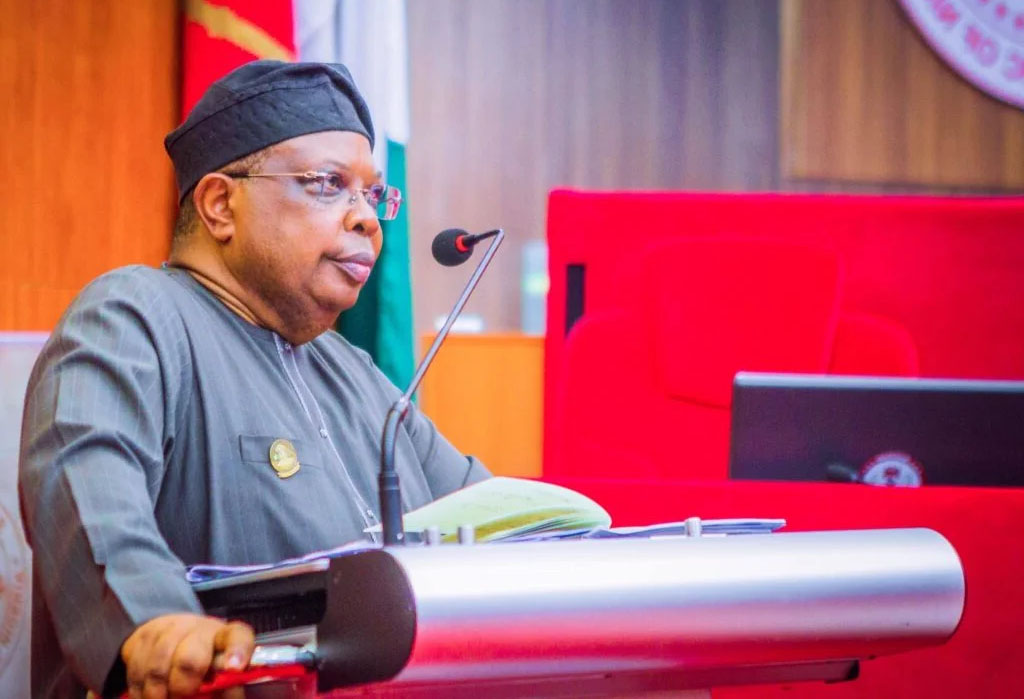
Minister of Power Joseph Tegbe disclosed the plan while outlining the government’s reform agenda, saying the administration of President Bola Ahmed Tinubu was working to clear legacy obligations in the electricity market and establish a more sustainable funding structure.
Tegbe said the planned withdrawal of the subsidy should not be interpreted as an immediate increase in electricity tariffs.
The minister has repeatedly stated that there is currently no government policy to increase electricity tariffs beyond their existing levels, stressing that the immediate priority is to improve service, expand access and ensure consumers pay for electricity actually supplied to them.
He also said the government was developing measures to protect vulnerable electricity consumers as the reform progresses.
The planned subsidy phase-out comes against the background of a major financial crisis in the Nigerian Electricity Supply Industry (NESI). The government has had to cover part of the difference between the cost of supplying electricity and the amount recovered through tariffs, while unpaid obligations have accumulated across the electricity value chain.
Recent figures cited by industry reports indicate that the Federal Government covered about ₦358.32 billion of electricity generation costs in the first quarter of 2026 alone.
Between April 2025 and April 2026, distribution companies reportedly issued electricity invoices worth about ₦3.16 trillion, with the government expected to cover about ₦1.86 trillion as subsidy for customers whose tariffs remained below cost-reflective levels.
The burden has added to the financial pressures facing generation companies, gas suppliers and other participants in the electricity market, limiting their ability to maintain equipment, settle obligations and invest in additional capacity.
The government has therefore made power-sector debt reduction a central part of its reform programme.
President Tinubu approved a plan to settle about ₦3.3 trillion in verified legacy electricity-sector debts accumulated between February 2015 and March 2025.
READ ALSO:
- Nigeria Wins $3.38bn Mambilla Arbitration Battle As ICC Rejects Sunrise Claims
- 2027: Tinubu May Mediate Wike-APC Governors Rift In France
- 2027: Sowore Says He’d Rather Die Than Travel Abroad For Medical Treatment
To support the programme, the Federal Government established a ₦4 trillion Power Sector Multi-Instrument Issuance Programme.
The government has so far raised hundreds of billions of naira through the initiative. The second series, valued at approximately ₦728.9 billion, was completed in September, bringing total funds raised under the programme to more than ₦1.1 trillion, according to government officials.
The second issuance comprised about ₦402 billion in cash bonds and ₦326.98 billion in non-cash bonds allocated to participating generation companies. Eleven GenCos took part in the second series, compared with eight in the first.
The debt settlement is intended to restore liquidity to the electricity market and improve the financial position of generation companies, which in turn should help them meet obligations to gas suppliers and invest in maintaining and expanding their plants.
The Federal Government has said resolving the historical debt problem is necessary if the electricity market is to become commercially sustainable and attract new private investment.
The subsidy reform is being pursued alongside measures aimed at improving the physical infrastructure needed to deliver electricity.
The Federal Ministry of Power has identified weaknesses in the national transmission network as one of the major constraints to reliable electricity supply and has established a Technical Working Committee on Grid Stabilisation.
The committee is expected to work with the Transmission Company of Nigeria and the Nigerian Independent System Operator to address transmission bottlenecks, ageing infrastructure and recurring system collapses.
The government’s plans include strengthening critical transmission corridors, expanding grid redundancy and modernising control and monitoring systems.
Tegbe has also outlined plans to improve metering, tackle electricity theft and reduce technical and commercial losses across the power value chain.
The government has linked the reforms to its wider objective of ensuring that consumers are billed more accurately and that electricity companies can recover the revenue required to maintain their operations.
The minister has also reported improvements in generation and electricity availability in some areas, but stressed that generation alone cannot resolve Nigeria’s power problems.
For electricity to reach consumers consistently, power must be generated, transmitted, distributed and properly paid for. Weaknesses in any part of that chain can undermine improvements elsewhere.
The government is therefore pursuing reforms across generation, transmission, distribution and metering, rather than relying solely on additional generation capacity.
The planned 2027 electricity subsidy phase-out will be a major test of those reforms. Government support has helped keep tariffs below the cost of supplying electricity for some categories of consumers, but the resulting financial burden has contributed to recurring liabilities in the sector.
The challenge for the government will be to reduce that burden without worsening the difficulties faced by households and businesses, particularly low-income consumers.
Tegbe has said vulnerable Nigerians will be protected and that the subsidy transition will be accompanied by efforts to improve electricity services.
For now, the Federal Government is combining the planned subsidy reform with debt settlement, grid investment, metering and measures to improve the commercial operation of the electricity market.
The success of the policy will ultimately depend on whether the government can translate those measures into more reliable electricity, improved service delivery and a financially sustainable power sector while limiting the impact of the transition on vulnerable consumers.
FG Plans 2027 Electricity Subsidy Phase-Out, Targets Power Sector Debt
-

 International3 days ago
Islamic Council Condemns Attempted Attack on Holy City of Mecca
-

 News3 days ago
Keep Politics Out of My Office — Ogbomoso Grand Chief Imam Warns Politicians, Bloggers
-

 metro2 days ago
Niger Mosque Abductions: Terrorists Execute 30 of 500 Captive Muslim Worshippers
-

 Entertainment2 days ago
BREAKING: Olu Jacobs Dies at 84, Atiku Mourns Cultural Icon
-
 Business2 days ago
Fuel Prices Climb to ₦1,500 per Litre Across Nigeria, Sparking Calls for Urgent Action
-

 News2 days ago
Blue Line Rail, Hospitals Get Boost as Lagos Approves ₦200bn Bond and Budget Reordering
-
 News2 days ago
OAU Investigates Death of Final-Year Student as Police Begin Probe
-
 Interview2 days ago
He Does Not Lose Elections”: Abdulmumin Jibrin Predicts 65% Landslide for Tinubu in 2027