

Auto
Inauguration of the National Road Safety Advisory Council: FRSC continues to grow in leaps and bounds under Oyeyemi, by Bisi Kazeem

Nothing gladdens the heart of a citizen than the empirical indices of positive changes and development of his country. When the nation is blessed with a crop of leaders who formulate and implement policies that guarantee the safety and security of lives and properties of all and sundry, that feeling of assurance is second to none. The feeling has a magic wand that could trigger immeasurable degree of patriotism. It breeds confidence, nurtures trust in the government, eradicates apathy, and entrenches great deal of citizenship participation in governance.
A case at hand is the Federal Road Safety Corps and the crop of leaders the lead agency in road safety administration and traffic management in Nigeria has had since creation. In its over three decades of entrenching safety and creating a safer motoring environment in Nigeria, the agency, through coordinated formulation and implementation of life saving policies, has in no small measure, clamped down on factors that have bedeviled the highways and successfully reduced to the barest minimum, the cases of road traffic crashes and fatalities on our roads.
Since 18 February, 1988 when the Corps commenced full operational activities geared towards eradicating road traffic crashes, the Federal Road Safety Corps has brought down annual record of crashes from over Forty Thousand deaths per year to below Five Thousand deaths.
The foregoing, of course is not the crux of this article, since several publications abound on how the Corps achieved the aforementioned strides. My opinion will dwell mostly on the resourcefulness, inventiveness, dexterity and administrative prowess of the present Corps Marshal, Dr Boboye Oyeyemi whose administration defined its cause in tandem with UN Decade of Action as well as the mantra of functional 21st century organization by chatting a path to meet the Accra Declaration of 50% reduction in fatality by 2015, achieve the UN decade of action on road Safety of 50% fatality reduction by 2021 and the rollover of UN Decade of Action in 2031 among others.
The Corps Marshal, Apart from succeeding in securing the endorsement of the first National Road Safety Strategy in 2016, made Nigeria the first African country to be admitted into International Traffic Safety Data analysis group IRTAD, became the first African country to accede to six (6) United Nations Conventions on Road Safety. These efforts have been systematically coordinated to align with global best practice as the standards have been domesticated and part of this domestication led to the birth of the National Road Safety Strategy for the years 2021-2030.
This quest to have a coordinated road safety framework anchored on the safe system approach and the five pillars of UN Decade of Action was aggressively pursued by the Corps Marshal owing to the fact that according to the United Nations, Africa faces specific issues exacerbating road traffic crashes. The UN report revealed that the population in Africa is steadily growing. The region’s economy is growing faster than any other continent, less affected by the global economic crisis, which results in a rapid expansion in middle class and increasing motorization in the continent.
The UN submitted that, in most African countries, urbanisation is growing and road infrastructure is expanding, while safety consideration in land-use planning and road design is not adequate to serve the mixed traffic that exists in the region. Road transport is the dominant mode of motorised transport, but traffic operation is unsafe due to many variables including poor road use and old vehicle fleet. Generally road traffic concentrates at and near urban centers and on specific major roads. In most African countries, post-crash care is weak or nonexistent. Above all, with these risk factors of road crash, governance and commitment are important concerns in Africa thereby worsening the situation.
Expectedly, the need to set Nigeria on a path that will exonerate her from the identified risk factors, is the propelling factor that triggered Oyeyemi’s resolve and determination to ensure that Nigeria has a working document that will not only coordinate the implementation of road safety policies, but also encompass everyone ranging from the public to private sectors, civil society to non-governmental organizations and government at all levels; vis federal, state and local government.
Retrospectively, the year 2011 was marked by the launch of the UN Decade of Action for Road Safety. For this occasion, the UN called on Member states, international agencies, civil society, businesses and community leaders to ensure that the Decade leads to real improvement, and recommended governments to develop national action plans for the decade 2011-2020.
As a response, several countries released or updated in 2011 their national road safety strategies. The achievement of this ambitious objective significantly reduced the consequences of road traffic crashes as well as physical and mental torment of direct victims and their relatives.
In addition to the purely human dimension, road traffic crashes also carry an economic dimension; therefore a substantial reduction in road traffic accidents represents considerable savings for the whole society.
By adopting the first National Road Safety Strategy, Nigeria joined in with countries where citizens have shown their will to fight against the new global epidemics – epidemics of serious consequences of road traffic crashes. As such, a major precondition for successfully achieving the objectives of the new Strategy is to have road traffic safety adopted by each and everyone as their personal right and responsibility. This was also part of the variables that informed the management of the Corps under the leadership of the Corps Marshal to facilitate the involvement of governments at all levels towards the realisation of the objectives of the NRSS document to create a safer motoring environment in line with the safe system approach where road crashes do not occur at all, and even if they do, would result in zero death.
Hence the inauguration of the National Road Safety Advisory Council, chaired by Vice President Yemi Osinbajo, with the Corps Marshal, Federal Road Safety Corps (FRSC), Dr Boboye Oyeyemi as Secretary.
Other members of the 29-member Advisory Council include six governors representing the six geo-political zone, Secretary to the Government of the Federation, Minister of Transport, Minister of Works, Minister of Health, Minister of Justice, Minister of Education, Minister of Finance, Budget and National Planning, Minister of Environment, Minister of Labour and Employment, Minister of Police Affairs, Minister of the Federal Capital Territory, National Security Adviser, President, Association of Local Government of Nigeria, ALGON.
The National Road Safety Advisory Council is a critical aspect of the updated or second version of the Nigeria Road Safety Strategy 2021-2030 adopted by NEC and approved by the Federal Executive Council late last year. The updated version came following the expiration of the first document in December, 2020. And its primary function is to set National Road Safety Strategy target(s), Ensure co-ordination between Federal, States and Local Governments in achieving Road Safety targets, Drive the implementation of the NRSS via: Requests for progress reports from relevant agencies, Invitation of relevant agencies to defend proposed activities and road safety efforts on a quarterly basis, Endorsement of disbursement of pre-approved funds for strategic initiatives, Endorsement of disbursement of pre-approved funds for strategic initiatives and Monitoring of funds disbursement for strategic initiatives among others.
The Council is a very important body in Road safety management in Nigeria whose key role is to enhance the entrenchment of safety of all road users anchored much on the successful implementation of the Nigeria Road Safety strategy (NRSS) 2021-2030 where it is expected as earlier stated that crashes when they occur, result in zero deaths. The main objective of the NRSS document is to stem the menace of crashes through a systemic, nationally coordinated; deliberate and all inclusive crash management process that manages all the variables that interact on the road. Viz; road, road users, vehicles and road managers.
The National Road Safety Council is part of the general organised efforts of the Corps to ensure that all hands are on deck to end road traffic crashes in Nigeria. The move is to get the buy-in of major stakeholders in the public sector that play critical role in policy formulation. This is why the understanding and effective implementation of the provisions of the NRSS from the grass-root to the state and federal level will facilitate the achievement of the national goal of having a country where road traffic crashes result in zero death on Nigerian roads. As such, it is now more than ever, the time for every citizen to wake up to the realities of the present time and begin to contribute towards the actualization of the safety mandate because road safety is indeed, everybody’s business.
It was based on these stated facts that I leveraged these successes to adjudge the Corps Marshal’s leadership of the Federal Road Safety Corps as the proper placement of a square peg in a square hole and commend President Muhammadu Buhari for re-appointing Dr. Boboye, whose drive and sense of commitment to duty and professionalism is no doubt a clear justification of President Buhari’s confidence in the Corps Marshal.
• Assistant Corps Marshal Bisi Kazeem, fsi, Amnipr is the Head of Public Education Office at the FRSC National Headquarters, Abuja.









Auto
China’s Auto Price War Hits German Giants as Nigeria’s Market Offers Fresh Hope
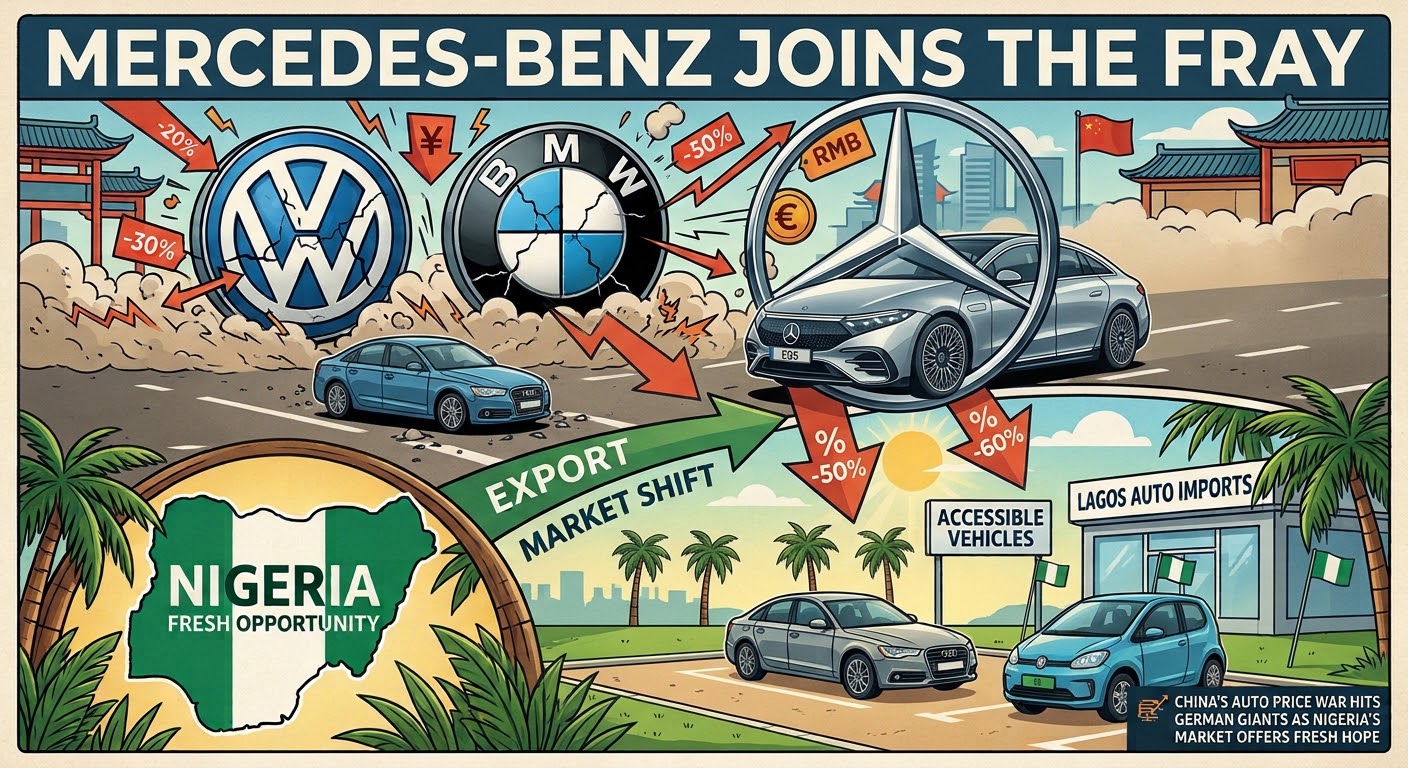
China’s Auto Price War Hits German Giants as Nigeria’s Market Offers Fresh Hope
The global automotive industry is facing a deepening shake-up as fierce competition from Chinese manufacturers, weakening demand and rising production costs force some of the world’s biggest automakers to slash profit expectations, even as Nigeria’s automobile market shows signs of renewed activity, with dealers reporting improved sales of new vehicles.
Mercedes-Benz, BMW and Volkswagen, three pillars of Germany’s automotive industry, have all come under mounting pressure from China, the world’s largest vehicle market, where domestic brands are increasingly challenging established international manufacturers with competitively priced vehicles, advanced electric-car technology and faster product development.
The latest warning came from Mercedes-Benz on Tuesday, October 27, when the luxury carmaker cut its 2026 profitability forecast, citing deteriorating market conditions in China and higher costs expected in the fourth quarter.
The company now expects an adjusted return on sales of between two and three per cent for its cars division, down from its previous forecast of three to five per cent. Its group operating profit is also expected to remain broadly flat compared with last year, instead of recording the previously anticipated improvement.
Mercedes-Benz’s car sales fell eight per cent year-on-year in the third quarter, with weak demand in China contributing to the decline. The announcement sent its shares down by more than five per cent during Tuesday’s trading.
BMW and Volkswagen have also lowered their financial expectations this year, reflecting the increasingly difficult operating environment confronting European manufacturers.
Chinese competitors, including BYD and other rapidly expanding electric-vehicle makers, are gaining ground through aggressive pricing, technological innovation and frequent model upgrades. The shift is forcing established brands to rethink their product strategies, production costs and investment priorities.
For German manufacturers that built their reputations on engineering excellence, premium vehicles and strong brand loyalty, the challenge is no longer simply selling more cars but maintaining profitability in a market where consumers have more alternatives and price competition is intensifying.
Nigeria’s contrasting market outlook
While the global picture presents significant challenges, Nigeria’s automotive market offers a more nuanced outlook.
Although many buyers of new vehicle in Nigeria are shifting to China-made brands largely due to low prices and improved technology, the Japanese, Korean and German automobiles are still holding their own, Newstrends can authoritatively report.
Despite persistent affordability concerns, high vehicle acquisition costs and pressure on household purchasing power, automobile dealers say demand for new vehicles by corporate buyers is picking up in Nigeria, suggesting that parts of the market may be regaining momentum.
However, the reported improvement should not be mistaken for a comprehensive industry recovery, as publicly available sales data have yet to establish a significant scale of increase.
Nigeria’s market dynamics also differ considerably from China’s. Import dependence, foreign-exchange exposure, financing costs and the purchasing power of consumers shape vehicle demand, while the relatively small base of locally assembled vehicles presents opportunities for manufacturers willing to invest in domestic production.
The Federal Government’s Nigeria First Policy is expected to influence this landscape by directing ministries, departments and agencies to procure vehicles from licensed local assemblers or their authorised retailers, subject to specified exceptions and approval requirements.
The National Automotive Design and Development Council’s Director-General, Oluwemimo Joseph Osanipin, has said Nigeria’s vehicle assembly plants have an annual capacity of 370,520 units. The government is seeking to increase local production, create jobs and reduce reliance on imported vehicles.
Osanipin has also highlighted the country’s substantial unmet vehicle needs, estimating that Nigeria requires about 40 million vehicles to adequately serve its population, compared with an estimated 12 million to 14 million currently on the roads.
These figures point to significant long-term opportunities, although translating them into actual sales will require improved affordability, accessible vehicle financing, stronger consumer confidence and dependable after-sales services.
For dealers, assemblers and distributors, the reported improvement in new-car sales offers encouragement. Sustaining that momentum, however, will depend on whether manufacturers can deliver vehicles that match Nigerian buyers’ budgets and operating conditions.
The contrasting developments underline a central reality for the global automotive industry: established manufacturers can no longer rely on brand prestige alone. In China, survival increasingly depends on competing with agile domestic rivals. In Nigeria, growth will depend on affordability, reliable customer service, accessible financing and policies that support local production.
As the industry navigates these competing pressures, the winners will be those that adapt fastest to changing consumer needs without sacrificing quality or financial sustainability.
After-sales service emerges a new strategy
More automobile dealers and assemblers in Nigeria are placing greater emphasis on after-sales service as a strategy to retain existing customers, attract new buyers and build long-term brand loyalty.
Companies such as Carloha Nigeria, Toyota Nigeria, Jetour Nigeria, Mikano Motors, Coscharis Motors, Hyundai Motors Nigeria and CFAO Mobility are among the industry players operating in a market where the customer experience increasingly extends beyond the point of sale to maintenance, spare-parts availability, warranty support and access to reliable service centres.
For customers investing millions of naira in vehicles, dependable after-sales support has become an important consideration, particularly as the cost of repairs, replacement parts and vehicle maintenance continues to rise. Buyers are increasingly concerned not only about the purchase price but also about the cost of keeping their vehicles roadworthy throughout their ownership.
For dealers and assemblers, the strategy offers an opportunity to differentiate their brands in a market where foreign-used vehicles remain a major source of competition. Accessible service centres, trained technicians, genuine spare parts, transparent maintenance costs and responsive customer-care teams can strengthen confidence and encourage repeat purchases.
The emphasis on customer retention is also commercially significant. A satisfied vehicle owner is more likely to return to the same dealer when replacing a car, recommend the brand to others and remain within its service network. Conversely, poor maintenance support and difficulty obtaining spare parts can undermine confidence, regardless of how attractive a vehicle appears in the showroom.
As Nigerian dealers report improving new-vehicle sales, particularly among corporate buyers, a stronger after-sales proposition could help sustain demand beyond fleet purchases and appeal to individual customers seeking greater value for money.
Ultimately, the evolving competition in Nigeria’s automotive market will not be decided by vehicle prices and specifications alone. Just as German manufacturers must respond to Chinese rivals with more competitive products, Nigerian dealers and assemblers must demonstrate that their brands offer dependable ownership experiences long after the keys have been handed over.
In a market where every major purchase demands careful financial consideration, the ability to keep customers satisfied after the sale may prove just as important as the ability to win them in the showroom.
Auto
On the Highway Marks 30 Years, Sets Agenda for Safer Roads, Sustainable Mobility

On the Highway Marks 30 Years, Sets Agenda for Safer Roads, Sustainable Mobility
As stakeholders prepare to assess Nigeria’s highway challenges, road safety, emergency rescue services and the transition to CNG-powered mobility at anniversary lecture in Lagos
JCN Consulting and On The Highway Africa, a magazine dedicated to Nigeria’s highway and transport sectors, will on November 3, 2026, mark three decades of highway journalism with a legacy lecture and anniversary celebration in Lagos.
The event, tagged JCN @ 30 (1996–2026): 30 Years On The Highway, is scheduled to hold at the Lagos Chamber of Commerce and Industry (LCCI), Ikeja, from 9 a.m., bringing together stakeholders from the automotive, transport, road safety, security, logistics, government and corporate sectors.
The milestone celebration is expected to provide a platform for reflecting on the evolution of highway journalism in Nigeria and Africa, while examining persistent challenges confronting the country’s road infrastructure and exploring pathways towards safer, more efficient and sustainable mobility.
Central to the anniversary programme will be discussions on road conditions, traffic congestion, road safety, emergency rescue services and Nigeria’s transition towards Compressed Natural Gas (CNG)-powered transportation.
The organisers have proposed two themes for the anniversary lecture: “30 Years On The Highway: Safety, Security and Sustainability – From Bad Roads to CNG Revolution” and “The Nigerian Highway in 2026: Roads, Roils & Rescue – Auditing Pain, Progress and the Pathway to Safe Mobility.”
The discussions are expected to draw attention to the realities confronting motorists and other road users, alongside the policy interventions, infrastructure improvements and industry collaboration required to address longstanding highway challenges.
Beyond the anniversary lecture, the celebration will feature a special legacy edition of the magazine documenting its 30-year journey, its contributions to road safety advocacy and its role in raising public awareness about developments in Nigeria’s highway and transport sectors.
Since its establishment in 1996, On The Highway Africa has maintained a focus on road conditions, traffic management, the experiences of road users and the broader issues shaping highway development. Through its reporting and advocacy, the publication has continued to draw attention to the need for safer roads and improved transportation infrastructure.
Over the years, its coverage has also evolved to accommodate emerging developments in the transport industry, including conversations around Nigeria’s CNG initiative and the drive towards cleaner and more sustainable mobility alternatives.
Speaking ahead of the anniversary, the Publisher and Chief Executive of JCN Consulting, Mrs Julie Chi-Nwaoha, described the milestone as an opportunity to acknowledge the contributions of the stakeholders, readers, partners and road users who have supported the publication throughout its journey.
“This is not just about me; it is about every road user, every stakeholder, every reader who has believed in our brand. Thirty years on the highway is by God’s grace and the support of great people who believe in me,” she said.
Chi-Nwaoha said the anniversary would provide an opportunity to celebrate the organisation’s achievements, reflect on its experiences and articulate its vision for the future of highway journalism and sustainable mobility in Nigeria.
The management disclosed that media partners, sponsors and well-wishers had begun indicating interest in supporting the anniversary, which is expected to attract participants from different segments of the transport and highway ecosystem.
The celebration comes at a time when road safety, highway infrastructure, efficient emergency response and alternative-fuel transportation remain important considerations in Nigeria’s mobility development.
For JCN Consulting and On The Highway Africa, the 30th anniversary represents not only a celebration of longevity in specialised journalism but also an opportunity to renew the call for safer highways, stronger transport infrastructure and greater accountability in addressing the challenges confronting road users across Nigeria and Africa.
For media enquiries, partnerships and sponsorship:
JCN Consulting
20A, Bayo Ajayi Street, CBD, Agidingbi, Ikeja, Lagos.
Telephone: 08130779590, 08023015560
Email: jcn4real@yahoo.com
Website: www.jcn.com.ng | ONTHEHIGHWAYAfrica.ng
Auto
Car of the Year, other top honours up for grabs as NAJA Awards race begins
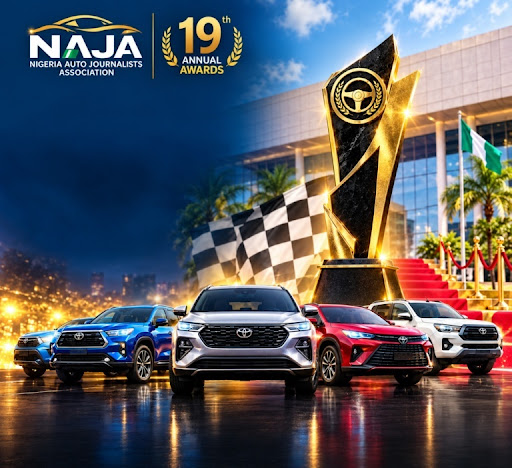
Car of the Year, other top honours up for grabs as NAJA Awards race begins
Nigeria’s leading automobile brands and industry players are gearing up for a keen contest for the coveted Car of the Year title and other top honours as nominations open for the 19th Nigeria Auto Journalists Association Awards, scheduled for December 3, 2026, in Lagos.
With the Civic Centre, Victoria Island, set to host the ceremony for the first time, the competition is expected to spotlight outstanding vehicles, automotive companies, assemblers, after-sales service providers and industry personalities whose products, innovations and contributions are shaping Nigeria’s evolving automotive market.
The Car of the Year category is expected to be a major highlight as nominations begin, with competing brands seeking to outshine one another in a market increasingly influenced by vehicle technology, affordability, performance, customer experience and the growing adoption of alternative-energy mobility solutions.
The commencement of nominations marks a significant step towards the December 3, 2026 grand finale, where outstanding automobile brands, manufacturers, distributors, service providers and industry personalities will be recognised for their performance and contributions to the sector.
The Car of the Year award has become a major talking point at the annual event, providing an opportunity for competing vehicle brands to demonstrate their strengths in an increasingly competitive Nigerian automotive market.
Other categories will spotlight excellence across different segments of the industry, such as vehicle manufacturing and assembly, commercial vehicles, alternative-energy mobility, after-sales services, automotive distribution and individual contributions to sector development.
The awards are expected to attract leading automobile manufacturers, distributors, dealers, financial institutions, policymakers and other stakeholders, as the industry navigates changing consumer preferences, technological advancements, alternative-energy vehicles and renewed efforts to promote local assembly.
Chairman of the 2026 NAJA Awards Planning Committee, Frank Kintum, said the committee was determined to deliver a ceremony worthy of the growing importance of Nigeria’s automotive industry.
Kintum described the awards as an important platform for recognising individuals, brands and organisations whose activities have contributed significantly to the development of the sector.
He said the 19th edition was being planned to be bigger and more glamorous than previous editions, while upholding the credibility and professional standards associated with the awards.
According to the organisers, products, brands and personalities will be assessed across relevant categories, with the final outcomes determined in line with the association’s approved award modalities.
NAJA Chairman, Theodore Opara, said the awards were not merely about celebrating the biggest players in the market but also recognising organisations and individuals that had demonstrated measurable excellence and made meaningful contributions to the automotive ecosystem.
He noted that the credibility of the evaluation process had helped strengthen the awards’ relevance as a reference point for industry stakeholders.
As nominations progress, competition is expected to reflect the growing diversity of Nigeria’s automotive market, where established manufacturers and distributors are facing increasing competition from emerging brands, new vehicle models and alternative-energy mobility solutions.
The outcome of the 2025 edition provides an indication of the competition that could unfold in this year’s contest.
At the 18th NAJA International Auto Awards, held on December 16, 2025, at the Oriental Hotel, Victoria Island, Lagos, the Jetour Dashing emerged as Nigeria’s Car of the Year after beating the Changan CS55 and Chery Tiggo to the top prize.
The award placed the compact crossover SUV in the spotlight, reflecting the growing competition among vehicle brands seeking to attract Nigerian buyers through design, technology, performance and value.
Mikano Motors also recorded a major success, winning Auto Company of the Year, while its Changan CS55 was named Midsize SUV of the Year.
Toyota Nigeria’s Isolo facility won Workshop of the Year, while the Toyota Hilux and Toyota Hiace emerged Pick-Up of the Year and Minibus of the Year, respectively.
Other notable winners included Dangote Sinotruk as Heavy-Duty Truck Brand of the Year, Iron Products Industries Limited as Truck Assembler/Body Builder of the Year, Lanre Shittu Motors as Truck Plant of the Year and Innoson Vehicle Manufacturing as Passenger Car Assembly Plant of the Year.
In the alternative-energy segment, SAGLEV won EV Brand of the Year, while Jet Automobiles was recognised as CNG Vehicle Assembler of the Year. NORD Automobiles emerged Fastest Growing Auto Brand of the Year.
Carloha Nigeria secured the Auto Aftersales Company of the Year and Pre-owned Company of the Year awards, while Winpart by CFAO won Auto Aftersales Service Provider of the Year for parts and workshop services.
The awards also recognised individual contributions, with NORD Automobiles Chairman and Chief Executive Officer, Oluwatobi Ajayi, named Auto Personality of the Year in the private-sector category, while National Automotive Design and Development Council Director-General, Joseph Osanipin, received the public-sector honour.
The range of winners illustrated the breadth of the awards, which extend beyond passenger vehicles to recognise achievements in commercial transportation, local assembly, workshop services, electric mobility and automotive business development.
Industry expectations rise
The 2026 awards come at a time when the automotive industry is undergoing significant changes, with vehicle electrification, compressed natural gas adoption, local manufacturing, after-sales support and evolving government policies shaping its direction.
Against this background, the awards provide an opportunity to highlight businesses and individuals responding to these changes while delivering products and services to Nigerian consumers.
For vehicle manufacturers and distributors, winning a major category could strengthen brand visibility and market positioning, while recognition for assembly plants, service providers and transport operators would underscore the importance of the wider automotive value chain.
The organisers have urged automobile brands and other industry stakeholders to participate actively in the nomination process as preparations gather momentum for the December ceremony.
With the 2025 winners setting a competitive benchmark, attention will now turn to the brands, companies and personalities that will emerge at the 19th edition of the NAJA awards on December 3.
-

 Politics2 days ago
2027: APGA Chairman Says South-East Must Back Tinubu to Secure Igbo Presidency
-

 metro11 hours ago
Cancelled Wedding: Man Sues Ex-Fiancée’s Father Over Unpaid ₦70,000 Dowry
-

 Entertainment2 days ago
Tope Alabi Threatens Pastor With Lawsuit Over Toluwanisings’ Death Claims
-

 International2 days ago
France Deploys 70,000 Police as Cost-of-Living Protests Intensify
-
 metro2 days ago
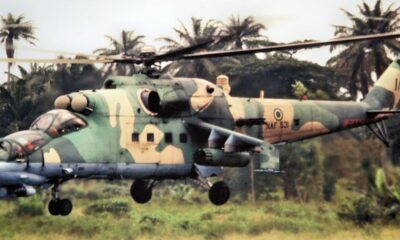
Borno: Troops Kill 15 Terrorists in Midnight Air Strike
-

 Auto11 hours ago
Car of the Year, other top honours up for grabs as NAJA Awards race begins
-

 Politics2 days ago
Atiku Condemns Attack on Edo Comedian Over Refusal to Support Tinubu
-

 News2 days ago
Bill Clinton condemns anti-Muslim prejudice, cites Qur’an’s message of coexistence