
International
India unsure of Russian arms to meet China, Pakistan threats

NEW DELHI (AP) — India is exploring ways to avoid a major disruption in its supply of Russian-made weaponry amid U.S. sanctions following Moscow’s invasion of Ukraine, and Prime Minister Narendra Modi’s tightrope walk could become more difficult due to a continuing border standoff with China.
Experts say up to 60% of Indian defense equipment comes from Russia, and New Delhi finds itself in a bind at a time when it is facing a two-year-old standoff with China in eastern Ladakh over a territorial dispute, with tens of thousands of soldiers within shooting distance. Twenty Indian soldiers and four Chinese soldiers died in a clash in 2020.
“The nightmare scenario for India would be if the U.S. comes to the conclusion that it confronts a greater threat from Russia and that this justifies a strategic accommodation with China. In blunt terms, concede Chinese dominance in Asia while safeguarding its European flank,” Shyam Saran, India’s former foreign secretary, wrote in a recent blog post.
Would China, drawing lessons from Ukraine, be an aggressor in disputed eastern Ladakh or in Taiwan?
“It is very possible they might do it,” said Jitendra Nath Misra, a retired diplomat and distinguished fellow in the Jindal School of International Affairs.
President Joe Biden has spoken about unresolved differences with India after the country abstained from voting on United Nations resolutions against Russian aggression in Ukraine. Modi has so far avoided voting against Russia or criticizing Putin for invading Ukraine.
In the early 1990s, about 70% of Indian army weapons, 80% of its air force systems and 85% of its navy platforms were of Soviet origin. India is now reducing its dependency on Russian arms and diversifying its defense procurements, buying more from countries like the United States, Israel, France and Italy.
From 2016-20, Russia accounted for nearly 49% of India’s defense imports while French and Israeli shares were 18% and 13%, respectively, according to the Stockholm International Peace Research Institute.
India not only depends on Russian weaponry, but it also relies hugely on Moscow for military upgrades and modernization as it moves toward self-reliance in its defense sector, said Lt. Gen. D.S. Hooda, a former Indian military commander.
READ ALSO:
- Osinbajo Notifies Buhari Of Presidential Ambition
- Father remanded in Edo for defiling 15-month-old daughter
- NDLEA nabs General Overseer of popular Anambra Church with drugs at Lagos airport
“Russia is the only country that leased a nuclear submarine to India. Will any other country lease India a nuclear submarine?” Hooda asked.
Sushant Singh, a senior fellow at the Center for Policy Research, said: “India’s navy has one aircraft carrier. It’s Russian. India’s bulk of fighter jets and about 90% of its battle tanks are Russian.”
In 1987, the Indian navy leased a Chakra-1, a Charlie-class nuclear cruise missile submarine, from the former Soviet Union for training. It later got another Soviet submarine, Chakra-2, in its place. In 2019, India signed a $3 billion contract to lease an Akula-1-class nuclear-powered attack submarine from Russia for 10 years. It is expected to be delivered by 2025.
India bought its only aircraft carrier, INS Vikramaditya, from the Russia in 2004. The carrier had served during the former Soviet Union and later for the Russian navy. India’s first indigenous 40,000-tonne aircraft carrier is undergoing sea trials ahead of its planned induction by next year.
India also has four nuclear-powered ballistic missile submarines on the way.
India’s air force presently operates more than 410 Soviet and Russian fighters, comprising a mix of imported and license-built platforms. India’s inventory of Russian-made military equipment also includes submarines, tanks, helicopters, submarines, frigates and missiles.
Misra said the U.S. hasn’t shown any willingness to provide technology transfers to India.
“I would like to ask our American friends: What kinds of defense technology have you given us? What the U.S. is offering is the F-16 fighter aircraft rebranded as the F-21. The F-16 is obsolete from the Indian point of view. We went for the Mig-21 in the 1960s because the F-104 was denied to India. We are seeing the same kind of thing,” he said.
“Under the AUKUS agreement, the U.S. is willing to share the nuclear propulsion technology for submarines with Australia but is not willing to share it with India,” he added, referring to the trilateral security pact between the U.S., U.K. and Australia.
Australia in September decided to cancel a multibillion-dollar contract to buy diesel-electric French submarines and said it would instead acquire U.S. nuclear-powered vessels in a new Indo-Pacific defense deal under AUKUS.
During the Donald Trump presidency, the U.S. and India concluded defense deals worth over $3 billion. Bilateral defense trade increased from near zero in 2008 to $15 billion in 2019. Major Indian purchases from the United States included long-range maritime patrol aircraft, C-130 transport aircraft, missiles and drones.
As the Ukraine crisis deepens, the challenge for India is how to navigate international sanctions against Russia.
The Russian S-400 missile system deal with Moscow has put India at risk of U.S. sanctions after Washington asked its partners to avoid purchasing Russian military equipment. The S-400 is a sophisticated surface-to-air defense system and is expected to give India strategic deterrence against rivals China and Pakistan.
New Delhi has sought support from Washington and its allies in confronting China, a common ground for the Indo-Pacific security alliance known as “the Quad” that also includes Australia and Japan.
Tracing the history of India’s acquisition of Soviet arms, S.C.S. Bangara, a retired navy admiral, said India began looking for arms and ammunition after its war with China in 1962.
The Cold War resulted in the United States cozying up with China. Pakistan as a facilitator held a trump card that could be used to enlist the complete support of the U.S. government in the event of an India-Pakistan conflict, he said.
During India’s war with Pakistan in December 1971 that led to the creation of Bangladesh, the U.S. deployed a task force led by the USS Enterprise in the Bay of Bengal in support of Pakistan.
In the mid-1960s, India negotiated a series of acquisition agreements with the Soviet Union that continued for the next 40 years, Bangara said.
“It was not seamless, particularly when the Soviet Union collapsed. The long chain of training facilities along with the supply chain of logistics collapsed when the Union broke into smaller states,” he said.
Even as India diversifies its defense acquisitions from the U.S., Israel, France and other countries, it may take 20 years to get over its dependence on Russian supplies and spares, Bangara said.
AP






International
Russia Escalates Digital Control with Attempted WhatsApp Block

Russia Escalates Digital Control with Attempted WhatsApp Block
WhatsApp has accused the Russian government of trying to completely block its messaging service in the country, a move aimed at steering users toward the state-backed app MAX. The Meta-owned platform said the effort, reported on February 12, 2026, threatens over 100 million users and undermines private, encrypted communication in Russia.
In a statement, WhatsApp said: “Today the Russian government attempted to fully block WhatsApp in an effort to drive people to a state-owned surveillance app. Trying to isolate over 100 million users from private and secure communication … can only lead to less safety for people in Russia. We continue to do everything we can to keep users connected.”
READ ALSO:
- Tumbler Ridge Massacre: Canada Investigates Shooter’s Mental Health, Police History
- Ex-Acting AGF Nwabuoku Admits Diverting N868.4 Million to Private Firms
- Kwankwasiyya Urges US Congress to Drop Kwankwaso’s Name from Bill
The attempt is part of a broader crackdown on foreign tech platforms in Russia. Authorities have previously restricted access to Facebook, Instagram, and targeted other services like Telegram. Reports indicate that Roskomnadzor, Russia’s communications regulator, removed WhatsApp from its national internet directory, forcing users to rely on VPNs to access the platform. Critics warn that such measures are designed to expand state surveillance and control over digital communication.
The government is actively promoting MAX, a domestic “super-app” similar to China’s WeChat, which combines messaging with other services. Rights advocates caution that the push toward MAX could compromise privacy protections that platforms like WhatsApp provide. Meanwhile, Kremlin officials have indicated that WhatsApp and other restricted apps could be restored if Meta complies with local data storage and regulatory laws.
WhatsApp’s statement emphasizes that the company will continue to work to keep its service accessible where possible, but the attempted block highlights Russia’s ongoing effort to enforce digital sovereignty and shift users toward state-controlled technology platforms.
Russia Escalates Digital Control with Attempted WhatsApp Block
International
Tumbler Ridge Massacre: Canada Investigates Shooter’s Mental Health, Police History
Tumbler Ridge Massacre: Canada Investigates Shooter’s Mental Health, Police History
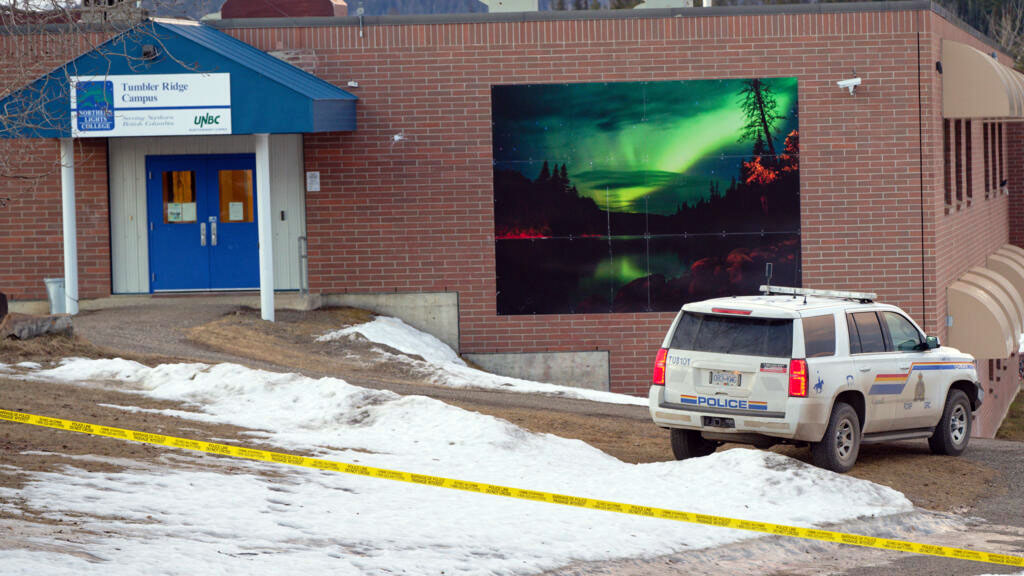
Canadian authorities are intensifying investigations into the mental health history and prior police interactions of Jesse Van Rootselaar, the 18-year-old who carried out a deadly mass shooting in the remote mining town of Tumbler Ridge, British Columbia, on February 10, 2026. The tragedy has left the small community in mourning and raised national questions about gun control, mental health support, and law enforcement interventions.
According to RCMP Deputy Commissioner Dwayne McDonald, authorities are still unclear on the motive behind the attack, which is one of the deadliest school shootings in Canadian history. Van Rootselaar, a transgender woman who had dropped out of Tumbler Ridge Secondary School four years ago, first killed her mother and stepbrother before opening fire at the school, where she shot six more victims. The shooter later took her own life at the scene.
Investigators have confirmed that Van Rootselaar was known to police and had previous interactions with the public health system due to mental health concerns. Authorities are reviewing prior incidents, including earlier firearms seizures and her lapsed gun licence, to understand how warning signs were addressed before the massacre. British Columbia Premier David Eby said officials are working with the health system to determine “what interactions may have taken place” in the past.
READ ALSO:
- Ex-Acting AGF Nwabuoku Admits Diverting N868.4 Million to Private Firms
- Kwankwasiyya Urges US Congress to Drop Kwankwaso’s Name from Bill
- Liverpool Edge Sunderland 1-0 to Halt Impressive Home Streak
The victims include a 39-year-old female teacher and five students aged 12 and 13, with one child, 12-year-old Maya Gebala, in critical condition after trying to lock herself and classmates in a library during the attack. First responders arrived within minutes, but the scale of the violence left the tight-knit community of about 2,700 residents reeling. Hundreds gathered for a candlelight vigil to honour those killed and injured.
Prime Minister Mark Carney addressed parliament, describing Tumbler Ridge as a resilient, compassionate community of miners, teachers, and construction workers, and emphasised the need to learn from the tragedy. Flags across Canada have been lowered to half-staff for seven days in remembrance of the victims. Britain’s King Charles and Queen Camilla also expressed shock and sorrow over the massacre.
Schools in the area will remain closed for the remainder of the week as authorities continue their investigation into Van Rootselaar’s mental health background, police interactions, and access to firearms, seeking to understand how similar tragedies can be prevented in the future.
Tumbler Ridge Massacre: Canada Investigates Shooter’s Mental Health, Police History
International
Canada Mass Shooting: Nine Dead in School, Residence Attack
Canada Mass Shooting: Nine Dead in School, Residence Attack
A mass shooting in Tumbler Ridge, British Columbia, Canada has left nine people dead and dozens injured after an attacker opened fire at a secondary school and a nearby residence on Tuesday, February 10, 2026.
According to the Royal Canadian Mounted Police (RCMP), seven victims were killed at Tumbler Ridge Secondary School, while two others died at a residence connected to the incident. At least 27 people were wounded, including two in critical condition, while the rest sustained non-life-threatening injuries.
The suspect was found deceased at the scene from an apparent self-inflicted injury. Authorities have not yet released the identity or motive behind the attack, which has shaken the small community of roughly 2,400 residents.
READ ALSO:
- Police Arrest Suspect as Youth Suffers Head Injury in Vigilante Custody
- Boko Haram Seizes Four Trailers, Rustles Over 100 Cows in Borno
- Wike Backs Tinubu’s Peace Efforts, Vows Stability in Rivers
Police responded rapidly, issuing an active shooter alert, placing schools on lockdown, and evacuating students safely. The RCMP and local officials continue to investigate the circumstances surrounding the attack and the suspect’s background.
Local leaders described the event as a devastating tragedy, expressing solidarity with victims’ families. The shooting has prompted national attention in Canada and renewed calls for enhanced school security and measures to prevent mass shootings.
Authorities have urged the public to remain vigilant and report any suspicious activity, emphasizing the importance of community cooperation in maintaining safety and preventing similar tragedies.
The attack is considered one of the deadliest school-related shootings in Canada in recent years, drawing widespread condemnation and grief across the country.
Canada Mass Shooting: Nine Dead in School, Residence Attack

-

 metro2 days ago
Leadership Crisis at NAHCON as Chairman Abdullahi Saleh Usman Resigns
-

 News2 days ago
Oyo Muslims Reaffirm Loyalty to Sultan on Islamic Matters — Grand Chief Imam
-
 News2 days ago
US Judge Orders FBI, DEA to Release Tinubu’s Criminal Records, Faults Delays
-

 International2 days ago
US to Deport 18 More Nigerians on ‘Worst-of-the-Worst’ Criminal List (Full Names)
-
metro2 days ago
Former NAHCON Chief Explains Why He Stepped Down, Denies Conflicts
-

 Business2 days ago
Naira Posts Strong Comeback, Breaking Two‑Year High Against Dollar
-
 Business3 days ago
CAC Deploys AI, Partners Google to Tackle Rising Business Registration Demand
-

 metro3 days ago
Court of Appeal Affirms Senate’s Power to Suspend Natasha Akpoti