

International
US Urges China to End Military Drills as Taiwan-China Tensions Escalate
US Urges China to End Military Drills as Taiwan-China Tensions Escalate
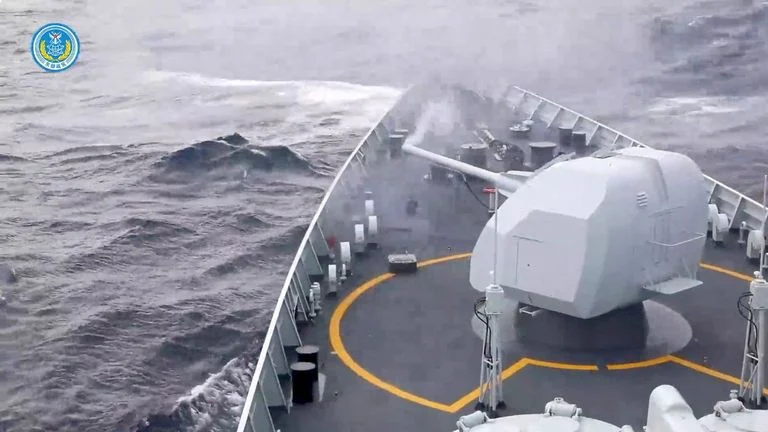
The United States has called on China to halt its military pressure on Taiwan, warning that Beijing’s recent war games around the self-ruled island have unnecessarily heightened Taiwan-China tensions in the region.
State Department spokesman Tommy Pigott said Thursday that China’s military activities and rhetoric toward Taiwan increase tensions and urged Beijing to exercise restraint and engage in meaningful dialogue.
Earlier this week, China launched missiles and deployed dozens of fighter jets, navy ships, and coastguard vessels to encircle Taiwan, simulating a blockade of the island’s main ports. The exercises drew sharp condemnation from Taipei, which called the drills “highly provocative.”
China maintains that Taiwan is part of its territory and has refused to rule out the use of force to achieve reunification. In response to international criticism, a Chinese defence ministry spokesman defended the maneuvers as “legitimate” and warned foreign countries to adhere to the One-China principle and avoid “stirring up trouble” in the Taiwan Strait.
READ ALSO:
- Nigerian Army Frees Five Abductees, Finds Bodies in Kogi Forest Operation
- No One Can Hold Nigerians to Ransom, Says Sheikh Gumi as Peter Obi Defects to ADC
- Two Years After Bodija Blast, Oyo Govt Says Federal ₦30bn Intervention Fund Unused
US President Donald Trump appeared unconcerned about the drills, stating he does not believe President Xi Jinping will order an invasion, citing their reportedly strong personal relationship.
The tensions follow the Trump administration’s approval of an $11 billion arms package for Taiwan, reaffirming decades of US commitment to Taiwan’s self-defense, while maintaining deliberate ambiguity about direct military intervention in the event of a Chinese invasion.
China’s latest exercises mark the sixth major round of military drills around Taiwan since 2022, when then-US House Speaker Nancy Pelosi visited the island, a move that drew Beijing’s fury.
“The United States supports peace and stability across the Taiwan Strait and opposes unilateral changes to the status quo, including by force or coercion,” Pigott said, reiterating Washington’s call for dialogue and de-escalation.
Analysts warn that continued China-Taiwan military confrontations risk escalating regional security threats, potentially drawing in other powers invested in maintaining stability in the Indo-Pacific.
US Urges China to End Military Drills as Taiwan-China Tensions Escalate
AFP








International
French Students Return to Streets as Anger Over School Conditions Grows
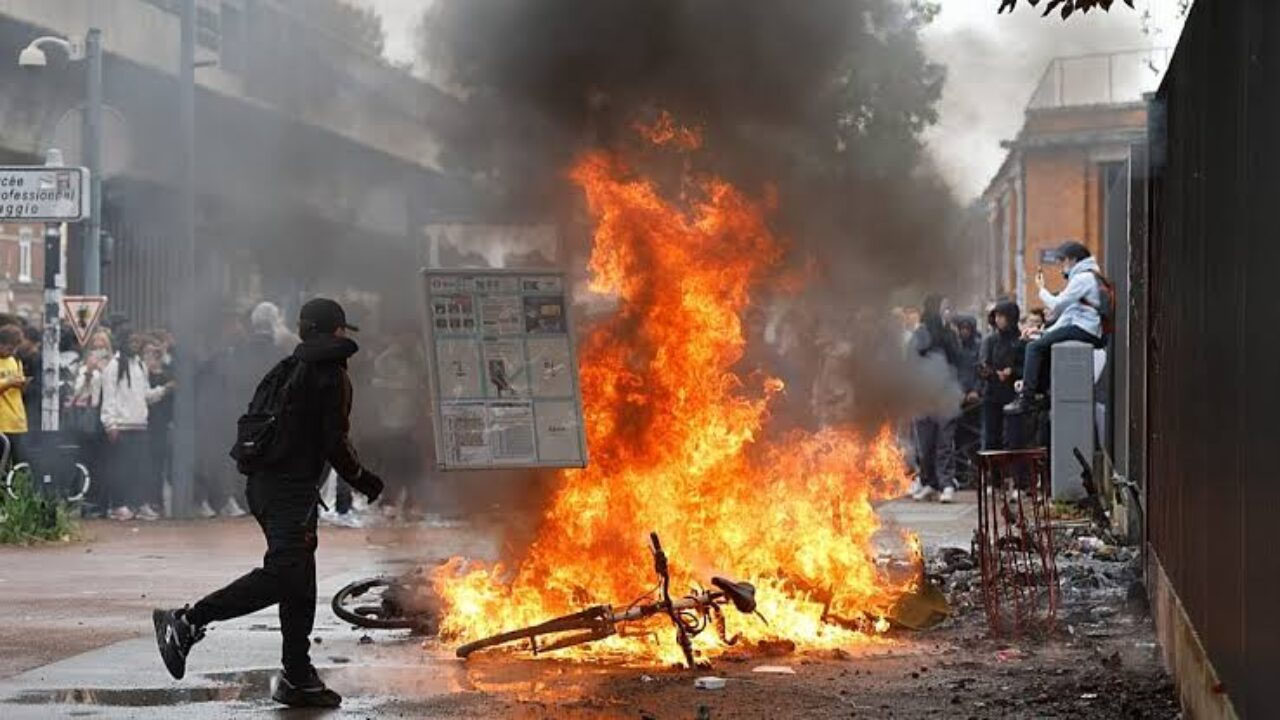
Students across France are preparing for fresh nationwide demonstrations on Tuesday, October 13, as growing frustration over poor school conditions, teacher shortages and inadequate education resources continues to fuel unrest.
The planned protests come after weeks of demonstrations, school blockades and confrontations with police, putting further pressure on President Emmanuel Macron’s government to address concerns over the country’s education system.
The movement, which began in September, has spread from individual high schools to cities across the country, attracting university students, education workers and trade unions in support of demands for improved learning conditions.
Student organisers have urged more young people, parents and workers to participate in the latest demonstrations, insisting that previous government assurances have not adequately addressed their concerns.
The protests have focused on underfunded schools, overcrowded classrooms, teacher shortages, deteriorating school buildings and unequal access to educational opportunities.
Students have also criticised the government’s handling of their demands, arguing that announcements of future improvements must be accompanied by concrete measures.
READ ALSO:
- Oyo School Kidnappings: How ANSARU Allegedly Used Children to Pressure FG
- Drama as Dutch Police Use Batons, Dogs to Shut Down Nigerian Wedding; Two Arrested
- LAWMA Deploying CCTV Cameras to Hunt Down Illegal Dumpers, says MD
The demonstrations have continued despite a government commitment to deploy 3,000 additional teachers to schools experiencing severe staffing shortages.
Education Minister Édouard Geffray announced the emergency recruitment and deployment plan last week, saying the additional teachers would be assigned to high-priority schools.
The government’s response followed discussions with student representatives, but protest leaders have maintained that the proposed measures do not go far enough to resolve the broader problems affecting schools.
The unrest intensified on October 8, when tens of thousands of people took to the streets across France. The Interior Ministry reported that approximately 71,500 people participated in demonstrations nationwide, including about 24,500 in Paris.
The protests were accompanied by clashes in several locations, with police using tear gas to disperse some gatherings. Authorities also reported arrests and injuries among demonstrators and security personnel.
On October 9, France’s Education Ministry said 141 high schools remained closed, either fully or partially, as a result of the movement.
The demonstrations have also drawn international attention. The United Nations human rights office expressed concern over incidents of violence linked to the protests and school blockades, calling attention to the need to protect the rights and safety of those involved.
Meanwhile, the French government has faced criticism over its handling of the unrest, including allegations of excessive force by security personnel. Authorities have defended the need to maintain public order while acknowledging the importance of addressing students’ concerns.
The crisis comes as France debates its public spending priorities and seeks to reduce its budget deficit. The government must balance calls for greater investment in education against pressure to control public debt.
The protests have therefore become part of a wider debate about public services, inequality and the opportunities available to young people.
With students preparing to return to the streets on Tuesday, the government faces renewed pressure to demonstrate that its promises will translate into meaningful improvements in classrooms across the country.
Student organisers have indicated that demonstrations could continue if their demands remain unresolved, leaving the authorities with the challenge of restoring normal school activities while addressing the concerns driving the movement.
French Students Return to Streets as Anger Over School Conditions Grows
International
Second Houthi Strike in Two Days Kills One at Riyadh Airport
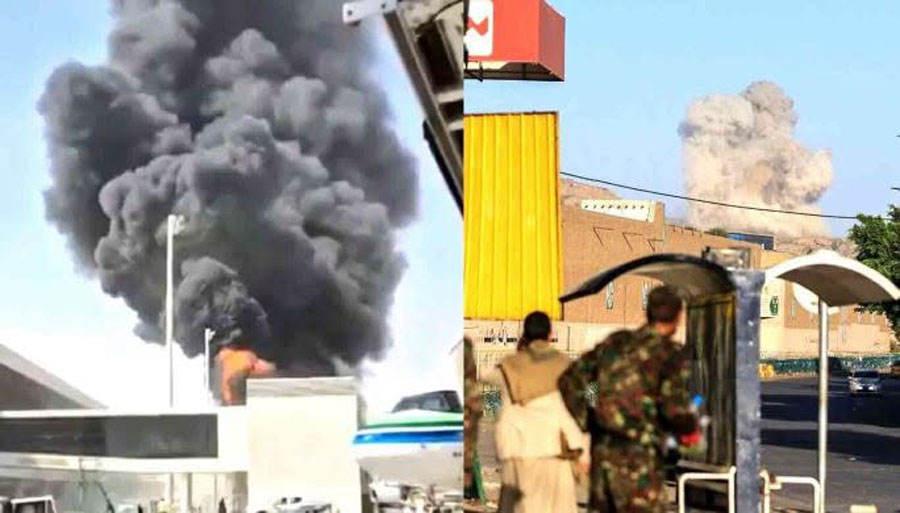
Saudi Arabia is facing mounting security concerns after a second consecutive day of attacks on Riyadh’s King Khalid International Airport left one person dead and 11 others injured, following an earlier strike that killed at least 13 people and wounded more than 300.
The latest attack occurred on Sunday, October 11, 2026, when a projectile struck Terminal 4 at the airport in the Saudi capital. The country’s General Authority of Civil Aviation confirmed that the person killed was a Pakistani resident, while the 11 injured people were taken to hospitals for treatment.
The incident came less than 24 hours after another deadly attack on the airport, prompting renewed fears about the safety of passengers, airport workers and other civilians as tensions involving Saudi Arabia and Yemen’s Houthi movement intensified.
Saudi authorities began assessing the damage and inspecting airport facilities after the latest strike. Airport operations had already been disrupted following Saturday’s attack, with reports indicating that the closure was extended while officials reviewed security conditions and determined when flights could safely resume.
The attacks have raised serious concerns about the vulnerability of Saudi Arabia’s aviation infrastructure, particularly as the Houthis have threatened further strikes against airports and other strategic facilities in the kingdom.
The death toll from Saturday’s attack was initially reported at 12, with more than 300 people injured. India’s embassy in Saudi Arabia later confirmed that an Indian citizen had died from injuries sustained in the incident, bringing the reported toll to at least 13 deaths from that attack alone. The additional fatality reported on Sunday brings the combined reported death toll from the two incidents to at least 14.
READ ALSO:
- 2027 Elections: Atiku Demands Names of INEC Ballot Printers, Questions Secret Contracts
- ₦8.7bn Erosion-Control Budget Gap Raises Questions as Anambra Gullies Expand
- Fuel Subsidy May Ease Hardship Today, But Could Cripple Nigeria’s Economy Tomorrow — FG
The figures relate to separate attacks and should not be confused with the 11 people injured in Sunday’s incident.
The Houthi movement, which is aligned with Iran and controls large parts of northern Yemen, claimed responsibility for attacks on Saudi targets. Its military spokesperson, Yahya Saree, said the group had carried out operations involving missiles and drones against airports and facilities belonging to Saudi energy giant Aramco.
The Houthis identified King Khalid International Airport in Riyadh and King Fahd International Airport near Dammam among their targets. The group also warned airlines and passengers against using Saudi airports and airspace, threatening further operations as the confrontation escalated.
Saudi authorities reported additional security incidents during the same period. The Saudi-led coalition said air defences intercepted a cruise missile near King Khalid International Airport. A drone was also intercepted in the Eastern Province, while a ballistic missile reportedly launched towards Khamis Mushait was intercepted.
Emergency alerts were issued in Abha, southern Saudi Arabia, although civil defence authorities later said the immediate danger had passed.
Reports also indicated that King Fahd International Airport in Dammam came under attack on Sunday evening. Officials said damage assessments and safety inspections were under way, although the full extent of the damage was not immediately clear.
The incidents have heightened concerns that the attacks could extend beyond Riyadh to other parts of Saudi Arabia, threatening civilian infrastructure and complicating efforts to maintain normal aviation operations.
The repeated strikes are particularly alarming because Riyadh’s airport was reportedly targeted several times within a five-day period. The pattern has intensified pressure on Saudi authorities to strengthen air defences and protect critical infrastructure against further missile and drone attacks.
Saudi Arabia has long supported Yemen’s internationally recognised government in its conflict with the Houthis. The latest attacks have increased the risk of renewed confrontation between Riyadh and the armed group, potentially undermining efforts to contain the wider regional crisis.
Pakistan’s Prime Minister, Shehbaz Sharif, condemned the attack on Riyadh airport and expressed solidarity with Saudi Arabia. He called for an end to attacks on civilians and critical infrastructure, warning of the wider implications for regional security and stability.
The attacks have also raised concerns about international air travel, given Saudi Arabia’s importance as a regional aviation hub and a destination for millions of travellers, including religious pilgrims. Any prolonged closure of major airports could disrupt passenger movements, airline schedules and international connections.
Beyond aviation, the escalation could have implications for global energy markets and maritime trade. Saudi Arabia is a major oil producer, while the wider conflict has raised concerns about security along important shipping routes, including the Red Sea and Bab el-Mandeb Strait, which connects the Red Sea with the Gulf of Aden.
Sustained attacks on transport and energy infrastructure could increase shipping risks, insurance costs and pressure on supply chains, although the extent of any economic impact would depend on the duration and scale of the escalation.
Saudi authorities now face the immediate challenge of assessing damage, restoring airport operations safely and protecting passengers and aviation facilities against further attacks. The Houthis’ warning of additional strikes has added uncertainty over when normal air travel can resume and whether other strategic locations could become targets.
The latest incidents underscore the growing threat to civilian infrastructure as regional tensions intensify, with potential consequences for Saudi Arabia’s security, international aviation, maritime trade and the wider Middle East.
Second Houthi Strike in Two Days Kills One at Riyadh Airport
International
Russia-Ukraine Truce in Doubt as Zelenskyy Questions Trump’s Ceasefire Announcement
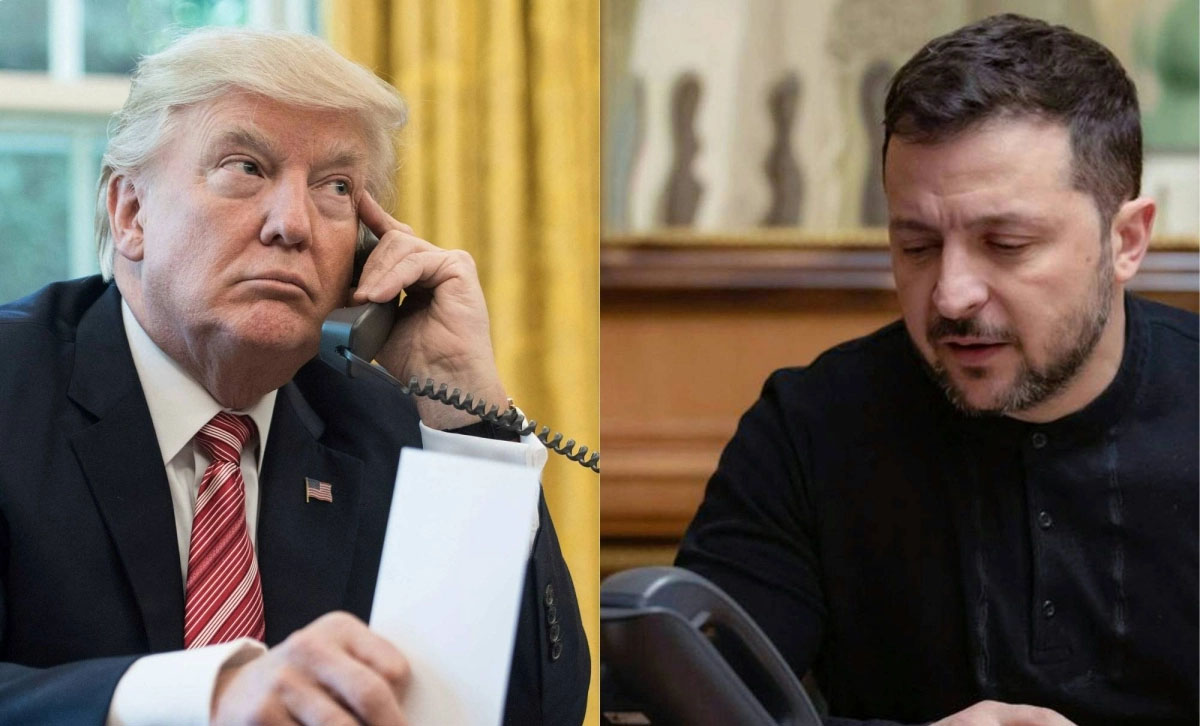
Russia-Ukraine Truce in Doubt as Zelenskyy Questions Trump’s Ceasefire Announcement
United States President Donald Trump has announced an immediate energy ceasefire between Russia and Ukraine, claiming both countries have agreed to stop attacks on each other’s energy infrastructure, but Ukrainian President Volodymyr Zelenskyy says he was not aware of any such agreement.
Trump made the announcement on Sunday, October 11, 2026, in a post on his Truth Social platform, declaring that the ceasefire would take effect immediately.
“Effective immediately, there is an ENERGY CEASEFIRE in the War between Russia and Ukraine. Both parties have agreed. Do not break it!” Trump wrote.
However, the announcement was not immediately confirmed by either Moscow or Kyiv, raising questions about whether a formal agreement had been reached and how it would be implemented.
Zelenskyy told Axios that Trump’s announcement was the first he had heard of the purported agreement. He nevertheless indicated that Ukraine was prepared to accept a ceasefire if Russia agreed to stop its attacks on Ukrainian energy facilities.
“If President Trump negotiated it with Putin, please tell us when the ceasefire begins. We are ready and we will accept it,” Zelenskyy said.
Earlier on Sunday, the Ukrainian president reiterated Kyiv’s position that it would halt attacks on Russian oil refineries if Moscow stopped targeting Ukraine’s power infrastructure.
READ ALSO:
- Djibouti Boat Disaster: 139 Migrants Dead, Dozens Missing
- US Names 24 More Nigerians in Fresh Fraud, Money Laundering Crackdown
- How Bauchi Court Jailed Three 21 Years Each for Abducting Seven Children
Zelenskyy stressed that any agreement must be reciprocal and backed by credible guarantees, arguing that Ukraine could stop strikes on energy infrastructure if Russia demonstrated a genuine willingness to do the same.
The disagreement highlights the diplomatic challenges facing efforts to secure a halt to attacks on critical infrastructure amid the continuing war.
Russia has repeatedly targeted Ukraine’s electricity network and other energy facilities, damaging infrastructure and disrupting essential services. Ukraine, in turn, has launched drone attacks on Russian oil refineries and other strategic facilities, seeking to weaken Moscow’s ability to finance its military campaign.
Trump has criticised Ukraine’s attacks on Russian refineries, arguing that they contribute to disruptions in fuel supplies and higher energy prices. The issue has become increasingly significant amid pressure over rising diesel prices in the United States.
The announcement also followed a contentious diplomatic exchange between Trump and Zelenskyy. On Saturday, the US president urged Ukraine to stop attacking Russian oil refineries and suggested that Ukrainians should elect a different leader who could reach an agreement with Moscow.
Zelenskyy rejected the suggestion that Washington should determine Ukraine’s leadership, insisting that the choice belonged to the Ukrainian people. He also maintained that elections could not be held under the country’s current martial-law restrictions without the necessary changes to the security situation and legal framework.
The Ukrainian leader said he would be willing to organise elections if Russia agreed to a comprehensive 60-day ceasefire, which he argued would provide the conditions needed for a vote.
The latest dispute comes amid broader diplomatic efforts to end the war and disagreements over how much pressure should be placed on Moscow and Kyiv to make concessions.
Trump had announced a similar energy ceasefire in September, but the earlier declaration was not followed by a clearly confirmed, sustained agreement between the two countries.
The latest announcement therefore leaves key questions unresolved, including whether Russia has formally accepted the proposal, when any halt to attacks would begin, and what mechanisms would be used to monitor compliance.
For Ukraine, the immediate priority remains securing an end to Russian attacks on its energy infrastructure while retaining assurances that Moscow would not use a pause to its military advantage.
For now, Trump’s declaration represents a claimed diplomatic breakthrough rather than a fully verified agreement. Whether it leads to a genuine reduction in attacks will depend on confirmation from both sides and their willingness to honour reciprocal commitments.
Russia-Ukraine Truce in Doubt as Zelenskyy Questions Trump’s Ceasefire Announcement
-

 metro2 days ago
₦8.7bn Erosion-Control Budget Gap Raises Questions as Anambra Gullies Expand
-

 Politics2 days ago
Obi Positioning for SGF Role Under Atiku’s ADC Ticket – Sowore
-
 International3 days ago
US Names 24 More Nigerians in Fresh Fraud, Money Laundering Crackdown
-

 metro2 days ago
How Bandits Demand ₦300m Ransom for Abducted Kaduna Couple, Baby in Viral Video
-

 metro2 days ago
Child Soldiers, Baby Factories: US Raises Alarm Over Official Complicity in Nigeria
-

 Politics2 days ago
Okonkwo Alleges Return of Subsidy, Accuses NNPC of Plotting Trillions in ‘Lost Profit’
-

 metro2 days ago
2027 Elections: Atiku Demands Names of INEC Ballot Printers, Questions Secret Contracts
-

 Africa3 days ago
Djibouti Boat Disaster: 139 Migrants Dead, Dozens Missing