
News
Insecurity: Presidency labels those asking Buhari to resign as saboteurs
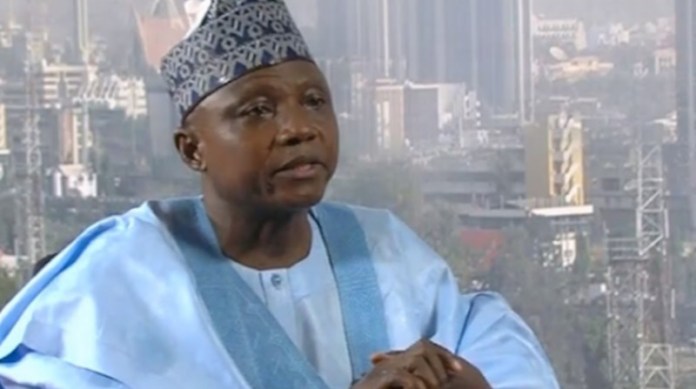
The presidency has reacted to calls for President Muhammadu Buhari to resign over security challenges in the country, saying those making the suggestion are saboteurs that have failed to connect with the people.
On Tuesday, the Northern Elders Forum had asked the President to resign over “failure to show appropriate response” to the country’s security challenges.
Responding in a statement on Wednesday, spokesman for the President, Garba Shehu, said the present administration had taken major steps that would soon offer “massive” rewards in the fight against insecurity.
He described the calls for Buhari’s registration as the work of politicians who had failed to connect with the people.
“The Presidency does not wish to be drawn into the high-decibel show in the media, taking the nation by the storm from the Northern Elders Forum. Publicity is the oxygen for politicians who have failed to connect with voters in a democracy,” the statement read.
It also stated, “It is enough to say from our part, that resignation call on the President is not a solution to the security problems facing the country, something that has built up to a worrisome level following decades of neglect.
“It is more important that citizens know what their government is doing to deal with this situation and for politicians to come to terms with the fact that it is beneficial to all that they help to preserve the state so that when it is their turn, they will have a place that they will manage.
“People don’t have to destroy what is there in a desperate quest to get power.
“In response to the recent spike in terrorist activity particularly in the Kaduna and Niger States axis, the defence establishment, in response to presidential directives, has realigned and reorganised the ongoing operation in the areas, as well as that going on in the Niger Delta region.
“The new operations structures are being reinforced with land-based assets to increase the efficiency of the troops and intelligence is equally being reinforced.
“The air defence system is being reinforced with newly-acquired jets and drones which assemblage and training for operators has been hastened to meet the current exigencies.
“The country is equally getting assurances of early delivery of equipment on order from manufacturers and the effort is ongoing to conclude other major procurements still in process.”
He highlighted efforts by the present administration to boost security in various geopolitical zones, adding that “the procurement of the largest ever single procurement of military vehicles” was approved on Wednesday.
“At the same time, similar major operations are going in the South-East and the South-South where the economic life wire of the nation and electricity transmission lines are currently being secured from saboteurs,” he said.
“What the sponsored saboteurs aim to show is that the government cannot provide power sabotaging equipment at switches and other vital points. They will not succeed. The public knows who is who, and who has done what in our country’s governance.
“Massive gains being made will shortly be manifesting. Large number of arrests have equally been made. Nigerians are assured that the government will keep its promise to the nation and threats to security will be handled with the firmness they call for. And government will remain firm in securing the country’s unity and progress.”










News
Relief Radiant Hearts Foundation Launched in Iwo, Promises Hope for the Vulnerable

Relief Radiant Hearts Foundation Launched in Iwo, Promises Hope for the Vulnerable
March 3, 2026
The ancient town of Iwo, Osun State, witnessed a significant humanitarian milestone on Sunday, March 1, 2026, as the Relief Radiant Hearts Foundation (RRHF) was officially launched at the Palace of the Oluwo of Iwo.
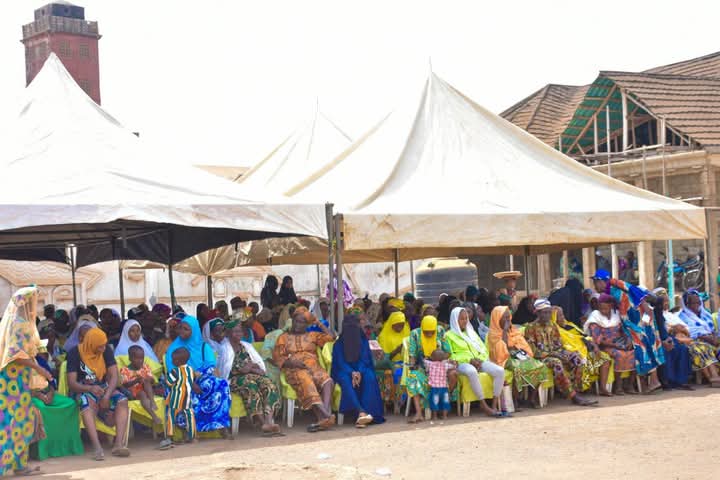 The colourful ceremony, held at the revered Oluwo Palace, attracted dignitaries, traditional rulers, government officials, medical professionals, education stakeholders and community leaders from within and beyond Iwoland.
Royal Endorsement and Vision
Chairman of the Board of Trustees of the Foundation, Alhaji Liad Tella, expressed deep appreciation to the Oluwo of Iwo, Oba Abdul Rasheed Adewale Akanbi, for his royal blessings, fatherly guidance and unwavering support which paved the way for the successful unveiling of the foundation.
Alhaji Tella stated that RRHF is built on the core values of integrity, transparency, accountability and sincerity of purpose. He commended the Coordinator of the Foundation, Asiwaju Anifowose Rahman, describing his passion as a driving force behind the initiative’s mission to reduce hardship, empower the less privileged through education and restore dignity to vulnerable members of society.
 According to him, what began as a seed of compassion has blossomed into a tree of hope, stressing that divinely inspired visions often attract support from unexpected quarters.
In his royal remarks, Oba Akanbi lauded the initiative, noting that it would help reduce poverty, inspire hope and strengthen communal bonds within Iwo and its environs.
Chieftaincy Honour for UCH CMD
A major highlight of the event was the conferment of the prestigious chieftaincy title of Baasegun Ariwajoye of Iwoland on the Chief Medical Director of the University College Hospital (UCH), Professor Jesse Abiodun Otegbayo.
Professor Otegbayo described the launch as “the unveiling of hope and the institutionalization of compassion,” emphasizing the urgent need for structured and sustainable humanitarian interventions in the face of widening socio-economic gaps.
He praised the visionaries behind the foundation for transforming compassion into an enduring institution capable of delivering measurable impact.
The UCH management team present at the ceremony included Mrs. I.O. Olaleye, Acting Director of Administration; Mrs. Fawole, Head of General Administration; Mr. Akintola, Head of Transport; and Mrs. Obafunmilayo Adetuyibi, Head of Public Relations, among other staff members.
Academic Excellence Competition
Demonstrating its commitment to educational empowerment, the Foundation organized an Academic Excellence Competition as part of the launch activities.
Olaniyan Abdulsomod Olawale of Muslim Comprehensive High School, Isokan, emerged as the Overall Best Student and received a gold medal alongside a full scholarship to any public university of his choice in Nigeria.
Zakariyah Hameedah of Iwo Grammar School secured second place and was awarded full sponsorship for WAEC, NECO and JAMB registration, while Taofeek Ajimoh of St. Anthony Catholic Grammar School, Iwo, finished third and received full sponsorship for WAEC and NECO registration.
Two other outstanding students — Adigun Oluwatoyin Esther of Baptist High School, Iwo, and Atilola Ameeroh Demilade of Anwar-ul-Islam Grammar School, Iwo — were also recognized and rewarded with gifts in appreciation of their commendable performances.
In a further show of community support, the Host of the Day, Engr. Alamu Akeem Adelani, pledged to sponsor the WAEC and NECO fees of the two outstanding students on behalf of Omoba Dotun Babayemi (ODB).
Community Outreach and Collective Responsibility
Another key highlight of the ceremony was the distribution of food items to members of the community, reflecting the foundation’s core mandate of compassion, relief and service to humanity.
Special appreciation was extended to the Executive Chairman of Iwo Local Government, members of the Executive Council, EAS officials, honourable councilors, the CEO of Coastline, and prominent sons and daughters of Iwo both at home and in the diaspora who contributed to the success of the event.
Speakers at the ceremony described the Relief Radiant Hearts Foundation as more than an organization, but a symbol of unity, compassion and collective responsibility.
As the event concluded with prayers of gratitude to Almighty Allah, stakeholders expressed optimism that the foundation would bridge social gaps, uplift vulnerable groups and position Iwo as a beacon of structured humanitarian service in Nigeria.
Relief Radiant Hearts Foundation Launched in Iwo, Promises Hope for the Vulnerable
News
Human Rights Lawyer Warns Against Targeting Children, Hospitals in U.S – Israel Military Action

Human Rights Lawyer Warns Against Targeting Children, Hospitals in U.S – Israel Military Action
Human rights lawyer Deji Adeyanju has urged the United States and Israel to fully respect international humanitarian law and the Geneva Conventions in their ongoing military action against Iran, warning that targeting civilians, children, hospitals and other protected populations constitutes a serious violation of the laws of war.
Speaking in a statement on Monday, Adeyanju said that even amid heightened conflict, combatants have clear legal obligations under international law to distinguish between military targets and civilians. He noted that deliberate attacks on non‑combatants and protected infrastructure such as hospitals and schools are prohibited under global legal norms aimed at minimizing human suffering during armed conflict. This framework is central to the Geneva Conventions and their Additional Protocols, which require parties to a conflict to take all feasible precautions to safeguard civilians and avoid harm to civilian objects.
“The United States and Israel must respect the Geneva Convention in their war with Iran. Children, hospitals, the civil population and vulnerable people must not be targeted,” Adeyanju said, emphasizing that failure to uphold these principles could amount to serious violations under international law.
READ ALSO:
- Several U.S. Warplanes Crash in Kuwait Amid Ongoing Iranian Strikes
- Wike Blasts Kingibe Over FCT Council Election Remarks
- Israeli Airstrikes Kill 31 in Lebanon as Hezbollah Loses Senior Figures
International humanitarian law (IHL) — the body of legal rules that govern armed conflict — protects those who are not taking part in hostilities, including civilians, medical personnel and humanitarian workers, and restricts how warfare may be conducted. Under IHL, parties must always distinguish between combatants and civilians and refrain from deliberate attacks on civilian objects even if military activity is occurring nearby.
Adeyanju’s appeal comes amid sharp escalations in the Middle East, where recent U.S. and Israeli military strikes inside Iran have sparked retaliatory attacks by Tehran and heightened fears of a wider regional conflict involving multiple state and non‑state actors. Various international actors, including the European Union, have called for “maximum restraint” and full compliance with international law in responding to the crisis, urging the protection of civilian lives and strict adherence to humanitarian norms.
Similarly, international legal and humanitarian organisations, such as the International Committee of the Red Cross (ICRC) and the United Nations human rights chief, have reiterated that the laws of war apply regardless of the political objectives of the parties involved, and that the safety of civilians must remain paramount. They have called for all sides to uphold the rules of armed conflict and protect medical personnel, hospitals, homes and schools from attack.
Critics of the escalation have underscored the devastating toll that indiscriminate or disproportionate use of force can have on civilian populations, not only in the immediate conflict zone but also across neighbouring regions struggling with displacement, economic instability and humanitarian needs.
Adeyanju stressed that adherence to international humanitarian law and the Geneva Conventions is not merely aspirational but a legal and moral obligation for all parties in hostilities. He reiterated that the protection of innocent lives, especially children and vulnerable civilians, should remain central to any legitimate military action and urged greater international accountability for violations.
Human Rights Lawyer Warns Against Targeting Children, Hospitals in U.S – Israel Military Action
News
Presidency Denies Alleged Poison Plot Against President Tinubu, Calls Viral Report Fake

Presidency Denies Alleged Poison Plot Against President Tinubu, Calls Viral Report Fake
The Presidency of Nigeria has firmly denied claims circulating online that a chef at the Aso Rock Presidential Villa attempted to poison President Bola Ahmed Tinubu, describing the viral report as false, misleading, and fabricated.
In a statement released on Sunday, the Special Adviser to the President on Information and Strategy, Bayo Onanuga, dismissed the social media video suggesting that security operatives had arrested a kitchen staff member in connection with an alleged poisoning attempt. The statement emphasised that the report is “fake news” with no credible source or evidence.
The viral video, which gained significant traction across social media platforms, alleged that intelligence reports uncovered suspicious activities in the presidential kitchen, prompting the deployment of special security units and the launch of a covert investigation. However, the Presidency categorically refuted these claims, stating:
“There was no attempt to poison the President, and no kitchen staff member was arrested in connection with any such plot. The story being circulated is entirely fabricated and should be disregarded.”
READ ALSO:
- Saudi Arabia Denies Lobbying US to Strike Iran as Gulf States Respond to Escalation
- NDLEA Dismantles Meth Lab, Arrests Long‑Wanted Drug Kingpin in Imo
- Military Kills Boko Haram/ISWAP Insurgents, Recovers Weapons, Armed Drone in Borno
Officials clarified that the video consisted of unrelated clips combined with a dramatic voice-over, likely aimed at creating panic and generating online engagement. The statement urged members of the public, journalists, and media outlets to verify information through official channels before sharing sensitive claims, particularly those involving national security.
Security analysts noted that misinformation targeting high-profile political figures can spread rapidly online, often fueled by sensational narratives, and warned that such false reports could undermine public trust in national institutions.
As of the filing of this report, no security agency has independently confirmed the alleged incident. Multiple reputable news outlets have reinforced the official denial, highlighting that the alleged poisoning attempt did not occur.
The Presidency reiterated its commitment to transparency and responsible communication, assuring Nigerians that any genuine security threats involving the President would be addressed through proper official channels. Citizens are advised to remain calm and avoid amplifying unverified information capable of causing panic or destabilising public discourse.
Presidency Denies Alleged Poison Plot Against President Tinubu, Calls Viral Report Fake

-

 International2 days ago
Ayatollah Ali Khamenei, Iran’s Supreme Leader, Dies After U.S.–Israeli Strikes
-
 International2 days ago
Iran: US, Israel launch another strikes, Commander, Defence leader, five other top officials killed
-

 International3 days ago
Middle East on Edge as Iran Retaliates Against Israel, U.S Bases
-

 International2 days ago
Kamala Harris Slams Trump for Dragging U.S. Into ‘Unwanted War’ in Iran Conflict
-

 metro2 days ago
Hajj, Umrah Are for Muslims Only – Scholar Urges NAHCON to Tighten Screening
-
 International1 day ago
Iran Retaliates: Gulf States Allied With US Hit by Missiles, Drones
-
 International1 day ago
Saudi Arabia Denies Lobbying US to Strike Iran as Gulf States Respond to Escalation
-

 International2 days ago
BREAKING: Iran Forms Three-Member Leadership Council to Steer Country After Khamenei’s Death