

News
IPPIS failed to remit workers N26.6bn NHF in two years – FMBN

THE Federal Mortgage Bank of Nigeria (FMBN) says the Integrated Personal Payrol information System (IPPIS) failed to remit N26.6 billion of workers contributory funds in two years.
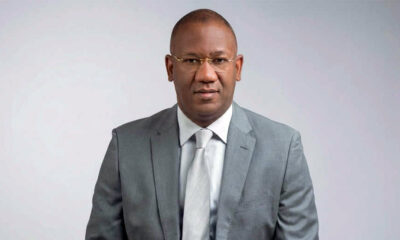
Mr Madu Hamman, Managing Director of FMBN, said this on Thursday in Abuja while appearing before the House of Representatives Ad hoc committee probing the non-remittance to the National Housing Fund (NHF) and Utilisation.
According to him, from October to December 2022 there were 40 per cent unremitted payments to FMBN resulting from revenue drive by the Federal Government and a total of N11.630 billion was involved.
“From January to December 2022, N11.587 billion was not remitted as backlog payments for MDAs from IPPIS, while N3. 356 billion was not remitted from April to July 2021 as outstanding failed payments for 2021 from IPPIS,” he said.
Hamman explained that some NHF payments meant to be paid to FMBN as housing contributions had been wrongly made into the Federal Government Loan and Scholarships Board, adding that 14 MDAs were affected by the wrong payments.
He said all contributors were eligible for a full refund of their contribution over the years including accrued interest of 2 per cent upon retirement.
Others, he said, were by attainment of 60 years or inability to continue due to incapacitation or death, adding that FMBN had refunded N66.678 billion to 444,637 beneficiaries.
Speaking on projects executed through various means, Hamman said, FMBN ensured it gave loans to register members of the association of developers.
READ ALSO:
- Restore constitutional order, French president urges Niger Military Junta
-
NAFDAC Approves varsity’s herbal medicine for diabetes
-
Breakthrough: Doctors develop vaccine to prevent breast cancer
He said that FMBN also had the regular primary mortgage bank from interested individuals where it disbursed N139.6 billion to 24,332 beneficiaries.
On the ministerial pilot scheme, he said the Federal Ministry of Works and Housing provided land for those on the scheme and it had spent N38 billion to build 5,443 units of housing.
Reacting to the allegations, Mr Ekwem Dem, Deputy Director, IPPIS in the Office of the Accountant General said, ” On our own part, we are just hearing some of these allegations.”
He said, for instance, the ‘no work no pay’ for members of ASUU remittances was still hanging, adding that there was a need for a reconciliation window, “so we can see the area of convergence”
Rep. Dachung Bagos, the Chairman of the Committee, said it would go on oversight of some of the projects claimed to have been executed by FMBN and where they were located.
“We are going to do some random checks to see the utilisation of this work, we are going to oversight all these projects
” We need to know why the Nigerian civil servants are not given what is due to them, even if we have to go with a tricycle; we will go.
” Some of us are engineers. We are going to receive some of these things, we must get value for our naira and Nigerians must get value for their money,” the chairman said.
READ ALSO:
- Chicago varsity clerk behind graduation certificate anomalies – Tinubu
-
NAF to take delivery of 18 attack helicopters – CAS
-
JUST IN : Appeal Court dismisses Kano gov’s move to set aside tribunal’s ruling
The News Agency of Nigeria (NAN) reports that on Wednesday, the Nigeria Labour Congress (NLC) threatened to pull out civil servants from the NHF contributory funds over the non-remittance of deductions made.
President of NLC, Joe Ajaero made the threat while appearing before the House of Representatives Ad hoc Committee on Non-Remittance to the NHF and Utilisation of the Funds from 2011 till Date.
According to Ajaero FBN had refused to send alerts of how much civil servants have contributed including their monthly deductions.
He urged the lawmakers to take drastic steps to remove the encumbrances to affordable and quality housing to millions of Nigerians especially workers who make the most contributions to the NHF.
This according to him is as
identified in the memorandum and other memoranda submitted to the committee.
He said that the immediate past Managing Director of FMBN Mr Ahmed Dangiwa who is now the Minister of Housing and Urban Development said he left behind N120 billion in the coffers of
the bank.
IPPIS failed to remit workers N26.6bn NHF in two years – FMBN
(NAN)





News
Missing Billions: Lawmakers Summon NNPCL and 146 Marketers Over ₦432bn Downstream Debt
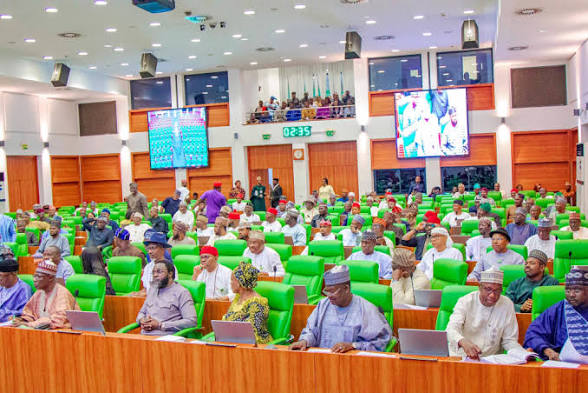
Nigeria’s federal lawmakers are putting the downstream energy sector under the microscope after audit records revealed that state oil firm NNPCL and private fuel marketers have piled up at least ₦432 billion in unpaid regulatory obligations.
The House of Representatives Public Accounts Committee (PAC) confirmed the formal probe this week, following persistent warnings raised in the Auditor-General’s 2023 and 2024 annual reports.
Regulatory Levies Left Unpaid
The mountain of debt has accumulated over a six-year period from 2017 to 2023, remaining largely uncollected despite the country’s tight fiscal squeeze.
READ ALSO:
Cheap Alcohol Fuels Banditry NAFDAC Chief Stands Firm on Sachet Ban
Fresh Blackout Hits Abuja as Apo Substation Transformer Trips
More Than 1,000 Migrants Rescued Off West Africa in One Week
The liabilities consist of statutory fees meant to fund national energy infrastructure, including the 1% Midstream and Downstream Gas Infrastructure Fund, National Transport Average fees, Balancing Allowances, and lingering credit balances from import and coastal operations.
Audit records track a steep rise in default:
- The 2023 audit initially captured ₦392 billion in total arrears, with NNPCL carrying over ₦162 billion and commercial marketers responsible for ₦230 billion.
- The 2024 report revealed that private marketer debt alone had swelled to ₦432 billion, separate from state-owned NNPCL liabilities.
- Regulatory data from the NMDPRA confirms that 146 companies affiliated with DAPPMAN and MEMAN owed ₦327 billion by 2025.
No Hiding Place for Defaulters
PAC Chairman, Rep. Bamidele Salam, made it clear that parliament expects compliance from corporate leaders, issuing a firm directive against corporate stonewalling.
Salam emphasized that the committee will scrutinize why statutory revenues were permitted to sit idle without vigorous enforcement from the NMDPRA. Defaulters will be forced to present audit trails detailing every transaction, outstanding balances, and proof of any remittances made to date.
For lawmakers, the objective is unambiguous: plug commercial leakages, enforce fiscal discipline, and recover every outstanding naira owed to the federation.
News
Fresh Blackout Hits Abuja as Apo Substation Transformer Trips
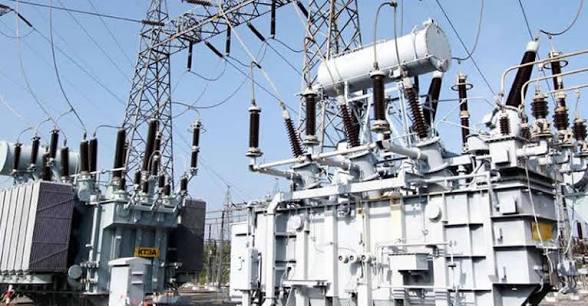
Parts of the nation’s capital have once again been plunged into darkness following an early-morning equipment failure at the Apo Transmission Substation on Wednesday.
The Transmission Company of Nigeria (TCN) confirmed the outage, attributing the disruption to the tripping of a 100MVA TR4 power transformer at its 132kV/33kV facility. Preliminary findings trace the failure to an oil spillage on the transformer’s red-phase High Voltage (HV) bushing, which forced four critical 33kV feeders, H31, H33, H35, and H37 offline.
READ ALSO:
Cheap Alcohol Fuels Banditry NAFDAC Chief Stands Firm on Sachet Ban
Missing Billions: Lawmakers Summon NNPCL and 146 Marketers Over ₦432bn Downstream Debt
More Than 1,000 Migrants Rescued Off West Africa in One Week
In an official public notice, the transmission utility stated that technical teams are already mobilized on-site:
“The Transmission Company of Nigeria, TCN, hereby informs the public that the 100MVA TR4 transformer at the 132/33kV Apo Transmission Substation tripped in the early hours of today. Our maintenance crew are already carrying out a detailed investigation on the transformer to ascertain the exact cause of the tripping, to enable us effect repairs and restore the transformer.”
Following the grid disruption, the Abuja Electricity Distribution Company (AEDC) confirmed power losses across several major districts, including the Apo Legislative Quarters, Lokogoma, and Apo Resettlement.
The latest breakdown adds to a pattern of recurring supply interruptions across Abuja, coming just days after scheduled maintenance works left residents grappling with low generation and prolonged blackouts.
News
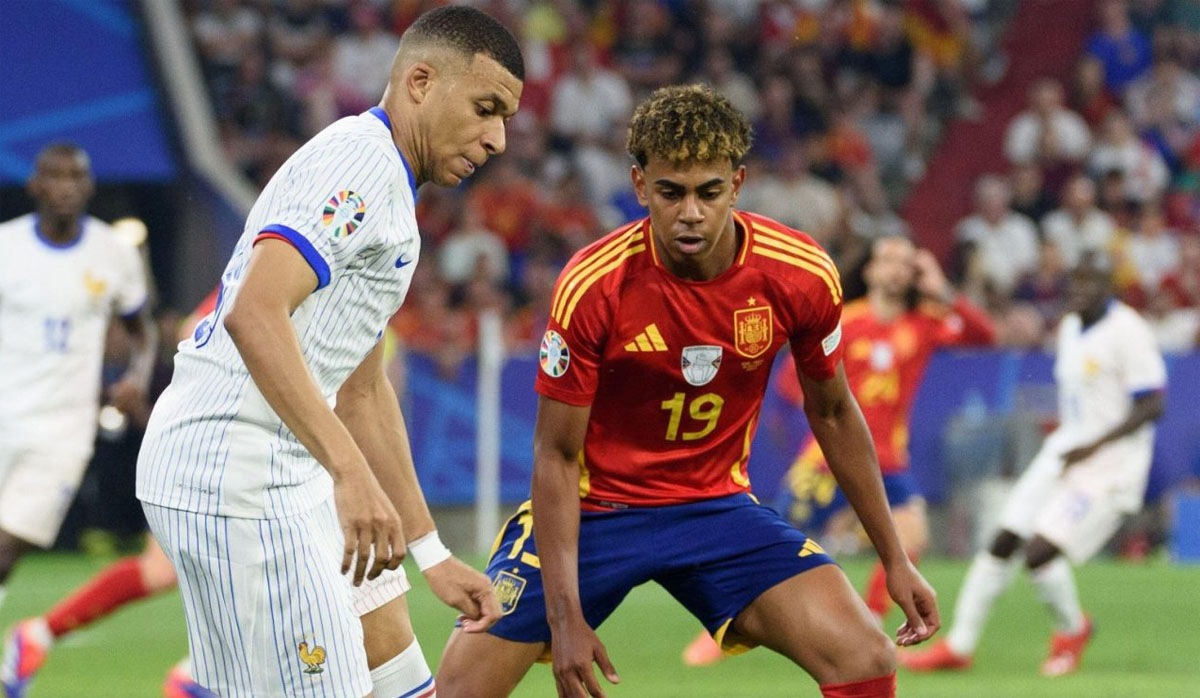
Yamal Fires Back at Mbappé: “I’m Not Going to Beg” for Ballon d’Or
Yamal Fires Back at Mbappé: “I’m Not Going to Beg” for Ballon d’Or
The 19-year-old Spain international insists his World Cup and La Liga triumphs speak for themselves, while also being named one of Barcelona’s vice-captains ahead of the October 26 ceremony.
Barcelona forward Lamine Yamal has made it clear that he will not campaign or “beg” for the 2026 Ballon d’Or, stating that his achievements on the pitch for club and country should speak for themselves. Speaking ahead of Barcelona’s Champions League opener against Feyenoord, the 19-year-old responded to comments from rival Kylian Mbappé, who had previously made his case for the award by highlighting his World Cup Golden Boot win, which also saw him become the competition’s all-time top goalscorer.
“I don’t think I need to campaign for the Ballon d’Or. I’m not thinking about what I deserve, everyone can think what they like,” Yamal told reporters. “I’m proud of everything I’ve done this year with my club and with the national team. We’ve become world champions, we’ve won the league again. I can’t ask for anything more. I think I’ve shown an incredible level, it’s your job and I will not beg for anything.”
The Spanish international, who finished second in last year’s voting behind PSG’s Ousmane Dembélé, is among the leading contenders for the prize alongside Mbappé, Harry Kane, Dembélé, and Khvicha Kvaratskhelia. The ceremony is scheduled for October 26 in London. Yamal was officially named among the 30 nominees for the 2026 men’s Ballon d’Or when France Football unveiled the list on Tuesday, marking his third nomination.
When asked about Dembélé’s recent comments naming Kvaratskhelia, Kane, and Mbappé as his top three, Yamal joked: “He’s a friend of Kylian, right? Honestly, I don’t care. I’m very happy with the year I had. Whenever I’ve faced both of them, I’ve won. They must have taken a dislike to me for some reason.” Spain knocked France out of the World Cup semi-finals with a convincing 2-0 victory.
READ ALSO:
- Osun Police Arrest Woman After Vigilante Member Dies During Sexual Encounter in Ile-Ife
- Igbo Group Rejects Tinubu Endorsement, Pledges Grassroots Support for Peter Obi in 2027
- Lagos arraigns over 100 suspects after 130 arrested in Lekki, Ajah raid
Yamal, who suffered a hamstring injury in April, has returned to form with two goals in his last two outings against Rayo Vallecano and Valencia, and appeared far more cheerful after a difficult start to the season. “In the end, I’m 19, coming off winning a World Cup, having had the best holidays of my life. I’ve never been happier at any point in my life than I am now,” he said.
Beyond individual honours, Yamal emphasised that Barcelona’s primary target this season is the Champions League trophy, a title that has eluded the Catalan giants since 2015. “There’s no greater motivation than the Champions League, which is the one I still have to win. We will give our all to win it,” Yamal said ahead of Wednesday’s opener against Feyenoord. “Good players have arrived, like Anthony Gordon, Karim Adeyemi, Rodri.”
Barcelona coach Hansi Flick praised the young star, saying: “Lamine is a player who can decide games on his own, fantastic quality. It’s great, you can see it every day how he is enjoying playing football. For me the best thing is that he enjoys this game and then he’s on a top level.”
Yamal is also the favourite to win a third consecutive best young player award at the Ballon d’Or ceremony, having been one of 10 players nominated on Tuesday, including Johan Manzambi, Yan Diomande, and Ayyoub Bouaddi, who all impressed at the World Cup and were then the subject of big-money summer transfers.
Interestingly, during the press conference, neither Yamal nor Flick mentioned Feyenoord by name, instead focusing entirely on Barcelona’s mission to win the Champions League. Yamal was recently elected one of three vice-captains by his teammates, alongside Eric Garcia and Frenkie de Jong, with coach Hansi Flick selecting Raphinha and Pedri as the other members of the five-man captaincy group. “It’s something to be proud of at 19 years old. I’m very grateful to my teammates. It’s a position that comes with responsibilities, even if I’m only 19, but I’m very happy,” he said.
Yamal Fires Back at Mbappé: “I’m Not Going to Beg” for Ballon d’Or
-
 Politics3 days ago
Peter Obi, Others Challenging Tinubu Cannot Transform Nigeria — Datti Baba-Ahmed
-

 Auto2 days ago
Kaduna to Lead Govt Patronage of Local Vehicles as Sani Unveils Peugeot 5008
-

 metro1 day ago
El-Rufai Demands ₦10bn from Defence Minister Over Southern Kaduna Killings Allegation
-

 metro2 days ago
Socialite Igho ‘Tiny’ Ubiribo Dies After Penis Enlargement Surgery
-

 metro1 day ago
Catholic priest leaves priesthood, weds Kenyan woman after 12 years in Kenya
-

 Politics3 days ago
Demystifying the Political Monolith: Wike’s ‘See Finish’ Doctrine and Nigeria’s New Political Calculus
-

 Politics1 day ago
Why Did Peter Obi Attend Seyi Makinde’s Campaign Launch? Here’s What He Said
-

 metro1 day ago
No US Case Against Tinubu, Family Enjoy Unimpeded Transit for UNGA — Ambassador Ibrahim