

International
Iran Denies US Talks After Trump Announces Negotiations as War Enters Sixth Month
Iran Denies US Talks After Trump Announces Negotiations as War Enters Sixth Month
Tehran rejects Washington’s claim of imminent talks, says discussions with Oman over Strait of Hormuz are separate and ongoing
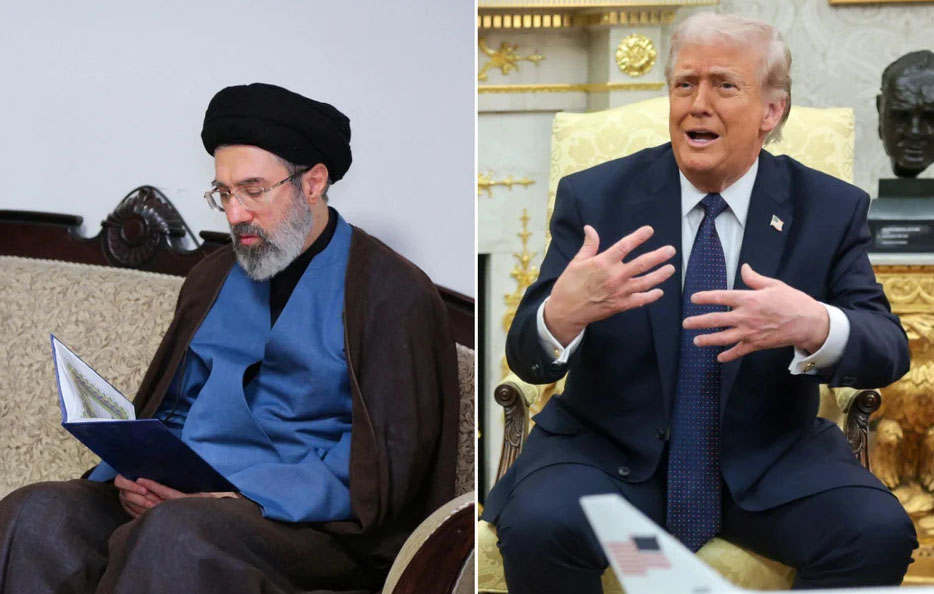
Iran has firmly denied that it is currently holding negotiations with the United States, contradicting President Donald Trump’s announcement that talks would begin on Monday afternoon. The conflicting claims come amid heightened tensions over the Strait of Hormuz and Iran’s nuclear program, with the war between the two countries now in its sixth month. The war began on February 28, 2026, when the United States and Israel launched surprise strikes against Iran, targeting key leadership, air defence capabilities, missile sites, and the Islamic Revolutionary Guard Corps (IRGC) Navy. The opening salvo included an attack on a leadership meeting in Tehran that killed Supreme Leader Sayyid Ali Khamenei, Iran’s defence minister, the chief of staff of the armed forces, and the commander of the IRGC. Since then, months of on-off diplomacy have led to periods of relative calm, though fighting has continued to flare.
Iranian Foreign Ministry spokesman Esmaeil Baqaei stated during a televised press conference on Monday that “Iran is not currently holding talks with the United States”. He elaborated that Tehran has no plans to host or send delegations, and members of Iran’s negotiating delegation remain inside the country. Baqaei clarified that Iran’s current discussions are focused exclusively on Oman regarding a temporary safe route through the Strait of Hormuz. He emphasized that reaching an agreement with Oman would not mean the reopening of the strait, as the situation would remain unchanged while US “aggression” continued. “So long as the United States continues to violate its commitments, the situation in the Strait of Hormuz will not change,” Baqaei told his weekly press conference. The spokesman also warned Gulf states against allowing the United States to use their territory for attacks on Iran, urging countries in the region not to facilitate US military action.
READ ALSO:
- NiDCOM confirms release of Nigerian girls detained in Mauritius
- Power Struggle Threatens Peter Obi-Kwankwaso Alliance Ahead of 2027 Polls
- Gumi: Clerics who join politics are better than those praying for politicians
On Sunday, President Trump told reporters aboard Air Force One that negotiations with Iran would begin Monday afternoon. He claimed that the talks would cover the Strait of Hormuz and ultimately the denuclearisation of Iran. “The deal is imminent, having to do with the Hormuz Strait and also, ultimately, the denuclearization of Iran,” Trump said. Trump stated that he had been asked by Iran as well as US partners Saudi Arabia, the United Arab Emirates, and Qatar to hold off on strikes, which he claimed would have been “the biggest attack since World War II”. In a post on Truth Social, Trump wrote: “Based on this request, I have agreed, for the future benefit of the WORLD and, likewise, the survival of a successful and prosperous Iran, to cancel the attack, subject to being able to rapidly make a DEAL”. However, Iranian media has denied that Tehran asked Trump not to strike. Trump has repeatedly predicted that a negotiated settlement is within reach, although previous diplomatic efforts have been followed by renewed exchanges of military strikes.
While denying US talks, Iranian officials confirmed progress in discussions with Oman over a new shipping route through the Strait of Hormuz. Iranian Foreign Minister Abbas Araghchi said negotiations with Oman on a mechanism for ships to transit the waterway were “nearing completion and in their final stages,” according to Iranian state media. The talks have been ongoing for months between Tehran and Muscat, the two littoral states bordering the strait, with discussions continuing at both the technical and political levels. Baqaei told state television that a deal was close with Oman over a new route through the strait, describing it as “one path with entry and exit lanes” that would respect the sovereign rights of both sides. The route under discussion will be temporary, he said, and through it, Iran will ensure safe navigation. Baqaei emphasized that Iran and Oman, as coastal states of the strait, are required to cooperate to ensure the safe passage of vessels through the waterway and reach a defined mechanism. He noted that Tehran needs to ensure that the Strait of Hormuz would not be exploited by the parties that have carried out aggression against Iran, adding that “this requires us to adopt a mechanism in which Iran’s sovereign rights are fully respected”.
The conflicting claims come against the backdrop of a war that has significantly disrupted global energy markets. Before the war, the Strait of Hormuz served as a conduit for approximately 20% of the world’s oil and liquefied natural gas. Iran has largely closed the strait, causing energy prices to rise and stoking broader inflation. On June 18, Iran and the United States signed a memorandum of understanding (MoU) on ending the conflict, under which the two countries were scheduled to hold negotiations within a 60-day period to reach a final agreement. Under the understanding, Iran agreed to allow fee-free maritime transit through the Strait of Hormuz for a period of 60 days. However, the talks’ fate has been uncertain due to recent military escalation. The US attempted to undermine Iran’s sovereignty by establishing an unsafe corridor near Omani shores, prompting Iran’s firm response to re-impose restrictions on the strait.
Iranian President Masoud Pezeshkian posted on X that “We must strive to compel the enemy to remain committed to what it has signed”. He expressed belief that the MoU would be the focal point of Iran’s foreign relations in the future. Baqaei also revealed that over the past 24 hours, “we have received numerous calls from the United Kingdom, Bulgaria, and Ukraine stating that they will not be part of the war against Iran”. Iranian lawmaker Hassan Ghashghavi, spokesman for the parliament’s national security commission, said on Sunday that mediators were trying to revive the US-Iran memorandum of understanding that was agreed in June. That agreement was not intended as a final peace deal, but as a stepping stone to negotiations on a comprehensive agreement, though it did include provisions on Hormuz. “They know that the main issue and, in fact, the key to the matter right now is the issue of the Strait of Hormuz, so yes, there is an exchange of views,” Ghashghavi said.
Trump’s announcement had immediate market effects, with oil prices falling at the opening of Asian trade. The president said he had been asked by Iran as well as US partners Saudi Arabia, the United Arab Emirates, and Qatar to hold off on further strikes. Eli Cohen, Israel’s energy minister and a member of Prime Minister Benjamin Netanyahu’s security cabinet, said there was close security and intelligence coordination between Israel and the US on everything happening in the region. However, he added: “With or without an agreement, and regardless of any external commitments, if Iran attempts to renew its nuclear programme or advance its ballistic missile industries, we will be there. We will take action, and we will strike”. In his call with Trump, Saudi Crown Prince Mohammed bin Salman stressed the “necessity of prioritising dialogue to de-escalate tensions” in the Middle East, according to Saudi Arabia’s state news agency. Many observers have expressed skepticism about the latest diplomatic push. Vali Nasr, an Iran expert at Johns Hopkins University, stated there was “no clear path” for Trump to achieve his goals, noting that “He is trying his hand now at a diplomatic solution to avoid military escalation. But there’s no clear path, either diplomatically or militarily, to get Trump to a place where he can declare victory”.
Iran Denies US Talks After Trump Announces Negotiations as War Enters Sixth Month
Additional reporting by Reuters, AFP, Ynetnews, and The New Arab










Health
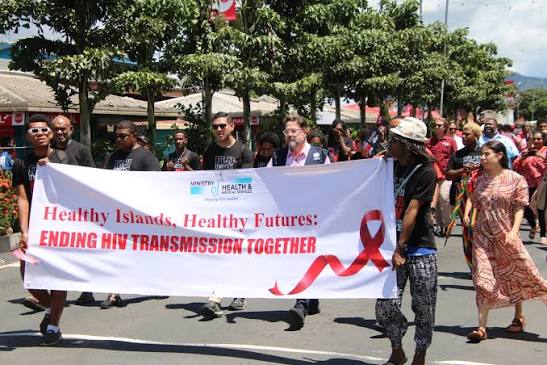
Fiji Declares National HIV Emergency as Diagnoses Surge Sixteenfold
Fiji Declares National HIV Emergency as Diagnoses Surge Sixteenfold
Authorities launch a multi-agency public health campaign to expand free testing, treatment, and harm-reduction services
Fiji has announced a nationwide health response to address a significant rise in HIV cases and ensure that all residents can access essential medical care.
On Wednesday, Health Minister Dr. Atonio Lalabalavu shared the emergency declaration, explaining that national agencies are joining forces to provide rapid medical support, expand testing, and protect community well-being across the islands.
Official reports indicate that about one in every 60 adults in Fiji currently lives with HIV, following an increase in new infections over recent years. Health specialists explain that the virus spreads primarily through intimate sexual contact and shared needles among individuals using illicit substances.
Additionally, routine screenings revealed that two out of every 100 expecting mothers carry the virus, highlighting an urgent need for early maternal healthcare to protect newborns from infection.
To safeguard public health, authorities are delivering free daily treatments, distributing protective preventive medications, and setting up clean needle programs to stop infections before they start.
Furthermore, global partners, including Australia, New Zealand, India, and United Nations health bodies are providing financial resources and medical supplies to back the local effort.
By encouraging open community conversations and delivering accessible healthcare without judgment, health workers aim to ensure that everyone receives the care and dignity they deserve.
Fiji Declares National HIV Emergency as Diagnoses Surge Sixteenfold
International
Kim Yo-jong: Only ‘Idiots’ Think North Korea Will Give Up Nuclear Weapons

International
Gaza Building Collapse Kills 21, Including Eight Children
Gaza Building Collapse Kills 21, Including Eight Children
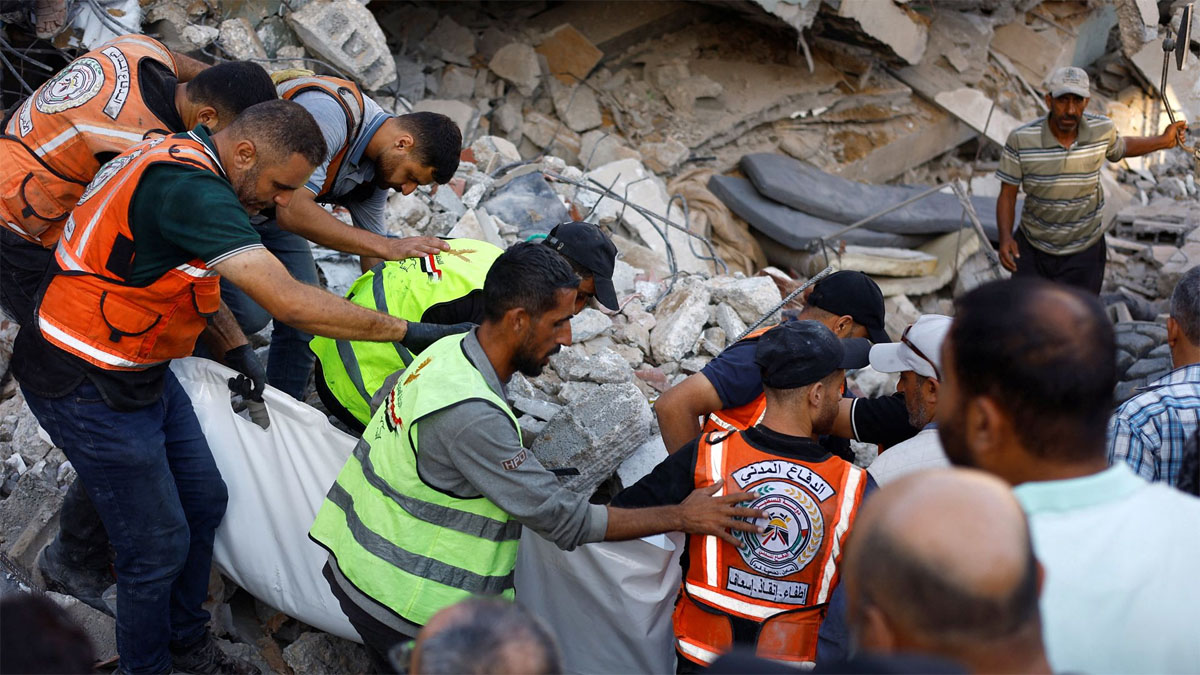
At least 21 people have been killed, including eight children, after a war-damaged building collapsed in Gaza City overnight, rescuers and medics say. The tragedy has renewed concerns about the collapse risk facing hundreds of bomb-damaged structures across the Gaza Strip as winter approaches.
The six-storey residential building in Gaza City’s Tal al-Hawa area collapsed in the early hours of Wednesday. According to the United Nations humanitarian coordinator for the occupied Palestinian territories, Ramiz Alakbarov, an estimated 100 people, including 50 children, were living in the building when it came down. The Gaza Civil Defence agency confirmed that rescuers extracted 21 bodies and rescued 20 unharmed individuals from the rubble on al-Sinaa Street in Tal al-Hawa. Dozens remain missing or injured underneath the debris.
Witnesses told the BBC that the building had been left tilting dangerously to one side after an Israeli strike more than a year ago. Displaced families had moved inside because they were desperate, with nowhere else to go. The building had been hit multiple times in 2024 and March 2025, leading to warnings for Gazans not to return, according to Civil Defence spokesman Mahmoud Basal. More than 10 families, totalling around 80 people, lived in the building, according to residents, with dozens of them being children. Sherif, whose sister was killed, said: “They couldn’t find a tent or somewhere to live. This was the last place they could turn to, despite the danger. They were aware that it would likely end in tragedy. A lack of resources drove them towards certain death.“
A woman living in a tent nearby, Umm Mohammed Bakrun, said she had been talking to her son when the building collapsed suddenly. “It felt like an earthquake. There was a loud sound and I couldn’t stand up. Stones rained down on us and when I looked outside I saw a lot of dust,” she told the BBC. “Within minutes, there were screams everywhere.” Another witness, Mansour Abu Mohammed, said the building collapsed “in a few seconds”. “Every day, a stone or a few stones would fall from it, but the people inside couldn’t find anywhere else to live. I used to live next door to it and you could see that it was tilting to one side.”
READ ALSO:
- Niger Mosque Abductions: Terrorists Execute 30 of 500 Captive Muslim Worshippers
- OAU Investigates Death of Final-Year Student as Police Begin Probe
- 57-Year-Old Man Arrested Over Sexual Abuse of Stepdaughter in Edo
UN and Egyptian teams joined the search for survivors, which was slow due to a lack of heavy machinery. Initially, rescuers from the Hamas-run Civil Defence agency had to use their bare hands. Egypt provided heavy machinery for the rescue operation, while the United Arab Emirates and Qatar were set to deliver relief items. The Palestinian Civil Defence said rescue teams had been working continuously since the collapse, but lacked even the most basic tools. “In the first moments after the collapse, we had to ask neighbours and displaced people nearby to bring hammers, shovels and other tools because of the severe shortage of equipment,” said Abdullah al-Majdalawi, director of public relations at Gaza’s Civil Defence. The head of the United Nations Development Programme (UNDP) Gaza office, Alessandro Mrakic, told reporters at the scene that “the situation… is tragic because we don’t have the equipment and machinery that is needed”.
Mrakic warned that approximately 400 other war-damaged buildings across Gaza were at imminent risk of collapse, particularly as winter approaches. The Civil Defence agency has identified around 2,000 buildings across the territory at risk of collapse. “We need support, most importantly with machinery, equipment, among others. Our colleagues here don’t have [engine] oil and spare parts to continue to work with all the equipment that is still in Gaza.” The UN’s humanitarian relief coordinator, Ramiz Alakbarov, said he was “devastated” by the reports. “No-one should have to risk their life simply to find a safe place to shelter,” he said. He also urged Israeli authorities to approve deliveries to Gaza of heavy machinery for rescue operations, as well as tents, tarpaulins and other non-food items for displaced people ahead of the winter rains. Israel says its restrictions are meant to keep equipment out of the hands of Palestinian armed groups that could also have military uses.
An estimated 80% of all structures in Gaza have been destroyed or damaged during the war between Israel and Hamas, according to the UN. More than 1.9 million people — about 90% of the territory’s population — have been displaced, many of them multiple times, and 1.2 million of them are currently living in tents or makeshift shelters. The UN has warned that the humanitarian situation in Gaza remains dire despite the ceasefire agreed last October, as Israeli air strikes and other attacks continue to hit populated areas, causing casualties and property damage and driving further displacement. According to Gaza’s health ministry, 1,369 Palestinians have been killed and 4,627 wounded since the fragile ceasefire took effect on 11 October 2025. The total death toll since the war began has reached 73,783, with 174,738 injured.
On Tuesday, Israeli air strikes killed at least five Palestinians, including two children and a Hamas commander, according to health officials and Hamas sources. The Israeli military said it killed a Hamas commander in southern Gaza and another fighter in the north. In both cases, a child was also reportedly killed. Separately, the British charity Medical Aid for Palestinians said that a patient was killed by an Israeli drone at a health centre it supports in Jabalia in northern Gaza. A spokesperson for the Israeli military told the BBC it was not aware of such an incident.
The Gaza war was triggered by the Hamas-led attack on southern Israel on 7 October 2023, when about 1,200 people were killed and 251 others were taken hostage. Since then, more than 73,790 people have been killed in Gaza, according to the territory’s Hamas-run health ministry, whose figures are considered reliable by the UN. In a statement, the Gaza government media office under Hamas said it held “the Israeli occupation and the international community fully and directly responsible for this catastrophe befalling our Palestinian people“.
Gaza Building Collapse Kills 21, Including Eight Children
-

 Sports3 days ago
‘I Was Never the Chosen One’ — Dembele Responds to Mbappe
-

 International2 days ago
Islamic Council Condemns Attempted Attack on Holy City of Mecca
-

 metro2 days ago
Lagos Power Outage: Ikeja Electric Blames TCN as Businesses, Homes Groan
-

 Education3 days ago
JAMB Moves 2027 UTME Time — Here’s What Candidates Need To Know
-

 News2 days ago
Keep Politics Out of My Office — Ogbomoso Grand Chief Imam Warns Politicians, Bloggers
-

 Politics2 days ago
2027: APC Governors Reject Wike’s Rainbow Coalition, Insist on Party Loyalty
-

 News3 days ago
I Wanted to Disgrace Tinubu — Omokri Reveals What He Discovered at Chicago Varsity
-

 metro2 days ago
A Son Wouldn’t Have Done Better — Dangote Speaks on Daughters, Succession