
International
Iran Warns U.S. Against Israeli Pressure as Nuclear Talks Resume

Iran Warns U.S. Against Israeli Pressure as Nuclear Talks Resume
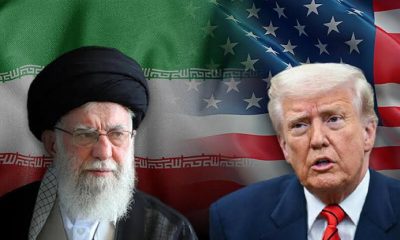
Iran has warned that Israeli Prime Minister Benjamin Netanyahu’s visit to the United States is a calculated move to undermine the newly resumed nuclear negotiations between Iran and the U.S., urging Washington to resist external pressure that could derail diplomacy.
Netanyahu arrived in Washington on Tuesday for talks with U.S. President Donald Trump, as he seeks to push for a tougher American position on Iran, particularly on its ballistic missile programme, ahead of the next phase of negotiations.
The trip marks Netanyahu’s seventh meeting with Trump since the U.S. president returned to office. Their last meeting took place in Jerusalem in October 2025, shortly after Trump announced a ceasefire in Gaza.
Speaking before his departure, Netanyahu said discussions would focus on Gaza, regional developments and Iran’s nuclear file.
“On this trip, we will discuss a range of issues: Gaza, the region, but of course first and foremost the negotiations with Iran,” he said.
READ ALSO:
- Lagos Announces Four-Week Partial Closure of Lagos-Abeokuta Expressway
- Ido-Ayegunle Killings: Monarch Confirms Arrest of Four Suspects
- Oyo Muslims Reaffirm Loyalty to Sultan on Islamic Matters — Grand Chief Imam
Netanyahu added that he would present Israel’s position on what he described as “the principles of the negotiations,” arguing that these principles were crucial not only for Israel but for peace and security in the Middle East.
His office has repeatedly insisted that any agreement with Iran must extend beyond nuclear matters to include ballistic missile development and Iran’s regional activities.
Reacting to the visit, Iranian Foreign Ministry spokesman Esmaeil Baghaei accused Israel of being the primary source of instability in the region and of working against diplomatic efforts.
Baghaei said Israel had turned Iran’s “peaceful nuclear programme” into what he described as a “fabricated crisis”, adding that Israel opposes any diplomatic process capable of restoring peace and calm in the Middle East.
He cautioned U.S. officials against allowing foreign actors to shape American foreign policy, urging Washington to act independently of what he called “destructive pressures and lobbies.”
Baghaei said Iran had demonstrated seriousness and goodwill in the talks and was eager to secure the lifting of “illegal sanctions” imposed on the country.
Referring to a brief encounter between Iranian and U.S. delegations last Friday, he said there was an understanding to continue the diplomatic process, describing it as an important step forward.
Meanwhile, Ali Larijani, secretary of Iran’s Supreme National Security Council, arrived in Oman on Tuesday, according to local media, as diplomatic engagements around the talks intensify.
Iran Warns U.S. Against Israeli Pressure as Nuclear Talks Resume







International
US to Deport 18 More Nigerians on ‘Worst-of-the-Worst’ Criminal List (Full Names)

US to Deport 18 More Nigerians on ‘Worst-of-the-Worst’ Criminal List (Full Names)
The United States Department of Homeland Security (DHS) has announced plans to deport an additional 18 Nigerians from its “worst-of-the-worst” criminal register, bringing the total number of Nigerians slated for removal to 97. The latest names were added to DHS records on Monday, reflecting an expansion of the ongoing enforcement exercise targeting serious criminal immigrants.
According to DHS, the newly listed Nigerians were convicted of offences such as wire fraud, mail fraud, and identity theft, among other crimes. The department emphasized that the arrests are part of a nationwide crackdown coordinated by U.S. Immigration and Customs Enforcement (ICE) under the leadership of Under Secretary Noem, fulfilling President Trump’s promise to prioritize the deportation of the most dangerous criminal aliens.
In a statement, DHS said:
“The U.S. Department of Homeland Security is highlighting the worst of the worst criminal aliens arrested by the U.S. Immigration and Customs Enforcement (ICE). Under Secretary Noem’s leadership, the men and women of DHS and ICE are fulfilling President Trump’s promise and carrying out mass deportations, starting with the worst of the worst.”
READ ALSO:
- Fuel Self-Sufficiency: Dangote Refinery Counters Misinformation on Petrol Imports
- “Electoral Act Amendment: El-Rufai Calls Akpabio ‘Tinubu’s Lapdog’”
- Lookman Reflects on Bittersweet La Liga Debut as Atletico Madrid Fall at Home
The 18 Nigerians recently added to the list include: Oluwaseyanu Akinola Afolabi, Olugbeminiyi Aderibigbe, Benjamin Ifebajo, Obinwanne Okeke, Kolawole Aminu, Oluwadamilola Olufunsho Ojo, Franklin Ibeabuchi, Alex Afolabi Ogunshakin, Joshua Ineh, Stephen Oseghale, Eghosa Obaretin, Adesina Surajudeen Lasisi, Ibrahim Ijaoba, Azeez Yinusa, Charles Akabuogu, Kelechi Umeh, Lotenna Chisom Umeadi, Donald Ehie, and Chukwudi Kingsley Kalu.
This development underscores the U.S. administration’s tough stance on illegal and criminal immigrants, with foreign nationals, including Nigerians, continuing to be significantly affected by enforcement drives. Analysts say the DHS crackdown signals the federal government’s commitment to prioritizing the removal of individuals considered threats to public safety and national security.
The announcement follows a series of previous deportations affecting Nigerian nationals, with the total number of Nigerians removed under the “worst-of-the-worst” initiative steadily rising. Nigerian authorities have historically prepared reintegration measures for deported citizens, assisting returnees with relocation and support upon arrival.
US to Deport 18 More Nigerians on ‘Worst-of-the-Worst’ Criminal List (Full Names)
International
Japan Restarts World’s Largest Nuclear Power Plant After Technical Glitch

Japan Restarts World’s Largest Nuclear Power Plant After Technical Glitch
Japan has restarted the world’s largest nuclear power plant, the Kashiwazaki‑Kariwa Nuclear Power Plant, following a brief suspension caused by a technical alert and minor malfunction during its initial restart. The move marks a major step in Japan’s nuclear energy revival as the country seeks to reduce fossil fuel imports, strengthen energy security, and meet its carbon neutrality goals.
The restart, conducted by Tokyo Electric Power Company Holdings Inc. (TEPCO), involved the No. 6 reactor at Kashiwazaki‑Kariwa in Niigata Prefecture. Operations resumed after additional safety checks addressed a monitoring system alarm triggered during control rod operations in late January. TEPCO announced that commercial operations are expected to begin by March 18, 2026.
The Kashiwazaki‑Kariwa plant, with a total capacity of approximately 8.2 gigawatts, has been mostly offline since the 2011 Fukushima Daiichi disaster, when an earthquake and tsunami caused multiple reactor meltdowns. Its restart follows rigorous safety upgrades, including enhanced tsunami defenses, improved emergency power systems, and stricter regulatory compliance, approved by the Nuclear Regulation Authority and local authorities.
READ ALSO:
- Ex‑Lawmaker, 200 Others Defect From APC to Labour Party in Abia
- How Death Threats During #EndSARS Made Me Rethink Activism – Omotola
- Electronic Transmission of Election Results Must Remain Mandatory – Adegboruwa
The government views the plant’s revival as a crucial element of its energy transition strategy, aiming to diversify Japan’s electricity generation, reduce dependence on imported fossil fuels, and achieve long-term climate targets. Japan has gradually restarted other reactors across the country under strict safety protocols, but Kashiwazaki‑Kariwa represents the largest single increase in nuclear generation capacity in more than a decade.
Despite the positive energy implications, the restart remains controversial. Many local residents and safety advocates continue to express concerns over potential risks, emphasizing the importance of robust emergency planning in an earthquake-prone region. Petition campaigns and public consultations prior to the restart highlighted these safety fears, signaling ongoing local scrutiny.
Experts say that the reactivation of Japan’s largest nuclear plant could strengthen national energy independence and play a significant role in reducing the country’s greenhouse gas emissions. However, they stress that maintaining a strong safety culture is essential to prevent incidents and preserve public confidence in nuclear energy.
The plant’s restart underscores Japan’s broader energy policy shift, as the country seeks a balance between renewable energy expansion and nuclear power, which remains a critical component of its electricity supply mix. With rising domestic energy demand, including from digital infrastructure and AI systems, nuclear power is seen as a reliable and low-carbon solution to meet Japan’s energy needs.
Japan Restarts World’s Largest Nuclear Power Plant After Technical Glitch
International
U.S.-Based Group Demands UK Accountability Over Nnamdi Kanu’s Arrest, Conviction
U.S.-Based Group Demands UK Accountability Over Nnamdi Kanu’s Arrest, Conviction
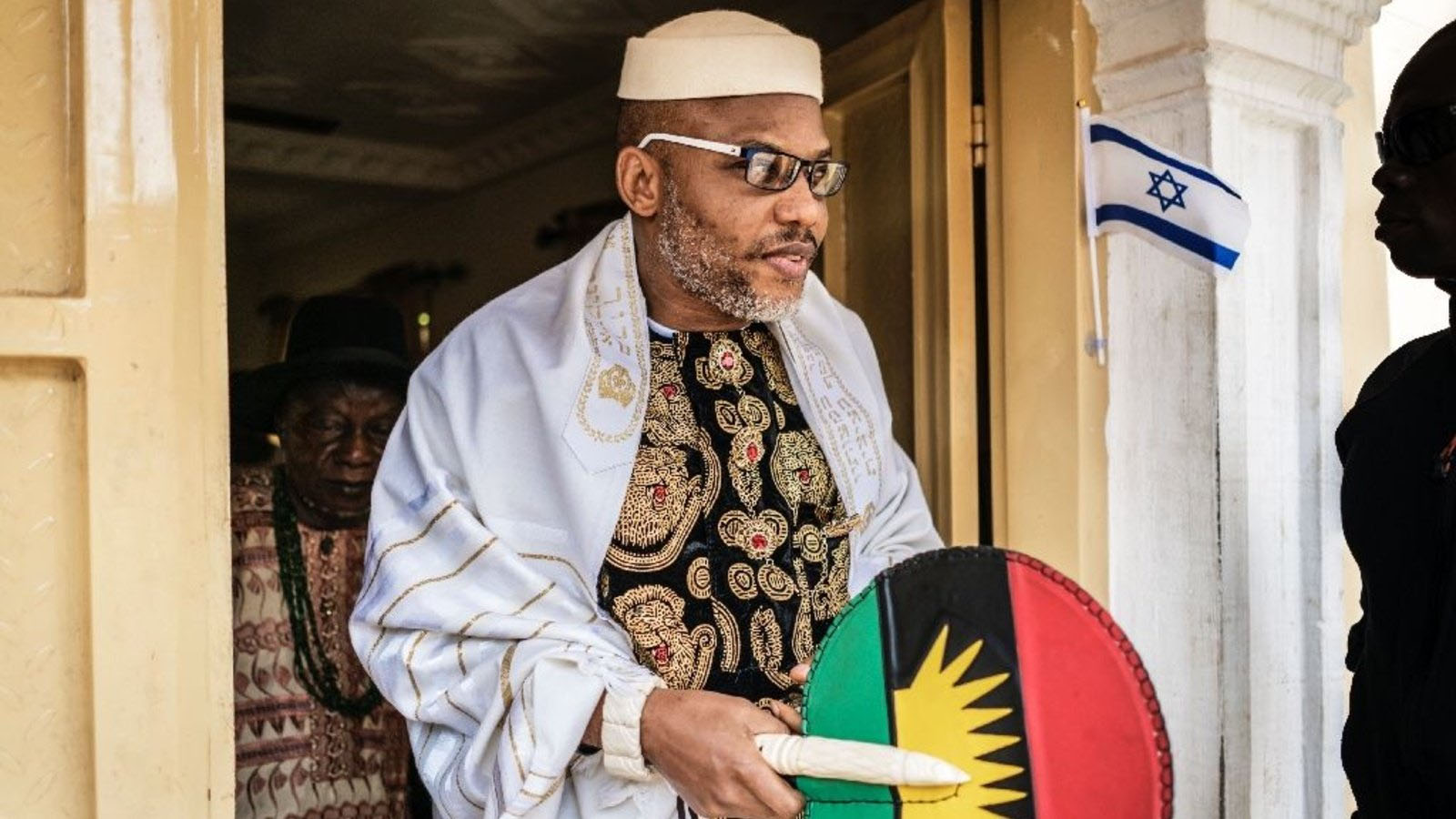
A United States–based advocacy group, the Rising Sun Foundation, has called on the United Kingdom government to demand accountability from Nigerian authorities over the arrest, rendition, and conviction of Nnamdi Kanu, leader of the Indigenous People of Biafra (IPOB), ahead of President Bola Tinubu’s expected UK visit.
In a press statement issued on Monday and signed by its president, Dr. Maxwell Dede, the foundation urged British authorities not to allow the meeting between President Tinubu and King Charles III to proceed without first addressing what it described as Kanu’s “unlawful abduction and extraordinary rendition” in 2021.
“The only expectation we have is simple and just: that this visit must not pass without the United Kingdom demanding clear answers from the Nigerian authorities regarding the unlawful abduction of Mazi Nnamdi Kanu,” the statement read.
Kanu, a British citizen, was arrested in Kenya in June 2021 and transferred to Nigeria under circumstances that drew international criticism and sparked human rights concerns. While the Nigerian government confirmed Kanu’s return, it has consistently rejected allegations that the transfer amounted to illegal rendition.
READ ALSO:
- Ex‑Lawmaker, 200 Others Defect From APC to Labour Party in Abia
- How Death Threats During #EndSARS Made Me Rethink Activism – Omotola
- Electronic Transmission of Election Results Must Remain Mandatory – Adegboruwa
According to the Rising Sun Foundation, the UK Foreign Office has, over nearly five years, sent multiple diplomatic communications to Nigeria seeking clarification on Kanu’s arrest and transfer, but has not received what it called a transparent or satisfactory response.
“For a British citizen traveling on a valid UK passport to be abducted from a third country and rendered to Nigeria without due process is a matter that demands urgent and serious attention,” Dr. Dede said. The group also accused the UK government of failing in its duty of care toward Kanu, arguing that political and economic interests should never override fundamental human rights.
“It is morally indefensible for the very state that created Nigeria, and which remains one of its principal political and economic partners, to abandon its duty of care toward a British citizen simply because of political convenience or historic hostility toward the Biafran cause,” the statement added.
The Rising Sun Foundation further raised concerns over what it described as credible reports about the aircraft and logistical arrangements allegedly used in Kanu’s transfer, suggesting possible international complicity. “The continued silence and inaction of the UK authorities, coupled with these reports, have deepened public suspicion that powerful international actors may have been aware of, or complicit in, the operation,” Dr. Dede said.
The group outlined specific demands it wants the UK government and the British monarch to pursue during President Tinubu’s visit, including a full public explanation from Nigerian authorities, clarification of the legal basis for Kanu’s arrest in Kenya, and the establishment of an independent inquiry if satisfactory answers are not provided.
“If the United Kingdom wishes to demonstrate that it was not a silent partner—or worse, an instigator—in the unlawful abduction of its own citizen, then this visit presents a clear and unavoidable test,” the statement said.
Dr. Dede concluded, “The world is watching. Justice demands answers.”
This call follows pressure from diaspora groups, civil society organisations, and human rights advocates who have repeatedly raised concerns about Kanu’s treatment and the international ramifications of his rendition and life imprisonment in November 2025, arguing that it violated extradition norms, international law, and human rights conventions. (independent.ng, thewhistler.ng)
U.S.-Based Group Demands UK Accountability Over Nnamdi Kanu’s Arrest, Conviction

-
 News2 days ago
BREAKING: Tinubu Holds Reconciliation Meeting With Wike, Fubara, Rivers Leaders at Aso Rock
-

 Business2 days ago
BoI Gets CBN Approval to Launch Non‑Interest Banking Window in Nigeria
-
 Africa3 days ago
Electoral Malpractice: President Mahama Orders Immediate Recall of Ghana’s High Commissioner to Nigeria
-

 metro21 hours ago
Leadership Crisis at NAHCON as Chairman Abdullahi Saleh Usman Resigns
-

 metro2 days ago
Nnamdi Kanu Orders Permanent End to Monday Sit-at-Home in South-East
-
 News21 hours ago
US Judge Orders FBI, DEA to Release Tinubu’s Criminal Records, Faults Delays
-

 metro3 days ago
Nigeria’s Unity Under Scrutiny: IPOB, US Lawmaker Clash Over Christian Safety
-

 Entertainment3 days ago
2Baba Breaks Silence on Quarrel with Wife Natasha During London Trip