
International
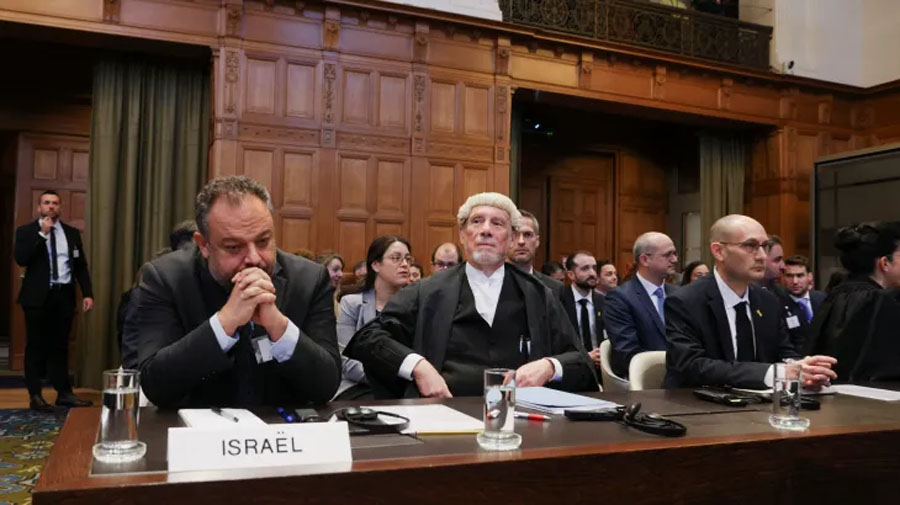
Israel rejects accusations of genocide in Gaza war at ICJ hearing
Israel rejects accusations of genocide in Gaza war at ICJ hearing
Israel has rejected the accusations brought by South Africa to the International Court of Justice (ICJ) that its actions in Gaza amount to genocide, in a second day of a public hearing at the world body in The Hague.
Israel’s legal representatives on Friday claimed South Africa’s case was “unfounded”, “absurd” and amounting to “libel”, and said Israel sought not to destroy a people but to protect its people.
On Thursday, on the first day of hearings, South Africa argued Israel had committed “systematic” acts of genocide in Gaza, where more than 23,500 Palestinians have been killed amid Israel’s military campaign, with at least 70 percent of whom were women and children, according to Gaza’s Health Ministry.
Israel’s arguments revolved around its “right to self-defence” following the attacks by Hamas on October 7, as well as what it called a lack of evidence of “genocidal intent”.
Christopher Staker, a lawyer representing Israel, said, “The inevitable fatalities and human suffering of any conflict is not of itself a pattern of conduct that plausibly shows genocidal intent.”
Malcolm Shaw, a professor of international law representing Israel, said the case relates only to charges of genocide, which “stands alone among violations of international law as the epitome of evil”. If the charge of genocide is levelled incorrectly, “the essence of this crime would be lost”, he said.
READ ALSO:
- Three men bag 22 years imprisonment for stealing household items
- C/River: Gov Otu floors Onor of PDP at S/Court
- Supreme Court dismisses PDP case against LP’ s Alex Otti as Abia governor
Shaw added that such evidence was lacking in the arguments South Africa presented a day earlier.
Detailing its evidence on Thursday, Tembeka Ngcukaitobi, a lawyer for South Africa, said, “The evidence of genocidal intent is not only chilling, it is also overwhelming and incontrovertible.”
‘Massive disconnect’
Israel’s legal representatives insisted its army has acted in compliance with international law in Gaza and aimed to mitigate civilian harm by warning of impending military actions, including via telephone calls and leafleting.
Omri Sender, another lawyer, argued that Israel’s efforts to facilitate humanitarian assistance to people in Gaza testified to its objective of protecting the civilian population, rather than destroying it.
However, Thomas MacManus, a senior lecturer in state crime at Queen Mary University of London, told Al Jazeera the ICJ is likely to see a “massive disconnect” between the picture Israel painted of its humanitarian concern for Gaza and “the reality on the ground where UN agencies say people are starving, lacking water, and seeing attacks on hospitals, schools, and universities”.
Speaking before the ICJ hearing, Galit Raguan, acting director of the international justice division at Israel’s Ministry of Justice, refuted the claim that Israel had bombed hospitals. She argued Israel had found evidence of Hamas using “every single hospital in Gaza” for military purposes.
Responding to claims that hospitals were used as military bases, Palestinian foreign ministry official Ammar Hijazi told Al Jazeera outside The Hague that Israel’s arguments were not based in fact or law.
“What Israel has provided today are many of the already debunked lies,” he said.
‘Plausible right to self-defence’
The ICJ is set to rule on nine provisional measures effectively seeking the suspension of military operations in Gaza, but a timeline for when that will happen has not been stated. Israel has argued the provisional measures cannot require a state to refrain from exercising a “plausible right to defend itself”.
READ ALSO:
- Supreme Court overrules A’court, upholds Mutfwang as Plateau governor
- Kano gov: NNPP Abba Yusuf wins at Supreme Court
- Supreme Court overrules A’court, upholds Mutfwang as Plateau governor
On the issue of jurisdiction, Israel argued that one of the requirements of the ICJ’s mandate is that the state putting forward the case should try to sort out this problem first. According to Israel, they did not manage to talk to South Africa before they brought this case to the court. In turn, South Africa argued it had reached out to Israel but obtained no response.
The Israeli team did make strong “jurisdictional and procedural arguments”, Al Jazeera’s senior political analyst Marwan Bishara said, but he added that “Israel lost the moral, factual, historical and humanitarian argument because of the way the situation has unravelled in Gaza – with the sheer death and industrial killing there.”
Tal Becker, the legal adviser of Israel’s foreign ministry, told the ICJ hearing that South Africa enjoyed close relations with Hamas and was therefore attempting to put forward a “distorted factual and legal picture”.
South Africa “firmly rejects” that claim, Al Jazeera’s Fahmida Miller said, reporting from South Africa.
“The South African government has said that it doesn’t have bilateral relations with Hamas and that its stance in terms of supporting the Palestinian struggle against occupation does not equate to the support of Hamas,” she said.
In its presentation on Thursday, South Africa’s lawyers also condemned Hamas’s actions on October 7.
ICJ President Joan Donoghue ended the two-day hearing saying the court will announce its decision in the coming days.
Israel rejects accusations of genocide in Gaza war at ICJ hearing
SOURCE: AL JAZEERA










International
€10 Million Stolen from Sparkasse Bank Vault in Gelsenkirchen Over Christmas
€10 Million Stolen from Sparkasse Bank Vault in Gelsenkirchen Over Christmas
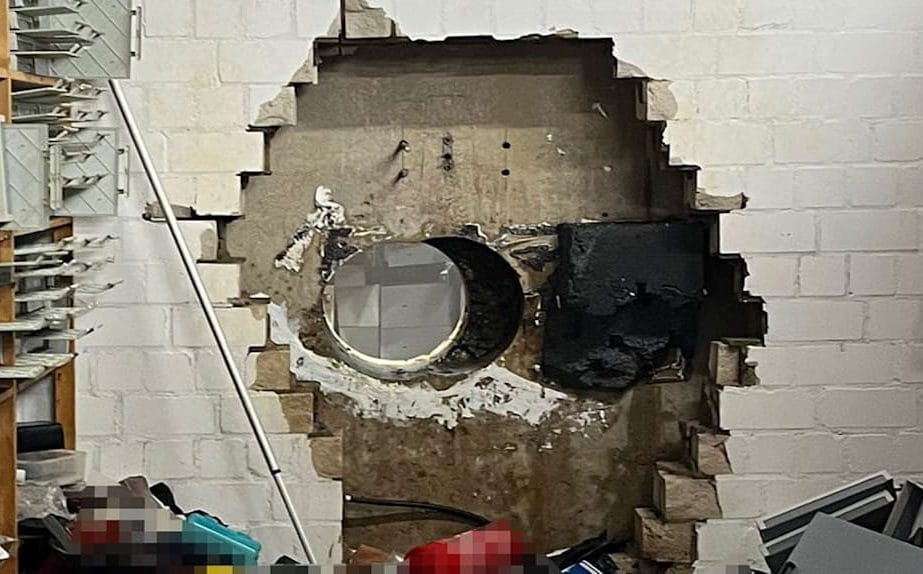
Thieves exploited the quiet Christmas holiday to break into a branch of Sparkasse Bank in Gelsenkirchen, Germany, stealing at least €10 million, police confirmed on Tuesday.
The suspects drilled through a thick concrete wall to gain access to the bank vault, where they forced open customer safe deposit boxes and made off with the money and valuables.
The crime went undetected until the early hours of Monday, December 29, when a fire alarm alerted authorities to the breach. Most shops and banks in Germany are closed from the evening of December 24 during the holiday season, allowing the robbers to carry out the heist unnoticed.
READ ALSO:
- Assertion, Retraction, and Responsibility: Lessons from the Kailani–Dangote Episode
- NANS Declares National Protest Against Implementation of Tax Reform Law
- Labour Party Reacts to Peter Obi’s Defection to ADC, Calls 2023 Candidacy ‘Mistake’
According to witnesses, several men carrying large bags were seen moving through the stairwell of a nearby parking garage late on Saturday night. Investigators are also examining reports that a black Audi RS6, with masked occupants, left the garage early Monday morning. The car reportedly had stolen licence plates from Hanover, more than 200 kilometres from Gelsenkirchen.
Angry and anxious customers gathered outside the bank on Tuesday, demanding information about their belongings. One customer, who had used the deposit box for 25 years to store retirement savings, told Welt, “I couldn’t sleep last night. We’re getting no information.” Another reported storing cash and family jewellery in the box.
Police investigations into the massive bank robbery are ongoing.
€10 Million Stolen from Sparkasse Bank Vault in Gelsenkirchen Over Christmas
International
Elon Musk Faces Backlash Over ‘Hotness’ Remark on Teen Facing Deportation

Elon Musk Faces Backlash Over ‘Hotness’ Remark on Teen Facing Deportation
Tech billionaire and Tesla CEO Elon Musk has come under renewed criticism following remarks he made about the physical appearance of a teenage girl who was facing possible deportation from Denmark.
The backlash followed a post by Musk, 54, on X (formerly Twitter), where he suggested that people who are physically attractive should be exempted from deportation. The comment was made in reference to Audrey Morris, a 19-year-old American student whose immigration status in Denmark recently became a public issue.
Reacting to the comment, Morris described Musk’s remark as demeaning, saying it reduced her case to her looks rather than her personal achievements and life circumstances.
“It’s definitely crazy,” Morris told the Daily Beast, adding that while she was not entirely shocked, she was floored that such a comment came from someone of Musk’s stature.
She said public attention quickly shifted from her academic achievements, volunteer work, and long-term residence in Denmark to her appearance.
READ ALSO:
- IPOB Lawyer Ifeanyi Ejiofor Raises Alarm Over Death Threats to Self, Family
- Peter Obi Directs Labour Party Members to Register with ADC Ahead of 2027
- Driver in Anthony Joshua Crash Faces Possible Reckless Driving Charges
“It would’ve been really cool if he commented on my academic achievements or what I’ve accomplished,” she said. “That would have been helpful.”
Morris noted that although the attention was embarrassing, she hoped it would at least bring awareness to her situation.
The teenager has lived in Denmark since the age of nine after her family relocated from the United States in 2015 for her mother’s doctoral studies. She remained in the country under a temporary residency permit as an accompanying child, which expired in June 2024.
Her immigration troubles reportedly began after she moved into a boarding facility at her high school in another city and changed her address—an action that violated the conditions of her residency permit. At one point, the threat of deportation became serious enough for her to prepare to return to the United States, leaving behind her family and boyfriend.
In a later development, Danish authorities granted Morris a 10-year residency permit, sparing her immediate deportation. However, she was denied citizenship, even as her American mother and 15-year-old brother were granted the status.
“Denmark is my home—one hundred percent,” Morris said in an earlier interview. “I am as Danish as a foreigner can possibly be.”
Musk’s comment, in which he wrote that “8 or above level hotness should get an exemption,” has since drawn criticism from social media users and commentators who accused him of objectifying women and trivialising a serious immigration issue.
Elon Musk Faces Backlash Over ‘Hotness’ Remark on Teen Facing Deportation
International
Israel to Revoke Licences of 37 Aid Groups in Gaza, West Bank, Sparks International Outcry
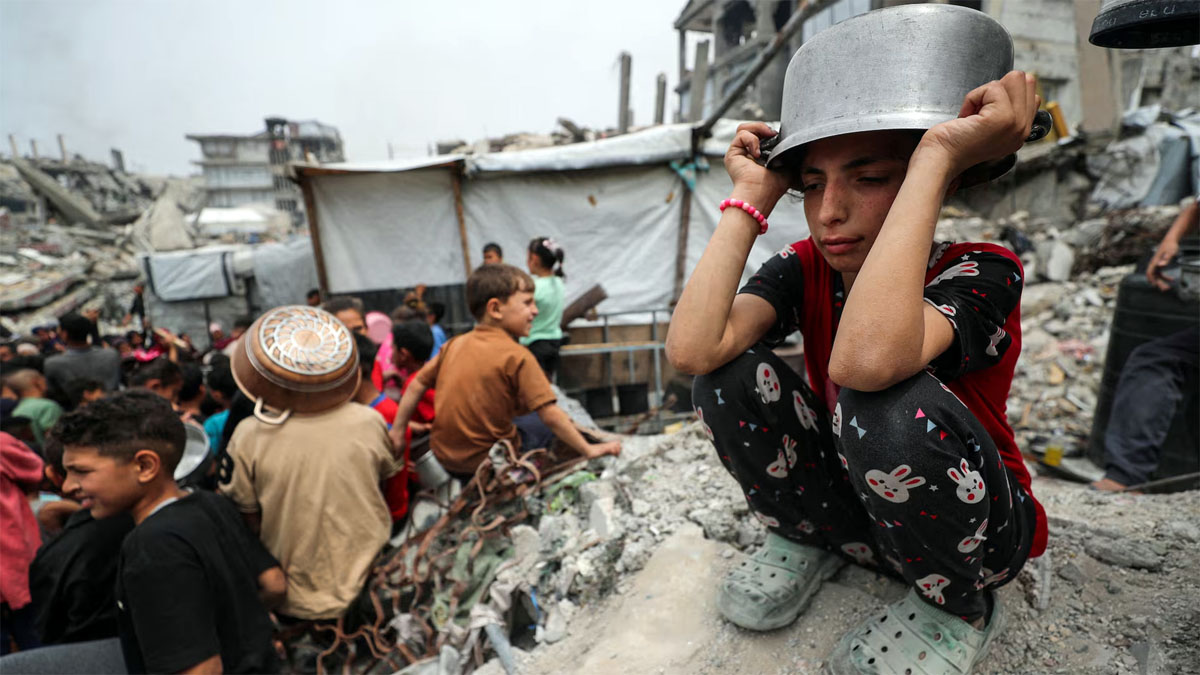
Israel to Revoke Licences of 37 Aid Groups in Gaza, West Bank, Sparks International Outcry
Israel has announced plans to revoke the licences of 37 humanitarian aid organisations operating in Gaza and the occupied West Bank, a move that has drawn sharp criticism from several Western governments and international humanitarian bodies.
The affected organisations include major international non-governmental organisations (INGOs) such as ActionAid, the International Rescue Committee, and the Norwegian Refugee Council, whose licences are set to be suspended from January 1, with their operations expected to wind down within 60 days.
According to Israel’s Ministry of Diaspora Affairs, which oversees the registration of aid groups, the decision followed the organisations’ failure to comply with new registration requirements, including the submission of what it described as “complete and verifiable personal details” of staff members.
The announcement triggered condemnation from the foreign ministers of 10 countries, including the United Kingdom, France, Canada, Japan, Norway and Sweden, who described the new rules as “restrictive” and “unacceptable.” In a joint statement, they warned that shutting down INGO operations would have a severe impact on access to essential services, particularly healthcare, in Gaza.
READ ALSO:
- UNN Students Reject 100% Fee Hike, Insist on Maximum 25% Increase
- Police Arrest 22-Year-Old Over Alleged Rape of Minor in Oyo State
- Army Rescues Over 1,000 Kidnap Victims, Destroys Bandit Camps Across North-West
The ministers stressed that the humanitarian situation in Gaza remains catastrophic and urged the Israeli government to ensure aid organisations can operate in a sustained and predictable manner.
Israel, however, insisted that the move would not disrupt the flow of humanitarian assistance. The Ministry of Diaspora Affairs said aid continues to reach Gaza through approved and vetted channels, including United Nations agencies, bilateral partners and selected humanitarian organisations.
The ministry argued that the licence revocations were necessary to prevent the infiltration of terrorist operatives into humanitarian structures, adding that fewer than 15% of aid organisations were found to be in violation of the new regulatory framework.
Israel’s military coordination body, Cogat, also claimed that the suspended organisations did not deliver aid to Gaza during the current ceasefire, and that their combined contribution previously accounted for about 1% of total aid volumes.
The new framework allows for licence denial on grounds including denying Israel’s existence, denying the Holocaust or the October 7, 2023 Hamas attacks, supporting armed struggle against Israel, promoting delegitimisation campaigns, or calling for a boycott of Israel.
In contrast, the Humanitarian Country Team of the Occupied Palestinian Territory, which represents UN agencies and over 200 local and international organisations, warned that the registration system “fundamentally jeopardises” humanitarian operations in Gaza and the West Bank. The group said the criteria were vague, arbitrary and politicised, making compliance difficult without breaching international humanitarian principles.
The forum noted that INGOs currently support most of Gaza’s field hospitals, primary healthcare centres, emergency shelters, water and sanitation services, and nutrition centres for malnourished children.
Israel’s Minister of Diaspora Affairs and Combating Antisemitism, Amichai Chikli, defended the policy, stating: “Humanitarian assistance is welcome — the exploitation of humanitarian frameworks for terrorism is not.”
Other organisations facing suspension include CARE, Medico International, and Medical Aid for Palestinians.
Israel to Revoke Licences of 37 Aid Groups in Gaza, West Bank, Sparks International Outcry
BBC

-

 metro3 days ago
Niger Delta Crackdown: Army Seizes ₦150m Stolen Oil, Arrests 19 Suspects
-

 Sports3 days ago
Cristiano Ronaldo Wins Best Middle East Player at 2025 Globe Soccer Awards in Dubai
-

 Sports3 days ago
Anthony Joshua injured as two die in fatal Lagos-Ibadan Expressway crash (plus photos)
-

 metro2 days ago
Mrs. Regina Akume Urges SGF George Akume to Return to Christianity Amid New Marriage
-

 metro2 days ago
Two Close Aides of Anthony Joshua Identified as Victims of Fatal Crash
-

 metro2 days ago
Ogun Man Arrested After ₦4,000 Debt Dispute Claims Stepbrother’s Life
-

 metro2 days ago
Malami, Son, Wife Remanded Over ₦Billions Money Laundering Charges
-

 metro2 days ago
Tinubu Condoles Anthony Joshua After Ogun Crash That Killed Two Associates