
International
Israel returns ‘decomposed’ bodies of 89 Palestinians to Gaza

Israel returns ‘decomposed’ bodies of 89 Palestinians to Gaza
Israel has returned the bodies of nearly 90 Palestinians killed in its military offensive in the Gaza Strip, the Palestinian Ministry of Health has said.
Yamen Abu Suleiman, the director of the Palestinian Civil Emergency Service in Khan Younis in southern Gaza, said on Monday that it was unclear whether the bodies had been dug up from cemeteries by the army during the ground offensive, or whether they were “detainees who had been tortured and killed”.
“The occupation provided us with no information about the names, or ages, or anything. This is a war crime, a crime against humanity,” Abu Suleiman said.
He said the bodies would be examined in an attempt to determine the causes of death and to identify them, before being buried in a mass grave at a cemetery near Nasser Hospital in Khan Younis.
Gaza’s Government Media Office said Israel had sent 89 bodies as “bones and decomposed bodies in an inhumane manner”.
It said Israeli forces had “stolen” 2,000 bodies since October 7 from dozens of cemeteries, which they bulldozed during their ongoing military offensive.
The office added that Israeli forces also previously dug up graves in Khan Younis, Jabalia and the Tuffah neighbourhood in Gaza City, and transferred the bodies to “unknown places”, an action amounting to a war crime and a crime against humanity.
It said Israeli forces continue to hold dozens of bodies.
READ ALSO:
- Protesters continue demonstrations in Lagos, Osun despite Tinubu’s broadcast
- NCC directs telcos to simplify tariff plans
- We need decisive action on IgboMustGo threat, IBN tells Tinubu, Sanwo-Olu
Hamas said in a statement the bodies were handed over in “a state of complete decomposition, without any ability to determine their identities”.
“It highlights the sadism of the [Israeli] occupation and the level of crime committed by the Nazi occupation army, which is unprecedented in human history,” it said.
There was no immediate comment from the Israeli military on the return of the bodies. In the past, Israel has said it returned bodies after checks that they were not Israeli hostages who had been held by Hamas since the October 7 attack on Israel.
No ceasefire deal
In Jerusalem, the Israeli Hostages and Missing Families Forum asked why Israeli Prime Minister Benjamin Netanyahu would allow the handover of Palestinian bodies without a ceasefire deal with Hamas.
“Why are bodies being returned outside the framework of a comprehensive deal? Such an agreement could bring back living hostages for rehabilitation and the deceased for proper burial,” the group said in a statement.
Rocketing regional tensions are increasing the desperation of families and friends of the remaining 111 captives, including 39 known to be dead, taken during the October 7 attack.
Critics say Netanyahu, who is facing a corruption trial, prefers to prolong the conflict rather than agree a deal that could upset his hardline coalition partners and tip him out of office.
Israel returns ‘decomposed’ bodies of 89 Palestinians to Gaza







International
Hegseth Warns US ‘Can’t Stop Everything’ Iran Fires Despite Claiming Air Superiority
Hegseth Warns US ‘Can’t Stop Everything’ Iran Fires Despite Claiming Air Superiority
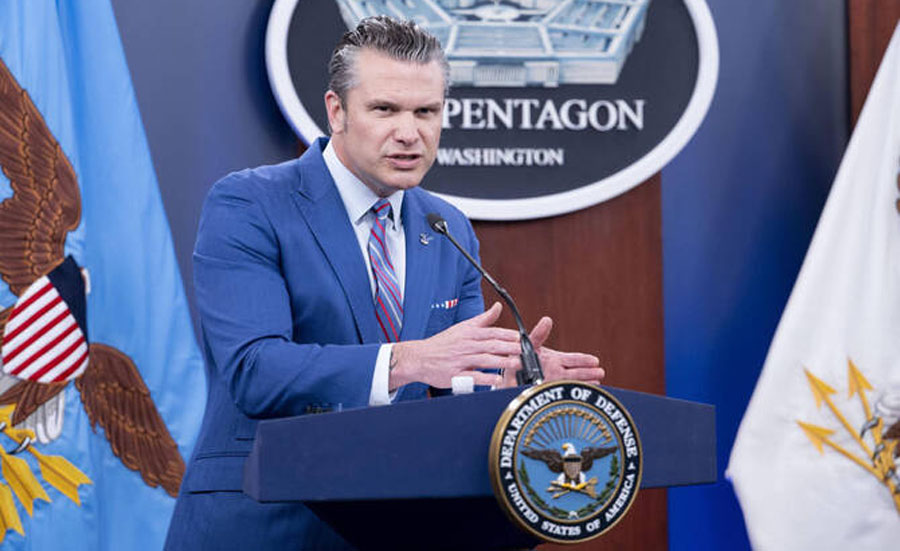
WASHINGTON (AP) — US Defense Secretary Pete Hegseth acknowledged Wednesday that some Iranian drone and missile attacks may still penetrate American defenses, even as he insisted that US forces are rapidly gaining control of Iranian airspace.
Speaking at the Pentagon alongside Gen. Dan Caine, chairman of the Joint Chiefs of Staff, Hegseth said the United States had spared “no expense or capability” to bolster air defense systems across the Middle East to protect American troops and allied forces.
“This does not mean we can stop everything,” Hegseth said. “But we ensured that the maximum possible defense and maximum possible force protection was set up before we went on offense.”
His remarks came days after the United States and Israel launched coordinated strikes against Iranian targets, widening a conflict that has sent shockwaves across the region and heightened fears of a prolonged war.
Gen. Caine stressed that US service members continue to face significant danger. “US service members remain in harm’s way, and we must be clear-eyed that the risk is still high,” he said.
The warning follows the deaths of six US soldiers in Kuwait after an Iranian drone struck an operations center located within a civilian port facility. According to military officials, the building — described by a relative of one of the victims as a shipping-container-style structure — reportedly lacked hardened defensive protections. The incident underscored the evolving nature of drone warfare and the difficulty of intercepting every low-flying or remotely piloted threat.
READ ALSO:
- Pedro Sánchez Rejects Trump Trade Threat, Says ‘No to War’ as EU Backs Spain
- Nigeria officially out of 2026 World Cup as FIFA confirms DR Congo for play-offs
- MURIC Petitions NASS, Demands Removal of INEC Chairman Over Alleged Anti-Muslim Bias
Defense officials say layered systems — including Patriot missile batteries, naval-based interceptors, radar networks and counter-drone technologies — have been reinforced in key locations. However, Hegseth acknowledged that even advanced systems cannot guarantee a 100% interception rate, particularly during sustained attacks.
Despite the risks, Hegseth asserted that the US military’s technological edge and operational tempo are shifting the balance decisively. He said additional jet fighters, long-range bombers and logistical support units continue to arrive in the region, reinforcing America’s military posture.
Pentagon officials indicated that early phases of the campaign relied heavily on precision-guided munitions and stealth capabilities to neutralize Iranian air defense systems. As air superiority expands, US forces may increasingly deploy conventional precision and gravity bombs for sustained operations.
Hegseth also emphasized that the United States has sufficient munitions stockpiles and equipment to sustain a prolonged campaign if necessary. While US President Donald Trump has suggested the conflict could last four to five weeks, Hegseth signaled it may stretch longer, potentially up to eight weeks or more, depending on how events unfold.
“You can say four weeks, but it could be six, it could be eight, it could be three,” Hegseth said. “Ultimately, we set the pace and the tempo. The enemy is off balance, and we’re going to keep them off balance.”
Trump has said he is prepared “to go far longer” if required to achieve strategic objectives.
Military analysts note that wars of attrition depend not only on firepower but also on logistics, morale and political will. Sustained Iranian missile capabilities, proxy operations and cyber activities could continue to pose asymmetric challenges even if Tehran’s conventional air defenses are degraded.
Tehran has vowed to intensify its response, warning that regional military and economic infrastructure could be targeted if hostilities continue. Iranian officials have framed the conflict as a defense of sovereignty and signaled no immediate willingness to de-escalate.
The widening confrontation has raised concerns about potential spillover into neighboring states, disruptions to global energy markets and broader geopolitical instability.
For now, US defense leaders are balancing confidence in air dominance with public acknowledgment of ongoing risks — recognizing that even overwhelming military superiority does not eliminate the danger to troops deployed in active combat zones.
Hegseth Warns US ‘Can’t Stop Everything’ Iran Fires Despite Claiming Air Superiority
International
Pedro Sánchez Rejects Trump Trade Threat, Says ‘No to War’ as EU Backs Spain
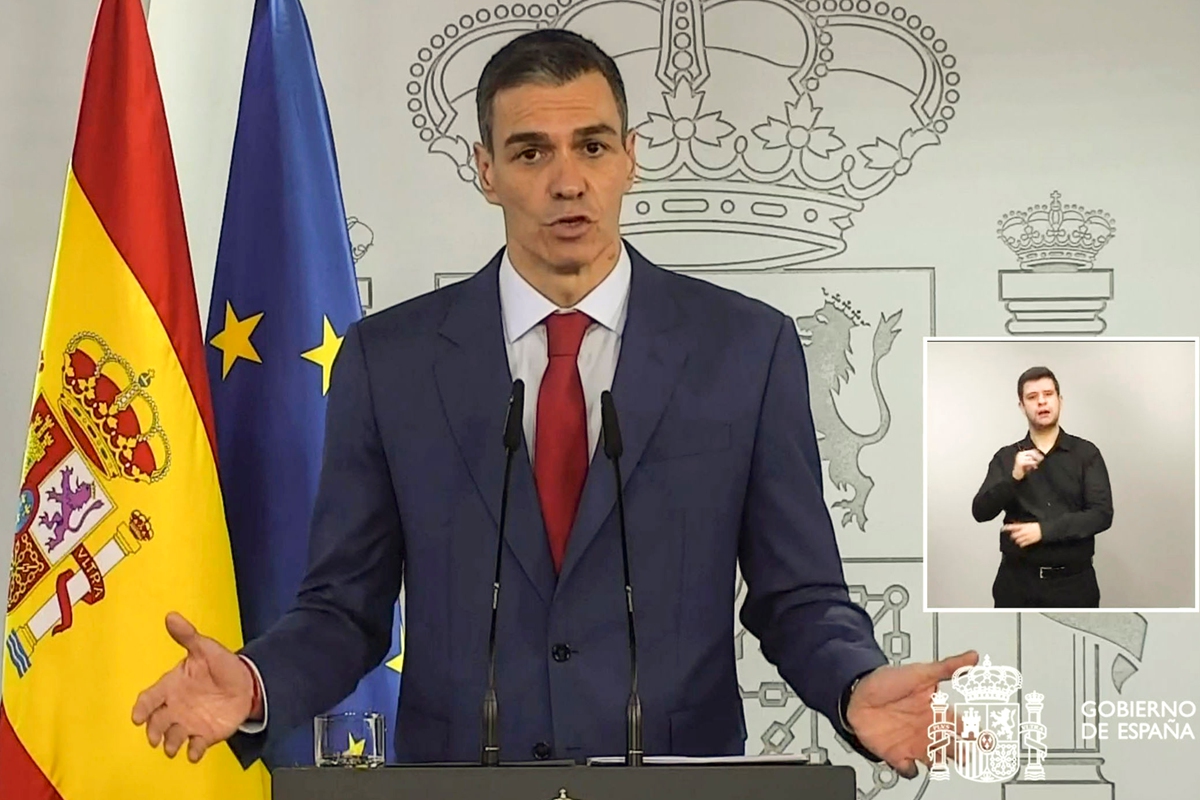
Pedro Sánchez Rejects Trump Trade Threat, Says ‘No to War’ as EU Backs Spain
Spain’s Prime Minister Pedro Sánchez has delivered a forceful response to US President Donald Trump’s threat to sever trade ties, declaring that Spain stands for peace, international law and multilateralism, not escalation.
In a 10-minute televised address from the prime minister’s official residence in Madrid, Sánchez reflected on the wars in Ukraine, Gaza, and the 2003 Iraq War, arguing that history had shown the devastating consequences of military interventions that sidestep international legality. “Our position can be summed up in three words: no to war,” Sánchez said, warning that “you cannot answer one illegality with another,” because that path leads to wider global catastrophe.
Tensions escalated after President Trump threatened to impose a full trade embargo on Spain following Madrid’s refusal to allow the United States to use the jointly operated military bases at Morón and Rota for potential strikes against Iran. “Spain has been terrible,” Trump said during a meeting with German Chancellor Friedrich Merz. “We’re going to cut off all trade with Spain. We don’t want anything to do with Spain.”
Spain hosts key US military installations under long-standing bilateral defence agreements, and access to these bases has historically required coordination and political consent from Madrid. Spanish officials maintain that any offensive military use of the facilities must align with Spain’s foreign policy stance and international law obligations.
READ ALSO:
- MURIC Petitions NASS, Demands Removal of INEC Chairman Over Alleged Anti-Muslim Bias
- Tinubu swears in Disu as substantive IGP, chief inaugurates up state police committee
- US Military Says It Has Struck Nearly 2,000 Targets in Iran as War Escalates
The threat triggered swift reactions across Europe. The Élysée Palace confirmed that French President Emmanuel Macron expressed solidarity with Spain during a call with Sánchez, while European Council President António Costa conveyed the European Union’s full backing. German Chancellor Merz clarified that the United States could not negotiate selective trade arrangements with individual EU member states, underscoring that trade policy falls under EU competence rather than national authority.
Spain’s Economy Ministry signaled it was assessing contingency measures in case of economic retaliation, although Sánchez avoided directly repeating Trump’s trade embargo language during his address. He stressed that the government was studying ways to shield Spanish businesses and households from potential fallout.
Trump also criticized Spain for failing to meet NATO’s proposed 5% of GDP defence spending target, calling the country a “terrible partner” in the alliance. Spain currently spends significantly less than that benchmark, though it has pledged gradual increases in line with NATO commitments. Earlier this year, Sánchez had drawn criticism from Washington for opposing a US military incursion into Venezuela, reinforcing perceptions of policy divergence between Madrid and Washington.
Despite tensions, Sánchez reiterated Spain’s solidarity with nations “illegally attacked by the Iranian regime,” while maintaining that military escalation was not the solution.
Sánchez invoked Spain’s experience during the 2003 Iraq invasion, recalling the meeting of the so-called “Azores trio” — then-US President George W. Bush, UK Prime Minister Tony Blair, and Spain’s then conservative leader José María Aznar — shortly before the invasion. He argued that the Iraq War left Europe with “a more insecure world and worse life,” suggesting that strikes on Iran could similarly destabilize global markets and harm ordinary citizens through rising energy prices and economic uncertainty.
The Iraq reference resonates strongly in Spain, where mass anti-war protests preceded the 2004 general election. Many analysts believe public anger over the war contributed to the Socialist Party’s surprise electoral victory days after the Madrid train bombings.
Sánchez’s stance aligns with Spain’s broader foreign policy posture on the Middle East. His government has been one of Europe’s most outspoken critics of Israel’s military campaign in Gaza following the 2023 Hamas attacks. Spain described Israel’s actions as genocide and moved to recognize a Palestinian state earlier than many EU counterparts, a position that has support among Sánchez’s left-wing coalition partners and segments of Spanish public opinion.
The transatlantic clash comes at a delicate moment for Sánchez’s coalition government, which has faced mounting political pressure and corruption allegations involving allies. His parliamentary majority depends on a complex alliance of left-wing and regional nationalist parties.
However, confronting Trump could carry electoral advantages. A recent survey by Spain’s CIS research institute found that 77% of Spaniards hold a bad or very bad opinion of Trump, suggesting broad domestic backing for Sánchez’s defiance.
Uncertainty remains over whether Trump’s rhetoric will translate into concrete economic measures. Spain exports billions of euros in goods to the United States annually, including automobiles, pharmaceuticals, olive oil, and industrial machinery. A full trade embargo would significantly disrupt bilateral commerce and ripple across EU markets.
For now, Spain is emphasizing diplomacy, European unity, and adherence to international law, while businesses and citizens await clarity on whether the standoff will escalate into tangible economic consequences.
Pedro Sánchez Rejects Trump Trade Threat, Says ‘No to War’ as EU Backs Spain
International
Mystery as Iranian Warship Sinks off Sri Lanka, Over 100 Feared Missing
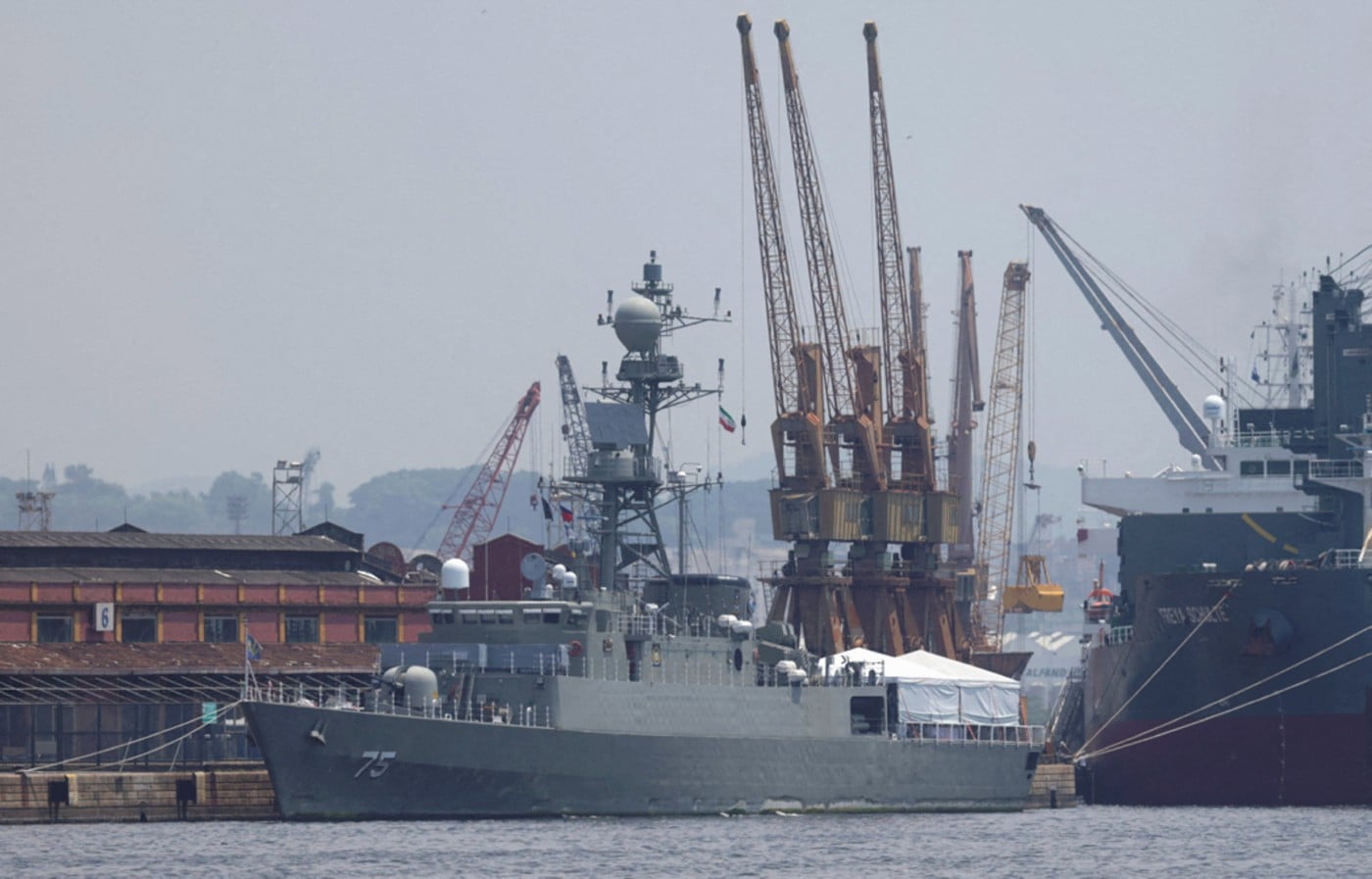
Mystery as Iranian Warship Sinks off Sri Lanka, Over 100 Feared Missing
An Iranian warship has sunk off the coast of Sri Lanka, triggering a major search and rescue operation after authorities confirmed that 32 people were rescued while several bodies were recovered from the sea.
Sri Lanka’s Foreign Minister, Vijitha Herath, told parliament on Wednesday that the vessel, identified as IRIS Dena, went down in waters off the island nation.
Initial reports from sources within the Sri Lanka Navy and the defence ministry suggested the ship may have been attacked by a submarine, with at least 101 people unaccounted for following the incident in the Indian Ocean.
However, a navy spokesman dismissed the claim that over 100 people were missing, describing the figure as inaccurate. He also rejected speculation about the cause of the sinking, saying investigations were still ongoing.
The rescued sailors, who sustained injuries during the incident, are receiving treatment at a state-run hospital in the southern port city of Galle.
According to naval authorities, a distress call was received from the Iranian vessel, prompting a swift joint rescue effort by the navy and the Sri Lanka Air Force. Search operations were immediately launched in the affected area of the Indian Ocean.
While defence sources hinted at a possible underwater attack, officials stressed that the exact circumstances surrounding the sinking remain unclear, and no group or country has been identified as responsible.
The incident has raised fresh security concerns in the strategically sensitive Indian Ocean region, as authorities continue efforts to account for all crew members and determine what led to the vessel’s sudden loss.

-
 International2 days ago
Iran Retaliates: Gulf States Allied With US Hit by Missiles, Drones
-
 International2 days ago
Saudi Arabia Denies Lobbying US to Strike Iran as Gulf States Respond to Escalation
-
 International2 days ago
Several U.S. Warplanes Crash in Kuwait Amid Ongoing Iranian Strikes
-

 metro2 days ago
Daddy Freeze Warns Couples Over 40: ‘Avoid Moving Abroad, Especially US, UK’
-
 International2 days ago
Israeli Airstrikes Kill 31 in Lebanon as Hezbollah Loses Senior Figures
-

 Politics2 days ago
Wike Blasts Kingibe Over FCT Council Election Remarks
-

 Health2 days ago
Nigeria to Receive Breakthrough HIV Prevention Drug This Month – NACA
-
 International2 days ago
Austin Bar Shooting Kills 3, FBI Investigates Possible Terrorism Link