

International
Israeli military begins ground invasion of southern Lebanon
Israeli military begins ground invasion of southern Lebanon
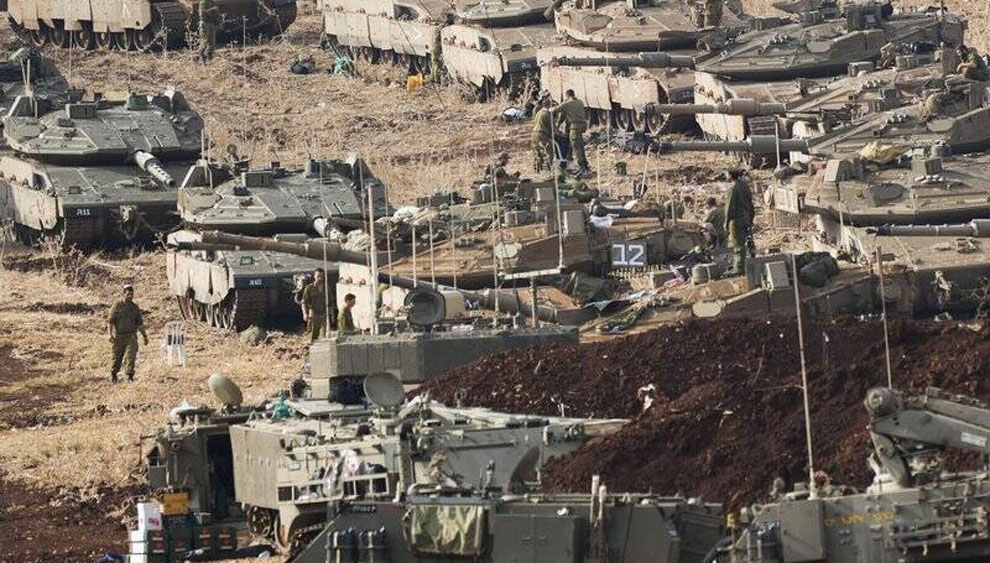
BEIRUT/RIYADH: The Israeli military said early Tuesday that it had started a ground invasion of Lebanon in a long anticipated operation that leaders say will support the return of displaced Israelis to northern settlements.
Israel’s military said the operation in southern Lebanon was limited and localized and was based on precise intelligence against the Lebanese group Hezbollah, adding that the air force and artillery units were supporting ground troops.
The military said that its targets were in villages close to its border with Lebanon that pose “an immediate threat to Israeli communities in northern Israel.”
Hezbollah and Israel have been trading fire across the border for months, forcing many residents either side of it to flee or be evacuated from danger zones.
Lebanese residents in Aita al-Shaab reported heavy shelling and the sound of military aerial activity.
Lebanese authorities said that 95 people had been killed on Monday due to Israeli actions across the country.
Hezbollah said on Monday that it had carried out attacks against the Israeli military.
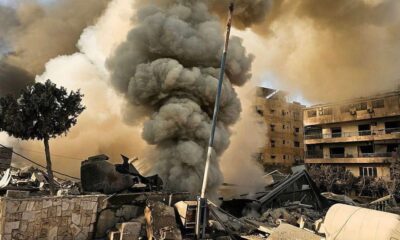
The Lebanese capital was again targeted by Israeli fire on Monday night as at least six strikes hit south Beirut. Residents received messages to evacuate target sites and many continue to sleep outside for safety or because they have nowhere else to go.
In Sidon, a strike targeted Mounir Maqdah, commander of the Lebanese branch of the Palestinian Fatah movement’s military wing, the Al-Aqsa Martyrs Brigade, Reuters reported citing two Palestinian security officials, and his fate was unknown early Tuesday.
The strike hit a building in the Ain Al-Hilweh Palestinian refugee camp in the south of the city.
READ ALSO:
- Gunmen abduct pastor, engineer in Kwara state
- FG increases monthly pension of retirees by N32,000
- Just in: Police attack Independence Day protesters in Abuja
In neighboring Syria, state media said that three people had been killed, including a journalist, with air defenses intercepting “hostile” targets in the Damascus area on Tuesday.
“Our air defense systems are intercepting hostile targets in the Damascus area,” Syria’s official SANA news agency said, using a phrase usually used to refer to Israeli strikes.
Earlier, State Department spokesman Matthew Miller said Israel informed the US about the raids, which he said were described as “limited operations focused on Hezbollah infrastructure near the border.”
Before the Israeli ground troops entered Lebanon, a Western diplomat in Cairo whose country is directly involved in de-escalation efforts said Israel had shared its plans with the US and other Western allies, and conveyed the operation will “be limited.”
Meanwhile, Lebanon’s army is repositioning troops stationed on its southern border, a Lebanese military official told AFP.
The Lebanese army is “repositioning and regrouping forces” at the southern border following threats of an Israeli incursion, the official said, requesting anonymity to discuss sensitive matters.
Britain and Canada announced on Monday plans to get their citizens out of Lebanon amid fears over a wider escalation that may involve Iranian intervention to support Hezbollah.
Earlier on Monday, Hezbollah’s deputy leader Naim Qassem said in his first public speech since Israeli airstrikes killed its veteran chief Hassan Nasrallah last week that the group’s fighters are primed to confront any Israeli ground invasion of Lebanon. Israel will not achieve its goals, he said.
“We will face any possibility and we are ready if the Israelis decide to enter by land and the resistance forces are ready for a ground engagement,” he said in an address from an undisclosed location.
He was speaking as Israeli airstrikes on targets in Beirut and elsewhere in Lebanon continued, extending a two-week long wave of attacks that has eliminated several Hezbollah commanders but also killed about 1,000 Lebanese and forced one million to flee their homes, according to the Lebanese government.
Nasrallah’s killing, along with the series of blows against the organization’s communications devices and assassination of other senior commanders, constitute the biggest blow to the organization since Iran created it in 1982 to fight Israel.
He had built it up into Lebanon’s most powerful military and political force, with wide sway across the Middle East.
READ ALSO:
- US ports shut down as dockworkers embark on strike
- Atiku seeks National Assembly support for six-year term president
- Tinubu confused about economic policies – Segun Sowunmi
Now Hezbollah faces the challenge of replacing a charismatic, towering leader who was a hero to millions of supporters because he stood up to Israel even though the West branded him a terrorist mastermind.
“We will choose a secretary-general for the party at the earliest opportunity…and we will fill the leadership and positions on a permanent basis,” Qassem said.
Qassem said Hezbollah’s fighters had continued to fire rockets as deep as 150 km (93 miles) into Israeli territory and were ready to face any possible Israeli ground incursion.
“What we are doing is the bare minimum…We know that the battle may be long,” he said. “We will win as we won in the liberation of 2006 in the face of the Israeli enemy,” he added, referring to the last big conflict between the two foes.
Israel, which has also assassinated leaders of the Palestinian militant group Hamas in the Gaza war, says it will do whatever it takes to return its citizens to evacuated communities on its northern border safely.
“The elimination of Nasrallah is an important step, but it is not the final one. In order to ensure the return of Israel’s northern communities, we will employ all of our capabilities, and this includes you,” Israeli Defense Minister Yoav Gallant told troops deployed to the country’s northern border.
Hours before Hezbollah’s Qassem spoke, Hamas said an Israeli airstrike killed its leader in Lebanon, Fateh Sherif Abu el-Amin, along with his wife, son and daughter in the southern city of Tyre on Monday.
Another faction, the Popular Front for the Liberation of Palestine, said three of its leaders died in a strike in Beirut’s Kola district — the first such hit inside the city limits.
The wave of Israeli attacks on militant targets in Lebanon are part of a conflict also stretching from the Palestinian territories of Gaza and the occupied West Bank, to Yemen, Iraq and within Israel itself. The escalation has raised fears that the United States and Iran will be sucked into the conflict.
The latest actions indicated Israel has no intention of slowing down its offensive even after eliminating Nasrallah, who was Iran’s most powerful ally in its “Axis of Resistance” against Israeli and US influence in the region.
Iranian Foreign Ministry spokesperson Nasser Kanaani said Tehran would not let any of Israel’s “criminal acts” go unanswered. He was referring to the killing of Nasrallah and an Iranian Guard deputy commander, Brig. Gen. Abbas Nilforoushan, who died in the same strikes on Friday.
Russia said Nasrallah’s death had led to a serious destabilization in the broader region.
A spokesperson for British Prime Minister Keir Starmer said Britain called for a ceasefire, although they added that its support for Israel’s right to self-defense was “ironclad.”
Close ally the US has shown unwavering support for Israel despite concerns over heavy civilian casualties.
Israeli military begins ground invasion of southern Lebanon
ARAB NEWS






International
Trump Tells Supporters to ‘Cheat Like Hell’ Ahead of US Election

Trump Tells Supporters to ‘Cheat Like Hell’ Ahead of US Election
US President Donald Trump has made an unusual appeal to his supporters ahead of the November 3 election, telling them to turn out with their families and friends while declaring that he would “cheat like hell.”
Trump made the comments during a Republican gathering in Dallas, Texas, where he led attendees through a mock pledge intended to encourage them to support him and participate in the election.
After asking the crowd to raise their right hands and repeat after him, Trump urged his supporters to help bring their relatives and friends to the polls.
READ ALSO:
- MURIC fires back at Peter Obi: Forget Sallah ceremony, free Nigerian Muslims
- Fani-Kayode Condemns Fresh Killing of Two Nigerians in South Africa
- FG Targets 2 Million Creative Jobs by 2030
He then made the controversial remark while discussing voter registration, saying he was unconcerned about whether he was registered and accusing his political opponents of being bigger “cheaters.”
Trump went on to encourage supporters to vote either on November 3 or before election day, ending the pledge with an appeal to God.
The president also joked that supporters who failed to vote could face divine punishment, telling the crowd they would “go to hell” if they did not turn out.
The remarks came as Trump sought to energise Republican voters ahead of the election, in which control of Congress is also at stake.
His comments are likely to attract attention because of the language he used during an event aimed at mobilising voters, particularly his reference to cheating and his claims about the conduct of his opponents.
Trump Tells Supporters to ‘Cheat Like Hell’ Ahead of US Election
International
France Train Derailment Injures 44, 18-Year-Old Woman in Critical Condition

France Train Derailment Injures 44, 18-Year-Old Woman in Critical Condition
At least 44 people were injured after a passenger train carrying 186 people derailed in northwestern France on Friday evening, with an 18-year-old woman among those injured and reported to be in critical condition.
The Rouen-Caen regional train derailed at about 7:45 p.m. local time near Cléon, in the Seine-Maritime department of Normandy, while travelling between the cities of Rouen and Caen.
The incident triggered a major emergency response, with authorities deploying about 130 firefighters, five medical teams and 80 emergency vehicles to the scene.
A mass-casualty emergency plan was activated to coordinate the rescue operation and treatment of those injured.
According to Rouen prosecutor Sébastien Gallois, 44 passengers were injured in the France train derailment, including the 18-year-old woman who was airlifted to Rouen University Hospital in critical condition.
The other 43 injured passengers were treated for less serious injuries.
The initial estimate of the number of injured passengers was lower, but the figure was revised to 44 after emergency teams completed their assessment of passengers at the scene.
Transport Minister Philippe Tabarot said the train was travelling between Rouen and Caen when the accident occurred.
A passenger identified as 24-year-old Louis described the moments before the train accident in France as frightening.
He said the train first experienced several jolts before the movement became increasingly violent.
“Suddenly there were a few jolts, and then after about three seconds it got stronger and stronger,” he told ICI Normandie radio.
READ ALSO:
- Ondo Herbal Drink Tragedy: Survivor Vows Never to Drink Again as Death Toll Tops 30
- Sokoto Cleric Stabbed Twice in Neck After Juma’at Prayer, Attacker Killed
- Woman disguises as Muslim woman in Niqab to steal in Ado-Ekiti market, video sparks outrage
“I couldn’t stay in my seat any more. The windows partially shattered; the stones from the track came into the carriage. It was really shocking. I’m still shaking,” he said.
A police source said the train may have struck an unidentified object shortly before it derailed. However, authorities have not established whether the object was responsible for the accident.
The cause of the Cléon train derailment therefore remains under investigation.
The Rouen prosecutor said drug and alcohol tests conducted on the train driver were negative.
Police and railway investigators have begun examining the train, the railway infrastructure and the circumstances surrounding the derailment to determine what caused the accident.
The railway operator, SNCF Réseau, suspended traffic on the affected line and switched off electricity to the tracks to allow emergency workers to operate safely.
“The priority is to care for the passengers and then to restore safe operating conditions,” SNCF Réseau said.
The disruption affected rail services along the Rouen-Caen route, while other services connecting Caen with Le Havre were also affected.
Rail authorities worked to arrange alternative transport for passengers whose journeys were disrupted while emergency and investigative operations continued at the accident scene.
Passengers who were not seriously injured were moved away from the crash site as emergency teams attended to those requiring medical attention.
The prefecture urged members of the public to stay away from the affected area to allow rescue workers and investigators to carry out their duties.
The accident caused significant disruption to rail services across the region, with authorities prioritising the safety of passengers and the restoration of the affected railway line.
The investigation is expected to establish whether the train’s contact with the unidentified object, a problem with the railway infrastructure or another factor contributed to the derailment.
As of the latest reports, there were no fatalities recorded in the accident, while the 18-year-old woman remained in critical condition and the other injured passengers were receiving medical attention.
Authorities said investigations into the France train accident were continuing.
France Train Derailment Injures 44, 18-Year-Old Woman in Critical Condition
International
Five Dead After Coach Carrying Dutch Tourists Overturns in Switzerland

Five Dead After Coach Carrying Dutch Tourists Overturns in Switzerland
A holiday trip in Switzerland has ended in tragedy after a coach carrying 45 Dutch adults overturned in the eastern part of the country, killing five people and injuring the remaining passengers.
The crash occurred on Thursday afternoon on the road linking Susch and Zernez in the Graubünden region. Police said the vehicle went off the roadway while passing through an area where construction work was taking place before overturning.

Three of those injured are in serious condition, while another 37 people sustained less severe injuries. The driver, who is also Dutch, survived the crash but was among those taken for medical treatment.
READ ALSO:
- Yari: God Chose Me to Lead Tinubu’s 2027 Campaign
- Iran’s President Seeks End to War as US Tightens Economic Pressure
- Woman disguises as Muslim woman in Niqab to steal in Ado-Ekiti market, video sparks outrage
Authorities have begun investigating the incident and are working to establish what caused the coach to leave the road.
Tour operator Oad said the company was devastated by the deaths and described the incident as a deeply shocking tragedy.
The crash took place close to Zernez, a popular gateway to Switzerland’s National Park, a large Alpine nature reserve in the Engadine valley.
Five Dead After Coach Carrying Dutch Tourists Overturns in Switzerland
-

 metro1 day ago
Woman disguises as Muslim woman in Niqab to steal in Ado-Ekiti market, video sparks outrage
-

 metro3 days ago
Police Arrest Woman Over Fake OPay Shutdown Notice
-

 Politics3 days ago
Amaechi will be caged politically, Wike shouldn’t bother about Ikwerre votes — Wihioka
-

 metro3 days ago
Residents Cry Out Over Poorly Constructed Entrance of Ademola Abiola Street, Demand Urgent Intervention
-

 Politics3 days ago
Remi Tinubu Appeals To South-East Voters, Says She Wants To ‘Enjoy Nigeria’ In Old Age
-

 Politics3 days ago
Breaking the Cycle of Collective Guilt: When a Ruling Party Voice Backs Peter Obi
-

 Business19 hours ago
Dangote: ₦525 Refinery Shares Could Rise to ₦10,000
-

 News2 days ago
AI on the Roads: LASTMA Turns to China to Fix Lagos Traffic