
Education
JAMB arrests 40 impersonators during UTME
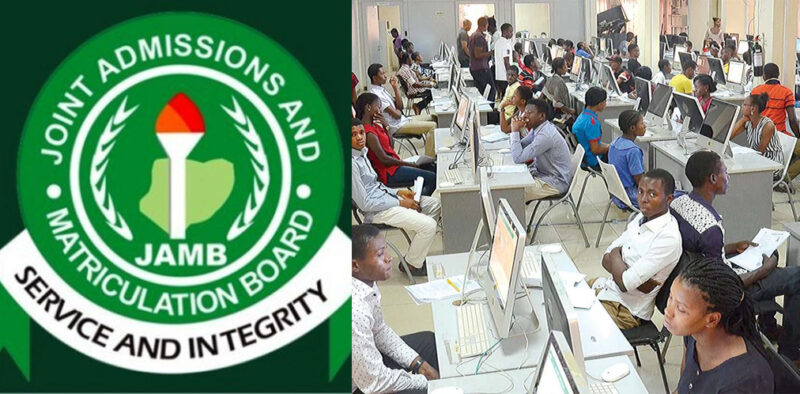
JAMB arrests 40 impersonators during UTME
Over 40 persons have been arrested and are facing prosecution for impersonating candidates during the ongoing 2025 Unified Tertiary Matriculation Examination (UTME), the Joint Admissions and Matriculation Board (JAMB) has disclosed.
This comes as many parents and guardians express concern that the 6.30 a.m. resumption time for the exam was too early for candidates, adding that many may have to drive several miles to their examination sites.
The 2025 UTME, which began on Thursday, April 24, will run until Monday, May 5.
According to JAMB, over 2,030,627 students are taking this year’s exam at authorised computer-based test centres across the nation.
A mother of a candidate who claimed to live in Awoyaya, Lekki, Lagos, but whose 14-year-old son was assigned to a centre in Ikorodu, stated that the young guy may miss the exam due to time constraints.
“The examination slip states that candidates are expected at the centre by 6.30am. So, that means my son must be on the road by 4 am. I don’t drive. We don’t have a car. He would have to take a bus. Even if I decide to go with him, how are we supposed to get a bus at that time, and how are we supposed to get to Ikorodu before 6.30am?
“This is wickedness. JAMB should look into this and move the exam forward. 6.30am for an examination is too early.”
Olaoluwa Yinka, a guardian, lamenting on X, wrote, “My younger sister has just travelled today for her UTME tomorrow morning. From Abeokuta, she was sent to Ijebu Igbo by 6.30am. This is very absurd.
“When I wrote JAMB, I did so around 9 am and the heavens did not fall. This CBT is the problem. Students get to the centre, and sometimes the systems don’t work as well.”
READ ALSO:
- Napoli set €100m price tag on Osimhen amid Juventus interest
- Nigerian varsity student hospitalised after hot water attack
- Barcelona beat Real Madrid 2-1 in extra time to win Copa del Rey
Social media activist, Rinu Oduala, in a statement on X, wrote, “Again, why are you scheduling exams for 6.30am, @JAMBHQ? And expect teenagers to find their ways 50km plus away from home? How can educated people make nonsensical policies for citizens and kids in this country? Does it make any sense?”
A mother, Nnem Chacha-Gold, told this reporter on Saturday that her only daughter had to leave the house at 4.30 a.m. to travel to her exam venue by 6.30 a.m.
“I had to follow my daughter to her centre in Ikorodu from Ejigbo. When I got there, they said we (parents) were not welcome at the centre. I even learnt that candidates slept outside their centres to meet up. I can’t imagine my own child sleeping on the street overnight just to meet up. Goodness!”
Meanwhile, Esther Oladele, a young female candidate aged 16, was claimed to have lost her way to her centre.
Richard, claiming to be her brother, stated that she travelled from Ajah to Epe on Thursday, April 24, but mistakenly boarded the wrong bus.
The post read, “It’s been almost 24 hours since we haven’t heard from my sister. She was going to Epe from Ajah around 1 pm yesterday (Thursday) for her UTME. The last message she sent to us reads thus: ‘I’m scared. I think I entered the wrong car, and my eyes are itchy. E be like say I want to sleep.”
READ ALSO:
- Nigerian students abroad call out FG over unpaid allowances
- Tinubu smashes opposition, four more PDP govs set to decamp
- Obi introduces online registration, ID cards for Obidient
This spurred numerous X users to initiate a search online, notifying the authorities to look for the young lady.
After nearly 48 hours, Richard returned to X to confirm that Esther had been discovered in Ijebu Ode, Ogun State.
Esther’s picture leaked online, showing her in garish apparel and with messy hair.
The flier read, “We are overjoyed to share that Esther is home safe and sound! Words cannot express our gratitude to everyone who played a part in bringing her back. Your reposts, prayers, and unwavering support gave us strength and hope throughout this difficult time. We are eternally grateful for the kindness and compassion of our community.”
Despite the board’s efforts to sanitise the examination process, Benjamin expressed concern about impersonation.
He noted that while other countries have successfully conducted remote exams, Nigeria’s current context makes such an innovation impractical.
“If Nigerians want comfort, let us behave very well. If we are transparent, we can do these CBT exams at home and submit them online. We will just send questions to them, and they will answer and send them back to us. Then, we will grade and send them back the results,” Benjamin said.
“But, you know what will happen if we try to do that. Several countries are doing their central examinations from home. But, can we do that in Nigeria,” he added.
JAMB arrests 40 impersonators during UTME




Education
WAEC Releases 2026 WASSCE Timetable for School Candidates

WAEC Releases 2026 WASSCE Timetable for School Candidates
The West African Examinations Council (WAEC) has officially released the 2026 West African Senior School Certificate Examination (WASSCE) timetable for school candidates across its member countries. The final international schedule, shared on WAEC’s official X (formerly Twitter) handle, provides students with a clear roadmap for exam preparation, ensuring they can plan their revision and practical work effectively.
According to the timetable, the 2026 WASSCE will commence on Tuesday, April 21, 2026, and conclude on Friday, June 19, 2026, spanning nearly nine weeks of examinations. The exams will kick off with Foods and Nutrition 3 (Practical) Planning Session and Home Management 3 (Practical) Planning Session, marking the start of both practical and theory assessments.
The timetable covers core subjects such as English Language and Mathematics, which are compulsory for all candidates, as well as a broad range of elective papers in sciences, arts, humanities, vocational, and technical subjects. Key science subjects include Biology, Chemistry, and Physics, while elective options span Economics, Government, Geography, Metalwork, and Applied Technology.
READ ALSO:
- UK, US, France Among 10 Nations Granting Agrément to Nigerian Ambassadors
- Aiyedatiwa Sacks All Political Aides, Plans 1,000 New Appointments
- Tinubu Appoints Senator Ibrahim Ida as CAC Chairman, Names Seven NPC Commissioners
WAEC advised all candidates to carefully check the timetable, confirm their exam dates with school authorities, and ensure they arrive at examination centres fully equipped with approved materials. The council also encouraged students to use the timetable to avoid subject clashes, prepare for both written and practical assessments, and manage study time efficiently.
The WASSCE is a crucial qualification for secondary school students in English-speaking West Africa, serving as the gateway for university and tertiary institution admissions. The exam is conducted annually in WAEC member countries, including Nigeria, Ghana, Liberia, Sierra Leone, and The Gambia, and is recognised as a key academic milestone in the region.
With the release of the 2026 timetable, students, parents, and school authorities now have a complete guide to plan study schedules, revision sessions, and exam strategies, helping ensure candidates are well-prepared to succeed.
WAEC Releases 2026 WASSCE Timetable for School Candidates
Education
WAEC Releases 2026 Computer-Based WASSCE Results, See Details Checking Procedure
WAEC Releases 2026 Computer-Based WASSCE Results, See Details Checking Procedure
The West African Examinations Council (WAEC) has officially released the results of the 2026 Computer-Based West African Senior School Certificate Examination (CB-WASSCE) for private candidates, marking another milestone in its transition to digital assessment.
The examination body announced on Friday that candidates who participated in the first series of the computer-based examination can now access their results, with full access expected to be activated within hours of the release.
In a statement accompanying the announcement, WAEC noted that the adoption of the Computer-Based Testing (CBT) format has significantly enhanced the speed and efficiency of result processing, eliminating many of the delays traditionally associated with manual marking systems.
Improved Performance Recorded
A preliminary analysis of the results indicates a modest improvement in candidates’ overall performance. According to data released by the council, about 32.72 per cent of candidates obtained a minimum of five credits, including English Language and Mathematics, a key benchmark for academic and career advancement in Nigeria.
WAEC attributed the improvement to increased candidate preparedness, improved examination administration, and the deployment of technology-driven assessment methods.
Malpractice Cases Under Review
Despite the gains recorded, the council disclosed that a number of results have been withheld due to allegations of examination malpractice. WAEC stated that investigations are ongoing and assured that appropriate actions would be taken upon conclusion of the review process.
The council reiterated its commitment to maintaining the integrity and credibility of its examinations, warning candidates and stakeholders against engaging in any form of malpractice.
Transition to Digital Examinations
The release of the 2026 CB-WASSCE results underscores WAEC’s broader strategy to modernize its examination system through the adoption of digital technology. The move is expected to improve transparency, reduce human error, and enhance the overall efficiency of the examination process across member countries.
How to Check WAEC Results
WAEC has provided a straightforward process for candidates to access their results online. Candidates are advised to follow the steps below:
- Visit the official WAEC result-checking portal at www.waecdirect.org
- Enter your Examination Number in the required field
- Select the Examination Year (2026)
- Choose the appropriate Examination Type (Private Candidate – First Series)
- Enter the Card Serial Number found on your scratch card
- Input the PIN on the scratch card
- Click on “Submit” to view your result
Candidates who encounter delays are advised to remain patient, as access may be staggered due to high traffic on the portal.
WAEC further urged candidates to keep their result-checking details secure and avoid sharing sensitive information with unauthorized persons to prevent fraud.
The council reaffirmed its commitment to continuous innovation in examination delivery, assuring stakeholders that the transition to computer-based testing will further strengthen the credibility of its certificates across the globe.
WAEC Releases 2026 Computer-Based WASSCE Results, See Details Checking Procedure
Education
NYSC Debunks ‘Ransom Clause’ Rumour, Details Security Measures for Corps Members

NYSC Debunks ‘Ransom Clause’ Rumour, Details Security Measures for Corps Members
The National Youth Service Corps (NYSC) has dismissed as false a viral report alleging that the scheme operates a “ransom clause” and exposes corps members to banditry, insisting that no such provision exists in its legal or operational framework.
The clarification comes amid rising concerns from families over the safety of corps members, especially those deployed to areas considered high-risk. In a statement issued on Wednesday, the NYSC, through its Director of Information and Public Relations, Caroline Embu, described the claim as misleading and alarmist.
According to the scheme, the widely circulated write-up titled “Urgent: The NYSC Death Trap Our Graduates Are Being Sold to Bandits” is entirely unfounded. It stressed that there is no mention of any “ransom clause” in the NYSC Act, bye-laws, or official publications, urging the public to disregard the report.
The NYSC also addressed the case of Musa Usman Abba, which contributed to the controversy. The scheme clarified that Abba is not a serving corps member, noting that he completed his national service in 2023. While expressing sympathy with him and his family over the reported incident, the NYSC emphasized the importance of accurate information to avoid unnecessary panic.
READ ALSO:
- Court Orders Final Forfeiture of $13m Linked to Achimugu’s Firm
- Momodu: ADC Should Tap Buhari’s Former Allies to Defeat Tinubu
- Lasaco Assurance Deepens ESG Integration to Drive Sustainable Growth
Reaffirming its commitment to corps members’ safety, the NYSC stated that it continues to work closely with security agencies across the country. It noted that corps members posted to vulnerable areas are provided with enhanced protection, including military escorts. This arrangement, according to the scheme, has been consistently implemented in the North West since 2024 and earlier in parts of the North East.
The scheme further highlighted that it has relocated orientation camps from volatile locations to safer areas in states such as Kebbi, Kaduna, Kwara, Borno, Gombe, and Plateau, as part of proactive measures to safeguard both corps members and camp officials.
On welfare, the NYSC explained that all corps members are covered by a life insurance policy through Capital Express Assurance Limited, which extends up to three weeks after service completion. In addition, corps members are enrolled in the National Health Insurance Scheme (NHIS) to ensure access to healthcare throughout their service year.
The NYSC reiterated that it places the highest priority on the welfare, safety, and well-being of corps members and staff. It warned that the spread of misinformation, particularly on social media, could heighten anxiety and undermine public confidence in national institutions.
Established in 1973, the NYSC programme was designed to promote national unity and integration by deploying Nigerian graduates to serve in states outside their regions of origin. Despite ongoing security challenges in some parts of the country, the scheme said it has continued to strengthen its safety protocols through strategic deployments, camp relocations, and collaboration with security agencies.
The agency maintained that while concerns about security are valid, false narratives about NYSC and banditry only worsen public fear and misrepresent the efforts being made to protect corps members nationwide.
NYSC Debunks ‘Ransom Clause’ Rumour, Details Security Measures for Corps Members

-

 Entertainment24 hours ago
Funke Akindele, Toyin Abraham Spark Reactions Over Alleged Snub at Iyabo Ojo’s Premiere
-

 metro1 day ago
Jos Attack: Plateau Govt Declares 48-Hour Curfew After Deadly Assault
-

 Entertainment3 days ago
Streamer Peller Escorted Out of Alake of Egbaland’s Palace in Abeokuta
-

 Education9 hours ago
WAEC Releases 2026 WASSCE Timetable for School Candidates
-

 metro3 days ago
ADC Chairman’s Daughter Joins Pro-Tinubu Campaign Organisation
-

 News24 hours ago
UK Raises Visa Costs, Tightens Immigration Rules From April 8
-

 Auto5 hours ago
Lagos NURTW Chairman Sego Distributes Exotic Cars, Luxury Items to Cabinet Members (Video)
-

 International2 days ago
Iran Threatens US-Linked Universities in Middle East Amid Escalating Tensions