

Education
JAMB Disowns Lead City University Law Admissions, Warns Against Inter‑University Transfer Fraud

JAMB Disowns Lead City University Law Admissions, Warns Against Inter‑University Transfer Fraud
The Joint Admissions and Matriculation Board (JAMB) has officially disowned all admissions into the Law Faculty of Lead City University, stating that such offers are illegal, invalid, and not recognised. The board clarified that the programme remains under a five‑year suspension and that any purported admissions did not go through the Central Admissions Processing System (CAPS) — the only authorised platform for processing admissions into Nigerian tertiary institutions.
In a statement issued on Thursday by Dr. Fabian Benjamin, JAMB’s Public Communications Adviser, the board said it had received multiple complaints accusing it of negligence over the purported admissions into Lead City University’s Law Faculty. JAMB emphasised that admissions not processed through CAPS carry no legitimacy, and students who accept such offers cannot claim official recognition for academic registration, graduation, or mobilisation for the National Youth Service Corps (NYSC).
“The Board unequivocally states that the said admissions were not conducted through CAPS. Consequently, such admissions are void as they are unknown to the Board. The institution is not authorised to admit candidates into the programme until the expiration of the suspension,” JAMB said.
READ ALSO:
- NSCDC Exposes Fake NYSC Member Who Cloned Cambridge Emails to Defraud Parents
- Lawmakers Switch Allegiance: 6 Reps Join APC, 6 Join ADC
- Court Grants ICPC Access to Examine Devices Seized from El-Rufai’s Home
The examination body warned candidates not to accept offers outside CAPS, stressing that such irregular admissions are considered fraudulent and may implicate recipients as complicit in bypassing official regulations. Prospective students are advised to register for the next Unified Tertiary Matriculation Examination (UTME) to pursue legitimate admission through approved channels.
JAMB also raised concerns about alleged attempts by some universities to circumvent regulations through inter‑university transfer fraud, transferring improperly admitted candidates to other institutions. The board stressed that no inter‑university transfer will be recognised unless the initial admission was validly processed through CAPS.
The board reiterated its commitment to maintaining transparency, fairness, and integrity in Nigeria’s tertiary education system. It called on candidates, parents, and institutions to rely exclusively on official JAMB channels and CAPS to avoid falling victim to fraudulent schemes or risking invalid admissions.
JAMB’s warning reflects ongoing efforts to ensure that Nigerian universities adhere strictly to regulatory standards, with the Council of Legal Education (CLE) monitoring law programme compliance nationwide. The board continues to enforce admission rules and combat attempts to bypass the CAPS system.
JAMB Disowns Lead City University Law Admissions, Warns Against Inter‑University Transfer Fraud








Education
JAMB Sacks Staff Over Candidate Extortion, Warns Against Abuse of Office
JAMB Sacks Staff Over Candidate Extortion, Warns Against Abuse of Office
The Joint Admissions and Matriculation Board (JAMB) has terminated the appointment of a staff member found culpable of extorting candidates, reinforcing the examination body’s warning that employees who abuse their positions will face disciplinary action.
The development was disclosed in JAMB’s latest bulletin as the board continues its efforts to strengthen accountability and protect candidates from fraud, extortion and other forms of exploitation within the UTME and admission process.
JAMB did not disclose the identity of the affected staff member or the specific amount allegedly collected from candidates. However, the board’s decision to terminate the appointment underscores its stated position that misconduct by its own personnel will not be tolerated.
The action comes amid the board’s broader campaign against fraudulent practices targeting UTME candidates, including attempts by individuals and organised groups to exploit candidates and their parents by promising examination assistance, admission-related services or other benefits.
JAMB has repeatedly warned candidates and parents against paying individuals who claim they can manipulate examination results, secure admission through unofficial channels or provide services outside the board’s approved procedures.
The board maintains a cashless registration system aimed partly at reducing opportunities for unnecessary financial dealings between candidates and officials. Its official guidance also states that candidates should use JAMB-approved Computer-Based Test (CBT) centres for registration and other designated services.
READ ALSO:
- Jetour T1 Storms Abuja as Automaker Accelerates Nigeria Expansion
- Kidnapped Female Police Officer Found Dead in Ebonyi as Suspect Leads Police to Remains
- CNN, MS NOW, Politico Sue Trump Over White House Access Ban
JAMB has previously acknowledged concerns about extortion involving officials and operators. In 2024, the board said it had received reports of candidates being allegedly extorted in connection with regularisation and other services and directed investigations into the complaints.
The board had also considered reducing physical interaction between candidates and officials, particularly because many UTME candidates are underage, as part of efforts to reduce opportunities for exploitation and improve monitoring.
The latest dismissal is also coming as JAMB continues to confront wider forms of examination malpractice and fraud.
Earlier in 2026, the board disclosed that it had uncovered syndicates using artificial intelligence and other methods to impersonate JAMB officials and defraud candidates preparing for the UTME. Investigations in that case reportedly linked more than 100 candidates to the scheme, with dozens confirmed to have made payments to the fraudsters.
JAMB has also taken disciplinary and other enforcement measures against personnel and centres implicated in activities considered capable of compromising the integrity of its examination system.
The board’s position is that the fight against examination malpractice must include both external fraudsters and individuals working within the system who exploit their official positions.
For candidates, JAMB advises that payments and transactions relating to its services should be made through approved channels and that sensitive information such as passwords, profile details and e-PINs should not be disclosed to unauthorised persons.
Candidates who encounter problems or suspect misconduct can also use JAMB’s Central Online Support System (COSS) to submit complaints and track their cases.
The latest action therefore sends a clear administrative signal that JAMB staff misconduct can attract serious consequences, particularly where officials are found to have exploited candidates entrusted to their care.
JAMB said its personnel are expected to maintain professionalism and integrity in dealing with candidates, while the board will continue to take appropriate action against those found to have violated its rules.
The development is expected to further focus attention on safeguards around the JAMB registration process, candidate support services and other interactions between applicants and officials as the board continues efforts to protect the integrity of Nigeria’s tertiary admission system.
JAMB Sacks Staff Over Candidate Extortion, Warns Against Abuse of Office
Education
JAMB Allows Candidates to Change Lost SIM, Email Addresses

JAMB Allows Candidates to Change Lost SIM, Email Addresses
The Joint Admissions and Matriculation Board (JAMB) has reviewed its policy on changing registered phone numbers and email addresses, allowing candidates who have genuinely lost access to their SIM cards or email accounts to update their details through a controlled verification process.
The new arrangement took effect on Monday, September 21, 2026, providing a new option for candidates who can no longer use the phone numbers linked to their JAMB profiles, or who have lost access to the email accounts registered during previous examinations.
JAMB said the policy change followed the introduction of stronger identity authentication and biometric verification measures, which it said would help prevent impersonation, fraud and unauthorised alterations to candidates’ records.
The Board had previously restricted SIM swaps and email changes because of security vulnerabilities associated with changing the contact details attached to candidates’ profiles.
Under the revised policy, however, candidates with genuine cases can now request changes through designated JAMB facilities, subject to identity verification and other requirements.
The service covers candidates who need to change their GSM number, their email address, or both.
JAMB said candidates must provide the new phone number and/or email address they intend to register, as well as a duly executed court affidavit, which must be scanned and ready for upload.
The Board also stressed that the facility should be used strictly for genuine cases and that candidates should patronise only designated JAMB CBT centres or other officially approved locations.
The process for changing a registered SIM or email address is as follows:
1. Log into the JAMB e-Facility
Candidates should first log into their JAMB e-Facility profile using their existing credentials. The Board said candidates can use their available registered information, including their registration number or profile code, to begin the process.
2. Select the SIM Swap/eMail Change payment option
After logging in, candidates should select “SIM Swap/eMail Change Payment” from the available menu and proceed with the prescribed payment.
READ ALSO:
- How Nigerians Can Get Federal High Court Affidavit Online Without Visiting Court
- Plateau Violence: Several Killed as Fresh Attacks Trigger Mass Exodus
- Lagos Mechanic Lured With Mercedes Repair Job, Hacked to Death in Bush
3. Visit a designated JAMB CBT centre
After payment, the candidate is required to proceed to a designated JAMB CBT (PTC/PRC) Centre. JAMB said State Offices may also provide the service where applicable.
4. Access the SIM Swap/eMail Change Quicklink
At the designated centre, the candidate will access the SIM Swap/eMail Change Quicklink provided for the service.
5. Enter the profile details
The candidate will enter the Profile Code or existing GSM number and select “Fetch Details” to retrieve the relevant profile information.
6. Complete biometric verification
The candidate must undergo biometric verification before the request can proceed. This measure is intended to establish that the person requesting the change is the genuine owner of the JAMB profile.
7. Select the required change
The candidate will then select the service required — GSM number only, email address only, or both GSM number and email address.
8. Enter the new contact details
The candidate will provide the new GSM number and/or email address to be linked to the JAMB profile.
9. Upload the court affidavit
The candidate must upload the scanned court affidavit required by JAMB as part of the verification process.
10. Submit the update
After checking the information provided, the request can be submitted by clicking “Update”. A confirmation message will be displayed once the change has been successfully processed.
JAMB said the enhanced verification system is intended to ensure that the relaxation of the previous restriction does not expose candidates’ records to unauthorised changes.
The Board has also cautioned candidates against using unofficial agents or unauthorised outlets to change their registered details, warning that the process must be completed through approved JAMB channels.
The new policy is particularly significant for candidates who registered for the Unified Tertiary Matriculation Examination (UTME) in previous years but subsequently lost their registered SIM cards or became unable to recover the email accounts linked to their profiles.
Without access to those contact details, some candidates may face difficulties with subsequent JAMB registration and other examination-related services.
JAMB’s revised arrangement now provides a formal route for such candidates to restore access to their current contact details while maintaining identity checks.
The Board, however, emphasised that the facility is subject to strict authentication and should not be treated as a general opportunity to make repeated changes to candidate profiles.
Candidates who use the service are therefore advised to ensure that their new phone numbers and email addresses are active, accessible and entered correctly before submitting their requests.
JAMB has also previously introduced a Profiled Email service as an alternative communication channel for candidates affected by lost SIM cards. The official JAMB website says the service allows important notifications and transactions to be delivered to a candidate’s profiled email and the messages section of the candidate’s account. (Joint Admissions and Matriculation Board)
The latest policy means candidates with genuine cases involving lost SIM cards or inaccessible email accounts now have a dedicated procedure for updating their records, rather than being left without a formal route to change the affected contact details.
The Board said the policy is aimed at balancing candidate data security with access to essential JAMB services, while ensuring that genuine candidates are not unnecessarily disadvantaged by circumstances beyond their control.
JAMB Allows Candidates to Change Lost SIM, Email Addresses
Education
Unity Schools Crisis Deepens as PTAs Reject Resumption Notices, Await National Directive
Unity Schools Crisis Deepens as PTAs Reject Resumption Notices, Await National Directive
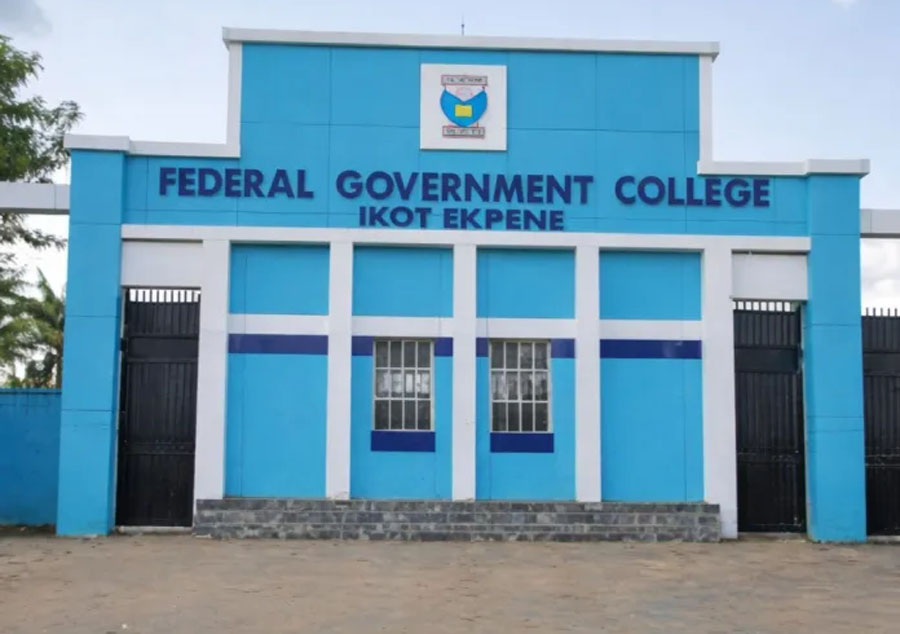
Uncertainty continues to surround the resumption of students in some Federal Unity Colleges across Nigeria as Parent-Teacher Associations (PTAs) await a formal position from their national body amid an unresolved dispute involving King’s College, Lagos.
The development has created confusion for parents and students as competing positions from the Federal Ministry of Education, labour groups and parent representatives continue to affect arrangements for the 2026/2027 academic session.
The Federal Government had directed students in Federal Unity Colleges to resume, with the Ministry of Education assuring parents that adequate arrangements had been made to support a safe and orderly return to school.
However, some PTAs have faulted resumption notices issued by individual schools, arguing that parents should await guidance from the national PTA leadership before sending their children back.
The disagreement is linked largely to the controversy surrounding the proposed concession of King’s College, Lagos, to the King’s College Old Boys’ Association (KCOBA).
The Federal Government has maintained that the arrangement does not amount to the sale of the historic school and that government ownership would remain intact.
However, sections of the workforce and some parent representatives have raised concerns about the terms of the proposed arrangement, its duration and possible implications for staff, students and the future management of Federal Unity Colleges.
The controversy intensified after the government announced that Federal Unity Colleges were expected to resume on September 14, 2026.
While the Ministry of Education maintained that the schools should reopen, labour groups opposed the directive as the disagreement over King’s College remained unresolved.
The Association of Senior Civil Servants of Nigeria (ASCSN) and other labour representatives had directed workers in Federal Unity Colleges to suspend activities in protest against aspects of the government’s position.
The action resulted in some schools remaining closed despite the government’s resumption directive, leaving parents uncertain about whether to take their children back to school.
In some locations, students who arrived for resumption reportedly met locked gates, while parents were advised to await further instructions.
READ ALSO:
- How Nigerians Can Get Federal High Court Affidavit Online Without Visiting Court
- Plateau Violence: Several Killed as Fresh Attacks Trigger Mass Exodus
- Lagos Mechanic Lured With Mercedes Repair Job, Hacked to Death in Bush
The competing directives have placed PTAs in a difficult position, with some parent representatives insisting that they cannot independently approve resumption arrangements until the national body provides a clear position.
The PTAs have also sought clarification over claims made during the dispute, particularly allegations concerning admission-related payments and other charges in Federal Unity Colleges.
Parent representatives have called for specific evidence where such allegations are made, including details of the affected schools, dates of transactions and relevant records.
They have argued that concerns over the King’s College concession should not be interpreted as opposition to improvements in public education or responsible collaboration with private organisations.
Rather, they want greater transparency around any arrangement involving a public institution, including details of the concession agreement, its duration, financial obligations, performance requirements and provisions protecting students and staff.
The status of workers at King’s College has also become a major issue in the dispute.
Questions have been raised about whether teachers and other employees would remain within the Federal Civil Service and what options would be available to them if management arrangements changed.
The disagreement eventually led to discussions between the Federal Government and organised labour, following which the government agreed to review aspects of the King’s College arrangement.
The concession was subsequently suspended for two weeks, while a seven-member committee was constituted to review the agreement and make recommendations.
The development prompted ASCSN to suspend its industrial action and direct affected workers to return to their duties.
However, the resolution did not immediately end the disagreement, as questions remained over the implementation of the agreement and the timing of school resumption.
For parents, the situation has created uncertainty over which directive to follow, particularly where notices from individual schools conflict with positions taken by parent groups or labour representatives.
The dispute has also renewed attention on the broader management of Federal Unity Colleges, which were established to provide quality secondary education while promoting national integration by bringing students from different parts of the country together.
Parent representatives have continued to emphasise that the priority should be the safety, welfare and uninterrupted education of students.
Until a unified directive is issued, parents with children in affected Federal Unity Colleges are expected to monitor official communication from their schools, the national PTA leadership and the Federal Ministry of Education before making further resumption arrangements.
The immediate challenge for the authorities is to resolve the outstanding disagreements and provide a clear, uniform position that can be communicated to parents, students, teachers and school administrators across the country.
Unity Schools Crisis Deepens as PTAs Reject Resumption Notices, Await National Directive
-

 International3 days ago
BREAKING: Bloodbath at Pakistan Mosque as Suicide Blast Kills 21, Injures 103
-

 Sports3 days ago
Falconets Thrash England 3-0, Face Colombia in U-20 World Cup Quarter-Finals
-

 Politics3 days ago
Yayi Ancestry Row: Stepmother Sets Record Straight as Legal Battle Looms
-

 metro3 days ago
Tinubu Orders Full Probe Into 37 Miners’ Deaths in NSCDC Custody
-

 metro2 days ago
Niger Miners’ Deaths: Families Demand Compensation, Justice for Victims
-

 metro2 days ago
Mambilla: ICC Raises Questions Over $500,000 Payment to Atiku’s Former Wife
-

 Entertainment2 days ago
“She Wanted to Stay Single”: Rema Opens Up About Rejection That Inspired Hit Song ‘Oh No’
-

 metro3 days ago
Xenophobia: FG Brings 33 More Nigerians Home From South Africa