
metro
Killer Children On The Prowl, Murdered 88 Parents In 6yrs

No fewer than 88 fathers and mothers have been murdered by their children in Nigeria within a period of six years, data compiled by Daily Trust has shown.
The data revealed that the killers – sons and daughters – mostly between the ages of 18 and 35, used knives, sticks, pestles, shovels and other tools to stab, hack or bludgeon their parents to death.
According to the data, the states with the highest number of parricides are Niger, 7; Lagos and Enugu 6 each; Anambra, Akwa Ibom and Ebonyi, 5 each; with Kano and Edo, 4 each.
Osun, Abia, Ekiti, and Ondo record 3 cases each; Bayelsa, Adamawa, Kwara, Delta, Bauchi, Jigawa, Ogun, Yobe, Oyo, Gombe, FCT and Imo have 2 cases each; while Kaduna, Kogi and Plateau recorded 1 case each.
Of the total of 87 parricide cases that took place within the six-year period, 39 mothers and 45 fathers were murdered in different circumstances.
Why killings persist
In as many as four out of five cases recorded, the killers admitted that they were under the influence of drugs when they perpetrated the act.
However, others attributed the killings to rituals, desperation for inheritance, cannibalism, witchcraft and other disagreements with the parents in terms of marriage and money issues.
Experts who spoke to Daily Trust said they were appalled that most children these days don’t have an emotional attachment, empathy and love for their parents to the extent that very few gave a second thought before harming them.
“In the past, parents meant a lot to children, especially in an African setting. Parents meant everything to their children; they were their providers, mentors and protectors,” said Zainab Habibu, a 63-year-old housewife.
“Sadly, modernity has corrupted that affinity to the extent that children can sacrifice their parents for worldly things. In the past, a child cannot afford to look directly into the eyes of his father or mother but it is no longer the same. This is basically why we are witnessing cases of children attacking their parents,” she said.
According to the statistics, the highest number of parricides was recorded in 2017 when 14 mothers and 8 fathers were murdered, followed by 8 mothers and 11 fathers in 2018; 7 mothers and 12 fathers in 2019; 7 mothers and 4 fathers in 2020; then 2 mothers and 6 fathers in 2021.
However, the first quarter of 2022 has begun with an early surge in the number of parricides, with 4 mothers and 4 fathers already brutally murdered by their offspring.
The latest among the cases was of a 31-year-old man, Nicodemus Ignatius, who allegedly beat his 75-year-old father to death.
Nicodemus, who hails from Unguwan Bistel in Song town, Song LGA of Adamawa State, carried out the act on March 3, 2022, shortly after returning from a drinking bar.
 He was said to have been arrested sometime in November 2021 for threatening to kill his father before he was released after the septuagenarian pleaded on his behalf.
His neighbours, who don’t want to be named, told newsmen that the suspect clubbed his father to death.
“Nicodemus had returned home from the bar where he usually drinks at about 8pm on that fateful day and met his late father and mother in the room and decided to lock both of them in.
“But the 75-year-old Ignatius, sensing danger and afraid of the possibility of his son setting the house on fire, jumped through the window to escape.
“Unknown to him, his son armed himself with a stick. The suspect pounced on his father and hit him with the stick and broke his head, resulting in his untimely death,” one of the neighbours said.
But after taking the life of his father, the suspect, while confessing to the crime, blamed his action on the influence of Indian Hemp.
“I smoked Indian hemp on that fateful day… I bitterly regret my action,” he had said.
The Adamawa State Police Public Relations Officer, Suleiman Nguroje, confirmed the incident, saying the suspect would be charged to court upon completion of the investigation and cautioned the public to desist from taking the law into their hands.
Another famous case of matricide was when Garba Abubakar from Akko LGA of Gombe State allegedly strangled his biological mother to death.
Parading the suspect, the Commissioner of Police, Ishola Babaita, said Garba allegedly murdered his mother because she always warned him against excessive intake of hard drugs.
The CP said that Garba’s act was based on indiscriminate use of outlawed substances, and the matter is being investigated.
“The suspect strangled his mother and as a result, she fell down and became unconscious because she normally advises him to stop taking hard drugs.
“The victim was rushed to the General Hospital Kumo where she was confirmed dead by a medical doctor,” he said.
Babaita regretted that, “sadly, the woman was murdered by her own son. That is the effect of drug.”
He advised parents to pay more attention to their children, and make sure they do not consume or become addicted to hard drugs.
Girls on the rampage too
It’s quite unusual to find a girl killing her parents, especially in an African setting. Therefore, the gruesome murder of one Eka Ime by her daughter, Mary Imewe, was a shock that gripped residents of Umoh Obot Street, off Nto Akpan Inyang in the Ikot-Ikpene Local Government Area of Akwa Ibom State.
It was gathered that the killer daughter murdered her mother and dismembered her before she was apprehended.
Angry youths of the community, who were irked by the bizarre manner in which Mary allegedly murdered her mother, compelled her to pack the body parts into a basin and was paraded round the community.
READ ALSO:
- Arrest anyone enforcing sit-at-home in Anambra, IPOB tells Soludo
- Train Attack: Kaduna Receives Luggage Of 100 Affected Passengers
- We’ll Bring In Foreign Mercenaries If FG Fails To End Terrorism – El-Rufai
- Appeal court dismisses suit seeking Umahi’s sacking over defection
According to a source, when the police came to arrest Mary, she stated that she did not care about her arrest and detention.
“I don’t care if I am arrested and detained by the police,” the suspect was quoted to have said before being bundled into a waiting police van.
The command’s Public Relations Officer, Odiko Macdon, who confirmed the incident, said he was surprised that a daughter could commit such a dastardly act against her mother.
He said no right-thinking person would slaughter her mother in such a gruesome manner, adding that the police would conduct a test to ascertain her state of mind before she would be charged.
“The story is true; she butchered her mum. We are suspecting that she is not of a sound mind, but we do not have any medical capacity yet to say so.
“Medical personnel will have to determine if she is of a sound mind or not, because no right-thinking person will kill her mother by butchering her.
“As we speak, we have her in our custody. We have gathered the parts of her mother and deposited them in the mortuary.
“By the time we ascertain her state of mind, we will charge her accordingly. The test will determine the extent of her culpability in the crime,” he said.
In another case in 2017, a 20-year-old man, Adamu Mai-Bisco, hacked his father, mother and two sisters to death at Batayya ward in Potiskum town, Yobe State.
Confirming the incident, the Police Public Relations Officer, ASP Toyin Gbadegesin, said the suspect used a shovel to kill all four members of his family.
Gbadegesin also attributed the action of the suspect to be under the influence of hard drugs.
One of their neighbours, who doesn’t want to be named, said the parents had threatened to report their son to security agents for allegedly being a member of Boko Haram, hence his action against them.
“He didn’t take that threat lightly and so decided to kill them while they were all asleep,” a source informed.
Eye witness, Malam Ibrahim, told our correspondent that “Ado as the suspect was fondly called by his late mother came out of the house with a shovel and jackknife and said he had wiped out his family.
“He told me ‘na gama da su’ meaning ‘l have finished them.’ I asked what he meant by that, and he started chasing me with the knife. He was intercepted by good Samaritans, and handed over to the police around 1am,” he had said then.
The family members killed were his father Malam Magaji Mai-Bisco, 65; Mother, Mama Ado, 50; sisters Aisha, 16; and Zainab,14.
While these are some of the cases reported by the media, others were not reported or deliberately covered by the family to avoid embarrassment.
Experts speak menace, way out
A psychologist, Dr Mahmud Sarki, said moral degradation, depression and drugs abuse were responsible for all the parricidal cases happening in society now.
“In a situation where parents do not take responsibility for feeding, accommodating, schooling and other welfare needs of the children, the parents are provoking the children and this may likely happen.
“Once a child becomes depressed, anything can happen, he can kill. Coupled with this is the peer group, which is more powerful than the parents.
“They influence these children to engage in drugs abuse, by telling them that it will take their minds off depression and convince them that their parents are well-to-do but don’t take care of them.
“So, by the time he gets intoxicated with drugs, he will kill the parents without remorse because he’s been made to hate them,” he said.
Sarki said if research can be conducted to generate data, of the parricide cases recorded in Nigeria within three months, North West alone has more than eight cases.
“So long as parents continue giving birth to children they cannot cater for, the problem will persist,”
When asked to proffer solutions, he said, “The solutions must be multifaceted; which include public enlightenment through parents and community leaders, youth empowerment, because without employment one cannot predict what the youth can do.”
He attributed the root cause of the problem to a relationship between unemployment, anxiety and depression.
“In this, we have problem focus coping strategy, emotion focus coping strategy and avoidance focus strategy.
“Unfortunately, our youth are taking avoidance, to avoid the consequences and the impact, so they end up abusing drugs to reduce tension, and become addicts in the long run.
“There must be interventions from parents, community, government through empowerment programmes and public enlightenment programmes,” he added.
Also speaking on the issues, Maryam Abdullahi, who is a marriage counsellor, notes that the structure of today’s family is faulty as most parents do not have that bonding time with children anymore.
“We have unfortunately found ourselves in a pathetic scenario, where all the parents care for now is money. They feel fulfilled that as long as they can provide the material needs of their children, all is well.
“Ironically, that is even more dangerous because at the end these children turn to friends and people outside the family for love and confidentiality.
“We have a situation where both parents are out all day working and the children are left to cater for themselves or left with nannies who introduce some of this stuff to the children.”
Hajiya Maryam notes that the family plays a major role in how children turn out to be in their adult life.
“Parents need to begin to be part of their children’s life. Most parents do not know what their children are engaged in on social media or who their friends are.
“The family plays a major role in curbing some of the ills in the society today, especially when it comes to drug abuse and it is likes,” she said.
DAILY TRUST











metro
Autopsy Confirms Destiny Boy Died from Toxic Substances

Autopsy Confirms Destiny Boy Died from Toxic Substances
The tragic death of 22-year-old Afrofuji singer Afeez Adesina, popularly known as Destiny Boy, has been clarified following the release of his official autopsy report. The findings confirm that toxic substances, including tramadol and methamphetamine, were present in his system and played a critical role in his untimely passing.
Destiny Boy passed away on January 17, 2026, a loss that sparked intense speculation on social media, with videos circulating showing his body being transported to a mortuary. These clips fueled public concern and rumours about the circumstances of his death. (pmnewsnigeria.com)
According to the Ogun State Police Command, the Homicide Section of the State Criminal Investigation Department (SCID) carried out the autopsy. The toxicology report detected dangerous levels of tramadol, its metabolites, and methamphetamine in Destiny Boy’s body. The official cause of death was determined to be aspiration pneumonitis, a severe lung inflammation resulting from the ingestion of these substances. (lindaikejisblog.com)
READ ALSO:
- DHQ Reveals Over 60% of Terrorist Fighters Not Ideologically Driven
- Bala Mohammed Rejects APC Pressure, Says He Won’t Be Criminalised
- Blessing CEO Defends Breast Cancer Fundraiser Amid Backlash
DSP Babaseyi Oluseyi, Police Public Relations Officer, confirmed that at least one suspect has been arrested in connection with the singer’s death and that investigations are ongoing. The police emphasized that the case remains under careful examination to determine all contributing factors.
Destiny Boy, who first gained recognition in 2019 for his Fuji rendition of Davido’s “If”, later covered popular tracks by Tekno, 2Baba, 9ice, and Small Doctor. His original songs, including Lamba, One Transaction, Gbese, Billion Dollar, Mio Gbonkankan, and Lowkey, solidified his rising fame in Nigeria’s music industry. He also welcomed his first child with partner Iremide in November 2024.
The autopsy report has provided much-needed clarity after months of uncertainty and public debate surrounding Destiny Boy’s sudden death, highlighting the dangers of substance misuse among young entertainers. Fans and industry colleagues have expressed deep sorrow while advocating for awareness on drug safety and mental health support in the entertainment industry. (tell.ng)
Autopsy Confirms Destiny Boy Died from Toxic Substances
metro
DHQ Reveals Over 60% of Terrorist Fighters Not Ideologically Driven

DHQ Reveals Over 60% of Terrorist Fighters Not Ideologically Driven
The Defence Headquarters (DHQ) has disclosed that more than 60 percent of terrorists and armed fighters in Nigeria are not motivated by ideology, but are individuals who were coerced, abducted, or caught up in conflict dynamics. The military says this highlights the need for tailored deradicalisation, rehabilitation, and reintegration programmes to address insecurity across the country.
Brigadier General Yusuf Ali, National Coordinator of Operation Safe Corridor (OPSC), revealed during a press briefing in Abuja that many individuals surrendering from armed groups such as Boko Haram and its splinter factions are low-risk combatants often forced into violent networks due to survival, economic pressures, or coercion. According to OPSC data, thousands of former fighters have been successfully rehabilitated and reintegrated into society since the programme’s inception in 2016.
Launched in 2016, Operation Safe Corridor is a federal government-led non-kinetic counter-insurgency programme coordinated by the DHQ in collaboration with agencies including the Ministry of Justice and Nigeria Police. The initiative encourages voluntary surrender, provides deradicalisation training, and facilitates reintegration into civilian life.
READ ALSO:
- Bala Mohammed Rejects APC Pressure, Says He Won’t Be Criminalised
- Blessing CEO Defends Breast Cancer Fundraiser Amid Backlash
- Men Encouraged to Ejaculate More to Reduce Prostate Cancer Risk
General Ali emphasised that the programme is evolving to address regional realities and cater to the specific needs of affected communities. He said new plans include establishing Victims’ Rehabilitation and Reintegration Camps in the North-West and North-Central regions, such as the DRR camp in Tsafe, Zamfara State, and a planned facility in Benue, to help victims of violent extremism recover from trauma, displacement, and loss.
“The programme is evolving to become more victim-sensitive,” Ali said. “Sustainable peace cannot be achieved if victims of conflict feel neglected. Many live with deep psychological scars, and addressing that trauma is as important as rehabilitating ex-combatants.”
The OPSC Coordinator also stressed that misconceptions about the programme persist. He clarified that OPSC is not amnesty, not a shortcut to evade justice, and not a recruitment pathway into the Armed Forces. The government is working to enhance public understanding through stakeholder engagement, media campaigns, and partnerships with agencies such as the Office of the Special Presidential Envoy on Reconstruction and Rehabilitation.
Experts say that understanding that the majority of fighters are not ideologically committed could help shape more effective deradicalisation and reintegration strategies, addressing root causes like coercion, poverty, lack of education, and social exclusion. The DHQ’s findings underscore the importance of combining military operations with community-focused rehabilitation to achieve lasting peace in conflict-affected regions.
DHQ Reveals Over 60% of Terrorist Fighters Not Ideologically Driven
metro
Fire Engulfs Yaba Market in Lagos, Traders Suffer Huge Losses
Fire Engulfs Yaba Market in Lagos, Traders Suffer Huge Losses
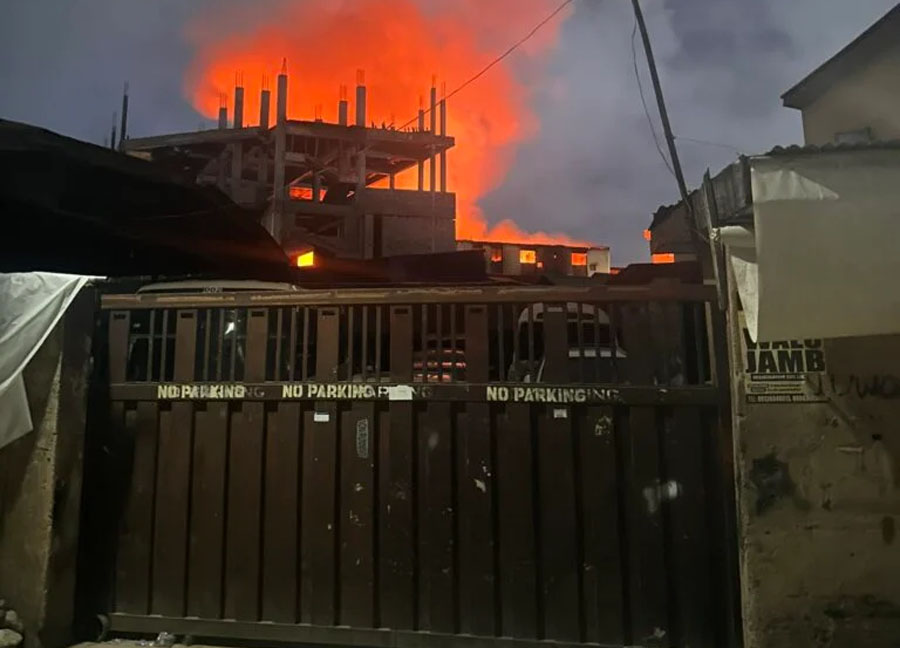
A major fire outbreak has ravaged a popular market in the Yaba area of Lagos State, destroying shops and goods worth millions of naira and causing panic among traders and residents. The blaze reportedly started in the early hours of Saturday around 3 a.m., quickly spreading across several sections of the market.
Eyewitnesses described the scene as chaotic, with thick smoke and flames consuming parts of the market near the Popo section. Traders and locals desperately tried to salvage their belongings, but much of the property was lost in the inferno. Videos circulating on social media captured the intensity of the fire and the frantic efforts of residents to control it.
An eyewitness, identified as Lugar Feliz during a TikTok livestream, said firefighters were on the scene but faced challenges in containing the blaze, with claims that some fire trucks lacked sufficient water. Several social media users on X (formerly Twitter) raised alarms about the incident, sharing videos and updates as the fire spread.
READ ALSO:
- JAMB Debunks 2026 UTME Postponement Rumour, Issues Fraud Warning
- Gunmen Kill Three in Jos Community Hours After Tinubu Visit
- Amnesty International Condemns Wike Over ‘Violent Remark’ Against Journalist
Traders affected by the fire lamented the financial losses. One resident, Adeoluwa, said he woke up to find shops behind his completely razed, estimating that billions of naira worth of goods may have been destroyed. Other reports suggest that hundreds of traders lost merchandise, highlighting the devastating economic impact on small business owners.
As of now, the cause of the fire remains unknown, and authorities, including the Lagos State Fire and Rescue Service, have not released an official statement on the full extent of damage or whether there were casualties. The incident adds to a growing trend of market fires in Lagos, often attributed to poor infrastructure, overcrowded stalls, and inadequate fire safety measures.
Affected traders are now calling for improved emergency response systems, better fire safety protocols, and stricter enforcement of safety regulations to prevent future disasters in crowded commercial hubs like Yaba.
Fire Engulfs Yaba Market in Lagos, Traders Suffer Huge Losses

-

 metro2 days ago
VeryDarkMan Dares Sowore Over Blord’s Kuje Prison Remand
-

 Business2 days ago
NNPC Boosts Crude Supply to Dangote Refinery to Address Rising Fuel Prices
-

 metro2 days ago
Nigerians to Enjoy Four-Day Break as FG Declares Easter Holidays
-

 metro1 day ago
Tinubu Approves 1,000 Forest Guards, Orders 5,000 CCTV Cameras to Boost Security in Plateau
-

 International1 day ago
Iran Announces ‘Bounty’ on US Pilots After Claiming Downing of Fighter Jet
-

 International2 days ago
Iran Fires Missiles at Israel After Trump Threatens Weeks of ‘Extremely Hard’ Strikes
-
 metro7 hours ago
Pastor Found Dead in Guest House After Night Out With Married Female Church Member
-

 Entertainment2 days ago
Madam Saje brokers peace in Akindele–Abraham feud