
Politics
Kwankwaso, Sowore parties have no gov, assembly candidates yet, says INEC

Two political parties, African Action Congress (AAC) led by Omoyele Sowore and New Nigeria Peoples Party (NNPP) headed by Rabiu Kwankwaso are yet to upload a single nomination of their candidates for governorship, deputy governorship and state assembly elections on the Candidate Nomination Portal of the Independent National Electoral Commission, the electoral body has said.
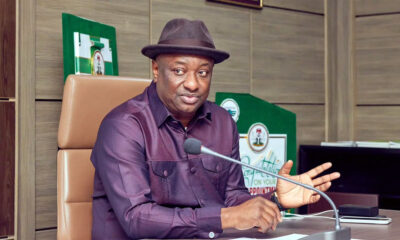
National Commissioner and Chairman, Information and Voter Education Committee at INEC, Festus Okoye, said this on Wednesday in a statement.
He said, as provided for in the timetable and schedule of activities for the 2023 general elections released by the commission on February 26, 2022, all political parties that conducted valid primaries are required to nominate their candidates for governorship, deputy governorship and state assembly elections via the ICNP from 1st-15th July 2022.
He said, “So far, the commission has processed 6,995 nomination forms (EC9) uploaded by 16 out of 18 political parties for the constituencies where they intend to sponsor candidates.
“However, two political parties, the AAC and NNPP, are yet to upload a single nomination to the portal. The commission hereby reminds all political parties that they have three days left to upload their list of candidates to the ICNP.
“The deadline is Friday, 15th July 2022. The portal will automatically shut down at 6.00pm on that date.”
On issuance of Certified True Copies (CTCs) of documents, Okoye said the commission had continuously responded to requests for CTCs of documents mainly arising from the conduct of party congresses, primaries and nomination of candidates.
He said, “The number of requests processed has now risen to 1,662,987 pages of documents. Sadly, in spite of the commission’s effort, 147 out of 476 requests processed as at today involving 5,646 pages are yet to be collected by applicants.”
Okoye appealed to prospective litigants to come forward and collect the certifed copies of the documents.







Politics
Tinubu Mocks Atiku, Obi, Aregbesola, Says They Need ‘Jigi-Bola Glasses’ to See APC Achievements
Tinubu Mocks Atiku, Obi, Aregbesola, Says They Need ‘Jigi-Bola Glasses’ to See APC Achievements
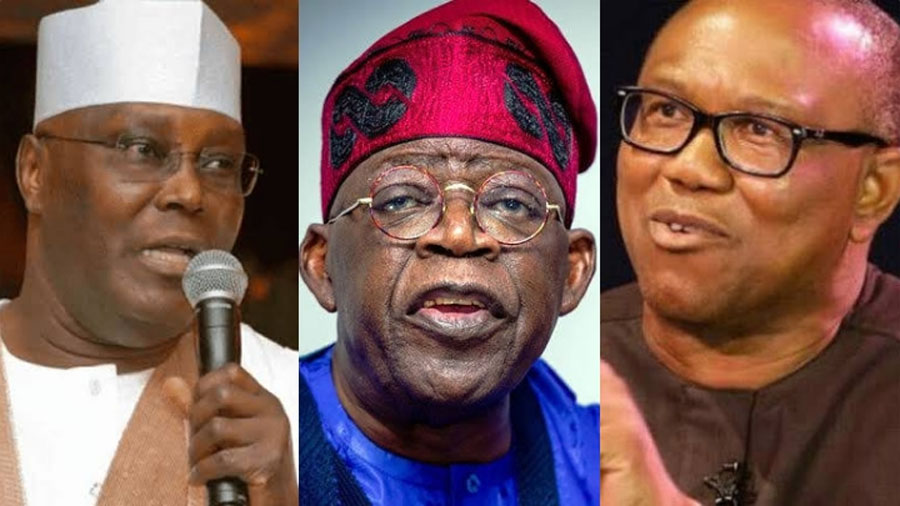
President Bola Ahmed Tinubu has taken a swipe at opposition figures aligned with the African Democratic Congress, saying they need “Jigi-Bola eyeglasses” to see what he described as the achievements of his administration.
Tinubu made the remark on Thursday at the State House while receiving a delegation of the Renewed Hope Ambassadors led by Imo State Governor Hope Uzodimma.
“If they don’t want to see the hope and the roads and bridges, and the children we are raising, the economy we are growing, we shall lend them Jigi-Bola eyeglasses,” the President said, defending his government’s performance.
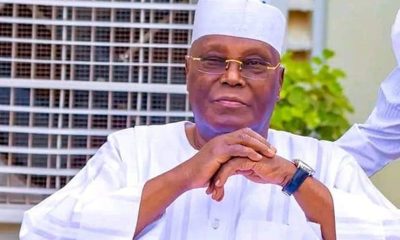
The comment comes amid escalating political exchanges between the Presidency and key opposition figures, including former Vice President Atiku Abubakar, Peter Obi, and former Osun State governor Rauf Aregbesola, who are now prominent voices within the ADC coalition.
Tinubu reiterated his commitment to sustaining reforms under his Renewed Hope Agenda, particularly those aimed at improving economic opportunities for vulnerable Nigerians. He argued that ongoing policies are designed to stabilise the economy and drive long-term growth.
READ ALSO:
- World Athletics Blocks Favour Ofili’s Switch from Nigeria to Turkey
- Gunmen Kidnap 14 JAMB Candidates in Benue Highway Attack
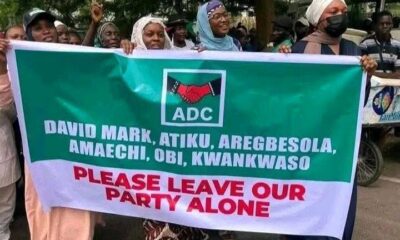
- Atiku, Obi, Kwankwaso Camps Clash as ADC Grapples with Leadership Dispute
However, opposition leaders have sharply criticised the administration.
Aregbesola recently described Tinubu’s Renewed Hope Agenda as a “scam,” intensifying tensions within Nigeria’s political space.
Atiku Abubakar, on his part, vowed to reverse all policies introduced by the Tinubu administration if elected president in 2027, stating that the current government represents “the worst administration” he has witnessed.
Similarly, Peter Obi criticised the government’s economic management, citing rising poverty levels and increasing national debt. According to him, key economic indicators have worsened, warning that the country risks deeper crisis without urgent reforms.
Obi also raised concerns about national unity, arguing that divisions have widened under the current administration and calling for collective efforts to rebuild cohesion.
The exchange highlights growing political realignments ahead of the 2027 general elections, with opposition leaders ramping up criticism while the Presidency continues to defend its policies and achievements.
Tinubu Mocks Atiku, Obi, Aregbesola, Says They Need ‘Jigi-Bola Glasses’ to See APC Achievements
Politics
ADC Expels Nafiu Bala, Leke Abejide, Ratifies David Mark-Led Leadership
ADC Expels Nafiu Bala, Leke Abejide, Ratifies David Mark-Led Leadership
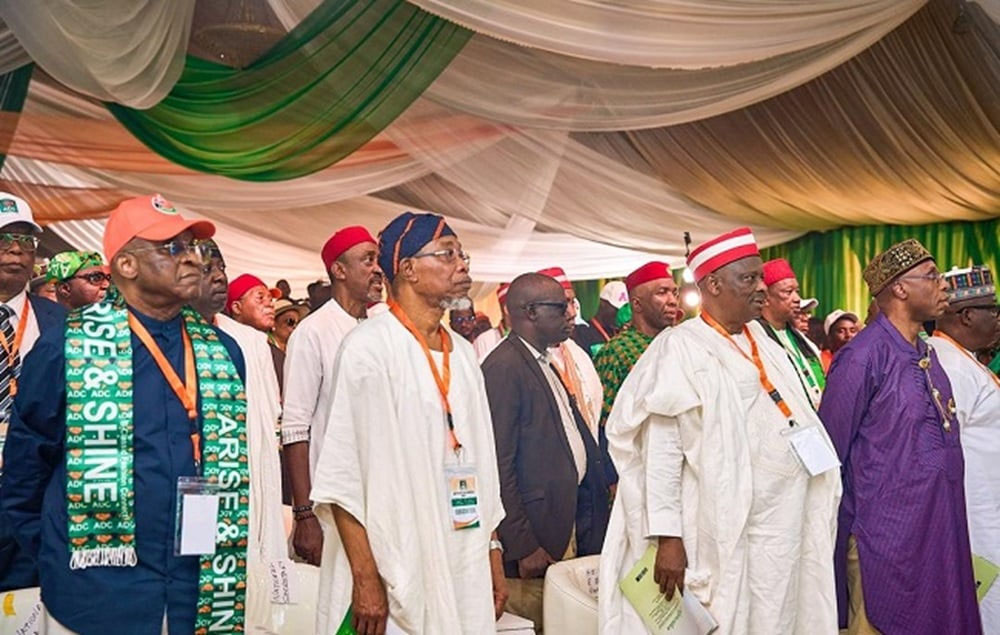
The African Democratic Congress (ADC) has expelled its former Deputy National Chairman, Nafiu Bala Gombe, and House of Representatives member, Leke Abejide, following decisions taken at its national convention held on Tuesday, in a major restructuring aimed at resolving internal leadership disputes and repositioning the party ahead of the 2027 general elections.
The party also expelled Kenneth Ehiator, Abia State chairman of the ADC, Stella Chukwu, and Elias Adiukwu, with officials stating that the move was part of efforts to restore discipline, unity, and organisational stability within the party structure.
At the same convention, the ADC ratified a new National Working Committee led by former Senate President David Mark, alongside former Osun State Governor Rauf Aregbesola as National Secretary, former Secretary to the Government of the Federation Babachir Lawal as Deputy National Chairman (North East), and Bolaji Abdullahi as National Publicity Secretary.
The leadership changes come amid prolonged internal disputes over legitimacy and control of the party structure, with Nafiu Bala previously insisting he remained the rightful national chairman of the ADC, while Leke Abejide aligned with his faction and participated in protests at the Independent National Electoral Commission (INEC) demanding recognition.
READ ALSO:
- Yul Edochie Slams ADC Leaders, Says Opposition Chieftains “Achieved Nothing” while in govt
- Rising Debt, Oil Shock Could Trigger Global Slowdown, IMF Warns
- 2026 JAMB UTME: Over 2.2 Million Candidates Face Stricter Rules, CBT Reforms Begin
Party insiders said the expulsion of key figures was necessary to end parallel leadership claims and unify the party ahead of its political roadmap toward the 2027 elections, where it plans to field candidates across all elective positions.
The ADC also confirmed that it had duly notified INEC ahead of the convention and would proceed to submit its official report in line with electoral guidelines.
Chairman of the convention media sub-committee, Kola Ologbondiyan, said the party complied with legal requirements, stressing that INEC’s physical presence at the event was not mandatory for the validity of the convention.
According to him, what matters under the law is proper notification and submission of post-convention documentation, which the party says it has fulfilled.
With the convention concluded, the ADC said it is now shifting focus to preparations for its primaries, where it will select candidates for the 2027 general elections, including its presidential flagbearer.
Political sources within the party said the newly established leadership structure would guide negotiations among aspirants, with discussions expected on whether to adopt direct primaries or a consensus arrangement.
The 2026 Electoral Act allows political parties to determine their method of primary elections, either through direct voting by members or consensus among stakeholders.
Sources further noted that managing multiple high-profile aspirants remains one of the biggest challenges facing the party as it prepares for the presidential contest.
Political analysts say the ADC’s evolving structure could reshape opposition politics in Nigeria, especially with the reported involvement of prominent figures such as former Vice President Atiku Abubakar, former presidential candidate Peter Obi, former Kano State Governor Rabiu Kwankwaso, and former Rivers State Governor Rotimi Amaechi.
However, analysts also warn that internal competition for the presidential ticket may become a major test of unity for the party as it attempts to position itself as a strong opposition force ahead of 2027.
Despite the tensions, the ADC insists that its convention marks a turning point in its restructuring process and a significant step toward its participation in the next general elections.
ADC Expels Nafiu Bala, Leke Abejide, Ratifies David Mark-Led Leadership
Politics
2027: Pro-Jonathan Group Launches Campaign Urging Goodluck Jonathan to Run
2027: Pro-Jonathan Group Launches Campaign Urging Goodluck Jonathan to Run
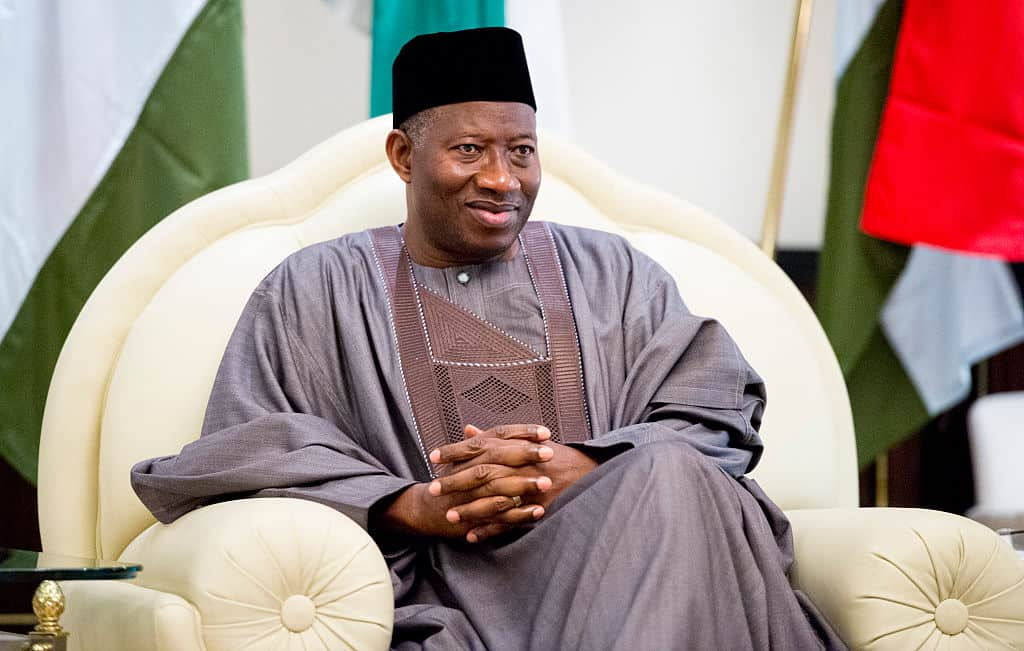
A new political movement, the Goodluck Presidential Support Campaign Group, has officially launched a nationwide mobilisation calling on former President Goodluck Jonathan to contest the 2027 presidential election, amid growing political conversations over leadership direction and national stability.
The group made its position public during a press conference on Wednesday, stating that Nigeria is at a critical point that requires experienced leadership to address economic hardship, insecurity, and declining public confidence in governance.
According to the group, the decision to rally support for Jonathan followed wide consultations across different regions of the country, with stakeholders agreeing that his return to active politics could help restore unity, stability, and economic confidence.
Speaking at the launch, the Director General of the group, Jeff Okoi, said the initiative was driven by national concern rather than political sentiment, stressing that Nigeria needs a leader with proven governance experience.
Okoi described the moment as “a defining period in Nigeria’s democratic journey,” adding that the country is currently facing serious challenges that demand urgent and credible leadership intervention.
He explained that the group is made up of Nigerians committed to national unity, economic recovery, and political stability, insisting that Jonathan’s track record in office remains a key reason for the call.
He said Nigeria is currently battling insecurity, economic pressure, and weakening global confidence, adding that only experienced leadership can reposition the country for growth and development.
READ ALSO:
- Tension in Osogbo as Protesters Demand Respect for Court Judgments in LG Dispute
- Nigerian Air Force Releases BMTC 46/2025 Shortlist, Fixes Kaduna Interview Dates
- Over 250 Feared Dead as Migrant Boat Capsizes En Route to Malaysia
The group further stated that it has begun establishing mobilisation structures across Nigeria’s geopolitical zones to build wider support ahead of the 2027 general elections.
Okoi also noted that the campaign is not about personal ambition but about what he described as a “national rescue mission” aimed at restoring stability and shared prosperity.
He added that Jonathan remains, in their view, a symbol of democratic stability and international respect, particularly for his role in peaceful political transitions during his time in office.
The group also expressed concern over what it described as the narrowing of democratic space in Nigeria, warning that democracy must remain inclusive, competitive, and fair to thrive.
According to the movement, Nigeria needs a leader who understands governance, embraces diversity, and commands both local legitimacy and international respect.
The emergence of the campaign group adds to rising political pressure on Jonathan, as several youth organisations and civic groups have also staged public rallies in recent weeks urging him to consider a return to the presidential race.
However, despite the growing calls, Goodluck Jonathan has not made any official statement regarding whether he will contest the 2027 presidential election.
Political analysts say the increasing mobilisation signals early political positioning ahead of what is expected to be a highly competitive election cycle in Nigeria.
2027: Pro-Jonathan Group Launches Campaign Urging Goodluck Jonathan to Run

-
 metro3 days ago
Arise News Yet to Confirm Reported Suspension of Rufai Oseni
-
 metro2 days ago
Tension in Osogbo as Protesters Demand Respect for Court Judgments in LG Dispute
-
 metro1 day ago
UNILAG Lecturer Sexual Assault Trial: Student Testifies in Lagos Court
-
 International3 days ago
World Leaders Gather in Paris Over Strait of Hormuz Crisis
-

 Politics2 days ago
Obesere’s Wife Sekinat Adelakun-Akande Declares for 2027 Ibadan Reps Race
-

 metro1 day ago
Grandfather in police net for impregnating granddaughter
-
 News3 days ago
Lafarge Convicted of Terrorism Financing by French Court in Landmark Case
-

 International1 day ago
US Senate Rejects Measure to Limit Trump’s Iran Military Powers