

Politics
Kwankwaso, Sowore parties have no gov, assembly candidates yet, says INEC

Two political parties, African Action Congress (AAC) led by Omoyele Sowore and New Nigeria Peoples Party (NNPP) headed by Rabiu Kwankwaso are yet to upload a single nomination of their candidates for governorship, deputy governorship and state assembly elections on the Candidate Nomination Portal of the Independent National Electoral Commission, the electoral body has said.
National Commissioner and Chairman, Information and Voter Education Committee at INEC, Festus Okoye, said this on Wednesday in a statement.
He said, as provided for in the timetable and schedule of activities for the 2023 general elections released by the commission on February 26, 2022, all political parties that conducted valid primaries are required to nominate their candidates for governorship, deputy governorship and state assembly elections via the ICNP from 1st-15th July 2022.
He said, “So far, the commission has processed 6,995 nomination forms (EC9) uploaded by 16 out of 18 political parties for the constituencies where they intend to sponsor candidates.
“However, two political parties, the AAC and NNPP, are yet to upload a single nomination to the portal. The commission hereby reminds all political parties that they have three days left to upload their list of candidates to the ICNP.
“The deadline is Friday, 15th July 2022. The portal will automatically shut down at 6.00pm on that date.”
On issuance of Certified True Copies (CTCs) of documents, Okoye said the commission had continuously responded to requests for CTCs of documents mainly arising from the conduct of party congresses, primaries and nomination of candidates.
He said, “The number of requests processed has now risen to 1,662,987 pages of documents. Sadly, in spite of the commission’s effort, 147 out of 476 requests processed as at today involving 5,646 pages are yet to be collected by applicants.”
Okoye appealed to prospective litigants to come forward and collect the certifed copies of the documents.




Politics
Barau Sacks Aide Over ‘Abba Must Go’ Social Media Posts

Barau Sacks Aide Over ‘Abba Must Go’ Social Media Posts
Deputy President of the Senate, Senator Barau I. Jibrin, has terminated the appointment of his Special Legislative Aide, Umar Alhassan, popularly known as King Indara, following social media posts calling for the removal of Kano State Governor Abba Kabir Yusuf.
Alhassan, a popular Kano-based TikToker, was removed from his position with effect from September 18, 2026, according to a statement issued by Barau’s Special Assistant on Media and Publicity, Shitu Madaki Kunchi.
The statement said the decision followed social media posts by Alhassan containing the phrase “Abba Must Go”, which Barau’s office described as an act of indiscipline and disrespect towards the Kano governor.
According to the statement, the posts were considered contrary to the values of respect and decorum expected from the office of the Deputy Senate President.
Barau’s office also said the action was inconsistent with the principles of the All Progressives Congress (APC), the party to which both Barau and Governor Yusuf belong.
“Accordingly, we announce his removal from the position of Special Legislative Assistant (SLA) in the office of the Deputy President of the Senate as of September 18, 2026,” the statement said.
Alhassan had reportedly published the “Abba Must Go” message on Facebook on Friday, alongside other political comments concerning the political situation in Kano.
In another post following the termination of his appointment, Alhassan reportedly stated that Kano belongs to Rabiu Musa Kwankwaso, the former Kano governor and political figure associated with the Kwankwasiyya movement.
He also indicated that he remained a member of the APC, despite expressing support for Kwankwaso.
Barau, who represents Kano North Senatorial District, subsequently reaffirmed his commitment to the APC and called for support for the party across all levels.
The Deputy Senate President has been involved in efforts to strengthen the APC structure in Kano following Governor Yusuf’s move from the New Nigeria Peoples Party (NNPP) to the ruling party.
READ ALSO:
- Niger Miners’ Deaths: FG Suspends 21 NSCDC Officers, Releases Names
- Adeyanju Rejects Payment for Niger Miners’ Probe, Vows to Expose Any Cover-Up
- Kano TikToker Remanded Over Alleged Defamation of Politician
Yusuf joined the APC in January 2026 after resigning from the NNPP, the platform on which he won the 2023 Kano State governorship election.
The governor’s movement into the APC brought him into the same political party as Barau and other prominent Kano politicians, while also changing the political alignments surrounding the state ahead of the 2027 general elections.
Barau had previously been associated with political discussions surrounding the Kano governorship, but his office has more recently maintained support for the APC structure and Governor Yusuf’s position within the party.
The termination of Alhassan’s appointment, however, was specifically linked by Barau’s office to the aide’s social media activity and the language used in the posts.
There was no announcement of criminal proceedings against Alhassan in connection with the posts.
The development has attracted attention because Alhassan is a well-known social media personality in Kano and had served in a legislative support role in the office of one of the National Assembly’s senior presiding officers.
His removal also illustrates the political sensitivities surrounding public statements by political appointees and legislative aides, particularly when such statements appear to conflict with the positions of the officials or institutions they serve.
The controversy comes at a time when political activity is increasing in Kano ahead of the 2027 elections, with different political actors positioning themselves within the APC and other political platforms.
Governor Yusuf’s defection to the APC has also altered the relationship between him and his former political allies in the NNPP and the Kwankwasiyya movement.
Kwankwaso, who backed Yusuf’s 2023 governorship campaign, is now associated with the African Democratic Congress (ADC) as part of the opposition political realignment ahead of the 2027 elections.
Alhassan’s reported reference to Kwankwaso after losing his appointment has therefore added another dimension to the political discussion surrounding Kano, although his stated APC membership remains his own position.
For now, the immediate consequence of the controversy is the termination of Alhassan’s appointment as a Special Legislative Aide to the Deputy President of the Senate.
Barau’s office has reiterated its commitment to the APC, while Alhassan has continued to express his political views on social media.
The development is expected to generate further discussion within Kano’s political circles as parties, elected officials and their supporters prepare for the next electoral cycle.
Barau Sacks Aide Over ‘Abba Must Go’ Social Media Posts
Politics
Keyamo Knocks Atiku for Addressing President Tinubu as ‘Bola’
Keyamo Knocks Atiku for Addressing President Tinubu as ‘Bola’
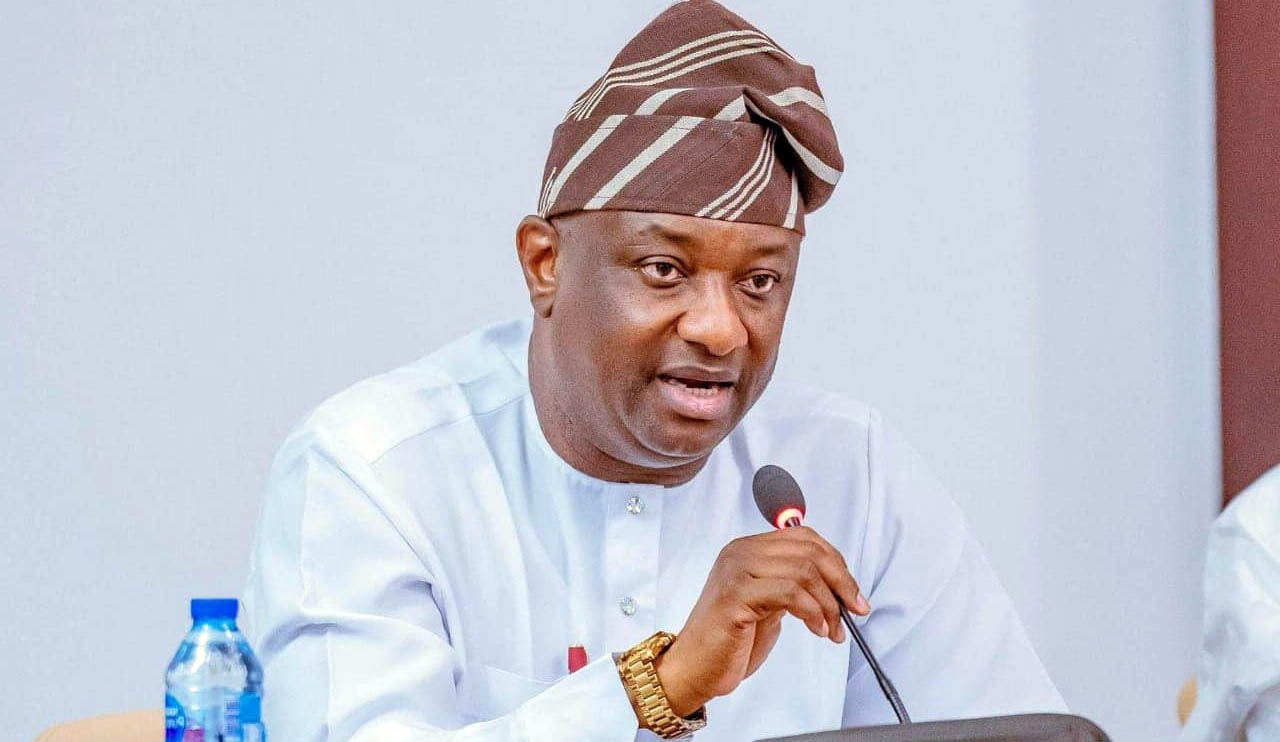
Minister of Aviation and Aerospace Development, Festus Keyamo, has criticised former Vice-President and African Democratic Congress (ADC) presidential candidate Atiku Abubakar for repeatedly referring to President Bola Ahmed Tinubu simply as “Bola” during a press conference on Nigeria’s rising petrol prices and cost of living.
Keyamo described the reference as “very disrespectful and discourteous”, arguing that political disagreements should not diminish the dignity attached to the office of the President.
The minister made the comments in a post on his X account on Friday, September 18, 2026, shortly after Atiku addressed journalists in Abuja on fuel prices, palliatives, electricity costs and economic hardship.
Keyamo said Atiku should recognise that, regardless of political differences, the office of the President deserved to be accorded the appropriate respect.
“The continuous reference to President Bola Ahmed Tinubu … as ‘Bola’ is very disrespectful and discourteous,” Keyamo said.
He added that Atiku should understand that “no matter your differences with Mr President,” the presidential office should be accorded the dignity it deserves.
Keyamo also accused the former Vice-President of speaking from a position of personal grievance, saying the tone of his remarks “reeks of pain and bitterness in his heart”.
The minister further referred to Atiku’s recent comments about the ages of the two politicians, arguing that it was inconsistent for Atiku to describe Tinubu as older than himself while also addressing him by his first name.
The criticism came after Atiku used his press conference to call on Tinubu to take immediate measures to reduce the price of petrol and diesel and ease the economic pressure on Nigerians.
Atiku argued that the removal of the petrol subsidy in May 2023 had contributed to higher transportation, logistics, food and energy costs, with households, workers, farmers and businesses bearing the consequences.
He said rising fuel costs had effects far beyond filling stations because higher transportation and logistics expenses eventually feed into the prices of food and other goods.
READ ALSO:
- Rivers Fire: Mother, Four Children Die in Okochiri House Inferno
- Niger Miners’ Deaths: Survivor Alleges Substance Was Sprayed in Cell as Probe Intensifies
- Lagos APC Orders 2027 Candidates to Stay in Nigeria Until After Election
Atiku urged Tinubu to reconsider the government’s approach and said the President should be willing to adopt a policy proposal capable of reducing petrol prices even if the idea originated from a political opponent.
“Bola Tinubu should not be ashamed to do what is necessary to lower the price of petrol simply because Atiku Abubakar proposed a government intervention,” he said.
He added that the President could rename the proposal or take credit for it if necessary, stressing that what mattered to him was for Nigerians to pay less for petrol.
Atiku also criticised the continued reliance on government palliatives to cushion the effects of economic hardship.
According to him, emergency assistance cannot substitute for policies that address the underlying causes of rising costs.
He argued that measures such as food distribution and cash support could provide temporary relief but would not restore Nigerians’ purchasing power if the costs of fuel, electricity, transportation and production continued to rise.
Atiku said the government’s economic performance should ultimately be assessed by whether ordinary Nigerians could afford essential goods and services, rather than by increases in government revenue or headline economic figures.
The ADC candidate also raised concerns over the planned phase-out of electricity subsidies from 2027, warning that another increase in energy costs could place additional pressure on households, small businesses and manufacturers.
He said businesses were already spending heavily on electricity, diesel and alternative power sources to remain operational.
Atiku argued that the experience following petrol subsidy removal should inform the government’s approach to electricity pricing and called for measures that would prevent additional pressure on consumers and productive businesses.
The former Vice-President’s intervention has drawn a response from the ruling All Progressives Congress (APC).
APC National Publicity Secretary Felix Morka said Atiku had not presented what he considered a credible alternative to the economic policies of the Tinubu administration.
Morka said Atiku, as a presidential candidate, should explain to Nigerians what he intended to do differently rather than simply ask the President to adopt his proposals.
Morka also criticised Atiku over his position on fuel subsidy removal, accusing him of supporting the policy during the 2023 presidential campaign before subsequently criticising the Tinubu administration over its implementation.
On electricity, Morka questioned Atiku’s criticism of the planned subsidy phase-out, arguing that the former Vice-President had previously served in government and had an opportunity to address challenges in Nigeria’s power sector.
Atiku’s position, however, is that his current proposal for government intervention is intended to reduce the cost of domestically refined petroleum products and protect consumers from the effects of high energy prices.
He has also argued that the government should focus on policies that increase purchasing power and reduce production costs rather than relying primarily on palliatives.
The competing positions have added to the growing political debate over petrol pricing, fuel subsidy policy, electricity costs and the wider cost of living as political parties prepare for the 2027 general election.
Keyamo’s intervention, however, was specifically focused on Atiku’s manner of addressing Tinubu and the dignity of the presidential office, rather than providing a detailed response to Atiku’s fuel-pricing proposal.
The dispute therefore combines a political disagreement over the appropriate way to address the President with a broader policy debate over how Nigeria should respond to high energy and living costs.
As the 2027 election approaches, fuel prices, electricity tariffs, subsidy policy, domestic refining and purchasing power are expected to remain prominent issues in exchanges between the Federal Government, the APC and opposition parties.
Keyamo Knocks Atiku for Addressing President Tinubu as ‘Bola’
Politics
Lagos APC Orders 2027 Candidates to Stay in Nigeria Until After Election
Lagos APC Orders 2027 Candidates to Stay in Nigeria Until After Election
The Lagos State chapter of the All Progressives Congress (APC) has directed all its candidates contesting the 2027 general elections to remain in Nigeria until after the polls, as the party formally activates its campaign machinery and begins an intensified grassroots mobilisation drive across the state.
The directive was issued by the Lagos APC chairman, Cornelius Ojelabi, on Friday, September 18, 2026, during the inauguration of the party’s 1,235-member 2027 campaign council at the APC secretariat on ACME Road, Ikeja.
Ojelabi told the candidates to cooperate with the campaign council and remain available for campaign activities, stressing the importance of coordination and accountability within the party’s election structure.
“To our candidates, cooperate with the campaign council and make yourself available. After today’s inauguration, no candidate is allowed to travel outside the country until after the general elections,” Ojelabi said.
The directive is an internal instruction by the Lagos APC to its candidates and should not be interpreted as a government-imposed restriction on international travel. It does not amount to a travel ban on members of the general public.
The travel directive came as the party inaugurated a large campaign structure designed to coordinate its activities across Lagos ahead of the 2027 elections.
Former Minister of State for Defence and former senator, Musiliu Obanikoro, is serving as Director-General of the campaign council, while Governor Babajide Sanwo-Olu is listed as chairman and Deputy Governor and APC governorship candidate Kadri Obafemi Hamzat as deputy chairman.
READ ALSO:
- BREAKING: Bloodbath at Pakistan Mosque as Suicide Blast Kills 21, Injures 103
- Xenophobia: FG Brings 33 More Nigerians Home From South Africa
- Falconets Thrash England 3-0, Face Colombia in U-20 World Cup Quarter-Finals
The campaign structure also includes APC Lagos chairman Ojelabi as Vice-Chairman I, Lagos State House of Assembly Speaker Mudashiru Obasa as Vice-Chairman II and Damilola Sonayon James as Vice-Chairman III.
At the advisory level, Prince Tajudeen Olusi is chairman of the Governance Advisory Council, while Sanwo-Olu heads the Advisory Council. Former Lagos governors Babatunde Fashola and Akinwunmi Ambode are listed as co-chairmen.
Other prominent figures in the structure include President Bola Ahmed Tinubu’s Chief of Staff, Femi Gbajabiamila, and former Minister of Health Adeleke Mamora.
The campaign council has multiple directorates and committees responsible for areas including legal and compliance, party and inter-party affairs, administration and logistics, finance and fundraising, ICT, traditional institutions, diaspora engagement and residents’ associations.
The structure also provides for coordination across Lagos’ senatorial districts, local government areas and other grassroots political structures.
Ojelabi said the party would adopt a decentralised grassroots strategy, with members expected to work directly within communities, wards and polling areas.
He described the approach as “operation man your polling booth”, saying the party intended to deploy its members and leaders to polling locations to mobilise voters.
The APC chairman put the party’s target at five million votes from a projected seven million voters in Lagos. That figure is a campaign target announced by the party and does not represent an established election result or independent projection.
Ojelabi also urged members to respect the law and maintain discipline within the campaign structure. He called for an election campaign free from hatred, thuggery and violence, stressing the importance of peaceful political engagement.
Hamzat, who is the APC’s candidate for the 2027 Lagos governorship election, urged party members to base their campaign on what they describe as the records and achievements of APC-led administrations.
He said campaign messages should focus on facts, data and measurable outcomes, citing areas including taxation, infrastructure, agriculture and security.
Hamzat also referenced major infrastructure projects, including the Lagos-Calabar Coastal Highway, while calling on party members to explain the administration’s policies and programmes to voters during the campaign.
The governorship candidate also urged APC members to mobilise voters at the community level and work for the party’s candidates contesting the Senate, House of Representatives and Lagos State House of Assembly elections.
Obanikoro, as Director-General of the campaign council, also called for unity and commitment among members of the campaign structure as the party begins its electioneering activities.
The inauguration brings together serving and former political office holders, elected representatives, candidates and other party stakeholders as the Lagos APC prepares for the 2027 electoral cycle.
The party’s campaign structure is expected to coordinate its activities across the state while keeping candidates and grassroots members engaged throughout the election period.
The directive that APC candidates should remain in Nigeria until after the election therefore forms part of the party’s internal campaign coordination strategy, coming at a time when political parties are organising their structures ahead of the 2027 general elections.
Lagos APC Orders 2027 Candidates to Stay in Nigeria Until After Election
-
 metro3 days ago
Niger Mosque Abductions: Terrorists Execute 30 of 500 Captive Muslim Worshippers
-

 Business2 days ago
Fuel Prices Climb to ₦1,500 per Litre Across Nigeria, Sparking Calls for Urgent Action
-
 News2 days ago
OAU Investigates Death of Final-Year Student as Police Begin Probe
-
 News1 day ago
ECOWAS Biometric Card Expands as Seven Countries Begin Rollout
-
 metro3 days ago
US-Based Nigerian Lawyers Disbarred: Full List of Fraud, Theft and Misconduct Cases
-

 Politics2 days ago
Aisha Buhari Visits Atiku Amid Opposition Coalition Activities
-

 Business2 days ago
NCAA Moves Against Airlines Over Rising Flight Delays
-
 Interview2 days ago
He Does Not Lose Elections”: Abdulmumin Jibrin Predicts 65% Landslide for Tinubu in 2027