

News
Ladoja becomes ceremonial Ibadan Oba, receives beaded crown

Ladoja becomes ceremonial Ibadan Oba, receives beaded crown
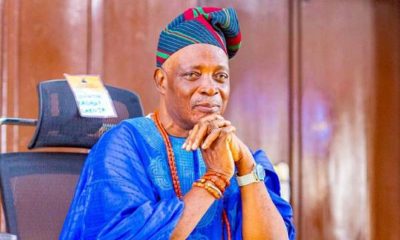
The Otun Olubadan of Ibadan, Senator Rashidi Ladoja, on Monday, became a crown wearing Oba as he received beaded crown from the Olubadan of Ibadan land, Oba Owolabi Olakulehin and instruments of office from the acting governor of Oyo State, Bayo Lawal.
The ceremony held at the palace of the Olubadan of Ibadan land, Oke-Aremo, Ibadan, puts an closure to the long resistance of Ladoja regarding wearing beaded crown apart from that of the Olubadan of Ibadan land, following amendments to the Ibadan chieftaincy declaration.
Presenting certificate and staff of office to Ladoja, the Oyo Acting governor said the changes to the Ibadan monarchy system were imperative for Ibadan and for the state to progress.
According to Lawal, a rancour-free and well-established monarchy in Ibadan was crucial as it would be a reference point for monarchies across Yoruba land.
Lawal said: “The governor extends his greetings to you. In recent weeks, some things happened, that made this celebration successful. Ibadan is a great city, a city of royalty.
“When there is peace in Ibadan land, we believe the entire Yoruba land is peaceful. There won’t be friction in Ibadan land.
“We thank God that, today, all the controversies surrounding the issue of the beaded crown have come to an end even without external interference.
“Today is a day of joy for Oyo State, particularly Ibadan land. I am no novice to Oba Ladoja and he is not a novice to me. I am grateful that the governor gave me the privilege to do this ceremony.
READ ALSO:
- Police raided Labour House to arrest foreigner planning to destabilise Nigeria – IGP
- Tinubu launches CNG buses in Aso Rock, says commercial vehicles consume 80% Nigeria’s petrol
- Man, son killed in Jigawa building collapse
“We believe that for Oyo State to progress, there will be some changes in how we do things. We want monarchy to be well founded, well established in Oyo State. We believe that if monarchy is well established in Oyo State, it will be a reference point across Yoruba land.”
The crown handed to Ladoja by the Olubadan of Ibadan land, Oba Owolabi Olakulehin, bore the title, “Oba Oju Opo.”
Speaking, Ladoja said his acceptance of beaded crown finally came after the Olubadan of Ibadan land explained to him that he is receiving crown as Oba Oju Opo (king-in-line), meaning that those who are highest on the Olubadan chieftaincy line to include Otun, Osi, Asipa, Ekerin, Balogun are next in line to become Olubadan.
He explained that his resistance to accepting the beaded crown was because he kept asking over what domain would he reign as Oba and he didn’t get a response he could fathom.
Ladoja said he now understood that the amended chieftaincy declaration stated that the Otun, Osi, Asipa, Ekerin are crowned Obas and all enjoy being regarded as next king in line, thereby nullifying the question of what domain.
Even when issues and controversies reach fever pitch in Ibadan, Ladoja said Ibadan people would always find a way to resolve their chieftaincy issues without external interference.
Ladoja said: “Ibadan can arrange its chieftaincy. If people think Ibadan will burn, Ibadan will boil, they lie, that is only because we are yet to meet behind closed doors.
READ ALSO:
- NYSC invalidates certificates of national service to 101 UNICAL graduates
- Lady who destroyed husband passport faces imprisonment, says Immigration Act
- Horror as cleric beheads 14-year-old boy in Ibadan
“Once we come out after meeting behind closed doors, you will see a change in stance because we know what is right.
“All that happened before was due to lack of understanding as the question asked then was if we are crowned king, what domain are we king over? But we have been told that we are Oba Oju Opo (king-in-line) because it is all of us on that line that can become king.
“What the declaration stated is that if Otun cannot become king, Osi can, Asipa can, Ekerin can, that is, all of us in that line can become king. So, each of us can enjoy being king in line.
“That nullifies the question of what domain is one king over, we say we are now in line to become Olubadan of Ibadan land. I thank the Olubadan of Ibadan land for approving of my request for an answer to my persistent question of over what domain is one king over.
“He let me understand that we are all kings in line and we can become Olubadan of Ibadan land, when there is vacancy. May God grant the Olubadan long life on the throne, and it is God that grants one the grace to become Olubadan of Ibadan land.
“We have had people become Otun, people become Balogun yet did not become Olubadan. If we don’t know that of many, we know that of Kuye and Omiyale that passed at almost the same time. May God rest their souls.”
Ladoja becomes ceremonial Ibadan Oba, receives beaded crown




Education
25 Universities, Teaching Hospitals Get Solar Power Under REA Programme

25 Universities, Teaching Hospitals Get Solar Power Under REA Programme
Twenty-five federal tertiary institutions have been connected to solar electricity under the Rural Electrification Agency’s (REA) Energizing Education Programme.
The REA Managing Director, Abba Aliyu, disclosed this during the commissioning of a 3MW captive solar hybrid power project at Yakubu Gowon University, Abuja.
According to Aliyu, the programme covers 22 federal universities and three affiliated teaching hospitals and has deployed more than 100MW of clean energy.
He said the initiative now benefits over 300,000 students and 50,000 academic and administrative staff.
Aliyu added that the new 3MW facility would power key university facilities, including lecture halls, laboratories, ICT systems, administrative buildings and campus lighting.
Meanwhile, Minister of Power Joseph O. Tegbe said reliable electricity was essential to supporting teaching, research, healthcare and digital services in universities.
He stressed that the long-term performance of the solar projects would be more important than their commissioning.
Vice-Chancellor of Yakubu Gowon University, Prof. Hakeem Babatunde Fawehinmi, also said dependable electricity was critical to the institution’s academic and research activities.
25 Universities, Teaching Hospitals Get Solar Power Under REA Programme
News
OAU Investigates Death of Final-Year Student as Police Begin Probe

OAU Investigates Death of Final-Year Student as Police Begin Probe
Obafemi Awolowo University (OAU), Ile-Ife, Osun State, is investigating the death of a final-year student of the institution.
The student, Oluwole Oluwosegun, was studying Materials Science and Engineering at the university.
According to the university’s Public Relations Officer, Olarewaju Abiodun, the incident occurred on Tuesday afternoon at the student’s off-campus residence around the Damico area of Ooni Layout, Ile-Ife.
After receiving the report, the university’s Quick Response and Security (QRS) Team went to the location. The team also contacted the Nigeria Police, after which officers from the ‘A’ Division in Moore, Ile-Ife, joined them at the scene.
The university later took the student to its Health Centre, where a medical doctor confirmed his death.
READ ALSO:
- 57-Year-Old Man Arrested Over Sexual Abuse of Stepdaughter in Edo
- US-Based Nigerian Lawyers Disbarred: Full List of Fraud, Theft and Misconduct Cases
- Katsina Police Rescue Two Kidnapped Women, Arrest Suspected Kidnappers
Police Begin Investigation
Following the incident, university authorities handed relevant information and items recovered from the scene to the police to support their investigation.
The police have since begun inquiries into the circumstances surrounding the student’s death.
Meanwhile, the university said it had informed the appropriate student affairs authorities to provide necessary follow-up, particularly regarding the welfare and emotional support of students affected by the incident.
Vice-Chancellor Professor Simeon Bamire also expressed condolences to the student’s family, friends, classmates and colleagues.
The university further encouraged students facing severe emotional distress, relationship difficulties, financial pressure or other personal challenges to seek help from trusted people and available university support services.
Professor Bamire reaffirmed the institution’s commitment to the welfare of its students and staff, stressing that no student should feel they must face overwhelming difficulties alone.
OAU Investigates Death of Final-Year Student as Police Begin Probe
Education
Niger State Urges Local Communities to Protect Newly Completed Public Schools
Niger State Urges Local Communities to Protect Newly Completed Public Schools
Basic education officials deliver modern classrooms to help children learn safely, kicking off an ambitious statewide renovation drive.
State education leaders in Niger State are calling on neighborhood residents and parent groups to take good care of newly renovated primary schools.
On Wednesday, the head of the Niger State Universal Basic Education Board, Dr. Ibrahim A. Liman, reminded communities that public classrooms belong to everyone, warning that state funding can only make a lasting difference when local people watch over these shared spaces.
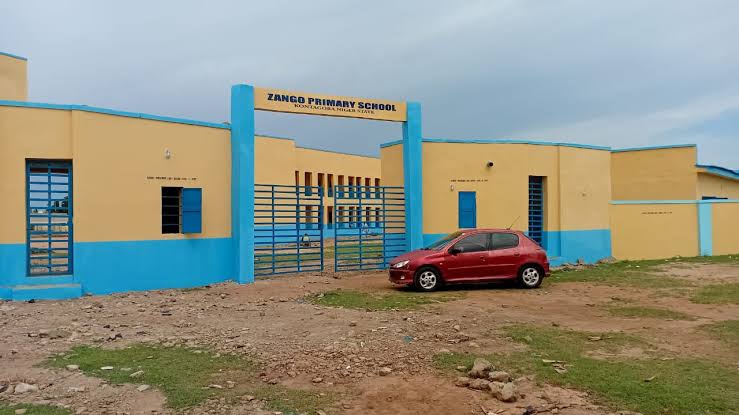
To prepare for handing over the keys, board officials visited Zango Primary School in Kontagora and Richard Lander Primary School in New Bussa. These two locations are the first to finish out of seven model schools currently under construction.
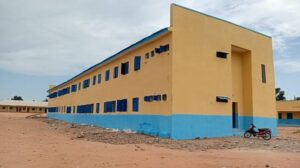
During their visits, team members inspected classrooms to make sure builders followed high safety standards, while encouraging neighbors to keep the grounds secure, tidy, and ready for pupils.
Furthermore, state officials explained that these building projects are part of a larger plan to improve early education across every community. Alongside these new classrooms, the board is starting repair work on about 400 primary schools throughout the state.
In addition to fixing desks and roofs, authorities are upgrading classroom teaching tools and supporting teachers. As a result, children across all backgrounds will have safe, welcoming spaces to learn and grow together.
Niger State Urges Local Communities to Protect Newly Completed Public Schools
-

 Politics3 days ago
2027: Northern Lecturers Back Tinubu, ASUU Disowns Endorsement
-

 metro3 days ago
Police Arrest Mother Over Alleged Brutal Abuse of 7-Year-Old Girl in Anambra
-

 Sports2 days ago
‘I Was Never the Chosen One’ — Dembele Responds to Mbappe
-

 International1 day ago
Islamic Council Condemns Attempted Attack on Holy City of Mecca
-

 metro2 days ago
Lagos Power Outage: Ikeja Electric Blames TCN as Businesses, Homes Groan
-

 Education2 days ago
JAMB Moves 2027 UTME Time — Here’s What Candidates Need To Know
-
 News1 day ago
Keep Politics Out of My Office — Ogbomoso Grand Chief Imam Warns Politicians, Bloggers
-
 Politics2 days ago
2027: APC Governors Reject Wike’s Rainbow Coalition, Insist on Party Loyalty