

News
Updated: Reps propose long imprisonment for separatists, national symbol destroyers
Updated: Reps propose long imprisonment for separatists, national symbol destroyers
Promoters of secessionist movements and other acts that try to put Nigeria down may be spending long term in jail going by a new bill before the House of Representatives.
The House is proposing a 25-year imprisonment or N10 million fine, or both, for any person convicted of an action that can lead to sectional conflict or separation in the country.
The proposed legislation, according to its explanatory memoranda, “seeks to criminalise subversive activities by associations, organisations, militias, cults, bandits and other proscribed groups in Nigeria.”
This is contained in the Counter Subversion Bill 2024 before the House.
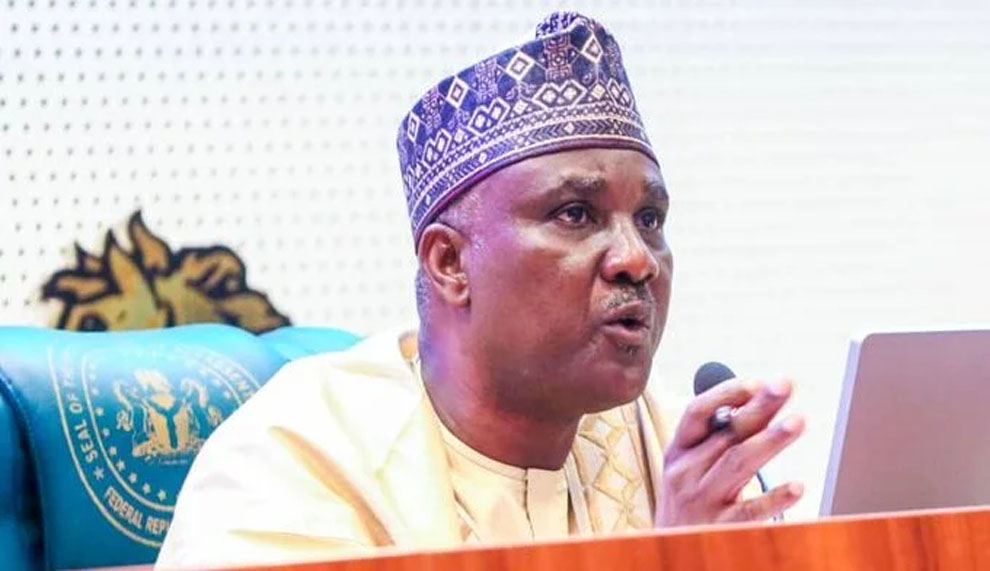
The bill, sponsored by Speaker Tajudeen Abbas, is awaiting the second reading, during which the general principles will be debated.
Similarly, the bill states that any person who destroys national symbols, refuses to recite the national anthem and pledge, defaces a place of worship with the intent to cause violence and subverts the Federal Government shall, on conviction, be liable to a fine of N5 million or 10-year imprisonment or both.
According to the bill, any person who mounts an illegal roadblock, engages in illegal road traffic function, imposes illegal curfew, conducts illegal procession, shall, on conviction, be liable to a fine of N2 million or five-year jail term or both.
Furthermore, the bill prescribes a fine of N4 million or two years imprisonment for a person convicted for castigating, denigrating, embarrassing or bringing to disrepute the leadership of a community, religion, lawful group, local government, state or federal government.
READ ALSO:
- Ladoja becomes ceremonial Ibadan Oba, receives beaded crown
- Police raided Labour House to arrest foreigner planning to destabilise Nigeria – IGP
- Tinubu launches CNG buses in Aso Rock, says commercial vehicles consume 80% Nigeria’s petrol
Also, sections 2,5,6 and 10 of the proposed legislation state, “A person who engages in activities that results in mutual suspicion, mistrust, distrust or intolerance which degenerates into conflict and violence that threatens the corporate existence, peace and security of the federation of Nigeria commits an offence and is liable on conviction to a fine of N5 million or imprisonment for a term of 10 years or both.
“A person who forcefully takes over any place of worship, town hall, school, premises, public or private place, arena, or a similar place through duress, undue influence, subterfuge or other similar activities, commits an offence and is liable on conviction to a fine of N5 million or imprisonment for a term of 10 years or both.
“A person who professes loyalty, pledges or agrees to belong to an organisation that disregards the sovereignty of Nigeria commits an offence and is liable on conviction to a fine of N3 million or imprisonment for a term of four years or both.
“A person who receives financial or political support from a foreign organisation, group or country that is not compatible with the interest, development, security and progress of Nigeria, commits an offence and is liable on conviction to a fine of N15 million or imprisonment for a term of 20 years or both.”
Also, sections 12, 13 , 14 , 15, 17 and 20 of the bill provide that “every person, group or organisation that engages in activities that undermines national security, harmonious community interaction, peaceful coexistence and the maintenance of law and order commits an offence and is liable on conviction to a fine of N3 million or imprisonment for a term of five years or both.
READ ALSO:
- Man, son killed in Jigawa building collapse
- NYSC invalidates certificates of national service to 101 UNICAL graduates
- Lady who destroyed husband passport faces imprisonment, says Immigration Act
“A person, group or organisation that persistently disregards, disobeys, or disrespects constituted authority, rules, regulations, order or contravenes the law wilfully, commits an offence and is liable on conviction to three years imprisonment at the first instance, and seven years for a subsequent offence or to a fine of N5 million or both.
“A person who habitually violates the law, refuses or prevents arrest, disrupts legal processes or proceedings, engages in contrary behaviour or persistent and recalcitrant, defiance and rebellion against constituted authority, commits an offence and is liable on conviction to a fine of N5 million or seven years imprisonment or both.
“A person who establishes, creates, operates or maintains, funds, supports or assists a paramilitary group, guard, brigade, organisation, corps, union, militia, cult or bandit group under whatever name or guise, except established by laws passed by the National Assembly or State House of Assembly, commits an offence and is liable on conviction to a fine of N10 million or 15 years imprisonment or both.”
While Sections 17 and 20 add that, “A person who illegally constructs a structure or takes over a public place, road or fields without permission from the authority in charge of the place, commits an offence and is liable on conviction to a fine of N1 million or imprisonment for a term of three years or both.
“A person, who owns, possesses, produces, distributes, imports, handles, uses military, police or intelligence agency’s uniforms, emblems or accoutrements, commits an offence and is liable on conviction to a fine of N2 million or imprisonment for a term of two years or both.”
Updated: Reps propose long imprisonment for separatists, national symbol destroyers







News
We Must Build Beyond the Next Elections’ — Shettima

We Must Build Beyond the Next Elections’ — Shettima
Vice-President Kashim Shettima has called on political leaders to look beyond election cycles and leave behind institutions that can continue to benefit Nigerians.
His remarks came at the Abuja presentation of Brigadier Musa Usman (1940–1991): Service and Impact, a book documenting the life and public service of the late military governor of the former North-Eastern State.
Represented by Aliyu Modibbo Umar, Shettima said leadership should be measured by the value that remains after an administration has left office.
“We must recover the spirit of selflessness in public service,” he said, urging leaders to “build beyond the next elections and think beyond political boundaries.”
He listed reconstruction, agriculture, education, transport, energy, industrialisation, jobs, environmental restoration, peace and security among areas where leaders must take a long-term approach.
The Vice-President pointed to Musa Usman’s administration as an example of how development can outlive a political tenure. Usman governed the former North-Eastern State from 1967 to 1975, and the region he once administered now covers six states in the North-East.
Shettima said Usman played a major role in developing Maiduguri and establishing infrastructure and institutions that later administrations were able to build upon.
Governor Babagana Zulum, who spoke at the event, described Usman as a leader who combined effective governance with integrity, discipline and humility.
Zulum said the late governor’s contributions included investments in education, healthcare and infrastructure, as well as efforts to strengthen the region’s economy.
The book, written by journalists Mahmud Jega and Theophilus Abbah, also traces Usman’s military career and his rise to leadership at a young age. It was published to preserve his record and the history of the former North-Eastern State.
Shettima said preserving such history could help younger Nigerians understand that lasting public service is about strengthening institutions and improving lives, rather than simply holding office.
News
I Wanted to Disgrace Tinubu — Omokri Reveals What He Discovered at Chicago Varsity
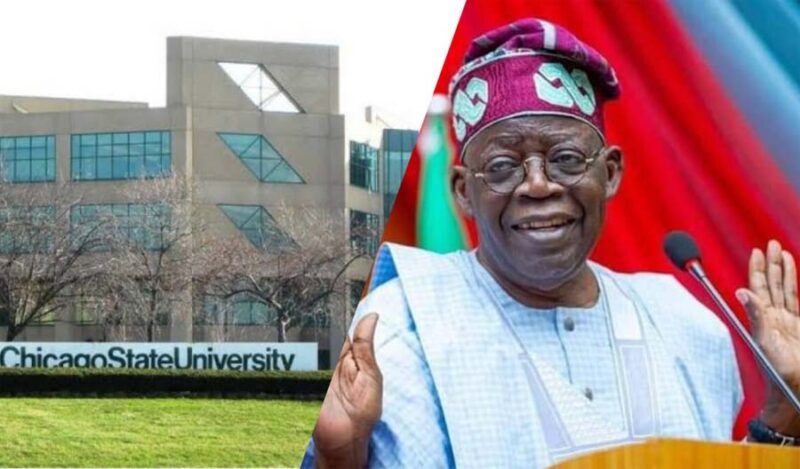
I Wanted to Disgrace Tinubu — Omokri Reveals What He Discovered at Chicago Varsity
Nigeria’s ambassador-designate to Mexico, Reno Omokri, has recounted what he described as an unexpected twist during his visit to Chicago State University (CSU) in the United States, saying he initially travelled there with the intention of scrutinising President Bola Ahmed Tinubu’s academic history.
Omokri, a former aide to ex-President Goodluck Jonathan and now a diplomatic appointee of the Tinubu administration, reportedly made the disclosure while recounting his earlier position on the controversy surrounding the President’s academic credentials.
According to the account circulating online, Omokri said his original objective was to find information that could be used to discredit Tinubu, particularly amid years of controversy over the President’s educational background.
However, he said what he encountered at the university changed his understanding of the matter.
Omokri was quoted as saying that he went to Chicago State University with a predetermined objective—to investigate Tinubu and, if possible, expose inconsistencies that could damage the President politically.
But, according to his account, the findings did not produce the outcome he expected.
Instead, he said he became convinced that Tinubu had genuinely been admitted to and attended Chicago State University.
The development is significant because Tinubu’s educational history has remained one of the most contentious issues surrounding his political career, particularly since the 2023 presidential election.
READ ALSO:
- ‘I Was Never the Chosen One’ — Dembele Responds to Mbappe
- Plateau Attacks: Gunmen Kill Passengers, 13 Dead Across Three LGAs
- 2027: Northern Lecturers Back Tinubu, ASUU Disowns Endorsement
The controversy intensified in 2023 when former Vice-President Atiku Abubakar obtained a United States court order compelling Chicago State University to release documents relating to Tinubu’s academic records.
The records were subsequently released following the order of a US federal judge. Reports at the time said the university’s records confirmed that Tinubu attended the institution and graduated in 1979.
CSU Registrar Caleb Westberg also testified under oath that Tinubu had attended and graduated from the university.
However, the controversy did not completely disappear because questions were raised about the specific diploma submitted by Tinubu to Nigeria’s electoral authorities.
Reports of the US proceedings indicated that the university had Tinubu’s academic record but could not authenticate a particular diploma presented to Nigerian authorities because that exact document was not in the university’s possession.
Against that background, Omokri’s reported admission represents a striking change in tone, considering his earlier opposition to Tinubu.
His account suggests that his visit to Chicago State University was initially motivated by political scepticism but ultimately left him convinced that there was indeed a genuine academic connection between Tinubu and the institution.
The development has generated reactions on social media, with supporters of the President viewing Omokri’s account as further vindication of Tinubu’s claim that he attended the Chicago university.
Critics, however, are likely to maintain that the issue was never simply whether Tinubu attended Chicago State University, but also concerned questions surrounding documents, identity details and the certificate submitted to the Independent National Electoral Commission (INEC).
The available reporting from the 2023 legal proceedings provides an important distinction. There is substantial documentary evidence that Tinubu attended Chicago State University and graduated in 1979. CSU’s registrar testified to his attendance and graduation, while the university released academic records pursuant to a US court order.
At the same time, the controversy over the particular diploma submitted to INEC was not identical to the question of whether Tinubu attended the university.
That distinction has continued to fuel political arguments between supporters and opponents of the President.
Tinubu’s education has remained a recurring political issue since the 2023 election, with opponents repeatedly questioning aspects of his academic credentials, while his supporters argue that the available university records establish his attendance and graduation.
The latest account attributed to Omokri therefore adds another dramatic chapter to a controversy that has survived the election, court battles and the release of university records.
For Omokri, the story appears to have taken an unexpected turn: he said he went looking for ammunition against Tinubu but returned convinced that the President was, in fact, admitted to Chicago State University.
I Wanted to Disgrace Tinubu — Omokri Reveals What He Discovered at Chicago Varsity
Interview
“Not as Corrupt as the World Thinks”: Reno Omokri Defends Nigeria’s Image and Safety
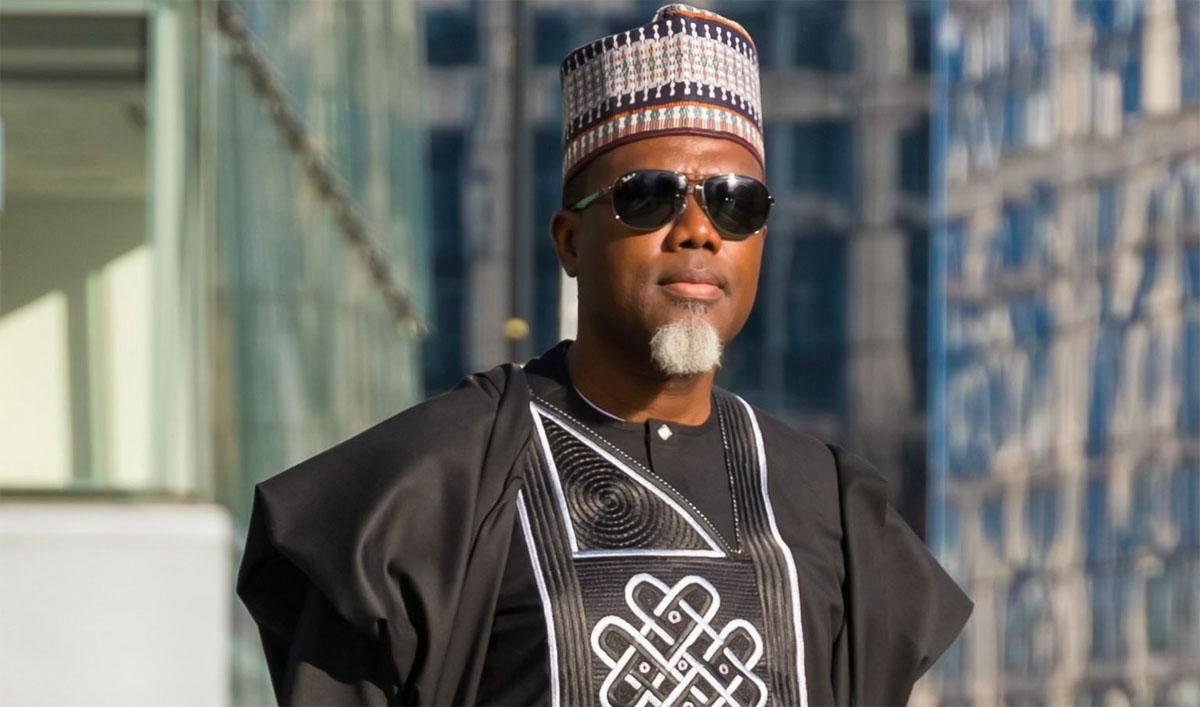
Citing economic growth and safe public festivals, Reno Omokri urges the nation to tell its own story rather than rely on external perception indexes.
Nigeria is not nearly as corrupt or unsafe as foreign reports claim, according to Reno Omokri, Nigeria’s Ambassador-designate to Mexico. In a television interview on Channels Television, Omokri explained that international assessment groups often misunderstand Nigerian customs because they apply global benchmarks that ignore local traditions.
A central issue, Omokri noted, is how different cultures view appreciation. In Nigerian society, offering a gift to say thank you to an official who provides excellent service is a familiar sign of respect, much like tipping in other parts of the world.
However, international observers often label this practice as corruption. Omokri stated that the country needs to share its own experiences directly with the world rather than allowing outside groups to set a negative narrative.
Omokri also defended the country’s safety record by pointing to Lagos, where the economy has expanded steadily and major cultural events draw massive crowds.
He highlighted the annual holiday season in Lagos, which brings more than one million visitors together peacefully each year. For Omokri, these vibrant events show that everyday life in Nigeria is full of energy, community warmth, and safety.
-
 Business3 days ago
Dangote: ₦525 Refinery Shares Could Rise to ₦10,000
-
 News2 days ago
SERAP Threatens Legal Action Over ₦126bn INEC Electoral Funds
-

 metro3 days ago
MURIC fires back at Peter Obi: Forget Sallah ceremony, free Nigerian Muslims
-

 metro3 days ago
Abia Police Arrest Father, Three Others Over Alleged Attempt to Sell 16-Month-Old Daughter
-
 International3 days ago
Trump Tells Supporters to ‘Cheat Like Hell’ Ahead of US Election
-
 Politics2 days ago
Five Islamic Clerics Abducted After Tinubu Re-Election Prayer At Yari’s Zamfara Residence
-
 metro3 days ago
FG Targets 2 Million Creative Jobs by 2030
-

 Auto3 days ago
Jetour Takes Award-Winning Dashing, Other SUVs to Abuja