

Business
Marketers formally adjust petrol pump price to N170-N190/litre
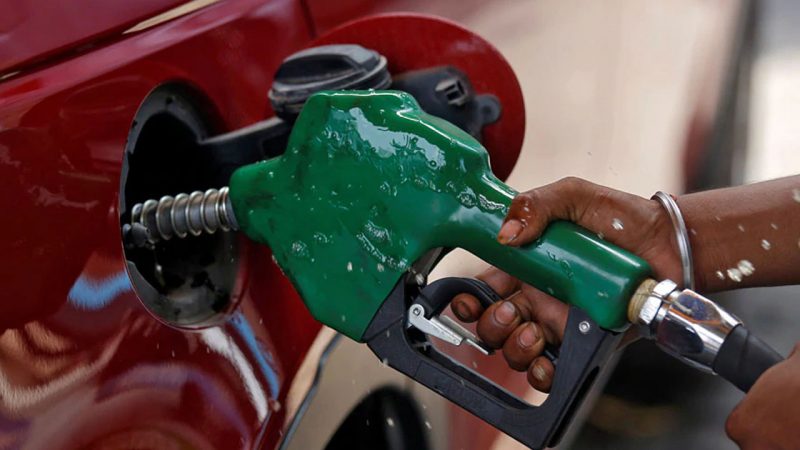
Premium Motor Spirit popularly known as petrol will now be sold between N170/litre and N190/litre in filling stations across the country, following what is believed to be a subtle agreement between Federal Government officials and oil marketers.
Findings by The PUNCH on Sunday revealed that the development was the outcome of a meeting between the Nigerian Midstream and Downstream Petroleum Regulatory Authority and oil marketers on Thursday.
Sources privy to the meeting said it was agreed that the pump price of petrol should be increased by N10 per litre.
A market survey on Sunday revealed that price display boards at some petrol stations in Lagos reflected new prices starting between N170 per litre and N175 per litre.
However, some other filling stations sold above these prices, with some selling as high as N185/litre.
Oil marketers denied holding a meeting with the NMDPRA on the subject matter but sources close to the matter confirmed to our correspondent that the meeting actually held.
The officials said the NMDPRA agreed marketers could increase their pump price to N165-N175/litre for filling stations inside towns, and a maximum of N190/litre for those on the outskirts.
READ ALSO:
- Woman with drugs in fetish bowls intercepted at Lagos airport
- How Infighting Caused APC’s Defeat In Osun
- Zamfara Gov Suspends Emir For Turbaning Bandit As Sarkin Fulani
“The meeting was held and everybody was told to keep mum. A band of N165-N175/litre was approved for the filling stations inside towns, while N189 was approved for those outside towns,” our source said.
The NMDPRA could not verify this claim as of press time on Sunday.
The spokesman for the NMDPRA, Kimchi Apollo, did not respond to several calls made to his telephone line.
However, marketers under the aegis of the Independent Petroleum Marketers Association of Nigeria confirmed the fuel pump price hike to our correspondent.
The National Operations Controller, IPMAN, Mike Osatuyi, explained the reasons behind the fuel pump price hike.
Osatuyi, who also denied that a meeting held between oil marketers and the Federal Government on Thursday, however, disclosed that there was a fresh increase, describing it as a “market fundamentally determined price.”
“Petrol now sells between N175-N180 per litre depending on the area, ‘’ he said.
“Petrol is now available and as you can see, the queues in Lagos and Abuja have disappeared. We are businessmen and it’s impossible for us to run at a loss. Marketers are allowed to sell at a minimum price of N170 and a maximum of N180. There’s something we call market fundamentals; this is what came into play here. This is because it is impossible to bring the product into your station at N170 and sell at N165,” he added.
When asked if there was a circular from the NMDPRA to the effect, he responded “no”, adding, “there was no meeting but what you saw was simply an increase due to market forces.”
Explaining further, he said the Pipelines and Product Marketing Company’s price template, which has the current official price of N165/litre, was arrived at about 12 ago.
“The template is 12 years old when the dollar was still N175 and diesel was sold at N200/litre. Now, diesel is around N850. Even major oil marketers have changed their price boards to reflect the new band. It’s no more hidden. It is better for fuel to be available at N180 or N185 than buying at N250 from black marketeers. Now, no more boys going around with jerry cans, you can drive in and buy with ease”, he said.
Meanwhile, findings showed on Sunday that fuel queues at petrol stations in Lagos and Abuja, which had lingered since February, suddenly disappeared over the weekend following the latest development.
Meanwhile, economist and Chief Executive Officer of the Centre for the Promotion of Private Enterprise, Dr. Muda Yusuf, told The PUNCH that the current price is not sustainable.
According to him, the government is in the best position to control the prices of petrol if it cannot control diesel prices.
He said, “Already, National Bureau of Statistics reports make us understand that except for Lagos, Abuja and other big cities, petrol prices are already above N165/litre. That is the market reality, except the government doesn’t want private entities to get involved in the market because these guys are there to do business and not to run at a loss. These marketers share their figures with everybody. Most of these guys are based in Lagos and they transport their products in trucks that run on diesel. Can the government control the prices of diesel? If they can’t then, they should hand off regulating prices. They should first resolve the surging diesel prices and challenges at the depots before pouncing on marketers. Otherwise, their businesses will close down, and black marketers will take over the business – that’s when we will see more adulterated products capable of burning down houses and cars,” he said.
Also, a former Chairman of the Major Oil Marketers of Nigeria, Tunji Oyebanji, declined to comment on the new price but told The PUNCH that the Federal Government’s price template was old and needed to be updated.
He said, “Nobody had any meeting with the NMDPRA. The only thing we have continued to say is that N165/litre is not sustainable because the template with which that price was arrived at made all the elements therein fixed and unchanged. Elements such as coastal, NPA, NIMASA jetty throughput, storage and financing, which were used to arrive at the ex-depot price were all based on the old dollar and old diesel prices.
“All the items on the template have currently gone up because of the exchange rate which impacted our operating costs due to the high cost of diesel. As of the time when the template was done, diesel was N130/litre, now it is N800 which allows for an operating cost of N4.00. That is why N165/litre cannot work. Nobody is saying price should be this or that, but that government should come to our aid.”
According to him, if the price is not increased, marketers will soon go out of business.
Also reacting, a former Group Chairman/Chief Executive Officer, International Energy Services Limited, Dr Diran Fawibe, said, “The whole process is not transparent. If we had allowed market forces to determine prices, we wouldn’t be in the dilemma that we are currently in. Everybody is just throwing up figures and at the end of the day; it’s the consumers that will pay for it. But as long as the government keeps giving subsidies, marketers will expect subsidies to keep increasing, and until we start to refine products in-country, the whole business will not just be murky but will soon turn into a monkey business.”






Auto
26th Abuja Motor Fair: NADDC, BKG Set November 10 Date for Auto Industry Show

26th Abuja Motor Fair: NADDC, BGK Set November 10 Date for Auto Industry Showcase
The National Automotive Design and Development Council and BKG Exhibitions Ltd have unveiled plans for the 26th Abuja International Motor Fair, scheduled to hold from November 10 to 13, 2026, at Eagle Square, Abuja.
The four-day event is expected to bring together major players across the automotive value chain, such as vehicle manufacturers and assemblers, component producers, financial institutions, technology firms, transport operators, logistics companies, development partners, investors and government agencies.
A three-day conference will also feature prominently at the fair, with the theme, “Driving Nigeria’s Automotive Transformation: Policy, Production, and Prosperity.”
A statement on Friday by BKG Exhibitions said the conference would examine key issues shaping the development of Nigeria’s automotive industry, with speakers drawn from various sectors of the industry and related fields.
Chairman of the Organising Committee and Managing Director of BKG Exhibitions, Mr Ifeanyi Agwu, said the conference would feature a keynote address by the Director-General of NADDC, Otunba Joseph Osanipin, alongside presentations and speeches by leading stakeholders in the automotive and transport sectors.
READ ALSO:
- BREAKING: Bloodbath at Pakistan Mosque as Suicide Blast Kills 21, Injures 103
- Xenophobia: FG Brings 33 More Nigerians Home From South Africa
- Falconets Thrash England 3-0, Face Colombia in U-20 World Cup Quarter-Finals
According to him, the fair will provide participants with opportunities to engage industry leaders, investors, government officials and business executives while exploring emerging vehicles, technologies, products and investment opportunities.
Other highlights of the event are the Nigeria Automotive Excellence Awards Night, Abuja Automotive Road Show, Ultimate Test-Drive experience, exotic automobile displays and the Automotive and Future Mobility Arena.
Visitors will also have access to professional advice, technical papers and a showcase of some of Abuja’s finest cuisine.
The Abuja International Motor Fair has, over the years, evolved into one of Nigeria’s major automotive exhibitions and platforms for industry and policy dialogue.
The organisers said this year’s edition would further strengthen the platform’s role in promoting investment, innovation, local production and sustainable growth across Nigeria’s automotive sector.
26th Abuja Motor Fair: NADDC, BGK Set November 10 Date for Auto Industry Showcase
Auto
Replace Fuel Subsidy With Vehicle Credit to Drive Mobility, Jobs,LCCI, Ilekuba tell FG
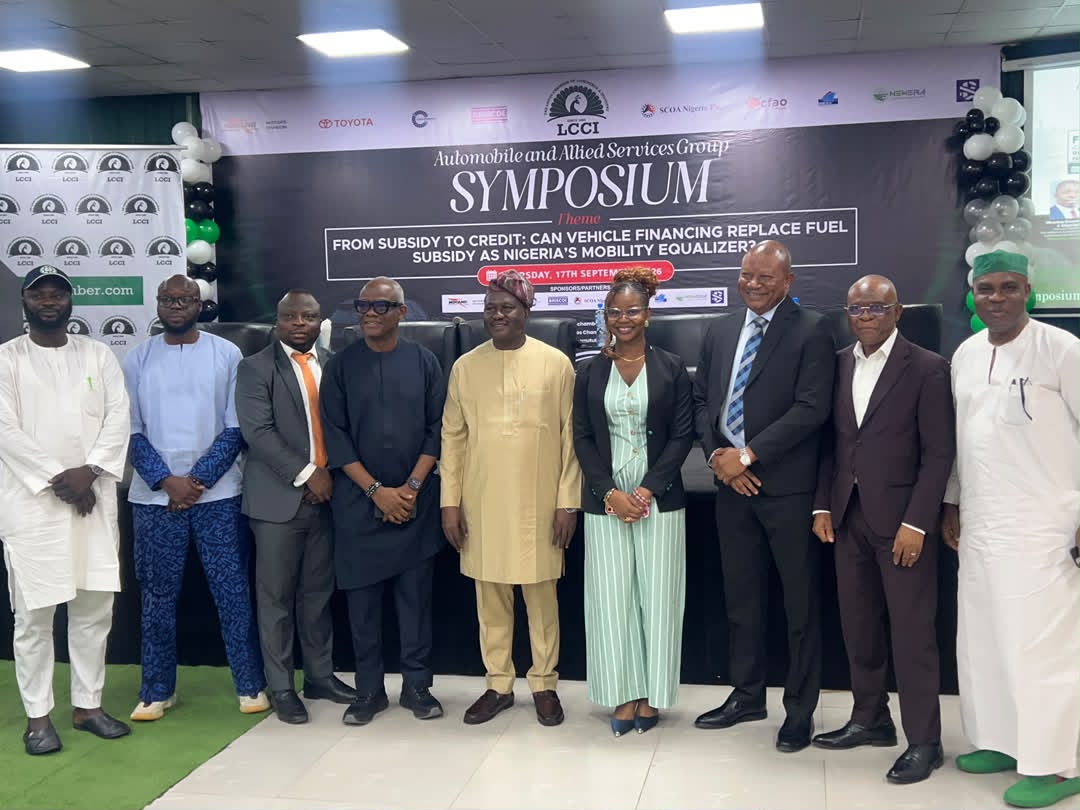
Replace Fuel Subsidy With Vehicle Credit to Drive Mobility, Jobs,LCCI, Ilekuba tell FG
Nigeria’s automotive stakeholders have called for an urgent shift from fuel subsidy to affordable vehicle financing, saying the new model could make vehicle ownership accessible to more Nigerians while driving local production, creating jobs and reducing dependence on imported automobiles.
The call was made on Thursday at the LCCI/National Automotive Design and Development Council Automobile Symposium, themed, “From Subsidy to Credit: Can Vehicle Financing Replace Fuel Subsidy as Nigeria’s Mobility Equalizer?”
Chairman of the LCCI Auto and Allied Sector Group, Dr Femi Eguaikhide, said affordable vehicle credit could restore access to mobility, improve productivity and create a stronger market for Nigeria’s automotive industry.
He said fuel subsidy had for decades effectively functioned as Nigeria’s mobility policy by helping to keep transportation relatively affordable for millions of Nigerians, including commercial drivers, teachers and small-business operators.
However, following its removal in May 2023, Eguaikhide said mobility costs had risen sharply, resulting in higher transport fares and increased prices of goods and services, with knock-on effects on productivity.
“Subsidy made fuel cheap, but cars remained expensive. So only the rich owned productive assets,” he said, arguing that vehicle credit could enable more Nigerians to acquire income-generating vehicles and repay loans from the proceeds.
Eguaikhide called for affordable, preferably single-digit interest rates and longer-tenor lease-to-own schemes for commercial operators using buses, tricycles and motorcycles.
“Can we create a ₦50,000/month plan for a keke driver?” he asked, urging financial institutions to develop financing products around borrowers’ earning capacity rather than conventional lending models.
He also advocated the use of vehicle telematics, tracking systems and cash-flow data to develop “mobility credit scores” that could help lenders assess the repayment capacity of commercial transport operators.
But Eguaikhide warned that vehicle financing must not become a fresh channel for importing used vehicles.
“If we use credit to import more Tokunbo, we’ve solved nothing,” he said, advocating financing for CNG conversions, locally assembled electric and hybrid vehicles, as well as mass-transit buses.
He summed up the proposed policy shift: “Subsidy gave us consumption. Credit can give us production.”
In a special address, Chairman and Chief Executive Officer of Cedric Masters Group, Chief (Sir) Anselm Ilekuba, also canvassed a fundamental shift towards vehicle financing, stressing that such a policy must simultaneously promote Nigeria’s automotive industrialisation.
Ilekuba, who was represented at the event by his Chief Finance Officer and Head of Accounts and Strategy, Christabel Mmesoma Ilekuba, decried the impact of high financing costs, short repayment periods and pressure on household incomes on vehicle ownership, despite strong demand for automobiles.
He urged the Federal Government to seriously consider the proposed National Automotive Bank being championed by NADDC, describing it as a specialised financing institution that could support consumers, vehicle assemblers and component manufacturers.
Ilekuba proposed longer-tenor financing for qualifying locally assembled vehicles, alongside industrial credit for manufacturers and funding for machinery, technology, certification and capacity expansion by component producers.
He also called for stronger localisation of automotive components, citing the proposed National Automotive Components Parts Gateway being developed by ALCMAN with Chinese partners.
According to him, the Automotive Bank and Components Gateway could create a cycle in which increased vehicle purchases stimulate local assembly, boost demand for locally produced components, expand factories and generate jobs, while reducing Nigeria’s exposure to foreign-exchange pressures.
Ilekuba said the success of vehicle financing should therefore not be measured merely by the number of loans disbursed, but also by growth in local vehicle assembly, component production, factory expansion, employment and foreign exchange conserved or earned.
“The old subsidy helped Nigerians consume mobility. The new approach should help Nigerians own mobility—and help Nigeria produce it,” he said.
Auto
Jetour Set to Storm Abuja Show with Rugged Luxury T2
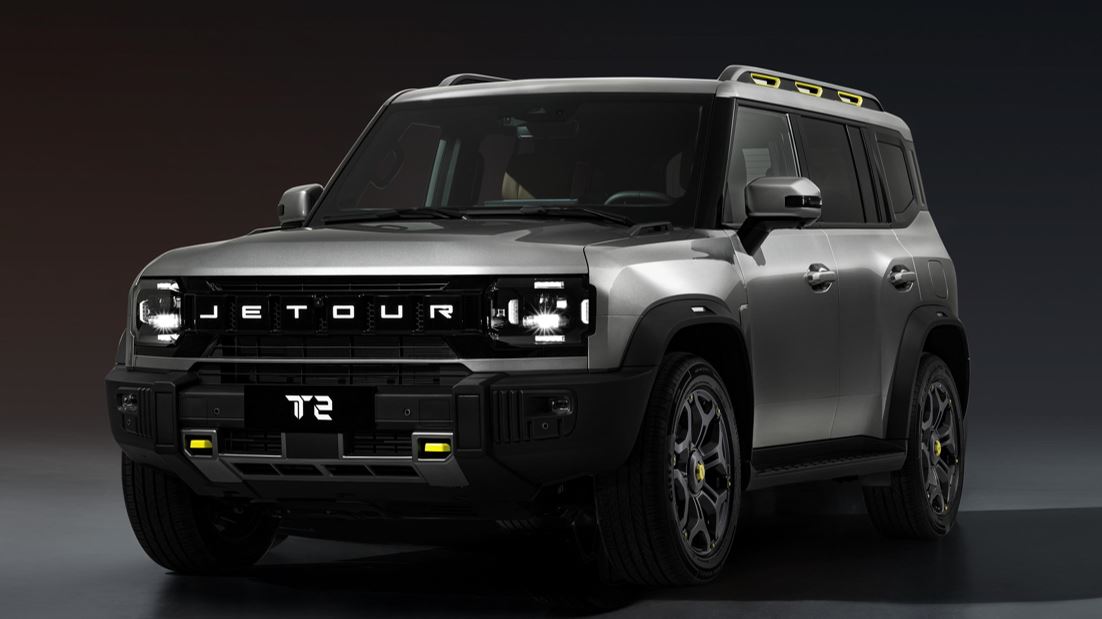
Jetour Set to Storm Abuja Show with Rugged Luxury T2
Abuja is set for a taste of rugged luxury as Jetour Nigeria puts its adventure-ready T2 SUV in the spotlight at the Jetour Experience Abuja from September 22 to 24, 2026, giving motorists in the Federal Capital Territory and neighbouring states an opportunity to test its blend of off-road capability, premium comfort and advanced technology.
The three-day showcase at Maha Event Centre, Area 8, Garki, will feature test drives, live demonstrations and direct interaction with Jetour product specialists, offering prospective buyers a closer look at the T2 and other models in the automaker’s growing Nigerian line-up.
Positioned as a premium SUV combining off-road capability with comfort and advanced technology, the Jetour T2 is designed for motorists seeking a vehicle capable of handling both city driving and challenging terrain.
Jetour Nigeria is distributing the T2 and other models via its seven accredited dealers — Elizade Nigeria Limited, New Era AutoVehicle Services Limited, Germaine Auto Centre, Kojo Motors, Mandilas Autos, R.T. Briscoe Motors and Tab Autos Limited.
The T 2 SUV is powered by a 2.0-litre turbocharged engine producing 254 horsepower and 390 Nm of torque. The engine is paired with a seven-speed dual-clutch transmission and BorgWarner sixth-generation intelligent four-wheel-drive system.
It also features five driving modes — Eco, Sport, Mud, Rock and X Smart — designed to provide improved adaptability across different road and terrain conditions.
Measuring 4,758mm in length, 2,006mm in width and 1,880mm in height, the SUV offers 220mm ground clearance and a 70-litre fuel tank, giving it the capability for extended journeys and off-road adventures.
Inside the cabin, the T2 combines rugged styling with modern comfort, featuring ergonomic seating and a 15.6-inch touchscreen infotainment system with Apple CarPlay, Android Auto and intelligent voice control.
Its safety and driver-assistance features include a 360-degree panoramic camera, rear parking sensors, Lane Departure Warning, Blind Spot Detection, Anti-lock Braking System and Emergency Brake Assist.
The SUV also comes with off-road crawl control as well as push-button and remote-start functions.
The Abuja experience follows Jetour Nigeria’s recent showcase in Lagos as the automaker continues to expand its presence and customer reach across the country.
With its combination of performance, technology, safety and luxury, the Jetour T2 is expected to attract motorists seeking an SUV capable of combining everyday urban mobility with adventure and off-road driving.
-
 metro3 days ago
Niger Mosque Abductions: Terrorists Execute 30 of 500 Captive Muslim Worshippers
-
 Business2 days ago
Fuel Prices Climb to ₦1,500 per Litre Across Nigeria, Sparking Calls for Urgent Action
-

 News3 days ago
Blue Line Rail, Hospitals Get Boost as Lagos Approves ₦200bn Bond and Budget Reordering
-
 News2 days ago
OAU Investigates Death of Final-Year Student as Police Begin Probe
-
 News1 day ago
ECOWAS Biometric Card Expands as Seven Countries Begin Rollout
-
 Interview2 days ago
He Does Not Lose Elections”: Abdulmumin Jibrin Predicts 65% Landslide for Tinubu in 2027
-

 Politics2 days ago
Aisha Buhari Visits Atiku Amid Opposition Coalition Activities
-
 metro3 days ago
US-Based Nigerian Lawyers Disbarred: Full List of Fraud, Theft and Misconduct Cases