

News
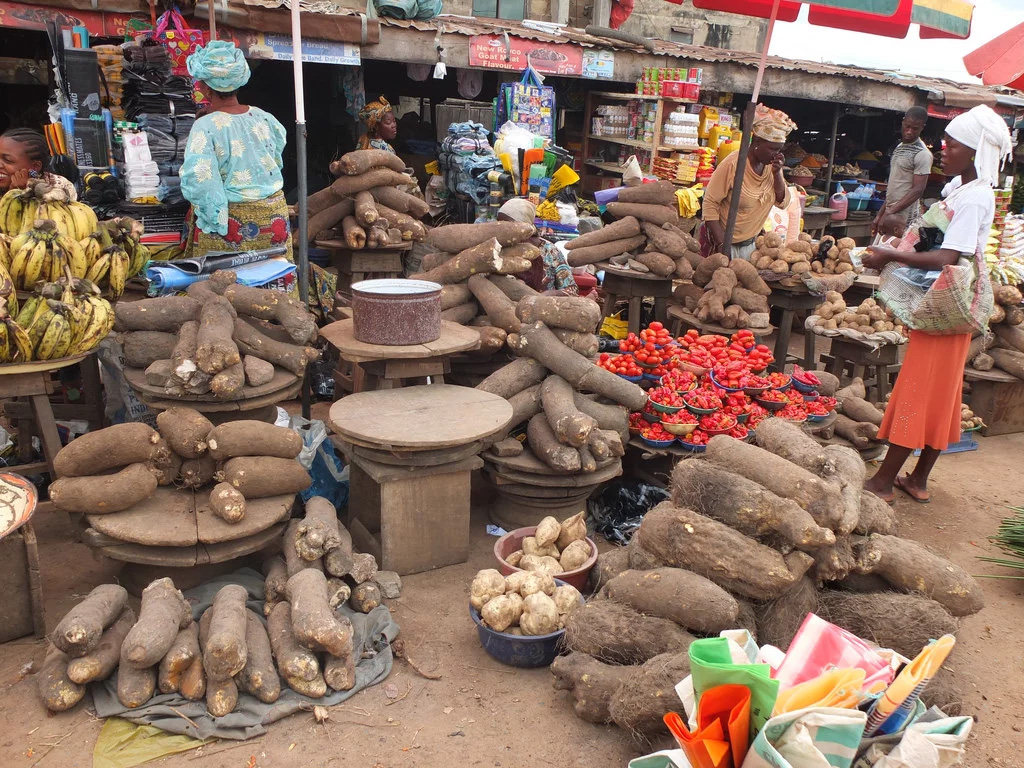
More states unveil intervention plans to tackle food scarcity
More states unveil intervention plans to tackle food scarcity
As governments at all levels intensify efforts to halt the current food crisis, Katsina State Governor Dikko Radda has signed into law an executive order to check food scarcity and prohibit hoarding of food and other essential commodities in the state.
His Nasarawa State counterpart, Abdullahi Sule, said in Lafia yesterday that his recent interaction with marketers on food hoarding had started yielding results while the Delta State Traditional Rulers Council warned that indiscriminate bush burning in the state is harmful to food production.
Governors elected on the platform of the Peoples Democratic Party (PDP) asked the All Progressives Congress (APC) led federal government to get going or quit.
But the immediate past Labour Minister, Senator Simon Lalong, said Nigerians should give the policies of President Bola Tinubu a chance to mature for them to yield the desired results.
The Katsina executive order which takes immediate effect, according to Information Commissioner Bala Zango, is a clear message from the government that it will not tolerate practices that threaten the well-being of the people.
The executive order empowers government to break, with the aid of a court warrant, into any place suspected of being used for food hoarding and the commodity found therein sold to the public.
Proceeds of such sale shall be subject of determination in accordance with the prevailing laws on proceeds of crime.
A task force has been established to enforce the provisions of the order.
Its functions include identifying food commodity hoarders in the state and interacting with stakeholders on food prices in the state.
A task force has been established to enforce the provisions of the order.
Its functions include identifying food commodity hoarders in the state and interacting with stakeholders on food prices in the state.
READ ALSO:
- More trouble as EFCC investigators uncover fresh N17bn fraud in humanitarian ministry
- Niger, Burkina Faso, and Mali forge ahead with Tri-State confederation plan
- The Israel of Shaitan – Femi Fani-Kayode
Prior to the signing of the executive order, the governor Radda had convened an emergency meeting of the expanded security council to deliberate on the rising prices of food items.
What my govt is doing to address high cost of living in Nasarawa – Sule
Speaking at the fund raiser for the new Nasarawa central mosque complex in Nasarawa Local Government Area, Governor Sule said following his recent appeal to marketers in the state to shun hoarding of food, they have offered to sell over 21,000 bags of rice to government.
Part of the rice, he said, would be distributed free of charge to the people and rest sold at a discount.
He said government was also willing to buy millet and maize to be shared to people.
He pleaded for patience by the people.
He said:”We are aware of the prevailing challenges across the country. There is hunger occasioned by the high cost of food items as well as economic hardship.
“Just like President Tinubu appealed to Nigerians to be patient, I’m also adding my voice by appealing to Nigerians to remain patient. Government is working hard to address these challenges.”
Also speaking, the Sultan of Sokoto, Alhaji Saad Abubakar III, asked Muslims to continue to pray for leaders across the country for them to successfully discharge their responsibilities.
The Sultan said it is better if the people pray for their leaders, especially at a time like this.
His words: “If you pray for a leader and he is able to deliver good leadership, the citizens would benefit.
“But if you leave the leaders alone and they are not able to deliver, it is the citizens that would suffer. “It’s therefore imperative that we continue to pray for our leaders for them to be able to discharge the responsibilities vested upon them by Allah.”
He urged Muslims to use the coming Ramadan to redouble their prayers for the leaders and the country.
Niger govt urges women to remain calm, patient
The Niger Government appealed to women in the state to be calm and patient as it is doing everything possible to alleviate the current hardship and rising cost of living.
Hajiya Hauwa Bako, Special Adviser to Gov. Umaru Bago on Social Investment Programme, made the appeal at a consolidated stakeholders’ engagement with the Kpagungu community in Minna.
READ ALSO:
- Chief Imam drags prominent traditional ruler to court over alleged plan to sack him
- Dentist shortage: UK to waive qualifying exam for foreign dentists
- Heatwave: Drink more water, doctors issue health care tips
She said that the state government was concerned about the plight of citizens amidst high cost of commodities and would do everything possible to support them with a view to improving their standard of living.
Responding, Aisha Jibrin and Fatima Aliyu, who led the protest on February 5 over the current food crisis, said the action was not intended to cause crisis but to express their plight so that government could come to their rescue.
We’ve reduced food prices – Kano traders
Some traders at the Kano essential commodities market, popularly known as Singer market, say they resolved to reduce prices of food commodities.
“The spaghetti that we sold at N11,500 or N11,700 in the market is now sold for N12,800 in companies. Sugar in the company is sold N72,000 but we sold it N70,000. Rice is sold at N65,700 now but we sold it at 57,000 to 60,000,” one of the market leaders said.
Chairman of the marketers, Ibrahim Danyaro, told journalists about the price reduction shortly after a meeting with the Chairman of Kano State Public Compliant and Anti-Corruption Commission, PCACC, Barrister Muhuyi Magaji Rimin-Gado.
Danyaro said they currently sell food commodities at prices less than company prices. He also vowed to weed out those hoarding food stuffs in Kano markets.
The decision by the traders followed the public outcry over the soaring prices of essential commodities and high cost of living in the country.
The market leader also vowed to assist the commission to fish out bad eggs among who are hoarding goods and arbitrarily increasing their prices.
Hamisu Rabi’u, another leader of the traders, assured the residents of maintaining the old prices of the stocks at hand against the high prices being experienced at various markets across the state.
Delta traditional rulers warn against indiscriminate bush burning
The Delta State Traditional Rulers Council condemned indiscriminate bush burning, describing it as a threat to food production.
Rising from a meeting in Asaba, the first Vice Chairman of the Council and Pere of Akugbene Mien, S. P Luke Kalanama V111, decried the act and called for immediate action to stop the unwholesome trend which, if not checked might thwart the effort of government at achieving food security in the state.
READ ALSO:
- Police arrest house help for allegedly stealing employer’s $51,000 in Lagos
- Nigerian woman, Chidinma Thompson, appointed as first black Judge in Canada’s Kings court
- Bukayo Saka at the double as five-star Arsenal hammer Burnley
Indiscriminate bush burning, according to them, has not only caused the devastation of the ecosystem but also destroyed economic trees and food crops and in some cases razed residential buildings.
The monarchs appealed to the state government to, as a matter of urgency, carry out an aggressive enlightenment and sensitization program on the dangers inherent in bush burning.
FCCPC reopens sealed Sahad stores
The Federal Competition and Consumer Protection Commission (FCCPC) has reopened the Abuja head office of Sahad Supermarket which was sealed for alleged customers extortion and lack of transparency in price fixing.
The Acting Executive Vice Chairman of FCCPC, Dr Adamu Abdullahi, said in a statement in Abuja yesterday that the reopening followed a mutual understanding and commitment from the store to implement transparent pricing practices.
He said the Commission was aware that similar practices might be happening at other Fast-Moving Consumer Goods (FMCG) outlets nationwide.
Abdullahi advised supermarkets or outlets engaging in customers’ extortion to desist from such practices immediately to avoid consequences.
”Businesses are expected to display transparent pricing information to empower consumers to make informed purchasing decisions, especially during challenging economic times,” he said.
He added:”The FCCPC remains committed to combating all forms of exploitative or misleading practices that undermine consumer rights.
”The FCCPA protects consumer rights and prohibits deceptive business practices.
”Section 115 outlines potential penalties for violations, including fines for organisations and imprisonment for directors.
”The FCCPC encourages all businesses to adhere to fair and transparent pricing practices to ensure consumer protection and a healthy market environment,” the acting executive vice chairman said.
The commission had on Friday sealed the supermarket for customers’ extortion and lack of transparency in prices.
PDP govs offer to help in resolving food crisis, others
Governors elected on the platform of the Peoples Democratic Party (PDP), yesterday offered to collaborate with President Tinubu in finding a lasting solutions to “a very difficult situation created or exacerbated by the APC since 2015.”
The governors said the APC-led federal government should quit the stage if it cannot mobilize Nigerians as well as all organs and tiers of government for sustainable solutions to the various problems plaguing the nation.
The Governors, under the aegis of the PDP Governors’ Forum, PDP-GF, specifically noted that the hardship and suffering being faced by Nigerians have no tribal, religious, or party coloration, stressing that “a hungry man is an angry man.”
“The buck ultimately stops at the President’s table as the Chief Executive Officer of Nigeria, the President and Commander in Chief of the Armed Forces of the Federation, the Chief Salesman, and leader of Nigeria,” said the PDP-GF in a statement issued by its Director-General, Hon CID Maduabum in Abuja during the weekend.
They frowned at the Minister of Information, APC Governors’ Forum, and other officials of the APC-led Federal Government who criticized the PDP-GF for their suggestions, advice, and patriotic intervention on the way forward for the country in a communique issued at the end of their recent meeting in Abuja.
READ ALSO:
- Bandits kill nine, abduct ex-CBN Director, 34 others
- Ogun traditional ruler bags two months suspension without salaries for abusing naira notes
- Oluwo appeals to NEMA for intervention as rainstorms wreak havoc in Iwo
“The APC sought power to solve the problems of Nigeria; not to compound them or shift blame, or grandstand or use propaganda to obfuscate or confuse issues,” the PDP-GF said.
“PDP governed States are comparatively the best in Nigeria in terms of developmental policies, programmes, and projects that benefit their states positively, regular payment of salaries, pensions, gratuities, and minimum wage to their workforce.”
The PDP governors urged for urgent steps to avoid a situation similar to Venezuela in Nigeria and commended President for convening a special meeting on 15th February 2024 to discuss these issues between the Federal and State Governments.
The PDP Governors’ Forum advice and suggestions come as part of a series of discussions held by the PDP Governors during their meeting on 12th February 2024, under the leadership of Sen. Bala Abdulkadir Mohammed, Governor of Bauchi State during which they advised the Federal Government to, among others, mobilize state and local governments towards the creation of state police that avoids abuse and overreach by any tier of government.
Give Tinubu’s policies time to mature –Lalong
Immediate past Minister of Labour, Senator Simon Lalong yesterday asked Nigerians to give the policies of President Bola Tinubu a chance to mature and yield the desired results.
Lalong told former speakers of Houses of Assembly meeting in the Adamawa State capital, Yola, that Nigeria needs their experiences to wade through the prevailing crisis.
Lalong spoke during the opening of a meeting of Conference of Former Speakers of State Houses of Assembly of Nigeria of which he is the chairman.
“Let all of us and all Nigerians support our president, Bola Ahmed Tinubu, who has continued to pursue the path of renewing the hope of the nation,” Lalong, Speaker of the Plateau State House of Assemnly between 2000 and 2007, said.
Lalong, who currently represents Plateau North zone in the Senate, added, “No doubt some of the programmes, like the removal of petrol subsidy, have impacted on the lives of the people. However, we need to give these policies some time to mature so that we can benefit from the gains they bring.”
In his own address, the host governor of the ex-speakers’ meeting, Ahmadu Fintiri, said the most important takeaway from the role of speaker is a cutting edge capacity for leadership after their experiences as speakers.
Fintiri, who was himself a former speaker in Adamawa State, added: “No one passes through this hatchery and come out with empty brain. We must appreciate this privilege and continue to avail our leadership experiences and skills to Nigeria.”
According to Fintiri, “If there is any time that Nigeria needs ex-speakers’ leadership acumen, experiences and unity of purpose, to mitigate its towering challenges of survival, “the hour is now.”
More states unveil intervention plans to tackle food scarcity



International
Truly Depraved Rapist Jailed for 17 Years After Violent Attack on Woman

A 24-year-old Nigerian national, Gift Oladele, dragged a young woman into woodland and violently raped her has been jailed for 17 years after a judge described his actions as “truly depraved”.
Gift Oladele carried out the attack in Wrexham, North Wales, in September last year after approaching the victim, who was 19 at the time, as she walked home from a night out.
Oladele was convicted of rape and sexual assault at Mold Crown Court in March. He was sentenced on Thursday.
How the Attack Happened
The court heard that Oladele approached the woman and her friends outside a takeaway in Wrexham city centre. He initially appeared friendly and flirtatious before offering to walk home with her.
According to prosecutor James Coutts, Oladele accompanied the woman until they reached an isolated area, where he grabbed her by the mouth and forced her into the woods.
He then carried out a violent rape.
“She described being terrified,” Coutts told the court. “She did what she thought she needed to do to get through the attack.”
Oladele threatened to find and harm the victim if she reported the rape. He also threatened to take photographs of her and post them online.
Despite the threats, the woman returned home and immediately told her parents, who contacted the police.
Oladele was arrested the following day at his cousin’s home in Wrexham. Officers said he had attempted to hide a mobile phone, which contained searches relating to sexual attacks.
The court heard that Oladele had a “fascination in forced sexual abuse and rape” and that he appeared to be acting out a fantasy shown in the videos he had searched for.
Victim Describes Lasting Trauma
In a victim impact statement, the woman told the court that she continued to wake up from nightmares in which Oladele had tracked her down.
“I’m petrified,” she said.
She also described taking medication to prevent HIV infection after the assault and suffering long-term emotional and psychological effects.
“I feel ashamed, and somehow damaged, since what he did to me,” she said.
“The emotional impact has been very significant.
“I can’t go anywhere on my own anymore.
“I feel unsafe.”
Judge Simon Mills praised the woman for her courage during and after the attack.
“You showed exceptional courage during the incident and afterwards,” he told her.
Previous Conviction and Deportation Appeal
At the time of the Wrexham attack, Oladele was already on bail over another rape allegation in Manchester dating from November 2024.
He had also been jailed in 2022 for a sexually motivated attack.
The court heard that Oladele was later due to be deported to Nigeria but successfully challenged the decision on human rights grounds.
An immigration tribunal judge described the deportation case as “finely balanced”, acknowledging the seriousness of Oladele’s previous offence and the public interest in deporting foreign criminals.
However, the tribunal also considered his ties to the United Kingdom, where he had grown up, and the consequences of relocating to Nigeria.
The Home Office made two attempts to appeal the decision, but both appeals were rejected.
Judge Calls Defendant Dangerous
During sentencing, The Judge described Oladele’s actions as “truly depraved”.
“You subjected her to a terrible violation,” he said.
“You are a dangerous offender.”
The judge said Oladele posed an exceptionally high risk of harm to young women and had shown “absolutely no remorse whatsoever”.
The Home Office described the case as horrific and said Oladele’s imprisonment was the right outcome.
The victim’s account has highlighted not only the brutality of the attack but also the lasting fear and emotional damage that sexual violence can cause long after the offender has been convicted.
News
Missing Billions: Lawmakers Summon NNPCL and 146 Marketers Over ₦432bn Downstream Debt
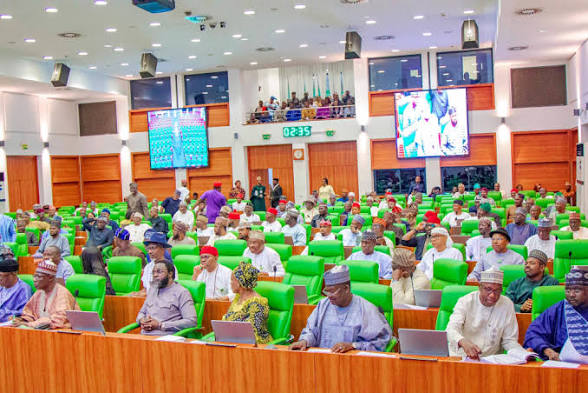
Nigeria’s federal lawmakers are putting the downstream energy sector under the microscope after audit records revealed that state oil firm NNPCL and private fuel marketers have piled up at least ₦432 billion in unpaid regulatory obligations.
The House of Representatives Public Accounts Committee (PAC) confirmed the formal probe this week, following persistent warnings raised in the Auditor-General’s 2023 and 2024 annual reports.
Regulatory Levies Left Unpaid
The mountain of debt has accumulated over a six-year period from 2017 to 2023, remaining largely uncollected despite the country’s tight fiscal squeeze.
READ ALSO:
Cheap Alcohol Fuels Banditry NAFDAC Chief Stands Firm on Sachet Ban
Fresh Blackout Hits Abuja as Apo Substation Transformer Trips
More Than 1,000 Migrants Rescued Off West Africa in One Week
The liabilities consist of statutory fees meant to fund national energy infrastructure, including the 1% Midstream and Downstream Gas Infrastructure Fund, National Transport Average fees, Balancing Allowances, and lingering credit balances from import and coastal operations.
Audit records track a steep rise in default:
- The 2023 audit initially captured ₦392 billion in total arrears, with NNPCL carrying over ₦162 billion and commercial marketers responsible for ₦230 billion.
- The 2024 report revealed that private marketer debt alone had swelled to ₦432 billion, separate from state-owned NNPCL liabilities.
- Regulatory data from the NMDPRA confirms that 146 companies affiliated with DAPPMAN and MEMAN owed ₦327 billion by 2025.
No Hiding Place for Defaulters
PAC Chairman, Rep. Bamidele Salam, made it clear that parliament expects compliance from corporate leaders, issuing a firm directive against corporate stonewalling.
Salam emphasized that the committee will scrutinize why statutory revenues were permitted to sit idle without vigorous enforcement from the NMDPRA. Defaulters will be forced to present audit trails detailing every transaction, outstanding balances, and proof of any remittances made to date.
For lawmakers, the objective is unambiguous: plug commercial leakages, enforce fiscal discipline, and recover every outstanding naira owed to the federation.
News
Fresh Blackout Hits Abuja as Apo Substation Transformer Trips
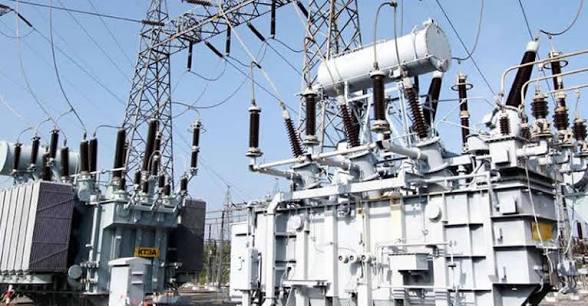
Parts of the nation’s capital have once again been plunged into darkness following an early-morning equipment failure at the Apo Transmission Substation on Wednesday.
The Transmission Company of Nigeria (TCN) confirmed the outage, attributing the disruption to the tripping of a 100MVA TR4 power transformer at its 132kV/33kV facility. Preliminary findings trace the failure to an oil spillage on the transformer’s red-phase High Voltage (HV) bushing, which forced four critical 33kV feeders, H31, H33, H35, and H37 offline.
READ ALSO:
Cheap Alcohol Fuels Banditry NAFDAC Chief Stands Firm on Sachet Ban
Missing Billions: Lawmakers Summon NNPCL and 146 Marketers Over ₦432bn Downstream Debt
More Than 1,000 Migrants Rescued Off West Africa in One Week
In an official public notice, the transmission utility stated that technical teams are already mobilized on-site:
“The Transmission Company of Nigeria, TCN, hereby informs the public that the 100MVA TR4 transformer at the 132/33kV Apo Transmission Substation tripped in the early hours of today. Our maintenance crew are already carrying out a detailed investigation on the transformer to ascertain the exact cause of the tripping, to enable us effect repairs and restore the transformer.”
Following the grid disruption, the Abuja Electricity Distribution Company (AEDC) confirmed power losses across several major districts, including the Apo Legislative Quarters, Lokogoma, and Apo Resettlement.
The latest breakdown adds to a pattern of recurring supply interruptions across Abuja, coming just days after scheduled maintenance works left residents grappling with low generation and prolonged blackouts.
-

 Auto3 days ago
Kaduna to Lead Govt Patronage of Local Vehicles as Sani Unveils Peugeot 5008
-

 metro2 days ago
El-Rufai Demands ₦10bn from Defence Minister Over Southern Kaduna Killings Allegation
-

 metro3 days ago
Socialite Igho ‘Tiny’ Ubiribo Dies After Penis Enlargement Surgery
-

 metro2 days ago
Catholic priest leaves priesthood, weds Kenyan woman after 12 years in Kenya
-

 News2 days ago
Lagos Moves to Slash Agency Fees, Curb Rent Hikes With New Tenancy Bill
-

 metro2 days ago
Oyoland Grand Chief Imam Celebrates Dr Sharafudeen Raji for Service to Islam
-
 Politics2 days ago
Why Did Peter Obi Attend Seyi Makinde’s Campaign Launch? Here’s What He Said
-
 metro2 days ago
No US Case Against Tinubu, Family Enjoy Unimpeded Transit for UNGA — Ambassador Ibrahim