
International
‘My wife died giving birth after Trump cut funding to our clinic’

‘My wife died giving birth after Trump cut funding to our clinic’
When Shahnaz went into labour, her husband Abdul called a taxi to take them to the only medical facility accessible to them.
“She was in a lot pain,” he says.
A 20-minute drive away, the clinic was in Shesh Pol village in Afghanistan’s north-eastern Badakhshan province. It was where their two older children were born.
Abdul sat next to Shahnaz comforting her as they drove over gravel tracks to reach help.
“But when we reached the clinic, we saw that it was closed. I didn’t know it had shut down,” he said, his face crumpling with agony.
Warning: Readers may find some details in this article distressing.
The clinic in Shesh Pol is one of more than 400 medical facilities that closed down in Afghanistan, one of the world’s poorest countries, after the Trump administration cut nearly all US aid to the country earlier this year, in a drastic and abrupt move following the dismantling of the US Agency for International Development (USAID).
A single-storey structure with four small rooms, white paint peeling off its walls, the Shesh Pol clinic has USAID posters tacked up everywhere with information and guidance for pregnant women and new mothers.
It doesn’t look like much but in Badakhshan’s mountainous, unforgiving terrain, where a lack of access has been a major reason for historically high maternal mortality rates, the clinic was a critical lifeline, part of a wider programme implemented during the tenure of the US-backed government in the country, to reduce maternal and newborn deaths.
It had a trained midwife who assisted around 25-30 deliveries every month. It had a stock of medicines and injections, and it also provided basic healthcare services.
READ ALSO:
- Leaked WhatsApp message revealed Gbenga Daniel working against APC – Report
- Salah’s late penalty gives Liverpool 1-0 win against Burnley
- Tobi Amusan advances to world 100m hurdles semi-finals
Other medical facilities are simply too far from Abdul’s village, and it was not without risk for Shahnaz to travel on bumpy roads. Abdul also didn’t have money to pay for a longer journey – renting the taxi cost 1,000 Afghani ($14.65; £12.70), roughly a quarter of his monthly income as a labourer. So they decided to return home.
“But the baby was coming and we had to stop by the side of the road,” Abdul said.
Shahnaz delivered their baby girl in the car. Shortly after, she died, bleeding profusely. A few hours later, before she could be named, their baby also died.
“I wept and screamed. My wife and child could’ve been saved if the clinic was open,” said Abdul. “We had a hard life, but we were living it together. I was always happy when I was with her.”
He doesn’t even have a photo of Shahnaz to hold on to.
There’s no certainty the mother and baby would’ve survived if they’d been treated at the clinic, but without it, they didn’t stand a chance, underlining the undeniable impact of US aid cuts in Afghanistan.
For decades, America has been the largest donor to Afghanistan, and in 2024, US funds made up a staggering 43% of all aid coming into the country.
The Trump administration has justified withdrawing it, saying there were “credible and longstanding concerns that funding was benefiting terrorist groups, including… the Taliban”, who govern the country. The US government further added that they had reports stating that at least $11m were “being siphoned or enriching the Taliban”.
The report that the US State Department referenced was made by the Special Inspector General for Afghanistan Reconstruction (SIGAR). It said that $10.9m of US taxpayer money had been paid to the Taliban-controlled government by partners of USAID in “taxes, fees, duties, or utilities”.
READ ALSO:
- Submit yourself to probe, northern youths tell El-Rufai
- TAX ID: No need for separate TIN to operate bank accounts – FIRS
- JUST IN: ADC denies INEC confirmation of state chairmen list
The Taliban government denies that aid money was going into their hands.
“This allegation is not true. The aid is given to the UN, and through them to NGOs in provinces. They identify who needs the aid, and they distribute it themselves. The government is not involved,” said Suhail Shaheen, the head of the Taliban’s political office in Doha.
The Taliban government’s policies, especially its restrictions on women, the harshest in the world, have meant that after four years in power, it is still not recognised by most of the world. It’s also a key reason donors have been increasingly walking away from the country.
The US insists no one has died because of aid cuts. Shahnaz and her baby’s deaths are not recorded anywhere. Neither are countless others.
The BBC has documented at least half a dozen first-hand, devastating accounts in areas where USAID-supported clinics have shut down.
Right next to Shahnaz’s grave, villagers who had gathered around us pointed to two other graves. They told us both were of women who died in childbirth in the past four months – Daulat Begi and Javhar. Their babies survived.
Not far from the graveyard, we met Khan Mohammad whose wife, 36-year-old Gul Jan, died in childbirth five months ago. Their baby boy Safiullah died three days later.
“When she became pregnant, she would go to the clinic for check-ups. But midway through her pregnancy it shut down. During the delivery she had a lot of pain and blood loss,” Khan Mohammad said. “My children are sad all the time. No one can give them the love of a mother. I miss her every day. We had a sweet and loving life together.”
A roughly five-hour drive from Shesh Pol, in Cawgani, another village where a USAID-backed clinic closed down, Ahmad Khan, the grief-stricken father of Maidamo showed us the room in their mud and clay home where she died giving birth to baby Karima.
“If the clinic had been open, she might have survived. And even if she had died, we would not have had regrets knowing the medics tried their best. Now we’re left with regret and pain. America did this to us,” he said, tears rolling down his face.
In another home a few lanes away, Bahisa tells us how terrifying it was to give birth at home. Her three other children were born in the Cawgani clinic.
“I was so scared. In the clinic, we had a midwife, medicines and injections. At home I had nothing, no painkillers. It was unbearable pain. I felt like life was leaving my body. I became numb,” she said.
READ ALSO:
- I married Soludo as a virgin, Anambra governor’s wife replies Ekwunife
- Ex-lawmakers endorse Tinubu for 2027, say South must finish term
- Yahaya Bello promised to make me Kogi governor – Ex-deputy gov
Her baby girl, named Fakiha, died three days after she was born.
The closure of clinics in villages has resulted in a surge of patients at the maternity ward of the main regional hospital in the provincial capital Faizabad.
Getting to it, through Badakhshan’s treacherous landscape is risky. We were shown a horrifying photo of a newborn baby, who was delivered on the way to Faizabad, and whose neck snapped before he got to the hospital.
We had visited the hospital back in 2022, and while it was stretched then, the scenes we saw this time were unprecedented.
In each bed, there were three women. Imagine having gone into labour, or just having gone through a miscarriage, and not even having a bed to yourself to lie in.
It’s what Zuhra Shewan, who suffered a miscarriage, had to endure.
“I was bleeding severely and didn’t even have a place to sit. It was really hard. By the time a bed is free, a woman could die bleeding,” she said.
Dr Shafiq Hamdard, the director of the hospital, said: “We have 120 beds in the hospital. Now we’ve admitted 300 to 305.”
While the patient load is swelling, the hospital, too, has faced sharp cuts in its funding.
“Three years ago our annual budget was $80,000. Now we have $25,000,” Dr Hamdard said.
By August this year, there had been as many maternal deaths recorded as there were for the whole of last year. Which means that at this rate, maternal mortality could increase by as much as 50% over last year.
Newborn deaths have already increased by roughly a third in the past four months, compared with the start of the year.
Razia Hanifi, the hospital’s head midwife, says she’s exhausted. “I have been working for the past 20 years. This year is the toughest, because of the overcrowding, the shortage of resources and the shortage of trained staff,” she said.
But no reinforcements are coming because of the Taliban government’s restrictions on women. Three years ago, all higher education, including medical education was banned for women. Less than a year ago, in December 2024, training for midwives and female nurses was also banned.
At a discreet location, we met two female students who were midway through the training when it was closed. They didn’t want to be identified for fear of reprisal.
Anya (name changed) said they both were in graduate courses at university when the Taliban took over. When those were closed in December 2022, they began midwife and nursing training, as it was the only path left to getting an education and a job.
“When that was also banned, I became depressed. I was crying day and night, and I wasn’t able to eat. It’s a painful situation,” she said.
Karishma (named changed) said: “There is already a shortage of midwives and nurses in Afghanistan. Without more being trained, women will be forced to give birth at home which will put them at risk.”
We asked the Taliban government’s Suhail Shaheen how they can justify bans which effectively curb access to health for half the population.
“It is our internal issue. These are our issues, how to handle them, how to consider them, how to take decisions, this is something internal. That is up to the leadership. Based on the needs of the society, they will take a decision,” he said.
With their access to medical services severely restricted, by wave after wave of crushing blows, for Afghanistan’s women, their right to health, and life itself, is at grave risk.
Additional reporting, photography and video: Aakriti Thapar, Mahfouz Zubaide, Sanjay Ganguly
Top image shows Abdul with his daughter and son in Shesh Pol.
‘My wife died giving birth after Trump cut funding to our clinic’









International
US Seeks Control of Iranian Oil, Not Peace – Envoy to Nigeria
US Seeks Control of Iranian Oil, Not Peace – Envoy to Nigeria
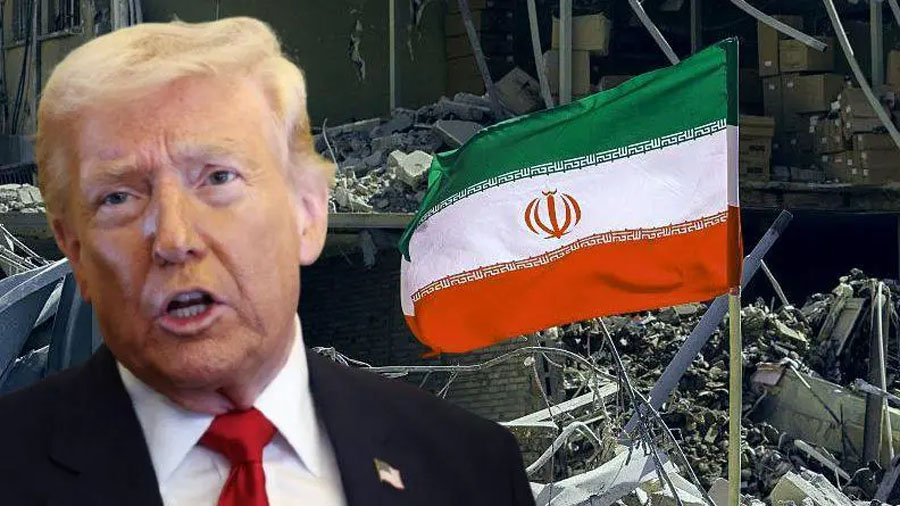
Abuja, Nigeria — The Iranian Ambassador to Nigeria, Gholamreza Mahdavi Raja, has accused the United States of using the ongoing Middle East conflict to secure control over Iran’s energy reserves, describing Washington’s actions as driven by hegemonic ambitions. His comments were made on Trust TV’s Daily Politics on Monday and reflect Tehran’s view that US policy prioritizes oil dominance over peacebuilding.
Raja said the recent US and Israeli airstrikes on Iran are part of a broader strategy to weaken the country and seize its oil-rich territories. “The main aim of the United States and the Zionist regime for such brutal and unprovoked aggression is to seize Iranian energy reserves. The Zionist regime seeks Iran’s disintegration—they announced it themselves,” he stated. Despite repeated attacks on infrastructure, Raja emphasized that Iran’s government continues to function normally and that the Iranian people remain united in defending their sovereignty.
READ ALSO:
- Turaki‑Led PDP Rejects Court of Appeal Ruling, Heads to Supreme Court
- US to Designate Sudanese Muslim Brotherhood as Terrorist Organisation
- NRC Investigates Assault Allegation Against UI Lecturer at Moniya Station
The ambassador rejected any external interference in Iran’s political affairs, particularly regarding the appointment of Ayatollah Mojtaba Khamenei as Supreme Leader, son of the late Ayatollah Ali Khamenei. He said, “Iran is an independent country. We make our own decisions without outside interference,” countering claims of US influence over Tehran’s leadership succession.
On the humanitarian impact of the conflict, Raja accused US missiles of hitting civilian targets, including a school in Minab City, claiming many children were killed. He insisted that Iranian strikes target only military bases, while Washington and Israel allegedly conduct “false flag operations” to blame Tehran.
Raja also denied accusations that Iran sponsors terrorism in Nigeria, stating that its relations with the Islamic Movement of Nigeria (IMN) are purely spiritual and cultural, dismissing Israeli claims as politically motivated. He emphasized that Iran is willing to assist Nigeria in combating extremism, citing shared concerns over groups like Boko Haram and ISWAP.
Addressing global energy concerns, the ambassador warned that further military escalation could destabilize the region and drive global oil prices higher. He refuted reports of Iran closing the Strait of Hormuz, stressing that Tehran’s goal is defense, not disruption of international energy flows. Raja’s comments come amid a broader conflict that began after joint US‑Israeli strikes in February 2026, which triggered regional tensions and disrupted global energy markets. Analysts say the situation underscores US-Iran tensions, the struggle over energy dominance, and the potential for wider Middle East instability.
US Seeks Control of Iranian Oil, Not Peace – Envoy to Nigeria
International
Qatar Arrests Over 300 for Sharing Misleading Iran Attack Images
Qatar Arrests Over 300 for Sharing Misleading Iran Attack Images
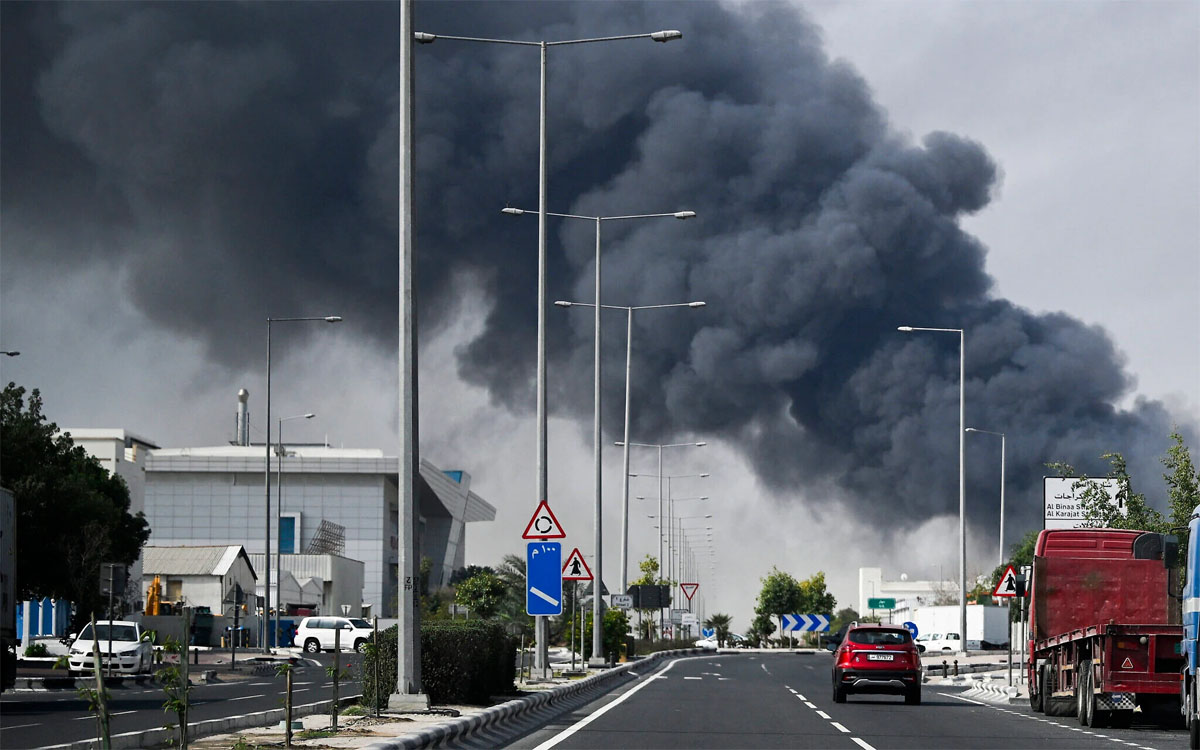
Qatari authorities have detained over 300 individuals for recording, posting, and circulating unauthorised images and videos of Iranian attacks in the Gulf, the Ministry of Interior confirmed on Monday. The arrests were conducted by the Department for Combating Economic and Cyber Crimes under the General Directorate of Criminal Investigations, targeting people of various nationalities whose social media posts and messages officials described as misleading or capable of “stirring public opinion.” Legal and administrative actions are reportedly underway for those detained.
The crackdown comes amid escalating Gulf security tensions following daily Iranian drone and missile strikes on airports, military bases, energy facilities, and residential areas across the region. Qatari authorities have urged residents and visitors to avoid filming, posting, or sharing images and videos of ongoing attacks unless sourced from official channels, warning that unverified content could cause public alarm and spread false narratives.
READ ALSO:
- US Issues Terror Alert Over Possible Attacks on Embassy, Schools in Nigeria
- ‘We Will Decide When War Ends’ — Iran’s Revolutionary Guard Fires Back at Trump
- Middle East Crisis Pushes Petrol Price to N1,300 Per Litre in Nigeria
Authorities in Qatar’s neighbouring countries have taken similar measures. In Bahrain, four people were arrested for recording and distributing footage of Iranian attacks and spreading what officials called false information. In Kuwait, three individuals were detained after posting a video mocking the situation, while the United Arab Emirates (UAE) issued text warnings urging residents not to film or circulate images of missile strikes or damage, with the UAE Attorney General’s Office warning of legal consequences for violations. Despite these measures, videos and images continue to circulate widely on social media and private messaging platforms, highlighting the challenges Gulf states face in controlling misinformation.
Qatari authorities emphasised that the arrests aim to prevent rumours and unverified narratives that could undermine public order and social stability. Citizens and residents are urged to follow official updates, maintain personal safety precautions, and avoid sharing content that has not been verified by recognised government or security sources.
The wave of arrests reflects a broader Gulf-wide strategy to curb misinformation during periods of heightened tension, particularly amid the ongoing Middle East conflict involving Iran’s drone and missile strikes. Gulf governments are increasingly monitoring social media platforms and online messaging channels to enforce strict regulations against sharing sensitive or unverified content, aiming to preserve public safety and prevent panic.
The crackdown also underscores the importance of cyber security and information control during regional crises. Authorities have reiterated that sharing misleading or unverified content online can lead to detention, prosecution, and other legal penalties, reinforcing the strict stance of Gulf nations on social media compliance during times of conflict.
Qatar Arrests Over 300 for Sharing Misleading Iran Attack Images
International
‘We Will Decide When War Ends’ — Iran’s Revolutionary Guard Fires Back at Trump
‘We Will Decide When War Ends’ — Iran’s Revolutionary Guard Fires Back at Trump
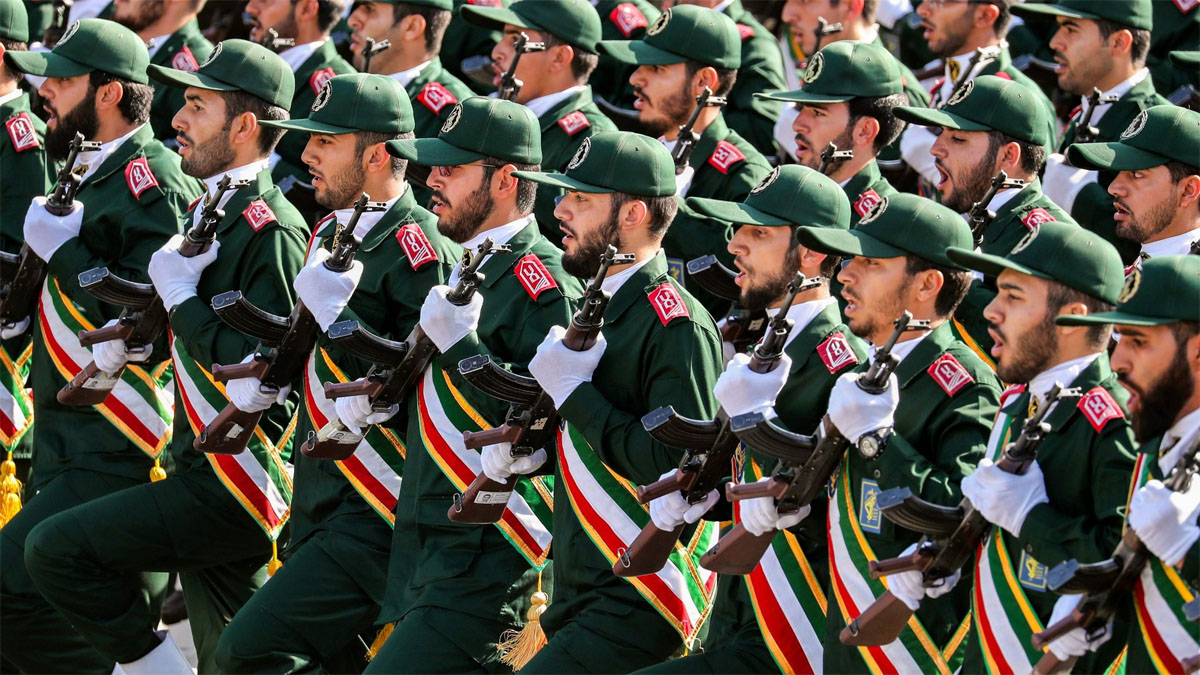
Iran’s Islamic Revolutionary Guard Corps (IRGC) has firmly rejected claims by Donald Trump that the ongoing US-Iran war could soon come to an end, insisting that only Iran will determine the timeline and conditions for ending the conflict.
In a statement carried by Tasnim News Agency, the powerful Iranian military force said developments on the battlefield would ultimately dictate when the war ends.
“We are the ones who will determine the end of the war. The conditions on the battlefield and the end of the war are in the hands of the Islamic Republic,” the IRGC said.
The statement signals Tehran’s continued defiance despite sustained military pressure from the United States and its allies since the conflict erupted earlier this year.
President Donald Trump had earlier suggested that the military campaign against Iran was nearing completion. Speaking in an interview with CBS News, Trump said U.S. forces had significantly weakened Iran’s military capabilities, including its navy, air force, missile infrastructure and drone production facilities. According to the U.S. president, the operation was progressing faster than initially expected, adding that it was ahead of his earlier four-to-five-week timeline for achieving key military objectives. His remarks raised speculation that Washington believed the conflict could soon wind down following a series of strikes on Iranian strategic assets.
READ ALSO:
- Middle East Crisis Pushes Petrol Price to N1,300 Per Litre in Nigeria
- OYOSUBEB Chairman Adeniran Joins 2027 Oyo Governorship Race
- BREAKING: Zamfara Governor Dauda Lawal Defects from PDP to APC
The current Middle East conflict began in late February after coordinated strikes by the United States and Israel targeted key Iranian military facilities, senior commanders and air defence systems. The strikes reportedly focused on installations linked to missile development, drone production and strategic command infrastructure. While Washington initially anticipated a short and decisive military campaign, Iran has remained defiant, signalling its readiness to continue the conflict until its strategic objectives are achieved.
Security analysts say the IRGC’s latest statement highlights the widening gap between U.S. expectations of a quick victory and Iran’s determination to prolong the conflict. Despite suffering tactical setbacks, Iran still maintains significant asymmetric military capabilities, including long-range missile programmes, advanced drone systems, and influence through allied armed groups across the Middle East. These capabilities could allow Tehran to continue exerting pressure on U.S. and allied interests in the region.
Experts warn that the conflict may evolve into a prolonged regional confrontation, especially if indirect engagements involving Iranian-aligned groups expand across multiple countries.
The war has already triggered volatility in global oil markets, with crude oil prices rising sharply amid fears of supply disruptions in the Middle East. Countries that depend heavily on imported fuel, including several African economies, are already feeling the economic ripple effects through higher energy prices and inflation.
Diplomatic efforts to de-escalate the crisis are ongoing in several international capitals, but the IRGC’s latest remarks suggest that there is currently no clear timeline for the end of the war.
‘We Will Decide When War Ends’ — Iran’s Revolutionary Guard Fires Back at Trump

-

 metro3 days ago
Daniel Bwala Faces Backlash After Al Jazeera Interview With Mehdi Hasan
-

 News2 days ago
Tinubu Approves Salary, Allowance Increase for Nigerian Armed Forces
-
 International2 days ago
Top 10 Strongest Militaries in the World in 2026 – Full Ranking
-

 Business2 days ago
NNPCL, Marketers Increase Petrol Price Again Within 24 Hours After Dangote Refinery Hike
-

 metro1 day ago
Viral Video Shows Man Disarming Robbers After Minna Bank Heist, ₦10m Stolen
-

 metro2 days ago
EFCC Intercepts Wife of Federal High Court Chief Judge With $160,000 Cash
-

 metro22 hours ago
Tragedy in Ibadan as Woman, 26, Dies at Boyfriend’s Residence
-

 metro3 days ago
Nigeria’s Mall Retail Falters as Shoprite Completes Shutdown After 20 Years