

metro
No need for separate TIN to operate bank accounts – FIRS

No need for separate TIN to operate bank accounts – FIRS
The Federal Inland Revenue Service (FIRS) has refuted claims that Nigerians must obtain a separate Tax Identification Number before they can own or operate a bank account, insisting that the new framework integrates seamlessly with existing national registries such as the National Identification Number and Corporate Affairs Commission records.
This clarification comes amid widespread claims following media reports suggesting that from January 2026, every Nigerian would be required to present a TIN to open or maintain a bank account, a development that generated fears of fresh bureaucratic hurdles for citizens.
Reacting to the controversy, Arabinrin Aderonke Atoyebi, the Technical Assistant on Broadcast Media to the Executive Chairman of FIRS, Zacch Adedeji, elucidated in a post on her official X handle on Saturday that the reports were false.
“In recent debates about Nigeria’s tax reforms, a widespread misconception has taken root: that citizens without a Tax Identification Number (TIN) cannot own or operate a bank account.
“This view, while the reality is that Nigeria’s tax system has evolved to integrate seamlessly with existing national registries, ensuring that every eligible individual or entity is automatically identifiable for tax purposes.
“This article clarifies how the new framework works, drawing from the Federal Inland Revenue Service’s (FIRS) implementation of the National Taxpayer Directory under the Nigeria Tax Administration Act (2025),” parts of her explanation read.
She also explained that the TIN is a 13-digit identifier designed to uniquely capture details of taxable persons and entities across Nigeria.
She continued, “What is a Tax ID? The Tax Identification Number (TIN) is a 13-digit unique identifier for all taxable persons and entities in Nigeria. It encodes details such as issuance year, registry source (NIN for individuals, RC for corporates), state of registration, and a cryptographic fragment for security, ending with a check digit.
READ ALSO:
- JUST IN: ADC denies INEC confirmation of state chairmen list
- I married Soludo as a virgin – Soludo’s wife replies APC’s Ekwunife
- Ex-lawmakers endorse Tinubu for 2027, say South must finish term
“The TIN is not a standalone requirement imposed on citizens. Instead, it’s a statutory tool that ensures every taxpayer, whether an individual, a registered business, or an association, can be uniquely verified within the national tax system.”
Speaking on the integration with national identity systems, Atoyebi stressed that citizens are already tax-compliant once they provide their NIN.
“Tax ID and the National Identity Management Commission (NIMC): For individuals, the TIN is automatically linked to their National Identification Number (NIN) issued by the National Identity Management Commission (NIMC).
“When an individual provides their NIN, such as during bank account opening or Know Your Customer (KYC) processes, the system cross-checks the NIN in the national database. As part of this verification, the TIN is automatically retrieved and attached to the person’s records.
“This means citizens do not need to manually apply for or present a tax ID before opening a bank account. The system handles the integration in real time,” her explanation added.
She also disclosed that businesses are also covered through their CAC registration numbers.
“Tax ID and the Corporate Affairs Commission (CAC): For businesses, the TIN is tied directly to the RC Number issued by the Corporate Affairs Commission (CAC).
“Likewise, for cooperatives, partnerships, professional bodies, and other legal entities, the TIN is connected to their respective recognized registries. This linkage ensures that corporate entities can be transparently identified for both tax & compliance purposes. Just as with individuals, banks and regulators do not require extra documentation beyond the foundational registry numbers to confirm tax status,” she continued.
She emphasized the framework’s overall benefits, arguing that it fosters inclusion, financial access, and fraud prevention.
She added, “Exploring the Benefits of Tax ID:Seamless Banking Access: Individuals and businesses can open and operate bank accounts using their NIN or RC number, with the TIN automatically integrated behind the scenes. Fraud Reduction: The system eliminates duplicate or false identities by ensuring every taxpayer is tied to a verifiable registry.
“Regulatory Compliance: Banks and financial institutions can rely on a single, consent-driven source of truth for onboarding, reporting, and KYC compliance. Inclusivity: Beyond companies, the framework extends coverage to associations, professional bodies, and trustees. Global Compatibility: Nigeria’s tax system can securely interact with international systems for trade finance and compliance.”
According to her, the widespread notion that Nigerians would be barred from banking services without a separate TIN is misplaced.
“The misconception that Nigerians cannot own or operate a bank account without a tax ID overlooks the integrated design of the new TIN system. By linking TINs to existing foundational identifiers such as the NIN and RC Number, the system ensures automatic compliance without creating unnecessary barriers for citizens.
“In practice, this means a Nigerian walking into a bank with their NIN is already tax-compliant. The bank simply retrieves their TIN as part of its onboarding process. Far from being a hurdle, the TIN framework is a gateway to financial inclusion, regulatory transparency, and global interoperability in Nigeria’s evolving digital economy,” Atoyebi concluded.
No need for separate TIN to operate bank accounts – FIRS







International
Pope Leo XIV Warns Against Letting AI Make Human Decisions
Pope Leo XIV Warns Against Letting AI Make Human Decisions
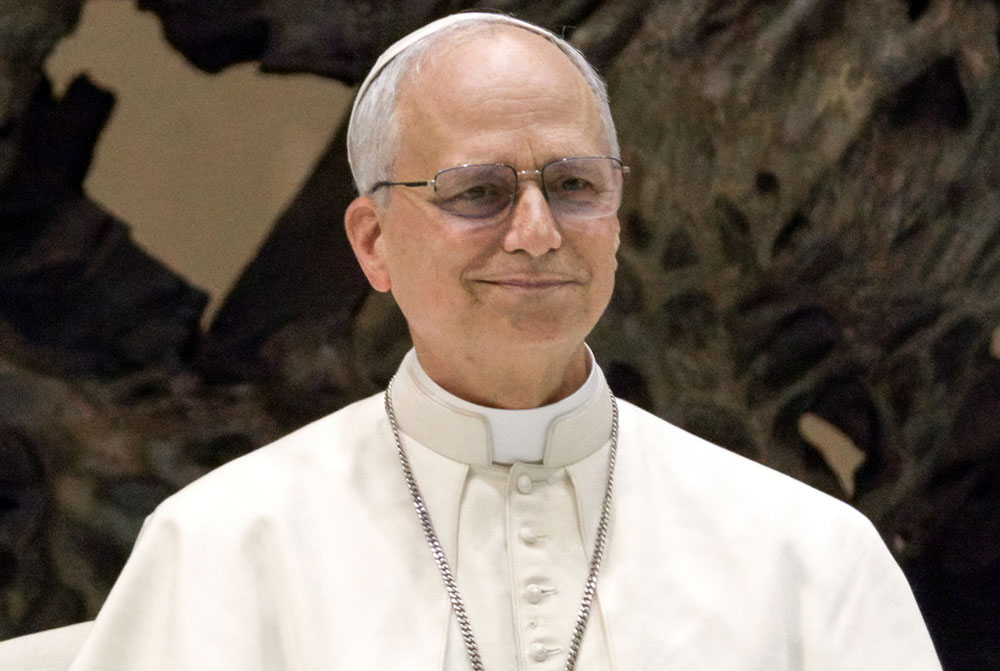
The rapid advancement of artificial intelligence has prompted a fresh warning from Pope Leo XIV, who says some decisions should never be handed over to algorithms.
The Pope made the remarks at his weekly audience in St Peter’s Square, where he addressed thousands of faithful and reflected on the impact of technology on modern human interaction.
While acknowledging that AI, social media and other forms of technological development can reduce barriers and connect people across great distances, he said they also carry a risk of making human relationships increasingly virtual.
His particular concern was the possibility that society could become accustomed to allowing algorithms to determine matters that should instead be guided by human conscience.
“Ensuring that social relationships have real substance and personal depth” is one way the Christian community seeks to respond to this challenge, he said.
The comments come amid broader concerns about the direction of AI development. Recent security incidents, along with the growing ability of some AI systems to improve their own performance without human intervention, have intensified debate about the technology.
Another major question is whether companies and organisations within the AI sector are capable of regulating themselves effectively as the technology becomes more powerful.
The Pope has previously made AI a major focus of his public interventions. His first major document, the May encyclical “Magnifica Humanitas”, urged efforts to prevent AI from becoming a force that dominates humanity.
The Holy See has also become more active in calls for international rules governing AI, grounding its position in the protection of human dignity. Its initiatives have extended to discussions involving nuclear technology, culture and artistic creation.
The latest warning places the Vatican’s concerns within a wider debate over how humanity should balance the benefits of increasingly powerful AI with the need to keep important decisions under human control.
Pope Leo XIV Warns Against Letting AI Make Human Decisions
metro
Kara Bridge Repairs, Multiple Crashes Trigger 14-Hour Gridlock on Lagos-Ibadan Expressway

metro
Tinubu Rewards Qur’anic Champion Maryam Dan’Azumi With N20m
Tinubu Rewards Qur’anic Champion Maryam Dan’Azumi With N20m
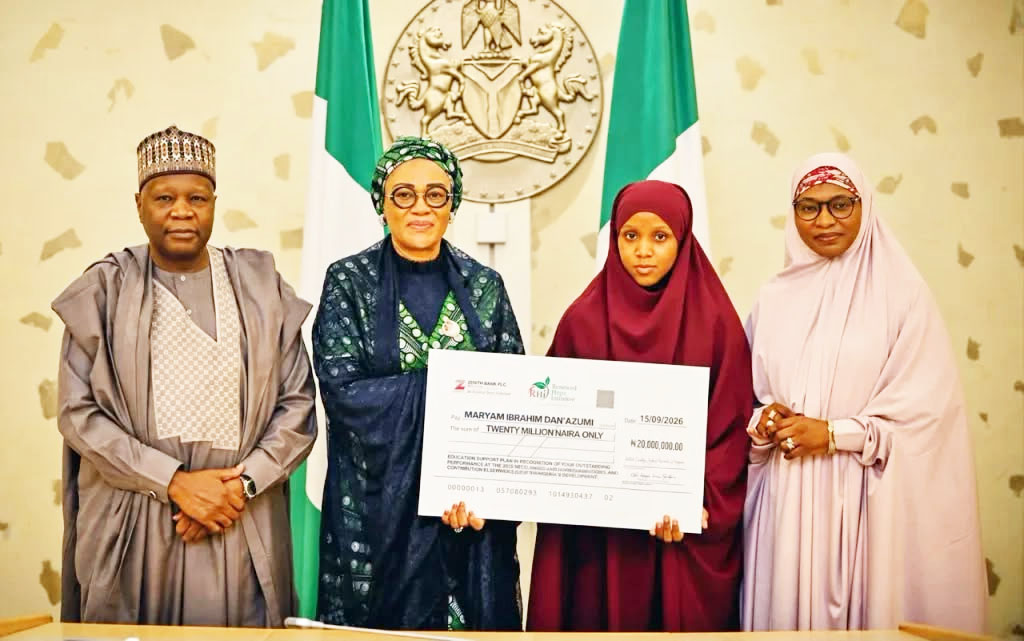
Nigeria’s First Lady, Senator Oluremi Tinubu, has rewarded 19-year-old Gombe State Qur’anic scholar Maryam Ibrahim Dan’Azumi with N20 million following her outstanding performance at the 46th King Abdulaziz International Qur’anic Competition in Makkah, Saudi Arabia.
Oluremi Tinubu presented the cash award to Maryam at the Presidential Villa, Abuja, on Tuesday after the young Qur’anic scholar was formally presented to her by Gombe State Governor Muhammadu Inuwa Yahaya.
The governor was accompanied by Maryam’s father, teachers and other members of the Gombe State delegation during the visit.
In addition to the N20 million reward, the First Lady expressed her willingness to support Maryam in pursuing a master’s degree, encouraging the young scholar to continue her academic development alongside her Qur’anic studies.
Tinubu described Maryam’s achievement as a source of pride for Nigeria and an example of what young Nigerians, particularly girls, can accomplish through dedication, discipline and education.
Maryam attracted international attention in August after emerging winner of the second category of the women’s division at the prestigious King Abdulaziz International Qur’an Competition in Saudi Arabia.
She scored 97.70 marks to take first position in a category that required participants to demonstrate mastery of the entire Holy Qur’an, together with excellence in recitation and interpretation of Qur’anic vocabulary.
The 46th edition of the international competition reportedly attracted 334 contestants from 133 countries, with participants competing across various categories covering Qur’anic memorisation, recitation and interpretation.
Maryam’s victory also earned her a prize of 300,000 Saudi Riyals, widely reported at about N120 million, making the N20 million presented by the First Lady a separate recognition of her achievement.
READ ALSO:
- ASUU Crisis Deepens: Lagos Universities Join UNIBEN, Taraba on Indefinite Strike
- Lagos Power Outage: Ikeja Electric Blames TCN as Businesses, Homes Groan
- US Court Blocks Trump Visa Rule Limiting Stay of Foreign Students, Journalists
Receiving Maryam at the State House, Oluremi Tinubu praised the teenager’s commitment to Qur’anic scholarship and her determination to excel in both religious and formal education.
She also acknowledged the contribution of Maryam’s parents, teachers and mentors, noting that sustained support from families and educators remains important in nurturing young talents.
The First Lady encouraged Maryam to remain committed to her education and to embrace mentorship as she progresses in her academic and personal development.
Maryam’s international success is also part of a remarkable family record in Qur’anic competitions.
Her elder sister, Hajara Ibrahim Dan’Azumi, won the 18th Hashemite Jordan International Qur’anic Competition for Females in Jordan in 2024.
The achievements of the two sisters have drawn attention from Nigerian leaders and stakeholders in Islamic education, with President Bola Ahmed Tinubu previously congratulating Maryam on her international victory and recognising the role played by her family, teachers and mentors.
According to Governor Inuwa Yahaya, Maryam’s success followed years of participation in Qur’anic competitions at different levels.
She reportedly distinguished herself in local and state competitions before progressing to national contests and eventually representing Nigeria at the international competition in Saudi Arabia.
Maryam is a Physics Education student at Gombe State University and also studies at the Abubakar Siddiq Community School for Qur’anic Memorisation in Gombe.
Speaking after her reception at the Presidential Villa, Maryam expressed appreciation to the First Lady for the recognition and financial support.
She said her participation in the Saudi Arabian competition enabled her to interact with contestants from different parts of the world and gain broader exposure.
The young scholar also expressed hope that her achievement would inspire other Nigerian youths to remain committed to education, develop their talents and pursue excellence in their chosen fields.
With the latest N20 million award, Maryam has received substantial financial recognition following her historic performance in Saudi Arabia.
Her 300,000 Saudi Riyal prize came from the King Abdulaziz International Qur’an Competition, while the N20 million reward from Oluremi Tinubu was presented during her visit to the Presidential Villa.
The First Lady’s offer to support Maryam’s postgraduate studies could further strengthen the young scholar’s ability to pursue higher education while continuing her development in Qur’anic scholarship.
Tinubu Rewards Qur’anic Champion Maryam Dan’Azumi With N20m
-

 News3 days ago
SERAP Threatens Legal Action Over ₦126bn INEC Electoral Funds
-

 Politics2 days ago
2027: Northern Lecturers Back Tinubu, ASUU Disowns Endorsement
-

 metro3 days ago
Mother ‘sold daughter’s abuse videos for $300’: Nigeria child pornography case shocks nation
-

 News3 days ago
Adeleke Orders Arrests After Associate Ajagungbade Is Reportedly Killed in Ife
-

 metro2 days ago
Police Arrest Mother Over Alleged Brutal Abuse of 7-Year-Old Girl in Anambra
-

 News3 days ago
Petrol Subsidy: Presidency Rejects Atiku’s Plan, Says No Going Back
-

 Education3 days ago
JAMB Takes Over HND Admissions in Polytechnics, Health Institutions Nationwide
-

 Sports1 day ago
‘I Was Never the Chosen One’ — Dembele Responds to Mbappe