

Business
Naira marginally appreciates to N1,580/$ in parallel market
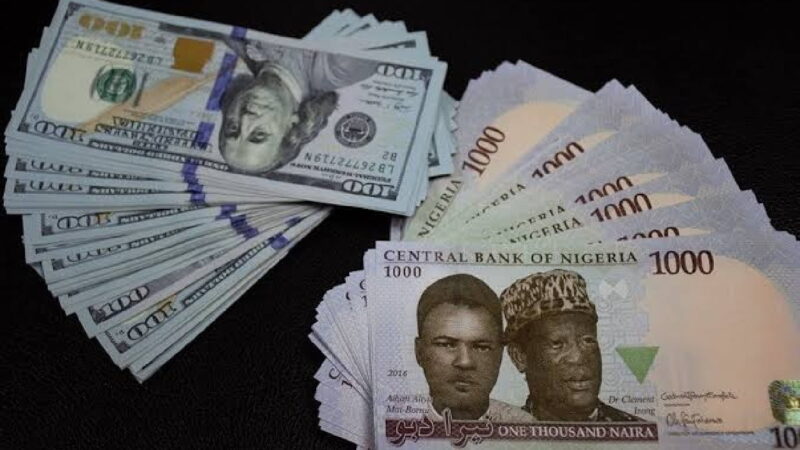
Naira marginally appreciates to N1,580/$ in parallel market
The Naira yesterday appreciated to N1, 580 per dollar in the parallel market from N1,595 per dollar on Wednesday.
Data from FMDQ showed that the indicative exchange rate for NAFEM fell to N1,570 per dollar from N1,608.73 per dollar on Wednesday, indicating N38.73 appreciation for the naira.
READ ALSO:
- Russia prisoner swap: Freed Americans reunite with families
- Overwhelming evidence Venezuela opposition won election – Blinken
- Australia finds ‘serious failures’ in Israeli attack on food aid convoy
The volume of dollars traded in the market grew by 47 percent to $142.32 million from $270.81 million traded on Wednesday.
Consequently, the margin between the parallel market and NAFEM rate narrowed to N10 per dollar from N13.73 per dollar on Wednesday.
Naira marginally appreciates to N1,580/$ in parallel market





Auto
Jetour Set to Storm Abuja Show with Rugged Luxury T2

Jetour Set to Storm Abuja Show with Rugged Luxury T2
Abuja is set for a taste of rugged luxury as Jetour Nigeria puts its adventure-ready T2 SUV in the spotlight at the Jetour Experience Abuja from September 22 to 24, 2026, giving motorists in the Federal Capital Territory and neighbouring states an opportunity to test its blend of off-road capability, premium comfort and advanced technology.
The three-day showcase at Maha Event Centre, Area 8, Garki, will feature test drives, live demonstrations and direct interaction with Jetour product specialists, offering prospective buyers a closer look at the T2 and other models in the automaker’s growing Nigerian line-up.
Positioned as a premium SUV combining off-road capability with comfort and advanced technology, the Jetour T2 is designed for motorists seeking a vehicle capable of handling both city driving and challenging terrain.
Jetour Nigeria is distributing the T2 and other models via its seven accredited dealers — Elizade Nigeria Limited, New Era AutoVehicle Services Limited, Germaine Auto Centre, Kojo Motors, Mandilas Autos, R.T. Briscoe Motors and Tab Autos Limited.
The T 2 SUV is powered by a 2.0-litre turbocharged engine producing 254 horsepower and 390 Nm of torque. The engine is paired with a seven-speed dual-clutch transmission and BorgWarner sixth-generation intelligent four-wheel-drive system.
It also features five driving modes — Eco, Sport, Mud, Rock and X Smart — designed to provide improved adaptability across different road and terrain conditions.
Measuring 4,758mm in length, 2,006mm in width and 1,880mm in height, the SUV offers 220mm ground clearance and a 70-litre fuel tank, giving it the capability for extended journeys and off-road adventures.
Inside the cabin, the T2 combines rugged styling with modern comfort, featuring ergonomic seating and a 15.6-inch touchscreen infotainment system with Apple CarPlay, Android Auto and intelligent voice control.
Its safety and driver-assistance features include a 360-degree panoramic camera, rear parking sensors, Lane Departure Warning, Blind Spot Detection, Anti-lock Braking System and Emergency Brake Assist.
The SUV also comes with off-road crawl control as well as push-button and remote-start functions.
The Abuja experience follows Jetour Nigeria’s recent showcase in Lagos as the automaker continues to expand its presence and customer reach across the country.
With its combination of performance, technology, safety and luxury, the Jetour T2 is expected to attract motorists seeking an SUV capable of combining everyday urban mobility with adventure and off-road driving.
Business
NCAA Moves Against Airlines Over Rising Flight Delays

NCAA Moves Against Airlines Over Rising Flight Delays
Thousands of Nigerian air passengers faced delays in August as domestic airlines struggled to keep to their scheduled flight times.
Now, the Nigerian Civil Aviation Authority (NCAA) says it is taking regulatory steps that could lead to sanctions against airlines responsible for persistent delays.
The regulator’s August data showed that 4,765 of 7,961 scheduled domestic flights were delayed. In other words, nearly 60 per cent of the flights did not leave as scheduled.
Air Peace and United Nigeria Airlines recorded some of the highest delay rates, with 71 per cent and 76 per cent of their flights respectively affected.
NCAA Warns Airlines
NCAA Director of Public Affairs and Consumer Protection, Michael Achimugu, said that the regulator had already engaged some of the airlines involved.
According to him, the NCAA met with Air Peace, United Nigeria Airlines and Max Air and issued stern warnings over their operations.
The authority is now weighing further regulatory measures as the problem continues to affect passengers.
Achimugu also urged travellers to consider other airlines when repeated delays make a particular carrier unreliable.
“When one airline is continuously misbehaving, buy tickets on another airline and make your flight” he said.
READ ALSO:
- 2027: Sowore Rejects Utomi’s Coalition Talks, Says AAC Won’t Join Opposition Alliance
- Sani Abacha’s Son Emerges Kano PDP Governorship Candidate for 2027
- He Does Not Lose Elections”: Abdulmumin Jibrin Predicts 65% Landslide for Tinubu in 2027
Passenger Rights Put Enforcement Under Spotlight
However, aviation consultant Capt. John Ojikutu believes the recurring problem exposes a wider weakness in the sector.
Ojikutu said Nigeria has regulations intended to protect air travellers, but questioned how consistently those rules are enforced.
“The regulation is there to protect the customer. What is the enforcement?” he said.
He noted that passengers can report violations to the appropriate authorities. But, in his view, regulators must follow up on those complaints with meaningful action.
The aviation expert also recalled experiencing severe delays himself.
He said he once travelled to Abuja and passengers had to board an aircraft three times before another plane was brought in to complete the journey.
The disruption, he said, left him returning to Lagos considerably later than expected.
Are Airlines Planning Their Routes Properly?
Ojikutu also linked the industry’s problems to the way some airlines plan their operations.
He questioned the number of carriers competing on the Lagos-Abuja route, particularly when several airlines operate multiple flights each day.
His argument is that airlines should first establish the level of passenger demand before selecting routes, aircraft sizes and flight frequencies.
According to him, deploying aircraft capable of carrying more than 100 passengers without sufficient demand can put additional financial pressure on an airline.
He therefore advised carriers to consider routes with enough passengers but less competition.
Smaller Aircraft Could Serve Regional Routes
Ojikutu said the industry could also learn from the operational model used by the former Nigerian Airways.
He recalled that the airline used larger aircraft on major routes while smaller planes connected regional destinations to major airports.
He suggested that modern carriers could adopt a similar approach by connecting cities such as Sokoto, Kaduna, Jos and Minna to larger aviation hubs.
Rather than having every airline compete directly on major routes, he said carriers could develop regional networks that feed passengers into bigger airports.
He also called for more airlines to establish bases outside Lagos.
According to him, encouraging operations in other parts of the country could reduce the heavy concentration of airlines in Lagos and create stronger regional connections.
Concern Over Airline Survival
Ojikutu further questioned the short lifespan of many Nigerian airlines.
He attributed part of the problem to weak business planning and argued that airlines should present credible, sustainable plans before receiving regulatory approval to operate.
The latest development therefore puts both airlines and the aviation regulator under scrutiny, as passengers continue to deal with delays despite existing rules designed to protect them.
NCAA Moves Against Airlines Over Rising Flight Delays
Business
Fuel Prices Climb to ₦1,500 per Litre Across Nigeria, Sparking Calls for Urgent Action
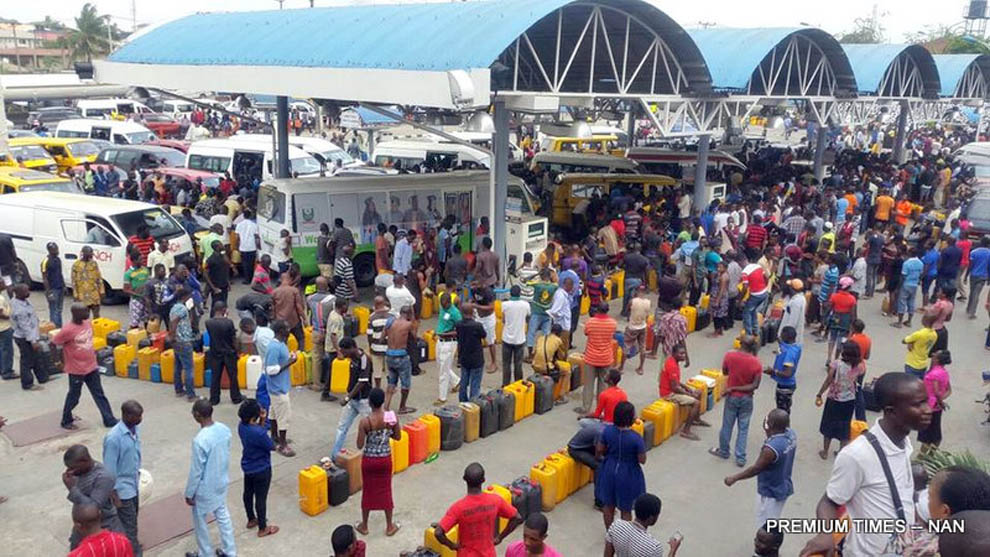
Fuel Prices Climb to ₦1,500 per Litre Across Nigeria, Sparking Calls for Urgent Action
Workers’ unions and fuel sellers appeal to the government to protect families from soaring transportation and food costs.
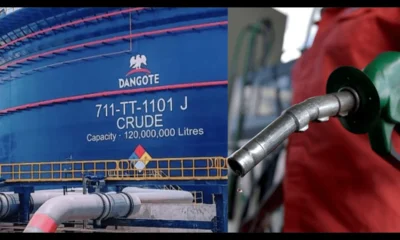
Fuel stations across Nigeria have raised the price of petrol to as high as ₦1,500 per litre, creating fresh financial strain for working people, small business operators, and families. Across cities such as Kano, Maiduguri, Damaturu, and Sokoto, drivers and commercial riders now pay higher rates at the pump, while stations in central and southern communities also report steady increases.
Because transportation costs directly influence the price of everyday essentials, bus drivers and tricycle operators have raised passenger fares to cover their fuel bills. As a result, parents and commuters face steeper daily travel expenses and rising grocery bills.
READ ALSO:
- Gaza Building Collapse Kills 21, Including Eight Children
- Niger Mosque Abductions: Terrorists Execute 30 of 500 Captive Muslim Worshippers
- OAU Investigates Death of Final-Year Student as Police Begin Probe
To address this pressure, the Nigeria Labour Congress urged federal authorities to step in quickly with practical relief measures. These proposals include providing cost-of-living allowances to workers, ensuring local refineries can purchase crude oil directly in local currency, and using surplus oil earnings to keep pump prices affordable.
At the same time, fuel sellers warned that pump prices could rise even further if international oil markets remain volatile. Retail associations noted that recent wholesale adjustments from local refineries have increased costs for station owners, who must pay more to restock their tanks.
To keep fuel affordable for the general public, union leaders and station operators are encouraging the government to reduce shipping and regulatory fees, helping ensure that reliable energy remains accessible to every community across the country.
Fuel Prices Climb to ₦1,500 per Litre Across Nigeria, Sparking Calls for Urgent Action
-
 Politics3 days ago
2027: Northern Lecturers Back Tinubu, ASUU Disowns Endorsement
-

 Sports2 days ago
‘I Was Never the Chosen One’ — Dembele Responds to Mbappe
-

 International1 day ago
Islamic Council Condemns Attempted Attack on Holy City of Mecca
-

 metro2 days ago
Lagos Power Outage: Ikeja Electric Blames TCN as Businesses, Homes Groan
-

 News1 day ago
Keep Politics Out of My Office — Ogbomoso Grand Chief Imam Warns Politicians, Bloggers
-

 Education2 days ago
JAMB Moves 2027 UTME Time — Here’s What Candidates Need To Know
-
 Politics2 days ago
2027: APC Governors Reject Wike’s Rainbow Coalition, Insist on Party Loyalty
-

 News2 days ago
I Wanted to Disgrace Tinubu — Omokri Reveals What He Discovered at Chicago Varsity