Senate backs Tinubu on NNPC selling crude to Dangote refinery in naira - Newstrends
Connect with us

Business

Senate backs Tinubu on NNPC selling crude to Dangote refinery in naira
Published

on

Senate backs Tinubu on NNPC selling crude to Dangote refinery in naira

..says it’s a lifeline to DangoteĀ 

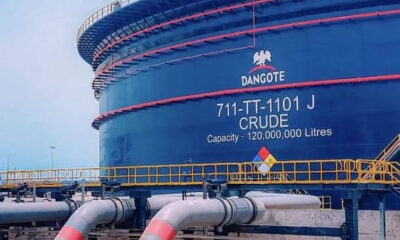
The Senate has said the lifeline given to the Dangote Refinery for the Nigerian National Petroleum Company Limited (NNPCL) to sell crude oil to the 650,000 barrels per day Dangote refinery in local cwill strengthen the naira.

It said this through its Committee on Finance in a statement by the Chairman, Senator Sani Musa.

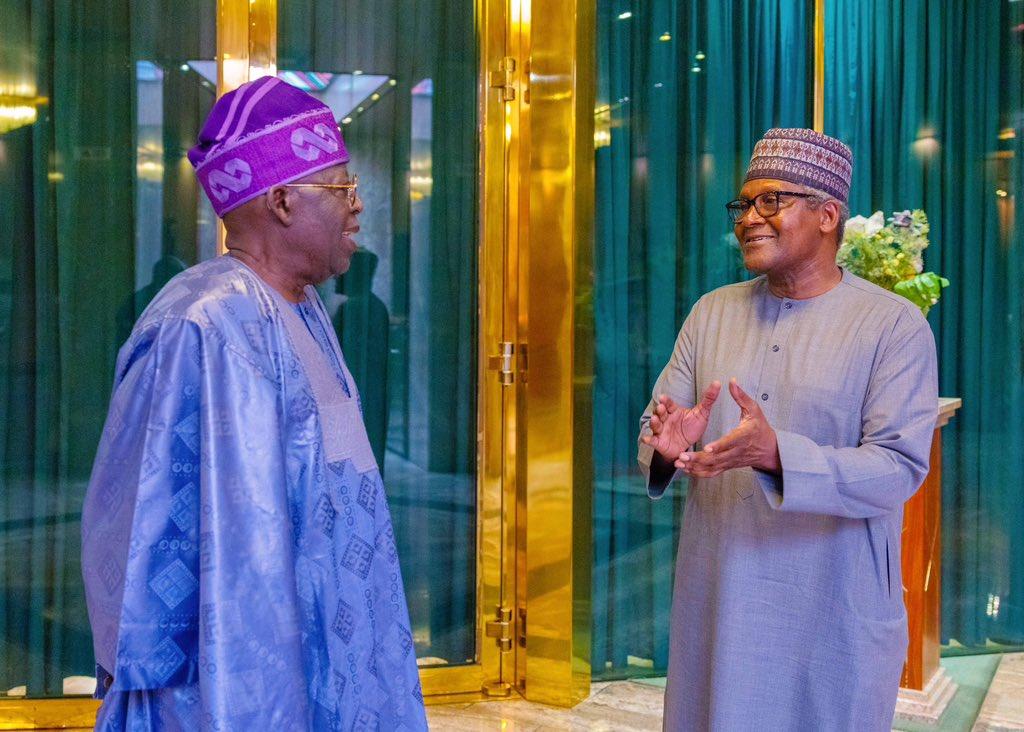
The Federal Executive Council (FEC) on Monday at its meeting presided over by President Bola Tinubu approved the sale of crude oil to indigenous refineries including the Dangote Refinery in naira.

The Senate committee commended Tinubu for his forward-thinking and impactful decision to approve the sale of crude oil to local refineries in Nigeria using naira.

ā€œThis strategic move is a significant milestone in our nation’s journey towards economic self-sufficiency and stability.

“By allowing transactions in our local currency, this policy not only strengthens the naira but also reduces our dependency on foreign exchange.

ā€œThis will likely lead to increased efficiency within our local refineries, boosting domestic production and ensuring a more consistent and affordable supply of refined petroleum products for all Nigerians,ā€ the committee said.

The Finance panel stressed that the gesture would enable the NNPC, Dangote Refinery and all domestic producers to take advantage of the opportunity to make their business decisions towards making production more affordable, sustainable and qualitative for the good of the country.

The committee said, ā€œThis decision reflects a deep commitment to fostering national growth, supporting local industries, and ensuring that the wealth generated from our natural resources benefits our economy directly.

ā€œIt is a testament to Mr. President’s visionary leadership and dedication to the prosperity of our country.ā€

Loading

Business

Dangote launches free petrol delivery in Lagos, Abuja, five other states

Published

on

Dangote launches free petrol delivery in Lagos, Abuja, five other states

Dangote launches free petrol delivery in Lagos, Abuja, five other states

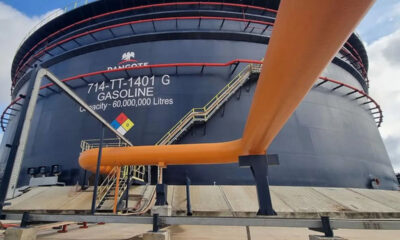
Dangote Petroleum Refinery has launched a free delivery programme for Premium Motor Spirit (PMS), popularly known as petrol, to customers in Lagos, Ogun, Rivers, Kaduna, Delta states and the Federal Capital Territory (FCT), Abuja, while maintaining its ex-depot price at N1,075 per litre.

The refinery announced the initiative in a notice published on its official X (formerly Twitter) account on Wednesday, describing the programme as part of efforts to improve the distribution of locally refined petrol, reduce logistics costs for marketers and ensure more efficient fuel supply across Nigeria.

According to the company, the free delivery service is available to customers purchasing a minimum of 250,000 litres of petrol. The current rollout covers six strategic locations, with plans to expand the initiative to other parts of the country in subsequent phases.

In addition to free transportation, the refinery introduced a 10-day credit facility for qualified bulk buyers, a move expected to ease cash flow challenges for marketers, improve inventory management and encourage wider distribution of fuel nationwide.

The latest initiative comes days after Dangote Petroleum Refinery held a meeting with stakeholders in Nigeria’s downstream petroleum sector to discuss cost-reflective petrol pricing, supply stability and measures to make fuel more affordable for consumers.

READ ALSO:

The meeting ended with marketers and industry operators expressing support for further reductions in petrol prices as local refining capacity continues to improve.

The free delivery programme also follows the refinery’s latest reduction in its ex-depot (gantry) price of petrol from N1,125 to N1,075 per litre, marking the fourth downward price review by the company in recent weeks.

Industry analysts believe the consistent price cuts reflect increasing production capacity at the refinery, improved operational efficiency and growing competition in Nigeria’s deregulated downstream petroleum market.

The refinery has also widened access to its products by allowing all licensed petroleum marketers to purchase directly, ending its previous consortium sales arrangement. The move is expected to promote competition, improve product availability and reduce supply bottlenecks across the country.

By absorbing transportation costs to the six pilot locations, Dangote Petroleum Refinery is expected to lower operational expenses for marketers. Analysts say the savings could translate into lower retail pump prices if passed on to consumers.

Commenting on recent market trends, the President of the Independent Petroleum Marketers Association of Nigeria (IPMAN), Abubakar Maigandi, disclosed that the retail price of petrol has dropped by about N125 per litre within the last three weeks.

According to him, pump prices currently range between N1,155 and N1,299 per litre, depending on transportation costs, location and individual marketers’ pricing structures.

Maigandi attributed the reduction to increased local supply from the Dangote Petroleum Refinery, heightened competition among marketers and the refinery’s successive reductions in ex-depot prices.

Industry experts believe the combination of lower gantry prices, free product delivery and easier access to supplies for marketers could further stabilise Nigeria’s fuel market, improve nationwide availability of petrol and moderate pump prices in the coming weeks.

The development represents another milestone for Dangote Petroleum Refinery as it expands its influence in Nigeria’s energy sector through increased domestic refining, improved fuel distribution and market-driven pricing strategies aimed at reducing the country’s dependence on imported petroleum products.

If successfully implemented on a wider scale, the initiative is expected to enhance fuel supply efficiency, strengthen competition in the downstream petroleum sector and deliver cost savings that could ultimately benefit millions of Nigerian motorists and businesses.

Dangote launches free petrol delivery in Lagos, Abuja, five other states

Loading

Continue Reading

Auto

Winpart by CFAO, CFAO Solidarity Advance Child Welfare Through Bethesda Foundation Initiative

Published

on

Winpart by CFAO, CFAO Solidarity Advance Child Welfare Through Bethesda Foundation Initiative
L-R: Director of Operations and Pastoral Care, Bethesda Child Support foundation, Mrs Lanre Abu: representative of the founder, Bethesda Child Support foundation; Barrister Olamide Adeleye; General Manager, Winpart by CFAO, Mr. Eric Fantodji; and Deputy Managing Director, CFAO Mobility, Mr Kunle Jaiyesimi, at the presentation of Financial support from CFAO Solidarity and Winpart by CFAO to Bethesda Child Support Foundation in Lagos recently

Winpart by CFAO, CFAO Solidarity Advance Child Welfare Through Bethesda Foundation Initiative

Winpart by CFAO, in collaboration with CFAO Solidarity, has reinforced its commitment to community development and social impact by supporting the Bethesda Child Support Foundation, a gesture aimed at expanding care, education and empowerment opportunities for vulnerable children while strengthening sustainable development initiatives across the communities where the CFAO Group operates.

The donation forms part of a broader corporate social responsibility initiative designed to support organisations making measurable differences in the lives of disadvantaged people.

Through the intervention, CFAO Solidarity and Winpart by CFAO presented €7,000 and ₦1 million to the Foundation to bolster its programmes focused on child care, protection, education and holistic development.

Speaking during the presentation ceremony, the Deputy Managing Director of CFAO Mobility Nigeria, Kunle Jaiyesimi, said the company believes business growth must be accompanied by meaningful contributions to society.

“At CFAO, we believe that business success must go hand in hand with social responsibility. Our support for the Bethesda Child Support Foundation reflects our commitment to backing initiatives that create meaningful and lasting impact in the lives of children and communities,” he said.

READ ALSO:

Jaiyesimi noted that the intervention aligns with the company’s broader vision of promoting sustainable community development through strategic partnerships with organisations delivering tangible social impact.

The project is one of several initiatives selected and funded by CFAO Solidarity, the Group’s employee-led solidarity programme, which supports impactful community projects across the countries and communities where CFAO operates. Working with credible partner organisations, the programme seeks to improve the lives of vulnerable populations while driving positive and lasting social change.

Also speaking at the event, the General Manager of Winpart by CFAO, Eric Fantodji, said the company was proud to support an organisation dedicated to giving vulnerable children hope and opportunities for a better future.

“The work being done by the Bethesda Child Support Foundation is truly inspiring. We are honoured to support a cause that provides care, hope and opportunities to children who deserve the chance to build brighter futures. Through CFAO Solidarity, we are proud to be part of a wider movement supporting impactful community projects across our areas of operation,” he said.

Receiving the donation on behalf of the Foundation, Olamide Adeleye expressed gratitude to Winpart by CFAO and CFAO Solidarity, describing the support as a significant boost to the Foundation’s mission.

“We are deeply grateful to Winpart by CFAO and CFAO Solidarity for their generosity and belief in our mission. This support will contribute significantly to the welfare, development, and empowerment of the children under our care,” she said.

The initiative further underscores CFAO’s commitment to sustainable development and community engagement, highlighting the value of partnerships between the private sector and social institutions in creating lasting benefits for vulnerable communities.

Through interventions such as this, CFAO Mobility Nigeria and CFAO Solidarity continue to strengthen their commitment to building resilient communities, supporting vulnerable groups and advancing inclusive, sustainable development across the regions where the CFAO Group operates.


Winpart by CFAO, CFAO Solidarity Advance Child Welfare Through Bethesda Foundation Initiative

Loading

Continue Reading

Auto

Auto Tariff Reforms Must Not Undermine Nigeria’s Manufacturing Drive, NAMA Warns

Published

on

Auto Tariff Reforms Must Not Undermine Nigeria's Manufacturing Drive, NAMA Warns

Auto Tariff Reforms Must Not Undermine Nigeria’s Manufacturing Drive, NAMA Warns

The Nigerian Automotive Manufacturers Association (NAMA) has urged the Federal Government to align its 2026 Fiscal Policy Measures with stronger industrial protection policies, warning that tariff liberalisation without adequate safeguards could undermine years of investment in Nigeria’s automotive manufacturing sector.

In a policy position submitted to the Minister of Industry, Trade and Investment and copied to the National Automotive Design and Development Council (NADDC), the association said while the new fiscal measures support regional trade integration, they could weaken local vehicle assembly if not complemented by incentives that protect domestic manufacturers and encourage further investment.

The position paper, signed by NAMA Chairman, Mr. Bawo Omagbitse, and Executive Director/Chief Executive Officer, Dr. Harpreet Singh, commended the Federal Government for pursuing economic reforms and aligning trade policies with the ECOWAS Common External Tariff and the African Continental Free Trade Area (AfCFTA). It also welcomed initiatives promoting locally assembled vehicles, the End-of-Life Vehicle Policy and the Vehicle Conformity Assessment Programme.

However, NAMA expressed concern that the reduced duty gap between imported fully built vehicles and locally assembled units could erode the competitive advantage required for Nigeria’s emerging automotive industry to grow.

“Nigeria’s automotive industry is still at an infant to intermediate stage. Affordability for buyers and protection for the investment that creates jobs are not in conflict, and our appeal is that the two move together,” Omagbitse said.

The association cited Nigerian Ports Authority figures showing vehicle imports increased by 67 per cent, from 35,262 units in the first quarter of 2025 to 58,870 units during the same period in 2026. According to NAMA, the sharp rise suggests importers anticipated lower tariffs on fully built vehicles even before the latest fiscal measures took effect.

READ ALSO:

It warned that accelerated liberalisation could further increase vehicle imports, reduce local assembly volumes, weaken capacity utilisation and discourage investment in assembly plants and component manufacturing, including tyres, batteries, plastics, automotive glass and other locally sourced parts.

While reaffirming support for the government’s objectives of improving affordability, boosting revenue and promoting regional integration, Dr. Singh stressed that successful automotive nations first strengthened domestic manufacturing before opening their markets.

“Our request is simply that these gains be sequenced with the industrial incentives that every successful automotive economy put in place before opening its market,” he said.

NAMA pointed to countries such as Thailand, Morocco, South Africa and China as examples of economies that built competitive automotive industries through a combination of tariff protection, production incentives, supplier development programmes, export support and improved infrastructure before embracing wider market liberalisation.

Reviewing Nigeria’s automotive policy between 2014 and 2020, the association noted that local content development and production capacity remained below expectations largely because the Nigeria Automotive Industry Development Plan (NAIDP) lacked legislative backing and investors had insufficient long-term policy certainty.

To strengthen the industry, NAMA recommended restoring a wider tariff differential between imported and locally assembled vehicles, making consultation with NADDC and the Ministry of Industry mandatory before future automotive fiscal policy changes, and urgently passing the NAIDP into law.

It also proposed production-linked incentives, the establishment of an automotive supplier development fund, priority access to foreign exchange for industrial inputs, and dedicated energy and logistics support for manufacturers.

“Nigeria risks becoming a large vehicle consumption market without becoming a meaningful automotive manufacturing economy,” the association warned.

NAMA reaffirmed its readiness to work with the Federal Government, the Minister of Industry, Trade and Investment and the Director-General of NADDC to ensure ongoing economic reforms strengthen local manufacturing while advancing Nigeria’s long-term industrialisation agenda.


Auto Tariff Reforms Must Not Undermine Nigeria’s Manufacturing Drive, NAMA Warns

Loading

Continue Reading

Trending