The Phantom Presidential Council scandal, By Farooq Kperogi - Newstrends
Connect with us

Opinion

The Phantom Presidential Council scandal, By Farooq Kperogi

Published

on

Case for replicating the Oyo kidnap-rescue template nationwide, By Farooq Kperogi

The Phantom Presidential Council scandal, By Farooq Kperogi
first received a WhatsApp forward about the scandal from notable University of Texas history professor Toyin Falola. I didn’t read it. I thought it was just another corruption scandal, the sort I have become tragically inured to.

A few days later, my friend Professor Moses Ochonu forwarded another version of it to me. I told him Professor Falola, mentor to both of us, had already sent it to me but that I didn’t bother to read it because I had become jaded on issues like that. But social media soon became suffused with different tidbits of the scandal, and I could no longer ignore it.

I am now suspending the travelogue I had planned to write on my recent visit to Trinidad and Tobago where I was invited to deliver a keynote address at an international conference on media and communication. Nigeria, as it often does, has imposed its madness on my literary itinerary.

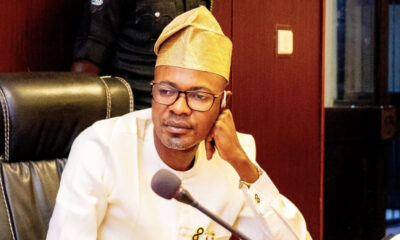
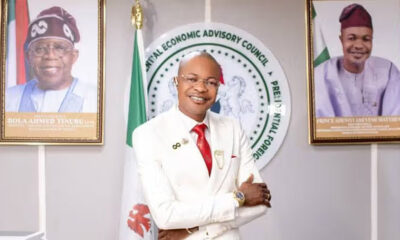
The story is almost too insane to be true. A certain Prince Adeniyi Adeyemi Mathew, also written in official statements as Adeyemi Adeniyi Matthew, presented himself as Director-General of the Presidential Foreign Intervention Promotion Council, sometimes twinned with the Presidential Economic Advisory Council.

The Presidency now says the body does not exist. In a June 11 disclaimer and a fuller July 1 statement, the State House said Adeyemi was an impostor, that his appointment letter was forged, that he falsely paraded himself as a presidential appointee and that the police had already filed criminal charges against him.

According to the Presidency, the drama began when the Nigerian Investment Promotion Commission complained in October 2025 that another supposed government body was operating in its orbit. Foreign Affairs also reportedly grew uneasy after Adeyemi held meetings with ambassadors. The Chief of Staff, Femi Gbajabiamila, then wrote the DSS and the Police to investigate what he described as forged appointment letters.

Adeyemi was later arrested at an office in the Federal Secretariat Complex in Abuja. Police reportedly searched his office and residence, found documents they characterized as forged and accused him of operating 34 bank accounts, including nine in the names of allegedly fictitious entities.

READ ALSO:

The Presidency says he even used his papers to open a CBN account by misleading the Office of the Accountant-General of the Federation, although no government money was transferred into the account.

If that were all, this would be a straightforward story of a brazen con man who found a costume in the wardrobe of power and decided to wear it. But that is not all.

Before the Presidency disowned him, Adeyemi and his council were not anonymous. He led a management team to the EFCC headquarters. Premium Times reported that the visit was part of a partnership to strengthen Nigeria’s investment climate ahead of a proposed World Investment Summit.

PM News similarly reported that EFCC Chairman Ola Olukoyede received him and his team. In the images and accounts that circulated later, the EFCC encounter took on even more symbolic weight because of claims that Adeyemi received an EFCC plaque. Whether or not every detail of that ceremonial exchange survives independent verification, the larger fact is that a supposed fake agency gained access to the nation’s foremost anti-corruption institution, among several prominent institutions.

Perhaps the most curious is the council’s appearance in the national budget. ICIR and Channels TV reported that the council was captured in the 2026 budget with more than N1.3 billion. That single fact turns this from a case of impersonation into a study in state porosity.

An impostor can print a fake letter. He can design a fake letterhead. He can borrow solemn English from government circulars and paste a coat of arms on a document. But how does a nonexistent presidential council find its way into the budget?

The .gov.ng domain controversy deepens the absurdity. Nigeria’s .gov.ng domain is not supposed to be bought from roadside web designers. It is reserved for government institutions and requires official authorization and verification.

If pfipc.gov.ng existed, and if it passed through the required government gatekeeping protocols, then somebody either forged papers successfully through a sleeping verification system or someone within the state gave it a helping hand. Either possibility is damning.

Adeyemi, for his part, has not gone quietly. He says he had a genuine appointment. He has accused Gbajabiamila of collecting N400 million through a proxy, demanding another N200 million and asking for 48 percent of a purported N27.4 billion take-off grant. He says his refusal to surrender the share caused his troubles.

These are grave allegations, but they are still allegations. So far, the public has not seen bank records, messages, recordings and receipts that would independently establish them.

Adeyemi is not a neutral witness in his own cause, so we can’t assume the facticity of his claims on face value. The Presidency and TheCable have drawn attention to his earlier public self-fashioning as a leader of the World Youth Organisation, which Nigerian newspapers once reported as an affiliate of the United Nations.

That claim later came under challenge because no such UN youth organ existed in the form he presented it. In other words, the man at the center of the PFIPC scandal appears to have a prior history of manufacturing proximity to grand institutions.

But the Presidency should not celebrate too quickly. Adeyemi’s credibility problems do not absolve the state. A thief who steals police uniform is a criminal. But if he uses the uniform to sleep in police barracks, command patrol vans, receive salutes from officers and collect allowances from the police budget, the scandal no longer belongs to the thief alone. It belongs to the police.

READ ALSO:

That is why the most plausible explanation is not a tidy binary. It is not simply that Adeyemi beat the system. Nor is it yet proven that Gbajabiamila co-designed the scheme and later turned on him after a quarrel over loot sharing.

The evidence available to the public supports a more troubling middle ground. Adeyemi was likely the prime mover of an elaborate institutional fraud, but he almost certainly benefited from either complicity, negligence or the habitual stupidity of Nigerian bureaucracy.

There are global parallels, but none is an exact twin. In Gujarat, India, a man named Sandeep Rajput allegedly created a fake Irrigation Project Division office, forged seals and signatures, submitted official-looking proposals and got more than 40 million Indian rupees in government grants released. That is probably the closest parallel because it involved not just impersonation but entry into public finance.

Also in India, Kiran Patel allegedly posed as an official of the Prime Minister’s Office and enjoyed official security and hospitality in Jammu and Kashmir before his arrest. His case resembles Adeyemi’s use of proximity to the presidency as a password to bureaucratic reverence.

In China, Zhao Xiyong posed as a State Council official, toured provinces, gave speeches and was received by local leaders who apparently lacked the courage or curiosity to ask basic questions.

In Ghana, a fake U.S. embassy operated for years, issued counterfeit visas and survived partly because corrupt officials were reportedly paid to look away.

These cases tell us something universal about power. Bureaucracies worship symbols. A seal, a title, a convoy, a letterhead, a foreign-sounding summit, a grandiose acronym and a confident fool in a well-cut suit can suspend institutional reason. In societies where hierarchy is fetishized, verification is often treated as disrespect or, as we like to say in Nigeria, “rudeness to constituted authority.”

The Nigerian state is at once overbearing and absent, performative and incompetent, obsessed with protocol but contemptuous of process. It will ask a poor widow for a sworn affidavit before paying her pension arrears but will allow a phantom council to stroll through elite institutions with the swagger of presidential legitimacy.

The question Nigerians should insist on is not merely whether Adeyemi forged documents. The Presidency has made that case and the court will decide. The bigger question is who opened the doors.

Who gave him office space? Who received his letters? Who cleared his delegation? Who processed his domain? Who inserted or failed to remove the budget line? Who saw the words “Presidential Foreign Intervention Promotion Council” and did not ask, “Which law created this body?”

The scandal is not that Nigeria produced a man audacious enough to impersonate the state. Every country produces such men. The scandal is that the Nigerian state, with all its security agencies, protocol offices, budget departments, domain regulators and anti-corruption theatrics, may have been too hollow to notice that it was being impersonated from within its own shadow.

Adeyemi may yet be shown to be a lone con artist. Gbajabiamila may yet be vindicated. Or an independent investigation may uncover something darker. But what the public already knows is enough to indict the system. A government that can be mimicked this successfully has already confessed to being indistinguishable from its counterfeit.


Kperogi is a renowned columnist and United States-based Professor of Journalism.


The Phantom Presidential Council scandal, By Farooq Kperogi

Loading

Opinion

Onaiyekan: Is Tinubu insensitive to Nigerians’ plight? By Bolanle BOLAWOLE

Published

on

Onaiyekan: Is Tinubu insensitive to Nigerians’ plight? By Bolanle BOLAWOLE

turnpot@gmail.com 0705 263 1058

(Published in the ON THE LORD’S DAY column in the Sunday Tribune edition of Sunday, 9 August 2026).

The Catholic Bishops’ Conference of Nigeria (CBCN) recently held a closed-door meeting with President Bola Ahmed Tinubu after which one of the bishops, John Onaiyekan, Bishop Emeritus of Abuja, went public with the contents of the meeting. The public was aghast when the president was reported as saying that hunger has been in the land before he was born!

But is it a lie? It is not! Tinubu reportedly asked the church leaders to feed the people if they – the church leaders – actually knew the people were hungry! Is it not a fact that many church leaders and denominations today behave like the scribes and Pharisees of Jesus Christ’s era – whom the Lord described as “serpents and generation of vipers”! – who “bind heavy burdens and grievous to be borne, and lay them on men’s shoulders; but they themselves will not move them with one of their fingers”? As many as eight times, Jesus said unto them: “Woe unto you, scribes and Pharisees, hypocrites!” He also repeatedly called them “fools and blind guides.” (See Matthew 23: 1 – end).

How many of the Catholic bishops who confronted Tinubu with the case of hungry Nigerians do not have hungry parishioners under their watch? How many of the hungry do they feed? Are they themselves among hungry Nigerians? How many of them, having two coats, give one to the naked (Luke 3:11)? How many follow the example of the Fathers (Acts 4: 32 – 37) or the Marxian doctrine of “From each according to his ability and to each according to his need”?

Despite the hardship in the land, which the Bishops went to Tinubu to complain about, are Church leaders not demanding tithes, vows, first fruit, and all manner of offerings – love offering, sacrificial offering, seed offering, thanksgiving offering, etc. from the same suffering masses? Before our very eyes, are they not building cathedrals worth billions of Naira, driving expensive cars, flying private jets, and living life to the hilt? Are they not?

However, this is an uncomfortable truth no one wants to hear! I should know because I am involved – if you know what I mean! Without speaking for Tinubu – because I, too, have my own grievances! – this must have been what he hinted at but which, understandably, was interpreted as an act of insensitivity. But since I, too, was born, up to date, I make bold to say that notable Nigerian musicians one after the other have complained of hard times. It is as if there has never been a time when things were okay in this country – except when we look back! Better times are usually behind us. No matter how bad a government might have been, succeeding governments always appear worse! That has been the narrative!

READ ALSO:

It appears to me that Tinubu loves to be audacious once in a while. Like when he made his “O lu’le” speech at Abeokuta, detailing how the then President Muhammadu Buhari contested election thrice but failed until he, Tinubu, came to the rescue. The icing on the case at the occasion was his angry reference to Gov. Dapo Abiodun, as “eleyi”, meaning “this one!” Consider as well his wandering off-script “subsidy is gone” statement in his very first speech and on his very first day as President and Commander-in-Chief!

Tinubu possesses enough knowledge of the media to guess what kind of headlines his statements can attract. In the case of the Catholic bishops, maybe he thought he was safe behind the iron curtain of confidentiality – until one of the bishops chose to tear the veil, forcing the Presidency to respond.

Presidential response to Onaiyekan

The response by Temitope Ajayi, Senior Special Assistant to President Tinubu on Media and Publicity, compelled this intervention lest we, again, throw the baby away with the bath water. Often, once we have pitched our tents for or against, we fail to see the merits in opposing advocacies – all to the chagrin of our collective good. Let’s hear from Ajayi:

“There is something fundamentally inappropriate about Cardinal John Onaiyekan granting a television interview to offer his own account and interpretation of what transpired during the private meeting between the Catholic Bishops’ Conference of Nigeria and President Bola Tinubu. It is, in my view, an abuse of clerical privilege.

“The bishops requested an audience with the president. He granted the audience graciously. They presented, as was their right, a catalogue of the country’s economic, social, and security challenges as they saw them. Except for their grudging acknowledgement of the benefits of NELFUND, they were dismissive of the other great things done by the administration. The bishops were notably acerbic in their submission, but the president listened to them patiently and responded.

“That should ordinarily have been where the matter rested. None of the issues raised by the bishops is beyond scrutiny or rebuttal. Their assessment is neither scripture nor an article of faith. It is a perspective, and perspectives can be challenged with facts and evidence.

“President Tinubu did exactly that, responding point by point to the issues they raised. On the bishops’ demand for the return of schools to their owners, the President was surprised that such an issue could be tabled before him, as it is a matter for the states to resolve, in line with our Constitution. So, he asked the bishops to take the matter to the governors and reminded them he returned mission schools in Lagos State (to their original owners) when he was (the) governor.

“The President argued that the bishops’ characterization of the country’s current condition was incomplete and, in several respects, inaccurate. He pointed to measurable progress on the economic, social, and security fronts. He did not pretend that Nigeria’s problems had disappeared. He acknowledged that significant economic and security challenges remain. His point was that the country has emerged from ‘a dark tunnel’, that his administration has laid the foundations for recovery and that the next phase is to ensure the greatest number of Nigerians feels the gains.

READ ALSO:

“What the clerics often overlook in these interventions is that governing a country is fundamentally different from shepherding a church. In a democracy, every interest group, including the Catholic Church, has every right to demand more from (the) government. That is part of democratic engagement. But the president of a nation of more than 200 million people is required to make difficult choices every single day. Those choices involve competing interests, limited resources, and imperfect options…There is no president…who can wave a magic wand and make Nigeria’s accumulated problems disappear overnight.

“It is easy to compile a list of national problems. It is far more difficult to acknowledge the disasters that have been averted. Whatever anyone thinks of President Tinubu’s policies, it is impossible to ignore the fiscal crisis he inherited and the measures taken to pull the country away from the edge of a financial cliff. Even the bishops themselves should recognize that one tangible consequence has been the restoration of greater fiscal stability across many states.

“Countless civil servants and pensioners who, for years, endured unpaid salaries and pensions are now receiving them more regularly. That was certainly not the reality in many states from around 2014. Even about four years ago, 27 state governments struggled to meet even their most basic obligations. Many of those civil servants and pensioners are themselves parishioners in Catholic churches. They know, from lived experience rather than official pronouncements, that there has been real relief in the regular payment of salaries and pensions. While this does not erase the discomfort many Nigerians still face, it is wrong to dismiss or ignore those improvements casually.

“So when President Tinubu reminded the bishops of these facts during the meeting, he was not, as Cardinal Onaiyekan later suggested, being aloof or dismissive. He was presenting evidence to support his argument that the country is not standing still. A disagreement over facts should not be interpreted as arrogance. The same applies to security. The bishops declared that Nigeria is bleeding. The President thinks otherwise. President Tinubu did not deny the seriousness of the security situation. Rather, he acknowledged the challenges while outlining the gains recorded by the Armed Forces and intelligence agencies across different theatres of operation…

“Cardinal Onaiyekan’s Arise News interview also reflected a familiar error that many ideological and professional critics make. They often assume that only critics speak truth to power while everyone around a leader is either unwilling or incapable of doing so. It is an attractive narrative, but it is rarely true. What truth does anyone really need to tell President Tinubu that he does not already know? As president, he has multiple channels for feeling the pulse of the country…

“The Catholic Bishops discharged what they considered their moral obligation by presenting their concerns to the president. President Tinubu, for his part, accorded them respect by granting them an audience and responding to every issue they raised. That exchange reflected the civility expected in a constitutional democracy.

“Reciprocity should have dictated that the confidentiality and dignity of that engagement be preserved. As such, it was inappropriate for one of the participants to emerge almost immediately on national television to provide his own version of what was essentially a private conversation with the president…” That was Temitope Ajayi, SSA to the President for President Bola Ahmed Tinubu.

Obligations of confidentiality

I asked Google: Is it appropriate to divulge the specifics of a closed-door meeting without the other party’s consent or prior knowledge? Google: “No, it is generally inappropriate and a breach of professional trust to divulge the details of a closed-door meeting without the other party’s consent or prior agreement. Why it is inappropriate: Breaches trust: Closed-door meetings imply an expectation of privacy and confidentiality so participants can speak freely. Damages relationships: Revealing private discussions destroys mutual respect and makes future cooperation difficult. Distorts context: Sharing only one side of a private conversation often misleads the public or other stakeholders who were not in the room.”

Again, I asked: Was Onaiyekan mandated by the CBCN to address the media after their meeting with President Tinubu? Google: “There is no official indication or report that Cardinal John Onaiyekan was specifically mandated or designated by the CBCN to grant media interviews or brief the press following their meeting with President Bola Tinubu…”

Then I asked: Is Onaiyekan the official leader of CBCN? Google: “No, Cardinal John Onaiyekan is not the current leader of CBCN; he is the Archbishop Emeritus of Abuja and previously served as CBCN president from 2000 to 2006.” The current president of CBCN is Most Rev. Matthew Man-Oso Ndagoso, the Metropolitan Archbishop of Kaduna.

Answering another question, Google described Onaiyekan as “a forthright and consistent critic of President Bola Tinubu’s electoral legitimacy and economic policies…” Arising from the above, we can see that Onaiyekan and Tinubu are no strangers to one another but are “old customers”, so to say!

Neither here, nor there

That said, Onaiyekun enjoys freedom of speech as enshrined in our Constitution, regardless how acerbic or far from the truth those views may be. Tinubu, too, has the right of reply which his being a sitting president does not deny him. Achebe said “Let the kite perch and let the eagle perch too. If one says ‘No’ to the other, let his wing break.” China’s revolutionary leader, Mao Zedong, put it this way: “Let a hundred flowers blossom, let a hundred schools of thought contend.” Scriptures cap it all in Proverbs 11: 14 thus: “Where no counsel is, the people fall: but in the multitude of counsellors there is safety.”

Tinubu’s man described the president meeting with the bishops as a privilege; no, it wasn’t! It was their right – and the president’s duty. There is nothing “gracious” in it; it is an obligation duly discharged.

Onaiyekan, however, ought to know that closed-door meetings should be accorded the confidentiality they deserve. To break this important rule is to burn bridges and destroy trust. As journalists, we do not rush to press with information gotten from such sources; we store them to be discretely leveraged in future.

That Onaiyekan was not specifically mandated by the CBCN to speak on its behalf makes his case worse. If it was so important for the bishops to speak, why not their president?

It is not everyone that understands the nuances of Nigeria’s prebendal politics. Femi Adesina, media adviser to President Muhammadu Buhari, said they were flying with Buhari when news of Tinubu’s “O lu’le” atomic bomb dropped on Buhari at Abeokuta reached them. Who was detailed by Buhari’s kinsmen on the same flight to break the news to Buhari? Adesina! Why him? And, now, why Onaiyekan? Dirty jobs reserved for who?

* Former editor of PUNCH newspapers, Chairman of its Editorial Board and Deputy Editor-in-chief, BOLAWOLE was also the Managing Director/Editor-in-chief of The Westerner news magazine. He writes the ON THE LORD’S DAY column in the Sunday Tribune and TREASURES column in New Telegraph newspaper on Wednesdays. He is also a public affairs analyst on radio and television.


Onaiyekan: Is Tinubu insensitive to Nigerians’ plight? By Bolanle BOLAWOLE

Loading

Continue Reading

Opinion

WHO WILL SPEAK FOR WASILAT? WHEN TRADITION BECOMES HUMILIATION, JUSTICE MUST SPEAK

Published

on

TikToker undergoes cleansing after filming Oloolu procession in Ibadan

WHO WILL SPEAK FOR WASILAT? WHEN TRADITION BECOMES HUMILIATION, JUSTICE MUST SPEAK

A young Nigerian lady, Wasilat, has become the centre of a disturbing controversy that should concern every defender of human rights, justice, and the rule of law.
According to her own account during a live interview on Lagelu FM, she did not film the Olóòlù masquerade itself. She said she only recorded the gathering of people and later uploaded the video to TikTok. She further stated that she was advised to remove the video, and she complied.

If her account is true, the events that followed should alarm every conscientious citizen.
She alleged that she was arrested the following day by followers of the olóòlù and later detained by the police. Images that circulated widely on social media appeared to show her publicly humiliated—made to wear a red wrapper, adorned with ritual objects, compelled to carry a live She-goat, and having her head shaved in public while being filmed. She also stated that these rituals were arranged between her mother and those involved while she was in detention not with her own consent.

Whether one believes in the spiritual significance of the Olóòlù tradition is beside the point.

The questions are:

1- Can any Nigerian be deprived of liberty, publicly humiliated, or compelled to participate in rituals against their will simply because of a traditional belief?

2- If the belief is that any woman who sees Olóòlù will automatically suffer supernatural consequences, why would human beings need to arrest, detain, and punish the alleged offender the next day?

3- If the supernatural claim is true, why was human intervention necessary?

4- If it is not true, then what justification exists for the alleged humiliation?

These are legitimate questions. They are not attacks on culture. They are questions about justice.
Nigeria is governed by law, not fear.
The Constitution guarantees the dignity of every human person. It protects personal liberty. It protects freedom of conscience. It prohibits degrading treatment.
No tradition, however ancient, should become a licence for intimidation, coercion, or public disgrace.
Culture deserves respect.
Human dignity deserves greater respect.
If Wasilat’s account is accurate, then what happened to her represents far more than a disagreement over tradition. It raises concerns about arbitrary arrest, coercion, degrading treatment, invasion of privacy, and possible violations of her constitutional rights.

Even more troubling is the public circulation of images depicting her alleged humiliation. In the digital age, such images can haunt a victim for years, affecting education, employment, mental well-being, and social acceptance.
Justice cannot remain silent.
Today it is Wasilat.
Tomorrow it could be another young woman.
The silence of good people is often the greatest ally of injustice.
This is therefore a call—not for violence, not for hatred against any cultural group—but for lawful action.
We call upon human rights organisations, the legal community, civil society organisations, women’s rights advocates, youth groups, and all lovers of justice to demand an impartial investigation into these allegations.
Let the truth be established.

If Wasilat’s rights were violated, those responsible should be held accountable in accordance with the law.
If public officials participated in or enabled unlawful conduct, they too should answer before the law.
No Nigerian should be subjected to degrading treatment in the name of culture.
No woman should be publicly humiliated because of superstition.
No citizen should lose her dignity because others choose fear over justice.
A society is judged not by how it treats the powerful, but by how it protects the vulnerable.
Justice delayed encourages injustice.

Justice denied encourages oppression.
Justice done restores confidence in both culture and the law.
Today, let us ask one simple question:
If this happened to your daughter, your sister, your wife, or your mother, would you remain silent?
If your answer is “No,” then now is the time to speak—not with anger, but with courage; not with violence, but with justice; not with vengeance, but with the unwavering conviction that every Nigerian deserves dignity, liberty, and equal protection under the law.
Justice for Wasilat is justice for every Nigerian woman.

Almudeer Ajiginni
Director, The City of knowledge /SSA to National chairman PCRC
4/8/2026.


WHO WILL SPEAK FOR WASILAT? WHEN TRADITION BECOMES HUMILIATION, JUSTICE MUST SPEAK

Loading

Continue Reading

Opinion

Five days in Salvador, Brazil’s Yoruba city, By Farooq Kperogi

Published

on

Five days in Salvador, Brazil’s Yoruba city, By Farooq Kperogi

Five days in Salvador, Brazil’s Yoruba city, By Farooq Kperogi

For the past couple of years, my wife and I have instituted a yearly self-care ritual of taking at least one vacation in a part of the world we have not visited before. This year, I suggested Brazil for two reasons.

One, my interest in recreational genetics has led me to join Facebook groups where people from all over the world share their DNA results and invite conversation. I was struck by the number of phenotypically white Brazilians who show significant Central and West African ancestry. Although the Brazilians who share their DNA results on social media groups are not representative of the entire population, their results nonetheless signaled to me that African filiation in the country is higher and deeper than most people assume.

Second, I have had a faint familiarity with the surviving vestiges of African, particularly Yoruba, cultural and linguistic influences in Brazilian culture and wanted to deepen my knowledge experientially.

So, we planned a 10-day, three-city vacation. We would visit Salvador, Brazil’s Blackest and fifth-largest city, which has the distinction of being the country’s first capital and is now the capital of the northeastern state of Bahia; São Paulo, Brazil’s commercial nerve center and the most populous city in the Americas; and Rio de Janeiro, Brazil’s second-largest city and its federal capital until 1960, which is also home to the Christ the Redeemer statue, one of the New Seven Wonders of the World.

Because of Salvador’s historical and cultural significance to us, we chose to spend half of our stay there. In this remarkable city, we repeatedly encountered West Africa speaking Portuguese. The resemblance was not always visible in faces. Sometimes it announced itself in food, gesture, rhythm and words whose African ancestry had survived even when their speakers no longer remembered it.

In more ways than I can express, driving and walking through Salvador was redolent of the sights, sounds, occasional smells and rhythms of Lagos.

Except for its exquisitely hilly landscape and its mixed-race and white populations, almost everything else about it reminded me of Lagos. The sight of helmeted “Okada” riders competing with motorists for the road, vulcanizer shops, street vendors, occasional unsolicited car windshield cleaners during traffic jams, bus conductors shouting destinations to attract passengers, open-air markets and the architecture of the buildings could have made me momentarily lose awareness of where I was. Only the phenotypic diversity of the people around us kept reminding us that we were not in West Africa.

READ ALSO:

Although Salvador is Brazil’s Blackest city, and the northeastern region is the country’s Black Belt, Black people who look like me are no longer the numerical majority there. They now constitute about 34 percent of the city’s population. Mixed-race people, classified as pardos in Brazil, are the majority, with more than 49 percent of the population. White Brazilians constitute a little more than 16 percent of the city’s population.

Salvador’s demographic changes reflect a broader national trend in Brazil. Brazil’s population went from predominantly Black in 1872 to predominantly white in subsequent censuses and then, for the first time in its census history, to predominantly mixed-race in the 2022 census. According to that census, mixed-race Brazilians now constitute about 45 percent of the country’s population. Whites constitute a little over 43 percent and Blacks a little over 10 percent.

However, although Salvador is now only a little over 30 percent Black, the Yoruba influence in the city is unmistakable. The people depicted in murals are predominantly Black. Representations of traditional attire reflect unmistakably West African aesthetics.

The most recognizable monument to the city’s Yoruba heritage can be found near its center. There stands a historic urban lagoon called Dique do Tororó, distinguished by eight monumental sculptures of Yoruba and Fon-Gbe deities standing in the water.

Designed by the Bahian artist Tatti Moreno, the sculptures represent Oxalá, or Òrìṣà-ńlá; Iemanjá, or Yemọja; Oxum, or Ọ̀ṣun; Ogum, or Ògún; Oxóssi, or Ọ̀ṣọ́ọ̀sì; Xangô, or Ṣàngó; Nanã, or Nàná Bùrùkúù; and Iansã, or Ọya.

Four smaller sculptures on the surrounding land represent Oxumaré, or Òṣùmàrè; Ossain, or Ọ̀sanyìn; Logun-Edé, or Lógun Ẹ̀dẹ; and Ewá, or Yewa. The works were created during the 1990s and have become internationally recognizable symbols of Salvador’s African religious and cultural identity.

We visited the city’s historic Pelourinho neighborhood, where Michael Jackson performed with Olodum, the Afro-Brazilian percussion group whose name recalls Olódùmarè, the Yoruba name for the Supreme Being, and shot his iconic music video for “They Don’t Really Care About Us.”

Pelourinho was once a place where enslaved Africans and others were publicly punished during the colonial period. Today, it is known for its cobblestone streets, brightly painted colonial buildings, churches and strong Afro-Brazilian cultural presence.

There, we also visited the Afro-Brazilian Museum, where we found street vendors selling everything from food and clothing to artwork amid the familiar sounds and movements of African open-air markets.

We explored Salvador’s cuisine, which reminded us of West Africa in several ways. In Salvador, you cannot miss acarajé, which anyone with even a faint familiarity with Yoruba would recognize as deriving from “àkàrà jẹ,” that is, “eat akara.”

Like Nigerian akara, acarajé is made from beans, although the Bahian version is fried in palm oil. Salvador’s acarajé is then sliced open and filled with sautéed shrimp, diced onions and peppers, with chopped okra sometimes added. The acarajé we ate in São Paulo, however, looked and tasted almost exactly like Nigerian akara.

READ ALSO:

The women who traditionally fry and sell acarajé are called baianas. They dress in white or other brightly colored dresses with matching headwraps, resembling exaggerated forms of modern West African dress. They could easily pass for our mothers and sisters in almost any part of West Africa.

We also found that Brazilian cuisine is full of something that looked and tasted to us like garri. They call it farofa, a toasted cassava flour prepared in many varieties and often mixed with palm oil. It is served alongside stews, incorporated into other dishes or sprinkled dry as a garnish.

My wife initially thought it was something else. When she tasted it and discovered that it was essentially garri by another name, she remarked that she would not pay good money to fly from the United States to Brazil to eat garri in expensive restaurants.

It turned out that cassava, from which garri is made, came to us in Nigeria by way of Brazil. The Portuguese who introduced cassava to Africa first encountered it in Brazil.

But the similarities in our cuisines did not stop there. On Salvador’s beaches, which have an elaborate nightlife, we sampled several kinds of street food. One that stood out was queijo coalho, often translated simply as coalho cheese, which tasted exactly like wàrà to us. It is a firm, mildly salty Brazilian cheese made from cow’s milk. You buy it ungrilled and beach vendors roast it for you on skewers.

Perhaps the most surprising gastronomic discovery for us on the beaches was the sight of vendors selling what looked, and even tasted, like tsire, the Hausa-style skewered meat, usually beef, coated with a spicy groundnut-based seasoning and grilled over an open fire.

Brazilians call their version espetinho. Although it is not coated in the distinctive groundnut-and-spice mixture used for tsire, it looks every bit like tsire nonetheless. It is served with farofa, vinaigrette-style salad or hot sauce.

Seeing tsire-like meat being sold alongside people hawking sugarcane made me do a double take. Was I suddenly in Kano?

By far the most mind-blowing experience for us was attending two Candomblé ritual ceremonies. Candomblé is an Afro-Brazilian religion rooted in Yoruba and other African traditions. Much of its ritual liturgy is preserved in Yoruba.

I have a working knowledge of Yoruba, and my wife, who attended high school in Ogbomoso for three years, speaks Yoruba even better than I do.

It was a surreal experience seeing Portuguese-speaking Brazilians beating drums and dancing like Yoruba people while reciting incantations, prayers and songs in Yoruba, a language they did not speak conversationally and whose literal meanings many of them did not appear to understand.

Because the ceremonies were not open to everyone, we had to gain access through a tour guide who was an adherent of the faith.

He had given his business a Yoruba name, and because he was as dark-skinned as any regular Nigerian, I assumed he spoke some Yoruba. He did not. But, like the worshippers we encountered at Ilê Asé Opô Aganju, as the shrine is called, he had memorized inherited prayers, chants and songs in Yoruba, much as non-Arabic-speaking Muslims use Arabic in worship.

The ritual language, of course, often preserves older Yoruba forms and pronunciations shaped by centuries of transmission in Brazil.

We encountered an Egúngún, a Yoruba ancestral masquerade preserved in Bahia. Completely concealed beneath an elaborate cascade of brightly colored cloth, the masquerader is regarded as the temporary embodiment of a departed ancestor returning to counsel, bless or discipline the living.

As it danced and lunged through the gathering, a cane or ritual staff enforced a respectful distance, threatening men who obstructed its path and sending spectators scrambling aside.

After the Egúngún ceremony was over and the crowd was dispersing, we heard someone say in accentless Yoruba, “Kí ló dé?” That stopped us in our tracks.

We did not know the context in which he said it, but it fascinated us. Could this be a native Yoruba speaker visiting from Nigeria or the Benin Republic? Could it be a Brazilian who had learned and understood the language?

So, I asked, in my limited Yoruba, who there spoke Yoruba. The person looked in our direction with great surprise and enthusiasm, but we had to leave because it was late and our guide had other commitments.

I will conclude this travelogue next week.

Five days in Salvador, Brazil’s Yoruba city, By Farooq Kperogi


Kperogi is a renowned columnist and United States-based Professor of Journalism 

Loading

Continue Reading

Trending