

International
Netanyahu: Italy, Canada, others to enforce ICC arrest warrants against Israeli PM
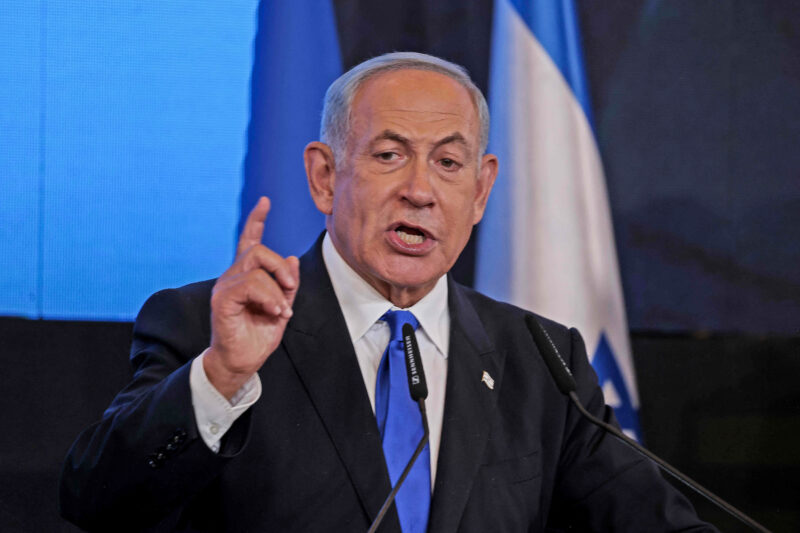
Netanyahu: Italy, Canada, others to enforce ICC arrest warrants against Israeli PM
Italy, the Netherlands, Canada, and other nations have indicated plans to comply with the International Criminal Court’s arrest orders for Israeli Prime Minister Benjamin Netanyahu and former Defence Minister Yoav Gallant.
The ICC issued the warrants on Thursday, accusing both men of war crimes and crimes against humanity during the current conflict in Gaza.
The charges brought before the court include allegations of starvation, murder, persecution, and other inhumane crimes.
The conflict occurred after Hamas launched a cross-border offensive on Israel on October 7, 2023, resulting in severe casualties.
More than 44,000 Palestinians, many of them women and children, have been slain, and Gaza’s 2.3 million residents have been displaced, with many relying on humanitarian aid.
This was the first time a sitting leader from a major Western country had been charged with war crimes by an international tribunal.
While the warrants also target Hamas’ military chief, Mohammed Deif, the arrest demands for Netanyahu and Gallant have received widespread attention because of their political prominence.
In a statement issued on Thursday, Italian Defence Minister Guido Crosetto said that if Netanyahu entered the country, Italy would be obligated to detain him.
Crosetto stressed that, while he disagreed with associating Israeli leaders with Hamas, Italy, as an ICC member, was legally obligated to follow the court’s directions.
Foreign Minister Antonio Tajani supported Crosetto’s viewpoint, emphasising that the ICC’s mission must be absolutely legal and not political.
READ ALSO:
- Nigerian Army has pursued Lakaruwa terrorists to Niger Republic – Senator Aliero
- Court jails 15 internet fraudsters in Benin City
- Two-thirds of Nigerian households lack money for healthy food — Survey
Tajani also stated that Italy would speak with its partners about how to best proceed in light of the warrants.
The Netherlands likewise committed to complete conformity with the ICC.
Dutch Foreign Minister Caspar Veldkamp claimed that Netanyahu would be arrested if he visited Dutch territory.
Veldkamp emphasised that the Netherlands, as a member of the European Union, was committed to maintaining the ideals laid out in the Rome Statute, the ICC’s legal foundation.
“We won’t engage in non-essential contacts, and we will act on the arrest warrants. We fully comply with the Rome Statute of the ICC,” he added.
Josep Borrell, the European Union’s foreign policy leader, weighed in, defining the arrest warrants as legal and binding rather than political.
Borrell insisted that all EU member states follow the court’s order, calling a halt to the violence in Gaza and emphasising the necessity of honouring the ICC’s decisions.
He said, “This decision is a binding decision, and all states, all state parties of the court, which include all members of the European Union, are binding to implement this court decision.”
Canada’s Prime Minister Justin Trudeau affirmed that the arrest warrants would be enforced.
Canada, a founding member of the ICC, has long advocated for international law.
Trudeau reaffirmed Canada’s commitment to justice, calling for an early cease-fire in Gaza, the release of hostages, and more humanitarian help to the region.
“It’s really important that everyone abide by international law,” Trudeau said, adding Canada would abide by rulings of international courts.
The National Council of Canadian Muslims praised Trudeau’s stance, describing it as a big step towards justice in Gaza and Palestine.
Jordan Foreign Minister Ayman Safadi said the ICC’s decision must be respected and implemented. “Palestinians deserve justice,” he said.
Netanyahu: Italy, Canada, others to enforce ICC arrest warrants against Israeli PM





International
Ninth Body Discovered in South Africa: Nigeria Issues Urgent Safety Alert to Nationals
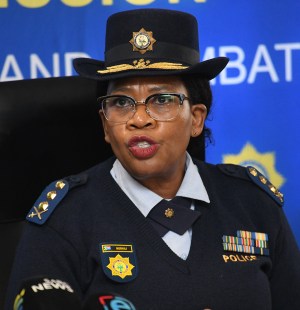
Ninth Body Discovered in South Africa: Nigeria Issues Urgent Safety Alert to Nationals
Police cordon off Kempton Park and post a $56,000 combined bounty as the Nigerian Consulate warns citizens to exercise heightened vigilance.
South African police recovered the body of a ninth woman on Thursday along a roadside in Dawn Park, intensifying public alarm and prompting the Nigerian Consulate-General in Johannesburg to issue an emergency safety advisory to its citizens.
In response to the discoveries, law enforcement teams placed Kempton Park in the Ekurhuleni municipality under lockdown and established roadblocks to inspect vehicles and restrict suspect movement.
Deputy Police Chief Tebello Mosikili declared during a press conference that authorities will deploy specialized investigative units to track down those responsible.
To accelerate breakthroughs, police offered a 400,000 rand ($25,000) reward for credible tips, while South Africa’s Democratic Alliance provided an additional $31,000, establishing a combined bounty of $56,000.
Detectives are now evaluating forensic evidence to determine whether one perpetrator committed the murders or whether independent offenders copied earlier attacks.
Meanwhile, the Nigerian Consulate-General urged Nigerian residents, especially women and young people who commute, exercise, or study around Ekurhuleni, to take deliberate personal precautions.
The mission advised community members to travel in groups, stay clear of isolated trails, and share real-time travel details with trusted family members.
Furthermore, diplomatic officials emphasized that safety precautions must not shift the burden of crime prevention onto women, calling on South African authorities to ensure thorough investigations and justice for every victim.
Ninth Body Discovered in South Africa: Nigeria Issues Urgent Safety Alert to Nationals
Health
Fiji Declares National HIV Emergency as Diagnoses Surge Sixteenfold
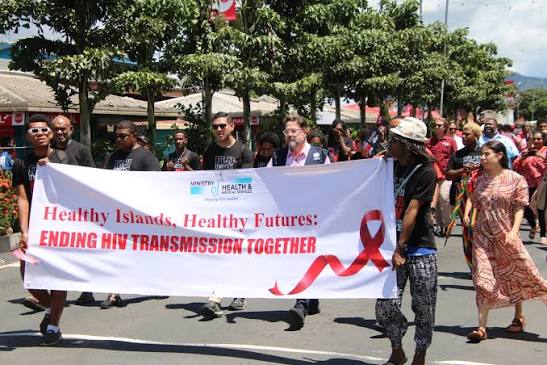
Fiji Declares National HIV Emergency as Diagnoses Surge Sixteenfold
Authorities launch a multi-agency public health campaign to expand free testing, treatment, and harm-reduction services
Fiji has announced a nationwide health response to address a significant rise in HIV cases and ensure that all residents can access essential medical care.
On Wednesday, Health Minister Dr. Atonio Lalabalavu shared the emergency declaration, explaining that national agencies are joining forces to provide rapid medical support, expand testing, and protect community well-being across the islands.
Official reports indicate that about one in every 60 adults in Fiji currently lives with HIV, following an increase in new infections over recent years. Health specialists explain that the virus spreads primarily through intimate sexual contact and shared needles among individuals using illicit substances.
Additionally, routine screenings revealed that two out of every 100 expecting mothers carry the virus, highlighting an urgent need for early maternal healthcare to protect newborns from infection.
To safeguard public health, authorities are delivering free daily treatments, distributing protective preventive medications, and setting up clean needle programs to stop infections before they start.
Furthermore, global partners, including Australia, New Zealand, India, and United Nations health bodies are providing financial resources and medical supplies to back the local effort.
By encouraging open community conversations and delivering accessible healthcare without judgment, health workers aim to ensure that everyone receives the care and dignity they deserve.
Fiji Declares National HIV Emergency as Diagnoses Surge Sixteenfold
International
Kim Yo-jong: Only ‘Idiots’ Think North Korea Will Give Up Nuclear Weapons

-

 metro3 days ago
Lagos Power Outage: Ikeja Electric Blames TCN as Businesses, Homes Groan
-

 International2 days ago
Islamic Council Condemns Attempted Attack on Holy City of Mecca
-
 Politics3 days ago
2027: APC Governors Reject Wike’s Rainbow Coalition, Insist on Party Loyalty
-
 News2 days ago
Keep Politics Out of My Office — Ogbomoso Grand Chief Imam Warns Politicians, Bloggers
-

 metro1 day ago
Niger Mosque Abductions: Terrorists Execute 30 of 500 Captive Muslim Worshippers
-

 International3 days ago
US Court Blocks Trump Visa Rule Limiting Stay of Foreign Students, Journalists
-

 metro3 days ago
A Son Wouldn’t Have Done Better — Dangote Speaks on Daughters, Succession
-
 Entertainment2 days ago
BREAKING: Olu Jacobs Dies at 84, Atiku Mourns Cultural Icon