
International
Nigeria Joins 106 Nations in UN Vote Calling for Ceasefire, Peace in Ukraine
Nigeria Joins 106 Nations in UN Vote Calling for Ceasefire, Peace in Ukraine
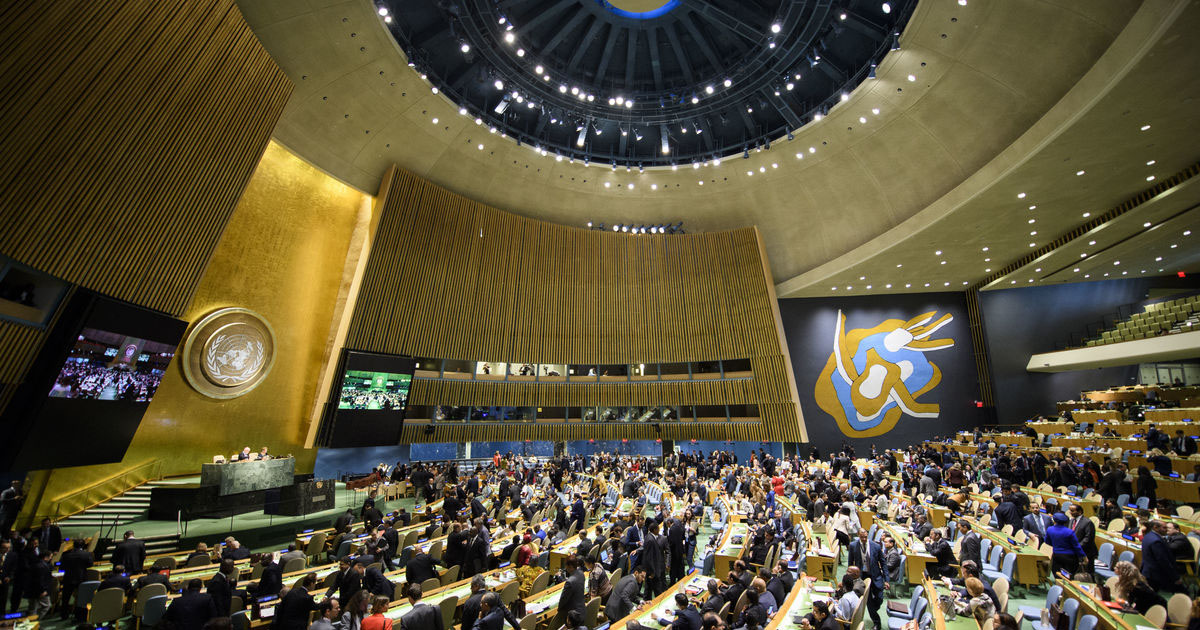
On the fourth anniversary of Russia’s full-scale invasion of Ukraine, Nigeria joined 106 other UN member states in voting for a resolution calling for peace, sovereignty, and humanitarian protection for Ukraine. The vote took place during an emergency special session of the United Nations General Assembly on Tuesday.
The resolution, titled “Support for Lasting Peace in Ukraine”, was adopted with 107 votes in favour, 12 against, and 51 abstentions, including the United States. It calls for a comprehensive, just, and lasting peace, an immediate and unconditional ceasefire, the exchange of prisoners of war, and the return of civilians forcibly transferred, including children. The General Assembly reaffirmed its commitment to Ukraine’s sovereignty, independence, unity, and territorial integrity within internationally recognised borders.
UN General Assembly President Annalena Baerbock described the war as shattering the peaceful aspirations of Europe and stressed that “war must never be the new normal.” She highlighted that generations in Europe have long lived in peace, but Russia’s invasion disrupted this reality.
READ ALSO:
- Gunmen Kill 25, Burn Homes in Twin Adamawa Village Attacks
- ‘Peter Obi Fuels Political Tension in Edo’ — Govt Responds After ADC Attack in Benin City
-
Tinubu Urges Senate to Amend Constitution for State Police Amid Rising Insecurity
UN Secretary-General António Guterres called the conflict a “stain on our collective conscience” and a continuing threat to regional and international security. He warned that prolonged warfare increases civilian casualties, with 2025 witnessing the highest number of civilian deaths in Ukraine since the invasion began. Guterres urged the international community to “use every diplomatic tool” to secure a full and unconditional ceasefire as a first step toward lasting peace.
During the session, Ukraine’s Deputy Foreign Minister Mariana Betsa condemned the invasion as a “war against the rules-based international order,” citing attacks on civilians, nuclear threats, and the forced deportation of children as potential war crimes. She reiterated that Ukraine rejects territorial concessions, insists on sovereignty as a red line, and called for stronger sanctions, air defense, binding security guarantees, and accountability for war crimes.
Conversely, the Russian Federation’s delegate rejected the resolution’s narrative, accusing European states of escalating the war while ignoring negotiations. Moscow reaffirmed its preference for diplomacy and stated that any settlement must address “root causes” and reflect “new territorial realities.”
The resolution demonstrates the broad international support for Ukraine, highlights Nigeria’s commitment to multilateral diplomacy, and emphasizes the urgent need for peaceful conflict resolution and adherence to international law as Russia’s invasion enters its fifth year.
Nigeria Joins 106 Nations in UN Vote Calling for Ceasefire, Peace in Ukraine








International
Trump Orders US Navy to Blockade Strait of Hormuz After Iran Talks Collapse

Trump Orders US Navy to Blockade Strait of Hormuz After Iran Talks Collapse
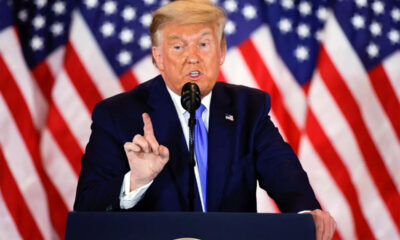
Donald Trump has ordered the United States Navy to begin an immediate blockade of the Strait of Hormuz, escalating tensions with Iran after the collapse of critical peace talks in Islamabad.
The directive, announced Sunday via Truth Social, signals a major shift from diplomacy to military pressure in one of the world’s most sensitive geopolitical flashpoints. Trump said U.S. naval forces would intercept all vessels attempting to enter or leave the Strait of Hormuz, particularly those suspected of paying transit tolls to Iran, which he described as “extortion.”
The move follows the breakdown of high-level negotiations between Washington and Tehran, widely seen as a rare attempt to de-escalate tensions. Although Trump acknowledged that discussions were partly productive, he insisted that the core issue—Iran’s nuclear programme—remained unresolved.
Sources familiar with the talks revealed that the مذاکرات collapsed over Iran’s refusal to give up its enriched uranium stockpile and its insistence on maintaining control over shipping activities in the strategic waterway. The Iranian delegation, led by Mohammad Baqer Ghalibaf, blamed the United States for failing to build trust during the negotiations.
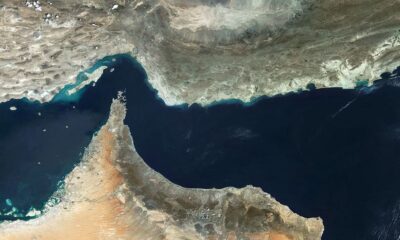
The Strait of Hormuz blockade carries enormous global implications. The narrow waterway handles roughly 20% of global oil and liquefied natural gas shipments, making it one of the most critical energy chokepoints in the world. Any disruption threatens to send shockwaves through global markets.
READ ALSO:
- Elon Musk Slams South Africa Over Starlink Ban, Calls Policy ‘Racist’
- Court Orders Forfeiture of Pastor Ebonyi’s Hotel, School, Factory Over Alleged N1.39bn Fraud
- Lagos 2027: APC Succession War Intensifies as Tinubu Reportedly Backs Hamzat
Indeed, oil prices have already surged amid the crisis, with Brent crude and WTI climbing above $115 per barrel at peak levels. Analysts warn that the blockade could push prices even higher, worsening inflation and straining economies heavily dependent on energy imports.
The escalation comes just a day after the U.S. military intensified operations in the region. The United States Central Command confirmed that American forces had begun mine-clearing operations in the Strait of Hormuz, amid allegations that Iran’s Islamic Revolutionary Guard Corps deployed naval mines to restrict shipping.
Two U.S. Navy destroyers, USS Frank E. Peterson and USS Michael Murphy, were spotted transiting the strait as part of efforts to secure maritime routes and ensure safe passage for commercial vessels.
Trump framed the blockade as a defence of global shipping freedom, warning that any Iranian attack on U.S. or allied vessels would be met with overwhelming force. However, the Pentagon has yet to release full operational details, leaving uncertainty around how the blockade will be enforced.
The situation is further complicated by developments involving Israel. Prime Minister Benjamin Netanyahu recently signalled that Israeli military operations against Iran are ongoing, despite ceasefire discussions. He stressed that Israel would act independently to protect its national interests.
Experts warn that the U.S.-Iran conflict escalation could rapidly spiral into direct military confrontation, with far-reaching consequences for global security. Shipping companies have already begun rerouting vessels, while insurers are raising premiums due to heightened risks in the Gulf.
As of now, Iranian authorities have not issued an official response to the blockade order. Meanwhile, global markets are bracing for volatility as trading resumes, with investors closely monitoring developments in the region.
The unfolding crisis highlights the fragile state of U.S.-Iran relations and underscores the strategic importance of the Strait of Hormuz to global energy supply and economic stability.
Trump Orders US Navy to Blockade Strait of Hormuz After Iran Talks Collapse
International
Elon Musk Slams South Africa Over Starlink Ban, Calls Policy ‘Racist’
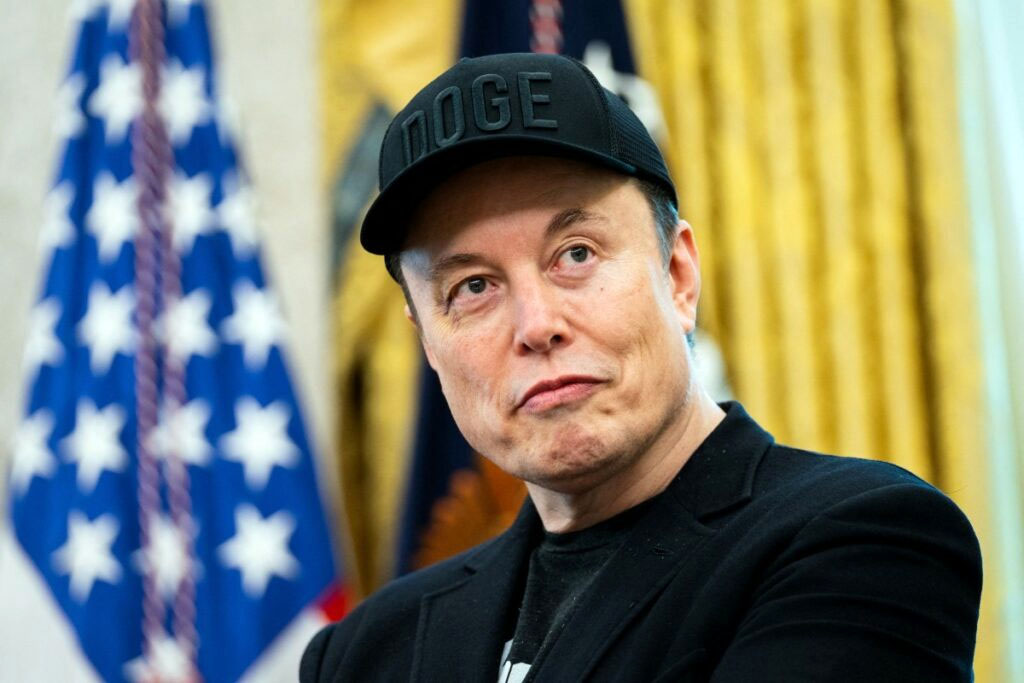
Elon Musk Slams South Africa Over Starlink Ban, Calls Policy ‘Racist’
Elon Musk has escalated his criticism of South Africa, accusing the government of racial discrimination following the continued refusal to grant an operating licence to his satellite internet service, Starlink.
In a strongly worded post on X (formerly Twitter) on Sunday, the SpaceX founder claimed that Starlink’s application had been blocked because he is not Black, despite being born in South Africa. The billionaire further alleged that the company was informally offered a workaround involving the appointment of a Black executive to satisfy ownership requirements, a move he said he rejected on principle.
The controversy centres on South Africa’s Broad-Based Black Economic Empowerment (B-BBEE) policy, which requires companies operating in sectors like telecommunications to meet equity thresholds, typically mandating at least 30 percent Black ownership. The policy was introduced to correct deep economic imbalances created during apartheid, but it has increasingly become a point of friction for foreign investors.
South African regulators, including the Independent Communications Authority of South Africa, have consistently maintained that the rules apply uniformly to all operators and are a legal requirement for licensing. Authorities have pushed back against claims of discrimination, insisting that the policy is aimed at economic redress rather than racial exclusion.
READ ALSO:
- Court Orders Forfeiture of Pastor Ebonyi’s Hotel, School, Factory Over Alleged N1.39bn Fraud
- Lagos 2027: APC Succession War Intensifies as Tinubu Reportedly Backs Hamzat
- Machete-Wielding Man Shot Dead After Injuring Three in New York
Musk has repeatedly criticised the framework, describing it as “unashamedly racist” and claiming that such policies contradict the legacy of Nelson Mandela. He has also alleged that numerous laws in the country unfairly disadvantage non-Black citizens, further fuelling the ongoing debate.
Despite the standoff, Starlink has continued its rapid expansion across Africa, now operating in nearly two dozen countries where it provides high-speed internet access to underserved communities, including schools and healthcare centres. South Africa, however, remains one of the few major economies on the continent where the service is unavailable.
Musk had previously proposed initiatives to support connectivity in rural South African communities, including offers to provide internet access to thousands of schools, but those plans have stalled due to regulatory hurdles tied to ownership compliance.
As of now, the South African government has not issued an official response to Musk’s latest remarks. However, previous statements suggest that there is unlikely to be any regulatory concession without full adherence to B-BBEE requirements.
The dispute highlights a broader tension between South Africa’s post-apartheid transformation policies and the expectations of global technology investors. Analysts say the outcome could shape future investment decisions and influence how African nations balance economic redress with the need to attract international business.
Elon Musk Slams South Africa Over Starlink Ban, Calls Policy ‘Racist’
International
Machete-Wielding Man Shot Dead After Injuring Three in New York
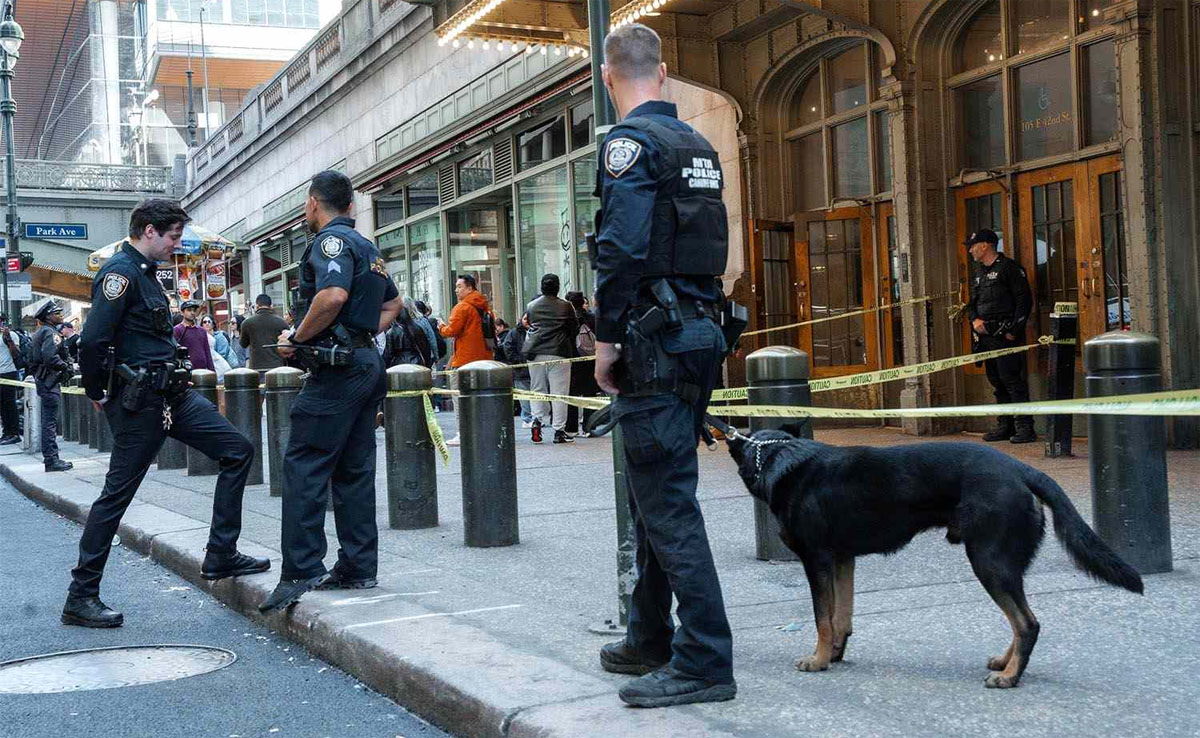
Machete-Wielding Man Shot Dead After Injuring Three in New York
A machete-wielding man who allegedly identified himself as “Lucifer” was shot dead by police after attacking three people at a subway station in New York City on Saturday, in a violent incident that triggered panic across the transit system and led to temporary train disruptions.
The suspect, identified as 44-year-old Anthony Griffin, reportedly launched the attack inside the subway network in Queens before being confronted by responding officers. Authorities said the incident began at the 7 train platform, where commuters were suddenly attacked in a series of violent slashes.
Police reported that the first victim, an 84-year-old man, was struck on the head. Griffin then allegedly moved through the station and attacked a 65-year-old man, causing injuries to his head and face, before proceeding to another platform where a 70-year-old woman was cut on the shoulder.
The attacks caused chaos inside the station, with passengers fleeing as the suspect moved between platforms, continuing the rampage before officers arrived at the scene.
READ ALSO:
- Gunmen Kill Imo Traditional Ruler, Security Operatives in Brutal Attack
- “I’m the Boss” — Anthony Joshua Fires Back at Tyson Fury Amid Fight Tension
- Nigerians Blast Power Minister Adelabu as Two-Week Electricity Promise Fails
According to the New York City Police Department, officers quickly located the suspect and issued repeated commands for him to drop the weapon. Police Commissioner Jessica Tisch said Griffin ignored at least 20 instructions to disarm and instead advanced toward officers while holding the machete and behaving erratically.
Officials said the suspect repeatedly claimed he was “Lucifer” during the confrontation, heightening concerns about his mental state as the situation escalated rapidly.
Police said an officer opened fire when Griffin advanced toward them with the weapon still raised. He was struck twice and later pronounced dead at Bellevue Hospital.
All three victims were also taken to hospital for treatment. Authorities confirmed their conditions were stable following the attack, though they sustained significant injuries.
Officials further revealed that Griffin had previously been arrested three times, although he had no documented history indicating classification as an emotionally disturbed person under police records. Investigators are now reviewing CCTV footage and eyewitness accounts to determine the full sequence of events.
The attack caused temporary disruptions across subway services as emergency responders secured the area and evacuated passengers from affected platforms. Train operations were later restored after the scene was brought under control.
New York Governor Kathy Hochul condemned the incident, describing it as a “senseless act of violence,” while city officials praised the rapid response of police officers in preventing further harm. Authorities say investigations are ongoing as they assess security measures across the city’s transit network following the attack.
Machete-Wielding Man Shot Dead After Injuring Three in New York

-
 metro21 hours ago
JUST IN: FG Publishes List of 48 Individuals, Groups Linked to Terrorism Financing in Nigeria
-

 Health3 days ago
Sleeping Positions: How They Affect Your Health and Which Ones to Avoid
-
 Politics1 day ago
Did Faleke Just Reveal Lagos’ Next Governor? Party Moves Begin
-

 metro23 hours ago
42-Year-Old Married Woman Declared Missing Found in Hotel with Man
-

 Education2 days ago
Germany Opens Fully Funded Scholarships for Nigerians, Africans
-
 Politics22 hours ago
2027: Oyo APC Governorship Aspirant Saheed Oladele Resigns From Party
-
 metro23 hours ago
ADC Threatens Civil Disobedience To Force INEC Chairman To Resign
-
 Business2 days ago
Nigeria May Face ₦2,000 Petrol Price Without Intervention, TUC Warns FG