

Business
Nigeria’s crude oil exports hit three-year low, says report
West Africa’s oil exports slumped to the lowest level in at least three years last month as infrastructure woes for some of Nigeria’s biggest streams combined with gradually waning output in Angola.
Combined flows from the region fell to 3.41 million barrels a day in January from 3.8 million barrels a day in December, according to tanker-tracking data compiled by Bloomberg.
It was the lowest for both countries since January 2018, when Bloomberg started monitoring shipments in detail.
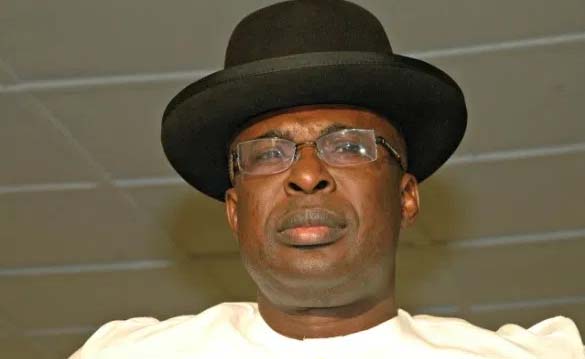
The report came just as Minister of State for Petroleum Resources, Chief Timipre Sylva, has said that with the completed and ongoing modular refineries in Nigeria, the Federal Government is set to tackle unemployment and incessant pipeline vandalism.
Nigeria, West Africa’s biggest oil producer, has seen its shipments curtailed in recent months by infrastructure issues affecting its biggest crude streams.
The nation’s loadings fell to 1.37 million barrels a day in January, the lowest for four years, according to separate data based on loading schedules compiled by Bloomberg.
Exxon Mobil Corp.’s Qua Iboe stream was placed under force majeure until late January following a fire in mid-December at the grade’s oil export terminal.
Revised loadings of Qua Iboe slumped to about 61,000 barrels a day over December and January, the lowest rate in more than four years while liftings averaged 190,000 barrels a day last year, the loading data show.
Nigeria’s Brass crude flows also slumped as shipments were rescheduled following pipeline problems late last year.
Eni SpA lifted a force majeure, a clause in contracts that allows deliveries to be suspended, on Brass exports in mid-December following repairs of two pipelines that lead to the Brass oil terminal.
Exports of Royal Dutch Shell Plc’s Forcados crude, the nation’s biggest oil stream, were also briefly placed under restrictions last month after a pipeline for that facility experienced leaks, although crude flows weren’t fully halted.
However, according to Bloomberg, Nigeria’s export problems may be temporary, as infrastructure is repaired and oil flows are restored.
However, it stated that Angola’s dwindling outflows look symptomatic of a longer-term decline in the country’s oil output.
Africa’s second-largest oil producer shipped 1.05 million barrels a day last month, slumping from an average of 1.25 million barrels a day last year, the tanker-tracking data show.
When Angola joined the Organisation of Petroleum Exporting Countries (OPEC) in 2007 it was pumping about 1.5 million barrels a day and output was rising as a string of new deepwater discoveries were brought into operation by companies including Total SE, BP Plc, Eni and Chevron Corp.
At the time, Angola said it would accept an OPEC production quota once its output hit 2 million barrels a day, a level that it struggled to reach on a sustained basis before a steep decline in rates as its offshore fields began to exceed the pace of additional supplies from new discoveries.
Linking smaller satellite fields back to existing floating production units helped the country to keep production close to its two million barrel-a-day target for several years, but declines really began to set in from the beginning of 2016, when the stock of new fields available for development began to dwindle.
Meanwhile, the Minister of State for Petroleum Resources, Sylva, has said that with the completed and ongoing modular refineries, the federal government is set to tackle unemployment and incessant pipeline vandalism.
Sylva spoke during the ground-breaking of an energy infrastructure park being developed by Atlantic International Refinery and Petrochemical Limited in partnership with the Nigerian Content Development and Monitoring Board (NCDMB) at Okpoama, Brass Local Government Area, Bayelsa State.
A statement by the NCDMB in Abuja noted that the minister also inaugurated three corporate social responsibility (CSR) projects executed by the company.
The projects included the Okpoama Cottage Hospital, Iseleama Health Centre and Okpoama Community Water Works. Sylva added that one of the best strategies to curb restiveness in the Niger Delta region is to create jobs and opportunities for youths.
He listed part of his mandate to include collaborating with players in the private sector to establish oil and gas facilities, including modular refineries, which will ensure value addition to the crude oil, products sufficiency, create jobs in-country and curb pipeline vandalism.
He charged the people of Okpoama and other parts of the Niger Delta to create an investment-friendly environment that will attract other oil and gas and manufacturing facilities to the region.
Executive Secretary of NCDMB, Mr Simbi Wabote, listed the various elements of the energy park project to include 2,000 barrels per day modular refinery, a power plant and a jetty.
He added that the project will serve as a catalyst for infrastructural development and economic activities in Bayelsa State.
-Thisday











Auto
Jetour T1 Storms Abuja as Automaker Accelerates Nigeria Expansion
Jetour T1 Set to debut in Abuja as Expansion Gains Momentum
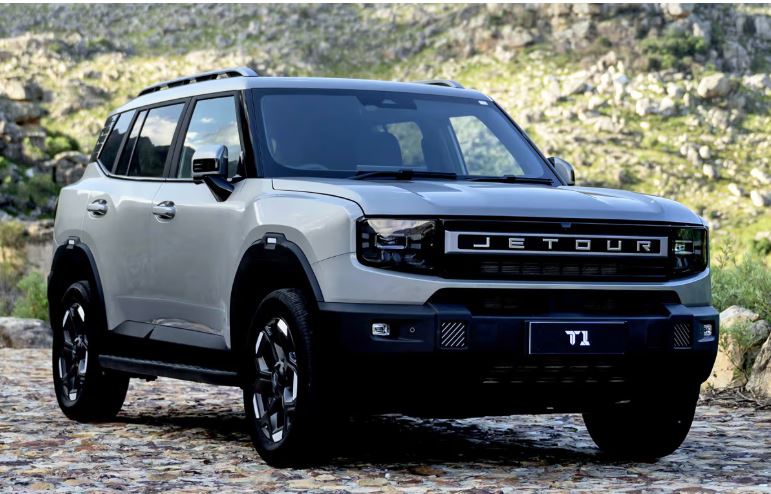
Following a successful debut in Lagos, Jetour Nigeria will host the Jetour Experience Abuja from September 22 to 24, 2026, positioning its all-new T1 model as a major competitor in the country’s growing adventure SUV market.
The three-day event in the Federal Capital Territory will give prospective buyers and motoring enthusiasts direct access to product demonstrations, expert-led technical sessions, and hands-on test drives.
“Strong participation, extensive test drives, and significant sales enquiries at the Lagos edition, coupled with growing demand from Abuja residents, influenced the decision to bring the experience to the nation’s capital,” the company said in a statement. The show holds at Maha Event Centre, Area 8, Garki.
To support its growing national footprint, Jetour Nigeria has established a network of seven accredited dealers: Elizade Nigeria Limited, New Era AutoVehicle Services Limited, Kojo Motors, Germaine Auto Centre, Tab Autos Limited, R.T. Briscoe Motors, and Mandilas Autos. The partnerships cover retail sales, genuine spare parts supply, and comprehensive after-sales maintenance.
READ ALSO:
- Kidnapped Female Police Officer Found Dead in Ebonyi as Suspect Leads Police to Remains
- CNN, MS NOW, Politico Sue Trump Over White House Access Ban
- JAMB Allows Candidates to Change Lost SIM, Email Addresses
The T1 enters the market with a focal point on balance—combining off-road capability with urban comfort.
The smart T1 has the following features-
Dimensions: 4,705mm (L) x 1,967mm (W) x 1,843mm (H) |; Wheelbase: 2,800mm; and
Powertrains: 1.5L Turbo / 2.0L Turbo (254 hp, 390 Nm torque).
The drivetrain is BorgWarner XWD Intelligent 4WD | 7-Speed DCT or 8-Speed Automatic. Terrain Capability: 199mm ground clearance, 600mm wading depth, and 28° approach/departure angles.
Other features include 15.6-inch HD touchscreen, Qualcomm Snapdragon 8155 platform, 8-speaker audio, 5-seater configuration with 574 litres of rear luggage space, 85 percent high-strength steel chassis alongside a Level 2 Advanced Driver Assistance System (ADAS), which includes Adaptive Cruise Control, Lane Keeping Assist, Forward Collision Warning, and Autonomous Emergency Braking.
Since its Nigerian market entry, Jetour has secured several local and international automotive honors, including Fastest Growing Auto Brand of the Year and Auto Brand of the Year.
Jetour T1 Set to debut in Abuja as Expansion Gains Momentum
Auto
Abuja Demand Rises as Jetour Brings X70 Plus Experience to FCT
Abuja Demand Rises as Jetour Brings X70 Plus Experience to FCT
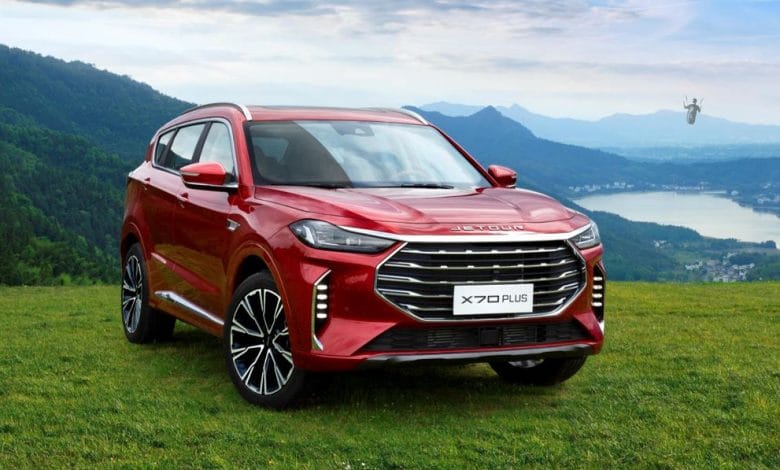
Jetour Nigeria is taking its seven-seater X70 Plus SUV to Abuja as rising interest from motorists in the Federal Capital Territory and neighbouring states fuels the brand’s latest push to deepen its presence across Nigeria.
The X70 Plus will headline the Jetour Experience Abuja, holding from September 22 to 24 at Maha Event Centre, Area 8, Garki, following the strong response recorded during the Lagos edition, where motorists turned out for test drives and made enquiries about Jetour models.
The Abuja activation is designed to give prospective buyers direct access to the X70 Plus and other models, with opportunities to test-drive the vehicles, engage product specialists and experience their technology, safety and comfort features.
The X70 Plus is positioned as a family-oriented SUV, offering seven-seat capacity and a range of features targeted at customers seeking comfort, technology and practicality.
The SUV is available with 1.5-litre and 1.6-litre turbocharged engine options, with outputs of up to 145kW and 290Nm of torque, paired with a dual-clutch automatic transmission.
READ ALSO:
- Enough Is Enough: Muslim Supporters Demand New Man United Owners
- Stray Bullet Kills 400-Level IBBU Student During Land Dispute in Niger
- Oyo Police: Student Who Died by Suicide Was Charged With Assault, Not ₦8,000 Debt
Its safety equipment includes front, side and curtain airbags, Vehicle Stability Control, Hill-Start Assist, Hill-Descent Control and a 360-degree panoramic camera with 2D and 3D viewing modes. Advanced Driver-Assistance Systems are also available.
Inside the cabin, the X70 Plus features a 10.23-inch LCD touchscreen, dual-zone climate control with air purification, wireless charging, a panoramic sunroof and an eight-speaker audio system.
Jetour Nigeria, the authorised distributor of the brand in the country, currently operates through seven accredited dealers: Elizade Nigeria Limited, Mandilas Autos, R.T. Briscoe Motors, Germaine Auto Centre, Kojo Motors, Tab Autos Limited and New Era Auto Vehicle Services Limited.
The company said the dealer network supports vehicle sales, genuine spare-parts supply and after-sales services across the country.
Jetour has also received recent industry recognition in Nigeria, including Fastest Growing Auto Brand by the Nigeria Auto Journalists Association and Auto Brand of the Year at the Nigeria Transport Lecture and Awards.
The Abuja experience is expected to provide prospective customers in the FCT and surrounding states with direct access to the X70 Plus and other Jetour models as the brand continues its national market expansion.
Abuja Demand Rises as Jetour Brings X70 Plus Experience to FCT
Auto
Jetour Unleashes F700 Hybrid Pickup as Abuja Experience Begins Tuesday
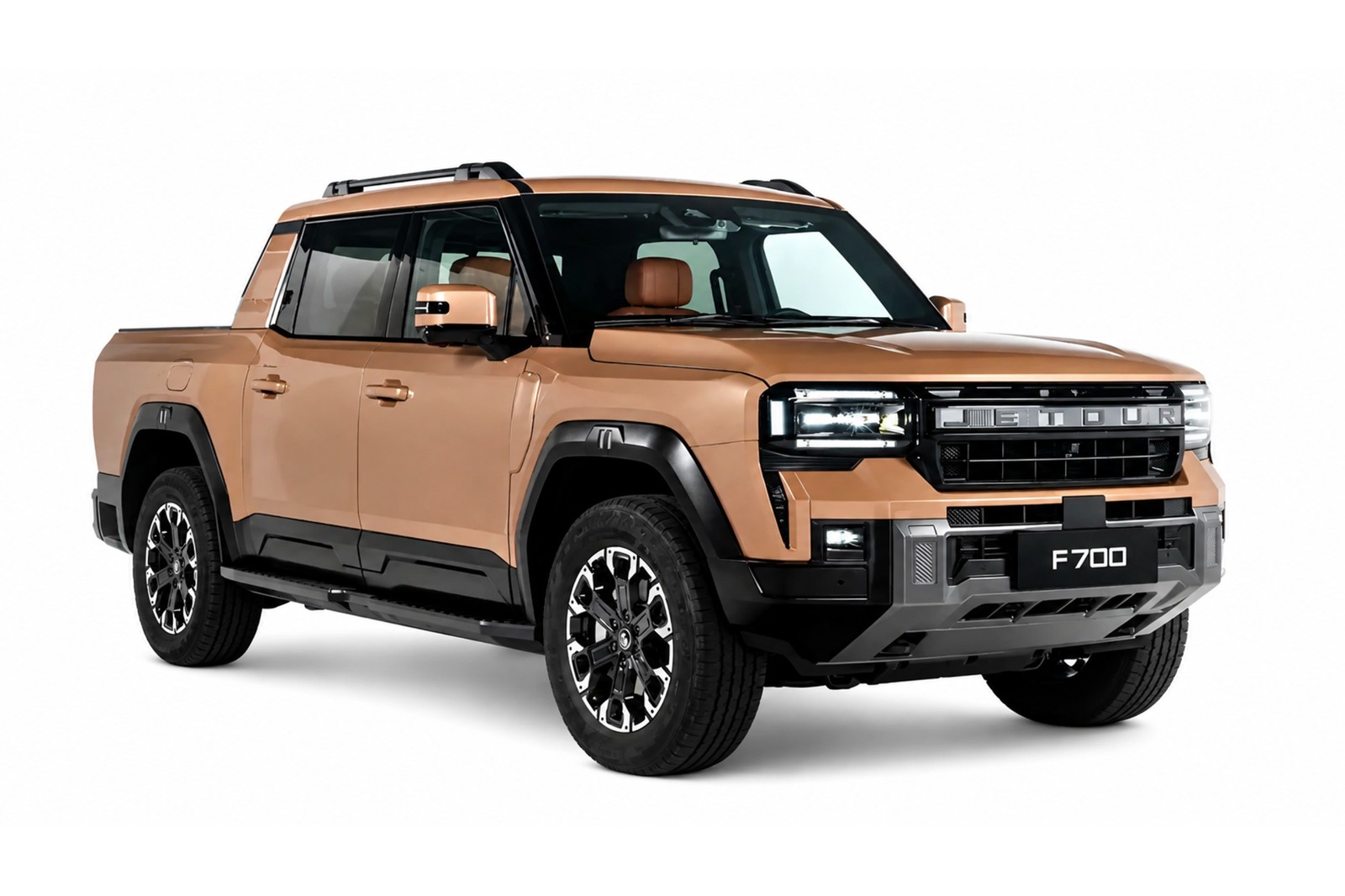
Jetour Unleashes F700 Hybrid Pickup as Abuja Experience Begins Tuesday
Jetour is taking its premium pickup game to Abuja as the automaker prepares to showcase the powerful F700 hybrid pickup at the Jetour Experience Abuja, bringing a blend of electrified performance, luxury and rugged off-road capability to the Federal Capital Territory.
The three-day event, scheduled for September 22 to 24 at Maha Event Centre, Area 8, Garki, comes on the heels of strong reception in Lagos and is expected to draw commercial fleet operators, corporate buyers and luxury pickup enthusiasts keen to experience Jetour’s latest hybrid workhorse.
Following high-impact reception in Lagos, the Abuja activation, which holds at Maha Event Centre, Area 8, Garki, answers massive demand from commercial fleet leaders, corporate buyers, and luxury truck enthusiasts eager for an electrified workhorse built without compromise.
Jetour’s rapid ascendancy as Nigeria’s Fastest Growing Auto Brand and Auto Brand of the Year is backed by nationwide after-sales infrastructure, certified technicians, and genuine parts availability through its authorized dealer network including Elizade Nigeria Limited, New Era AutoVehicle Services, Germaine Auto Centre, Kojo Motors, Mandilas Autos, R.T. Briscoe and
Tab Autos.
The Ultimate Hybrid Powerhouse
Engineered on the heavy-duty platform of Jetour’s G700 luxury SUV, the double-cab F700 redefines utility.
READ ALSO:
- Delta Police Intercept Sienna With Military Uniforms, Suspected Drugs
- Jehovah’s Witnesses Adjust Blood Transfusion Rules, Allow Personal Choice
- Ogun 2027: APC Highlights Adeola’s Projects, Challenges Adebutu
Stretching nearly 5.5 meters, it commands road presence via a high-tensile ladder-frame chassis and independent double-wishbone suspension engineered for punishing industrial demands and refined highway cruising alike.
Under the hood lies the revolutionary Kunpeng Super Hybrid CDM-O powertrain—pairing dual high-output electric drive motors with an onboard turbo petrol generator that seamlessly feeds the battery pack on the fly, eliminating range anxiety entirely.
According to Jetour, an advanced CATL 800V architecture surges the battery from 20% to 80% in just 10 minutes, achieving ultra-fast charging.
The vehicle delivers a monumental combined cruising range of up to 1,300 km on a single charge and tank, and achieves exceptional fuel economy, sipping as low as 1.39 L/100 km.
Conquering Terrain in First-Class Luxury
Engineered for unforgiving terrain, the F700 deploys Jetour’s intelligent XWD all-wheel-drive system governed by front, center, and rear mechanical differential locks.
With 9.5 inches of ground clearance and an imposing 900 mm water-wading capability, the F700 glides through deep water crossings, unpaved construction corridors, and rocky trails effortlessly.
Inside, the cabin abandons utilitarian compromises for bespoke executive refinement, featuring
35.4-inch Panoramic “Sky Screen” dominating the dash architecture.
Also, it features the 15.6-inch Central Command Touchscreen for seamless telematics and vehicle dynamics, Sculpted Luxury Finishes combining aviation-grade acoustic insulation, premium materials, and active driver-assist safety suites.
The three-day Jetour Experience Abuja will feature live technical walkarounds, rugged dynamic tests, and hands-on driving trials at the capital.
Jetour Unleashes F700 Hybrid Pickup as Abuja Experience Begins Tuesday
-

 International3 days ago
BREAKING: Bloodbath at Pakistan Mosque as Suicide Blast Kills 21, Injures 103
-

 Politics3 days ago
Yayi Ancestry Row: Stepmother Sets Record Straight as Legal Battle Looms
-

 Sports3 days ago
Falconets Thrash England 3-0, Face Colombia in U-20 World Cup Quarter-Finals
-

 Entertainment2 days ago
“She Wanted to Stay Single”: Rema Opens Up About Rejection That Inspired Hit Song ‘Oh No’
-
 metro3 days ago
Tinubu Orders Full Probe Into 37 Miners’ Deaths in NSCDC Custody
-

 metro2 days ago
Niger Miners’ Deaths: Families Demand Compensation, Justice for Victims
-

 metro2 days ago
Mambilla: ICC Raises Questions Over $500,000 Payment to Atiku’s Former Wife
-

 metro2 days ago
Oyo Police: Student Who Died by Suicide Was Charged With Assault, Not ₦8,000 Debt
You must be logged in to post a comment Login