
News
NIN linkage: Millions to lose access to their money as banks ‘move’ to block accounts
NIN linkage: Millions to lose access to their money as banks ‘move’ to block accounts
Over 70 million bank customers are at risk of losing access to their accounts when the Central Bank of Nigeria’s directive on restricting accounts without Bank Verification Numbers (BVN) and National Identification Numbers (NIN) goes into effect.
The CBN had on December 1, 2023, in a circular directed that a ‘Post no Debit’ restriction be placed on all bank accounts without the BVN and NIN from Friday, March 1, 2024.
‘Post No Debit’ is a term used to describe a restriction imposed by banks on specific accounts, preventing customers from making withdrawals, transfers, or any other debits from such accounts. This measure effectively freezes the funds in the account, rendering them inaccessible for the duration of the restriction.
The circular, jointly signed by the Director, Payments System Management Department, Chibuzo Efobi; and Director, Financial Policy and Regulation Department, Haruna Mustapha, read, “It is mandatory for all Tier-1 bank accounts and wallets for individuals to have BVN and/or NIN. It remains mandatory for Tiers 2 & 3 accounts and wallets for individual accounts to have BVN and NIN.
“For all existing Tier-1 accounts/wallets without BVN or NIN: Effective immediately, any unfunded account/wallet shall be placed on ‘Post No Debit or Credit’ until the new process is satisfied. Effective March 1, 2024, all funded accounts or wallets shall be placed on ‘Post No Debit or Credit’ and no further transactions permitted. The BVN or NIN attached to and/or associated with all accounts/wallets must be electronically revalidated by January 31, 2024.”
The circular went on to warn banks in the country that a “comprehensive BVN and NIN audit shall be conducted shortly and where breaches are identified, appropriate sanctions shall be applied.”
As the deadline approached, some banks sent out messages to their customers to regularise their accounts in line with the new CBN directive. While some asked customers to visit their physical branches, others made provisions for customers to update their accounts online.
READ ALSO:
- Economy Hardship: What Nigeria should do – Dangote
- Ex-Power Minister, Agunloye files N1bn suit against EFCC for declaring him wanted
- Why Nigeria’s best is always in its past – Farooq Kperogi
FirstBank Nigeria in an email to customers said, “Please ensure that your Bank Verification Number and National Identification Number are linked to your account number on or before February 29, 2024.
“You can seamlessly update your account information with your BVN and NIN by visiting any FirstBank branch close to you. Please note that the Central Bank of Nigeria through its circular: PSM/DIR/PUB/CIR/001/053 dated December 1, 2023, has directed that effective March 1, 2024, all funded accounts without BVN shall be placed on ‘Post No Debit or Credit’ and no further transactions permitted.”
Ecobank Nigeria wrote, “Please be informed that the Central Bank of Nigeria through its circular dated December 1, 2023, has announced that all accounts without Bank Verification Number and/or the National Identity Number would not be able to carry out transactions from March 1, 2024.
“Consequently, you will be required to update your account information with your National Identification Number and Bank Verification Number if you have not done so already.” It, however, offered an online solution.
Fintech firm, OPay, also called on its customers to complete the regularisation of their accounts by linking their BVN or their NIN as mandated by the apex bank, offering them both online and offline options.
A Tier-1 account refers to a bank account that can be opened with minimal or no form of documentation. Such an account can be opened with a passport photograph and has a limit of N50,000 deposit and an operating balance of N200,000 and is mostly not linked to the BVN and is targeted at the unbanked population.
This space is dominated by fintech firms and there are concerns that the lax Know Your Customer requirements are loopholes that are being used to perpetuate fraud.
The National President of the Association of Mobile Money and Bank Agents in Nigeria, Sarafadeen Fasasi, who called for an extension of the deadline, said while the policy was a good move to improve banks’ KYC requirements, its implementation was worrisome.
He said, “We are all aware that it is a good policy for the system for us to have good KYC, but unfortunately, what we have a challenge with is the implementation. This is another wrong implementation. Before you give a deadline, you must have provided the access points. As of today, we have about 104 million NINs out of 200 million people expected to have NINs. So, there is a gap of about 100 million.
“It is the same thing with the BVN, which as of the last report was about 59.9 million out of 134 million expected bank accounts. That means we have over 70 million accounts, which will be affected.”
According to data from Statista, as of 2021, the number of active bank accounts in the country was around 133.5 million, with savings accounts making up about 120 million.
READ ALSO:
- Ukraine donates grains to Nigeria amidst food price spike
- Forex: Cardoso dancing around the problem, Bwala asks Tinubu to sack bank execs
- Just in: CBN revokes licences of 4,173 bureau de change operators
Fasasi claimed that the National Identity Management Commission lacked the capacity to deliver 100 million NINs within the required timeframe.
He said, “The question is, can the NIMC deliver the gap of about 100 million NINs within the deadline? The answer is no, so why should this drive Nigerians into another problem? For BVNs, we have a huge gap to deliver and only bank branches can enrol BVN as of today.
“Based on our research, about 300 local government areas out of the 774 LGAs in Nigeria have no bank branches; so, who are those who are going to provide BVN enrolment at those LGAs? It means that people are going to run into trouble.
“Also, the highest that the banks have done is 500,000 enrolment per month. We are not ready for this. Why the rush? Why not plan that every month, this is what we want to achieve based on our capacity and access points?”
He lamented that this was coming at the same time as the National Communications Commission had directed telecom companies to bar mobile lines without the NIN.
“Who is pursuing us in Nigeria in this critical period where everyone is groaning under adverse economic conditions? They want to add extra trauma; I think we need to reconsider this,” he concluded.
The Chairman, Consumer Rights Awareness, Advancement and Advocacy Initiative, Moses Igbrude, said the apex bank ought to assess the level of compliance before wielding the big stick.
He said, “You must check the challenges and the parties who are responsible for the NIN and BVN. What of Nigerians in the Diaspora? They should give more time for this linkage so that they will not disrupt the banking system.
“It is a multifaceted issue involving many players. What is the infrastructure required for them to work? Otherwise, they will use a legal way to disenfranchise a lot of people.”
The President, Bank Customers Association of Nigeria, Dr Uju Ogubunka, called for an extension of the deadline to enable more bank customers regularise their accounts in line with the CBN directive.
Ogubunka said, “We know that some of our members have linked their accounts with the BVN/NIN as directed by the CBN. At this point, I think it will be wise to give an extension, because the telecom network has been a bit inclement and, then of course, you talk about power; some of us were unable to charge our phones for some time because there was no power. And these things are happening almost everywhere.
“People are willing to do what they’re supposed to do, but conditions within the environment are a bit difficult. So, I will personally suggest that we consider what is happening and give some extension.”
He went on to suggest that a test run where restrictions would be placed on some affected accounts might be of help in sensitising people to the importance of the directive.
“Another thing that they can do is maybe do a test run so that people will know that it is something that can be done. Some people may not even believe that it is possible to restrict transactions. So, if you do a test run for one day or even a few hours, you announce that those who have not linked up will be unable to access their accounts temporarily, maybe for 24 hours or 12 hours, then give an extension. That should help,” Ogubunka added.
READ ALSO:
- Hardship: Zaria residents ‘ambush’ BUA truck carrying foodstuffs, loot cartoons of noodles
- ‘Death to Israel’: Pro-Palestine protesters vandalize iconic New York ‘Charging Bull’ sculpture
- Tinubu appoints new FGN power company management team
He stated that there had been no reports that banks had started to restrict bank accounts without the BVN and NIN.
“No one has reported that to us yet. But then, they may not know until they want to make use of the accounts. It is not as if they are using the bank accounts every minute of the day. It is only when they want to make use of it and then see that they can’t get through, that is when they have an issue. So far, we don’t have any report on that,” he said.
Multiple bankers, who spoke on condition of anonymity, said the banks had not yet started to restrict accounts without the BVN and NIN.
They said directives had been issued from their headquarters to create a seamless linking process to avoid account deactivation.
A bank official said, “No one is deactivating accounts yet. They have been sending emails to customers to calm down so that a more seamless linking process will be communicated to customers. They will be reached via text and email. Some people used the NIN to open or update their accounts already so they won’t need to do it again.”
On the number of possible affected customers, the official stated, “We haven’t got the affected number yet. It has to be spooled by our IT team from the backend.”
Another official confirmed the directive to assist more customers via email.
“The deadline still stands; however, not all accounts are blocked because some opened theirs with the national ID from the inception. But we will be reaching out via email and text,” the official wrote to one of our correspondents.
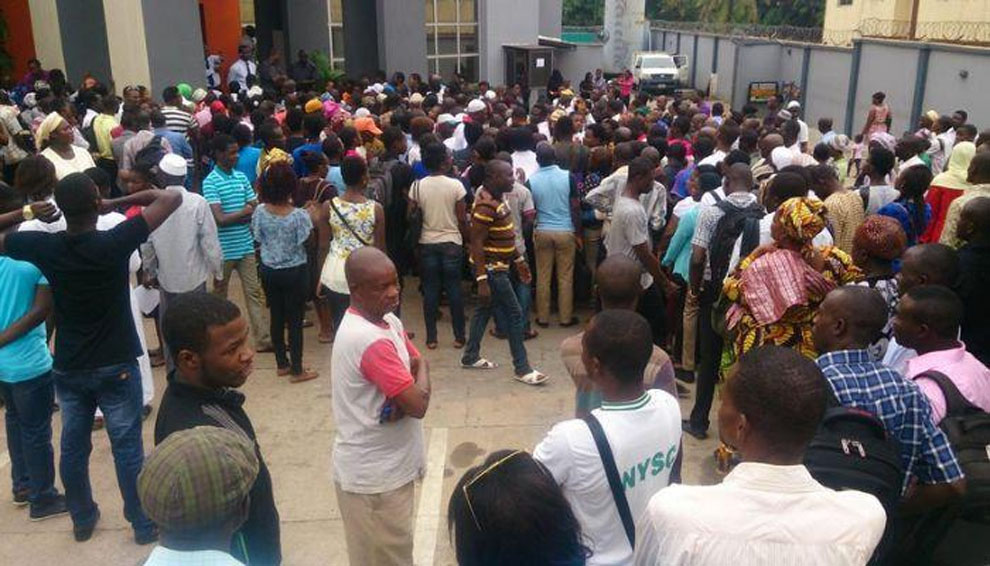
A News Agency of Nigeria report on Friday revealed that customers continued to besiege various bank branches in Lagos to meet the CBN deadline for linking BVN and NIN to their accounts.
The customers also asked the CBN to extend the deadline for them to link their BVNs and NIN with their accounts.
With the implementation of the directive, there was a significant gathering of customers at various banks as early as 8am on Friday to link their NINs with their bank accounts.
A security officer at a Guaranty Trust Bank branch in the Abule Egba area, while addressing customers who were eager to gain entry into the banking hall, said the message sent out by the bank to its customers concerning the directive was a random one.
He said not all customers that got the message were affected by the directive. This got the customers infuriated, as they said the bank should have sent out messages to only those affected. At another GTB branch in Egbeda, the bank advised customers to register online using specified codes displayed on the walls outside the banking hall.
However, at Polaris Bank, the crowd was not allowed to converge, and those who went into the banking hall were told by the customer service desk to produce their NIN slips.
Those without the slips were turned back. Customers who explained their mission to the bank’s security officers before entering the banking hall were told to get the slips.
Two bank employees used mini computers to do the first registration at the entrance before the security guards allowed the customers into the banking hall.
At Providus Bank on Nnamdi Azikiwe Road, customers were given forms and were assisted with registration simultaneously. The situation was similar at Wema Bank on Broad Street and other banks visited on Lagos Island.
Meanwhile, calls and text messages sent to the CBN spokesperson, Hakama Sidi, yielded no response as of the time of filing this report.
NIN linkage: Millions to lose access to their money as banks ‘move’ to block accounts
(PUNCH)










News
EFCC Arrests Abuja House Agent Over ₦288 Million Property Fraud
EFCC Arrests Abuja House Agent Over ₦288 Million Property Fraud
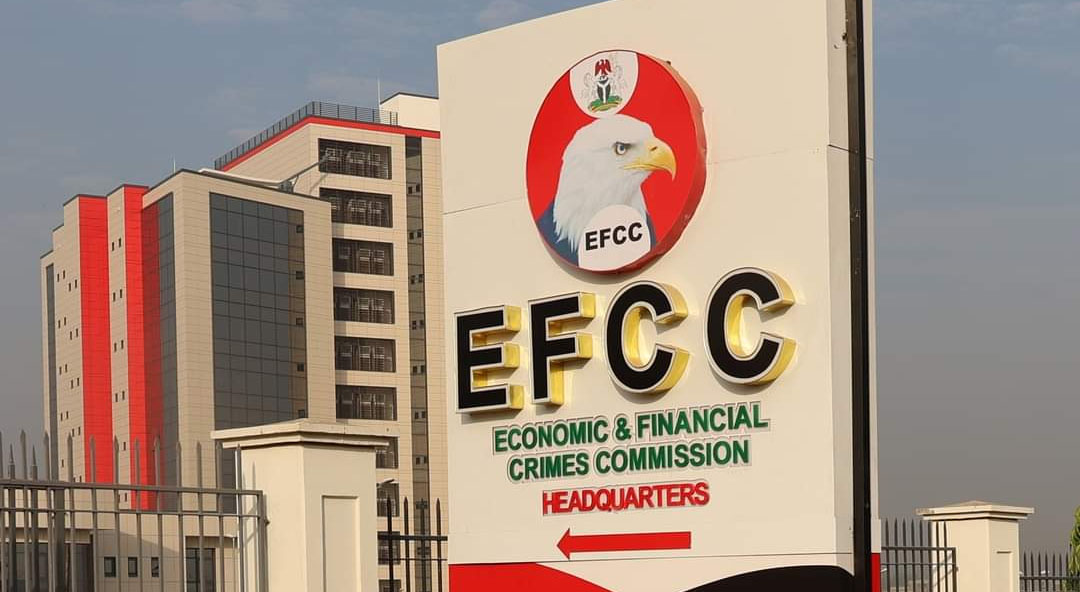
The Economic and Financial Crimes Commission (EFCC) has arrested an Abuja-based real estate agent, Hajia Adama Ahmed Adamu, in connection with an alleged ₦288 million property fraud, the agency confirmed on Wednesday.
According to the EFCC, operatives of its Ilorin Zonal Directorate apprehended Adamu following a petition from a complainant, Alhaji Tanko Yawale, who alleged that the agent collected the funds under the pretext of facilitating the purchase of a property at House 31, Haile Selassie Street, Asokoro, Abuja.
READ ALSO:
- Tinubu Govt Unveils National Laureate Prize to Reward Best Theses
- Foreign Intelligence Operations Behind Recent Nigeria Killings – Gumi
- Arise News Anchor Ikokwu Quits Journalism, Joins Politics
“Following the payment, Hajia Adamu allegedly failed to provide valid property documents and became evasive, raising suspicion and prompting a formal petition to the EFCC,” the commission stated on its official X handle.
Property-related fraud continues to be a recurring concern in Nigeria’s real estate sector, particularly in major cities like Abuja, where unsuspecting buyers often fall victim to agents posing as legitimate intermediaries. In response, the EFCC has intensified enforcement against land and housing scams, urging Nigerians to verify ownership and documentation before making payments.
The suspect is currently in EFCC custody as investigations continue. The commission also reiterated a warning to the public to remain vigilant against fraudulent property schemes and to report any suspected cases promptly.
EFCC Arrests Abuja House Agent Over ₦288 Million Property Fraud
News
Alkali resigns as Transport minister to chase Gombe governor’s seat
Alkali resigns as Transport minister to chase Gombe governor’s seat
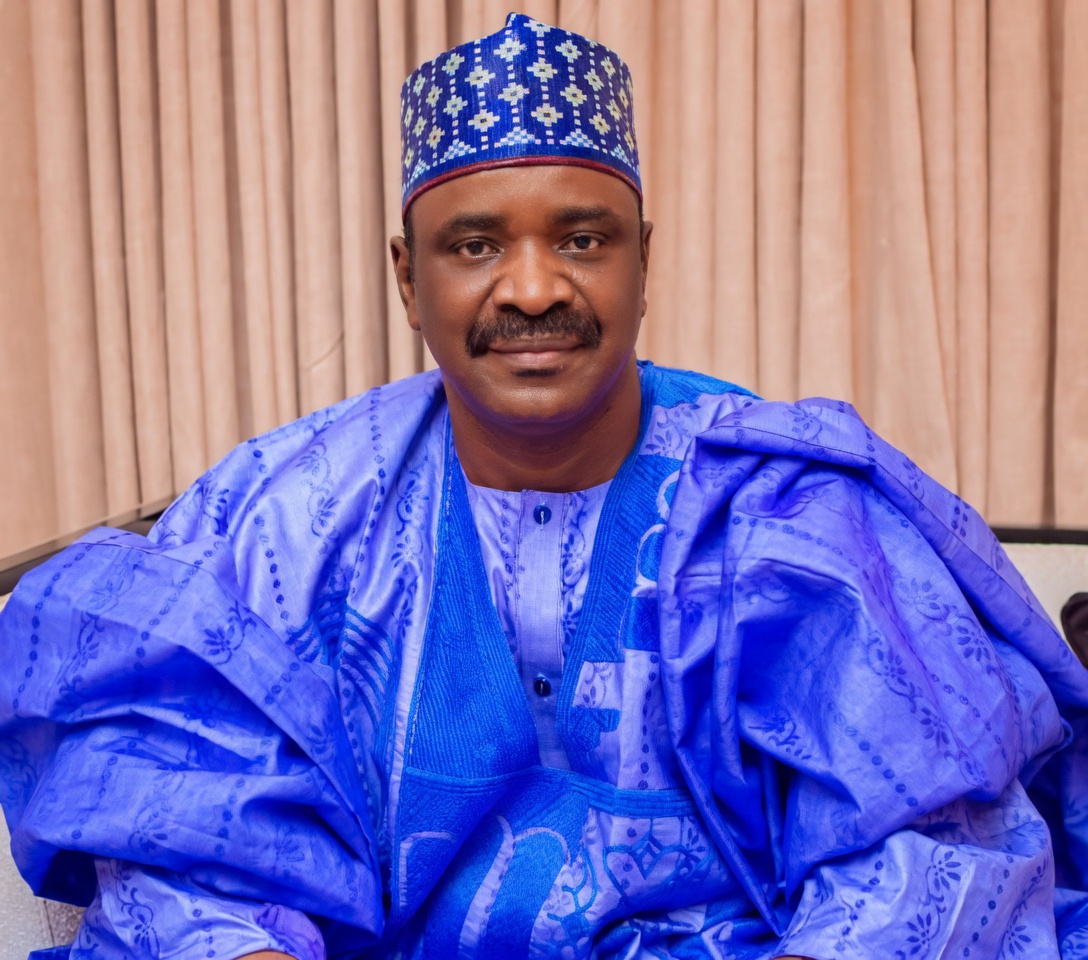
The race for Gombe State’s Government House has officially claimed its latest heavyweight contender. Saidu Ahmed Alkali has stepped down from his role as the Minister of Transportation to focus entirely on his 2027 governorship bid.
Alkali’s exit follows a high-profile meeting with President Bola Tinubu at the Presidential Villa on Tuesday.
His departure was formalized via a circular from the Office of the Secretary to the Government of the Federation (SGF), Senator George Akume.
The move is not just about personal timing; it’s about legal compliance. Alkali is adhering to:
* Section 88(1) of the Electoral Act, 2026: Which mandates officials to vacate office before seeking elective posts.
* The INEC Timetable: With party primaries for the 2027 elections looming, the window for transition is closing.
* Presidential Directive: President Tinubu has been firm that any cabinet member eyeing an elective seat must resign before the primary process begins.
Alkali, a veteran politician and former Senator for Gombe North, is now the third member of the Federal Executive Council (FEC) to trade their ministerial portfolio for a campaign trail.
His resignation leaves a vacancy in the Ministry of Transportation at a critical time for the nation’s infrastructure projects, but signals a tightening of the political battlefield in Gombe.
The circular confirming the development was issued by the Permanent Secretary, General Services Office, Ibrahim Kana.
The circular stated that the directive “followed the provisions of Section 88(1) of the Electoral Act, 2026, as well as the timetable released by the Independent National Electoral Commission (INEC) for party primaries ahead of the 2027 election.”
News
US Senator Ted Cruz Alleges Nigerian Officials Behind Christian Killings
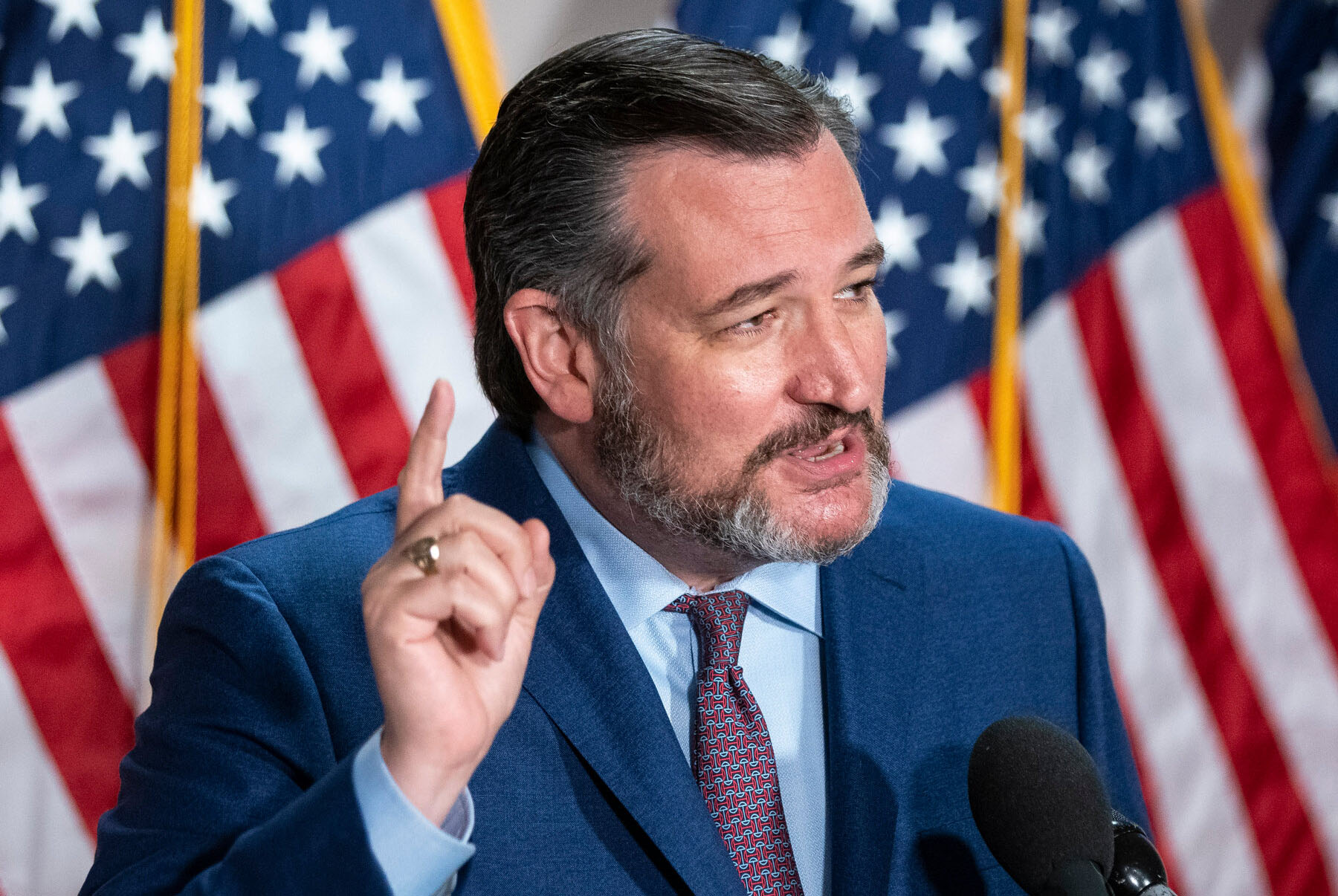
US Senator Ted Cruz Alleges Nigerian Officials Behind Christian Killings
United States Senator Ted Cruz has alleged that some Nigerian officials are complicit in attacks on Christians, warning that the United States could impose sanctions on those found responsible.
Cruz made the claim while reacting to the recent Plateau killings, particularly the deadly attack in Jos North area of Plateau State.
In a post on X, the lawmaker stated that American authorities are aware of those allegedly enabling the violence. He accused certain officials of creating an environment where Christians are “routinely persecuted and slaughtered,” adding that the U.S. has the tools to hold such individuals accountable.
The remarks followed a Palm Sunday attack on Angwan Rukuba, where gunmen invaded the community around 8:30 p.m., killing at least 12 people. Police confirmed the victims included 10 men and two women, with additional bodies later recovered during search operations.
The timing of the attack, coinciding with a major Christian observance, has heightened concerns about religious violence in Nigeria, particularly in the Middle Belt region.
READ ALSO:
- ‘I Have Not Resigned’ – Power Minister Adelabu Debunks Viral Resignation Report
- Benue Declares One-Week Easter Holiday for Civil Servants
- JAMB Releases 2026 UTME Mock Results, Delists Over 20 CBT Centres
Governor Caleb Mutfwang visited the affected community, expressing sympathy to victims’ families and vowing justice.
“Your pain is my pain, and the pain of Plateau State. My administration will pursue justice relentlessly until the perpetrators are brought to book,” he said.
The state government also announced emergency measures, including free medical treatment for the injured and dignified burials for the deceased.
To prevent further breakdown of law and order, authorities imposed a 48-hour curfew in Jos North, which lasted from midnight March 29 to April 1, 2026. Security presence was also reinforced, with additional personnel deployed to stabilise the area.
Security agencies have since intensified operations to track down those responsible for the attack, while residents remain on edge.
Cruz’s comments have reignited international scrutiny over Nigeria’s security situation, especially recurring violence in the Middle Belt.
However, the Federal Government of Nigeria has consistently rejected claims of targeted religious persecution, maintaining that the violence is driven by criminality, insurgency, and communal conflicts rather than a coordinated campaign against Christians.
President Bola Tinubu has also dismissed allegations of religious genocide, stating that Nigeria’s challenges stem from terrorism and extremism, not faith-based targeting.
Similarly, National Security Adviser Nuhu Ribadu has engaged with U.S. officials in past diplomatic efforts to clarify the country’s security realities.
Despite these assurances, incidents like the Plateau attack continue to raise both local and global concerns, with growing calls for stronger action to curb violence and ensure accountability.
US Senator Ted Cruz Alleges Nigerian Officials Behind Christian Killings

-

 Entertainment2 days ago
Funke Akindele, Toyin Abraham Spark Reactions Over Alleged Snub at Iyabo Ojo’s Premiere
-

 metro3 days ago
Jos Attack: Plateau Govt Declares 48-Hour Curfew After Deadly Assault
-

 Education2 days ago
WAEC Releases 2026 WASSCE Timetable for School Candidates
-

 Auto2 days ago
Lagos NURTW Chairman Sego Distributes Exotic Cars, Luxury Items to Cabinet Members (Video)
-

 metro2 days ago
Cars Torched as South Africans Protest Alleged Nigerian ‘Igbo King’ Coronation
-

 News2 days ago
UK Raises Visa Costs, Tightens Immigration Rules From April 8
-

 Auto3 days ago
Motoring World marks 30 years, set to rally industry leaders in Lagos
-

 metro3 days ago
Debate as OPM Pastor Marries Autistic Man to Older Woman