
News
OAU student death: Hilton Hotel owner Adedoyin sentenced to death

Just in: Hilton Hotel owner Adedoyin sentenced to death by hanging
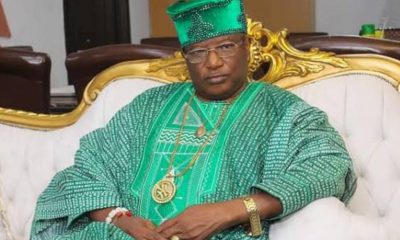
Dr Rahman Adedoyin, owner of Hilton Hotel in Ile-Ife, Osun State, has been sentenced to death by hanging.
He was found guilty for the murder of Timothy Adegoke, an OAU postgraduate student, allegedly killed in the hotel.
Osun State Chief Judge, Justice Oyebola Ojo, handed down the verdict on Tuesday, declaring Adedoyin and two of his workers guilty.
The judge said it was based on the circumstances of the case established by the prosecuting counsel, Femi Falana, SAN.
The court found Adedoyin culpable of conspiracy to commit murder, and unlawful killing of the deceased.




News
US Senator Ted Cruz Alleges Nigerian Officials Behind Christian Killings
US Senator Ted Cruz Alleges Nigerian Officials Behind Christian Killings
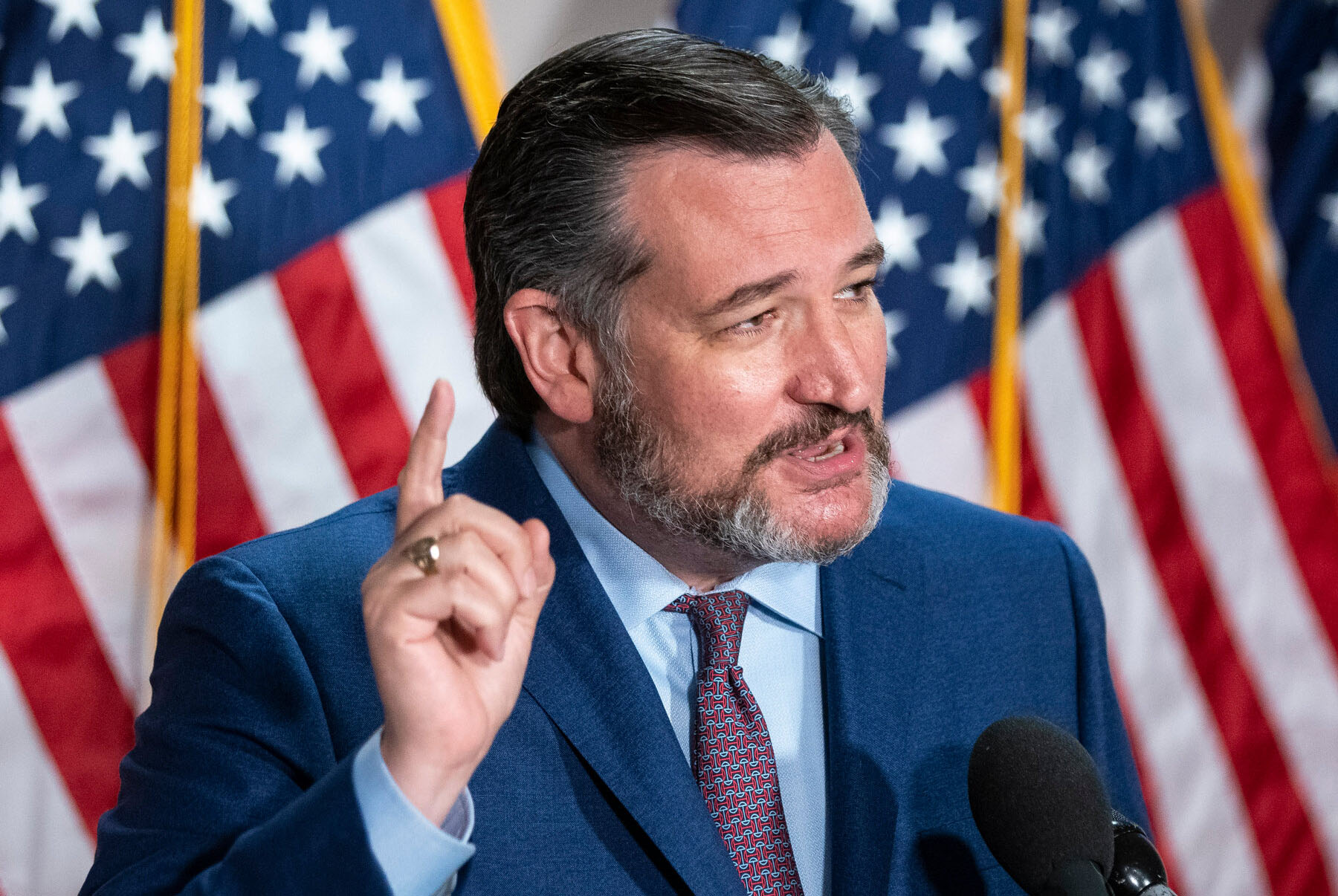
United States Senator Ted Cruz has alleged that some Nigerian officials are complicit in attacks on Christians, warning that the United States could impose sanctions on those found responsible.
Cruz made the claim while reacting to the recent Plateau killings, particularly the deadly attack in Jos North area of Plateau State.
In a post on X, the lawmaker stated that American authorities are aware of those allegedly enabling the violence. He accused certain officials of creating an environment where Christians are “routinely persecuted and slaughtered,” adding that the U.S. has the tools to hold such individuals accountable.
The remarks followed a Palm Sunday attack on Angwan Rukuba, where gunmen invaded the community around 8:30 p.m., killing at least 12 people. Police confirmed the victims included 10 men and two women, with additional bodies later recovered during search operations.
The timing of the attack, coinciding with a major Christian observance, has heightened concerns about religious violence in Nigeria, particularly in the Middle Belt region.
READ ALSO:
- ‘I Have Not Resigned’ – Power Minister Adelabu Debunks Viral Resignation Report
- Benue Declares One-Week Easter Holiday for Civil Servants
- JAMB Releases 2026 UTME Mock Results, Delists Over 20 CBT Centres
Governor Caleb Mutfwang visited the affected community, expressing sympathy to victims’ families and vowing justice.
“Your pain is my pain, and the pain of Plateau State. My administration will pursue justice relentlessly until the perpetrators are brought to book,” he said.
The state government also announced emergency measures, including free medical treatment for the injured and dignified burials for the deceased.
To prevent further breakdown of law and order, authorities imposed a 48-hour curfew in Jos North, which lasted from midnight March 29 to April 1, 2026. Security presence was also reinforced, with additional personnel deployed to stabilise the area.
Security agencies have since intensified operations to track down those responsible for the attack, while residents remain on edge.
Cruz’s comments have reignited international scrutiny over Nigeria’s security situation, especially recurring violence in the Middle Belt.
However, the Federal Government of Nigeria has consistently rejected claims of targeted religious persecution, maintaining that the violence is driven by criminality, insurgency, and communal conflicts rather than a coordinated campaign against Christians.
President Bola Tinubu has also dismissed allegations of religious genocide, stating that Nigeria’s challenges stem from terrorism and extremism, not faith-based targeting.
Similarly, National Security Adviser Nuhu Ribadu has engaged with U.S. officials in past diplomatic efforts to clarify the country’s security realities.
Despite these assurances, incidents like the Plateau attack continue to raise both local and global concerns, with growing calls for stronger action to curb violence and ensure accountability.
US Senator Ted Cruz Alleges Nigerian Officials Behind Christian Killings
News
Senate Passes ₦68.32trn 2026 Budget, Increases Tinubu’s Proposal
Senate Passes ₦68.32trn 2026 Budget, Increases Tinubu’s Proposal
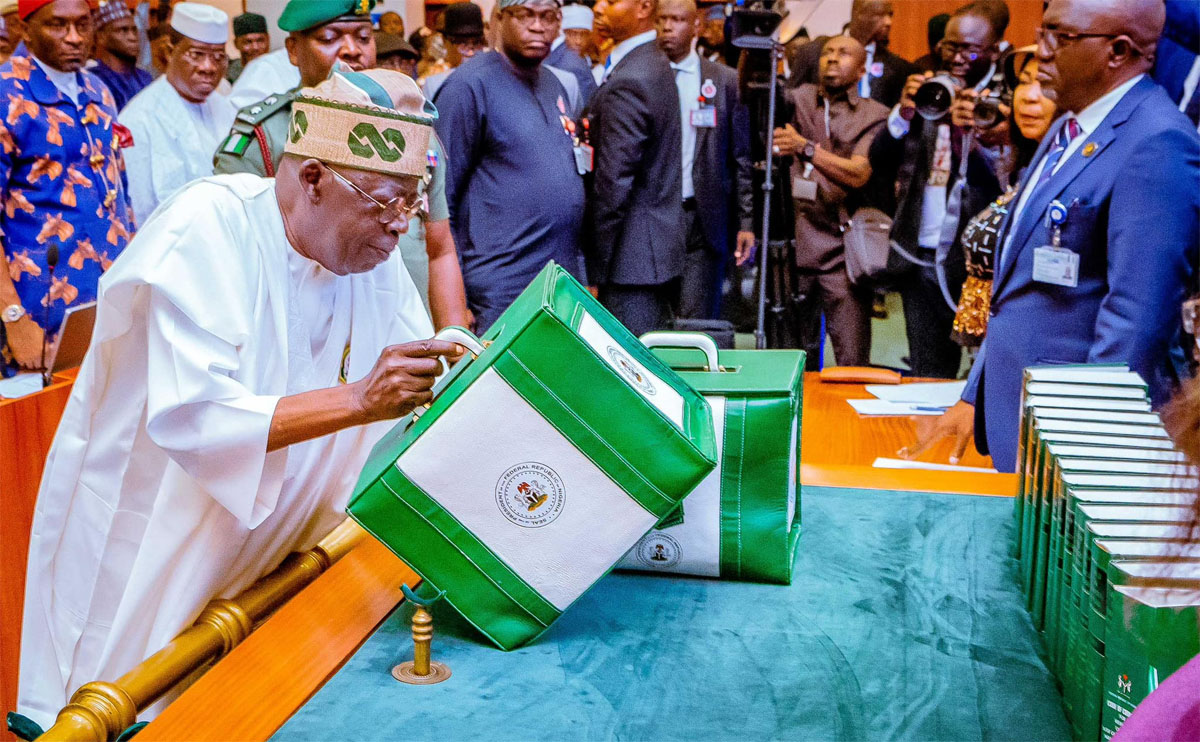
The Senate on Tuesday passed Nigeria’s ₦68.32 trillion 2026 Appropriation Bill, marking a sharp increase from the ₦58.47 trillion initially presented by Bola Ahmed Tinubu in December 2025.
The upper chamber approved the revised figure following a formal request by the President, who sought an upward review of the budget to reflect additional fiscal realities, legacy obligations, and priority national projects.
The spending plan, themed “Budget of Consolidation, Renewed Resilience and Shared Prosperity,” is aimed at sustaining macroeconomic reforms, boosting economic growth, job creation, and poverty reduction, while strengthening social protection for vulnerable Nigerians.
The approved total of ₦68,323,309,818,667 includes ₦4.8 trillion for statutory transfers, ₦15.81 trillion for debt servicing, ₦15.43 trillion for recurrent expenditure, and ₦32.29 trillion for capital expenditure, with the capital component taking the largest share to drive infrastructure and development.
A major driver of the increase is the inclusion of about ₦7.71 trillion to settle outstanding capital projects rolled over from the 2025 fiscal year, alongside an additional ₦2 trillion earmarked for new priority interventions across sectors. Lawmakers noted that a significant number of 2025 projects could not be completed due to revenue constraints, necessitating their rollover.
READ ALSO:
- FG Raises Gas Price to $2.18/MMBtu, Signals Fresh Economic Pressure for Nigerians
- Court Orders Final Forfeiture of Jeremiah Useni’s UK Property to FG
- Senate approves Tinubu’s $6bn loan request
The Senate also approved key strategic interventions, including ₦478.6 billion as equity contribution for presidential legacy rail projects in Lagos, Kano, Kaduna, and Ogun states, as well as feasibility studies for urban rail systems in Enugu and Maiduguri. It further cleared ₦8.96 billion for feasibility studies covering the Calabar–Maiduguri corridor and the Maiduguri–Sokoto superhighway, underscoring a renewed focus on nationwide connectivity.
In the health sector, the budget provides ₦482.76 billion for critical interventions tied to Nigeria’s bilateral and multilateral commitments, while the judiciary received significant allocations. These include ₦98.5 billion for the Court of Appeal, ₦36.7 billion for the Supreme Court, and ₦268.54 billion to strengthen judicial capacity, particularly ahead of the 2027 general elections.
On the revenue side, the fiscal framework is supported by an upward adjustment of the oil benchmark, projected to generate an additional ₦2.59 trillion, alongside increased non-oil revenue expectations. Lawmakers highlighted improved performance in the telecommunications sector, projecting about ₦724 billion in company income tax from MTN Nigeria and ₦150 billion from Airtel Nigeria.
To finance the deficit, the government proposed additional borrowings of about ₦6.16 trillion, reflecting ongoing reliance on debt to support budget expansion amid revenue limitations.
The bill underwent extensive legislative scrutiny, including committee reviews, engagements with the President’s economic team, and a public hearing involving Ministries, Departments and Agencies (MDAs), civil society organisations, and other stakeholders.
The Senate Committee on Appropriations explained that the adjustments were necessary to “regularise outstanding legacy capital commitments” and prevent the 2026 budget from being weighed down by unresolved obligations. It also noted that nearly 70 per cent of capital projects were rolled over due to revenue shortfalls in 2025.
Lawmakers expressed concerns over delays in fund releases during the previous fiscal year and warned against bureaucratic bottlenecks that could hinder implementation. They called for stronger coordination between the executive and legislature, alongside strict oversight to ensure that budgetary allocations translate into tangible development outcomes.
In a related resolution, the Senate approved the extension of the 2025 Appropriation Act implementation period to June 30, 2026, to allow completion of ongoing projects.
Speaking after the passage, Senate President Godswill Akpabio said the revised budget would ensure adequate funding for critical sectors and accelerate national development. He added that the harmonised work between both chambers eliminated the need for a conference committee and expressed optimism that increased revenue—particularly from ongoing tax reforms—would support effective implementation.
The passage of the 2026 budget signals the Federal Government’s continued push to balance economic reforms, infrastructure expansion, and social investment, even as concerns persist over rising debt levels and fiscal sustainability.
Senate Passes ₦68.32trn 2026 Budget, Increases Tinubu’s Proposal
News
Senate approves Tinubu’s $6bn loan request
Senate approves Tinubu’s $6bn loan request
The Senate on Tuesday approved President Bola Ahmed Tinubu’s request to secure external loans totalling $6bn to finance key infrastructure projects and support budget implementation.
The approval followed the consideration of a report presented by the Chairman of the Senate Committee on Local and Foreign Debts, Aliyu Wamakko, shortly after the President’s request was read on the floor by Senate President Godswill Akpabio.
The loan request was transmitted to the upper chamber in two separate letters. In the first, the President sought approval to obtain up to $5bn through a structured financing arrangement with First Abu Dhabi Bank to address funding gaps in the 2026 budget, meet existing financial obligations, and support priority projects.
In the second request, Tinubu asked the Senate to approve a $1bn loan facility backed by UK Export Finance and arranged by Citibank, London, for the rehabilitation of the Lagos Port Complex and Tin Can Island Port.
READ ALSO:
- US Warns Iran Against Closing Strait of Hormuz, Cites “Severe Consequences”
- China Thanks ‘Relevant Parties’ as Ships Cross Strait of Hormuz Amid Tensions
- Osimhen Among Highest-Paid African Footballers in 2026 — See Full List
According to the President, the port rehabilitation projects are expected to enhance operational efficiency, improve safety standards, and strengthen Nigeria’s competitiveness as a regional maritime hub.
Presenting the committee’s report, Wamakko said the proposed loans were in line with existing laws and necessary to fund critical infrastructure and stimulate economic growth.
The Senate subsequently approved the requests after deliberations, signalling legislative backing for the Federal Government’s plan to bridge fiscal deficits through external borrowing.
The approval underscores the government’s continued reliance on foreign loans to support development projects amid mounting fiscal pressures.
Senate approves Tinubu’s $6bn loan request

-

 Entertainment2 days ago
Funke Akindele, Toyin Abraham Spark Reactions Over Alleged Snub at Iyabo Ojo’s Premiere
-
 metro2 days ago
Jos Attack: Plateau Govt Declares 48-Hour Curfew After Deadly Assault
-

 Education1 day ago
WAEC Releases 2026 WASSCE Timetable for School Candidates
-

 Auto20 hours ago
Lagos NURTW Chairman Sego Distributes Exotic Cars, Luxury Items to Cabinet Members (Video)
-

 News2 days ago
UK Raises Visa Costs, Tightens Immigration Rules From April 8
-

 Auto2 days ago
Motoring World marks 30 years, set to rally industry leaders in Lagos
-
 International2 days ago
Iran Threatens US-Linked Universities in Middle East Amid Escalating Tensions
-

 metro23 hours ago
Cars Torched as South Africans Protest Alleged Nigerian ‘Igbo King’ Coronation