
Business
Oil price rises to $71.38 after Saudi facility attack
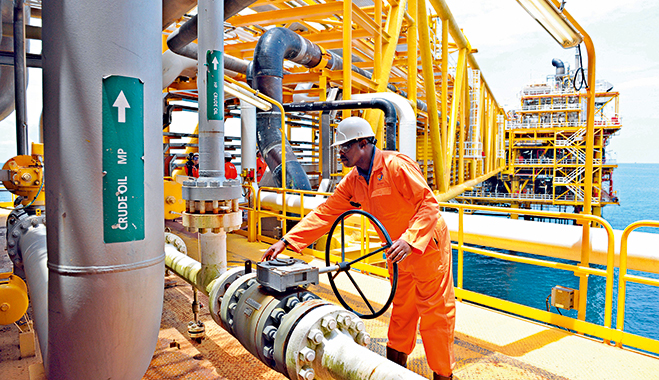
Oil price Monday morning rose to over $71 a barrel at the international market for the first time in 14 months after the reported attack on the Saudi Arabia’s facilities on Sunday.
Saudi, the world’s top oil exporter, had earlier cut about 500,000 barrels per day a few days after the Organisation of Petroleum Exporting Countries and non-OPEC members had resisted pressure to increase output.
Brent crude, the international benchmark, rose as much as 2.9 per cent to $71.38 a barrel on Monday morning in Asia while West Texas Intermediate (WTI), the US benchmark, rose by a similar margin to a high of $67.98 a barrel.
Experts say the development, for Nigeria, Africa’s largest oil producer, is a sweet bitter pill. Good that more foreign exchange would be earned by the Federal Government to finance the budget.
Bad because it’s going to push up the pump price of premium motor spirit (PMS) in the domestic market.
Minister of State, Petroleum Resources, Chief Timipre Sylva, had urged Nigerians to brace for a jump in the pump price of petrol when oil price had risen to $60 per barrel.
The Federal Government and the labour group are currently in talks to avert a backlash which a hike in petrol price would inevitably result to.
According a Financial Times report, a drone attack from the sea on a petroleum storage tank at Ras Tanura, one of the largest oil shipping ports in the world, took place on Sunday morning, the kingdom said.
In the evening, shrapnel from a ballistic missile fell in Dhahran, where state oil company Saudi Aramco has its headquarters and near where thousands of employees and their families live.
While Saudi Arabia’s ministry of energy said the attacks “did not result in any injury or loss of life or property”, and a person familiar with the matter said no production had been affected, the attacks have still unsettled oil markets that have rebounded strongly in recent months.
Yemen’s Iran-allied Houthi fighters claimed responsibility for the attacks and said they had also focused on military targets in the Saudi cities of Dammam, Asir and Jazan.
A Houthi military spokesperson said the group had fired 14 bomb-laden drones and eight ballistic missiles in a “wide operation in the heart of Saudi Arabia”.









Business
Naira Maintains Stability Against Dollar as CBN FX Measures Keep Markets Calm
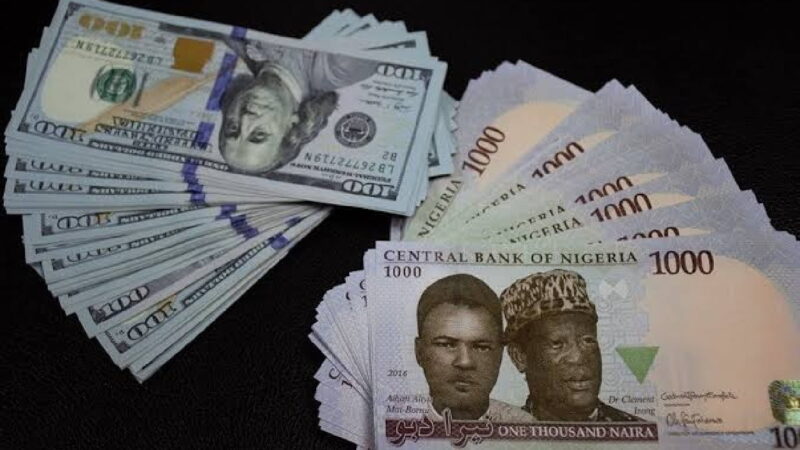
Naira Maintains Stability Against Dollar as CBN FX Measures Keep Markets Calm
The Nigerian Naira showed relative stability against the United States Dollar during Tuesday, February 17, 2026, trading sessions in both official and parallel foreign exchange markets. After a weekend of consolidation, the local currency continued to hover around the ₦1,350 band, reflecting the effectiveness of the Central Bank of Nigeria’s (CBN) liquidity management policies.
In the official Nigerian Foreign Exchange Market (NFEM), the Naira opened at ₦1,351.18 per dollar and adjusted slightly by mid-morning to ₦1,354.86, a movement attributed to early-week corporate demand. Analysts say the Electronic Foreign Exchange Matching System (EFEMS) and the Monetary Policy Rate (MPR) have helped anchor the official exchange rate below the ₦1,400 mark for over two weeks, providing a predictable environment for businesses and investors.
READ ALSO:
- 28 Wedding Guests Die in Separate Road, Boat Accidents in Enugu, Kebbi
- FG, Progressive Governors Forum Pledge ₦8bn Relief for Singer Market Fire Victims
- Former INEC REC Warns of “Chaos” in 2027 Over E-Transmission of Election Results
Meanwhile, in the parallel market, the Naira traded at a traditional premium, ranging from ₦1,380 to ₦1,440 per dollar in commercial hubs like Lagos, Abuja, and Kano. Traders reported sufficient dollar supply for personal travel and small-scale business transactions, noting that the narrowing gap between official and parallel rates has discouraged speculative hoarding and improved market efficiency.
Recent CBN interventions, including expanding access to licensed Bureau De Change operators and enforcing regulatory compliance, have strengthened FX liquidity, allowing for more transparent price discovery. Combined with Nigeria’s moderating inflation rates and robust external reserves of around $49 billion, these measures have bolstered confidence in the Naira and helped limit excessive volatility.
Market watchers, however, caution that challenges remain, including uneven foreign exchange inflows and persistent demand pressures in the informal sector. Sustaining the Naira’s stability in the coming weeks will depend on continued policy consistency, enhanced liquidity provision, and investor participation across sectors.
Summary of Rates on February 17, 2026:
- Official NFEM Opening: ₦1,351.18 per $1
- Official NFEM Mid-Morning: ₦1,354.86 per $1
- Parallel Market Range: ₦1,380 – ₦1,440 per $1
Analysts remain cautiously optimistic that the Naira can maintain its stability and momentum for the remainder of February, provided that external reserves and FX supply measures continue to support the market.
Naira Maintains Stability Against Dollar as CBN FX Measures Keep Markets Calm
Business
Dokpesi Jr, Ex-GMD Akiotu Clash Over DAAR Communications Mgt Restructuring
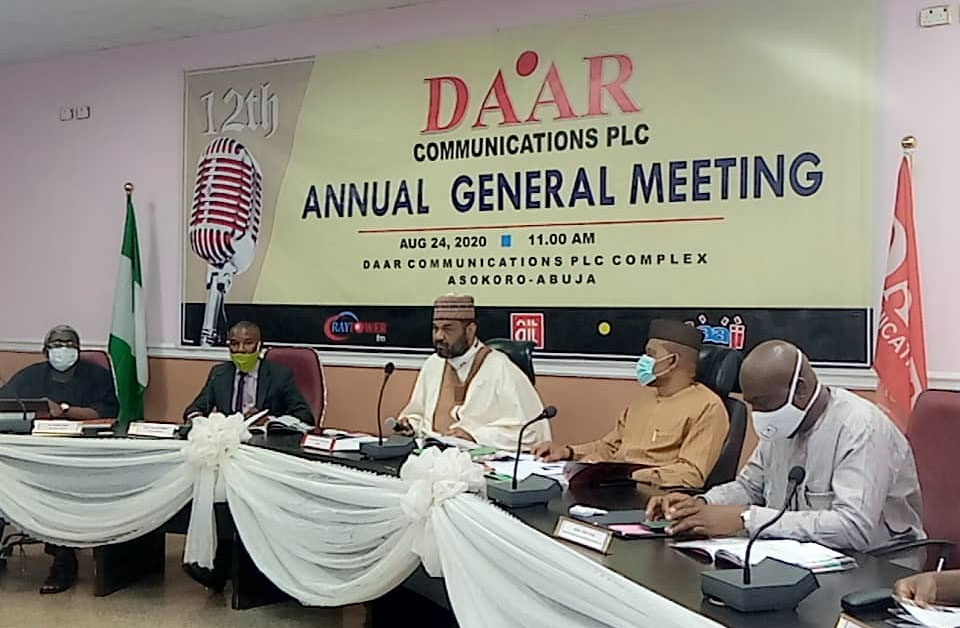
Dokpesi Jr, Ex-GMD Akiotu Clash Over DAAR Communications Mgt Restructuring
A public dispute has erupted at DAAR Communications Plc as Chairman Raymond Dokpesi Jr and former Group Managing Director, High Chief Tony Akiotu, publicly clashed over the company’s recent management restructuring, raising questions about corporate governance and the legacy of Nigeria’s pioneering media organisation.
Speaking in Abuja, Dokpesi Jr defended the executive shake-up, stating he has “no regrets” about the decisions made following the sudden death of the company’s founder, Raymond Aleogho Dokpesi Sr. He described the departure of long-serving executives as a difficult but necessary step to ensure stability, investor confidence, and future growth. The chairman noted that the company faced challenges after his father’s passing, including declining share value and reduced investor confidence, and emphasised that the transition process was carefully managed to minimise tension.
READ ALSO:
- EFCC Holds El-Rufai Overnight Over ₦423bn Kaduna Corruption Allegations
- Troops Intercept ₦37m Terror Funds, Phones, ISWAP Logistics in Borno Operations
- X Restored After Global Outage Disrupts Millions Worldwide
Dokpesi Jr acknowledged that the exiting executives were owed salary arrears and other entitlements, which the organisation has been settling, amounting to billions of naira accumulated over their 15-year tenure. He explained that the restructuring allowed the company to prioritise outstanding obligations and improve operational efficiency, with most business units now financially independent and others expected to achieve autonomy before the end of the year. “I will continue to apologise to Mr Tony Akiotu and the affected management staff for any hurt feelings,” he said, “but I have no regrets — the results validate the decision.”
In response, Akiotu criticised Dokpesi Jr’s statement as unfair and misleading. He argued that it was inappropriate for a chairman who presided over board meetings and approved management memos to later accuse the same leadership team of mismanagement. Akiotu highlighted that all major operational and financial decisions during his tenure were subject to board approval, and that the team had contributed significantly to the company’s growth into a national and international media brand, with operations spanning Nigeria, the United Kingdom, and the United States.
Akiotu also noted that while executive retirements may be permissible under corporate regulations, the public portrayal of their tenure overlooked the sacrifices made to build one of Nigeria’s pioneering broadcast institutions. “If Raymond Dokpesi Jr believes we played no part in the growth of the company, we leave it to Nigerians and history to make that judgment,” he said.
Industry observers say the dispute underscores ongoing debates about corporate governance, leadership succession, and strategic reform within DAAR Communications, which continues to be a major player in Nigeria’s broadcast media sector. Both parties have called for dialogue, but the public nature of the clash has drawn attention across the media and business community, with speculation over potential boardroom changes and the company’s future direction.
Dokpesi Jr, Ex-GMD Akiotu Clash Over DAAR Communications Mgt Restructuring
Business
Inflation Slows to 15.10% as Food Prices Eased in January
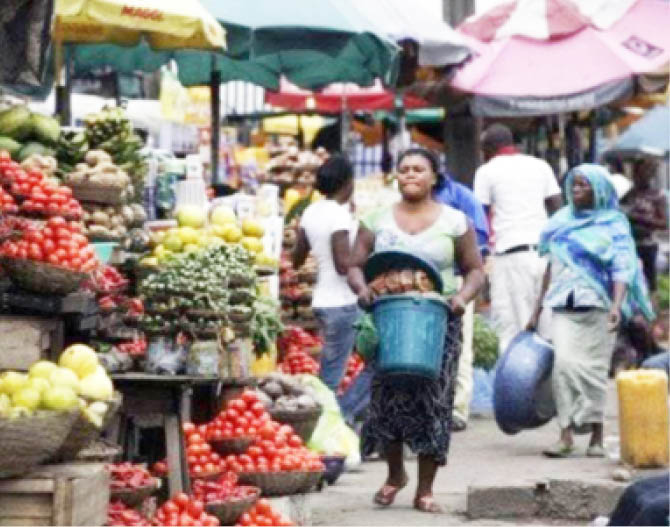
Inflation Slows to 15.10% as Food Prices Eased in January
Nigeria’s inflation rate recorded a marginal decline to 15.10 per cent in January 2026, signalling a slight moderation in consumer prices at the start of the year.
Latest data released on Monday by the National Bureau of Statistics (NBS) showed that headline inflation dipped from 15.15 per cent in December 2025, reflecting a 0.05 percentage point decrease.
The NBS, in its January Consumer Price Index (CPI) report, also revealed that food inflation — a key driver of household spending pressures — eased significantly to 8.89 per cent in January, down from 10.84 per cent recorded in December.
According to the bureau, the CPI dropped to 127.4 points in January from 131.2 points in the preceding month, representing a 3.8-point decline.
On a month-on-month basis, inflation fell sharply to -2.88 per cent in January, compared to 0.54 per cent in December — a 3.42 percentage point swing.
This indicates that the average price level not only slowed but contracted within the month under review.
“The Consumer Price Index (CPI) declined to 127.4 in January 2026, reflecting a 3.8-point decrease from the preceding month (131.2),” the NBS stated.
It added, “In January 2026, the headline inflation rate eased to 15.10%, down from 15.15% in December 2025.
“On a month-on-month basis, the headline inflation rate in January 2026 was -2.88%, which was 3.42% lower than the rate recorded in December 2025 (0.54%).”
The moderation in both headline and food inflation may offer cautious optimism for households and policymakers, particularly amid ongoing economic reforms and cost-of-living concerns.
However, analysts note that while the decline suggests easing price pressures, the overall inflation rate remains elevated, keeping purchasing power under strain.

-

 Education2 days ago
Check Your Name: UNILORIN Releases Updated NELFUND Refund List for 2024/2025 Students
-

 News2 days ago
Osogbo Sons and Daughters Mark 5th Anniversary with Awards, Political Undertones
-

 metro3 days ago
Woman Arrested Over Murder of Nigerian E-Hailing Driver in South Africa
-

 metro1 day ago
US Freezes Assets of Eight Nigerians Over Boko Haram, ISIL, Cybercrime Links
-

 News2 days ago
Afenifere Calls for Immediate Take-Off of State Police as Terror Threats Rise in Yorubaland
-

 metro3 days ago
Boko Haram Terrorists Release Video of 176 Abducted Kwara Residents
-

 metro1 day ago
Terror in Lagos Traffic: Cutlass Gang Unleashes Mayhem on Mile 12–Ketu Road
-

 metro2 days ago
US Military Boosts Support for Nigeria’s Fight Against Insurgency With Ammunition, Troop