

Opinion
Opinion: Buhari: Our president, their patient, by Tunde Odesola
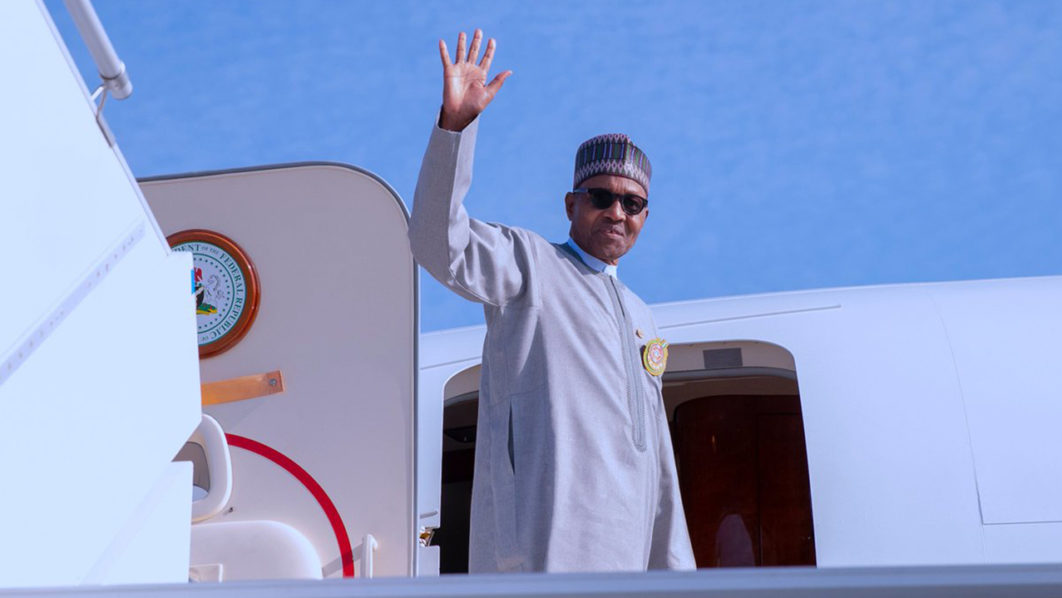
(Published in The PUNCH and Tunde Odesola.com on Monday, August 23, 2021)
His name outnumbers the 26 letters of the English alphabet. Arguably, the most creative hands to ever hold a chisel and a paintbrush, but unmistakably the sublime genius embodying the inventive force of the Renaissance Age.
A sculptor, painter, architect, poet and engineer, Michelangelo di Lodovico Buonarroti Simoni is the 38-letter name a little wizard was given at birth. But the world picked Michelangelo from the names and stuck it to his forehead.
A year before he died at age 88, Michelangelo, an Italian, who lived between March 6, 1475 and February 18, 1564, wrote in Italian language on a sketch he was working on, “Ancora Imparo,” meaning, “I’m still learning.”
The quote is akin to the pearl of wisdom from compatriot, fellow polymath and older rival, Leonardo da Vinci (April 15, 1452–May 2, 1519), who had earlier said, “Learning never exhausts the mind.”
For Michelangelo, every work of art he embarks on is a challenge, a task accomplishable on the flourish of his brilliance. He defines his raison d’être in these enduring words, “Every block of stone has a statue inside it and it is the task of the sculptor to discover it. I saw the angel in the marble and carved until I set him free.”
I affirm that Michelangelo’s imperishable legacy stands on four cardinal pillars: learn, discover, act and set free. These, for me, are the hallmarks of great leaders, great epochs.
Depressingly, however, these same pillars are conspicuously absent in the regime of Nigeria’s President, Major General Muhammadu Buhari (retd.), which comes across as standing on the pillars of ignorance, neglect, inertia and persecution.
Whereas Michelangelo describes learning as a life-long process, President Buhari appears to see life from a short-sighted spectrum, having not learnt any economic and patriotic lessons from his over 40 years of medical tourism to the United Kingdom.
In an unlearned defence of government policy, Information and Culture minister, Lai Mohammed; and Buhari’s Special Adviser on Media and Publicity, Femi Adesina, severally said it was right for the President to patronise foreign medical services for over 40 years.
This is despite the fact that Made-in-Nigeria doctors, who migrated abroad as a result of the rickety state of Nigeria’s medicare, today hold vital positions in first-class hospitals worldwide, potentially including Buhari’s hospital in the UK.
Last Thursday, Mohammed, in a display of the confusion that has continuously characterised the Buhari regime in the last six years, said those criticising the President for seeking medical care abroad were making ‘inconsequential attempts to de-market him’.
In a jejune defence, Adesina also said, “President Buhari has been with the same doctors and medical team for upward of 40 years. It is advisable that he continues with those who know his medical history and that is why he comes to London to see them. He has used the same medical team for OVER 40 years. Once you can afford it, then stay with the team that has your history.”
With soaraway inflation crippling Nigerians, Adesina should know that Nigeria cannot afford the unending presidential flights to the UK and the sacks of pound sterling in medical fee for gerontocratic ailments treatable in Nigeria.
The hotness of Lai Mohammed’s sophistry and the coldness of Adesina’s remarks will win trophies in Sodom and Gomorrah.
The display of profound arrogance by both Buhari spokespersons runs against the time-tested advice for caution in a Yoruba proverb that says, “When a man is sent on an errand fit for a slave, he should display discretion.”
What would Buhari and his image-makers say about Aisha, the wife of the President, who went to Dubai last year to treat neck pain? Dubai doctors must have been treating Aisha from the womb, right?
In a move to deflect public criticism from her neck-pain trip, Aisha spun the red herring fallacy when she said her flight back to Nigeria encountered a turbulent storm, hoping to mask the wastage of public funds, which her trip symbolises, with public sympathy.
Then she pushed her luck over the precipice and rubbed insult into injury by saying, “I, therefore, call on the healthcare providers to take advantage of the Federal Government’s initiative through the Central Bank of Nigeria guidelines for the operation of N100bn credit support for the healthcare sector as was released (and) recently contained in a circular dated March 25, 2020, to commercial banks.
“This will, no doubt, help in building and expanding the capacity of the Nigerian health sector and ultimately reduce medical trips and tourism outside the country.”
What hypocrisy! Scarcely had Aisha’s flight from Dubai touched down than she started to talk about reducing medical tourism. If she knew that medical tourism was a drain on Nigeria’s economy, why did she embark on it? Nigerians, whose taxes are being used to maintain Buhari and his family’s expensive lifestyle, are grumbling, ‘like husband, like wife’.
In 2017, Aisha had lamented that there was no syringe in Aso Rock Clinic, Abuja, when she fell sick. She revealed that, “In the end I had to go to a hospital (in Nigeria) owned and operated by foreigners 100 per cent.”
Similarly, Aisha’s daughter, Zahra had, also in 2017, said there was no Paracetamol in Aso Rock Clinic despite a budget of N3bn for the provision of drugs to the hospital.
That this insane level of corruption could happen under Buhari’s nose without perpetrators fearing the consequences of their action indicates a rudderless Nigerian ship careening against the rocks of insecurity, unemployment, hopelessness and poverty, heading for doom.
When Buhari, who has completely lost the fear factor, doesn’t care about the corruption perpetrated with the precincts of his residence, how would he care about the slaying of farmers by Fulani herdsmen in Igboho or the killings by unknown gunmen in Owerri? How would he care about the kidnapping of schoolchildren in the North or the bloodletting in the Middle Belt? Or care about the worse-than-pigsty hostels in the University of Nigeria, Nsukka?
If Buhari had done something about the anomaly in Aso Rock Clinic since 2017, Aisha wouldn’t have embarked on a neck-pain trip to Dubai in 2020.
When you minus 40 years from Buhari’s 78 years, you have 38 years. For someone who joined the military in 1962 at the age of 19, this means that Buhari had received medical treatment in Nigeria for 19 years, that is, up till 1981 when he was a colonel who had been Military Secretary at the Army Headquarters, a member of the Supreme Military Council, and had been GOC of the 4th Infantry Division, 2nd Mechanised Division, and the 3rd Armoured Division.
I ask, why did Buhari stop receiving treatment in the good, old Nigeria where doctors had his medical records for 19 years?
And if Buhari says he’s been receiving medical treatment abroad in the last 40 years, that suggests that he was receiving medical treatment in the UK between 1983 and 1985 when he headed a military junta that toppled the democratically elected government of Alhaji Shehu Shagari on December 31, 1983 over allegations that the civilian government was ostentatious and corrupt.
This act of hypocrisy runs contrary to the War Against Indiscipline mantra upon which Buhari and his deputy, Brigadier General Tunde Idiagbaon, rode to power.
In Buhari’s lip-service War Against Indiscipline, public officers were forbidden to own foreign accounts, own houses abroad, send their children to foreign schools, send their underage children on pilgrimage, among other prohibitions.
But when Nigeria’s bloodiest military head of state, General Ibrahim Babangida, torpedoed the Buhari-Idiagbon fascism on August 27, 1985, Idiagbon had gone on holy pilgrimage to Mecca with his underaged son, Adekunle, showcasing another classical hypocrisy of Buhari’s leadership.
Nothing demarkets Nigeria more than Buhari’s over 40 years of medical tourism.
Then British Prime Minister, David Cameron, in May 2016, during a conversation with Queen Elizabeth II, described Nigeria and Afghanistan as ‘fantastically corrupt’.
Cameron is right.

Email: Tunde Odesola.com
tundeodes2003@yahoo.com
Facebook: @tunde odesola
Twitter: @tunde_odesola







Opinion
Saudi Executions: Truth Behind Viral Kissing Claim
Saudi Executions: Truth Behind Viral Kissing Claim
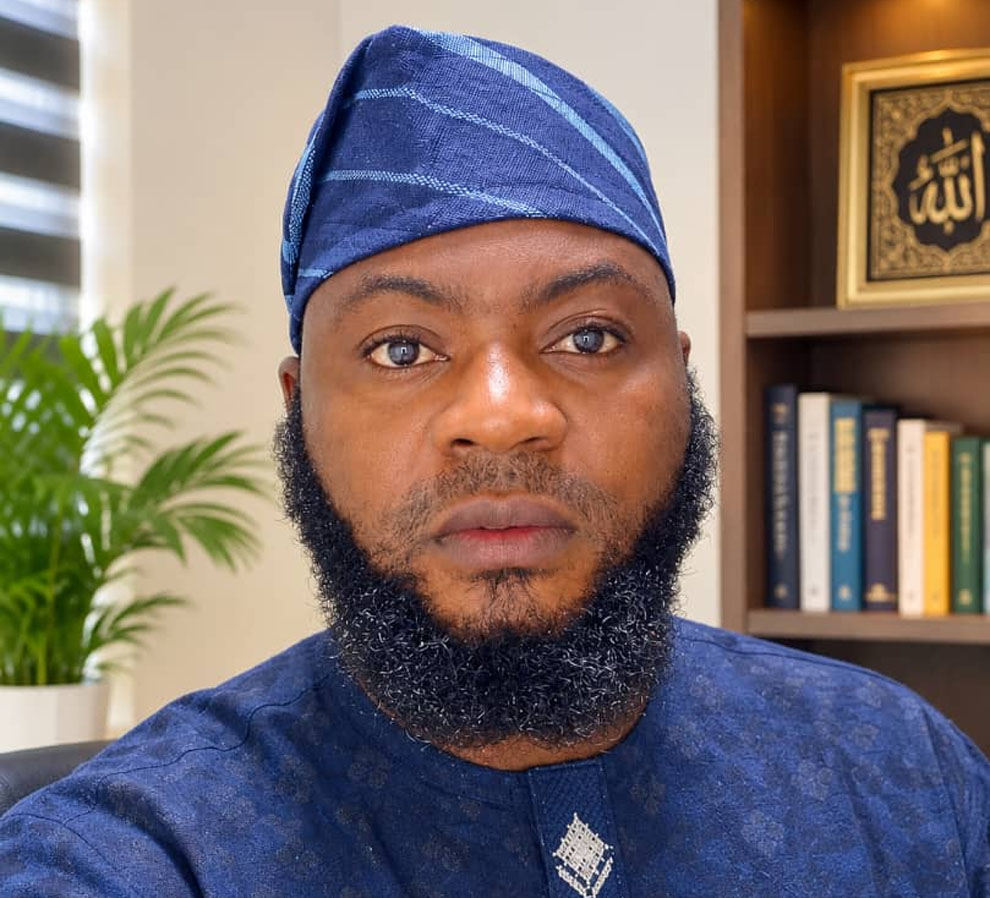
A Muslim scholar, Mallam Ibrahim Agunbiade, has urged the public to exercise caution over viral claims that two Bangladeshi nationals executed in Saudi Arabia were a married couple killed for kissing inside the Grand Mosque in Makkah, saying available official information does not establish the allegation.
In an article dated October 22, 2026, Agunbiade, a member of Al-Rabwa Islamic Propagation in Riyadh, Saudi Arabia, said the execution of the two Bangladeshis on October 14 had generated widespread controversy, particularly on social media, where claims about the circumstances of their deaths circulated without sufficient verification.
He said the Saudi Ministry of Interior announced that the individuals, identified as Nazrul Islam Abdul Basir and Siti Akhtar, also known as Sweety Akhtar, had been convicted of committing an indecent act inside a mosque in Makkah and sentenced to death under ta’zir, a category of punishment determined under the applicable Islamic legal framework.
According to Agunbiade, the Saudi authorities stated that the judgments had received the necessary judicial approval and that a royal order had authorised the executions.
However, he noted that the ministry’s announcement did not specify the precise act for which the two were convicted or state that they were executed for kissing on the forehead, as alleged in viral social media posts.
The scholar said the distinction was important because claims that the deceased were a married couple who had been punished for kissing inside the Grand Mosque had not been substantiated by the publicly available official statement.
Citing a report published by Bangladesh’s The Daily Star on October 20, Agunbiade said a confidential consular memorandum reportedly indicated that the two were not married but had worked as cleaners for the same company in Saudi Arabia.
He added that the memorandum reportedly stated that Nazrul was detained in August 2023 under Saudi Arabia’s cybercrime law, while Sweety was detained the following day over an allegation of adultery.
Agunbiade said the available information did not explain how the earlier allegations related to the offence subsequently cited in the Saudi government’s execution announcement.
READ ALSO:
- Shettima Blasts States Over Power Woes, Says Govs Must Stop Waiting for Abuja
- Fourth Gas Leak in Six Months: Over 100 Ogun Pupils Hospitalised, Schools Shut as Parents Panic
- Nigerian Journalist Sentenced to 4 Years Over Facebook Post Criticising Police
He further disclosed that Nazrul’s parents had told Bangladeshi media that their son was unmarried and that the family did not know the woman involved.
The Bangladeshi government has reportedly requested copies of the court judgments and further clarification from Saudi authorities, according to the account presented by the scholar.
He said the documents would be important in establishing the precise offences, the evidence considered by the courts and the circumstances surrounding the convictions.
Until the judgments and additional official explanations become available, Agunbiade advised the public against presenting the claims that the pair were newlyweds or were executed specifically for kissing inside the mosque as established facts.
Islamic teachings on the sanctity of mosques
Beyond the controversy surrounding the executions, Agunbiade emphasised that Islam attaches great importance to the sanctity of mosques and appropriate conduct in places of worship.
He cited Qur’an 72:18, which states: “And the mosques are for Allah, so do not invoke anyone along with Allah.”
According to him, the verse underscores the sacred purpose of mosques as places devoted to the worship of Allah.
He also referred to a narration in Sahih Muslim concerning the purposes of mosques, including the remembrance of Allah, prayer and the recitation of the Qur’an.
Agunbiade said Muslims should respect these sacred spaces and avoid behaviour that distracts worshippers or undermines their religious purpose.
However, he cautioned against using religious teachings to justify the circulation of unverified allegations or drawing conclusions about a criminal case without sufficient evidence.
Qur’an warns against spreading unverified information
The scholar said the controversy also highlighted the importance of verifying information before sharing it, particularly when reports involve criminal allegations, religious sensitivities and the lives of individuals who can no longer respond to claims made about them.
He cited Qur’an 49:6, which instructs believers to investigate information brought by an unreliable source before acting upon it.
The verse states: “O you who believe, if a rebellious person comes to you with information, investigate it.”
READ ALSO:
- Hyundai Unveils Mufasa, Grand Creta SUVs to Strengthen Nigeria Line-up (Updated)
- NAFDAC Busts Illegal Herbal Factory in Lagos, Arrests Manager Over Fake Registration Number
- NELFUND Warns Schools: Student Loans Are Voluntary, Not Compulsory
Agunbiade also cited a narration in the introduction to Sahih Muslim, commonly numbered Hadith 5, which warns that a person may be considered a liar if they narrate everything they hear.
He said the teachings were particularly relevant in an era when sensational claims could spread rapidly across social media platforms, often reaching large audiences before journalists or other responsible parties had established their authenticity.
According to him, journalists, religious commentators and members of the public have a duty to distinguish verified facts from allegations, speculation and unconfirmed accounts.
He warned that repeating a claim without checking its authenticity could mislead the public, damage reputations and inflame religious or social tensions.
Calls for clarification should not be confused with rejection of justice
Agunbiade also addressed questions surrounding the judicial proceedings that resulted in the executions, saying the reported request by the Bangladeshi government for copies of the judgments and further clarification deserved attention.
He cited Qur’an 16:90, which states that Allah commands justice and excellence, to underline the importance of fairness and accountability.
The scholar argued that seeking clarification about a criminal case should not automatically be interpreted as rejecting a court’s judgment.
Rather, he said, understanding the precise offence, the evidence presented and the circumstances of the proceedings was essential to an informed assessment of the case.
He also cautioned against drawing conclusions from the timing of the executions alongside international political developments, saying that the coincidence of events did not, by itself, establish a connection.
Any such suggestion, he maintained, would require credible supporting evidence.
Facts must be separated from speculation
Agunbiade concluded that the information presented in the Saudi Ministry of Interior’s announcement established that two Bangladeshi nationals had been executed after being convicted of an indecent act inside a mosque in Makkah.
However, he stressed that the announcement, as described in his article, did not substantiate the viral claim that the two were a married couple executed specifically for kissing on the forehead inside the Grand Mosque.
He called for responsible reporting and urged the public to avoid treating unverified social media narratives as confirmed accounts of the case.
The scholar said respect for the sanctity of mosques should go hand in hand with respect for truth, justice and responsible journalism.
As questions remain about the precise offence and the circumstances of the proceedings, the full court judgments and further official clarification from the relevant authorities would be necessary to establish a more complete account of the case.
The allegations circulating online should therefore be distinguished from the information confirmed in the publicly described official announcement, pending the release of further details.
Saudi Executions: Truth Behind Viral Kissing Claim
Opinion
OPINION: Who Still Needs the NYSC? — By Bola Bolawole
OPINION: Who Still Needs the NYSC? — By Bola Bolawole
The recent abduction of National Youth Service Corps (NYSC) members travelling from Ibadan, Oyo State, to orientation camps in the South-East and South-South has once again raised a difficult question: does Nigeria still need the NYSC in its present form?
The question is not new, but the latest incident has made it more urgent.
On October 1, two buses conveying NYSC members and other passengers from Ibadan to Uyo, Akwa Ibom State, and Bende, Abia State, were attacked by suspected armed men in Imo State. The police subsequently reported that 10 victims had been rescued, while efforts continued to establish the exact number of people still in captivity.
If the abducted young Nigerians travelled from Ibadan, some of them could be from Oyo and neighbouring South-West states, although victims may also have come from other parts of the country. The incident should therefore concern Nigerians collectively.
Governors whose citizens are affected should not leave the matter entirely to the Federal Government. Even where they do not directly control the police or military operations, they can support affected families, communicate with them and provide whatever assistance falls within their powers.
Questions over police handling
There are also serious questions about how information concerning the operation was handled.
The Imo State Commissioner of Police, CP Audu Bosso, disclosed that security operatives had located the kidnappers’ camp but were unable to immediately advance because intelligence indicated that the area had been mined with explosives. He also spoke about the use of drones and preparations for further operations.
That raises an important question about the disclosure of sensitive operational information while a rescue operation is still ongoing.
Security agencies must communicate with the public, but such communication should not inadvertently expose operational strategies, locations or vulnerabilities that could assist criminals.
The media, too, must exercise responsibility. The desire to break news or attract traffic should never override the safety of victims or security personnel.
Why was NYSC established?
The National Youth Service Corps was established by Decree No. 24 of May 22, 1973, following the Nigerian Civil War.
According to the NYSC, the scheme was created to promote national unity and develop common ties among Nigerian youths. Its broader purpose was to encourage young Nigerians to serve communities outside their immediate cultural and geographical environments.
The idea was understandable.
Nigeria had just emerged from a devastating civil war. The wounds were still fresh, distrust among different sections of the country was considerable, and there was an urgent need to rebuild bridges.
READ ALSO:
- Ondo High Chief Shot Dead During Colleague’s Burial, One Arrested
- ‘We Are Ignorant, We Don’t Read’ — NAFDAC DG Raises Food Safety Concerns
The NYSC was therefore conceived as an instrument of reconciliation, integration and national development.
But more than five decades later, we must ask whether the circumstances that gave birth to the scheme still exist in the same form — and whether the scheme is achieving its original objectives.
Fifty-three years later, what has changed?
The NYSC has undoubtedly produced benefits.
Millions of young Nigerians have lived and worked outside their home states, interacted with people from different ethnic and religious backgrounds and contributed to communities through their primary assignments and community development projects.
For many Nigerians, NYSC remains one of the few institutions where young people from different parts of the country experience Nigeria beyond their immediate environments.
But the challenges have also become enormous.
Over the years, corps members have died in road accidents while travelling to their places of primary assignment or during their service year. More recently, insecurity, terrorism, banditry and kidnapping have introduced an additional and frightening dimension to the risks confronting young Nigerians serving their country.
The latest abduction therefore forces us to ask:
For how long should young graduates be compelled to travel long distances and serve in places where their safety cannot be guaranteed?
And more importantly:
Is the present structure of the NYSC still the best way to promote national unity?
Has the NYSC achieved its central objective?
After more than five decades of the NYSC, Nigeria continues to struggle with ethnic suspicion, regional grievances and demands for greater autonomy or restructuring.
The emergence of groups such as MASSOB and IPOB in the South-East, alongside various self-determination and restructuring movements in other parts of the country, suggests that the challenge of national cohesion has not disappeared.
The South-West, too, has witnessed the emergence of different groups advocating varying forms of restructuring and self-determination.
These developments do not necessarily mean that the NYSC has failed. National integration is far more complicated than a single government programme.
But they should compel policymakers to examine whether the original model remains adequate for today’s Nigeria.
Reform rather than sentiment
The answer may not necessarily be to abolish the NYSC overnight.
There may be a strong case for fundamentally reforming it.
A modern national service programme could place greater emphasis on skills acquisition, technology, entrepreneurship, healthcare, education, disaster response and community development.
The compulsory nationwide posting system could also be reviewed, particularly where security conditions make deployment dangerous.
Nigeria should not continue doing something simply because it has been done for 53 years.
At the same time, we should not discard an institution simply because it has weaknesses. The real question should be: what works, what no longer works, and what should replace it?
Time to rethink government agencies
The NYSC debate should also be part of a broader conversation about the cost and effectiveness of government institutions.
Nigeria has numerous Ministries, Departments and Agencies whose functions sometimes overlap, while some institutions have become largely ineffective.
The Federal Government should therefore revisit recommendations on restructuring and rationalising government agencies, including the Oronsaye reforms.
The objective should not merely be cutting institutions for the sake of cutting them. It should be about creating a leaner, more efficient government that delivers better services to Nigerians.
Who still needs the NYSC?
That is ultimately the question.
The NYSC was born out of the circumstances of post-Civil War Nigeria. Its founders wanted young Nigerians to develop common bonds and a stronger sense of national identity. Those objectives remain desirable.
But the Nigeria of 2026 is not the Nigeria of 1973.
Our security challenges are different. Our population is different. Our economy is different. Our young people face different challenges. Technology has transformed communication and interaction.
The government must therefore have the courage to ask whether the NYSC should continue unchanged, be radically reformed, or eventually replaced with a more effective national service framework.
What we cannot continue to do is expose young Nigerians to avoidable danger simply because a policy was created more than half a century ago.
National unity is important. But so is the safety and dignity of the young Nigerians who are expected to serve the nation.
Bola Bolawole, a former Editor of PUNCH Newspapers, Chairman of its Editorial Board and Deputy Editor-in-Chief, writes columns for Nigerian newspapers.
Source note: The opinion is adapted for Newstrends.ng from Bola Bolawole’s October 7, 2026 article. The NYSC’s official account confirms that the scheme was established by Decree No. 24 of May 22, 1973, principally to promote national unity and common ties among Nigerian youths.
OPINION: Who Still Needs the NYSC? — By Bola Bolawole
Opinion
Nigeria — My Country of Destiny

Nigeria — My Country of Destiny
A speech delivered by Mrs Bolatito Ajibode, Convener, Independence Day Fiesta, at Landmark Events Centre, to mark Nigeria’s 66th Independence Anniversary
Nigeria is my country of destiny.
It is not a coincidence that I was born here. God had me in mind when He blessed this land.
It is not a coincidence that this prosperous land is populated by people of different cultures; hence, our tongues and tribes differ. We call it PRODIVA — Prosperity in Our Diversity.
The Lord finished the work of creation and should be praised for loading us with the benefits of arable soil, mineral-rich land, solid minerals, oil and gas, and a market of over 200 million people. Many are yearning for these endowments and have come to our land to explore and exploit them.
Our endowments are beckoning on us for exploration. The few who have taken up the challenge, like Dangote, are smiling to the bank by converting our huge deposits of limestone into cement and refining our crude oil into petroleum products. He has taken Nigeria to the global stage, and we are all proud of him as our brother.
We, however, need more Dangotes.
Last year, we had our maiden edition at Muri Okunola Park, where we challenged ourselves to do more by building a side hustle in addition to our 9-to-5 jobs.
We urged ourselves to:
- Start small from where we are and grow.
- Explore the vast resources of this country to create wealth.
I am happy to say that we have positive testimonies from those who have started their side hustles, making extra income and contributing to the total income of Nigeria.
READ ALSO:
- Ex-APC Women Leader Found Dead With Throat Slit in Bauchi
- Supreme Court Ruling: INEC Moves to Clarify Fate of 2027 Candidates
- Omokri Defends Tinubu Over Pension Record, Faults Linking President to 89-Year-Old’s Death
Having laid a solid foundation last year, our goal this year is to cement it and contribute, individually and collectively, to the per capita income of Nigeria.
The desired growth of Nigeria can only come as we add value to the wealth of the nation in our own little corners.
That is the only variable we can control because the other variable — population — is outside our control.
We are typically excited about our young population and proudly rejoice that Nigeria is projected to become one of the five most populous countries in the world by 2050.
The question we need to ask is: How do we house, feed and clothe this growing population?
Certainly, having a young population is good, but it can also become an easy path to poverty and insecurity if we are not deliberate about growing national wealth and baking a bigger national cake.
Yes, our business environment is tough and unstructured. It raises the entry barrier because many are not ready to weather the storm. Those who are able to stay and thrive in this tough business environment have overcome the challenges, and some of them are here with us today.
A deep appreciation to our keynote speaker, Mrs Chinwe Ezenwa, the Managing Director of Lee Look Bags, who has been in the business of Ankara and Aso-Oke fabric bags for four decades. We look forward to drinking from her fountain of knowledge this morning.
Also in our midst is our brother, Mr Ola Awakan, the Director-General of the Nigerian Tourism Development Authority, who has used literature and poetry to deliver compelling indigenous stories from the heart. He has come with his team all the way from Abuja to honour us.
During the panel session today, we will hear the success stories of our panelists and also interact with them during the networking session.
In line with the theme of the year, we would like us to consider:
- Low-hanging fruits in our business environment;
- Low-technology business ideas;
- Businesses that are authentic and unique to us;
- Commercialising our indigenous values and ideas in food, clothing, arts and drama.
We need to own and dominate this space!
Today, we have in this room great men and women who have taken these indigenous values and ideas to the global stage.
They will share their PRODIVA stories and inspire us.
I believe their insightful stories will also challenge the invited students from Yaba College of Technology, the University of Lagos and Lagos State University.
The idea is to catch them young. 😍
Please note: the Independence Day Fiesta is not about storytelling alone. We are also going to have fun.
We have about four performances, including spoken-word poetry, drama, drumming, music performances and Naija music with good lyrics.
We will also break out for lunch to enjoy various Naija cuisines.
It is my prayer that, at the end of the session, we will all have our takeaways and begin to water the seed of prosperity in our diversity.
Once again, thank you for coming. Please relax and have fun.
Nigeria — My Country of Destiny
-

 metro2 days ago
Cancelled Wedding: Man Sues Ex-Fiancée’s Father Over Unpaid ₦70,000 Dowry
-

 Auto2 days ago
Car of the Year, other top honours up for grabs as NAJA Awards race begins
-
 metro2 days ago
Nigerian Navy Recruitment 2026: October 31 Deadline, Full Requirements and How to Apply
-

 Sports2 days ago
KANE ENDS 25-YEAR WAIT! England Captain Wins 2026 Ballon d’Or After Stunning 73-Goal Season
-

 metro3 days ago
IKEDC Blames National Grid for Two-Week Power Crisis in Ishaga, Oke-Ayo
-
 metro3 days ago
Oyo Govt Draws Battle Line With Soun, Rejects Suspension of Ogbomoso Balogun
-

 metro1 day ago
₦110.4bn Fraud Trial: EFCC Witness Traces Company Inflows To Kogi LG Accounts
-
 metro2 days ago
EFCC Busts Four Illegal Lithium Plants in Ogun, Arrests 14 Chinese Nationals