

Politics
Opposition Weakens as Another Governor Eyes APC Move
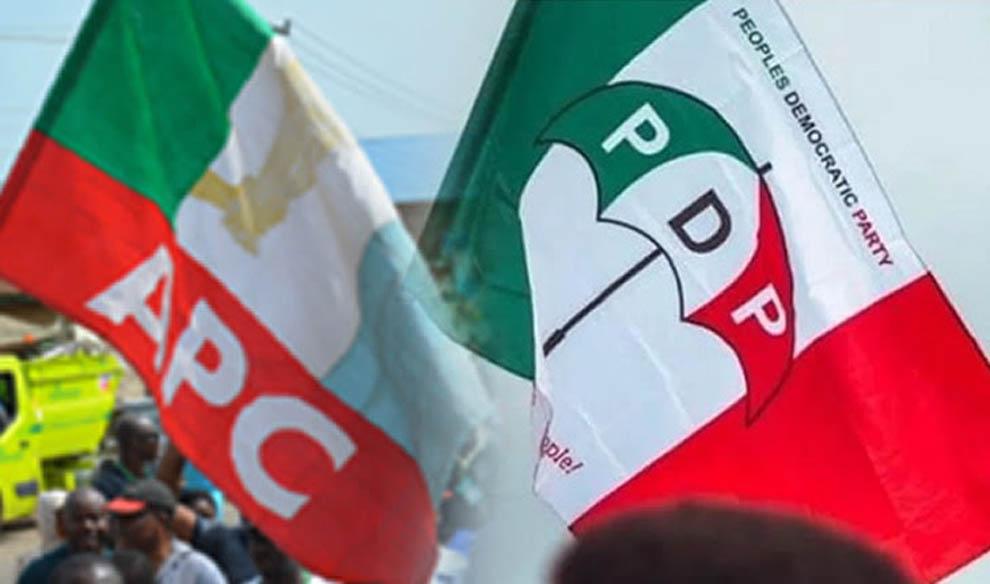
Opposition Weakens as Another Governor Eyes APC Move
A new wave of defections from the Peoples Democratic Party (PDP) and other opposition parties to the All Progressives Congress (APC) is reshaping Nigeria’s political landscape, with reports that another sitting governor may soon switch allegiance to the ruling party ahead of the 2027 general elections. Political analysts say these moves are strengthening APC’s dominance while raising concerns about the weakening of opposition parties and the future of Nigeria’s multiparty democracy.
Since May 29, 2023, when governors elected in the general elections were sworn in, the PDP controlled 11 states, cementing its position as the main opposition party. However, successive defections to APC and other parties have dramatically reduced the PDP’s influence, leaving it with just four serving governors — Ahmadu Fintiri (Adamawa), Bala Mohammed (Bauchi), Seyi Makinde (Oyo), and Dauda Lawal (Zamfara). Sources indicate that one of the remaining governors may soon defect to a more viable political platform, highlighting the party’s internal challenges and growing political vulnerability.
Observers attribute the ongoing defections to a mix of internal party crises, leadership tussles, and political survival strategies. Analysts note that the opposition parties’ repeated factional disputes, poor funding, and leadership conflicts have created openings for APC to consolidate power at both state and federal levels. While some argue that defections are a constitutional right and part of democratic choice, critics warn that the trend could erode checks and balances by weakening opposition parties.
READ ALSO:
- ₦13.7bn Payroll Fraud Claim Pits Audit Firm Against Osun Government
- Breaking: INEC Declares APC’s Joshua Ishaku Winner of Bwari Chairmanship Election
- FCT Poll: APC’s Maikalangu Wins AMAC Chairmanship as Collation Continues
Leaders of smaller opposition parties, including the New Nigeria Peoples Party (NNPP), say the defection wave is largely self-inflicted, resulting from internal squabbles rather than pressure from the ruling APC. Comrade Oginni Sunday, NNPP National Secretary in Ogun State, argued that the collapse of party cohesion within the PDP, LP, and NNPP has made defection a rational choice for political survival and access to federal resources.
Former local government officials and political commentators describe the mass defections as both a challenge and an opportunity for Nigerian democracy. While they acknowledge that the trend strengthens the ruling party, they caution that frequent cross-carpeting could undermine institutional stability, weaken legislative opposition, and reduce accountability.
The reported impending defection comes amid a broader pattern of political realignment, following high-profile defections in previous election cycles. Analysts say such moves are likely motivated by strategic calculations, alignment with federal policies, and preparation for the 2027 general elections. With the APC gaining more governors and lawmakers, the party is increasingly seen as the dominant force in several regions, while the remaining opposition parties scramble to reorganize and maintain relevance.
As Nigeria approaches the 2027 polls, the political stakes remain high. Observers stress that the future of multiparty democracy hinges on whether opposition parties can resolve internal conflicts, strengthen cohesion, and present credible alternatives to the ruling party. The potential defection of another sitting governor underscores the ongoing realignment of power across Nigeria’s states and the critical role of political strategy in shaping the nation’s democratic trajectory.
Opposition Weakens as Another Governor Eyes APC Move










Politics
2027: Northern Students Back Tinubu, Pledge Campus-to-Campus Mobilisation

2027: Northern Students Back Tinubu, Pledge Campus-to-Campus Mobilisation
Student leaders from tertiary institutions across Nigeria’s 19 northern states and the Federal Capital Territory (FCT) have declared support for President Bola Ahmed Tinubu’s 2027 re-election bid, promising to mobilise students across campuses in support of his candidacy.
The declaration was made in Kaduna at the inauguration of the Students’ Wing of Arewa for Asiwaju (A4A), a support group created to coordinate student mobilisation ahead of the 2027 presidential election.
The organisers said the students’ position was influenced by policies and programmes of the Tinubu administration, particularly in education, student financing, skills development and youth empowerment.
The coordinator of the A4A Students’ Wing and President of the Bayero University Kano Students’ Union Government, Abdulmudallib Sheriff, said the students’ support was intended to translate into an organised mobilisation network rather than remain a symbolic declaration.
Sheriff cited the Nigerian Education Loan Fund (NELFUND) among the federal government programmes that informed the students’ position, saying the scheme had provided financial support to students facing difficulties funding their tertiary education.
He also pointed to government initiatives in technical and vocational education, skills acquisition and youth development as areas the student leaders considered relevant to young Nigerians.
According to the organisers, the A4A Students’ Wing plans to build a coordinated structure capable of reaching students in universities, polytechnics and colleges of education across the northern region.
The Kaduna inauguration was attended by student union leaders and representatives of tertiary institutions from different parts of Northern Nigeria.
READ ALSO:
- Pope Leo XIV Warns Against Letting AI Make Human Decisions
- Kara Bridge Repairs, Multiple Crashes Trigger 14-Hour Gridlock on Lagos-Ibadan Expressway
- 2027: Court Gives Atiku Seven Days to Serve Tinubu Through APC in Eligibility Suit
Kaduna State Governor Uba Sani, who addressed the gathering, urged the student leaders to base their political engagement on policies and verifiable records rather than personal attacks against political opponents.
Sani highlighted areas including education, infrastructure, healthcare, agriculture and technical and vocational education, while drawing attention to programmes such as NELFUND and federal TVET initiatives.
The student endorsement comes amid increasing political mobilisation across Northern Nigeria ahead of the 2027 general election.
Several groups in the region have recently announced support for Tinubu’s second-term bid, including organisations representing Muslim women scholars, preachers and Da’wah leaders. Other groups representing communities and youth interests in the North have also held meetings and launched mobilisation activities ahead of the election.
A separate group representing Igbos living in the 19 northern states and the FCT has also expressed support for Tinubu and pledged to mobilise voters for his re-election.
The growing activity reflects efforts by political support groups to build grassroots structures well ahead of the 2027 poll, with youth and student voters expected to remain an important constituency for political parties and candidates.
The Tinubu administration has made NELFUND one of its prominent education initiatives. The programme provides loans and related financial assistance to eligible Nigerian students in tertiary institutions, with the government presenting it as part of efforts to reduce financial barriers to higher education.
The administration has also promoted technical and vocational education and training (TVET) as part of its broader youth skills-development agenda.
However, the endorsement announced in Kaduna represents the position of the participating student leaders and organisations. It does not necessarily reflect the views of all students, tertiary institutions or young people across Northern Nigeria.
The political development also comes as opposition groups and presidential aspirants intensify their own mobilisation efforts ahead of the 2027 election.
The African Democratic Congress (ADC) and other opposition political actors are building structures across the country, while presidential contenders, including Atiku Abubakar and Peter Obi, are also seeking support ahead of the election.
The student leaders backing Tinubu said their immediate focus would be to extend the A4A Students’ Wing to more campuses and strengthen its mobilisation network across the North.
Their declaration adds to the growing series of political endorsements and campaign activities taking place ahead of the 2027 presidential election, as competing political groups seek to attract young voters and build support at the grassroots.
Ultimately, the endorsement remains a declaration by the participating student organisations, while individual voters will make their choices through the electoral process.
2027: Northern Students Back Tinubu, Pledge Campus-to-Campus Mobilisation
Politics
2027: Court Gives Atiku Seven Days to Serve Tinubu Through APC in Eligibility Suit
2027: Court Gives Atiku Seven Days to Serve Tinubu Through APC in Eligibility Suit
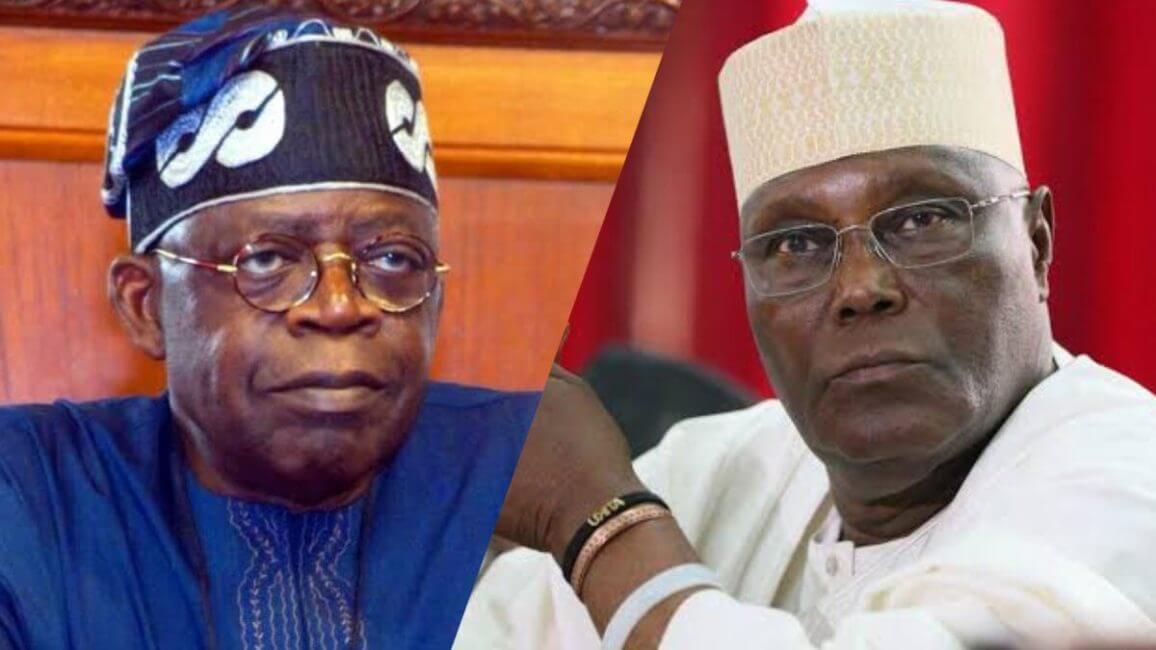
The Federal High Court in Abuja has granted former Vice President and African Democratic Congress (ADC) presidential candidate Atiku Abubakar seven days to serve President Bola Ahmed Tinubu with a suit challenging his eligibility to contest the 2027 presidential election.
Justice Inyang Ekwo issued the order after granting an application for substituted service, allowing Atiku and the ADC to serve the President through his political party, the All Progressives Congress (APC).
The suit, marked FHC/ABJ/CS/1888/2026, was instituted by Atiku and the ADC against Tinubu, the APC and the Independent National Electoral Commission (INEC).
Atiku is asking the court to determine whether Tinubu is qualified to participate in the 2027 presidential election based on allegations concerning an NYSC discharge certificate allegedly submitted to INEC.
According to the plaintiffs, the disputed certificate bears the name “Tinubu Bola Adekunle”, which they contend raises questions about its authenticity and its connection with the President. Atiku’s case also alleges that the document was presented to INEC as genuine and raises questions about information contained in the electoral documents submitted by Tinubu.
The allegations remain claims before the court and have not been established by a final judgment.
READ ALSO:
- “Clash of Egos”: Ayo Fayose Downplays Public Feud Between Wike and APC Governors
- ASUU Crisis Deepens: Lagos Universities Join UNIBEN, Taraba on Indefinite Strike
- Lagos Power Outage: Ikeja Electric Blames TCN as Businesses, Homes Groan
The plaintiffs are relying on provisions of the 1999 Constitution relating to the presentation of forged certificates to INEC. They are seeking, among other reliefs, orders that would prevent Tinubu and the APC from participating in the 2027 presidential election on the basis of the allegations contained in the suit.
The latest ruling followed a procedural dispute over how the President should be served with the court processes.
When the matter came up earlier in September, Atiku’s lawyers told the court that they had been unable to personally serve Tinubu. Although counsel representing Tinubu indicated that he was prepared to accept service on behalf of his client, the plaintiffs declined, saying they wanted to avoid possible technical objections concerning the validity of service at a later stage.
The court subsequently allowed the issue to be addressed through substituted service.
Justice Ekwo had earlier adjourned proceedings to September 28 following the service dispute. The judge also warned lawyers involved in the case against discussing the matter in the traditional or social media, directing that arguments concerning the case should be presented in court.
Meanwhile, Tinubu and the APC have rejected the allegations and asked the Federal High Court to dismiss the suit.
In their response, the President and the APC denied that Tinubu submitted a forged certificate to INEC for either the 2023 or 2027 presidential elections. They also questioned the legal foundation of Atiku and the ADC’s action and raised preliminary objections to the case.
The defendants have argued that the disputed certificate has not been established as forged and that the NYSC has not disowned the document at the centre of the controversy.
They have therefore urged the court to dismiss the suit rather than proceed to the substantive claims.
INEC has also challenged Atiku’s case and opposed aspects of the plaintiffs’ application to amend their suit. The electoral commission has raised procedural and legal objections, including arguments concerning the competence of the action and the plaintiffs’ standing.
The case has consequently developed into a series of preliminary procedural and legal disputes even before the court determines the central allegations surrounding the disputed NYSC certificate.
Atiku and the ADC maintain that the alleged certificate and information submitted to INEC raise constitutional questions concerning Tinubu’s eligibility for the 2027 presidential election.
Tinubu and the APC, however, deny the allegations and are seeking the dismissal of the case, while INEC has also opposed the action.
The Federal High Court’s latest decision is limited to the method and timeframe for serving Tinubu with the court processes.
It does not constitute a ruling that Tinubu is ineligible to contest the 2027 election, nor does it establish that the disputed NYSC certificate is forged.
The substantive claims, alongside the objections raised by Tinubu, the APC and INEC, remain before the court for determination.
2027: Court Gives Atiku Seven Days to Serve Tinubu Through APC in Eligibility Suit
Politics
“Clash of Egos”: Ayo Fayose Downplays Public Feud Between Wike and APC Governors

“Clash of Egos”: Ayo Fayose Downplays Public Feud Between Wike and APC Governors
On Channels Television, the former Ekiti governor says tensions over the ‘Rainbow Coalition’ will not hurt President Tinubu’s 2027 prospects.
Former Ekiti State Governor Ayo Fayose has weighed in on the sharp exchange between Federal Capital Territory (FCT) Minister Nyesom Wike and the All Progressives Congress (APC) Governors’ Forum, characterizing the disagreement as a battle of individual egos rather than a genuine threat to President Bola Ahmed Tinubu’s 2027 re-election campaign.
Speaking Tuesday night during an appearance on Channels Television’s Politics Today, Fayose noted that public friction often surfaces when assertive leaders navigate complex multi-party arrangements.
The spat erupted after Imo State Governor Hope Uzodimma, speaking for the APC Governors’ Forum, announced that party executives would reject any outside alliance or coalition capable of diluting the party’s strength or challenging its candidates in upcoming elections.
Wike responded swiftly during a televised broadcast, describing the governors as politically lazy and clarifying that his “Rainbow Coalition” was created specifically to mobilize cross-party votes for the president rather than fight local battles on behalf of state governors.
Addressing the controversy, Fayose remarked that everyday Nigerians understand Wike’s outspoken personality just as they understand the institutional posture of the Governors’ Forum.
He insisted that the rhetorical crossfire has no direct bearing on the president’s electoral fortunes, observing that political leaders across the spectrum possess strong personal pride that occasionally spills into public view. Fayose maintained that practical grassroots voter mobilization will ultimately outweigh public posturing as the 2027 race draws nearer.
“Clash of Egos”: Ayo Fayose Downplays Public Feud Between Wike and APC Governors
-

 Politics2 days ago
2027: Northern Lecturers Back Tinubu, ASUU Disowns Endorsement
-

 metro2 days ago
Police Arrest Mother Over Alleged Brutal Abuse of 7-Year-Old Girl in Anambra
-

 Sports2 days ago
‘I Was Never the Chosen One’ — Dembele Responds to Mbappe
-
 News3 days ago
Nwifuru Dismisses Cubana Chief Priest as ‘Attention-Seeker’
-

 Education1 day ago
JAMB Moves 2027 UTME Time — Here’s What Candidates Need To Know
-

 Politics2 days ago
2027: Sowore Promises ₦500,000 Minimum Wage, Free Education, 24-Hour Electricity
-
 metro2 days ago
Grand Chief Imam calls for professional communication structure for Rabitoh 1964
-
 Politics1 day ago
2027: APC Governors Reject Wike’s Rainbow Coalition, Insist on Party Loyalty