
News
Over 3,600 Nigerians Miss This Year’s Hajj

About one million Muslim faithful will spend today at the Islamic sacred site of Arafat, the most important ritual of the Muslim pilgrimage taking place in Saudi Arabia. But an estimated 3,660 Nigerians who had planned to make the trip had their hope dashed after the last flight of the Nigerian contingent left the Thursday afternoon, leaving them behind.
This is the first large scale hajj happening since the disruption caused by the coronavirus pandemic in early 2020. In both 2020 and 2021, only a handful of Saudi residents performed the exercise.
This year, a total of 850,000 foreigners and 150,000 domestic faithful were scheduled to perform the exercise. The figure is still a far cry from the nearly 2.5 million who performed the annual pilgrimage in 2019.
Nigeria had twice obtained extensions after it failed to conclude airlifting of its intending pilgrims. The country was allocated 43,008 slots for the hajj.
But by the time the Saudi air space was finally closed for intending pilgrims, Daily Trust gathered that at least 2,550 pilgrims who paid through states’ hajj commissions and 1,110 intending pilgrims who patronised licensed tour operators could not be airlifted. This was in addition to hundreds of others who could not get visas despite paying for the journey.
An insider in the commission told one of our reporters that the commission was issued 33,936 visas for pilgrims who paid through states’ agencies out of which 31,386 were airlifted.
Over 1,000 tour operators’ pilgrims stranded
Over 1,000 intending pilgrims belonging to the Licensed Tour Operators under the umbrella of the Association of Hajj and Umrah Operators of Nigeria (AHUON) would have missed the 2022 Hajj, according to findings by Daily Trust.
READ ALSO:
- Eid-el-Kabir: FG declares July 11 & 12 Public Holidays
- Court remands man for allegedly raping a 13-year-old girl
- Five reasons why Boris Johnson resigned as UK Prime Minister
The pilgrims are mostly stranded in Abuja, Lagos and Kano, it was learnt.
Most of the pilgrims could not make it to Saudi Arabia due to the alleged non-remittance of funds paid to the National Hajj Commission of Nigeria (NAHCON) to their i-bank accounts in Saudi Arabia, which would enable them to process visas for their intending pilgrims as well as pay service providers for accommodation, feeding, among others.
Daily Trust learnt that over 51 operators with about 2,800 pilgrims were initially affected.
Some of them had to source foreign exchange from the parallel market to be able to process their pilgrims.
National President of AHUON, Alhaji Nasidi Yahaya in a chat with Daily Trust said the association is still compiling the list but confirmed that there are about 500 stranded pilgrims in Kano, 360 in Abuja and about 250 in Lagos.
He said the association would soon address a press conference after compiling its reports on the 2022 exercise, saying the losses to the tour operators cannot be quantified.
“The losses are so much that I can’t give now. We will come out with the figure. It is so devastating,” he said, blaming the issue on the non-remittance of funds into the operators’ i-banks. We are short of words. We can’t find any reason.
“And the pilgrims would not understand. They have paid money and their concern is to take them to the holy land,” he said.
745 Kano intending pilgrims miss out
At least 745 intending pilgrims from Kano State have missed out on this year’s hajj due to hitches in the airlifting operation.
The last flight for Kano pilgrims left the Malam Aminu Kano International Airport (MAKIA) around 3:40pm on Thursday for Saudi Arabia after picking up 200 intending pilgrims to join those from another state already in the aircraft, leaving behind 745 intending pilgrims, including the Executive Secretary of Kano State Pilgrims Welfare Board, Muhammad Abba Danbatta and some directors of the board.
With hundreds of the intending pilgrims left stranded at the airport and hajj camp for days, Danbatta had faulted the last-minute disappointment on the failure of NAHCON to honour the rescue mission arrangement after the initial disappointment from Azman Airline, which led to an extension by the Saudi government.
Daily Trust gathered that NAHCON had agreed to a rescue mission, which would have seen the deployment of two Flynas aircraft to mop up all those left behind as of Tuesday, but the aircraft did not show up.
He said early on Thursday, Azman aircraft with 400 passengers capacity departed Kano with only 250 intending pilgrims, leaving on the ground over 940 pilgrims with the state officials and the last flight also left with another 200.
READ ALSO:
- Killings: Don’t cry for unknown gunmen, youth group replies IPOB, others
- LASTMA, police probe traffic extortion, withdraw errant officers
- Yemi Alade groans over butt-induced inconvenience
- Injury knocks out Oshoala from 2022 Women’s Africa Cup of Nations
“NAHCON had promised to deploy Flynas aircraft with a high passenger capacity since two days ago to save the situation but we are yet to see that happening,’’ Danbatta lamented earlier on Thursday, adding that Azman had conducted six flights mostly with small capacity planes with total intending pilgrims airlifted from the state standing at less than 1,500.
“This was why we complained before the beginning of the Hajj exercise because of our high number that we prefer to be airlifted by Max Air,” he said.
At the airport, Daily Trust observed that the international departure wing was full of stranded intending pilgrims lamenting, with some accusing the Pilgrim Welfare Board of failure. The situation was similar at Hajj Camp where most of the intending pilgrims were still hoping for a last-minute miracle.
An intending pilgrim, Jamilu Sulaiman, who was sighted exiting the airport, said he lost hope and left everything to Almighty God as he was tired of the sufferings.
“This is just a day to Arafat what do you think we should do other than to leave here? I spent two days here and yet there is nothing done. They gave assurance that today (Thursday), they will deploy aircraft that will carry many of us but yet we saw nothing,” he said.
It was also gathered that, apart from those from Kano, there were other intending pilgrims that paid through tour operators from across Gombe, Oyo and Taraba States that came to Kano for their flights but were also stranded with some of them leaving the airport.
“I am from Oyo State. I spent two days here at the airport but I have given up already. We came here thinking we may luckily go, but it seems we are missing this year’s Hajj,” an intending pilgrim, who did not give his name, said while leaving the airport along with several others.
Huge liability to be recorded – Source
In addition to losses by individual companies, the government will have to cough out money to settle liabilities created by the untidy operation.
“There will be very messy reconciliation of the commission’s accounts. There is the issue of the Hajj Saving Scheme, then tour operators, outstanding pilgrims, regular pilgrims, and even the airlines. Government would be made to shoulder the liabilities,” he said.
NAHCON explains glitch
Spokesperson for NAHCON, Hajia Fatima Usara, did not respond to our reporter’s request to comment on the issues. But a source in the commission who acknowledged “technical problems” at some point in the operation, which, he said, affected a number of states, said the commission was not entirely responsible.
On non-issuance of visas to some of the intending pilgrims, he said “Some states couldn’t pay for their visa. It’s not Saudi that didn’t issue”.








News
World Bank Deletes Nigeria Development Update Report Days After Release
World Bank Deletes Nigeria Development Update Report Days After Release
The World Bank has removed its latest Nigeria Development Update (NDU) report from its official website, just three days after its publication, raising concerns over the reasons behind the sudden action.
The report, titled “Nigeria’s Tomorrow Must Start Today: The Case for Early Childhood Development,” was released on April 7, 2026, but the document link is no longer accessible, returning a “page not found” error when users attempt to download it.
Despite the removal, the accompanying press statement remains available, outlining key findings on Nigeria’s economic performance and policy outlook.
In the now-withdrawn report, the World Bank said Nigeria’s economy recorded 4 percent growth in 2025, with inflation dropping significantly to 15.1 percent in February 2026 from 26.3 percent recorded in the same period a year earlier. The improvement was attributed to tighter monetary policies and better food supply conditions.
The report also highlighted that Nigeria’s macroeconomic environment has strengthened following recent stabilisation reforms, noting improvements in key indicators and steady expansion across major sectors of the economy.
READ ALSO:
- US Revokes Green Cards of Iranian Family
- 16-Year-Old Alleges Repeated Rape by Pastor During ‘Deliverance’ in Anambra
- Zulum Donates N50m to Family of Slain Army Officer in Borno Attack
Early data for 2026, according to the report, suggested that growth momentum had been sustained, although global tensions posed a mild drag on economic activity.
A major focus of the publication was early childhood development, which the World Bank described as critical to Nigeria’s long-term growth. It stressed that stronger investment in human capital is essential for translating macroeconomic gains into job creation, poverty reduction, and improved living standards.
The report painted a worrying picture of child welfare in the country, revealing that more than 110 out of every 1,000 children die before the age of five, while many others fail to meet basic developmental milestones due to poor nutrition, limited access to healthcare, and inadequate early education.
It warned that without urgent intervention, Nigeria risks missing out on the demographic dividend expected from its young population.
In addition, the report reportedly addressed ongoing structural reforms, including exchange rate unification, fiscal adjustments, and subsidy removals, noting that while these measures have helped stabilise the economy, their full benefits will depend on sustained implementation and targeted social support for vulnerable households.
However, parts of the report—particularly policy recommendations around the downstream petroleum sector—have drawn attention. The World Bank was said to have advised that Nigeria may need to continue importing petrol (PMS) in the short term to ensure supply stability while transitioning to a fully liberalised and competitive market.
The recommendation comes amid ongoing reforms in Nigeria’s oil and gas sector and has been viewed by some analysts as sensitive, given the country’s push for domestic refining capacity.
In a subsequent clarification following reactions, the World Bank emphasised that its recommendations should be seen within the broader context of energy security, market stability, and global supply uncertainties, rather than as a fixed policy directive.
The NDU is a bi-annual flagship report that evaluates Nigeria’s economic and social developments and provides policy guidance for sustainable growth.
As of the time of filing this report, the World Bank has not issued an official explanation for the removal of the April 2026 edition, fuelling speculation that the document may be undergoing revisions or internal review.
Economists say the development highlights the sensitivity of reform-related recommendations in Nigeria’s current economic climate, particularly those touching on fuel policy and social welfare, as the country navigates a delicate recovery path.
World Bank Deletes Nigeria Development Update Report Days After Release
News
Tinubu Promises Stable Electricity as Bayelsa Unveils 60MW Power Project
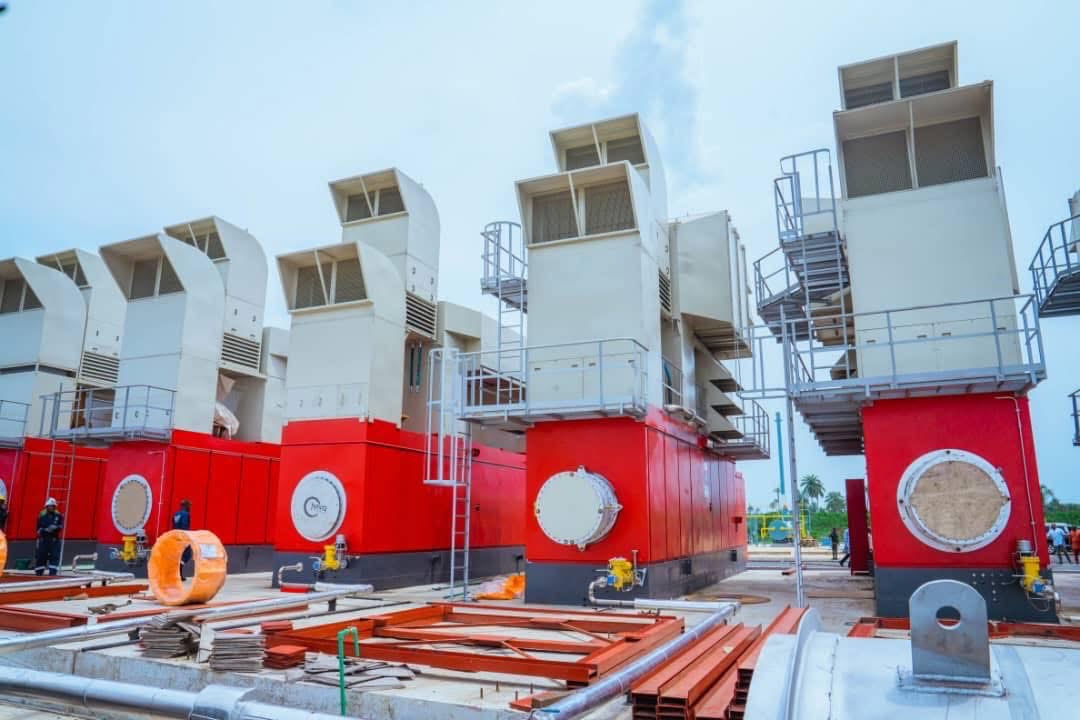
Tinubu Promises Stable Electricity as Bayelsa Unveils 60MW Power Project
President Bola Ahmed Tinubu has reaffirmed his administration’s commitment to delivering stable electricity capable of driving economic growth, industrialisation, and national development, saying ongoing reforms in the power sector will soon yield tangible results.
Tinubu made the remarks in Bayelsa State during the commissioning of major infrastructure projects executed by the state government, including a 60-megawatt Independent Power Project (IPP) located at Elebele in Ogbia Local Government Area.
He described the power project as a “significant step” toward strengthening energy security and subnational electricity generation, noting that no meaningful industrialisation or job creation can happen without reliable power supply.
“There can be no industrialisation, skill development and empowerment without power. I assure Nigerians that we will have electricity to power our growth,” the President said.
The IPP, powered by gas turbines, is expected to supply electricity to Yenagoa and surrounding communities, reducing dependence on the national grid and improving power reliability for households and businesses.
Alongside the power project, Tinubu also commissioned several key infrastructure projects, including the 27-kilometre dualised New Yenagoa City Road 1, the 630-metre Angiama–Oporoma Bridge, and the Sagbama/Ekeremor Road, all aimed at improving connectivity and boosting economic activity across Bayelsa State.
READ ALSO:
US Commences Visa Ban on Nigerians Linked to Alleged Religious Freedom Violations
Did Faleke Just Reveal Lagos’ Next Governor? Party Moves Begin
Jigawa Ward Head Denies Viral Wedding Cancellation Over Tinubu Support
He praised the state government led by Governor Douye Diri for what he described as “purposeful and progressive leadership,” adding that collaboration between federal and state governments remains essential for sustainable development.
“Development advances further and faster when the federal and state governments work in partnership toward a shared purpose,” Tinubu said.
The President also used the occasion to observe a minute’s silence in honour of soldiers killed in a recent terrorist attack on a military base in Borno State, reaffirming his administration’s commitment to defeating terrorism and banditry across the country.
“We will continue to equip and train our armed forces. We will defeat terrorism and banditry, regardless of their shenanigans,” he assured.
Tinubu further acknowledged the economic challenges facing Nigerians, including rising living costs linked to global energy disruptions, but insisted that government interventions are being implemented to ease hardship and support vulnerable citizens.
“We will continue to find ways to ameliorate the suffering of the vulnerable. This is a government that cares,” he said.
At the event, Tinubu also commended former President Goodluck Jonathan, describing him as “one of the most humble and reliable democrats on the continent,” while praising ongoing development efforts in Bayelsa State.
Governor Diri, in his remarks, appealed for federal refunds on projects executed on federal roads by the state government and highlighted ongoing infrastructure efforts under his “Assured Prosperity” agenda, including roads, bridges, civic buildings, and sports facilities.
He described the newly commissioned Yenagoa–Oporoma–Ukubie road as a transformative project that has ended years of isolation for several riverine communities in Southern Ijaw.
The Bayelsa IPP is expected to enhance power supply stability, attract investment, support SMEs, and stimulate economic diversification in the oil-rich state.
The commissioning ceremony was attended by several top political figures, including Senate President Godswill Akpabio, governors from multiple states, senior federal officials, and traditional leaders, reflecting the national significance of the projects.
Residents reportedly thronged the project sites in celebration, cheering and dancing as the President arrived at the Bayelsa International Airport aboard the presidential jet.
Tinubu concluded by expressing optimism about Nigeria’s future, saying: “Nigeria will be great, and we will succeed.”
Tinubu Promises Stable Electricity as Bayelsa Unveils 60MW Power Project
News
US Embassy Suspends Abuja Visa Appointments Over Security Concerns

US Embassy Suspends Abuja Visa Appointments Over Security Concerns
The United States Embassy in Nigeria has suspended visa appointments in Abuja following heightened security concerns, a move that has disrupted travel plans for hundreds of applicants in Abuja.
In an official notice released via its communication channels, the embassy confirmed that all visa interviews in Abuja have been cancelled until further notice, urging affected applicants to check their emails for updates on rescheduled appointments.
“U.S. Embassy Abuja is closed for visa appointments. Applicants should check their email for details on rescheduled appointments,” the statement read. It added that visa services in Lagos remain operational at the United States Consulate General Lagos, providing an alternative for applicants who can access the facility.
The embassy further clarified that American citizen services in Abuja will continue only in emergency situations and strictly by appointment, indicating a temporary scale-down of operations in the capital.
READ ALSO:
- ADC Crisis: Mark-Led Faction Sues INEC Over Party Leadership Removal
- Dangote Sugar Warns Staff Over Chewing Sugarcane, Threatens Arrest
- Jetour set to ignite Lagos with four-day automotive experience
The suspension follows a recent directive by the United States Department of State authorising the departure of non-essential staff and their families from Abuja, citing a deteriorating security situation in Nigeria.
An updated U.S. travel advisory has also placed Nigeria under a “Level 3: Reconsider Travel” status, warning of persistent threats including terrorism, kidnapping, crime, and civil unrest. Several states have been categorised under the stricter “Level 4: Do Not Travel” advisory due to high-risk security conditions.
States listed include Borno State, Yobe State, Taraba State, Niger State, Plateau State, and parts of Adamawa State, where threats linked to terrorism and kidnapping remain high. Other states such as Kaduna State, Katsina State, Zamfara State, and Sokoto State were also flagged over insecurity concerns.
The advisory has triggered reactions from the Federal Government of Nigeria, which described the assessment as “unbalanced” and not fully reflective of ongoing efforts to address insecurity nationwide. Authorities warned that such reports could negatively impact Nigeria’s global image and economic activities.
Despite the disruption in Abuja, visa processing and consular services continue in Lagos, offering a temporary alternative for applicants. However, the development is expected to cause delays in visa processing, particularly for students, business travellers, and individuals with urgent travel needs.
The US Embassy visa suspension in Abuja highlights the broader impact of security challenges on diplomatic operations and international travel, as uncertainty remains over when normal services will resume in the capital.
US Embassy Suspends Abuja Visa Appointments Over Security Concerns

-
 metro2 days ago
JUST IN: FG Publishes List of 48 Individuals, Groups Linked to Terrorism Financing in Nigeria
-

 metro2 days ago
42-Year-Old Married Woman Declared Missing Found in Hotel with Man
-
 Politics2 days ago
Did Faleke Just Reveal Lagos’ Next Governor? Party Moves Begin
-

 metro10 hours ago
BREAKING: Troops Arrest 15-Year-Old Linked to Killing of Gen Braimah in Borno
-

 Education3 days ago
Germany Opens Fully Funded Scholarships for Nigerians, Africans
-

 Politics2 days ago
2027: Oyo APC Governorship Aspirant Saheed Oladele Resigns From Party
-
 metro2 days ago
ADC Threatens Civil Disobedience To Force INEC Chairman To Resign
-
 Business3 days ago
Nigeria May Face ₦2,000 Petrol Price Without Intervention, TUC Warns FG