

Business
Passengers stranded over fresh Nigeria-UAE row

The fate of thousands of passengers was in the balance Sunday over the ban on Emirates flights from Nigeria, which takes effect from today (Monday).
In a new directive, the United Arab Emirates (UAE) carrier is allowed to only operate one flight per week to Nigeria against 21 flights earlier approved by the federal government.
The government, through the Nigeria Civil Aviation Authority (NCAA), on Thursday withdrew the winter schedule comprising 21 frequencies; 14 to Lagos and one to Abuja, approved for Emirates.
This was in retaliation for the refusal of the UAE authorities at Sharjah Airport to approve the three slots applied for by Air Peace, the sole Nigerian carrier operating Dubai via Sharjah.
In a similar retaliatory move, the federal government has indicated desire to ban flights from United Kingdom, Canada, Saudi Arabia and Argentina over their red-listing of Nigeria. This action, oberserves believe, will further aggravate woes of travellers.
READ ALSO:
- South African President tests positive for COVID after visit to Abuja
- Wife bolts door as Ogun pastor allegedly rapes teenage chorister, couple arrested
- I don’t kill, I only prepare soaps with human parts brought to me — Cleric
The latest diplomatic fiasco between Nigeria and UAE was coming a few days after President Muhammadu Buhari paid a visit to the country.
Buhari had attended the Expo 2020 in Dubai where he was received on arrival by his highness, Sheikh Mohamed Bin Zayed Al Nahyan, Crown Prince of Abu Dhabi and Deputy Supreme Commander of the UAE Armed Forces.
But barely a week after Buhari’s visit which coincided with the resumption of Emirates flights to Nigeria after more than nine months due to another row over COVID-19 protocols, both nations are at daggers drawn again.
This time around, the federal government, in a retaliatory move and the application of the principle of reciprocity contained in the Bilateral Air Services Agreement (BASA) between the two countries, imposed a ban on Emirates Airline.
The Director-General of NCAA, Capt. Musa Nuhu, who gave an insight into the development said Aviation Minister, Senator Hadi Sirika, had “graciously approved the winter schedule as requested by Emirates without any hindrance or arrival slot requirement in the spirit and intent of the Bilateral Air Services Agreement (BASA) between Nigeria and UAE.
“The Honourable Minister of Aviation decided to apply the principle of reciprocity and withdraw the approval of the winter schedule given to Emirates Airline and instead approved one weekly flight frequency to Abuja on Thursday.”
But the General Civil Aviation Authority (GCAA) of the UAE had written to the minister protesting the action of NCAA, saying it was against the spirit of BASAs between the two countries and that the action was unjustified.
READ ALSO:
- FG Calls on Western Allies to Declare Bandits, Boko Haram, IPOB as Terrorists
- Panic grips Zamfara communities as gunmen demand over N1m levy
- ‘Taxing carbonated drinks will reduce rate of diseases’
UAE’s Minister of Economy and Chairman of the GCAA Board, Abdulla Bin Touq Al Marri, in a letter dated December 10, 2021, disclosed that Air Peace abandoned its slots in Sharjah and moved to Dubai Airport and sought to shift to Sharjah again.
In a statement, Air Peace management described the minister’s claim as untrue.
Daily Trust, however, reports that the festering diplomatic row has created confusion again in the travel industry as many passengers who have booked on Emirates and Air Peace are uncertain about their flight schedules.
Findings by our correspondent yesterday indicate that Emirates airlifts an average of about 300 passengers daily on each flight to Dubai using its wide-bodied A380 aircraft.
With three daily flights, an estimated 1,000 passengers are currently stranded, uncertain of the status of their flights from today (Monday) while other passengers are exploring alternative flights.
Investigations revealed that many passengers have approached their travel agents for refund in the wake of Emirates’ flight suspension.
A passenger who was to travel on an Emirates flight on Monday had to explore an alternative airline, paying over N500,000 to travel via Lufthansa.
Among those stranded are businessmen, students and others, among them those said to be going for medical reasons.
“I had to book another flight on Lufthansa travelling through Brazil just to connect Dubai because the various restrictions across the world have made travel very difficult for everybody because you have to travel via a destination, not on the red list.
READ ALSO:
- Eguavoen named Super Eagles interim technical adviser, Rohr sacked
- EXCLUSIVE: ‘It’s totally unjust’ — UAE writes Hadi Sirika, seeks review of Emirates’ flight frequency
- I spent 28 years on death row for nothing — Onwuche, 68-year-old cook
“But I must be in Dubai by all means and that has cost me an extra N500,000. How many people can afford this,” the passenger, a student who preferred anonymity, said.
The Vice-President of National Association of Nigeria Travel Agencies (NANTA), Abuja Zone, Ambassador Adeshola Kayode, lamented that millions of naira have been lost and businesses affected as a result of the current imbroglio.
“We have lost millions, clients have started requesting refunds and some of these tickets are not refundable and for those that have refunds, it will take time to process,” he said.
He however said the federal government’s decision was a welcome development to protect the sovereignty and integrity of the country.
He said, “It is a challenging one because as some of us are aware, we have been on this issue for a while now, for over 10 months. When we heard that the ban had been lifted, we were happy. All of a sudden, our clients were about to travel until the shocking news came again.
“To us, I think the response of the Minister of Aviation and the DG of NCAA is a welcome idea because it is high time that we as an industry and as a country began to respond to such countries because they see us as an unserious nation and they can just throw anything at us.
“Like what happened when the British government put us on the red list. We as professionals have been discussing that the next thing the government should do is to put the UK and those countries on the red list as well.”
Other stakeholders said the development provided an avenue for Nigeria to review its BASAs in a way that would be commercially beneficial to the country.
A former president of the National Association of Aircraft Pilots and Engineers (NAAPE), Engr. Isaac Balami, said Emirates and other foreign airlines should begin to respect Nigeria.
“They should begin to take us seriously. When we didn’t fly into the country, we did not die. They must begin to respect Africa, most importantly Nigeria.
“I commend the minister and the DG for this bold step and I pray that we will continue in that trajectory, not just Emirates but any other person who will not respect and honour Nigeria.
“When Emirates solves the problem and makes Air Peace happy, we will also make them happy.”
Mr. Chris Aligbe, CEO Belujane Konzult, said, “For the first time Nigeria is giving an appropriate response. What Nigeria has done is the standard thing that should be done, the principle of absolute reciprocity and that is what happens in airline operation in the relationship between nations. Nigeria should be applauded.”
Meanwhile, the federal government is set to announce a ban on travellers and airlines from Canada, the United Kingdom, Saudi Arabia and Argentina if they do not take Nigeria off their red list.
Minister of Aviation Senator. Hadi Sirika, who dropped the hint on Saturday in a leaked audio clip, said his ministry and the Presidential Steering Committee (PSC) on COVID-19 have reached an agreement on the decision.
He said those countries will be on the red list no later than Tuesday, December 14, 2021.
He said the PSC had met and reviewed the various travel bans placed on Nigerian citizens to those countries and concluded that the ban was unacceptable.
“There is also the case of Saudi Arabia, which put Nigeria on the banned list. No visa, travels into that county and so also Canada and the United Kingdom. And so today there was a zoom meeting by the COVID-19 Task Force, which I participated in.
“We have said the ban isn’t acceptable by us and recommend that Canada, UK, Saudi Arabia and Argentina be also on the red list,” he explained.
He indicated that if they didn’t allow Nigerian citizens to get into their country, their airlines and citizens shouldn’t come to Nigeria either.
“I’m very sure between now and Monday, perhaps Tuesday maximum, all those countries will be on the red list from the Task Force on COVID-19. Once they are put on red-list, their airlines will also be banned,” he said.
Daily Trust








Auto
Happening now: Hyundai unveiling of Mufasa and Grand Creta
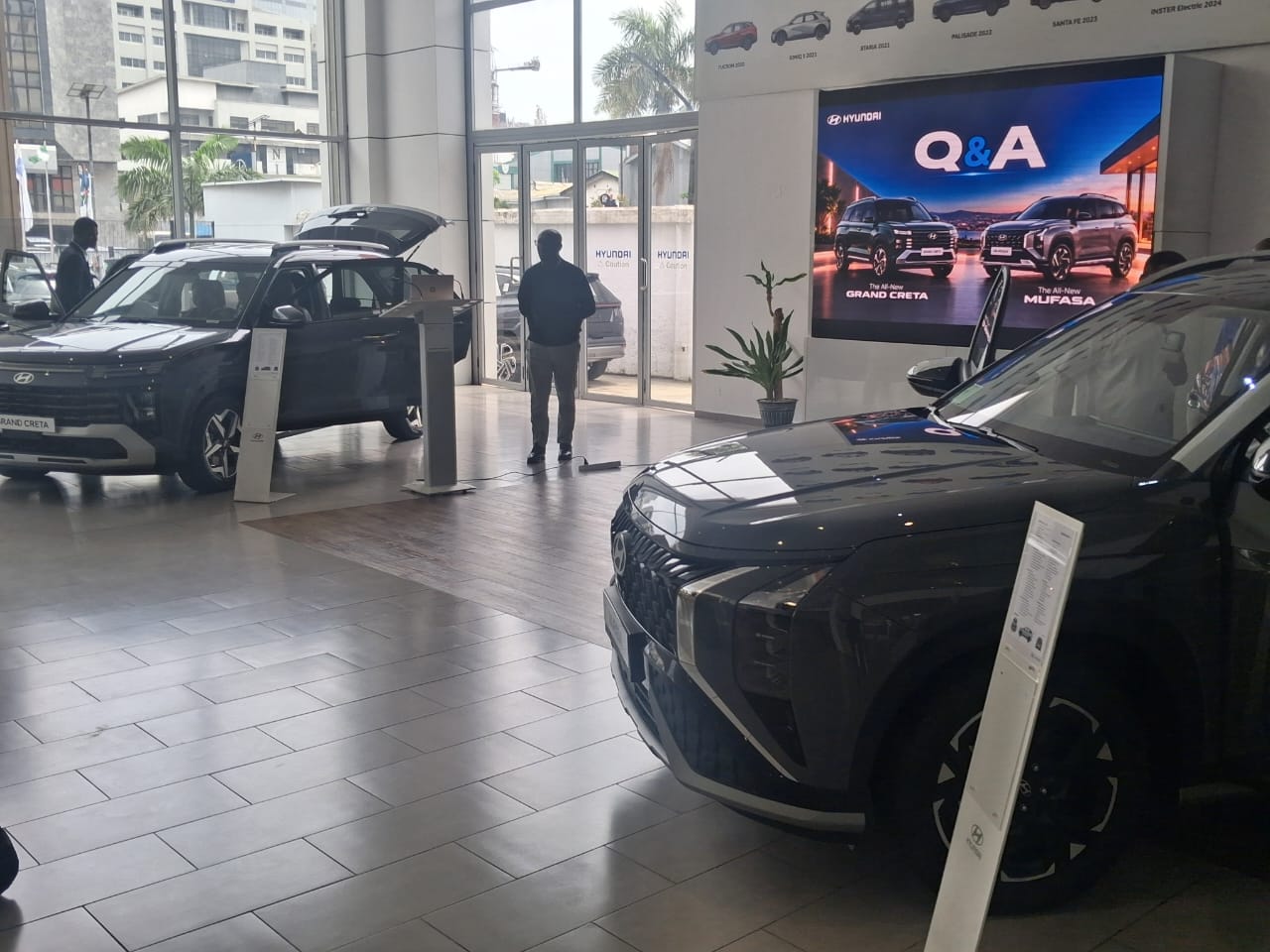
Happening now: Hyundai unveiling of Mufasa and Grand Creta (photos)
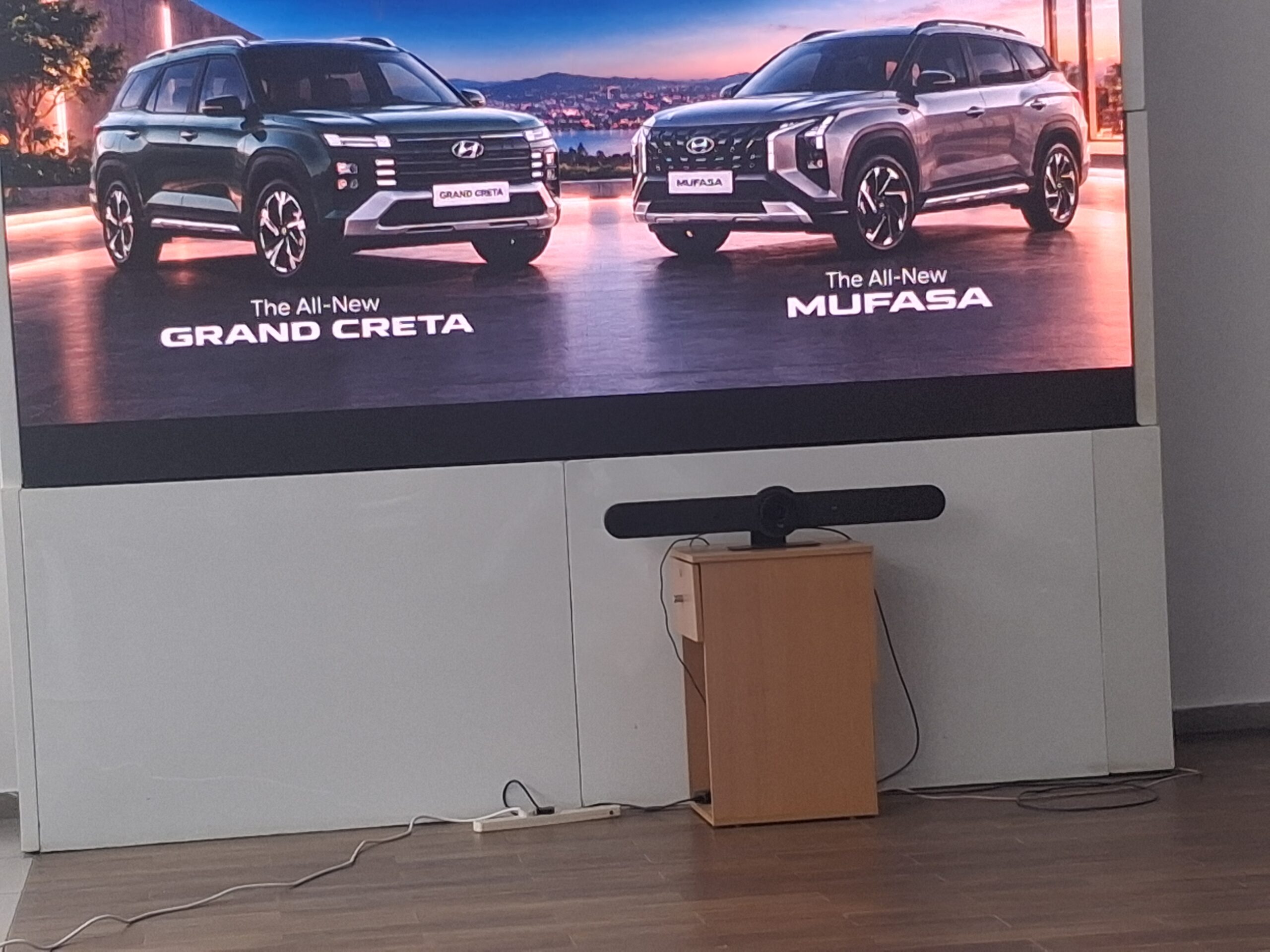
Two latest models of Hyundai auto brands are currently being officially rolled out in Lagos. The new vehicles are Mufasa and Grand Creta.
The unveiling is taking place at the Hyundai showroom on Akin Adesola Street Victoria Island, Lagos.


Auto
No 5% Petrol Tax Plan, Oyedele Says, Amid Public Concerns
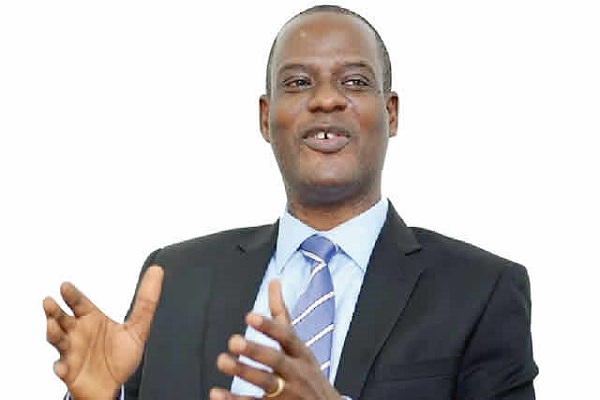
No 5% Petrol Tax Plan, Oyedele Says, Amid Public Concerns
The Federal Government has no plan to introduce a new tax on petrol, Minister of Finance and Coordinating Minister of the Economy, Taiwo Oyedele, has said, dismissing reports that the administration of President Bola Tinubu intends to impose a five per cent levy on petroleum products.
Oyedele clarified the issue in a statement posted on his X account on Tuesday, insisting that a fuel tax was not being considered by the government.
“In my interview with ARISE News, I was clear: a fuel tax is not on the table,” he said.
His statement follows reports linking him to the proposed five per cent tax, which sparked concerns about a possible increase in the cost of petrol amid Nigeria’s persistent cost-of-living crisis.
Petrol prices have remained a major driver of transportation and distribution costs since the removal of the fuel subsidy, contributing to higher prices of food and other essential goods and services.
The prospect of an additional levy had raised fears that households and businesses could face further financial pressure.
However, Oyedele’s clarification indicates that the Federal Government is not currently considering the proposed fuel tax, amid broader efforts to reform Nigeria’s tax system and strengthen public finances.
Auto
Beyond the Showroom: Why After-Sales Service Will Define Auto Industry Winners
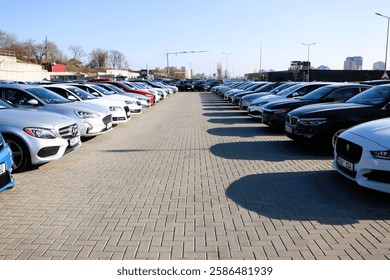
Beyond the Showroom: Why After-Sales Service Will Define Auto Industry Winners
Nigeria’s automotive industry must look beyond vehicle prices, specifications and flashy new models if it hopes to win lasting customer confidence. The real test of competition increasingly lies in what happens after the sale — when a vehicle needs servicing, spare parts, repairs or warranty support.
A car purchase is not a one-off transaction. It marks the beginning of an ownership journey that could last several years, during which the quality of after-sales service can determine whether a customer remains loyal to a brand or regrets the decision to buy it.
When customers struggle to obtain genuine parts, secure timely repairs or get clear answers to warranty claims, their frustration can damage confidence not only in a dealer but also in the manufacturer and the wider automotive market.
After-sales service must therefore move from the background to the centre of automotive competition in Nigeria.
Promises must translate into performance
Effective customer care starts with clear, credible commitments. Buyers deserve to understand warranty coverage, servicing schedules, access to genuine parts, repair procedures and the support available when problems arise.
But promises alone are not enough. A warranty has limited value if customers cannot access a competent service centre. A roadside assistance number means little without an effective response system. And a repair-time guarantee is only as good as the technicians, parts and processes supporting it.
Automotive distributors and dealers must ensure that their marketing promises are matched by the operational capacity to deliver.
Buyers, on their part, should ask questions before committing their money, examine warranty conditions and establish what support they can realistically expect throughout the vehicle’s lifespan.
Competing on ownership experience
Nigeria’s automotive market would benefit enormously if brands competed not only on the vehicles they sell but also on the quality of ownership experience they provide.
Such competition could drive improvements in service delivery, warranty transparency, spare-parts availability, technical training, repair turnaround and customer communication.
Some players are already putting more structured after-sales propositions before buyers. Carloha’s CarlohaCare 6-6-7 programme, for instance, combines a six-year warranty, six years of free servicing and a seven-day repair promise, subject to applicable terms and conditions. Its CarlohaCare Rescue service extends the proposition to assistance beyond the workshop.
These offerings illustrate how clearly defined service commitments can become part of a vehicle’s value proposition, rather than an afterthought.
However, the objective should not be to crown a permanent winner or single out one company as the industry benchmark. Every provider must demonstrate that its commitments are practical, transparent and consistently delivered.
The wider industry should embrace continuous improvement, with customers ultimately judging brands by their real-world experiences.
Automotive journalism must ask tougher questions
Automotive journalism has a critical role in broadening the conversation.
Coverage of the sector often focuses on vehicle launches, new technologies, prices, specifications and expansion plans. These remain important, but consumers also need independent reporting on the realities of vehicle ownership.
Journalists can examine warranty conditions, investigate spare-parts availability, interview service managers and fleet operators, document consumer experiences and assess how effectively companies resolve complaints.
They should celebrate genuine improvements while holding businesses accountable when their public commitments fall short.
The Nigerian Automotive Journalists Association (NAJA) is well positioned to encourage this conversation through informed reporting, industry analysis, interviews and stakeholder engagement.
The goal should be to bring manufacturers, distributors, dealers, fleet operators and consumers around a fundamental question: What level of care should Nigerians reasonably expect after buying a vehicle?
That conversation must remain independent, balanced and evidence-led, rather than becoming a promotional platform for individual brands.
Make after-sales service a buying criterion
The shift towards stronger customer care will gather momentum when Nigerians begin to assess after-sales support as seriously as they consider engine performance, fuel economy, safety features and purchase price.
A private buyer should ask about warranty coverage, servicing costs and the location of authorised workshops. A fleet operator should evaluate parts availability, repair turnaround and vehicle downtime alongside acquisition costs. Families should know what assistance is available when a vehicle breaks down far from home.
Dealers that offer transparent terms and dependable support should earn a competitive advantage. Those that fall short should have a clear incentive to improve.
This is particularly important in a market where vehicle ownership involves significant financial commitment and prolonged exposure to maintenance costs. A seemingly attractive purchase can become expensive if parts are difficult to source or repairs take too long.
The industry must therefore recognise that customer care is not merely a cost centre. Properly managed, it can build loyalty, strengthen brand reputation, generate repeat business and encourage referrals.
The real test begins after payment
Nigeria does not need an automotive market in which businesses compete only to sell more vehicles. It needs one in which they also compete to keep customers satisfied long after the keys have been handed over.
The true measure of a brand is not simply how attractively it markets a vehicle or how efficiently it closes a sale. It is how responsibly it responds when the customer needs help most.
As competition intensifies, the companies that combine good products with reliable service, accessible parts and transparent customer support will have a stronger foundation for lasting success.
For buyers, the message is equally clear: look beyond the showroom, ask the difficult questions and compare the support behind the badge.
Buy the car. Demand the care.
-

 metro1 day ago
Army Major, Soldiers Killed in ISWAP Ambush in Yobe State
-

 Politics3 days ago
Buhari Feared Tinubu Presidency, Resisted Pressure to Back Him – Baba-Ahmed Claims
-
 News3 days ago
FG Challenges World Bank’s 124% Debt-to-Revenue Warning, Cites Rising Income
-

 metro3 days ago
NAFDAC Probes Corps Member’s Death at Enugu Camp as Fake Drug Claims Emerge
-

 metro1 day ago
Breaking: Afenifere Leader Pa Fasoranti Dies at 100
-

 metro3 days ago
Ogun House Fire Horror: Husband Arrested After Wife Dies Following Domestic Dispute
-

 Entertainment3 days ago
Nollywood Mourns as Actress, Beauty Queen Tenia Abraham Dies at 32
-

 metro14 hours ago
‘We Don’t Know What Else to Do’ — Mother Begs for Release of Abducted Children