

Opinion
Pelé: Shame of Nigeria’s vagabond leadership by Tunde Odesola
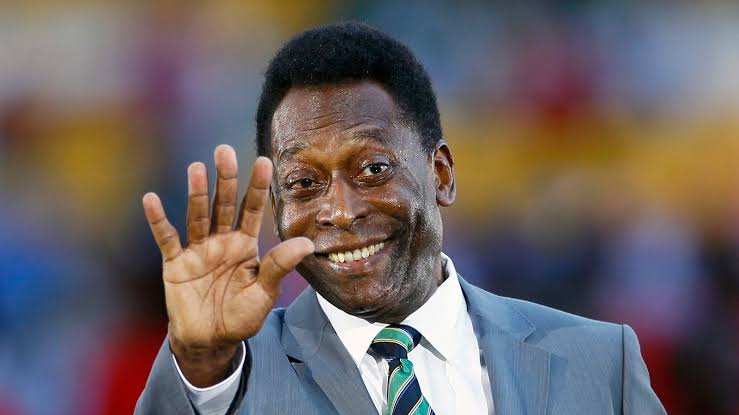
Pelé: Shame of Nigeria’s vagabond leadership
(Published in The PUNCH, on Monday, January 2, 2023)
With a halo round his head, Pelé packed lightning in his right foot, thunder in his left; the reason his footsteps sparkled, the reason he shone like a million stars, the reason he was named Edson after the inventor of the light bulb, Thomas Edison: the reason he turned football to ‘jogo bonito’ – the beautiful game.
Pelé was born in the morning of October 23, 1940 when electric light arrived in his hometown of Três Corações, a city in Minas Gerais, light and sunlight heralded the son of light to the delight of mother Celeste and father Dondinho, a foregone Fluminense forward reputed to have scored five headed goals in a match, a record Pelé eyed but could’t match.
Born Edson Arantes do Nascimento but globally called Pelé, a nickname he picked up as a child when teammates derided him for the way he pronounced Bilé, his father’s goalkeeper teammate; Pelé, the misnamed, has become Pelé, the main name.
If the ball was blazing at his feet, it was also magnetic in his hands. As a striker, Pelé was a terror to defenders just as he was a nightmare to strikers whenever he kept the goal, shouting, “Segura, Bilé,” a battle cry to his teammates. Segura means safe in Portuguese language, and the young Pelé was so talented that he was also Santos’ second choice goalkeeper, according to online sports medium, en.as.com.
After 18 years of exotic football at Santos FC, Pelé hung up his boots on October 2, 1974, following his club’s 2-0 victory over Associação Atlética Ponte Preta, and looked forward to life after retirement.
But fate had the first laugh. In a 2013 biography, “Pelé: A Importância do Futebol,” the legend recounts the surprise visit of his accountant. “I remember the moment he entered the house as if it were yesterday. He was sweating profusely. He was pale, he looked like he was about to faint. I could tell something was wrong so I made a little joke: ‘How many million have we still got?’ I nearly had to call the doctor when he replied: ‘Look, this is very difficult…’” Pelé discovered that all his money had gone and he had lost all the 41 properties he invested in.
Never say die, Pelé picked the bits and pieces of his life together, thereafter, and considered the prospect of returning to football and accepting a long rejected offer to play in the US for the New York Cosmos.
Popularly referred to as ‘O Rei’, Portuguese term for ‘The King’, Pelé met a former President and General Manager of New York Cosmos, Clive Toye, in Brussels, where he had gone for an international friendly. On the cliff edge of financial doom, Pelé felt it was time he listened to Toye, who offered him a $2.8m contract when the highest paid NBA player, Kareem Abdul-Jabber, was earning $450,000 a year. Light shone in again.
At 34, Pele, who had retired eight months earlier, debuted for New York Cosmos on June 15, 1975, scoring a goal and providing an assist in a 2-2 draw against Dallas Tornado. For the three seasons he played for Cosmos, Pele netted 37 goals and won the NASL title known as the North American league crown in his final season, swimming out of bankruptcy to financial harbour. Pelé had the last laugh.
Growing up, Pelé knew the colours of poverty having been apprenticed to be a shoemaker. But football gave the son of destiny his first break when he won the World Cup and played for Santos, and when he faced financial suffocation, football also rescued him, changing his status from penury to prosperity as he made most of his money after he retired from Cosmos.
Thus, Pelé first rose to fame, then slipped into insolvency and later rode onto the pantheon of all-time sports greats, nestling at the apogee of soccer immortality for over 40 years until death sold cancer to Pelé’s colon and metastasized the entrails of the lethal striker. And Pelé kicked the bucket!
Death blew the final whistle on Pelé just when the samba king was about to dribble into 2023, hacking him down in the 18-yard box. Cruelly, death did not give Pelé a penalty, it gave him a red card, marching him out of the pitch of life.
When Pelé was writhing in pain from the fatal tackle from death, he didn’t run abroad for medical treatment like Nigerian prodigal leaders would do. He stayed in Brazil, taking treatment at the Albert Einstein Israelite Hospital located in Morumbi, southern São Paulo.
Pelé invested his hard-earned football income in Brazil, creating jobs and supporting the economy in a commendable demonstration of patriotism, unlike public treasury-looting Nigerian leaders who stash their heists abroad, refuse to pay taxes and inflict suffering on the masses through multiple taxes and neglect of hospitals, schools and roads.
The Albert Einstein Israelite Hospital is renowned as the best in Latin America even as it reportedly ranks in the top 50 globally. It is owned by a group of Jewish community members in São Paulo. If the Brazilian government didn’t provide a secure atmosphere for the hospital to operate since 1971, the hospital would not be a pride of Brazil today, providing top-notch medicare to humanity.
Not only have Nigerian political leaders abandoned healthcare services provided by even foreign experts in Nigeria, they flee abroad to treat dandruff and hold political meetings while commending the masses to utilise decrepit public healthcare facilities they won’t recommend for pets.
As long as telecommunications companies and banks oil legislature palms without ceasing, blindness will continue to afflict legislative oversight functions that should check fraudulent bank charges and insane billing by telecommunication firms. Today, a mere ‘hello’ is costlier than a New Year broadcast from hell.
Brazilian pastors and imams didn’t go online to predict that witches and wizards were behind Pelé’s sickness like fake Nigerian clerics would do. A notorious Nigerian celestial cleric with a chest like a barrel of liquor from the Tibetan region of the Himalayas, shamelessly claimed God told him that France would defeat Argentina in the recent World Cup final, mopping his burnt face and foaming in the mouth like a rabid dog.
Pelé, the winner of three World Cups (1958, 1962 and 1970), still has a mother, Celeste, who is 100 years old. He played football on the streets but wasn’t shot dead by a police officer like pregnant lawyer Bolanle Raheem was shot dead by an accursed Assistant Superintendent of Police, Drambi Vandi.
Before he dropped out of school in fourth grade, kidnappers didn’t storm Pelé’s school to cart away pupils into the night like they did in Chibok, Borno State, and Dapchi in Yobe State.
As a budding player, Pelé was in various football camps, lodging in different hotels. There was no report of Pelé or any of his teammates being molested not to talk of being killed like an Obafemi Awolowo postgraduate student, Timothy Adegoke, was allegedly murdered in his sleep at Hilton Hotel, Ile-Ife.
If Pelé was shot dead by Brazilian soldiers like ‘zombie’ soldiers massacred Nigerian youths at the Lekki Tollgate, how would Brazil have profited from Pelé’s prodigy? Who knows how many Pelés, Albert Einsteins and Thomas Edisons have been sent to early graves by the Nigerian leadership?
As a mark of respect to the late Pelé, I decided to halt the conclusion of the two-part series I began last week, entitled, “Pelé can’t untie Messi’s shoelace (1).” Football tempers flared over the article which garnered thousands of likes on PUNCH Facebook page as well as some criticisms.
I must admit that the conversation over who football’s GOAT is will never end as long as football remains round. But I stand by Lionel Messi; he’s my GOAT. I shall return.
Email: tundeodes2003@yahoo.com
Facebook: @tunde odesola
Twitter: @tunde_odesola


Opinion
Ortom and His 23 Cars’ ‘Bonus’, by Dele Sobowale
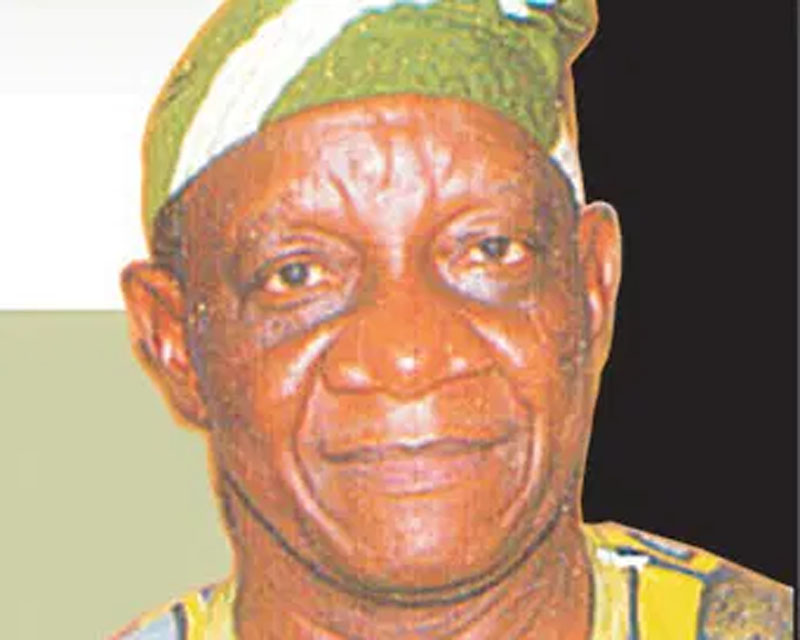
Ortom and His 23 Cars’ ‘Bonus’, by Dele Sobowale
“As I talk to you, after I left office, vehicles that were given to me legitimately by government, this government went and seized them in a manner that was not befitting.” – Former Governor Samuel Ortom of Benue State
Last week, former Governor Donald Duke of Cross River declared that military rule was, in many respects, better than civil rule since 1999.
I cannot agree more.
I had the privilege of visiting about seven former military governors before 1999.
No military governor had up to 23 cars assigned to the Governor’s Office or residence.
By contrast, since 1999, a civilian governor with only 23 cars in the office alone would be regarded as extremely prudent.
Many have 50 or more.
Ortom’s 23 cars have triggered a dispute. Governors, on their way out of office, routinely take what they deem as their entitlements and thus render their states poorer than they met them.
Most commentaries on Ortom’s 23 cars have been superficial.
The impression they have created is that only 23 cars were taken away.
Nothing can be further from the truth.
Ortom was not the only beneficiary of that largesse.
It is quite possible that over 100 cars were taken away as parting gifts – with Ortom’s approval – as I will explain shortly.
Ortom revealed the hidden truth by saying, with a straight face, that the vehicles were allocated to him and other members of his administration through the State Executive Council, SEC, after they had been used for more than four years.
It was the worst defence for an assault on public funds ever uttered by a former official.
It provided a window into the minds of top government officials everywhere – irrespective of political party affiliation.
Every State Executive Council, SEC, comprises the governor, the deputy governor, the Secretary to the State Government and commissioners.
All the others are selected or appointed by the governor and, with the exception of the deputy governor, can be removed from office.
In other words, the SEC is created by the governor and can take no independent decision of its own.
READ ALSO:
- Abuja Demand Rises as Jetour Brings X70 Plus Experience to FCT
- Enough Is Enough: Muslim Supporters Demand New Man United Owners
- Stray Bullet Kills 400-Level IBBU Student During Land Dispute in Niger
It is not an autonomous body.
Stripped of the subterfuge surrounding it, the decision to allocate 23 cars to Ortom amounted to the governor deciding to go home with the cars and getting his echoes in the SEC to endorse it.
Ortom, inadvertently, disclosed that more cars than 23 were driven home by his government officials when he claimed that the SEC allocated the vehicles in dispute to him “and other members of his administration”.
Since “the other members of his administration” start with the SEC, it stands to reason that the deputy governor, the Secretary to the State Government, all the commissioners, the Chief of Staff, several Special Advisers, heads of state agencies, etc., were also allowed to go home with cars declared over four years old – even if by one day.
Nobody has documented the number of cars Ortom and “the other members of his administration” took away. Over 100 vehicles might be involved.
That leads to the next question because it strikes at the heart of why poverty is increasing in Nigeria.
IS A CAR FOUR YEARS OLD READY FOR THE JUNKYARD?
Most Nigerians known to me, including those driving corporate official cars, are driving vehicles more than five years old.
Mine is 12 years old and can still break the speed limit anywhere in the world.
I also own a LAGRIDE taxi, now four years old.
The Chinese-made car was offered four years ago at N4.8 million, with a down payment of N1.82 million and the balance to be paid in instalments. Today, the car costs N25 million new, and offers have been made to buy my used one for N11–N13 million.
Obviously, when any government gives away, at far less than market value, to departing officials, the public loses.
Ortom’s 23 cars, as well as the others allocated to members of his administration, would have fetched almost five times what the officials paid for them.
To put the matter in perspective, Benue State would have to pay nothing less than N6 trillion just to replace the vehicles.
Left untouched is the question: What else was taken away – furniture, generators, air-conditioners, borehole pumps?
Outgoing officials are never satisfied with taking cars with them.
“Laws grind the poor, and rich [as well as powerful] men rule the law.” – Oliver Goldsmith, 1728–1774
The other half of his self-defence concerns the legality of the allocations.
That the law is an ass has been well established; so is the fact that what we often call law might be injustice codified.
Strictly speaking, everything Abacha did was supported by laws passed as decrees. Justice was never considered.
Civilian governments also make laws which are inherently unjust to the masses.
READ ALSO:
- Oyo Police: Student Who Died by Suicide Was Charged With Assault, Not ₦8,000 Debt
- Delta Police Intercept Sienna With Military Uniforms, Suspected Drugs
- Jehovah’s Witnesses Adjust Blood Transfusion Rules, Allow Personal Choice
The regulation allowing some public servants appointed by the governor to take away very useful public properties cannot be regarded as equitable, given the fact that those who served for 30 or 35 years cannot take away a single pin without being prosecuted.
What exactly does an outgoing governor want to do with 23 cars?
MEANWHILE, GOVERNOR ALIA SETS BACK DEMOCRACY IN BENUE
Governor Hyacinth Alia, a Catholic cleric, honourably fought for justice by having the 23 cars taken away by Ortom retrieved.
It is not clear whether other cars allocated by Ortom’s SEC members were also seized.
If not, the measure would appear personal and discriminatory.
It would appear to be partial justice and tainted with vendetta.
Frequently, individuals transiently invested with near-absolute power, like Nigerian governors, cross the thin line between the divine and the ridiculous within a short time.
When Alia, for the second time, blocked Peter Obi from moving freely about in Benue State, he betrayed democracy and the Constitution of Nigeria he swore to uphold.
He failed the democracy test. He even failed the test of advanced education.
His tenure is limited by the Constitution. Obviously, he will become an ex-governor one day – without armed escorts to protect him and clear the way.
He has established a precedent which will make it legitimate for any governor in Nigeria to block his right of passage.
Two examples in Nigerian history should serve as a warning to Alia.
Military Head of State Obasanjo passed the decree under which General Gowon would have been executed in 1976 – if Britain had not granted the deposed leader political asylum.
The same decree, with slight amendment, was used by Abacha to nail his former boss.
He was saved by divine intervention.
Malam El-Rufai, as governor of Kaduna State, had critics living in other states arrested, brought to Kaduna State and detained without bail for days – before media protests got them released on bail.
Today, El-Rufai is in detention by the DSS and ICPC, without bail for almost six months.
The same media, held in contempt by El-Rufai, has now undertaken the campaign to get him released.
As one of our founding fathers, Dr Nnamdi Azikiwe, reminded us before passing to eternal life: “No condition is permanent.”
Governor Alia should climb down from his high horse and apologise to Obi and Nigerians.
Ortom and His 23 Cars’ ‘Bonus’, by Dele Sobowale
Opinion
2027: Competence, Not Zoning, Should Decide Nigeria’s Next President — Imasuagbon

Nigerians should look beyond ethnicity, region and the longstanding debate over rotational presidency when choosing the country’s next leader, according to a chieftain of the African Democratic Congress (ADC), Kenneth Imasuagbon.
The former Edo State governorship aspirant said the priority ahead of the 2027 election should be finding a president with the ability to confront Nigeria’s economic, security and infrastructure challenges.
Speaking to journalists in Benin, Imasuagbon argued that presidential rotation is not a requirement of the Nigerian Constitution and should therefore not outweigh the question of competence.
He said voters should be more concerned about replacing poor schools with better ones, improving healthcare and addressing hardship than debating where the next president comes from.
Imasuagbon specifically appealed to voters in the South to support former Vice President Atiku Abubakar, who is contesting the 2027 presidency on the ADC platform.
According to him, Atiku has demonstrated the experience and determination needed to improve the country, describing the former vice president as someone capable of promoting national unity and fairness.
He also accused the Bola Tinubu administration of worsening economic pressure through policies including the removal of fuel subsidy, while expressing concern about the condition of roads, electricity and other infrastructure.
Imasuagbon argued that the next administration must focus on practical improvements in areas such as power, transportation, employment, security and public services.
The ADC chieftain also dismissed the idea that the ruling All Progressives Congress (APC) would automatically benefit from its incumbency advantage in 2027.
He maintained that the electorate ultimately determines the outcome of an election, arguing that voters could change the political direction of the country if they were determined to do so.
Imasuagbon further criticised what he described as regional and ethnic considerations in the distribution of political appointments and opportunities, insisting that the next president should give Nigerians across different parts of the country a sense of belonging.
His comments come as political parties and their candidates intensify preparations for the 2027 presidential election.
Opinion
Lesson from Dotun Oladipo’s Brave Daughters, by Bamidele Johnson
Lesson from Dotun Oladipo’s Brave Daughters, by Bamidele Johnson
I hope to grow old. I want to see my kids become real adults, find their own feet, make mistakes, recover from them, and perhaps one day complain that their own children are giving them grey hairs. I want that plainly stated before anything else, as everything that follows might read as a man agreeing to an early exit rather than a man simply being honest about the odds.
I want the decades. I want to become the grandfather who repeats the same stories until nobody bothers correcting him anymore. But wanting a thing and being granted are different things. The last year has made that difference harder to ignore than I would like. I have lost many friends recently to keep thinking that optimism is my natural resting state. Some of these men had better blood pressure than mine, better habits, better everything that is supposed to count. It did not save them.
There is no formula I know that reliably separates the men who make it to 70 from those who do not. Anyone who says he knows one is selling something. So, I do not assume that old age is an already booked destination. Even if I once did, which I doubt, the last three years have cured me of such an illusion. As such, I treat it as a hope rather than an expectation, and I have found that a more honest way to live.
It is exactly why I want something placed on record now, while I am still able to place things on record, rather than leave it for people to guess what my wishes were in the fog of a funeral week. If I do not make old bones, my children are not to be asked to read tributes at my funeral. Not one line, however short, however lovingly written.
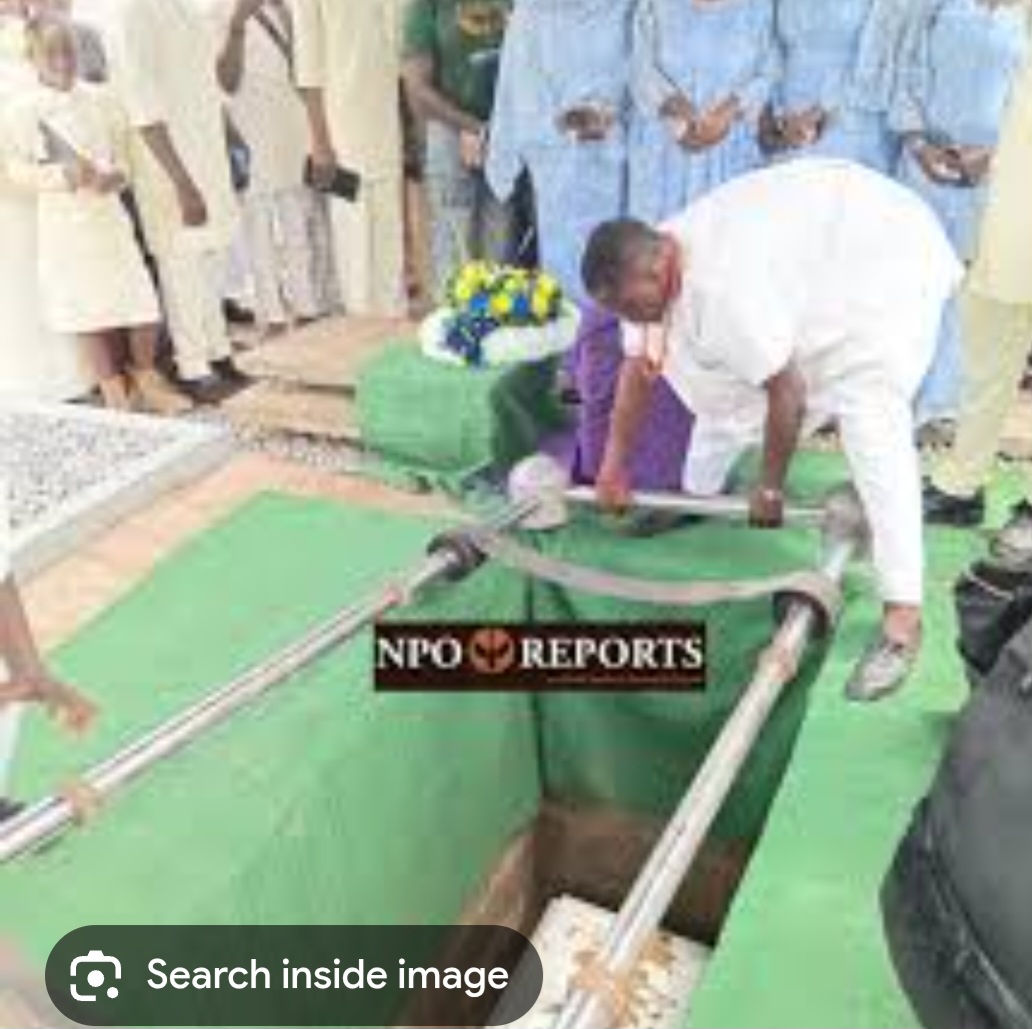
This, for me, was settled today rather than re-opened. At Dotun Oladipo’s funeral service, his three daughters took turns to read their tributes to their dad, and I found myself watching them with awe. There was a kind of strength in them that I do not possess. It is the strength needed to stand in front of a hall brimming with grieving adults and speak about a man they have just lost. Forever. Strength, however, is not the same as ease. I could see plainly what that strength was costing them as they read. Their voices caught. Their composure held and then did not hold and then held again through sheer will.
In front of them, in the pews, men and women considerably older than them came undone in ways the girls themselves were somehow managing to resist. I went mightily close. Some of the sobbing was quiet, the type people try to fold into a handkerchief. Some of it was not quiet at all, the kind that announces itself whether or not you want it.
Those young women honoured their father with a grace that is beyond me. What they did was astonishing. So, what I am attempting is an observation of a custom I have now watched wound people. This was not the first time I had watched this particular ritual extract more than it should from people already running on fumes. I saw an earlier and harder version of it at a friend’s wake back in 2015.
The first son was called forward to read his father’s tribute, and he could not do it. He tried, but the words would not come, and he stood there in front of a crowd of mourners, with his grief simply refusing to organise itself into sentences. The officiating minister, rather than releasing him from the task, urged him to continue. I sat fizzing with sorrow and ire. He could not go on and, eventually, the minister accepted, but not before insisting a while longer than it should have reasonably taken. His younger brother was called up next, presumably on the theory that if one grieving son could not manage it, maybe another one could. He flunked it in the same way. Grief does not distribute itself more conveniently among siblings just because a programme has been printed and needs to be followed.
I have turned that memory over many times since, trying to work out why this part of the rites is treated as mandatory in the first place. I have not found a satisfying answer. Maybe it comes from a belief that a child’s words carry more weight than anyone else’s, which may even be true, but weight is exactly the problem when those carrying it are struggling to hold themselves together with nothing but adrenaline and the fear of dissolving in public.
Maybe it is simply inertia, the reason we still do a hundred things at funerals that nobody can explain the original purpose of. Either way, I have stopped looking for the justification. I no longer think one exists that is good enough to weigh against what I watched happen to that boy in 2015.
So, let this stand as my instruction rather than my preference, the kind of thing I would rather state plainly now than leave for my children to infer later from how uncertain I sound when the subject comes up in passing. If I do not get the old age I am hoping for, my children will not be asked to read a single word over my body. Someone else can speak for me. A friend, a stranger with a steadier voice and a smaller stake in the loss, anyone whose grief will not be quite so total that standing upright becomes almost impossible.
My children, of course, will sit in front and fall apart if that is what the day requires of them, but without the microphone. That, at least, is one small mercy I intend to arrange for them while I am still here to arrange it.
Dotun deserved every bit of the send-off his daughters gave him today, and I suspect he would have been the first to tell them to sit down and let someone else carry the weight for a while. He did not get a say in that, as none of us ever do once we are the ones being spoken of rather than the ones speaking. Rest well, Dotun. You raised three young women whose strength I will not soon forget. That alone says everything worth saying about the man you were.
-

 News2 days ago
ECOWAS Biometric Card Expands as Seven Countries Begin Rollout
-

 Sports2 days ago
Ballon d’Or 2026: Mbappe Responds to Yamal’s Bold Claim
-

 metro2 days ago
FG Suspends Niger NSCDC Commandant As 37 Suspected Illegal Miners Die In Custody
-

 Politics2 days ago
Toyin Abraham Rejects Lagos APC Campaign Council Inclusion
-

 International2 days ago
Ninth Body Discovered in South Africa: Nigeria Issues Urgent Safety Alert to Nationals
-

 Politics2 days ago
2027: Sowore Says He’d Rather Die Than Travel Abroad For Medical Treatment
-

 International2 days ago
BREAKING: Bloodbath at Pakistan Mosque as Suicide Blast Kills 21, Injures 103
-
 metro2 days ago
Tinubu Orders Full Probe Into 37 Miners’ Deaths in NSCDC Custody