

metro
Police, Army in joint operation neutralise notorious kidnapper, Honor, in Nasarawa

Police, Army in joint operation neutralise notorious kidnapper, Honor, in Nasarawa
The Nasarawa State Police Command has confirmed the k!lling of a notorious kidnapper, “Honor” in Akwanga Local Government Area of the state.
Spokesperson of the command, SP Ramhan Nansel, who disclosed this in a statement on Saturday, March 15, 2025, said the suspect was intercepted near Akwanga Central Mosque by a joint patrol team of police, the Army and local vigilantes.
According to the PPRO, the suspect, who had been on the command’s wanted list, attempted to evade arrest and was gunned down by security operatives.
“The Nasarawa State Police Command, in its relentless drive to curb criminal activities, has collaborated with the Nigerian Army and local vigilante groups to successfully neutralize a notorious and wanted kidnapper during a joint security operation in Akwanga, Nasarawa state,” the statement read.
“This achievement occurred on March 14, 2025, at about 2200 hours, when security operatives tracked down the suspect, identified as Abdullahi (surname unknown), also known as “Honor”, a well-known armed robber and kidnapper who had been on the command’s wanted list for multiple offenses.
READ ALSO:
- Rivers Assembly members accuse Gov Fubara of frustrating them
- EPL: Merino header gives Arsenal slim win over Chelsea
- Why we awarded Lagos-Calabar coastal highway project to Hitech – Dave Umahi
“He was intercepted near the Akwanga Central Mosque while riding a motorcycle. During the operation, the suspect attempted to evade arrest and was fatally shot.
“A search of the suspect led to the recovery of: one Beretta pistol without bridge number, twelve rounds of 9mm live ammunition.
“One accomplice managed to escape with gunshot wounds, and a manhunt is currently underway to apprehend the fleeing suspect.
“The deceased suspect’s body has been evacuated to Akwanga General Hospital Mortuary for post mortem examination.
“The Commissioner of Police, CP Shetima Jauro Mohammed, has commended the operatives for their professional conduct and effective collaboration. He urged them to maintain the momentum in the ongoing fight against criminal elements in the state.
“Reiterating the command’s commitment to maintaining law and order, the Commissioner of Police warned all criminals to desist from their nefarious activities or face decisive action.”
Police, Army in joint operation neutralise notorious kidnapper, Honor, in Nasarawa












metro
Kano Police Trace 12 Stolen Vehicles, Arrest 10 Suspects
Kano Police Trace 12 Stolen Vehicles, Arrest 10 Suspects
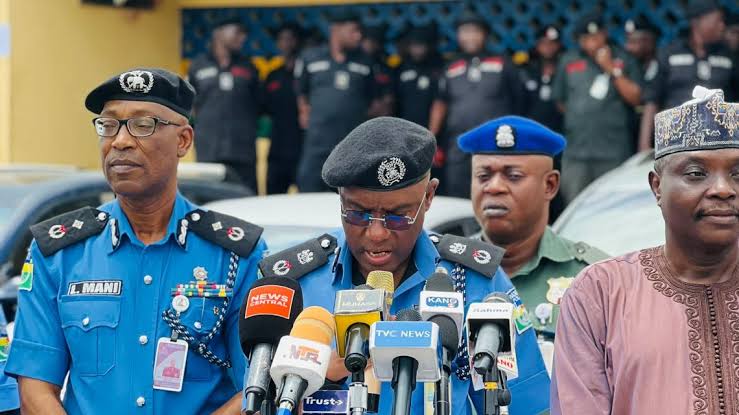
The Kano State Police Command has arrested 10 suspected members of an alleged interstate car theft syndicate and recovered 12 vehicles linked to the group.
Commissioner of Police Ibrahim Adamu Bakori disclosed this on Wednesday during a briefing at the Tarauni Area Command.
According to him, five suspects were first arrested in Adamawa on September 7, leading to the recovery of a Mercedes-Benz GLK 350. Further investigation resulted in the recovery of 10 additional vehicles from Kano and neighbouring states.

Five more suspects were arrested on September 12 at Kwankwasiyya City Quarters, Tarauni, where police allegedly recovered a stolen Toyota Hilux.
Bakori said preliminary findings showed that the suspects allegedly operated across Kano, Katsina, Bauchi, Gombe and other states. He said the group allegedly stole vehicles, hid them at different locations and moved them across state borders for resale.
The commissioner noted that 11 of the 12 recovered vehicles were unregistered, making it difficult to trace their owners.
He urged vehicle owners to register their vehicles and display valid number plates, while warning that unregistered vehicles could make criminal investigations more difficult.
Bakori said investigations were ongoing and efforts were underway to arrest other suspected members of the syndicate.
Kano Police Trace 12 Stolen Vehicles, Arrest 10 Suspects
metro
Osun Govt Vows to Prosecute Those Behind Recent Killings
Osun Govt Vows to Prosecute Those Behind Recent Killings
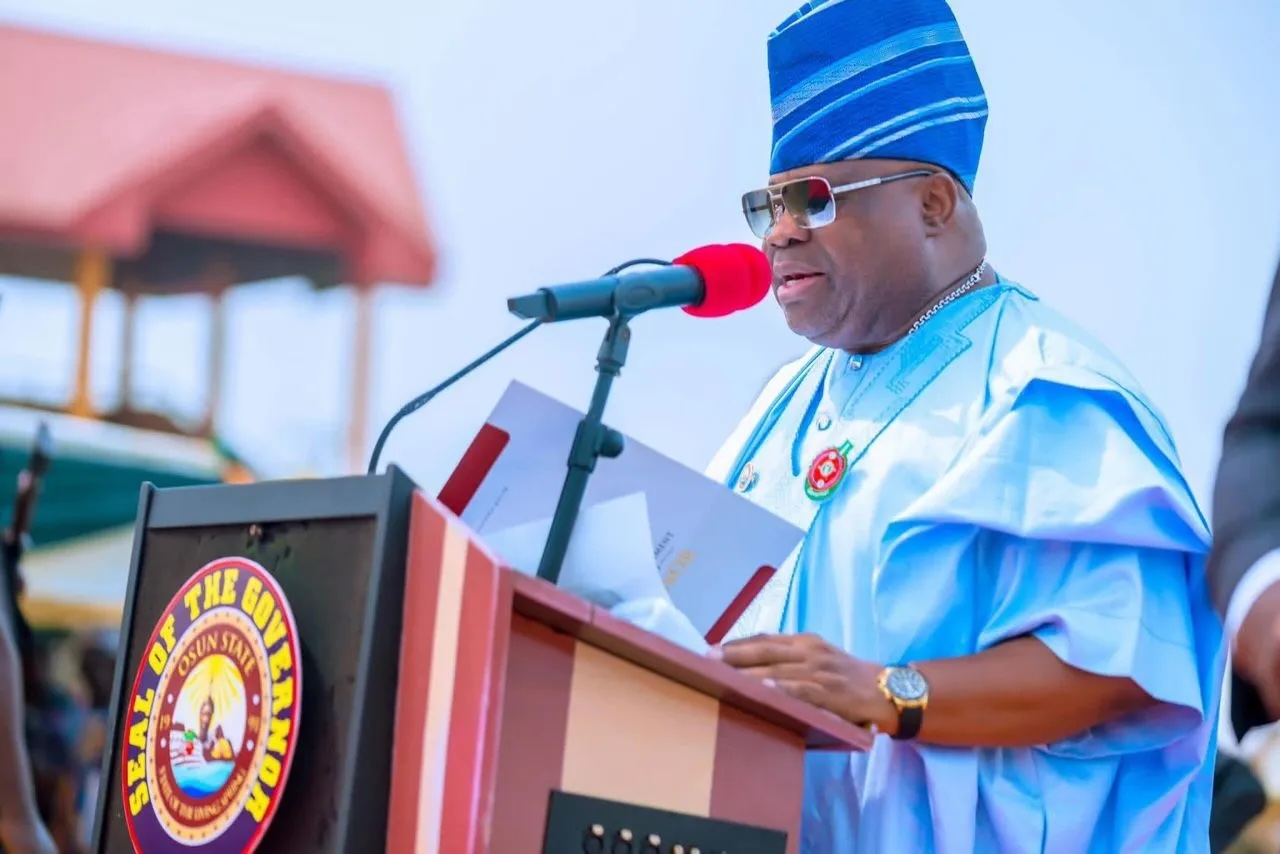
The Osun State Government has vowed to prosecute anyone found responsible for the recent killings and violent clashes across the state.
The government also denied allegations that it was protecting those suspected of killing Olalekan Oyeyemi amid a leadership dispute in the state chapter of the National Union of Road Transport Workers (NURTW).
Speaking on Wednesday, the Special Adviser to Governor Ademola Adeleke on Security Matters, Samuel Ojo, said the administration would allow security agencies to investigate the cases without interference.
Adeleke Summons Security Chiefs
Following the recent violence, Adeleke called an emergency security meeting attended by commanders from the police, DSS, Army, NDLEA, Immigration, Correctional Service, Civil Defence and Amotekun.
Deputy Governor Kola Adewusi represented the governor at the meeting.
Ojo said the security chiefs agreed to intensify efforts to stop further killings and restore peace across Osun.
He also dismissed claims that the government was shielding suspects in Oyeyemi’s murder, saying the police and DSS had been directed to thoroughly investigate the case.
Meanwhile, two NURTW leaders, Gbedegesin and Kareem Akeem, had alleged that Oyeyemi was killed because some union leaders opposed his proposed emergence as the next state chairman.
Transportation Commissioner Sesan Oyedele, however, denied that the government endorsed Oyeyemi for the position. He said the union leaders only informed him of their decision to choose the deceased.
About five people have reportedly been killed between August 24 and September 15 in Ikire, Ile-Ife and Osogbo in incidents linked to motor park disputes and alleged cult-related clashes.
Osun Govt Vows to Prosecute Those Behind Recent Killings
metro
57-Year-Old Man Arrested Over Sexual Abuse of Stepdaughter in Edo

57-Year-Old Man Arrested Over Sexual Abuse of Stepdaughter in Edo
The Edo State Police Command has arrested a 57-year-old man, identified as Kadiri Edenokun, over the alleged defilement of his six-year-old stepdaughter in Jattu, Etsako West Local Government Area of Edo State.
The suspect was reportedly taken into custody after the alleged abuse of the child was brought to the attention of the authorities, prompting the police to commence an investigation into the circumstances surrounding the case.
Police sources said the suspect allegedly admitted during interrogation that the incident occurred on more than one occasion. However, the allegation remains under investigation, and Edenokun has not been convicted of any offence.
The case has renewed attention on the problem of child sexual abuse in Edo State, particularly allegations involving adults who have regular access to children within homes and other familiar environments.
The Edo State Government disclosed in August that more than 70 cases of child defilement had been recorded in the state between January and July 2026. The Commissioner for Women Affairs and Social Development, Eugenia Abdallah, said children between the ages of two and 10 were among those affected.
The commissioner also said that more than half of the cases reported during the period involved fathers of the affected children, highlighting concerns over sexual abuse occurring within family settings.
The state government has continued to work with relevant agencies on cases of sexual and gender-based violence, including the provision of medical, psychosocial and protective support to survivors.
READ ALSO:
- US-Based Nigerian Lawyers Disbarred: Full List of Fraud, Theft and Misconduct Cases
- Katsina Police Rescue Two Kidnapped Women, Arrest Suspected Kidnappers
- Pope Leo XIV Warns Against Letting AI Make Human Decisions
The Ministry of Women Affairs and Social Development has also been involved in providing temporary protective care and other forms of assistance to children and young people affected by sexual violence.
In a separate case reported recently, the ministry provided an update on a 16-year-old girl who was allegedly sexually abused and became pregnant. The ministry said the survivor was placed in a government shelter and was receiving support while arrangements were being made for her welfare and education.
The police have also reported a number of arrests involving alleged sexual offences against minors across Edo State.
The Commissioner of Police, Patrick Daaor, said the command arrested several suspects in August in connection with sexual and gender-based violence. Some of the suspects were subsequently charged to court, while investigations into other cases continued.
Among the cases reported by the command were allegations involving girls aged 13, 15 and 11. Police also reported investigations involving alleged defilement of minors in Okpella and other parts of the state.
At its August operational review, the Edo Police Command said 12 suspects had been arrested in connection with sexual and gender-based violence during the month. The command also reported arrests linked to kidnapping, armed robbery, cultism, human trafficking and other offences.
The latest case involving the six-year-old girl is expected to be subjected to further investigation to establish the circumstances surrounding the alleged abuse and determine whether sufficient evidence exists to support criminal charges.
The child has reportedly been placed under appropriate care and is receiving medical attention with the involvement of the Edo State Ministry of Women Affairs and Social Development.
Child protection advocates have consistently stressed the importance of promptly reporting suspected cases of child abuse and sexual violence, particularly where the alleged perpetrator is a family member, caregiver or another adult with access to the child.
Under Nigerian law, allegations of defilement involving children are treated as serious criminal matters, with the relevant authorities responsible for investigating reported cases and presenting evidence before a court where prosecution is warranted.
The police are expected to complete their investigation and take appropriate legal steps based on the evidence gathered.
Edenokun remains an accused person at this stage, and any determination of criminal responsibility will ultimately be made through due process and, where applicable, by a court of law.
57-Year-Old Man Arrested Over Sexual Abuse of Stepdaughter in Edo
-

 Politics2 days ago
2027: Northern Lecturers Back Tinubu, ASUU Disowns Endorsement
-

 metro2 days ago
Police Arrest Mother Over Alleged Brutal Abuse of 7-Year-Old Girl in Anambra
-

 Sports2 days ago
‘I Was Never the Chosen One’ — Dembele Responds to Mbappe
-

 News3 days ago
Nwifuru Dismisses Cubana Chief Priest as ‘Attention-Seeker’
-

 Politics3 days ago
2027: Sowore Promises ₦500,000 Minimum Wage, Free Education, 24-Hour Electricity
-

 Education2 days ago
JAMB Moves 2027 UTME Time — Here’s What Candidates Need To Know
-
 metro3 days ago
Grand Chief Imam calls for professional communication structure for Rabitoh 1964
-
 Politics1 day ago
2027: APC Governors Reject Wike’s Rainbow Coalition, Insist on Party Loyalty