
metro
Police Corporal, Bus Conductor Get Death Sentence for Kidnapping in Akwa Ibom

Police Corporal, Bus Conductor Get Death Sentence for Kidnapping in Akwa Ibom
A Police Corporal and a bus conductor have been sentenced to death by hanging by an Akwa Ibom State High Court for their roles in the kidnapping of a school vice principal, delivering a strong message against violent crimes in the region. The court also imposed long prison terms on related charges after finding the evidence against the accused overwhelming.
The accused — Police Corporal Mbazigwe Chinedu Friday and bus conductor Isaac Eddy Ndeesor — were convicted on charges of conspiracy, kidnapping, and unlawful possession of firearms over the abduction of Elder Akara Johnson Mendie, the Vice Principal of Community Secondary School, Nkek, in Ukanafun Local Government Area of Akwa Ibom State.
The court heard that on July 5, 2015, at around 3:30 p.m., four armed men driving a Toyota Camry blocked Mendie’s vehicle along Urua Akpan Udosen/Ikot Unah Road as he was returning from church with his wife and family. The gunmen abducted Mendie and fled the scene, taking his wife’s handbag containing personal items and important documents. Mendie told the court that he was blindfolded and taken to an undisclosed location, where the kidnappers demanded a ransom of N50 million and threatened to kill him. After five days in captivity, his family paid N200,000 through his younger sister on July 10, 2015, which led to his release in Bori, Rivers State. He later reported the abduction at Bori Police Station and returned to his community with police assistance.
READ ALSO:
- Six Worshippers Abducted in Ondo Church Attack, One Rescued
- Nigerian Man Jailed in UK for Sexually Assaulting Two Women on Trains
- Carloha shakes up pickup market with launch of heavy-duty Chery Himla
In a confessional statement, Corporal Friday, 41, attached to Mopol 57 in Ukana, Essien Udim LGA, admitted his involvement. He told investigators he was contacted by a man identified as Felix, who introduced another accomplice known as “Different Man.” Friday claimed they were led to believe an unnamed “honourable” wanted the victim kidnapped over allegations that he had killed a friend — a claim the court later rejected. Friday admitted using his Toyota Camry to block Mendie’s vehicle, enabling the gunmen to force the victim into the car. When the vehicle developed a fault, he switched to another car and continued the operation, transporting the victim to bushland in Ogoni, Rivers State. He also stated that the firearm used was not an official police weapon. A search of his residence recovered a locally made revolver, live ammunition, an empty AK‑47 magazine, Indian hemp, CCTV equipment, multiple mobile phones, ATM cards, SIM packs, and car accessories.
Isaac Eddy Ndeesor, the bus conductor, also confessed, admitting he and others trailed the victim from his residence and that he stole and used the victim’s phone, which was later tracked and directly led to his arrest.
Delivering judgment, Justice Nsemeke Daniel criticised the lengthy trial, noting that although the case was filed in 2016, it was only concluded in 2026. He dismissed claims by Corporal Friday that he was framed, describing those assertions as inconsistent with the evidence presented.
The court ruled that the prosecution proved its case beyond reasonable doubt, sentencing both defendants to death by hanging for kidnapping, five years’ imprisonment for conspiracy, and seven years for unlawful possession of firearms. The judge pronounced: “You shall be hanged by the neck until you be dead. May God have mercy on you.”
The death sentences highlight the judiciary’s firm stance against kidnapping, a crime that has terrorized communities across Nigeria. The involvement of a serving police officer intensifies calls for internal reform and stronger oversight within security agencies. Authorities have welcomed the judgment, describing it as a critical step toward deterring similar crimes and reinforcing public confidence in the justice system, while also drawing attention to systemic delays in Nigeria’s criminal justice process.
Police Corporal, Bus Conductor Get Death Sentence for Kidnapping in Akwa Ibom









metro
JUST IN: FG Publishes List of 48 Individuals, Groups Linked to Terrorism Financing in Nigeria
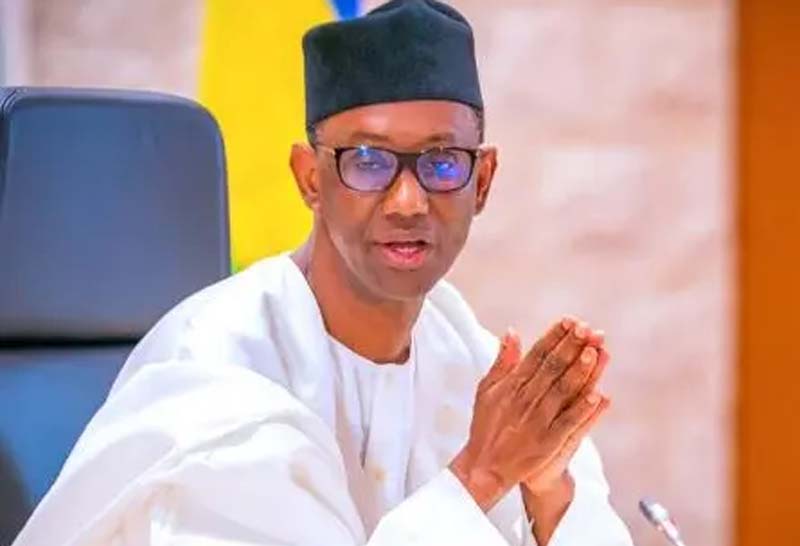
JUST IN: FG Publishes List of 48 Individuals, Groups Linked to Terrorism Financing in Nigeria
The Federal Government has released a list of 48 individuals and organisations alleged to be involved in terrorism financing in Nigeria, marking a significant step in ongoing efforts to disrupt funding networks linked to insecurity across the country.
The list was published on Saturday by the Nigeria Sanctions Committee (NIGSAC), the inter-agency body responsible for enforcing financial sanctions in line with Nigeria’s counter-terrorism financing (CTF) and anti-money laundering (AML) frameworks.
According to the committee, the designated individuals and entities are suspected of providing financial, logistical, or operational support to terrorist organisations operating in parts of the country, particularly in the North-East and other security-affected regions.
The list reportedly includes individuals connected to proscribed organisations such as the Indigenous People of Biafra (IPOB), the Ansaru, and the Islamic State West Africa Province. Among those named are Tukur Mamu, Simon Ekpa, Abdulsamad Ohida, Usman Abubakar, Kubara Salawu, Rabiu Suleman, Simon Njoku, Godstime Itare, Francis Nmaduabuchi, Chukwuka Eze, Edwin Chukwuedo, and others listed in the official document.
READ ALSO:
- 2027: Oyo APC Governorship Aspirant Saheed Oladele Resigns From Party
- 42-Year-Old Married Woman Declared Missing Found in Hotel with Man
- ADC Threatens Civil Disobedience To Force INEC Chairman To Resign
Security and financial intelligence sources said the designation is part of strengthened efforts to enforce targeted financial sanctions against terrorism sponsors, in line with Nigeria’s obligations under international security and financial monitoring standards. The sanctions framework allows authorities to impose measures such as asset freezes, restrictions on financial transactions, and travel limitations on individuals and organisations identified as being involved in terrorism financing activities.
Officials said the move is aimed at cutting off funding channels that support insurgent groups and separatist-linked violence in affected parts of the country. The Nigeria Sanctions Committee explained that the publication of the list is part of broader efforts to strengthen national security by targeting the financial infrastructure behind terrorism.
It added that identifying and sanctioning individuals linked to terrorist financing is crucial to weakening the operational capacity of groups responsible for attacks on civilians and security forces. Authorities also stressed that the listings are part of ongoing investigations and do not replace judicial proceedings, noting that further legal and enforcement actions may follow where evidence is established.
The development comes amid intensified military operations against insurgent groups across the country, as well as increased coordination between security agencies and financial regulators to monitor suspicious transactions and disrupt illicit funding flows.
Officials reiterated that combating terrorism requires both military action and sustained efforts to dismantle the financial networks supporting terrorism in Nigeria.
As of the time of filing this report, the Federal Government has not issued additional details beyond the published list, while reactions are expected from some of the individuals and organisations named.
JUST IN: FG Publishes List of 48 Individuals, Groups Linked to Terrorism Financing in Nigeria
metro
42-Year-Old Married Woman Declared Missing Found in Hotel with Man

42-Year-Old Married Woman Declared Missing Found in Hotel with Man
A 42-year-old woman declared missing in Ilara-Mokin, Ondo State, has been found in a hotel room in Ugbe-Akoko, sparking widespread reactions and renewed concerns over the circumstances surrounding her disappearance.
The woman reportedly left her matrimonial home in Ilara-Mokin in Ifedore Local Government Area without informing her husband or family members, prompting fears that she had been abducted or harmed.
Her husband was said to have raised the alarm after repeated attempts to reach her failed, leading to concern among relatives and residents of the community. The development triggered a search effort as anxiety grew over her whereabouts.
According to sources familiar with the case, the woman was later traced to Ugbe-Akoko in Akoko North-East Local Government Area, located about 124 kilometres from Ilara-Mokin. The journey between both locations typically takes over two hours by road.
READ ALSO:
- ADC Threatens Civil Disobedience To Force INEC Chairman To Resign
- World Bank Deletes Nigeria Development Update Report Days After Release
- US Revokes Green Cards of Iranian Family
She was reportedly discovered in a hotel in the area in the company of a 55-year-old man. Both individuals were taken in for questioning by relevant authorities to determine the circumstances surrounding their presence at the location.
Preliminary findings suggest that the woman may not have been abducted as initially feared but might have left home voluntarily without informing her family. However, officials are still working to establish the full details surrounding her movement and activities before she was found.
The incident has generated mixed reactions among residents of both communities, with many expressing shock, confusion, and concern over the circumstances that led to her disappearance and eventual discovery in a hotel.
Security agencies are continuing investigations to determine whether any offence was committed and to clarify the nature of the relationship between the woman and the man found with her.
As of the time of filing this report, there has been no official statement from law enforcement authorities, while the case continues to attract attention across Ondo State.
42-Year-Old Married Woman Declared Missing Found in Hotel with Man
metro
ADC Threatens Civil Disobedience To Force INEC Chairman To Resign
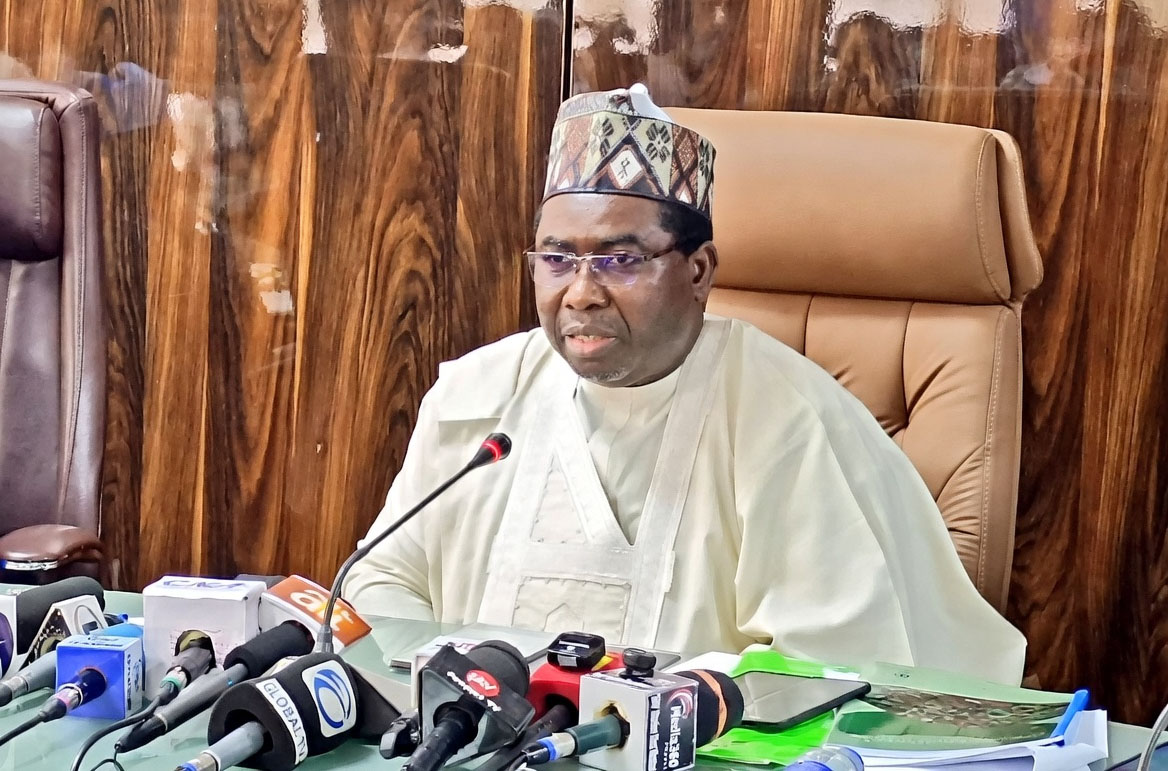
ADC Threatens Civil Disobedience To Force INEC Chairman To Resign
The African Democratic Congress (ADC) has demanded the immediate resignation of the Chairman of the Independent National Electoral Commission (INEC), Prof. Joash Amupitan, over allegations of political bias linked to controversial old social media posts, while also threatening civil disobedience if he remains in office.
The opposition party said its position follows growing concerns about the neutrality of the electoral body ahead of future elections, insisting that the credibility of the electoral process in Nigeria must not be compromised.
The controversy centres on alleged archived posts on X (formerly Twitter) attributed to an account bearing Amupitan’s name, which critics claim contained expressions perceived as supportive of the ruling All Progressives Congress (All Progressives Congress) and President Bola Ahmed Tinubu. The allegations gained wider attention after US-based Nigerian scholar Farooq Kperogi referenced the purported posts in a public commentary, arguing that they raise questions about the independence of INEC leadership. The claims have since sparked heated debate across social media, with supporters of the electoral commission questioning their authenticity while critics insist they undermine public trust in the institution.
READ ALSO:
- World Bank Deletes Nigeria Development Update Report Days After Release
- US Revokes Green Cards of Iranian Family
- 16-Year-Old Alleges Repeated Rape by Pastor During ‘Deliverance’ in Anambra
In response, the Chief Press Secretary and Media Adviser to the INEC Chairman, Adedayo Oketola, cautioned against misinformation and impersonation, warning that cybercriminals may be using fake accounts to circulate false narratives. He reaffirmed that INEC remains committed to delivering free, fair and credible elections in Nigeria, urging the public to rely only on verified communication channels from the commission.
Reacting to the controversy, ADC spokesperson Bolaji Abdullahi described the allegations as a serious breach of public trust and a threat to Nigeria’s democratic integrity, arguing that an electoral umpire must not only be neutral but must also be seen to be unquestionably impartial. According to him, the allegations—if proven true—undermine confidence in the leadership of the electoral body. Abdullahi further alleged attempts to manipulate or alter digital records linked to the controversy, describing the situation as a “calculated assault on truth and accountability.”
He said: “The referee cannot be running around in the shirt of one of the teams he is supposed to officiate.” The ADC insisted that Prof. Amupitan must resign immediately, warning that failure to do so would trigger escalated action, including civil disobedience protests across Nigeria. The party also said it would update petitions to relevant professional and international bodies, including the Nigeria Bar Association (Nigeria Bar Association), as part of efforts to intensify pressure on the electoral commission.
The controversy adds to rising political tension surrounding the leadership of INEC, as opposition parties increasingly scrutinise the commission’s neutrality ahead of upcoming electoral cycles. Analysts say the situation highlights ongoing concerns about trust in Nigeria’s electoral institutions, especially in the digital age where social media content can significantly influence public perception.
As of the time of filing this report, INEC has not issued a fresh statement addressing the ADC’s latest demand for the chairman’s resignation or its threat of civil disobedience.
ADC Threatens Civil Disobedience To Force INEC Chairman To Resign

-

 Africa3 days ago
ECOWAS Recruitment 2026: Over 30 Job Vacancies Open for Nigerians (How to Apply)
-

 metro8 hours ago
JUST IN: FG Publishes List of 48 Individuals, Groups Linked to Terrorism Financing in Nigeria
-

 Health2 days ago
Sleeping Positions: How They Affect Your Health and Which Ones to Avoid
-

 Politics3 days ago
Court Stops ADC Congress, Orders Status Quo in Leadership Row
-
 metro3 days ago
Boko Haram Attack in Borno: Brigadier-General, Soldiers Killed as ISWAP Overruns Military Base
-
 Politics18 hours ago
Did Faleke Just Reveal Lagos’ Next Governor? Party Moves Begin
-
 metro3 days ago
US Evacuates Embassy Staff in Nigeria, Lists 23 States as ‘Do Not Travel’
-

 Education1 day ago
Germany Opens Fully Funded Scholarships for Nigerians, Africans