
metro
Police recover human skull, other ritual items from Enugu ‘church’

Police recover human skull, other ritual items from Enugu ‘church’
A team of security operatives, led by the Divisional Police Officer of Igbo-Eze South local government area in Enugu State, has raided an ongoing church building and recovered a human skull in the process.
The structure, named Synagogue, belongs to one Prophet Chinedu Solomon Ezedike who is allegedly linked to the heartbreaking murder of four little siblings.
Four children were weeks back gruesomely murdered in the council area, attracting outrage from Enugu people and beyond.
Following the incident, the structure where the incident occurred was immediately demolished by the government.
But to further probe the pastor’s activities, the government widened its scope to his other properties, leading to the latest discovery.
Chairman of Igbo-Eze South Local government area, Barr Ferdinand Ukwueze, confirmed this in a post on his Facebook page, Monday.
He said: “Two days ago, yet in the course of combing locations reasonably suspected to be solitary sites and camps of divers shades of criminal activities, acting on intelligence, I visited a site at Abile Hill, Isi-Agu, Ibagwa-Aka, in the company of the Divisional Police Officer of Igbo-Eze South, and other security operatives.
READ ALSO:
- Osimhen considers Man U move after rejecting Saudi offer
- Father jailed for using children in pornography
- JUST IN : Osimhen turns down €75m Al Hilal deal
“The location, currently being used for the construction of Prophet Chinedu Ezedike’s so-called Synagogue, was discovered to be a suspected site for ritual activities.
“To our greatest dismay, a human skull and a ritual staff were discovered from the site, lending further credence to the disturbing and tragic circumstances surrounding the claims and allegations against Ezedike. The recovered items were duly handed over to the Police for further examination as investigations continue.
“More of these hidden locations will be discovered and visited, as we remain relentless in our pursuit against all forms of criminality in our Local Government Area.
“I reassure you; under the administration of His Excellency the Executive Governor of Enugu State, Dr. Peter Ndubuisi Mbah, there will be no hiding place for crimes of any form. We are pursuing an egalitarian society where sons and daughters of Enugu State can aspire and become anything of their choices legitimately without any fear of criminal molestation.
“I deeply appreciate the coordinated support of the Nigeria Police, Department of State Services (DSS), the Military, the gallant men of Igbo-Eze South Neighbourhood Watch, the Forest Guards, and all well-meaning individuals who have provided intelligence and cooperation over the past weeks.
“Society will keep deteriorating when good people keep mute in the face of crime.
“Together, we must protect our land.”
In an earlier post, Ukwueze confirmed the demolition of the pastor’s building.
“We stood with the good people of Ibagwa-Aka as we demolished the stronghold of Prophet Chinedu Solomon Ezedike who is linked to the heartbreaking murder of four innocent siblings.
“This is a clear message from the administration of His Excellency, Barr. Peter Ndubuisi Mbah that Criminals have no hiding place in Enugu State!
“Let the world know! Igbo-Eze South will no longer tolerate evil in any form.”
Police recover human skull, other ritual items from Enugu ‘church’








metro
Outrage as US Lawmakers Recommend Repeal of Sharia Codes in Nigeria
Outrage as US Lawmakers Recommend Repeal of Sharia Codes in Nigeria
The United States Congress has stirred national outrage in Nigeria after recommending the repeal of Sharia codes and criminal anti-blasphemy laws in northern states. The recommendations, included in a joint report on “Christian persecution in Nigeria” submitted to the White House by the House Foreign Affairs Committee and House Appropriations Committee, also urged the disarmament of Fulani militias and proposed restrictions on beef and cattle exports to West African countries.
The report claimed that Nigeria is the “deadliest place in the world to be a Christian,” citing attacks by Fulani herdsmen and terrorist groups that have resulted in deaths, kidnappings, and destruction of churches and schools. It accused northern blasphemy laws of being used to silence Christians and other minorities, and urged Washington to push Nigeria toward religious legal reforms.
Religious Leaders Reject US Recommendations
Islamic clerics and scholars have strongly condemned the proposals. Sheikh Ahmad Gumi, a Kaduna-based cleric, defended the use of Sharia law, emphasizing that Muslims have a right to be governed by their religious injunctions. He also criticized what he described as a double standard in global religious discourse, noting that while other countries allow governance by religious texts for Christians, similar rights for Muslims are being challenged.
READ ALSO:
- FG Tells Court NAFDAC Fully Empowered to Enforce Sachet Alcohol Ban
- Senior ISWAP Commander Killed by Own IED in Borno, Sources Say
- ADC to Take Alleged Edo Attack on Peter Obi, Odigie-Oyegun to ECOWAS Court
Another cleric, Sheikh Halliru Maraya, described the matter as “sensitive and double-edged,” warning that foreign pressure to scrap Sharia could deepen religious divisions. He stressed that violence in states like Kaduna, Zamfara, and Plateau affects both Christians and Muslims, urging the US to focus on capacity-building, intelligence sharing, and counter-terrorism cooperation instead of legal interference.
Civil Society and Experts Raise Sovereignty Concerns
Dr Hakeem Baba-Ahmed, former spokesman of the Northern Elders Forum, called the US recommendations “provocative” and detrimental to Nigeria’s sovereignty. He warned that attempts to enforce legal reforms externally could undermine interfaith harmony and national stability.
Political scientist Prof Jibrin Ibrahim noted that while the US can express concern about security incidents, it cannot dictate Nigeria’s domestic policies. He highlighted that much of the violence is driven by banditry and resource conflicts, affecting citizens of all faiths, rather than targeting Christians alone.
Federal Government Stresses Cooperation and Sovereignty
The Federal Government of Nigeria, through Minister of Information Mohammed Idris, described the report as a potential catalyst for broader cooperation. The government reaffirmed its commitment to protecting religious freedom and emphasized that ongoing security operations, intelligence sharing, and counter-terrorism efforts address threats posed by terrorist groups, bandits, and communal conflicts, irrespective of religion.
The government stressed that any foreign assistance must respect Nigeria’s sovereignty and constitutional framework, while warning against external interference in legal matters such as Sharia and blasphemy laws.
Call for Balanced, Home-Grown Solutions
Analysts and civil society organizations argue that while foreign concern is valid, Nigeria must determine its own policies through constitutional processes and inclusive national dialogue. Experts warn that external attempts to reform religious laws risk fueling divisions and undermining national sovereignty, calling for strategic, home-grown solutions to insecurity and interfaith tensions.
Outrage as US Lawmakers Recommend Repeal of Sharia Codes in Nigeria
metro
FG Tells Court NAFDAC Fully Empowered to Enforce Sachet Alcohol Ban
FG Tells Court NAFDAC Fully Empowered to Enforce Sachet Alcohol Ban
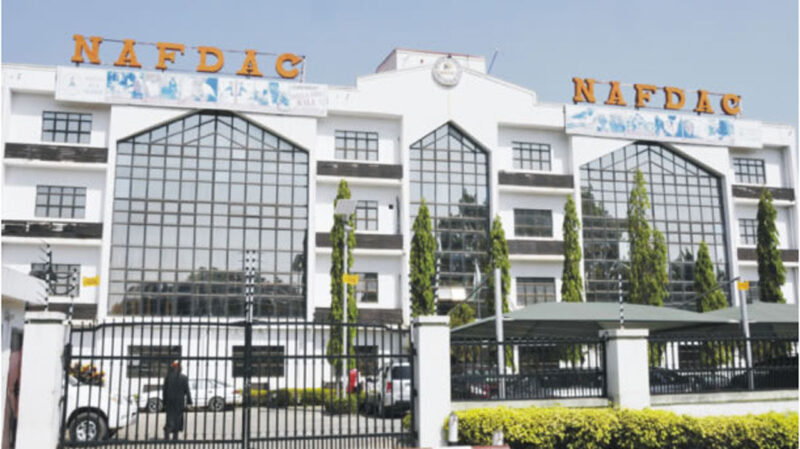
The Federal Ministry of Health and Social Welfare (FMOHSW) has affirmed before the Federal High Court in Lagos that the National Agency for Food and Drug Administration and Control (NAFDAC) has full legal authority to enforce the nationwide ban on sachet alcohol and other small‑pack alcoholic beverages. This declaration came in a counter‑affidavit filed on February 23, 2026, in response to a lawsuit filed by the Socio-Economic Rights and Accountability Project (SERAP) challenging the enforcement of the ban.
Through its lawyer, Jumoke Motilayo Falaye, the ministry maintained that it has never interfered in NAFDAC’s operations and is not an enforcement agency. The affidavit emphasised that NAFDAC is a statutory body established under the NAFDAC Act, with broad regulatory powers over foods, drugs, and related products, including alcoholic beverages in sachets, PET bottles, and glass bottles below 200 ml. According to the ministry, enforcement decisions are solely within NAFDAC’s mandate, and allegations of ministerial interference are speculative and unsupported by evidence.
READ ALSO:
- Senior ISWAP Commander Killed by Own IED in Borno, Sources Say
- ADC to Take Alleged Edo Attack on Peter Obi, Odigie-Oyegun to ECOWAS Court
- BREAKING: Tinubu Decorates Tunji Disu as Acting Inspector‑General of Police
The ministry also clarified that the Minister of Health has not granted any further extension of the moratorium on the ban, noting that the agency retains the authority to regulate, restrict, and enforce prohibitions as provided under Sections 5 and 30 of the NAFDAC Act, the Spirits Drink Regulation 2021, and the Memorandum of Resolution executed in December 2018.
SERAP’s Legal Challenge
SERAP filed the suit, marked FHC/L/CS/2568/25, against the Minister of Health and the Attorney-General of the Federation, seeking declaratory and injunctive reliefs to:
-
Declare the sachet alcohol ban valid under the NAFDAC Act.
-
Prevent the Minister of Health from granting or extending any moratorium on enforcement.
-
Restrict federal authorities from interfering with NAFDAC’s enforcement responsibilities.
-
Ensure full nationwide implementation of the ban, particularly given concerns over public health and alcohol abuse among youth and low-income communities.
SERAP argued that delays in enforcing the ban violate national health laws and expose communities to risks associated with cheap, potent, and highly accessible alcoholic beverages.
The sachet alcohol ban has been a contentious public policy issue in Nigeria. NAFDAC began a renewed crackdown on sachet alcohol in late 2025 following directives from the National Assembly and Senate, which ordered that the deadline for compliance be strictly enforced. However, conflicting communications from federal authorities, including the Office of the Secretary to the Government of the Federation, created confusion over the enforcement timeline.
Industry groups, including the Manufacturers Association of Nigeria (MAN), have challenged the ban, citing economic impacts, job losses, and potential growth of unregulated markets. Despite this, NAFDAC has maintained that enforcement is legally justified and in the interest of public health and safety.
The Federal High Court is yet to fix a hearing date for the case, which could set a landmark precedent for regulatory authority and public health enforcement in Nigeria.
FG Tells Court NAFDAC Fully Empowered to Enforce Sachet Alcohol Ban
metro
Senior ISWAP Commander Killed by Own IED in Borno, Sources Say
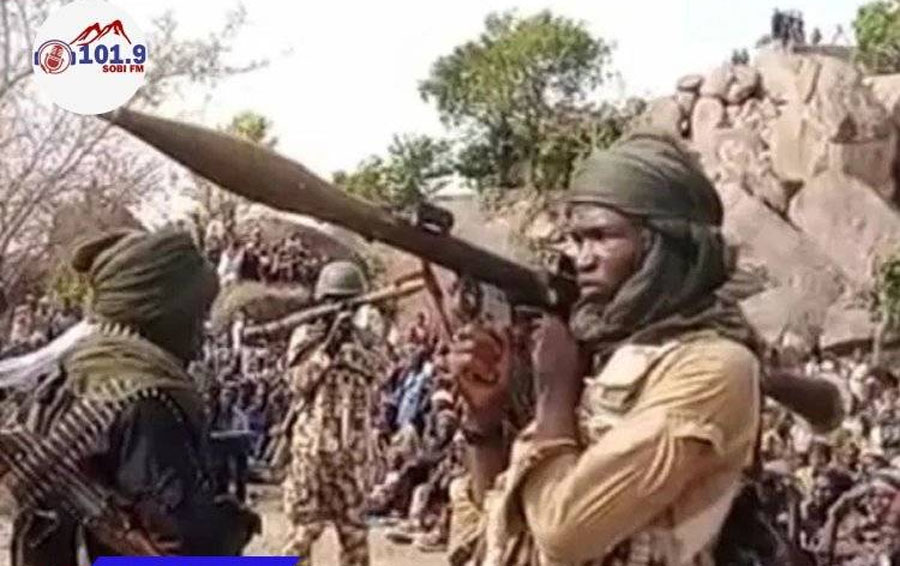
Senior ISWAP Commander Killed by Own IED in Borno, Sources Say
Confusion and internal tensions have reportedly erupted within a factional camp of the Islamic State West Africa Province (ISWAP) following the alleged death of a senior insurgent commander in an explosion caused by an improvised explosive device (IED) believed to have been planted by members of his own group.
According to local security sources cited by regional media, the incident took place in a remote area of Borno, long regarded as a hotbed of insurgency linked to ISWAP and Boko Haram offshoots. The explosive device was reportedly laid down as part of the group’s defensive strategy, but detonated unexpectedly, killing the commander and triggering confusion among fighters in the camp.
Sources say the explosion has stoked suspicions and recriminations within the faction, with some militants questioning whether the detonation was accidental or intentional. Unnamed fighters told reporters that the blast has amplified existing divisions within the group, though details surrounding the exact sequence of events remain sketchy and unverified.
READ ALSO:
- ADC to Take Alleged Edo Attack on Peter Obi, Odigie-Oyegun to ECOWAS Court
- BREAKING: Tinubu Decorates Tunji Disu as Acting Inspector‑General of Police
- Police Corporal, Bus Conductor Get Death Sentence for Kidnapping in Akwa Ibom
As of this report, there has been no official confirmation from the Nigerian Army, the Nigerian Air Force, or any other security agency on the commander’s death. Major international news organisations have also not confirmed the claims independently, underscoring the challenges in obtaining reliable information from insurgent‑held or remote conflict areas.
ISWAP, which operates across the Lake Chad Basin region, has a history of leadership changes, internal disputes and factional splits, making it difficult for analysts to assess the long‑term impact of the reported incident. Insurgent movements often grapple with power struggles, defections and operational mishaps, but verifying such events is complicated by limited access and the secretive nature of these groups.
Security analysts caution that further confirmation from credible sources will be needed to establish the full circumstances of the explosion and its implications for the group’s cohesion and operations. Local residents and defence watch groups are reportedly monitoring developments, but no formal statement has yet been issued by relevant authorities.
Senior ISWAP Commander Killed by Own IED in Borno, Sources Say

-
 News1 day ago
BREAKING: IGP Kayode Egbetokun Steps Down as Tinubu Names Tunji Disu as New Police Chief
-

 Entertainment11 hours ago
Nollywood Actor Okemesi Confirmed Dead After Brief Illness
-
 News1 day ago
Mother of Three Dies by Suicide After Fiance’s Family Rejects Marriage in Ijebu-Ode
-

 International2 days ago
US Adds 19 More Nigerians to ‘Worst of the Worst’ Deportation List
-

 News1 day ago
U.S. Congress Submits Report to Trump on Alleged Christian Persecution in Nigeria
-

 metro1 day ago
Osun Police Launch Investigation into Alleged Student Shooting in Osogbo
-
 Business1 day ago
CBN Mops Up $190 Million to Slow Rapid Naira Appreciation
-
 metro2 days ago
FG Arraigns Abuja Pastor-Doctor Over Alleged ₦19m Fraud, Sale of Embryos