

News
Read full text of Tinubu’s inaugural address as Nigeria’s President
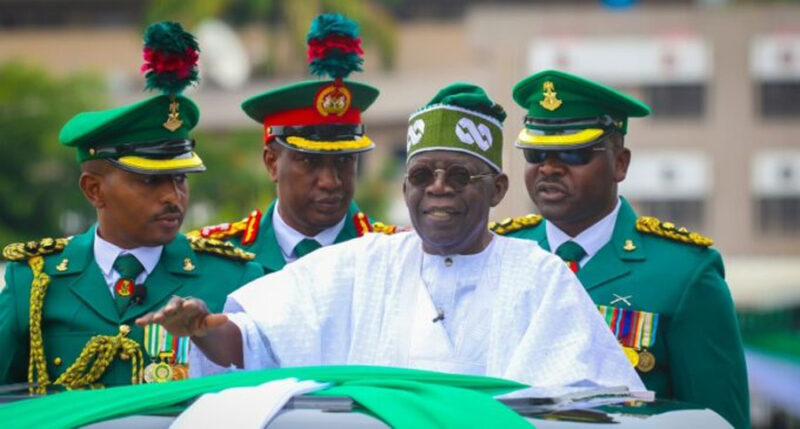
Read full text of Tinubu’s inaugural address as Nigeria’s President
President Bola Ahmed-Tinubu has been sworn-in on May 29 as the 16th President of Nigeria.
The oath of office and allegiance was administered on Mr Tinubu by the Chief Justice of Nigeria, Justice Kayode Ariwoola, at Eagles Square, Abuja.
Read the full speech:
FIRST INAUGURAL ADDRESS BY PRESIDENT BOLA AHMED TINUBU 29 MAY 2023
My Fellow Citizens,
I stand before you honoured to assume the sacred mandate you have given me. My love for this nation is abiding. My confidence in its people, unwavering. And my faith in God Almighty, absolute. I know that His hand shall provide the needed moral strength and clarity of purpose in those instances when we seem to have reached the limits of our human capacity.
This day is bold and majestic yet bright and full of spirit, as is our precious nation.
As a nation, we have long ago decided to march beyond the dimness of night into the open day of renewed national hope.
The question we now ask ourselves is whether to remain faithful to the work inherent in building a better society or retreat into the shadows of our unmet potential.
For me, there is but one answer. We are too great a nation and too grounded as a people to rob ourselves of our finest destiny.
This nation’s journey has been shaped by the prayers of millions, and the collective sacrifices of us all.
We have endured hardships that would have made other societies crumble.
Yet, we have shouldered the heavy burden to arrive at this sublime moment where the prospect of a better future merges with our improved capacity to create that future.
To the surprise of many but not to ourselves, we have more firmly established this land as a democracy in both word and deed.
The peaceful transition from one government to another is now our political tradition. This handover symbolizes our trust in God, our enduring faith in representative governance and our belief in our ability to reshape this nation into the society it was always meant to be.
READ ALSO:
- Updated: Tinubu sworn in as Nigeria’s President, Buhari bows out (+photos)
- Before stepping down, Wike seals PH hotel of political opponent
- Yoruba Nation agitators attempt to take over Alausa Police Division, injure officers
Here, permit me to say a few words to my predecessor, President Muhammadu Buhari. Mr President, you have been an honest, patriotic leader who has done his best for the nation you love. On a more personal note, you are a worthy partner and friend. May History be kind to you.
For many years, Nigeria’s critics have trafficked the rumour that our nation will break apart, even perish.
Yet here we are. We have stumbled at times, but our resilience and diversity have kept us going.
Our burdens may make us bend at times, but they shall never break us.
Instead, we stand forth as Africa’s most populous nation and as the best hope and strongest champion of the Black Race.
As citizens, we declare as one unified people devoted to one unified national cause, that as long as this world exists, NIGERIA SHALL EXIST.
Today, Fate and Destiny join together to place the torch of human progress in our very hands. We dare not let it slip.
We lift high this torch so that it might shine on every household and in every heart that calls itself Nigerian. We hold this beam aloft because it lights our path with compassion, brotherhood, and peace. May this great light never extinguish.
Our administration shall govern on your behalf but never rule over you. We shall consult and dialogue but never dictate. We shall reach out to all but never put down a single person for holding views contrary to our own.
We are here to further mend and heal this nation, not tear and injure it.
In this vein, may I offer a few comments regarding the election that brought us to this juncture. It was a hard fought contest. And it was also fairly won. Since the advent of the Fourth Republic, Nigeria has not held an election of better quality.
The outcome reflected the will of the people. However, my victory does not render me any more Nigerian than my opponents. Nor does it render them any less patriotic.
They shall forever be my fellow compatriots. And I will treat them as such. They represent important constituencies and concerns that wisdom dare not ignore.
Some have taken their concerns to court. Seeking legal redress is their right and I fully defend their exercise of this right. This is the essence of the rule of law.
Over six decades ago, our founding fathers gave bravely of themselves to place Nigeria on the map as an independent nation.
We must never allow the labor of those who came before us to wither in vain but to blossom and bring forth a better reality.
READ ALSO:
- Fabulous Fati fires up Camp Nou farewell in Barca’s 3-0 win
- Remi Tinubu at inauguration service seeks prayers, support reset Nigeria
- Reps in Sunday sitting extended 2022 supplementary budget implementation
Let us take the next great step in the journey they began and believed in.
Today, let us recommit our very selves to placing Nigeria in our hearts as the indispensable home for each and every one of us regardless of creed, ethnicity, or place of birth.
My supporters, I thank you. To those who voted otherwise, I extend my hand across the political divide. I ask you to grasp it in national affinity and brotherhood. For me, political coloration has faded away. All I see are Nigerians.
May we uphold these fitting and excellent notions as the new Nigerian ideal.
My fellow compatriots,
The Nigerian ideal which I speak of is more than just an improvement in economic and other statistics. These things are important; but they can never convey the fullness of our story.
Our mission is to improve our way of life in a manner that nurtures our humanity, encourages compassion toward one another, and duly rewards our collective effort to resolve the social ills that seek to divide us.
Our constitution and laws give us a nation on paper. We must work harder at bringing these noble documents to life by strengthening the bonds of economic collaboration, social cohesion, and cultural understanding. Let us develop a shared sense of fairness and equity.
The South must not only seek good for itself but must understand that its interests are served when good comes to the North. The North must see the South likewise.
Whether from the winding creeks of the Niger Delta, the vastness of the northern savannah, the boardrooms of Lagos, the bustling capital of Abuja, or the busy markets of Onitsha, you are all my people. As your president, I shall serve with prejudice toward none but compassion and amity towards all.
In the coming days and weeks, my team will publicly detail key aspects of our programme. Today, permit me to outline in broad terms a few initiatives that define our concept of progressive good governance in furtherance of the Nigerian ideal:
The principles that will guide our administration are simple:
1. Nigeria will be impartially governed according to the constitution and the rule of law.
2. We shall defend the nation from terror and all forms of criminality that threaten the peace and stability of our country and our subregion.
3. We shall remodel our economy to bring about growth and development through job creation, food security and an end of extreme poverty.
4. In our administration, Women and youth will feature prominently.
5. Our government will continue to take proactive steps such as championing a credit culture to discourage corruption while strengthening the effectiveness and efficiency of the various anti-corruption agencies.
SECURITY
Security shall be the top priority of our administration because neither prosperity nor justice can prevail amidst insecurity and violence.
To effectively tackle this menace, we shall reform both our security doctrine and its architecture.
We shall invest more in our security personnel, and this means more than an increase in number. We shall provide, better training, equipment, pay and firepower.
THE ECONOMY
On the economy, we will target a higher GDP growth and to significantly reduce unemployment.
We intend to accomplish this by taking the following steps:
First, budgetary reform stimulating the economy without engendering inflation will be instituted.
READ ALSO:
- Turkish president, Erdoğan triumphs in historic run-off election
- U-20 World Cup: Flying Eagles to play Argentina in Round of 16 cracker
- Buhari directs Dodan Barracks to surrender Obalende Eid prayer ground to Lagos community
Second, industrial policy will utilize the full range of fiscal measures to promote domestic manufacturing and lessen import dependency.
Third, electricity will become more accessible and affordable to businesses and homes alike. Power generation should nearly double and transmission and distribution networks improved. We will encourage states to develop local sources as well.
I have a message for our investors, local and foreign: our government shall review all their complaints about multiple taxation and various anti-investment inhibitions.
We shall ensure that investors and foreign businesses repatriate their hard earned dividends and profits home.
JOBS
My administration must create meaningful opportunities for our youth. We shall honour our campaign commitment of one million new jobs in the digital economy.
Our government also shall work with the National Assembly to fashion an omnibus Jobs and Prosperity bill. This bill will give our administration the policy space to embark on labour-intensive infrastructural improvements, encourage light industry and provide improved social services for the poor, elderly and vulnerable.
AGRICULTURE
Rural incomes shall be secured by commodity exchange boards guaranteeing minimal prices for certain crops and animal products. A nationwide programme for storage and other facilities to reduce spoilage and waste will be undertaken.
Agricultural hubs will be created throughout the nation to increase production and engage in value-added processing. The livestock sector will be introduced to best modern practices and steps taken to minimize the perennial conflict over land and water resources in this sector.
Through these actions, food shall be made more abundant yet less costly. Farmers shall earn more while the average Nigerian pays less.
INFRASTRUCTURE
We shall continue the efforts of the Buhari administration on infrastructure. Progress toward national networks of roads, rail and ports shall get priority attention.
FUEL SUBSIDY
We commend the decision of the outgoing administration in phasing out the petrol subsidy regime which has increasingly favoured the rich more than the poor. Subsidy can no longer justify its ever-increasing costs in the wake of drying resources. We shall instead re-channel the funds into better investment in public infrastructure, education, health care and jobs that will materially improve the lives of millions.
MONETARY POLICY
Monetary policy needs thorough housecleaning. The Central Bank must work towards a unified exchange rate. This will direct funds away from arbitrage into meaningful investment in the plant, equipment and jobs that power the real economy.
Interest rates need to be reduced to increase investment and consumer purchasing in ways that sustain the economy at a higher level.
Whatever merits it had in concept, the currency swap was too harshly applied by the CBN given the number of unbanked Nigerians. The policy shall be reviewed. In the meantime, my administration will treat both currencies as legal tender.
FOREIGN POLICY
Given the world in which we reside, please permit a few comments regarding foreign policy.
The crisis in Sudan and the turn from democracy by several nations in our immediate neighbourhood are of pressing concern.
As such, my primary foreign policy objective must be the peace and stability of the West African subregion and the African continent. We shall work with ECOWAS, the AU and willing partners in the international community to end extant conflicts and to resolve new ones.
As we contain threats to peace, we shall also retool our foreign policy to more actively lead the regional and continental quest for collective prosperity.
CONCLUSION
This is the proudest day of my life. But this day does not belong to me. It belongs to you, the people of Nigeria.
On this day, Nigeria affirms its rightful place among the world’s great democracies. There, Nigeria shall reside forever.
The course of our past and the promise of the future have brought us to this exceptional moment.
In this spirit, I ask you to join me in making Nigeria a more perfect nation and democracy such that the Nigerian ideal becomes and forever remains the Nigerian reality.
With full confidence in our ability, I declare that these things are within our proximate reach because my name is Bola Ahmed Tinubu, and I am the President of the Federal Republic of Nigeria.
May God bless you and May He bless our beloved land.






News
Yamal Fires Back at Mbappé: “I’m Not Going to Beg” for Ballon d’Or

Yamal Fires Back at Mbappé: “I’m Not Going to Beg” for Ballon d’Or
The 19-year-old Spain international insists his World Cup and La Liga triumphs speak for themselves, while also being named one of Barcelona’s vice-captains ahead of the October 26 ceremony.
Barcelona forward Lamine Yamal has made it clear that he will not campaign or “beg” for the 2026 Ballon d’Or, stating that his achievements on the pitch for club and country should speak for themselves. Speaking ahead of Barcelona’s Champions League opener against Feyenoord, the 19-year-old responded to comments from rival Kylian Mbappé, who had previously made his case for the award by highlighting his World Cup Golden Boot win, which also saw him become the competition’s all-time top goalscorer.
“I don’t think I need to campaign for the Ballon d’Or. I’m not thinking about what I deserve, everyone can think what they like,” Yamal told reporters. “I’m proud of everything I’ve done this year with my club and with the national team. We’ve become world champions, we’ve won the league again. I can’t ask for anything more. I think I’ve shown an incredible level, it’s your job and I will not beg for anything.”
The Spanish international, who finished second in last year’s voting behind PSG’s Ousmane Dembélé, is among the leading contenders for the prize alongside Mbappé, Harry Kane, Dembélé, and Khvicha Kvaratskhelia. The ceremony is scheduled for October 26 in London. Yamal was officially named among the 30 nominees for the 2026 men’s Ballon d’Or when France Football unveiled the list on Tuesday, marking his third nomination.
When asked about Dembélé’s recent comments naming Kvaratskhelia, Kane, and Mbappé as his top three, Yamal joked: “He’s a friend of Kylian, right? Honestly, I don’t care. I’m very happy with the year I had. Whenever I’ve faced both of them, I’ve won. They must have taken a dislike to me for some reason.” Spain knocked France out of the World Cup semi-finals with a convincing 2-0 victory.
READ ALSO:
- Osun Police Arrest Woman After Vigilante Member Dies During Sexual Encounter in Ile-Ife
- Igbo Group Rejects Tinubu Endorsement, Pledges Grassroots Support for Peter Obi in 2027
- Lagos arraigns over 100 suspects after 130 arrested in Lekki, Ajah raid
Yamal, who suffered a hamstring injury in April, has returned to form with two goals in his last two outings against Rayo Vallecano and Valencia, and appeared far more cheerful after a difficult start to the season. “In the end, I’m 19, coming off winning a World Cup, having had the best holidays of my life. I’ve never been happier at any point in my life than I am now,” he said.
Beyond individual honours, Yamal emphasised that Barcelona’s primary target this season is the Champions League trophy, a title that has eluded the Catalan giants since 2015. “There’s no greater motivation than the Champions League, which is the one I still have to win. We will give our all to win it,” Yamal said ahead of Wednesday’s opener against Feyenoord. “Good players have arrived, like Anthony Gordon, Karim Adeyemi, Rodri.”
Barcelona coach Hansi Flick praised the young star, saying: “Lamine is a player who can decide games on his own, fantastic quality. It’s great, you can see it every day how he is enjoying playing football. For me the best thing is that he enjoys this game and then he’s on a top level.”
Yamal is also the favourite to win a third consecutive best young player award at the Ballon d’Or ceremony, having been one of 10 players nominated on Tuesday, including Johan Manzambi, Yan Diomande, and Ayyoub Bouaddi, who all impressed at the World Cup and were then the subject of big-money summer transfers.
Interestingly, during the press conference, neither Yamal nor Flick mentioned Feyenoord by name, instead focusing entirely on Barcelona’s mission to win the Champions League. Yamal was recently elected one of three vice-captains by his teammates, alongside Eric Garcia and Frenkie de Jong, with coach Hansi Flick selecting Raphinha and Pedri as the other members of the five-man captaincy group. “It’s something to be proud of at 19 years old. I’m very grateful to my teammates. It’s a position that comes with responsibilities, even if I’m only 19, but I’m very happy,” he said.
Yamal Fires Back at Mbappé: “I’m Not Going to Beg” for Ballon d’Or
News
Lagos Moves to Slash Agency Fees, Curb Rent Hikes With New Tenancy Bill

Lagos Moves to Slash Agency Fees, Curb Rent Hikes With New Tenancy Bill
The Lagos State Government has unveiled a proposed tenancy law aimed at overhauling the relationship between landlords, tenants and estate agents, with measures designed to curb arbitrary rent increases, excessive agency charges, fraudulent property transactions and prolonged tenancy disputes.
The proposed Lagos State Tenancy and Recovery of Premises Bill, 2025, currently before the Lagos State House of Assembly, seeks to replace the existing tenancy framework with a more comprehensive regime covering rent payments, advance rent, agency fees, eviction, dispute resolution and the conduct of landlords and property agents.
The bill, however, has not yet become law and remains subject to legislative consideration and possible amendments.
One of the most significant provisions in the proposed legislation is the plan to reduce estate agency fees to five per cent of annual rent.
The proposal has attracted considerable attention because tenants in Lagos routinely complain about the financial burden of agency, agreement and other charges demanded when securing accommodation.
The Lagos State House of Assembly had previously stated during deliberations on the bill that the agency commission would be reduced from the existing 10 per cent benchmark to five per cent. An agent who charges above the prescribed rate under the proposed law could face sanctions, including refund of the excess, a fine of up to N1 million or imprisonment for up to two years, or both.
The bill also proposes compulsory registration of estate agents with the Lagos State Real Estate Regulatory Authority, LASRERA.
Under the proposal, operating as an estate agent without the required registration would become an offence. The government says the measure is intended to check the activities of fraudulent and unregistered operators accused of collecting money from unsuspecting members of the public, engaging in multiple transactions on the same property and imposing questionable charges on prospective tenants.
READ ALSO:
- Why Did Peter Obi Attend Seyi Makinde’s Campaign Launch? Here’s What He Said
- JUST IN: Tension in Benue as Suspected Thugs Attack Peter Obi’s Convoy, Block Access
- FIFA, CAF suspend NFF election as Nigeria football reforms face fresh review
The proposed legislation further requires agents handling rent or other funds on behalf of property owners to account for such money and remit it within a stipulated period. Legal reviews of the draft bill put the remittance period at seven working days and require agents to issue receipts for transactions.
One-year limit on advance rent
Another major proposal is the restriction on advance rent.
The draft legislation seeks to prevent landlords from demanding excessive periods of rent upfront. Under the proposed framework, a new tenant would generally not be required to pay more than one year’s rent in advance, while sitting tenants who ordinarily pay monthly would not be compelled to make excessive advance payments.
The measure is expected to address one of the biggest challenges facing accommodation seekers in Lagos, where prospective tenants often complain of demands for one, two or even more years’ rent before they are allowed to occupy a property.
Landlords may face scrutiny over rent increases
The proposed law also seeks to tackle what it describes as unreasonable increases in rent.
Under the bill, a tenant who considers a rent increase excessive could challenge it, with the court empowered to consider factors including rents charged for comparable properties and evidence presented by both the landlord and tenant.
The proposal is significant in a city where rapid increases in rental values have become a major concern for residents, particularly low- and middle-income earners.
The bill also provides protection for tenants who challenge an allegedly unreasonable increase, including restrictions on eviction while the matter is before the court.
Faster resolution of landlord-tenant disputes
Perhaps one of the most ambitious aspects of the proposed legislation is its attempt to speed up tenancy-related litigation.
The bill provides for tenancy proceedings through originating summons and proposes mechanisms designed to shorten the time between filing a case and hearing it.
It also empowers courts to sit on weekends and public holidays for tenancy matters and provides for virtual hearings.
The proposed framework further provides for mediation as an alternative to prolonged litigation, with the aim of resolving disputes more quickly and reducing the backlog of landlord-tenant cases.
The government has argued that faster dispute resolution would benefit both landlords and tenants by reducing the cost and uncertainty associated with lengthy court proceedings.
Tenants to provide evidence
The Lagos State Commissioner for Housing, Moruf Akinderu-Fatai, said tenants seeking legal action would be required to provide evidence including proof of rent payments and updated utility bills.
READ ALSO:
- NNPC Disowns Cannabis-Laden Tanker, Threatens Legal Action Over Brand Misuse
- Bauchi Man, 25, Allegedly Shoots Friend Dead With Dane Gun During Quarrel
- 87-Year-Old Man Arraigned for Severing Judge’s Hand in Adamawa Cutlass Attack
According to the government, the requirement is intended to ensure that tenancy disputes are supported by verifiable documentation rather than mere allegations.
Protection against self-help eviction
The proposed framework also strengthens legal protection against arbitrary eviction and other forms of self-help.
The draft bill provides for lawful procedures that landlords must follow when seeking possession of their properties. It seeks to discourage practices such as forcibly ejecting tenants, interfering with access to premises or taking other unilateral measures without following due process.
It also contains provisions relating to abandoned premises, recovery of possession and enforcement of court orders.
Service charges, deposits and professional fees
The bill goes beyond rent and agency commissions to address other financial issues associated with tenancy.
Among the proposed provisions are rules concerning service charges, facility and security deposits, as well as professional fees.
The draft framework seeks greater transparency in the handling of tenants’ money and provides for accountability concerning service charges and refundable deposits. Legal reviews of the bill indicate that security deposits would generally be refundable, subject to documented deductions for damage or other legitimate claims.
LASRERA intensifies enforcement
The proposed reforms come against the backdrop of increased enforcement by LASRERA against fraudulent operators in Lagos’ property market.
The Commissioner for Housing disclosed that the regulatory agency recovered more than N270 million from fraudulent estate agents between 2025 and 2026.
The government says the enforcement campaign, combined with the proposed legislation, is intended to restore confidence in the state’s real estate sector and protect residents from exploitation.
Stakeholders raise concerns
While the proposed reduction in agency fees has been welcomed by tenant advocates, housing stakeholders have also raised concerns about possible loopholes.
Spaces for Change, which participated in the 2025 public hearing on the bill, warned that agents could attempt to circumvent a five per cent cap by introducing additional charges under different descriptions.
The organisation recommended that the prescribed five per cent ceiling should cover other related charges in order to prevent agents from simply shifting costs from “agency fee” to documentation, inspection or other charges.
There have also been calls for the bill to provide clearer safeguards around the collection, storage and use of tenants’ personal information, given the large amount of sensitive data prospective tenants routinely submit to landlords and estate agents.
Bill still awaiting passage
Despite the publicity surrounding the proposed reforms, tenants and landlords have been urged not to assume that the new provisions are already enforceable.
The Lagos State Tenancy and Recovery of Premises Bill remains a proposal before the Lagos State House of Assembly. Until it is passed by the Assembly and receives the necessary assent, the existing tenancy law remains the applicable legal framework.
If eventually enacted, however, the proposed law could represent one of the most far-reaching changes to landlord-tenant relations in Lagos in years, particularly through its proposed five per cent agency-fee cap, restrictions on advance rent, compulsory registration of agents, stronger protections against arbitrary rent increases and faster mechanisms for resolving tenancy disputes.
For millions of Lagos residents struggling with rising accommodation costs, the central question will now be whether the proposed reforms can move from the pages of the bill to effective enforcement across the state’s notoriously expensive and complex rental market.
Lagos Moves to Slash Agency Fees, Curb Rent Hikes With New Tenancy Bill
Business
Dangote Refinery Sets ₦525 Per Share for Landmark IPO
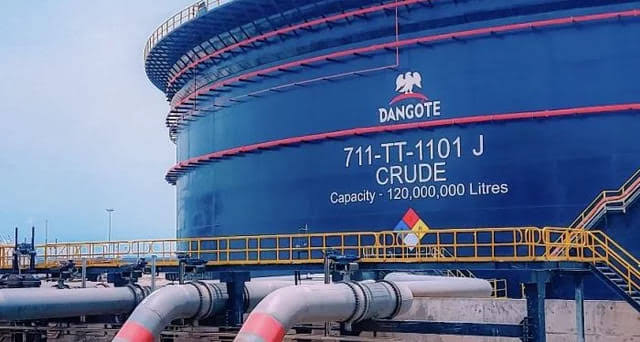
For ₦5,250, Nigerians could soon own a piece of the refinery that has reshaped the country’s fuel market.
-
 Politics3 days ago
Peter Obi, Others Challenging Tinubu Cannot Transform Nigeria — Datti Baba-Ahmed
-

 Auto2 days ago
Kaduna to Lead Govt Patronage of Local Vehicles as Sani Unveils Peugeot 5008
-
 metro1 day ago
El-Rufai Demands ₦10bn from Defence Minister Over Southern Kaduna Killings Allegation
-

 metro2 days ago
Socialite Igho ‘Tiny’ Ubiribo Dies After Penis Enlargement Surgery
-
 metro1 day ago
Catholic priest leaves priesthood, weds Kenyan woman after 12 years in Kenya
-
 Politics3 days ago
Demystifying the Political Monolith: Wike’s ‘See Finish’ Doctrine and Nigeria’s New Political Calculus
-
 metro1 day ago
No US Case Against Tinubu, Family Enjoy Unimpeded Transit for UNGA — Ambassador Ibrahim
-

 metro2 days ago
Three Women Killed, 10 Injured in Multiple Crash on Lagos-Ibadan Expressway Bridge